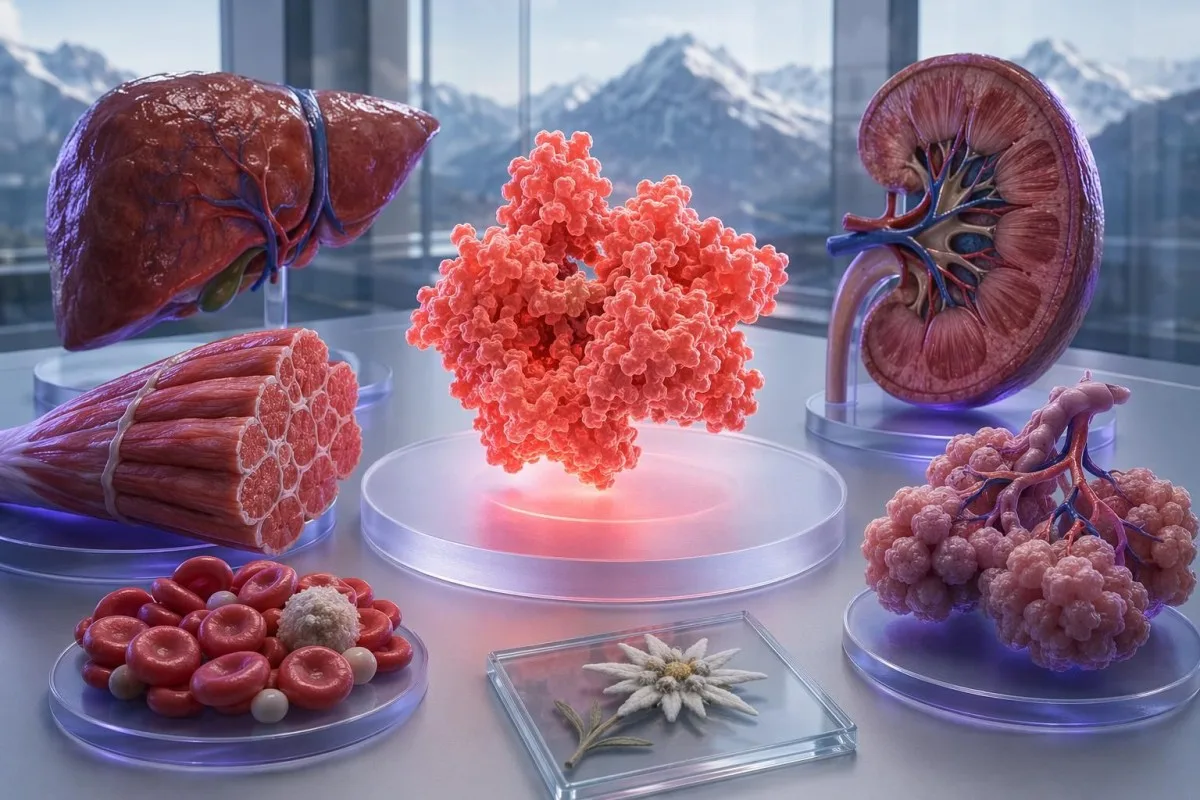
LDH is a smoke alarm, not a diagnosis. The useful work starts when doctors compare it with CBC, bilirubin, haptoglobin, CK, AST, ALT, symptoms, and timing.


- High LDH usually means cells have leaked lactate dehydrogenase after tissue stress or damage; it does not identify the organ by itself.
- Typical LDH range is roughly 125-220 U/L in many adult labs, but reference intervals vary by analyzer, age, and country.
- Mild LDH elevation below 1.5 times the upper limit is often rechecked before aggressive testing, especially if the sample was hemolyzed.
- LDH and hemolysis becomes more convincing when LDH is high with low haptoglobin, high indirect bilirubin, falling hemoglobin, and raised reticulocytes.
- Muscle injury pattern usually shows high CK, AST higher than ALT, muscle pain, recent intense exercise, or dark urine.
- Liver pattern becomes more likely when ALT, AST, ALP, GGT, direct bilirubin, or albumin are abnormal alongside LDH.
- Retest timing is usually 24-72 hours for a suspected sample issue, 5-7 days after heavy exercise, or 1-3 weeks for a mild isolated result.
- Urgent symptoms include chest pain, severe breathlessness, jaundice, dark urine, fainting, severe weakness, fever, night sweats, or unexplained weight loss.
What a high LDH blood test means in plain English
A high LDH blood test means lactate dehydrogenase has leaked from stressed or injured cells into the bloodstream; it is a nonspecific tissue-damage signal, not a diagnosis. In the first 60 seconds of review, I look for patterns: CBC changes, bilirubin, haptoglobin, CK, AST, ALT, ALP, GGT, symptoms, and whether the sample was hemolyzed.
LDH is present in red cells, liver, skeletal muscle, heart, lung, kidney, lymph tissue, and many other tissues. That wide distribution is why LDH levels high causes range from a hard gym session to hemolysis, hepatitis, pneumonia, lymphoma, or a damaged laboratory specimen.
I’m Thomas Klein, MD, and when I see LDH at 280 U/L in a patient whose lab upper limit is 220 U/L, I do not panic; I ask what else moved. A single LDH result is far less informative than a cluster, which is the same logic we teach in our guide to reading blood test patterns.
Kantesti is an AI blood test analyzer that reads LDH next to CBC, bilirubin, CK, and liver enzymes rather than treating one flagged number as a diagnosis. As of June 8, 2026, that pattern-based approach matters because most online explanations still make LDH sound more specific than it really is.
LDH normal range and how high is concerning
Adult LDH reference ranges commonly sit around 125-220 U/L, but some laboratories use intervals closer to 140-280 U/L. A result is more concerning when it is more than 2-3 times the upper limit or rising on repeat testing.
LDH is usually reported in U/L or IU/L, and those units are effectively used the same way in routine clinical practice. A value of 260 U/L may be abnormal in one lab and near-normal in another, so always compare with the reference range printed on your own report.
The practical threshold I use is fold-change: 1.1-1.5 times the upper limit is usually a mild signal, 1.5-3 times is a pattern-hunting result, and above 3 times needs faster clinical context. For people comparing reports across countries, our lab unit guide explains why the same number can look different after a laboratory switch.
Some European laboratories run slightly lower adult LDH upper limits than large North American reference labs because the analyzer method and local reference population differ. That is one reason Kantesti’s biomarker library checks units and reference intervals before it comments on severity.
A very high LDH, such as 900 U/L with an upper limit of 220 U/L, is roughly 4 times the upper limit and should not be dismissed as a small flag. The next question is still source, not fear.
First check: could the LDH be falsely high?
LDH can be falsely high if the laboratory sample is hemolyzed, delayed, overheated, or handled roughly. Red cells contain abundant LDH, so even a mildly damaged tube can push LDH upward without true disease.
The most common boring explanation is a tough collection: prolonged tourniquet time, vigorous tube shaking, small-gauge collection equipment, or transport delay. If the lab report says hemolysis index high or “sample hemolyzed,” I usually repeat LDH before ordering a broad workup.
A falsely high LDH from sample hemolysis often appears with potassium slightly high and AST mildly high, while ALT, bilirubin, haptoglobin, hemoglobin, and symptoms remain quiet. Our article on AI lab error checks shows how those mismatched patterns can be spotted before patients spiral.
In practice, I repeat a suspicious isolated LDH within 24-72 hours, using a clean venipuncture and prompt processing. If the repeat drops from 310 U/L to 190 U/L, the story is usually collection artefact, not a hidden catastrophe.
Do not ignore a hemolyzed sample if the patient is ill. The trick is to separate in-tube hemolysis from in-body hemolysis, because one is a collection problem and the other can be a real anemia emergency.
How CBC results narrow high LDH causes
CBC results help separate benign LDH noise from anemia, infection, marrow stress, and blood-cell turnover. High LDH with falling hemoglobin, abnormal white cells, or low platelets deserves more attention than high LDH alone.
A normal CBC does not prove everything is fine, but it lowers the probability of hemolysis, leukemia-like marrow patterns, and severe systemic illness. A hemoglobin of 13.9 g/dL, platelets of 240 × 10⁹/L, and WBC of 6.5 × 10⁹/L are much more reassuring than LDH 260 U/L with anemia and immature cells.
High LDH plus anemia pushes me toward reticulocyte count, bilirubin fractions, haptoglobin, and a cell sample slide review. If you are trying to understand the differential portion of the CBC, our absolute count guide is a useful next read.
High LDH plus very high WBC, blasts, unexplained bruising, or platelets below 100 × 10⁹/L changes the tone of the visit. That does not diagnose leukemia, but it does move the patient from “repeat later” to “clinician review now.”
A subtle pattern I see in clinic is LDH high with NRBCs or high RDW after a recent bleed, hemolysis episode, or marrow recovery. LDH can reflect cell turnover before the patient feels dramatically different.
LDH and hemolysis: the marker cluster doctors check
LDH and hemolysis becomes clinically meaningful when high LDH appears with low haptoglobin, high indirect bilirubin, increased reticulocytes, and falling hemoglobin. LDH alone cannot diagnose hemolytic anemia.
In intravascular hemolysis, haptoglobin often falls below 30 mg/dL, indirect bilirubin rises, and reticulocytes may climb above 2.5% as the marrow responds. Barcellini and Fattizzo described this marker combination in Disease Markers as clinically useful for differentiating hemolytic anemia from other anemia causes (Barcellini & Fattizzo, 2015).
I once reviewed a 34-year-old with LDH 640 U/L, haptoglobin undetectable, indirect bilirubin 2.1 mg/dL, and hemoglobin dropping from 12.8 to 9.6 g/dL over 2 weeks. That pattern is not “just high LDH”; it is active red-cell destruction until proven otherwise.
The next tests often include direct antiglobulin test, reticulocyte count, bilirubin fractions, cell sample slide, and sometimes G6PD or cold agglutinin testing depending on history. For a deeper look at the haptoglobin side of the story, see our guide to haptoglobin results.
A key distinction: sample hemolysis raises LDH because cells broke in the tube, while true hemolysis raises LDH because cells are breaking inside the body. Low haptoglobin and a falling hemoglobin are what make the second scenario more likely.
When liver enzymes point to the LDH source
Liver-related LDH elevation is more likely when ALT, AST, ALP, GGT, bilirubin, INR, or albumin are also abnormal. LDH is not a standard liver function test, but it can rise with hepatocyte injury or severe tissue stress.
ALT is more liver-specific than LDH, while AST can come from liver or muscle. The ACG guideline on abnormal liver chemistries recommends interpreting ALT, AST, ALP, bilirubin, and related tests as a pattern rather than as isolated results (Kwo et al., 2017).
A hepatocellular pattern is usually ALT and AST dominant; a cholestatic pattern is usually ALP and GGT dominant. If LDH is high with ALT 420 U/L, AST 510 U/L, and bilirubin 3.4 mg/dL, I worry about acute liver injury far more than I would with LDH 260 U/L alone.
Alcohol-related patterns often show AST higher than ALT, frequently with GGT elevation, although the classic AST:ALT ratio above 2 is not universal. Our liver function test guide explains why enzyme ratios can mislead without medication, alcohol, body weight, and viral history.
Direct bilirubin above about 0.3 mg/dL or above 20% of total bilirubin often points away from pure red-cell breakdown and toward liver or bile-flow handling. That small fraction detail can save patients from chasing the wrong explanation.
CK tells you whether muscle injury is driving LDH
Creatine kinase, or CK, is the main companion test when doctors suspect muscle injury behind high LDH. High LDH with CK above 1,000 U/L, muscle pain, weakness, or dark urine raises concern for significant muscle breakdown.
A 52-year-old marathon runner with AST 89 U/L, ALT 44 U/L, LDH 380 U/L, and CK 1,850 U/L is usually telling a muscle story, not a liver story. Huerta-Alardín and colleagues described rhabdomyolysis as a syndrome where CK is the central laboratory marker, often far higher than routine enzyme changes (Huerta-Alardín et al., 2005).
Heavy lifting, seizures, statin intolerance, heat illness, crush injury, and viral myositis can all raise CK and LDH. Our guide to exercise-related lab shifts explains why AST and LDH can lag behind soreness by 24-72 hours.
Most athletes with mild CK elevation improve with rest and hydration, but CK above 5,000 U/L or dark urine needs urgent kidney and electrolyte assessment. I also check creatinine, potassium, calcium, phosphate, and urinalysis because muscle injury can stress the kidneys quickly.
The patient’s story matters here. A sedentary person with CK 1,800 U/L and weakness is different from a trained cyclist tested the morning after a mountain race.
Heart, lung, and kidney clues that change LDH interpretation
LDH can rise in heart, lung, and kidney stress, but modern doctors rarely use LDH alone for these organs. Troponin, oxygen levels, D-dimer context, creatinine, eGFR, urinalysis, and imaging usually carry more weight.
Decades ago, LDH isoenzymes helped evaluate myocardial infarction, but high-sensitivity troponin has largely replaced that role. A patient with chest pain needs troponin trends, ECG, and clinical assessment, not reassurance from a vague LDH number.
Kantesti is an AI blood test interpretation platform that weighs LDH differently when troponin, creatinine, eGFR, D-dimer, CRP, or oxygen-related symptoms are present. For heart-specific enzyme timing, our cardiac enzyme guide is more useful than an LDH-only interpretation.
Kidney clues include creatinine rise, eGFR drop below 60 mL/min/1.73 m², abnormal urine albumin, or visible urine abnormalities. LDH may accompany systemic tissue stress, but it does not replace kidney-specific testing.
In lung illness, LDH can rise with pneumonia, pulmonary embolism, severe hypoxia, or pleural fluid disorders. The finding becomes actionable only when paired with symptoms such as oxygen saturation below 92%, pleuritic pain, fever, or abnormal imaging.
High LDH and cancer: useful clue, poor screening test
High LDH can reflect high cell turnover in some cancers, especially lymphomas and advanced disease, but it is not a good cancer screening test. Most people with a mild isolated LDH elevation do not have cancer.
In lymphoma care, LDH is often used as a prognostic or staging-related marker because rapidly dividing cells can release more enzyme. That is very different from using LDH to search for cancer in a well person with a borderline result.
The pattern that gets my attention is LDH high with enlarged lymph nodes, fever above 38°C, drenching night sweats, unexplained weight loss above 10% in 6 months, anemia, or abnormal white cells. Our detailed article on CBC and LDH in lymphoma covers why normal labs do not fully exclude lymphoma, either.
I have seen patients lose sleep over LDH 245 U/L when the lab upper limit was 220 U/L and every other marker was normal. That level, by itself, is a weak cancer signal.
Marked LDH elevation above 2-3 times the upper limit with systemic symptoms is a different conversation. It should be reviewed clinically rather than repeatedly self-tracked without a plan.
Symptoms that make high LDH more urgent
Symptoms change LDH risk more than the number alone. Chest pain, severe breathlessness, jaundice, dark urine, fainting, severe weakness, fever, night sweats, or rapid weight loss should prompt same-day medical advice.
LDH 300 U/L in a well person is usually handled differently from LDH 300 U/L with oxygen saturation 89%, confusion, or yellow eyes. The same number can be routine, urgent, or irrelevant depending on the bedside picture.
Red-flag combinations include LDH high with hemoglobin below 8 g/dL, platelets below 50 × 10⁹/L, bilirubin above 3 mg/dL, CK above 5,000 U/L, or creatinine rising quickly. Our guide to critical lab values explains why symptoms and thresholds are considered together.
Pain location helps too. Right-upper-quadrant pain points toward liver or bile ducts, diffuse muscle pain points toward CK testing, and pleuritic chest pain changes the clot-and-lung assessment.
If you have severe symptoms, do not wait for a perfect explanation of LDH. A vague enzyme can still be the clue that gets you assessed faster.
When to repeat LDH and when trends matter
LDH should usually be repeated based on the suspected cause: 24-72 hours for sample problems, 5-7 days after intense exercise, and 1-3 weeks for a mild isolated result. Persistent or rising LDH is more meaningful than one borderline flag.
For suspected hemolyzed samples, I repeat LDH quickly because the answer can change the whole plan. A fall from 340 U/L to 205 U/L within 48 hours usually ends the workup unless symptoms say otherwise.
For heavy training, I prefer at least 5-7 days without unusually intense exercise before retesting CK, AST, and LDH. The CrossFit and endurance communities often see this pattern, and our rhabdo red flag guide explains when muscle labs become unsafe rather than just impressive.
For a well adult with LDH under 1.5 times the upper limit and normal CBC, bilirubin, CK, ALT, AST, creatinine, and CRP, a 1-3 week repeat is reasonable in many primary-care settings. I, Thomas Klein, MD, still adjust that timeline if the patient is pregnant, immunosuppressed, on chemotherapy, or losing weight.
Kantesti’s neural network is especially useful for trend analysis because it compares today’s LDH with prior results, reference ranges, and related biomarkers rather than simply labeling the result “high.” Our lab trend graph guide shows why slope can matter more than a single dot.
Do not retest daily unless a clinician is monitoring an acute illness. Too-frequent testing creates noise and sometimes leads to unnecessary scans.
Medicines, supplements, alcohol, pregnancy, and exercise context
Medication exposure, alcohol use, supplements, pregnancy, recent vaccination, and exercise can all change how LDH is interpreted. These factors rarely explain a marked LDH elevation alone, but they often explain mild or mixed patterns.
Statins, antipsychotics, seizure medicines, chemotherapy, immune therapies, and some antibiotics can indirectly affect LDH through muscle, liver, or marrow effects. The timeline matters: a lab shift 10 days after a new drug is more suspicious than one that predates the prescription by years.
Alcohol can raise GGT, AST, ALT, triglycerides, and sometimes LDH when liver or muscle stress is present. If you are starting or changing a medication, our article on liver tests before new meds explains which baseline markers doctors usually want.
Supplements are not automatically safe just because they are sold without prescription. High-dose niacin, green tea extract, anabolic agents, and contaminated muscle-building products can produce liver or muscle patterns that make LDH harder to interpret.
Pregnancy changes plasma volume, alkaline phosphatase, and many reference intervals, while intense exercise can move CK and LDH for several days. I usually ask about the previous 7 days, not just the morning of the test.
How Kantesti reads LDH with the rest of the panel
Kantesti is an AI biomarker interpretation platform that interprets LDH by combining the value, reference range, unit, trend, symptoms entered by the user, and companion markers. It does not diagnose from LDH alone.
Our AI checks whether LDH is isolated or clustered with anemia, high CK, bilirubin fraction changes, liver enzyme shifts, kidney markers, or inflammatory markers. Kantesti is an AI-powered blood test analysis tool used by 2M+ people across 127 countries, so multilingual reference-range handling is not a nice extra; it is basic safety.
A common Kantesti output is not “your LDH is high, worry,” but “your LDH is mildly high and the pattern is most consistent with recent muscle stress; consider CK trend and retest timing.” That wording is deliberate because unnecessary alarm changes patient behavior.
Kantesti AI also flags when the pattern is not safe to ignore, such as LDH high with falling hemoglobin, indirect bilirubin, and low haptoglobin. Our AI interpretation guide explains the blind spots too, including symptoms and physical examination findings that no lab app can see.
For methodology, we align our clinical logic with physician-reviewed standards and ongoing validation work described in the AI technology guide. That review process is why LDH is handled as a probability signal rather than a stand-alone diagnosis.
What to ask your doctor after a high LDH result
After a high LDH result, ask which tissue source is most likely and which companion tests support that answer. The best next step is usually a focused repeat or add-on panel, not a random scan of everything.
Useful questions include: was the sample hemolyzed, how many times above the upper limit is LDH, and are CBC, bilirubin, haptoglobin, CK, ALT, AST, ALP, GGT, creatinine, and CRP normal? If your clinician can answer those in 2 minutes, the plan usually becomes much clearer.
Bring the exact report, not just a screenshot of the flagged number. Our full panel cluster guide can help you organize questions around patterns instead of isolated red marks.
If the result is persistent, ask whether LDH isoenzymes, reticulocyte count, cell sample slide review, direct antiglobulin test, hepatitis testing, urinalysis, or imaging is appropriate. LDH isoenzymes are less commonly used now, but they can occasionally help when the source remains unclear.
At Kantesti, our medical review standards are overseen with input from clinicians listed on our Medical Advisory Board. Dr. Thomas Klein’s practical rule is simple: one abnormal LDH starts a question, but a repeated pattern answers it.
Bottom line: LDH is a tissue-damage clue, not a verdict
High LDH means tissue stress or cell turnover may be present, but the cause is narrowed by pattern recognition. CBC, liver enzymes, CK, bilirubin, haptoglobin, symptoms, and retest timing usually tell the real story.
If LDH is mildly high and every companion marker is normal, the most sensible next move is often a clean repeat rather than an anxious deep dive. If LDH is high with anemia, jaundice, high CK, abnormal liver enzymes, kidney injury, or systemic symptoms, the result deserves timely clinical attention.
Kantesti’s published research work includes large-scale blood-test interpretation reports and validation studies, including the clinical validation benchmark. We also describe our physician oversight, review logic, and evidence standards on our Medical Validation page.
The uncertainty is real. LDH is one of those tests where context beats the number, and in my experience patients do best when they ask, “what pattern does this fit?” rather than “what disease does this number prove?”
If you remember one thing, remember this: LDH is a smoke alarm. Doctors still have to find the room, check whether toast is burning, and decide whether there is a fire.
Frequently Asked Questions
What does high LDH mean on a blood test?
High LDH means lactate dehydrogenase has leaked from cells into the bloodstream, usually because of tissue stress, cell turnover, or sample hemolysis. Many adult labs use a reference range around 125-220 U/L, but ranges vary. LDH is nonspecific, so doctors interpret it with CBC, bilirubin, haptoglobin, CK, liver enzymes, kidney markers, symptoms, and repeat timing.
Can a high LDH blood test be a lab error?
Yes, a high LDH blood test can be falsely elevated if the sample is hemolyzed during collection or transport. Red cells contain a lot of LDH, so a damaged tube can raise LDH without true illness. If LDH is mildly high and the report mentions hemolysis, many clinicians repeat the test within 24-72 hours before ordering a broad workup.
What LDH level is dangerous?
There is no single dangerous LDH cutoff because each lab has a different upper limit, but values above 3 times the upper limit are usually taken seriously. For a lab with an upper limit of 220 U/L, that means roughly above 660 U/L. LDH is more urgent when it is high with chest pain, breathlessness, jaundice, dark urine, severe weakness, fever, anemia, high CK, or abnormal liver enzymes.
How do doctors tell if high LDH is from hemolysis?
Doctors suspect hemolysis when high LDH appears with low haptoglobin, high indirect bilirubin, increased reticulocytes, and falling hemoglobin. Haptoglobin below about 30 mg/dL is a common clue, though reference ranges vary. A direct antiglobulin test and cell sample slide review may be added when autoimmune hemolysis or abnormal red-cell shapes are suspected.
Can exercise raise LDH levels?
Yes, strenuous exercise can raise LDH, especially when CK and AST rise at the same time. CK may climb above 1,000 U/L after heavy endurance exercise, intense resistance training, or a major workout in an untrained person. If there is no dark urine, kidney injury, or severe weakness, doctors often repeat CK and LDH after 5-7 days of rest.
Does high LDH mean cancer?
High LDH does not mean cancer by itself. LDH can be elevated in some cancers, especially lymphomas and advanced disease, but it is a poor screening test in well people. Doctors become more concerned when LDH is high with enlarged lymph nodes, fever, night sweats, weight loss over 10% in 6 months, anemia, or abnormal white cells.
What tests should be checked with high LDH?
The most useful companion tests for high LDH are CBC with differential, reticulocyte count, haptoglobin, total and direct bilirubin, CK, AST, ALT, ALP, GGT, creatinine, eGFR, CRP, and urinalysis when clinically relevant. Troponin is used for chest pain or heart concerns, not LDH alone. The right panel depends on symptoms, medication history, exercise timing, and whether the sample was hemolyzed.
Do I need to fast before an LDH blood test?
LDH testing itself usually does not require fasting. If it is drawn with glucose, lipid, or other tests that need preparation, follow the instructions for the full panel and ask the laboratory if you are unsure.
Can dehydration cause a high LDH result?
Dehydration alone does not usually cause a major true LDH rise, but heat illness, prolonged exertion, or another illness causing dehydration may injure tissues. Drink normally unless you have fluid restrictions, and discuss repeat testing after recovery.
Get AI-Powered Blood Test Analysis Today
Join over 2 million users worldwide who trust Kantesti for instant, accurate lab test analysis. Upload your blood test results and receive comprehensive interpretation of 15,000+ biomarkers in seconds.
📚 Referenced Research Publications
Klein, T., Mitchell, S., & Weber, H. (2026). AI Blood Test Analyzer: 2.5M Tests Analyzed | Global Health Report 2026. Kantesti AI Medical Research.
Klein, T., Mitchell, S., & Weber, H. (2026). RDW Blood Test: Complete Guide to RDW-CV, MCV & MCHC. Kantesti AI Medical Research.
📖 External Medical References
⚕️ Medical Disclaimer
This article is for educational purposes only and does not constitute medical advice. Always consult a qualified healthcare provider for diagnosis and treatment decisions.
E-E-A-T Trust Signals
Experience
Physician-led clinical review of lab interpretation workflows.
Expertise
Laboratory medicine focus on how biomarkers behave in clinical context.
Authoritativeness
Written by Dr. Thomas Klein with review by Dr. Sarah Mitchell and Prof. Dr. Hans Weber.
Trustworthiness
Evidence-based interpretation with clear follow-up pathways to reduce alarm.