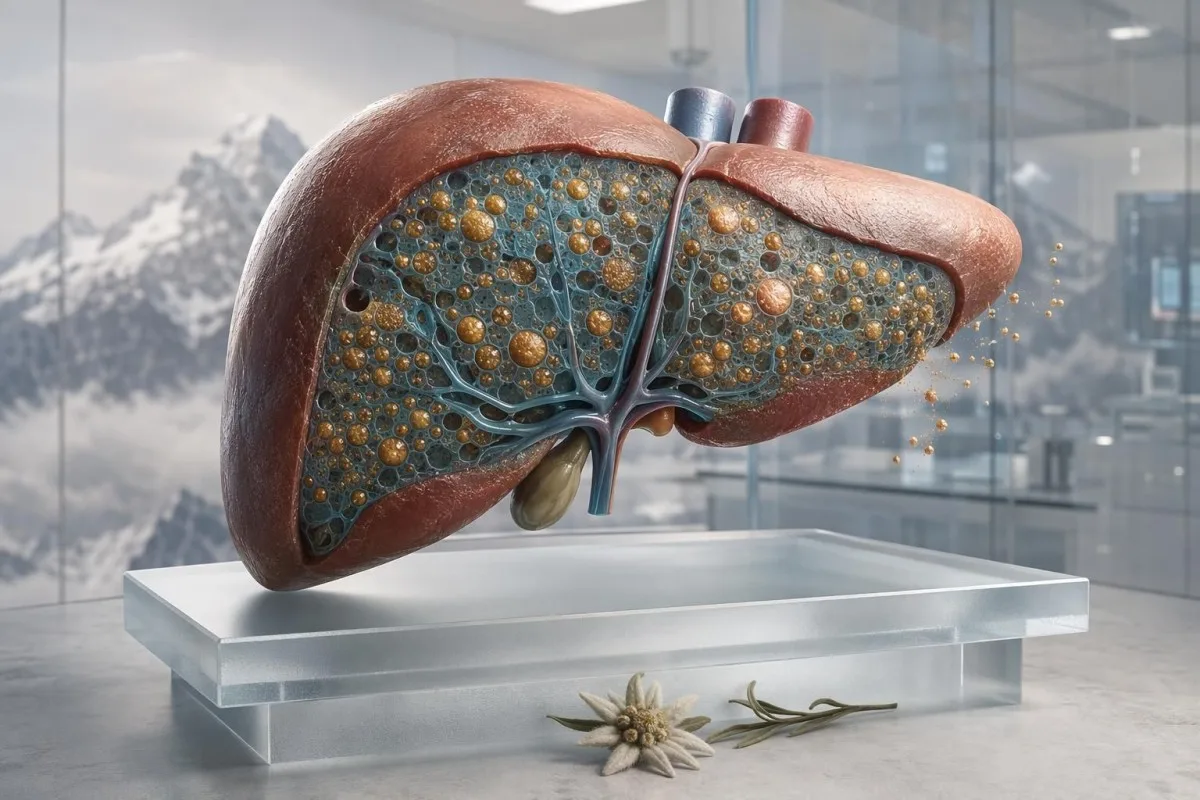
A short-lived ALT rise can occur while liver fat is mobilised during rapid weight loss, but it should never be assumed harmless without looking at the full liver panel, symptoms, medicines, and trend.


- Temporary ALT rise can occur in the first 2-8 weeks of aggressive calorie restriction, particularly when weight loss exceeds about 1 kg weekly.
- Healthy ALT range is often lower than the laboratory upper limit: the ACG cites approximately 19-25 IU/L for women and 29-33 IU/L for men.
- ALT above 3 times the lab upper limit deserves timely clinical assessment even if you have recently lost weight.
- AST and CK together help separate an exercise-related muscle signal from a liver-cell signal after hard training.
- Bilirubin above 2 times the upper limit alongside ALT or AST above 3 times the upper limit is not a routine weight-loss pattern and needs urgent review.
- Weight loss of 3-5% can improve liver fat, while sustained losses above 10% are more likely to improve steatohepatitis and fibrosis.
- Repeat testing after 2-6 weeks, with stable diet, no alcohol, and 5-7 days without strenuous exercise, often clarifies a mild unexpected ALT result.
- Persistent elevation beyond 3 months warrants a structured assessment for metabolic liver disease, medication injury, viral hepatitis, iron overload, and other causes.
Can liver enzymes rise while weight loss is improving fatty liver?
Yes—ALT can rise briefly during rapid weight loss, even when liver fat and long-term metabolic risk are improving. The usual pattern is a mild increase within the first several weeks, followed by a fall as weight loss steadies; an ALT result that keeps rising, exceeds 3 times the lab upper limit, or occurs with jaundice is not safely explained by dieting alone.
ALT is an enzyme concentrated inside liver cells, so an ALT blood test measures cellular leakage, not liver function itself. Albumin, INR, bilirubin, platelet count, and clinical symptoms tell us more about how well the liver is functioning. The tests included in a liver panel are therefore more informative together than ALT in isolation.
In my clinical work, the classic low-risk story is someone whose ALT moves from 32 to 58 IU/L after losing 7 kg in five weeks, while bilirubin, alkaline phosphatase, GGT, albumin, and platelets remain normal. That can fit transient metabolic flux, but I still repeat the panel rather than congratulating the result away. Dr. Thomas Klein reviews these changes as a trajectory, not a single flag.
Kantesti is an AI blood test analyzer that places ALT beside AST, GGT, bilirubin, metabolic markers, and previous results rather than treating a red laboratory flag as a diagnosis. A brief ALT rise may coexist with improving triglycerides and fasting glucose, yet the same number has a different meaning if bilirubin is also rising. That distinction prevents both needless panic and false reassurance.
Why rapid fat loss can temporarily raise ALT
Rapid fat loss can temporarily raise ALT because adipose tissue releases a large fatty-acid load to the liver, where it must be oxidised, repackaged, or exported. The signal is usually modest and transient, but the biology is plausible rather than mysterious.
During a large calorie deficit, triglycerides stored in fat tissue are broken into non-esterified fatty acids and glycerol. The liver receives much of that traffic through portal and systemic circulation; if export as VLDL and oxidation cannot keep pace immediately, temporary cellular stress may increase ALT release. This is most plausible with very-low-calorie diets, prolonged fasting, and abrupt carbohydrate restriction.
A falling body weight does not mean every liver measurement improves in a straight line. In one person, hepatic fat can decline while ALT briefly rises; in another, ALT falls first while imaging changes lag behind. Longitudinal blood-test analysis is more clinically useful than comparing a result with a generic population interval once.
The 2023 AASLD Practice Guidance states that 3-5% weight loss improves steatosis, while weight loss above 10% is generally needed to improve steatohepatitis and fibrosis (Rinella et al., 2023). That evidence supports gradual, sustained change, not a race to the lowest calorie intake. Kantesti AI reads the slope of ALT against the pace of weight loss, which often reveals the story more clearly than either datum alone.
How to read ALT, AST, GGT and bilirubin together
ALT is most suggestive of liver-cell injury when it rises with AST, while GGT, alkaline phosphatase, and bilirubin help identify bile-flow or alcohol-related patterns. A normal GGT and bilirubin make a mild isolated ALT rise less alarming, but they do not prove it is benign.
The American College of Gastroenterology identifies a healthy ALT range of roughly 19-25 IU/L in women and 29-33 IU/L in men, although individual laboratories may report upper limits near 40-56 IU/L. Values above a laboratory range are not automatically dangerous, but a lower healthy threshold explains why a result described as "normal" can still be relevant in metabolic liver disease (Chalasani et al., 2017).
An AST:ALT ratio below 1 is common in metabolic dysfunction-associated steatotic liver disease, formerly called NAFLD, whereas an AST:ALT ratio above 2 can raise concern for advanced alcohol-related liver injury in the right setting. Ratios are clues, not verdicts: strenuous exercise, muscle injury, cirrhosis, and some medicines can all disrupt them. Our GGT reference-range guide explains why GGT is useful but nonspecific.
Kantesti is an AI blood test interpretation platform that compares the hepatocellular pattern of ALT and AST with cholestatic markers instead of claiming one enzyme names a condition. In practical terms, ALT 62 IU/L with normal bilirubin and ALP is a very different problem from ALT 62 IU/L plus ALP 240 IU/L and dark urine. The latter needs faster clinical review.
Why fatty liver recovery rarely follows a straight lab line
Fatty liver improvement is rarely linear because liver fat, inflammation, fibrosis, insulin resistance, and enzyme leakage change at different speeds. A one-off higher ALT does not cancel the possibility that liver fat is falling.
Imaging measures fat, elastography estimates stiffness, and ALT reflects a momentary biochemical signal from hepatocytes. None is interchangeable with the others. A patient may improve liver fat substantially over 12 weeks while having a noisy ALT result at week 3 after dietary restriction or a new training programme.
I see this especially in people who start with high triglycerides, central weight gain, and insulin resistance. Their triglycerides may drop from 240 to 130 mg/dL before ALT settles; that pattern is encouraging, provided bilirubin, ALP, and synthetic function remain stable. The metabolic syndrome cutoffs can put those parallel changes in context.
AASLD advises against using normal aminotransferases alone to exclude clinically significant steatohepatitis or fibrosis (Rinella et al., 2023). Conversely, an abnormal ALT alone cannot stage liver disease. If ALT remains elevated, clinicians often calculate FIB-4 from age, AST, ALT, and platelets, then decide whether elastography or hepatology review is sensible.
Could hard exercise explain high ALT levels after weight loss?
Hard exercise can raise ALT and AST because skeletal muscle contains both enzymes, especially AST, and the effect can last several days. If creatine kinase is high after heavy training, muscle contribution becomes much more likely.
Resistance training, a marathon, CrossFit, or unfamiliar eccentric exercise can cause AST to rise more than ALT, sometimes with a CK above 1,000 IU/L. In a healthy 52-year-old runner, I have seen AST 89 IU/L, ALT 61 IU/L, and CK 2,400 IU/L two days after an event—an entirely different pattern from cholestasis. Our guide to high creatine kinase results covers the red flags that change this assessment.
Avoiding strenuous activity for 5-7 days before a repeat liver panel is a pragmatic way to reduce this confounder when the clinical situation permits. Keep hydration, diet, and usual medicines reasonably stable too; otherwise, the second test answers a different question. The exercise-related lab changes are often wider than people expect.
Severe muscle pain, weakness, tea-coloured urine, reduced urine output, or CK values far above the usual post-exercise range need urgent assessment for rhabdomyolysis. Weight-loss exercise plans should build progressively, particularly in people using statins, dehydrating heavily, or training in heat. ALT is not a gym-performance score.
Fasting, ketogenic diets and bilirubin changes
Fasting can raise unconjugated bilirubin and sometimes mildly alter ALT, particularly in people with Gilbert syndrome or rapid calorie restriction. A bilirubin rise with normal ALP and normal direct bilirubin may be harmless, but the pattern must be confirmed.
Reduced calorie intake increases bilirubin in many people because hepatic uptake and conjugation are temporarily affected. Gilbert syndrome commonly produces intermittent unconjugated bilirubin elevations, often below 5 mg/dL or 85 µmol/L, triggered by fasting, illness, or dehydration. The bilirubin rise during fasting is therefore not automatically a liver emergency.
Ketogenic diets add another layer: rapid lipid mobilisation can change triglycerides, uric acid, electrolytes, and liver enzymes at the same time. Kantesti is an AI-powered blood test analysis tool that identifies this cluster and prompts review of symptoms, medication use, and prior values rather than blaming ketosis alone. The low-carb diet lab guide is useful before changing several variables at once.
Dark urine, pale stools, itching, yellow eyes, or a rising direct bilirubin fraction are not typical fasting effects. Those features suggest impaired bile flow or hepatocellular dysfunction and should not wait for the next planned weigh-in. A direct-versus-indirect bilirubin result can materially change urgency.
Medicines and supplements that can confuse the weight-loss story
Medicines and supplements can cause elevated liver enzymes during weight loss, and a new product may be more relevant than the diet itself. The highest-yield question is often: what changed in the previous 90 days?
Common contributors include acetaminophen at high total doses, certain antibiotics, antifungals, anticonvulsants, anabolic agents, herbal mixtures, and unregulated "fat burner" products. For adults, acetaminophen should generally not exceed 4,000 mg in 24 hours, and lower limits are sensible with regular alcohol use, frailty, or known liver disease. Combination cold remedies are a frequent source of accidental double dosing.
In practice, a patient may tell me they are "only dieting" and then mention green-tea extract, high-dose niacin, ashwagandha, or a multi-ingredient pre-workout at the end of the visit. Stop nonessential new supplements only after discussing prescribed medicines with the clinician who manages them. Our article on risky liver supplements lists practical product categories to review.
Liver injury from a supplement is not diagnosed by ALT alone. Timing, dechallenge after stopping the suspected product, bilirubin, ALP, viral testing, and sometimes specialist input all matter. Keep a photographed list of products, doses, and start dates—brand labels can change surprisingly often.
Do not overlook alcohol, infections and unrelated liver conditions
Alcohol use, viral hepatitis, and metabolic liver disease remain common explanations for elevated liver enzymes during a weight-loss effort. Losing weight does not protect against a second process occurring at the same time.
Alcohol can elevate GGT and AST, though neither enzyme reliably measures how much someone drinks. A high AST:ALT ratio may be a clue, but it is neither sensitive nor specific enough to replace an honest exposure history. The lab timeline after stopping alcohol explains why improvement can take weeks rather than days.
Hepatitis B and C testing is appropriate when risk factors, unexplained persistent enzymes, or compatible symptoms are present. Hepatitis C is often silent, and ALT can fluctuate rather than stay steadily high. The early hepatitis C lab signs are a useful reminder that absence of symptoms does not settle the issue.
Other conditions worth considering include hemochromatosis, autoimmune hepatitis, coeliac disease, thyroid disorders, and Wilson disease in selected younger patients. The probability depends heavily on age, family history, ferritin and transferrin saturation, immunoglobulins, and the exact liver pattern. This is why blanket advice to "just lose more weight" can be unsafe.
ALT changes with GLP-1 treatment and bariatric surgery
GLP-1-based treatment and bariatric surgery usually improve liver fat and ALT over time, but nausea, dehydration, rapid weight loss, gallstone formation, and new medicines can complicate early results. Monitoring should be planned rather than reactive.
GLP-1 receptor agonists often improve weight, glycaemia, triglycerides, and steatotic liver disease markers, but they are not a free pass to ignore a rising ALT. A sudden right-upper abdominal pain episode with vomiting, bilirubin elevation, or ALP elevation raises concern for gallstone-related obstruction, particularly after fast weight loss. Gallstones are a mechanical issue, not simply an enzyme fluctuation.
After bariatric surgery, clinicians also monitor protein intake, iron, folate, vitamin B12, vitamin D, calcium, and fat-soluble vitamins alongside liver markers. Vomiting, very low intake, and dehydration can produce misleading biochemical noise. Our GLP-1 wellness blood-test guide outlines a sensible set of markers to discuss with a prescriber.
Kantesti AI can organise serial laboratory reports for people changing weight rapidly, but it does not replace the treating surgeon, prescribing clinician, or urgent assessment for biliary symptoms. Our clinical workflow examples show why trend review works best when paired with a clear escalation plan.
A weight-loss pace that is kinder to the liver
For most adults, losing about 0.25-0.9 kg weekly is more sustainable and less likely to create confusing liver-enzyme swings than crash dieting. Individual targets should be adjusted for body size, diabetes treatment, pregnancy, frailty, and eating-disorder history.
A daily deficit of roughly 500-750 kcal often produces a moderate weekly loss, though medication and baseline body size change the response. Protein needs rise in relevance during weight loss because loss of lean mass can reduce metabolic resilience; many active adults need around 1.0-1.5 g protein per kg body weight daily, subject to kidney disease and individual advice. Abrupt restriction is rarely necessary.
Mediterranean-style eating patterns, reduced refined carbohydrate intake, fibre, and resistance exercise can improve metabolic risk without extreme fasting. There is no credible "liver detox" food that neutralises a rising ALT. The Mediterranean diet markers provide better targets than supplement marketing.
Rapid loss above 1.5 kg per week is not inevitably dangerous in a larger person under clinical supervision, but it deserves more context and closer monitoring. Gallstone risk rises with rapid weight loss, especially after bariatric procedures or very-low-calorie diets. A slower plan often wins because it is still happening six months later.
When and how to repeat an ALT blood test
A mild isolated ALT elevation can usually be repeated in 2-6 weeks after removing obvious confounders, while a persistent or worsening result should be assessed sooner. Repeat the entire liver panel, not ALT alone.
Before a repeat test, avoid alcohol, nonessential new supplements, and unusually hard exercise for at least 5-7 days if medically safe. Record weight, calorie intake, exercise, illness, and medication changes around each draw; a 2 kg weekly loss and a 90-minute hill run can both explain variation. The lab result tracker offers a practical record of these details.
Order ALT with AST, ALP, GGT, total and direct bilirubin, albumin, and often a complete blood count with platelets. Fasting is not strictly required for ALT, but using the same approximate time, laboratory, and preparation improves comparability. If triglycerides or glucose are also being assessed, the laboratory may give separate fasting instructions.
Kantesti AI compares uploaded historical panels and can flag meaningful changes that a single laboratory reference interval misses. A change from ALT 28 to 54 IU/L is more informative if AST, GGT, bilirubin, and CK moved in parallel—or did not. The side-by-side blood-test guide explains why consistent conditions matter.
What persistent elevated liver enzymes need next
ALT that remains above the laboratory range for more than 3 months needs a structured clinical work-up, even if weight is falling and you feel well. Persistent elevation may reflect steatotic liver disease, medication injury, viral hepatitis, iron overload, autoimmune disease, or less common conditions.
The first step is confirming the pattern: hepatocellular means ALT or AST predominates, while cholestatic means ALP and GGT predominate. A raised ALP should be checked with GGT or ALP isoenzymes because bone can also raise ALP. Our cholestasis blood-test overview explains the bile-duct pattern in plain language.
For persistent hepatocellular results, clinicians commonly review hepatitis B and C status, alcohol, medication and supplement exposure, glucose and lipids, ferritin with transferrin saturation, and sometimes autoimmune markers. In adults over 35, a FIB-4 score below 1.3 often supports primary-care follow-up, while higher or indeterminate scores may trigger elastography; age changes interpretation, especially over 65.
Ultrasound can detect moderate-to-severe steatosis and structural abnormalities, but it cannot reliably rule out mild fat or stage fibrosis. Elastography estimates stiffness, yet acute inflammation and congestion can overestimate it. The aim is not to chase every rare diagnosis immediately—it is to avoid missing the few that change treatment.
Red flags: when high ALT levels need urgent care
High ALT levels need urgent assessment when they occur with jaundice, confusion, severe abdominal pain, persistent vomiting, fever, dark urine, pale stools, or abnormal clotting. A temporary dieting effect should never be used to explain these symptoms away.
ALT or AST above 10 times the upper limit of normal can signal acute hepatitis, toxin exposure, severe drug injury, ischaemia, or other urgent disease. Values above 1,000 IU/L deserve same-day medical assessment. The absolute number matters, but a steep rise from a known baseline can matter just as much.
The combination of ALT or AST above 3 times the upper limit with bilirubin above 2 times the upper limit, without another explanation, is a serious drug-induced liver injury warning pattern sometimes called Hy's law. It does not diagnose the cause, but it should prompt rapid clinician review. The warning signs of high bilirubin are especially useful when deciding whether to wait.
Kantesti is an AI lab test interpretation service designed to flag combinations that merit follow-up, but algorithms cannot examine abdominal tenderness, mental state, hydration, or medication toxicity. Our medical validation approach describes why abnormal clusters are signposts for clinical care, not a substitute for it.
A practical four-week plan after an unexpected ALT rise
A sensible four-week response is to slow extreme restriction, document exposures, repeat a complete liver panel under comparable conditions, and arrange medical review if ALT does not improve. This approach protects both your liver and the quality of the next result.
Week 1: write down every prescription, over-the-counter medicine, herbal product, alcohol exposure, and recent workout. Do not stop essential prescribed medication without advice. If a supplement began within the prior 8-12 weeks, bring the container or a clear label photograph to the appointment.
Weeks 2-4: use a moderate calorie deficit, maintain hydration, avoid binge alcohol, and keep exercise regular rather than punishing. Repeat the liver panel sooner if symptoms appear or values were more than mildly elevated. As of July 23, 2026, the EASL-EASD-EASO MASLD guideline continues to place sustained lifestyle change and fibrosis-risk assessment—not detox regimens—at the centre of care (EASL-EASD-EASO, 2024).
Dr. Thomas Klein's advice is simple: let the trend earn reassurance. Kantesti can help organise questions for a clinician, while our Medical Advisory Board supports the physician-led review standards behind our educational interpretation. Most mild elevations resolve or become explainable; persistent patterns deserve the time to be understood properly.
Frequently Asked Questions
Can losing weight cause elevated liver enzymes?
Yes, rapid weight loss can cause a temporary mild rise in ALT and sometimes AST because large amounts of fatty acids are mobilised and processed by the liver. This pattern is more plausible in the first 2-8 weeks of aggressive calorie restriction or loss exceeding roughly 1 kg per week. It should improve on repeat testing, and bilirubin, alkaline phosphatase, albumin, and symptoms should remain reassuring. ALT above 3 times the laboratory upper limit, a continued upward trend, or jaundice needs clinician review rather than being attributed to weight loss.
How long does ALT stay elevated after rapid weight loss?
A transient ALT rise related to rapid dietary change often settles over several weeks once calorie restriction becomes less extreme and weight loss stabilises. A practical repeat interval for a mild isolated elevation is 2-6 weeks, provided there are no warning symptoms and the initial ALT is not markedly high. If ALT remains elevated for more than 3 months, clinicians usually investigate other causes such as metabolic liver disease, medicines, alcohol, viral hepatitis, and iron overload. A stable or rising ALT trend is more significant than one mildly abnormal value.
What ALT level is dangerous during weight loss?
There is no single ALT value that diagnoses danger, but ALT above 3 times the laboratory upper limit warrants prompt medical assessment and ALT above 10 times the upper limit may indicate acute liver injury. For many laboratories, 10 times the upper limit means an ALT above about 400-560 IU/L. Any ALT elevation with bilirubin above 2 times the upper limit, yellow eyes, dark urine, pale stools, confusion, severe abdominal pain, or persistent vomiting requires urgent care. Dieting should not delay evaluation of these warning signs.
Does improving fatty liver make ALT go up first?
Improving fatty liver can coincide with a brief ALT increase during rapid fat mobilisation, but ALT does not need to rise for fatty liver to improve. Liver fat on imaging, insulin resistance, triglycerides, inflammation, and ALT can all move at different speeds. The AASLD guidance states that 3-5% weight loss can improve steatosis, while losses above 10% are generally needed for greater improvement in steatohepatitis and fibrosis. A falling ALT over months is reassuring, but normal ALT alone does not prove that fibrosis is absent.
Should I stop exercising before repeating an ALT blood test?
Avoiding strenuous exercise for 5-7 days before repeating an ALT blood test is reasonable when a recent hard workout may have affected AST, ALT, or creatine kinase. Heavy resistance exercise and endurance events can raise muscle-derived AST and sometimes ALT for several days, particularly when CK is also elevated. Continue gentle usual activity unless a clinician advises otherwise, and seek urgent care for severe muscle pain, weakness, reduced urine output, or tea-coloured urine. Keeping exercise, hydration, and diet similar before each test makes the trend easier to interpret.
Can GLP-1 medications raise liver enzymes while I lose weight?
GLP-1-based medicines more often improve liver fat and ALT over time, but a liver-enzyme rise during treatment still needs context. Rapid weight loss can promote gallstones, and new abdominal pain with vomiting, high alkaline phosphatase, high bilirubin, or dark urine may suggest a biliary problem rather than a routine adjustment. Review all medicines and supplements because a coincidental drug reaction can occur during GLP-1 treatment. Persistent ALT elevation beyond 3 months should be assessed by the prescribing clinician or a liver specialist when indicated.
Can dehydration make my ALT look high?
Dehydration can slightly concentrate blood components, but it does not usually cause a meaningful ALT rise on its own. Drink normally before a repeat test, but do not dismiss an abnormal result if it persists or occurs with symptoms.
Get AI-Powered Blood Test Analysis Today
Join over 2 million users worldwide who trust Kantesti for instant, accurate lab test analysis. Upload your blood test results and receive comprehensive interpretation of 15,000+ biomarkers in seconds.
📚 Referenced Research Publications
Klein, T., Mitchell, S., & Weber, H. (2026). Nipah Virus Blood Test: Early Detection & Diagnosis Guide 2026. Kantesti AI Medical Research.
Klein, T., Mitchell, S., & Weber, H. (2026). B Negative Blood Type, LDH Blood Test & Reticulocyte Count Guide. Kantesti AI Medical Research.
📖 External Medical References
EASL-EASD-EASO (2024). EASL-EASD-EASO Clinical Practice Guidelines on the management of metabolic dysfunction-associated steatotic liver disease (MASLD). Obesity Facts.
⚕️ Medical Disclaimer
This article is for educational purposes only and does not constitute medical advice. Always consult a qualified healthcare provider for diagnosis and treatment decisions.
E-E-A-T Trust Signals
Experience
Physician-led clinical review of lab interpretation workflows.
Expertise
Laboratory medicine focus on how biomarkers behave in clinical context.
Authoritativeness
Written by Dr. Thomas Klein with review by Dr. Sarah Mitchell and Prof. Dr. Hans Weber.
Trustworthiness
Evidence-based interpretation with clear follow-up pathways to reduce alarm.