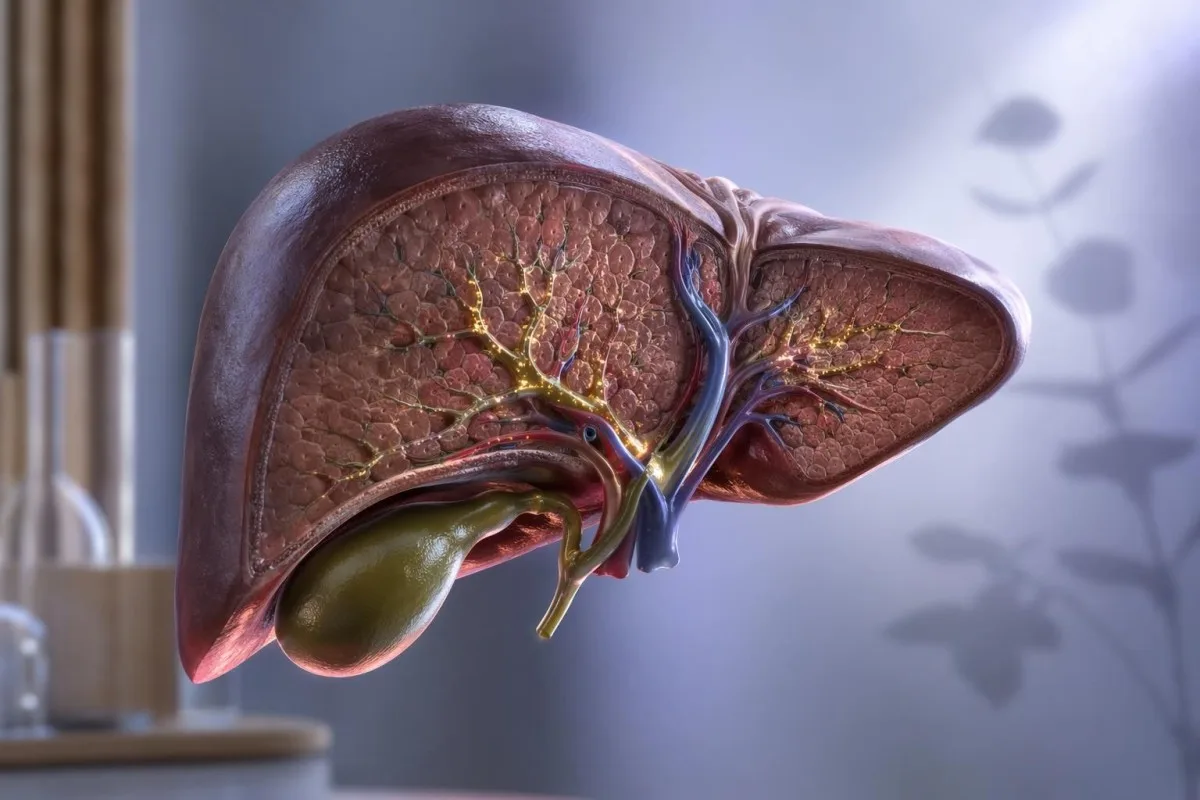
A normal range for bilirubin in most adults is 0.2-1.2 mg/dL, but fasting can push the result higher—often by 20-100% in susceptible people—without changing the lab reference interval. The common benign explanation is Gilbert syndrome, yet a new rise above 2-3 mg/dL, a high direct fraction, or symptoms still deserves follow-up.


- Adult total bilirubin normal range is usually 0.2-1.2 mg/dL (3-21 µmol/L).
- Direct bilirubin is usually below 0.3 mg/dL; a mild total rise with normal direct bilirubin usually points to an unconjugated pattern.
- Fasting effect can raise bilirubin by 20-100% after 12-48 hours, especially with low-calorie intake.
- Gilbert syndrome often produces bilirubin levels of 1.2-3.0 mg/dL at baseline and sometimes 4-5 mg/dL during fasting or illness.
- Benign pattern usually means high bilirubin with normal ALT, AST, ALP, GGT, CBC, and no dark urine.
- Follow-up cutoff is wise if bilirubin is newly above 2.0-3.0 mg/dL, keeps rising, or comes with jaundice, pain, fever, or anemia.
- Repeat testing works best after 24-48 hours of normal meals, hydration, and no strenuous exercise.
- Kantesti AI interprets bilirubin by comparing fractions, liver enzymes, CBC clues, medications, and prior trends in about 60 seconds.
What is the normal range for bilirubin after fasting?
Total bilirubin is usually 0.2-1.2 mg/dL (3-21 µmol/L) in adults, and a brief fast does not change the reference range itself. What changes is the result: after 12-24 hours without calories, some people—especially those with Gilbert syndrome—show a bilirubin fasting increase of 20-100%, so a value of 1.4-2.0 mg/dL with normal ALT, AST, ALP, GGT, and CBC is often benign; if the value is new, above 2-3 mg/dL, or paired with symptoms, it deserves follow-up. Our Kantesti AI and detailed bilirubin guide both work best when you read the whole pattern, not the red flag alone.
The practical nuance is that fasting does not create a new normal range; laboratories still compare you with the same adult interval. What changes is the physiology: if you ate dinner at 7 pm, skipped breakfast, trained at 6 am, and had blood drawn at 10 am, I have seen total bilirubin climb from 0.9 to 1.5 mg/dL with every other liver marker staying flat.
As of May 19, 2026, most adult reference intervals still center on 0.2-1.2 mg/dL, but some European labs flag anything above 17 µmol/L—about 1.0 mg/dL. That small range difference explains a lot of cross-border confusion when patients compare reports from different labs and different countries.
As Thomas Klein, MD, I worry less about an isolated 1.4 mg/dL after a 16-hour fast than I do about 1.1 mg/dL with rising ALP, itching, or dark urine. The number matters; the pattern matters more.
What total, direct, and indirect bilirubin really tell you
Total bilirubin equals direct plus indirect bilirubin, and the split often tells you more than the total number alone. When the direct fraction stays under 0.3 mg/dL and the total rises mildly, the pattern usually points to unconjugated bilirubin from fasting, Gilbert syndrome, or hemolysis rather than bile duct obstruction; our biomarker library lays out those fractions marker by marker.
Indirect bilirubin is produced when older red cells are cleared and heme is converted in the spleen and reticuloendothelial system. The liver then takes it up and conjugates it so it can enter bile; if that conjugation step slows, total bilirubin rises even when ALT, AST, and ALP stay normal.
Here is the bedside clue many patients miss: unconjugated bilirubin is not water soluble, so it usually does not cause dark urine. Dark tea-colored urine, pale stools, or itching make me think more about a direct/conjugated problem.
Kantesti AI interprets bilirubin fractions alongside enzymes, CBC trends, and timing of the sample because a lone total bilirubin value is blunt. A total bilirubin of 1.8 mg/dL means something very different when direct bilirubin is 0.2 mg/dL than when it is 0.9 mg/dL.
Why bilirubin rises during fasting
Fasting raises bilirubin mainly by reducing hepatic uptake and conjugation of unconjugated bilirubin, and the effect is strongest when calories drop sharply for 24-48 hours. In the classic New England Journal of Medicine report by Felsher et al. (1970), short-term caloric restriction significantly increased bilirubin in Gilbert syndrome—very similar to the bilirubin fasting increase we still see in people comparing results with our fasting vs non-fasting guide.
The trigger is not just clock time without food. A very low intake—around 400 kcal/day in older metabolic studies—can raise bilirubin even if someone says, 'I was not really fasting, I just ate very little.'
Morning labs amplify the effect. Skip dinner, wake up a little dehydrated, add a long run or a hard spin class, and a borderline bilirubin of 1.0 mg/dL can land at 1.6 mg/dL by the time the tube reaches the analyzer.
Most fasting-related rises settle after 24-48 hours of normal eating and hydration. That quick normalization is one of the most useful clinical clues because cholestatic or inflammatory liver disease does not usually behave that neatly.
How long a fast changes interpretation, not the reference range
Most labs do not publish a separate fasting normal range for bilirubin, but the longer the fast, the more carefully I interpret a borderline high result. An 8-10 hour fast often changes bilirubin very little, while 18-24 hours without meaningful calories can nudge susceptible adults from 0.8 to 1.3 mg/dL; that is why a CMP fasting guide matters.
A standard overnight fast for a chemistry panel is usually 8-12 hours, and many people with no Gilbert syndrome stay within their usual baseline. Once fasting stretches beyond 16 hours, the dispersion widens—some patients barely move, others climb by 0.3-0.8 mg/dL.
Unit conversion also trips people up. 1.0 mg/dL equals 17.1 µmol/L, so a report of 22 µmol/L is about 1.29 mg/dL, which is only mildly high in most adult labs.
Use the same lab, the same units, and ideally the same time of day when you compare values. Kantesti AI flags this kind of apples-to-oranges problem constantly, especially when one report is fasting and the prior one was not.
Gilbert syndrome bilirubin levels: what changes during a fast
Gilbert syndrome bilirubin levels are usually mildly high because UGT1A1 activity is reduced, often to roughly 30% of normal, and fasting magnifies that baseline weakness. Most adults with Gilbert syndrome run 1.2-3.0 mg/dL when well and may climb to 4.0-5.0 mg/dL with fasting, infection, or dehydration while still showing a classic high bilirubin with normal liver enzymes pattern.
Gilbert syndrome is common—roughly 3-10% of many populations, though some cohorts run higher. Bosma et al. (1995) linked the syndrome to reduced expression of UGT1A1, which explains why bilirubin rises yet the rest of the liver panel often looks boringly normal.
A pattern I see often is the healthy 31-year-old doing OMAD who keeps getting total bilirubin between 1.7 and 2.4 mg/dL. If direct bilirubin is normal, CBC is normal, enzymes are normal, and the result drops after regular meals, that story fits Gilbert far better than occult liver damage.
As Thomas Klein, MD, I still get cautious when the number goes past 5 mg/dL, because uncomplicated Gilbert usually does not live there for long. Values above that, or any new symptoms, make me look for another contributor rather than blaming genes alone.
High bilirubin with normal liver enzymes: when it is reassuring
An isolated bilirubin elevation with normal ALT, AST, ALP, and GGT is often reassuring, but only when the fractionation and symptoms fit. The ACG abnormal liver chemistries guideline recommends first separating bilirubin into direct and indirect fractions rather than launching a shotgun workup (Kwo et al., 2017), and our liver function pattern guide follows the same logic.
If direct bilirubin is above 0.3 mg/dL or clearly more than about 20% of the total, the pattern becomes less classic for simple fasting or Gilbert. I pay even more attention when ALP or GGT drifts up, because that combination nudges the differential toward cholestasis.
One patient can have total bilirubin 1.7 mg/dL, direct 0.2 mg/dL, ALT 22 U/L, AST 20 U/L, ALP 74 U/L, and no symptoms—that is reassuring. Another can have total bilirubin 1.1 mg/dL with ALP 165 U/L and itching, and I worry more even though the bilirubin is lower.
The reason combinations matter is simple: bilirubin plus cholestatic enzymes suggests impaired bile flow, while bilirubin alone usually does not. If your enzymes are drifting at all, read the broader AST and ALT pattern rather than staring at one highlighted line.
How to tell Gilbert syndrome from hemolysis
Hemolysis raises indirect bilirubin too, but it usually leaves footprints elsewhere: hemoglobin falls, reticulocytes rise, LDH rises, and haptoglobin drops. If total bilirubin is 1.9 mg/dL with a reticulocyte count above 2% or haptoglobin below about 30 mg/dL, I think beyond Gilbert and use the same pattern-first approach we teach in our anemia pattern guide.
Gilbert syndrome does not usually cause anemia. A hemoglobin that sits steadily at 13-15 g/dL year after year makes ongoing hemolysis less likely, although mild compensated hemolysis can occasionally hide in the margins.
Here is a subtle point: unconjugated bilirubin itself does not darken urine, but hemolysis can raise urinary urobilinogen or, in some settings, produce hemoglobin-related color change. That distinction is easy to miss and surprisingly useful.
I see this pattern in runners more than textbooks admit. Repeated foot-strike hemolysis after a marathon can nudge bilirubin and AST up together, so waiting 48-72 hours after hard exertion before retesting can save a lot of worry.
When a mild bilirubin fasting increase still deserves follow-up
A mild fasting-related rise still deserves follow-up when the number is new, rising, or paired with symptoms. In practice, I usually repeat testing if total bilirubin is above 2.0-3.0 mg/dL for the first time, persists after normal eating, or comes with jaundice, pain, fever, weight loss, anemia, or dark urine; our retesting guide covers that timing well.
Visible scleral icterus often starts around 2-3 mg/dL, although skin tone and lighting change that a bit. When a patient notices yellow eyes for the first time, I do not dismiss it just because the enzymes happen to be normal.
Age changes my threshold too. A brand-new isolated bilirubin of 1.8 mg/dL in a healthy 24-year-old intermittent faster feels different from the same number appearing for the first time at 58 with fatigue and weight loss.
Family history helps, but it does not close the case. More than once I have seen a person assume that everyone in the family runs high bilirubin, only to discover the direct fraction was elevated and the real issue was biliary rather than genetic.
Symptoms that change the math
Fever, right-upper-quadrant pain, pale stools, confusion, vomiting, or new dark urine lower my threshold for same-day assessment. Even a seemingly mild bilirubin number can matter if the story around it is wrong for Gilbert syndrome.
How to prepare for a repeat bilirubin test so the answer is clearer
For a clean repeat bilirubin test, eat normally, drink water, and avoid turning the retest into another experiment. If the goal is to see whether fasting caused the rise, I usually ask for 24-48 hours of normal calories, good hydration, and no extreme workout before the draw; plain water is fine, as we explain in our fasting rules article.
Patients often overdo the prep. You do not need a huge carbohydrate load, a detox drink, or gallons of water; a regular day of meals and ordinary hydration is enough.
If another doctor truly needs a fasting sample for glucose or lipids, write down the fasting duration exactly. In Gilbert syndrome, a draw after 9 hours and a draw after 19 hours are not clinically equivalent, even if both are labeled fasting.
I also try not to retest the morning after poor sleep, alcohol, or a punishing workout. Those little stressors can shift bilirubin by a few tenths of a mg/dL, which is enough to change the conversation.
Other reasons bilirubin rises even when you blame the fast
Fasting is not the only reason bilirubin rises; exercise, illness, dehydration, and several medications can produce the same lab pattern. Endurance events, viral infections, and drugs such as atazanavir, indinavir, irinotecan, and sometimes gemfibrozil can push unconjugated bilirubin upward, which is why I compare results with our guides to post-exercise labs and liver tests before new medicines.
A 52-year-old marathon runner with AST 89 U/L and bilirubin 1.6 mg/dL the day after a race is a very different case from a sedentary patient with the same bilirubin and rising ALP. Before you panic, ask what happened in the prior 72 hours.
Acute illness does this too. Even a short febrile viral syndrome can raise bilirubin in Gilbert syndrome, and the value may stay high for several days after the fever breaks.
Medication history matters more than many patients realize. Atazanavir in particular can cause striking unconjugated hyperbilirubinemia with otherwise normal enzymes, and that pattern is much more common in people who already have reduced UGT1A1 activity.
Who gets fasting-related bilirubin spikes most often
People most likely to show a fasting-related bilirubin spike are lean adults, intermittent fasters, endurance athletes, and patients with Gilbert syndrome. In my experience, the rise is more obvious after 16:8, OMAD, multi-day fasting, or aggressive calorie cuts than after a routine overnight fast, which is why our readers comparing results with fasting biomarker trends often get mixed signals.
The pattern is especially common in people with low body fat and high training volume. They do not have worse livers; they just have less metabolic slack when calories drop.
Some men are diagnosed earlier simply because mild Gilbert syndrome is more often picked up on routine chemistry panels, but women certainly get it too. I have also seen bilirubin fluctuate around menstruation or intercurrent illness in otherwise classic Gilbert patterns, though the evidence there is honestly mixed.
Not everyone with Gilbert responds the same way. Two siblings can share the diagnosis, yet one jumps from 0.9 to 2.3 mg/dL during a fast while the other barely reaches 1.3 mg/dL.
Does eating before the test lower bilirubin, and by how much?
Eating before a repeat bilirubin test often lowers a fasting-related false alarm, especially in Gilbert syndrome, but the meal should be ordinary rather than strategic. A normal mixed meal and a day or two of usual calories often bring bilirubin closer to baseline, while ultra-low-calorie intake can keep it elevated; that is why we remind patients that many common blood tests do not require fasting.
I tell patients not to binge on sugar the night before. The goal is not to beat the test; the goal is to remove the confounder of calorie restriction.
From a physiology standpoint, total calorie intake seems to matter more than a magical food. A boring breakfast of oats, yogurt, toast, eggs, or fruit is usually plenty if the question is whether fasting triggered the rise.
If your clinician needs both a fasting lipid panel and a clean bilirubin comparison, it may be smarter to separate the tests. I do this fairly often because combining them can create more noise than clarity.
Which follow-up tests make sense when bilirubin stays high
If bilirubin stays high after normal eating, the next useful tests are direct bilirubin, ALT, AST, ALP, GGT, CBC, reticulocyte count, LDH, and haptoglobin. That panel tells me whether I am looking at impaired conjugation, cholestasis, or red-cell turnover, and it makes more sense when you understand ordinary lab variability.
If the direct fraction is elevated or ALP/GGT is abnormal, I usually expand the workup—sometimes hepatitis testing, sometimes an ultrasound, sometimes both. If the pattern remains purely indirect with normal CBC and enzymes, I often stop short of imaging.
Unit consistency matters again. A rise from 14 µmol/L to 24 µmol/L sounds dramatic until you convert it from 0.82 to 1.40 mg/dL and notice the sample went from fed to 20-hour fasting.
Genetic UGT1A1 testing can confirm Gilbert syndrome, but I do not order it routinely when the pattern is textbook. I reserve it for recurrent diagnostic ambiguity, medication planning—especially with irinotecan—or cases where the story just does not behave.
One practical tracking tip
Keep the original lab PDFs and not just screenshots. Small details, like whether direct bilirubin was actually measured or merely calculated, often disappear in summaries and can completely change interpretation.
How Kantesti interprets bilirubin trends and when to act now
Kantesti AI interprets bilirubin best when it analyzes the full pattern—total and direct bilirubin, liver enzymes, CBC clues, fasting duration, medications, and prior results—rather than a single flagged number. On our AI blood test platform, patients can upload a PDF or photo, and our medical logic—reviewed against published methods on Medical Validation and our broader benchmark study—helps sort likely Gilbert or fasting patterns from results that need prompt care.
At Kantesti, Thomas Klein, MD, and our reviewers pay closest attention to three red flags: a bilirubin level that keeps rising, a direct fraction that is out of proportion, and accompanying symptoms or CBC changes. A stable pattern of 1.4-2.2 mg/dL over years is one thing; a jump from 0.8 to 2.8 mg/dL in a month is another.
If you want a quick second look, try our free demo. If you want to understand how files are parsed, read our report upload guide.
If you want to see who reviews the clinical logic, meet our medical advisory board. For the broader company background, start about Kantesti.
Bottom line: mild isolated bilirubin after fasting is often benign, especially with Gilbert syndrome, but it is never interpreted in a vacuum. Jaundice with fever, right-upper-quadrant pain, confusion, vomiting, or rapidly rising bilirubin needs same-day medical attention—do not wait for another fasting experiment.
Frequently Asked Questions
What is the normal range for bilirubin in adults?
The normal range for bilirubin in most adults is 0.2-1.2 mg/dL for total bilirubin, which is about 3-21 µmol/L. Direct bilirubin is usually below 0.3 mg/dL. A result just above the upper limit is not automatically dangerous, because fasting status, lab method, and Gilbert syndrome can all shift the number. The safest interpretation always includes the direct fraction and the rest of the liver panel.
Can fasting alone raise bilirubin if liver enzymes are normal?
Yes. Fasting can raise bilirubin even when ALT, AST, ALP, and GGT are normal, especially after 12-24 hours without meaningful calories. In susceptible people, the increase is often 20-100%, and the rise is usually in the indirect or unconjugated fraction. This pattern is especially common in Gilbert syndrome and often improves after 24-48 hours of normal eating.
What bilirubin level is common in Gilbert syndrome?
Many adults with Gilbert syndrome run a total bilirubin of about 1.2-3.0 mg/dL when they are well. During fasting, dehydration, illness, or heavy exertion, the value can rise to 4-5 mg/dL while liver enzymes remain normal. The direct bilirubin usually stays normal or low in proportion to the total. A result above 5 mg/dL is less typical for uncomplicated Gilbert syndrome and deserves a closer look.
Should I repeat bilirubin fasting or non-fasting?
If the question is whether fasting caused the rise, I usually repeat the test non-fasting or after 24-48 hours of normal meals and hydration. That approach removes one of the most common confounders. If another clinician specifically needs a fasting sample for a different reason, the fasting duration should be documented because 9 hours and 19 hours of fasting can produce very different bilirubin values. The repeat test is more useful when the pretest conditions are clear.
Is high bilirubin with normal liver enzymes always harmless?
No. High bilirubin with normal liver enzymes is often benign when the pattern is isolated, indirect, and stable over time, but it is not always harmless. Follow-up becomes more important if the direct fraction is high, the total bilirubin is above 2-3 mg/dL for the first time, the number keeps rising, or symptoms such as jaundice, dark urine, pain, fever, or anemia are present. Hemolysis and early biliary problems can occasionally begin with a bilirubin-predominant pattern.
When is a high bilirubin result urgent?
A high bilirubin result is more urgent when it comes with fever, right-upper-quadrant pain, confusion, vomiting, dark urine, pale stools, or a rapid upward trend. Visible yellowing of the eyes often appears around 2-3 mg/dL, but urgency depends more on the whole clinical picture than on one cutoff alone. A total bilirubin above 3 mg/dL usually deserves prompt follow-up, and values above 5 mg/dL are rarely explained by simple fasting alone. Same-day assessment is appropriate when symptoms are significant.
Does pregnancy change how a high bilirubin result should be interpreted?
Pregnancy does not make persistent bilirubin elevation or yellowing of the eyes routine, so report it to your maternity team rather than assuming fasting is responsible. Seek same-day assessment with headache, right-upper-abdominal pain, itching, vomiting, dark urine, or feeling unwell.
Can Gilbert syndrome run in families?
Gilbert syndrome is related to inherited changes in the UGT1A1 gene, so relatives may share a tendency toward mild bilirubin elevations. Having the gene change does not guarantee noticeable jaundice, and family members usually need testing only if their own blood results or symptoms warrant it.
Can a low-carbohydrate or crash diet raise bilirubin like fasting does?
Yes. Very low-calorie or low-carbohydrate dieting can mimic fasting, especially in Gilbert syndrome, because the liver handles bilirubin less efficiently during calorie restriction. If you are dieting, repeat the test after several days of steady meals unless your clinician advises otherwise.
Get AI-Powered Blood Test Analysis Today
Join over 2 million users worldwide who trust Kantesti for instant, accurate lab test analysis. Upload your blood test results and receive comprehensive interpretation of 15,000+ biomarkers in seconds.
📚 Referenced Research Publications
Klein, T., Mitchell, S., & Weber, H. (2026). Multilingual AI Assisted Clinical Decision Support for Early Hantavirus Triage: Design, Engineering Validation, and Real-World Deployment Across 50,000 Interpreted Blood Test Reports. Kantesti AI Medical Research.
Klein, T., Mitchell, S., & Weber, H. (2026). Urobilinogen in Urine Test: Complete Urinalysis Guide 2026. Kantesti AI Medical Research.
📖 External Medical References
Felsher BF et al. (1970). The reciprocal relation between caloric intake and the degree of hyperbilirubinemia in Gilbert's syndrome. New England Journal of Medicine.
⚕️ Medical Disclaimer
This article is for educational purposes only and does not constitute medical advice. Always consult a qualified healthcare provider for diagnosis and treatment decisions.
E-E-A-T Trust Signals
Experience
Physician-led clinical review of lab interpretation workflows.
Expertise
Laboratory medicine focus on how biomarkers behave in clinical context.
Authoritativeness
Written by Dr. Thomas Klein with review by Dr. Sarah Mitchell and Prof. Dr. Hans Weber.
Trustworthiness
Evidence-based interpretation with clear follow-up pathways to reduce alarm.