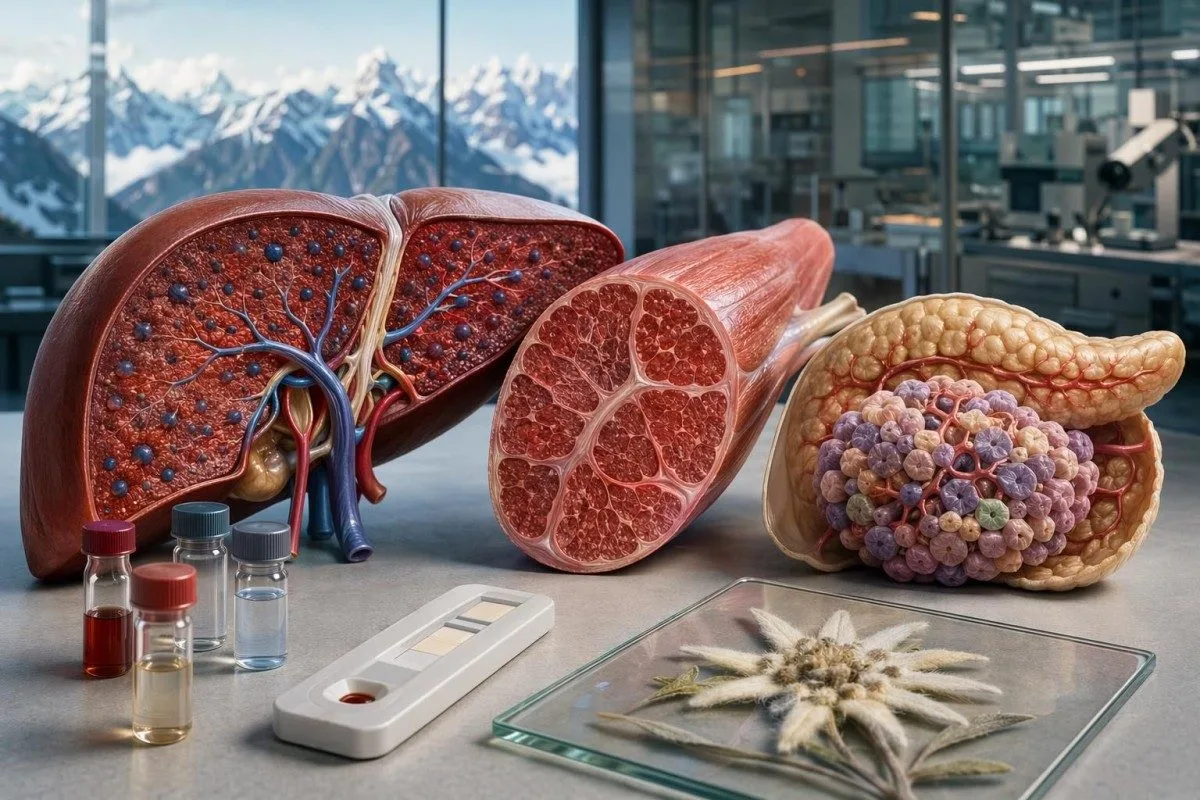
Routine fasting blood tests can show whether your body is moving toward fat use and lower insulin signaling. They cannot prove cellular autophagy is happening.


- Autophagy biomarkers are mostly indirect in routine care; standard blood tests do not directly measure LC3-II, p62, or autophagosome activity.
- Fasting glucose of 70-99 mg/dL is generally normal in adults; 100-125 mg/dL suggests prediabetes and weaker metabolic switching.
- Fasting insulin below about 5-8 µIU/mL often fits better insulin sensitivity, while values above 10-15 µIU/mL can suggest insulin resistance.
- Beta-hydroxybutyrate of 0.5-1.5 mmol/L suggests nutritional ketosis; values above 3.0 mmol/L need context, especially in diabetes.
- Triglycerides below 150 mg/dL are standard normal, but fasting values below 100 mg/dL often fit stronger metabolic flexibility.
- Uric acid may rise during early fasting because ketones and urate compete for kidney clearance; persistent levels above 6.8 mg/dL raise gout risk.
- ALT and GGT can improve with weight loss and lower liver fat, but a temporary AST rise after hard exercise is common and not autophagy.
- hs-CRP below 1.0 mg/L suggests low vascular inflammatory risk; fasting may lower inflammation over weeks, not usually overnight.
- Metabolic age test results are algorithmic estimates from biomarkers such as glucose, lipids, inflammation, liver enzymes, and kidney markers.
- Blood biomarker trends over 3-6 months are more meaningful than one fasting result because hydration, exercise, sleep, and illness shift labs.
What fasting labs can and cannot show about autophagy
Autophagy itself is not directly measured by standard fasting blood test results. Routine and advanced labs can only hint that your body is moving into a lower-insulin, fat-burning state that may permit more autophagy: lower glucose, lower insulin, rising ketones, falling triglycerides, changing uric acid, steadier liver enzymes, and lower inflammation. I tell patients to treat these as metabolic switching clues, not proof of cellular recycling. Kantesti AI reads these patterns together rather than pretending one marker can diagnose autophagy.
A routine lab report cannot show autophagosomes forming inside cells. Research laboratories may measure LC3-II, p62/SQSTM1, Beclin-1, or autophagic flux in tissue or cultured cells, but these are not part of a standard chemistry panel or lipid panel.
In our analysis of 2M+ blood tests across 127+ countries, the most useful fasting pattern is not a heroic 36-hour fast. It is a repeatable shift: fasting insulin down by 20-40%, triglycerides down by 15-30%, glucose less spiky, and ketones detectable without feeling unwell.
The practical mistake I see is calling any low glucose or high ketone result autophagy. If you want the basics of which tests are affected by fasting, our guide to fasting versus non-fasting labs is a good companion before you interpret deeper biomarker trends.
Why autophagy is not a routine blood test result
Autophagy is a cellular process, not a circulating blood analyte. A normal lab cannot simply report autophagy as high, low, or optimal because the process happens inside tissues and changes by organ, timing, nutrient status, exercise, sleep, and illness.
A liver cell, immune cell, and skeletal muscle cell can have different autophagy activity at the same moment. That is why a single fasting blood test cannot say, with honesty, that your brain or liver is doing more cellular cleanup.
When I review a panel after a 20-hour fast, I look for permission signals: lower insulin, modest ketones, no dehydration pattern, and no stress response. A standard blood test can show the metabolic environment around autophagy, not the cell machinery itself.
This distinction matters clinically. A person with glucose 62 mg/dL, ketones 2.8 mmol/L, and dizziness may be under-fueled, while another person with glucose 82 mg/dL, insulin 4 µIU/mL, and beta-hydroxybutyrate 0.7 mmol/L may be metabolically comfortable.
For readers comparing basic panels, the standard blood test guide explains why common panels capture glucose, liver, kidney, and lipid markers but skip cellular autophagy assays.
Fasting glucose: the first metabolic switching clue
Fasting glucose of 70-99 mg/dL is generally normal in adults, while 100-125 mg/dL suggests prediabetes and 126 mg/dL or higher suggests diabetes if confirmed. Glucose does not measure autophagy, but persistently lower fasting glucose often means the body is less dependent on constant carbohydrate intake.
According to the American Diabetes Association's 2024 Standards of Care, fasting plasma glucose should be interpreted with HbA1c and repeat testing when results are near diagnostic thresholds (American Diabetes Association Professional Practice Committee, 2024). I agree; a single 101 mg/dL result after a bad night of sleep is not the same story as five years of upward drift.
The morning rise is real. Cortisol and growth hormone can push glucose up between 4 a.m. and 8 a.m., so I often compare fasting glucose with HbA1c, triglycerides, ALT, and waist trend before deciding whether the result reflects insulin resistance or just dawn physiology.
A fasting glucose between 75 and 90 mg/dL with normal electrolytes and no symptoms is usually compatible with metabolic flexibility. A fasting glucose below 70 mg/dL is hypoglycemia by standard definition, and it deserves attention if paired with sweating, tremor, confusion, or medication use.
For a deeper look at morning highs, see our fasting blood sugar range article; it separates dawn phenomenon from prediabetes patterns that can look annoyingly similar on paper.
Fasting insulin, HOMA-IR, and C-peptide patterns
Fasting insulin is one of the most useful indirect autophagy biomarkers because insulin strongly suppresses fat mobilization and ketone production. Many metabolically healthy adults have fasting insulin around 2-8 µIU/mL, while persistent values above 10-15 µIU/mL often suggest insulin resistance even when glucose is normal.
The reason insulin matters is simple: glucose can stay normal for years because the pancreas is working harder. I see this often in 40- to 55-year-old patients with glucose 92 mg/dL, HbA1c 5.4%, triglycerides 190 mg/dL, and fasting insulin 18 µIU/mL.
HOMA-IR is calculated as fasting insulin in µIU/mL multiplied by fasting glucose in mg/dL, divided by 405. A HOMA-IR below about 1.5 often fits better insulin sensitivity, while values above 2.5-3.0 commonly suggest insulin resistance; clinicians disagree on the exact cutoff because ethnicity, age, and assay method matter.
C-peptide adds a useful angle because it reflects pancreatic insulin production and lasts longer in circulation than insulin. A normal C-peptide with high insulin can suggest clearance issues or assay nuance, while high C-peptide plus high insulin usually tells me the pancreas is compensating.
If your report includes insulin but not the calculation, our HOMA-IR explained guide shows the math and the caveats. Kantesti AI also calculates this when the required units are present.
Ketones and beta-hydroxybutyrate: useful but easy to overread
Beta-hydroxybutyrate of 0.5-1.5 mmol/L suggests nutritional ketosis, while values above 3.0 mmol/L need clinical context. Ketones are the clearest routine signal that fat oxidation has increased, but they still do not prove autophagy.
Cahill's classic 2006 review in Annual Review of Nutrition describes how prolonged fasting shifts fuel use from glucose toward fatty acids and ketone bodies, especially beta-hydroxybutyrate (Cahill, 2006). In clinical practice, I usually see measurable ketones after 12-18 hours of fasting, but athletes and low-carbohydrate eaters can reach them faster.
A beta-hydroxybutyrate result below 0.3 mmol/L is common after an overnight fast. Values between 0.5 and 1.5 mmol/L often fit nutritional ketosis; 1.5-3.0 mmol/L may occur during longer fasting, but it is not a contest.
Here is the safety line. Ketones above 3.0 mmol/L with high glucose, vomiting, abdominal pain, rapid breathing, pregnancy, type 1 diabetes, or SGLT2 inhibitor use can represent ketoacidosis risk and needs urgent medical review.
Kantesti's neural network treats ketones differently when bicarbonate, anion gap, glucose, and symptoms are available. If CO2 or anion gap is flagged, our basic metabolic panel CO2 article explains why acid-base context can change the whole interpretation.
Triglycerides and fat mobilization during fasting
Fasting triglycerides below 150 mg/dL are standard normal, but values below 100 mg/dL often fit better metabolic flexibility. Falling triglycerides over 8-12 weeks may suggest improved liver fat handling and lower insulin resistance, two conditions that support metabolic switching.
The 2018 AHA/ACC cholesterol guideline treats triglycerides of 150-199 mg/dL as borderline high, 200-499 mg/dL as high, and 500 mg/dL or higher as severe because pancreatitis risk becomes more relevant (Grundy et al., 2019). In fasting physiology, the triglyceride-to-HDL pattern often tells me more than total cholesterol.
A patient may celebrate glucose 88 mg/dL but miss triglycerides 230 mg/dL and HDL 38 mg/dL. That combination usually means the fasting state is being maintained by extra insulin, not effortless metabolic switching.
Triglycerides can fall quickly when refined carbohydrates, alcohol intake, and late-night eating decrease. I generally look for a 20% or greater drop over 3 months before calling it a real trend, because lab variability and recent diet can move the number by 10-15%.
If triglycerides are your main abnormality, the deeper guide on high triglycerides explains why the same number can mean different things in diabetes, hypothyroidism, kidney disease, and medication use.
Uric acid may rise before it improves
Uric acid can rise during early fasting because ketones and urate compete for kidney excretion. This transient rise is not proof of autophagy, and persistent uric acid above about 6.8 mg/dL increases the chance of urate crystal formation in susceptible people.
I warn gout-prone patients before they start aggressive fasting. A 24- to 48-hour fast can push uric acid up even when long-term weight loss would eventually help urate metabolism.
Typical adult reference ranges are roughly 3.4-7.0 mg/dL in men and 2.4-6.0 mg/dL in women, though ranges vary by laboratory. The biochemical saturation point for monosodium urate is about 6.8 mg/dL, which is why many gout treatment targets sit below 6.0 mg/dL.
A fasting uric acid jump from 5.8 to 7.4 mg/dL after a long fast may be temporary. A repeated uric acid of 7.8 mg/dL with toe pain, kidney stones, high triglycerides, or reduced eGFR is a different matter.
Kantesti AI flags this pattern because uric acid is not just a gout marker; it also clusters with insulin resistance and kidney handling. For cutoffs and follow-up, see our uric acid normal range guide.
Liver enzymes can improve, spike, or mislead
ALT, AST, and GGT do not measure autophagy, but they can show whether fasting or weight loss is helping liver metabolism. ALT above 35 IU/L in women or 45 IU/L in men is often flagged by labs, while many hepatology clinicians become interested at lower levels when fatty liver risk is high.
A 52-year-old marathon runner once showed me an AST of 89 IU/L after hill repeats the day before testing. Before anyone panicked about liver injury, we checked CK, repeated AST after 7 days of rest, and the enzyme normalized.
ALT is more liver-weighted than AST, while AST also comes from muscle. GGT often rises with alcohol intake, bile duct irritation, fatty liver, and some medications; a falling GGT over months can be a quiet sign that liver metabolic load is improving.
Some European labs use lower ALT reference intervals than large commercial panels, and I often take that seriously in patients with central weight gain. An ALT of 42 IU/L may be called normal in one lab but still fit early metabolic fatty liver in a patient with triglycerides 210 mg/dL and fasting insulin 16 µIU/mL.
If liver enzymes are part of your fasting pattern, our liver function test guide explains why AST/ALT ratio, bilirubin, ALP, albumin, and platelets change the interpretation.
Inflammation markers: slow signals, not overnight fasting proof
hs-CRP below 1.0 mg/L suggests low vascular inflammatory risk, 1.0-3.0 mg/L average risk, and above 3.0 mg/L higher risk when infection is excluded. CRP, ESR, and neutrophil-to-lymphocyte ratio may improve with metabolic health, but they rarely prove a fasting effect from one blood draw.
The JUPITER trial enrolled adults with LDL cholesterol below 130 mg/dL but hs-CRP of 2.0 mg/L or higher, showing that inflammatory risk can exist even when LDL looks acceptable (Ridker et al., 2008). That does not make CRP an autophagy marker, but it does make CRP useful in metabolic risk mapping.
CRP above 10 mg/L usually makes me pause and look for infection, injury, autoimmune flare, or recent vaccination before blaming metabolism. ESR is slower and more age-sensitive; it may remain elevated after the trigger has faded.
A low-grade hs-CRP fall from 3.8 to 1.4 mg/L over 12 weeks can be meaningful if weight, sleep, dental health, liver enzymes, and glucose improved too. A CRP of 6 mg/L the morning after a brutal workout tells a less elegant story.
For readers sorting CRP types, our CRP versus hs-CRP article explains why the test name changes the clinical meaning.
Advanced fasting biomarkers that add signal
Advanced fasting biomarkers can sharpen the metabolic switching picture, but none directly measures autophagy. Beta-hydroxybutyrate, fasting insulin, C-peptide, ApoB, LDL particle number, hs-CRP, GGT, uric acid, and sometimes free fatty acids help separate true metabolic flexibility from a cosmetically normal glucose.
The advanced marker I most often wish patients had is fasting insulin. Glucose can look perfect while insulin is doing all the heavy lifting, especially in early insulin resistance.
ApoB adds cardiovascular context when triglycerides are high or LDL cholesterol appears falsely reassuring. LDL particle number can also help, although ApoB is usually easier to standardize and interpret across countries.
Free fatty acids are intellectually appealing because they rise when fat is mobilized, but they are pre-analytically fussy. Handling time, tube type, and recent activity can make results hard to compare unless the lab is experienced.
For a broader list of markers worth tracking over time, our biohacking blood test guide is more useful than buying a huge panel once and never repeating it.
Metabolic age tests are estimates, not autophagy scores
A metabolic age test estimates biological or metabolic risk from patterns such as glucose, lipids, liver enzymes, kidney markers, inflammation, and body composition. It is not an autophagy score, and a younger metabolic age does not prove higher cellular recycling.
I like metabolic age tools when they are transparent about uncertainty. A 46-year-old whose biomarker pattern resembles lower-risk 39-year-olds has useful feedback, but the number should not become a diagnosis or a badge of moral achievement.
Kantesti's neural network treats metabolic age as a pattern estimate, not a verdict. Glucose, triglycerides, HDL, ALT, GGT, hs-CRP, creatinine or cystatin C, uric acid, and sometimes blood pressure carry more meaning together than they do as isolated flags.
One clinical quirk: fasting can temporarily make a metabolic age model look better or worse depending on dehydration, uric acid, ketones, and kidney concentration markers. That is why I prefer comparing similar conditions: same fasting length, similar exercise, similar sleep, and no acute illness.
If you are curious about the logic behind these estimates, our biological age blood test article explains why trend direction matters more than one flashy score.
Blood biomarker trends beat one fasting result
Blood biomarker trends over 3-6 months are more reliable than one fasting panel. Autophagy-related inference depends on direction: insulin lower, glucose steadier, triglycerides lower, ketones appropriate, uric acid not persistently high, liver enzymes calmer, and inflammation lower.
In my practice, the boring repeat test often changes management more than the exotic one-off panel. A fasting insulin drop from 17 to 8 µIU/mL over 16 weeks is more persuasive than a single ketone value after a very long fast.
Laboratory variability is not trivial. Triglycerides can swing 10-20%, AST can jump after exercise, creatinine can rise after dehydration or creatine use, and CRP can double after minor infections.
Use the same lab when possible, repeat under similar conditions, and write down fasting length, exercise in the prior 48 hours, sleep quality, alcohol intake, and supplements. Those notes save a lot of unnecessary anxiety.
Our blood test comparison guide shows how to separate meaningful trends from noise, which is exactly how Kantesti AI interprets serial fasting blood test results.
Common fasting panel patterns I see in clinic
The most helpful fasting pattern is a coherent one, not a perfect one. When glucose, insulin, triglycerides, ketones, liver enzymes, uric acid, and inflammation tell the same story, I trust the metabolic switching signal more.
Pattern one is the insulin-resistant normal glucose panel: glucose 92 mg/dL, HbA1c 5.5%, fasting insulin 19 µIU/mL, triglycerides 240 mg/dL, HDL 39 mg/dL, ALT 48 IU/L. That person is not metabolically switched, even if glucose looks tidy.
Pattern two is the under-fueled faster: glucose 61 mg/dL, beta-hydroxybutyrate 2.9 mmol/L, uric acid 8.1 mg/dL, BUN/creatinine ratio high, and dizziness. I do not celebrate those numbers; I ask about hydration, medications, eating disorder history, and symptoms.
Pattern three is the improving liver-insulin pattern: glucose 88 mg/dL, fasting insulin 6 µIU/mL, triglycerides 92 mg/dL, ALT down from 54 to 29 IU/L, hs-CRP down from 3.2 to 1.1 mg/L. That is the kind of pattern that makes me cautiously optimistic.
If your report has many borderline values, our borderline blood test guide explains why context often matters more than the red flag printed next to a single result.
How Kantesti AI interprets fasting blood test results
Kantesti AI interprets fasting blood test results by analyzing biomarker patterns, units, reference ranges, age, sex, timing, and prior trends. Our platform does not claim to measure autophagy directly; it identifies metabolic switching clues and safety flags in about 60 seconds after PDF or photo upload.
Our AI reads more than 15,000 biomarkers and checks whether units match the result: mg/dL versus mmol/L for glucose, IU/L versus U/L for enzymes, and mg/L versus nmol/L for inflammatory or lipid markers. Unit mistakes are a surprisingly common source of false panic.
When our platform sees ketones, low bicarbonate, high anion gap, high glucose, or diabetes medication context, it does not label the panel as simply efficient fasting. It raises a safety interpretation because the same ketone number can be nutritional or dangerous depending on the rest of the chemistry panel.
Kantesti AI is clinically governed through our medical validation standards and benchmarked on anonymised multinational cases, including trap cases where overdiagnosis would be harmful. The current validation paper is available as a clinical validation benchmark.
If you want to understand the engineering approach without the hype, our AI blood test interpretation article explains where AI helps and where a human clinician still needs to step in.
Research publications and DOI records we maintain
Kantesti maintains DOI-indexed educational and validation records so clinicians, patients, and researchers can verify how our medical content is documented. These publications do not turn routine labs into direct autophagy biomarkers, but they show the same discipline we use when interpreting complex fasting panels.
Thomas Klein, MD, and our clinical reviewers use source-traceable cutoffs because fasting interpretation is especially vulnerable to overclaiming. Our Medical Advisory Board reviews medical language so that terms like autophagy, ketosis, insulin resistance, and metabolic age are not blurred together.
Kantesti LTD. (2026). aPTT normal range: D-Dimer, Protein C blood clotting guide. Zenodo. https://doi.org/10.5281/zenodo.18262555. Related records: ResearchGate search and Academia.edu search.
Kantesti LTD. (2026). Serum proteins guide: Globulins, albumin & A/G ratio blood test. Zenodo. https://doi.org/10.5281/zenodo.18316300. Related records: ResearchGate search and Academia.edu search.
If you want the broader marker dictionary behind fasting labs, our blood test biomarkers guide maps routine and advanced markers into clinical categories rather than wellness slogans.
A safer testing plan for fasting and metabolic switching
A safer fasting lab plan compares baseline, repeat fasting results, symptoms, and medication risks instead of chasing high ketones. As of May 7, 2026, I recommend discussing fasting with a clinician if you use glucose-lowering drugs, are pregnant, have kidney disease, have gout, or have a history of eating disorder.
A reasonable baseline panel often includes fasting glucose, HbA1c, fasting insulin, lipid panel, CMP, uric acid, hs-CRP, CBC, and sometimes beta-hydroxybutyrate. If kidney function is borderline, I add cystatin C or repeat eGFR before recommending major fasting changes.
Do not test after unusual conditions if you want a clean trend. Hard exercise within 48 hours can raise AST and CK, dehydration can concentrate BUN and albumin, and poor sleep can nudge fasting glucose upward by 5-15 mg/dL in some people.
Kantesti can help you upload a PDF or photo and receive AI-powered interpretation, but alarming symptoms still need medical care. Chest pain, confusion, severe weakness, vomiting, fainting, or ketones with high glucose are not situations for self-experimentation.
You can try a safe first read with free blood test analysis, or learn more about Kantesti as an organization before uploading results. Bottom line: use fasting biomarkers to understand trends, not to prove that your cells are doing something no routine lab can see.
Frequently Asked Questions
Can a blood test measure autophagy directly?
No standard fasting blood test directly measures autophagy. Research labs can assess markers such as LC3-II, p62/SQSTM1, Beclin-1, or autophagic flux in cells or tissue, but these are not routine clinical blood results. Routine labs only suggest the metabolic environment around autophagy, such as lower insulin, detectable ketones, improved triglycerides, and lower inflammation.
What are the best autophagy biomarkers in fasting blood test results?
The most useful indirect autophagy biomarkers in fasting blood test results are fasting insulin, glucose, beta-hydroxybutyrate, triglycerides, uric acid, ALT, GGT, and hs-CRP. Fasting insulin below about 5-8 µIU/mL, triglycerides below 100-150 mg/dL, and beta-hydroxybutyrate around 0.5-1.5 mmol/L often fit better metabolic switching. These markers still do not prove cellular autophagy.
What ketone level means autophagy has started?
No ketone level proves that autophagy has started. Beta-hydroxybutyrate of 0.5-1.5 mmol/L suggests nutritional ketosis and increased fat oxidation, which may create conditions that permit more autophagy. Values above 3.0 mmol/L need caution, especially with diabetes, high glucose, vomiting, pregnancy, or SGLT2 inhibitor use.
Does low fasting insulin mean more autophagy?
Low fasting insulin suggests less insulin signaling, which is one condition that can favor autophagy, but it is not a direct measurement. Many metabolically healthy adults have fasting insulin around 2-8 µIU/mL, while repeated values above 10-15 µIU/mL often suggest insulin resistance. The interpretation is stronger when low insulin appears with normal glucose, lower triglycerides, and safe ketone levels.
Why does uric acid rise when I fast?
Uric acid can rise during fasting because ketones and urate compete for kidney clearance. A temporary rise from about 5.8 to 7.4 mg/dL after a longer fast may occur even in otherwise healthy people. Persistent uric acid above about 6.8 mg/dL is more concerning because urate crystals can form, particularly in people with gout or kidney stone risk.
Are liver enzymes autophagy biomarkers?
ALT, AST, and GGT are not autophagy biomarkers, but they can reflect liver metabolic stress during weight loss, fatty liver improvement, alcohol effects, medication effects, or recent exercise. ALT above about 35 IU/L in women or 45 IU/L in men is commonly flagged, although some clinicians use lower concern thresholds in metabolic fatty liver risk. AST can rise after hard exercise, so CK and repeat testing after rest may be needed.
How often should I repeat fasting labs to track metabolic switching?
Most people should repeat fasting labs after 8-12 weeks if they are changing diet, fasting schedule, exercise, or weight-loss medication. Biomarker trends over 3-6 months are more reliable than one test because triglycerides, AST, glucose, CRP, and kidney markers can shift with hydration, sleep, illness, and exercise. Use similar fasting duration and similar pre-test conditions for cleaner comparisons.
Can dehydration affect fasting biomarkers?
Yes. Dehydration can concentrate some blood measurements, particularly uric acid and creatinine, and may make results harder to compare. Drink water normally before the draw unless your clinician has given different instructions; water does not break a fasting blood test.
Can medications make fasting labs look like autophagy or metabolic switching?
Yes, some medications can change glucose, insulin, ketones, lipids, uric acid, or liver enzymes without reflecting autophagy. Tell your clinician about diabetes drugs, steroids, weight-loss medicines, diuretics, and supplements before interpreting fasting results.
Get AI-Powered Blood Test Analysis Today
Join over 2 million users worldwide who trust Kantesti for instant, accurate lab test analysis. Upload your blood test results and receive comprehensive interpretation of 15,000+ biomarkers in seconds.
📚 Referenced Research Publications
Klein, T., Mitchell, S., & Weber, H. (2026). aPTT Normal Range: D-Dimer, Protein C Blood Clotting Guide. Kantesti AI Medical Research.
Klein, T., Mitchell, S., & Weber, H. (2026). Serum Proteins Guide: Globulins, Albumin & A/G Ratio Blood Test. Kantesti AI Medical Research.
📖 External Medical References
American Diabetes Association Professional Practice Committee (2024). 2. Diagnosis and Classification of Diabetes: Standards of Care in Diabetes—2024. Diabetes Care.
⚕️ Medical Disclaimer
This article is for educational purposes only and does not constitute medical advice. Always consult a qualified healthcare provider for diagnosis and treatment decisions.
E-E-A-T Trust Signals
Experience
Physician-led clinical review of lab interpretation workflows.
Expertise
Laboratory medicine focus on how biomarkers behave in clinical context.
Authoritativeness
Written by Dr. Thomas Klein with review by Dr. Sarah Mitchell and Prof. Dr. Hans Weber.
Trustworthiness
Evidence-based interpretation with clear follow-up pathways to reduce alarm.