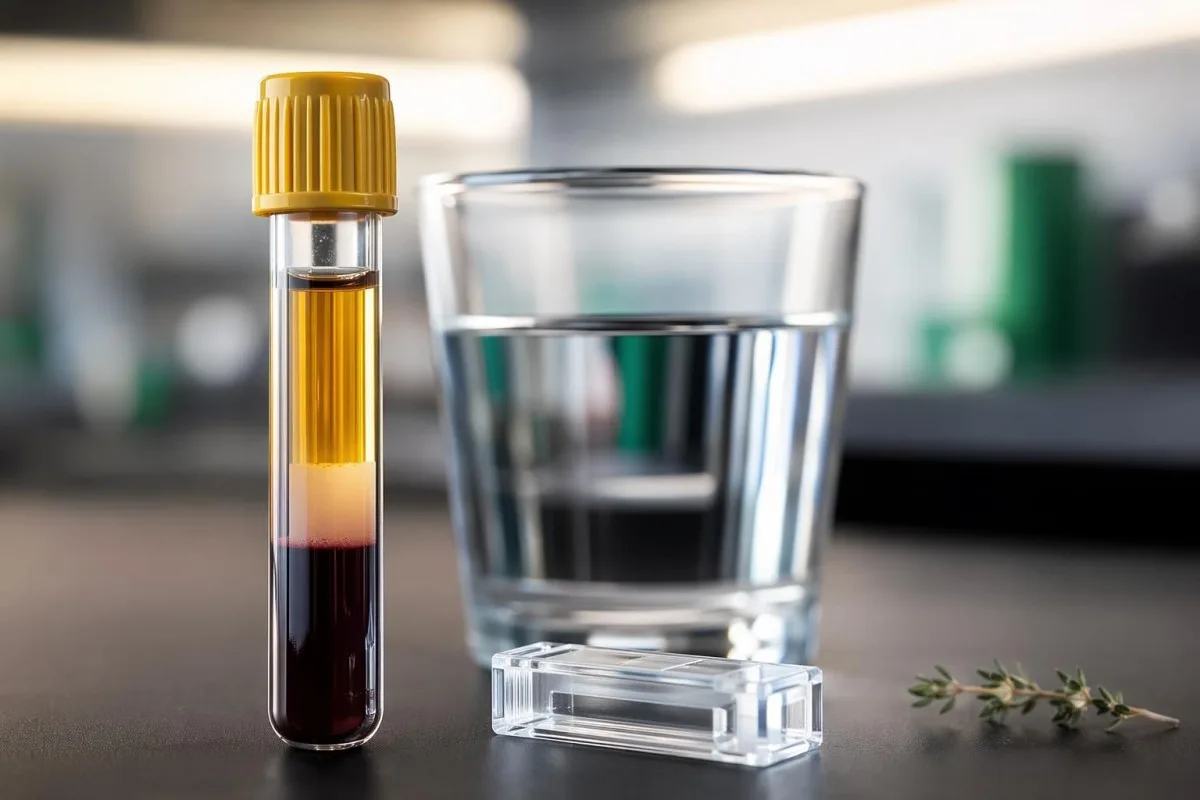
A CMP is often ordered with other labs, which is where fasting confusion starts. Here is the practical, physician-level version of what changes, what usually does not, and when a repeat test is sensible.


- CMP fasting is usually not required for a standalone comprehensive metabolic panel, but an 8-12 hour fast matters when fasting glucose or a lipid panel is being interpreted.
- Glucose is the CMP marker most affected by meals; fasting plasma glucose of 100-125 mg/dL is prediabetes and 126 mg/dL or higher on repeat testing supports diabetes.
- BUN can rise after a high-protein meal, dehydration, gastrointestinal fluid loss, or corticosteroids, so a single mild elevation is not automatically kidney failure.
- Creatinine is less meal-sensitive than BUN, but cooked meat within 4-6 hours and creatine supplements can nudge results upward in some people.
- Potassium can look falsely high from sample handling, fist clenching, delayed processing, or hemolysis; urgent repeat testing is often safer than assuming disease.
- Liver enzymes such as ALT and AST usually do not require fasting, but heavy exercise, alcohol, and certain medicines can shift them within 24-72 hours.
- Albumin and calcium can look higher with dehydration; corrected calcium or ionized calcium may clarify a borderline result.
- Repeat testing is reasonable when an abnormal CMP result conflicts with symptoms, prior trends, medication timing, or sample quality.
Do you need to fast before a comprehensive metabolic panel?
Most people do not need to fast for a standalone comprehensive metabolic panel, but fasting matters if your clinician wants to interpret glucose as a true fasting value or if a lipid panel is drawn at the same visit. I usually tell patients: water is fine, medication instructions matter, and the lab order—not the panel name alone—decides the fasting rule.
A CMP blood test contains 14 chemistry markers in many laboratories, including glucose, sodium, potassium, chloride, carbon dioxide, calcium, albumin, total protein, bilirubin, alkaline phosphatase, AST, ALT, BUN, and creatinine. You can upload a comprehensive metabolic panel to our AI blood test analyzer and see whether the fasting status changes the interpretation.
In my clinical practice, the confusion usually starts because the CMP is bundled with cholesterol, insulin, or diabetes labs. Our deeper guide to fasting versus non-fasting labs explains why two tests drawn from the same arm can have completely different preparation rules.
I am Thomas Klein, MD, and at Kantesti LTD we see this pattern daily: a mildly high glucose after breakfast gets treated like a diabetes diagnosis, or a BUN of 24 mg/dL after a steak dinner causes kidney panic. That is why our About Us page emphasizes pattern-based interpretation rather than single-number anxiety.
What does the CMP blood test include?
A typical CMP blood test measures kidney filtration clues, liver and bile duct markers, electrolytes, glucose, calcium, albumin, and total protein in one serum chemistry panel. The exact test list can vary by country and laboratory, but the clinical purpose is broadly the same: metabolic screening.
The comprehensive metabolic panel is broader than a basic metabolic panel because it adds liver-related and protein markers. If you want the side-by-side difference, our CMP versus BMP guide breaks down which results overlap and which ones are unique.
A basic metabolic panel usually includes 8 tests: glucose, calcium, sodium, potassium, chloride, CO2, BUN, and creatinine. A CMP typically adds 6 more: albumin, total protein, bilirubin, alkaline phosphatase, AST, and ALT.
Kantesti AI interprets CMP results by comparing units, local reference intervals, sex, age, and prior values where available. Our 15,000+ biomarker guide is useful when a lab uses different abbreviations, such as CO2 for bicarbonate or ALP for alkaline phosphatase.
Which CMP markers change after meals?
Glucose is the CMP marker most likely to change meaningfully after a meal, while BUN, creatinine, potassium, calcium, albumin, and bilirubin may shift modestly depending on hydration, protein intake, sample handling, and recent activity. Liver enzymes usually change less from a single meal.
Post-meal glucose commonly rises within 30-60 minutes and may remain elevated for 2 hours, especially in insulin resistance. A non-fasting glucose of 140-199 mg/dL can be a warning sign, but it is not interpreted the same way as fasting plasma glucose.
BUN may rise after a large protein meal because urea is produced when amino acids are metabolized in the liver. Creatinine is usually steadier, though cooked meat can transiently raise serum creatinine by about 10-20 percent in susceptible patients.
The thing is, laboratory variability is not random noise; it has patterns. Our article on blood test variability explains why a potassium of 5.4 mmol/L with visible sample hemolysis is clinically different from a repeat potassium of 5.4 mmol/L in a patient taking spironolactone.
Why glucose is the CMP result where fasting matters most
Glucose needs fasting status because the diagnostic cutoffs for diabetes and prediabetes depend on whether you have eaten. A fasting plasma glucose below 100 mg/dL is generally normal, 100-125 mg/dL suggests prediabetes, and 126 mg/dL or higher should be confirmed.
The American Diabetes Association Professional Practice Committee states that diabetes can be diagnosed by fasting plasma glucose of 126 mg/dL or higher, A1c of 6.5 percent or higher, 2-hour oral glucose tolerance result of 200 mg/dL or higher, or random glucose of 200 mg/dL or higher with classic symptoms (ADA, 2026). That is why fasting status cannot be guessed after the fact.
A 42-year-old patient of mine once had a CMP glucose of 151 mg/dL at 10:30 a.m.; he had eaten cereal and a banana 90 minutes earlier. His repeat fasting glucose was 96 mg/dL, but his fasting insulin was high, which changed the conversation from diabetes diagnosis to early insulin resistance.
If your CMP shows high glucose without a clear fasting label, compare it with A1c, symptoms, timing, and medications such as steroids. Our guide to high glucose without diabetes explains why stress, infection, sleep loss, and recent food can all push a single value upward.
Why fasting is requested when lipids are ordered with a CMP
Fasting is often requested because a lipid panel is drawn with the CMP, not because every CMP marker needs fasting. Triglycerides are not part of the comprehensive metabolic panel, but they are meal-sensitive and commonly bundled into annual blood work.
The 2016 European Atherosclerosis Society and European Federation of Clinical Chemistry consensus concluded that fasting is not routinely required for lipid profiles, but fasting may be preferred when triglycerides exceed 440 mg/dL or when certain metabolic questions are being asked (Nordestgaard et al., 2016). Clinicians still disagree in borderline cases, especially when prior triglycerides were high.
A non-fasting triglyceride rise of 20-50 mg/dL is common after ordinary meals, while a heavy fat-and-carbohydrate meal can produce a much larger jump. Our non-fasting cholesterol test article covers when a result still counts and when repeating is cleaner.
When our platform sees CMP plus lipid panel plus insulin, we flag preparation as a major interpretation variable. The article on high triglycerides is worth reading if your triglycerides are above 150 mg/dL or your lab uses mmol/L cutoffs.
How meals and hydration affect BUN, creatinine, and eGFR
BUN is more sensitive to hydration and protein intake than creatinine, while creatinine better reflects muscle mass, kidney filtration, and recent meat or creatine exposure. eGFR is calculated from creatinine, so a small creatinine shift can change the reported kidney category.
BUN commonly ranges from about 7-20 mg/dL in adults, though reference intervals vary by lab. A BUN of 24 mg/dL with normal creatinine after dehydration is a very different pattern from BUN 48 mg/dL with rising creatinine and low urine output.
KDIGO 2024 recommends using eGFR and urine albumin-to-creatinine ratio together for chronic kidney disease risk classification, because creatinine alone misses early kidney damage (KDIGO CKD Work Group, 2024). Our kidney function test guide explains why urine ACR can matter even when CMP creatinine looks normal.
High-protein diets can raise urea production without causing kidney disease, especially when daily protein intake exceeds 1.6-2.2 g/kg in athletes. If your CMP shows high BUN, the BUN meaning guide helps separate protein load, dehydration, and kidney filtration patterns.
Do sodium, potassium, chloride, and CO2 need fasting?
Sodium, potassium, chloride, and CO2 usually do not require fasting, but they are vulnerable to hydration, vomiting or diarrhea, medications, acid-base status, and sample handling. Potassium deserves special caution because false elevation is common.
Adult potassium is often reported around 3.5-5.1 mmol/L, and values above 6.0 mmol/L can be urgent if confirmed. Yet fist clenching during collection, delayed processing, or cellular element disruption can create pseudohyperkalemia.
CO2 on a CMP usually estimates bicarbonate and often ranges from 22-29 mmol/L. A low CO2 with a high anion gap points clinicians toward metabolic acidosis, while low CO2 with diarrhea often reflects bicarbonate loss through the gut.
I see many patients focus on one sodium value of 134 mmol/L or chloride of 108 mmol/L without checking the pattern. Our electrolyte panel guide and basic metabolic panel CO2 article explain why the acid-base story matters more than one flag.
Do liver enzymes and bilirubin change after eating?
ALT, AST, ALP, and bilirubin usually do not require fasting for routine interpretation, but bilirubin can shift with fasting, illness, and Gilbert syndrome. AST can also rise from muscle injury, which is easy to miss if the CMP is read as liver-only.
ALT is often more liver-specific than AST, while AST also appears in skeletal muscle and heart tissue. A 52-year-old marathon runner with AST 89 IU/L and normal ALT after a race does not have the same risk pattern as someone with ALT 160 IU/L, high GGT, and heavy alcohol intake.
Total bilirubin often ranges around 0.2-1.2 mg/dL in adults, but mild isolated elevation can occur in Gilbert syndrome, especially after fasting or illness. Our bilirubin normal range article explains why direct versus indirect bilirubin is the next useful split.
If ALT and AST are both elevated, the pattern can point toward fatty liver, medication effect, viral hepatitis, alcohol-related injury, or muscle source. Our liver function test and AST ALT ratio guides go deeper into that reasoning.
Why albumin, total protein, and calcium can mislead after poor hydration
Albumin, total protein, and calcium can look higher when you are dehydrated because the serum is more concentrated. Total calcium also binds to albumin, so albumin changes can make calcium look abnormal when ionized calcium is normal.
Albumin commonly ranges from about 3.5-5.0 g/dL in adults, and total protein often ranges from about 6.0-8.3 g/dL. A high albumin result is more often dehydration than overproduction, while low albumin raises different questions about liver synthesis, kidney loss, gut loss, or inflammation.
Total calcium is frequently reported around 8.6-10.2 mg/dL, but about 40 percent is albumin-bound. If albumin is 5.2 g/dL and calcium is 10.4 mg/dL, corrected or ionized calcium can prevent an unnecessary hypercalcemia workup.
Our albumin range guide explains the protein side, while the calcium interpretation guide covers when parathyroid hormone, vitamin D, magnesium, or kidney markers should be checked.
What else should you avoid before a CMP blood test?
Alcohol, intense exercise, dehydration, high-dose supplements, and certain medications can change CMP results more than a normal meal does. The highest-yield preparation step is not extreme fasting—it is avoiding unusual behavior in the 24-72 hours before the test.
Hard resistance training can raise AST and sometimes ALT for 24-72 hours, especially if creatine kinase is also high. In athletes, I often ask about training logs before interpreting mild transaminase elevations.
Alcohol can raise GGT over weeks and may raise AST more than ALT after heavier exposure. Acetaminophen, statins, antifungals, anti-seizure medicines, diuretics, ACE inhibitors, ARBs, and NSAIDs can all change CMP patterns in clinically different ways.
Before stopping any prescribed medication, ask the ordering clinician because abrupt changes can be risky. Our guide to medication blood test monitoring and our piece on exercise-related lab changes help you decide what history to bring to the visit.
When should an abnormal CMP be repeated?
An abnormal CMP should be repeated when the result is unexpected, borderline, affected by fasting or hydration, inconsistent with symptoms, or potentially due to sample handling. Critical values should not wait for routine repeat testing; they need prompt clinical review.
A potassium of 5.8 mmol/L with normal kidney function and a hemolysis comment often deserves same-day repeat testing, not months of worry. A sodium of 121 mmol/L, by contrast, can be dangerous and should be handled urgently even if the patient feels only mildly unwell.
Kantesti's neural network flags repeat-worthy patterns by looking for internal contradictions, such as high calcium with high albumin, high AST with normal ALT after exercise, or high BUN with normal creatinine and concentrated serum proteins. Our lab error checks article shows the kind of inconsistencies that deserve a second look.
The repeat interval depends on risk: urgent electrolytes may be repeated within hours, mild liver enzyme elevation is often repeated in 2-12 weeks, and borderline fasting glucose may be confirmed with A1c or repeat fasting glucose. Our repeat abnormal lab results guide gives practical timelines.
How long should you fast if your doctor requests fasting?
If fasting is requested for a CMP appointment, 8-12 hours without calories is the usual instruction, with plain water allowed. Longer fasting is rarely better and can actually distort bilirubin, glucose, hydration, and kidney markers in some patients.
A practical schedule is dinner at 7 p.m., water overnight, and a morning lab draw before 9 a.m. Coffee is lab-dependent; black coffee has few calories, but caffeine can affect some hormones and glucose responses, so I prefer water-only when the order says strict fasting.
Do not skip prescribed morning medicines unless the ordering clinician gives a reason. For example, taking a diuretic before the draw may affect sodium, potassium, and BUN, but withholding it without advice can be unsafe in heart failure or hypertension.
Our article on water before blood tests answers the common hydration question, and our fasting preparation guide covers coffee, gum, vitamins, and meal timing in more detail.
Who should be extra careful with CMP fasting?
People with diabetes, pregnancy, kidney disease, eating disorders, frailty, shift work, or children should not fast casually for a CMP without clear instructions. The risk of hypoglycemia, dehydration, or medication mismatch can outweigh the benefit of a cleaner glucose value.
A patient using insulin or sulfonylureas can become hypoglycemic during an 8-12 hour fast, especially if the lab appointment runs late. For diabetes monitoring, A1c, home glucose logs, or continuous glucose data may answer the question more safely than a single fasting CMP glucose.
Pregnancy changes fluid volume, kidney filtration, albumin, and alkaline phosphatase, so adult nonpregnant reference ranges can mislead. Our prenatal blood tests guide explains why trimester context matters.
Children may have different glucose, creatinine, ALP, and protein reference intervals because growth and muscle mass change the baseline. The pediatric lab range guide is a useful starting point before comparing a child’s CMP with adult cutoffs.
What should you ask before repeating an abnormal CMP?
Before repeating an abnormal CMP, ask whether fasting is needed, which result is being confirmed, whether medications should be taken as usual, and whether urine or follow-up tests should be added. A repeat without a plan often recreates the same uncertainty.
For high glucose, ask whether the repeat should be fasting plasma glucose, A1c, oral glucose tolerance testing, or home monitoring. For high creatinine, ask whether urine ACR, cystatin C, or medication review is more useful than another CMP alone.
For high potassium, ask whether the first specimen had hemolysis, delayed processing, or difficult collection. For high calcium, ask whether albumin correction, ionized calcium, PTH, and vitamin D are needed before assuming a parathyroid problem.
Bring the old result, fasting status, meal timing, exercise history, alcohol exposure, supplements, and medication list. Our guide on borderline blood test results and our blood test abbreviations article help patients ask more precise questions.
How Kantesti AI interprets CMP fasting status and trends
Kantesti AI interprets CMP fasting status by combining the reported marker values, units, reference ranges, historical trends, symptom context, medication clues, and likely pre-analytic issues. As of May 14, 2026, our platform supports users across 127+ countries and 75+ languages.
Our AI-powered blood test interpretation platform does not replace a clinician, but it can reduce the first-pass confusion that comes from mixed fasting and non-fasting results. A CMP glucose of 132 mg/dL is interpreted differently when the user reports an 11-hour fast versus a meal 45 minutes earlier.
Kantesti LTD, UK Company No. 17090423, uses medical review workflows described in our clinical standards and overseen with input from our Medical Advisory Board. Our validation work includes clinical benchmark reporting and multilingual decision-support research, including a published DOI on early hantavirus triage across 50,000 interpreted reports.
If you already have a CMP PDF or photo, you can try free AI analysis and add fasting status, medication timing, and symptoms before generating an interpretation. Thomas Klein, MD, reviews these topics with the same bias I use in clinic: confirm what is risky, repeat what is unstable, and never diagnose a person from one lonely flag.
Frequently Asked Questions
Do I need to fast for a comprehensive metabolic panel?
Most people do not need to fast for a standalone comprehensive metabolic panel, but many clinicians request an 8-12 hour fast if they want fasting glucose or if a lipid panel is drawn at the same time. Glucose is the CMP marker most affected by meals. If you ate before the test, tell your clinician before interpreting glucose as prediabetes or diabetes.
Can I drink water before a CMP blood test?
Yes, plain water is usually allowed and often helpful before a CMP blood test. Dehydration can make BUN, albumin, total protein, and calcium look higher than usual. Avoid calorie-containing drinks during an 8-12 hour fast unless your clinician gives different instructions.
Which CMP results change the most after eating?
Glucose changes the most after eating, often rising within 30-60 minutes and sometimes staying elevated for 2 hours. BUN may rise after a high-protein meal, and creatinine can rise modestly after cooked meat or creatine supplements. Electrolytes and liver enzymes usually change less from a normal meal, but sample handling and recent exercise can still matter.
Will coffee affect a comprehensive metabolic panel?
Black coffee has very few calories, but it can still affect some people’s glucose response, hydration, stomach acid, and medication timing. If your lab says strict fasting, water-only for 8-12 hours is the cleanest approach. If you drank coffee before the CMP, report it rather than assuming the test is useless.
Should I repeat a high glucose result from a non-fasting CMP?
A high glucose result from a non-fasting CMP often needs confirmation rather than immediate diagnosis. Fasting glucose of 100-125 mg/dL suggests prediabetes, while 126 mg/dL or higher on repeat testing supports diabetes. A1c, symptoms, medication use, and the exact time since eating help decide the next test.
Can dehydration make CMP results abnormal?
Yes, dehydration can raise BUN, albumin, total protein, and sometimes calcium by concentrating the serum. A BUN of 24 mg/dL with normal creatinine after poor fluid intake is often less concerning than a rising creatinine with low urine output. Repeating the CMP when normally hydrated can clarify borderline abnormalities.
Is a basic metabolic panel the same as a comprehensive metabolic panel?
No, a basic metabolic panel is smaller than a comprehensive metabolic panel. A BMP usually includes 8 markers, while a CMP usually includes those 8 plus liver-related and protein markers such as albumin, total protein, bilirubin, ALP, AST, and ALT. Fasting rules are similar for the overlapping markers, especially glucose.
Does a fasting CMP have to be drawn in the morning?
No—the usual goal is 8-12 hours without calories when fasting is requested, not a specific clock time. Morning appointments are often easiest because you can fast overnight and are less likely to eat accidentally; follow any lab-specific instructions.
Can being sick affect my CMP blood test results?
Yes. Fever, vomiting, diarrhea, acute infection, and poor food or fluid intake can temporarily change glucose, BUN, creatinine, carbon dioxide, and liver tests. If you are stable, your clinician may repeat borderline results after recovery; seek prompt care for severe symptoms or markedly abnormal results.
Can I take my usual medicines before a fasting CMP?
Take prescribed medicines as directed unless your clinician specifically tells you to hold them. Diabetes medicines, diuretics, and supplements deserve special instructions because fasting, dehydration, or skipped meals can change safety and lab interpretation.
Get AI-Powered Blood Test Analysis Today
Join over 2 million users worldwide who trust Kantesti for instant, accurate lab test analysis. Upload your blood test results and receive comprehensive interpretation of 15,000+ biomarkers in seconds.
📚 Referenced Research Publications
Klein, T., Mitchell, S., & Weber, H. (2026). Multilingual AI Assisted Clinical Decision Support for Early Hantavirus Triage: Design, Engineering Validation, and Real-World Deployment Across 50,000 Interpreted Blood Test Reports. Kantesti AI Medical Research.
Klein, T., Mitchell, S., & Weber, H. (2026). aPTT Normal Range: D-Dimer, Protein C Blood Clotting Guide. Kantesti AI Medical Research.
📖 External Medical References
American Diabetes Association Professional Practice Committee (2026). 2. Diagnosis and Classification of Diabetes: Standards of Care in Diabetes—2026. Diabetes Care.
KDIGO CKD Work Group (2024). KDIGO 2024 Clinical Practice Guideline for the Evaluation and Management of Chronic Kidney Disease. Kidney International.
Nordestgaard BG et al. (2016). Fasting is not routinely required for determination of a lipid profile: clinical and laboratory implications including flagging at desirable concentration cut-points—a joint consensus statement from the European Atherosclerosis Society and European Federation of Clinical Chemistry and Laboratory Medicine. European Heart Journal.
⚕️ Medical Disclaimer
This article is for educational purposes only and does not constitute medical advice. Always consult a qualified healthcare provider for diagnosis and treatment decisions.
E-E-A-T Trust Signals
Experience
Physician-led clinical review of lab interpretation workflows.
Expertise
Laboratory medicine focus on how biomarkers behave in clinical context.
Authoritativeness
Written by Dr. Thomas Klein with review by Dr. Sarah Mitchell and Prof. Dr. Hans Weber.
Trustworthiness
Evidence-based interpretation with clear follow-up pathways to reduce alarm.