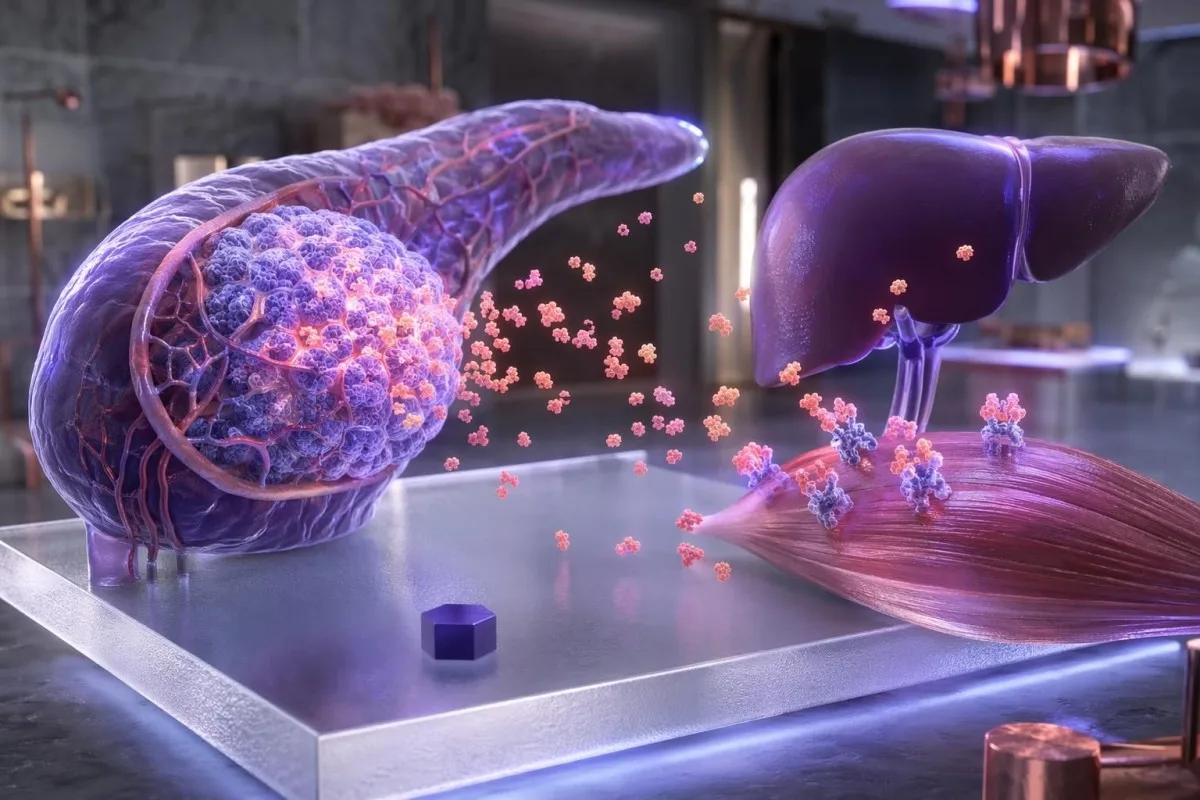
Fasting insulin often rises years before glucose crosses a diabetes cutoff. The useful question is not just whether insulin is high, but what pattern surrounds it.


- High fasting insulin causes usually include early insulin resistance, visceral fat, fatty liver, poor sleep, steroid medicines, PCOS, pregnancy, puberty, menopause, or rarely excess insulin production.
- Fasting insulin high but glucose normal often means the pancreas is compensating; glucose may stay near 70-99 mg/dL while insulin rises above roughly 10-15 µIU/mL.
- Fasting insulin symptoms are often absent, but cravings, afternoon sleepiness, skin tags, darker velvety skin folds, central weight gain, irregular periods, and post-meal hunger are useful clues.
- Reference ranges vary because insulin assays are not perfectly standardized; many labs report about 2-20 µIU/mL as normal, while cardiometabolic clinicians often watch values above 8-10 µIU/mL.
- HOMA-IR uses fasting glucose and fasting insulin; a value above about 2.0-2.5 suggests insulin resistance in many adults, but ethnicity, puberty, pregnancy, and assay method change interpretation.
- Risk clusters matter: triglycerides above 150 mg/dL, HDL below 40 mg/dL in men or 50 mg/dL in women, ALT drift, blood pressure above 130/80 mmHg, and waist-to-height ratio above 0.5 increase concern.
- Is high fasting insulin dangerous depends on context; it is usually not an emergency, but repeated high values can mark higher risk for type 2 diabetes, fatty liver disease, hypertension, and ApoB-related heart risk.
- Clinician follow-up is sensible if fasting insulin is repeatedly above 20-25 µIU/mL, if glucose is low with high insulin, if HbA1c is 5.7% or higher, or if symptoms suggest hypoglycemia.
Why fasting insulin rises before glucose looks abnormal
High fasting insulin usually rises because the body needs extra insulin to keep fasting glucose normal. In early insulin resistance, muscle, liver, and fat tissue respond less efficiently, so pancreatic beta cells compensate by secreting more insulin. That is why a person can have glucose of 88 mg/dL and HbA1c of 5.3%, yet fasting insulin of 18 µIU/mL.
I see this most often in patients who are told their labs are normal because only glucose and HbA1c were checked. Fasting glucose of 70-99 mg/dL is normal, but it does not show how hard the pancreas worked to achieve that number; our deeper guide to insulin resistance with normal A1c explains this mismatch in practical terms.
Kantesti is an AI blood test analyzer that reads fasting insulin alongside glucose, HbA1c, triglycerides, HDL, ALT, and medication context rather than treating one number as a diagnosis. In our analysis of large real-world lab uploads, the pattern that often precedes prediabetes is not a dramatic glucose jump; it is a slow insulin rise with triglycerides creeping from 90 to 150 mg/dL over 2-4 years.
Thomas Klein, MD, here: when I review a panel with fasting insulin of 16 µIU/mL and glucose of 92 mg/dL, I do not call that diabetes. I call it a warning light, especially if waist circumference, blood pressure, HDL, or liver enzymes are moving in the same direction.
What fasting insulin range means in adults
Most laboratories report fasting insulin around 2-20 µIU/mL as a reference range, but cardiometabolic risk can appear below the lab's high flag. A fasting insulin above 10-15 µIU/mL often deserves context, and repeated values above 20-25 µIU/mL deserve clinician review.
Insulin is commonly reported in µIU/mL in the US and UK private labs, or pmol/L in some international reports; 1 µIU/mL is roughly 6 pmol/L, though conversion varies by assay. If your result changed from 54 pmol/L to 9 µIU/mL, it may be the same biology in different units, not a sudden improvement.
A practical adult interpretation is: below 5 µIU/mL can be lean, low-carb, or sometimes underproduction; 5-10 µIU/mL is often metabolically quiet; 10-20 µIU/mL is a grey zone; above 20 µIU/mL is a stronger insulin resistance clue. For a deeper lab-by-lab discussion, see our insulin blood test range.
As of June 28, 2026, fasting insulin is still not a standalone diagnostic test for diabetes. The American Diabetes Association uses fasting glucose, HbA1c, oral glucose tolerance testing, or random glucose with symptoms for diagnosis, not insulin alone (American Diabetes Association Professional Practice Committee, 2024).
This is one of those areas where clinicians disagree on cutoffs. Some European metabolic clinics act on fasting insulin above 8-10 µIU/mL when triglycerides and waist-to-height ratio are abnormal, while many routine labs do not flag until 20 µIU/mL or higher.
The most common high fasting insulin causes
The most common high fasting insulin causes are insulin resistance from visceral fat, fatty liver, inactivity, high refined-carbohydrate intake, sleep disruption, medicines, PCOS, pregnancy, puberty, and genetics. Rarely, high insulin reflects an insulin-producing tumor or injected insulin exposure.
Visceral fat is metabolically active tissue, not just stored energy. A waist-to-height ratio above 0.5 is a stronger clue than body weight alone because abdominal fat sends fatty acids to the liver, driving hepatic insulin resistance before fasting glucose rises.
Fatty liver is another early driver. In clinic, I often see fasting insulin of 22 µIU/mL with ALT only mildly high at 38 IU/L; that combination is more informative than either result alone, especially before starting a weight-loss plan like the one outlined in our pre-diet lab checklist.
Medication history can change the whole interpretation. Prednisone, some antipsychotic medicines, high-dose niacin, some HIV therapies, thiazide diuretics, and certain beta blockers can worsen insulin sensitivity within weeks to months.
Kantesti LTD is described in our About Us page because readers deserve to know who is interpreting health data. In my view, transparency matters even more with insulin results, where the number is easy to overread without the surrounding clinical story.
Fasting insulin high but glucose normal: what the pattern suggests
Fasting insulin high but glucose normal usually means beta cells are still compensating well enough to hold glucose in range. This pattern can precede prediabetes by years, but it can also reflect a recent meal, a short fast, assay variation, pregnancy, puberty, or a medication effect.
The classic example is glucose of 91 mg/dL, HbA1c of 5.2%, insulin of 19 µIU/mL, triglycerides of 168 mg/dL, and HDL of 42 mg/dL. That is not diabetes, but it is not metabolically bland either.
HbA1c averages glycation over roughly 8-12 weeks, so it can miss short post-meal glucose spikes and early compensation. If your HbA1c and fasting glucose disagree, our guide to A1c and fasting sugar explains why red-cell lifespan, iron status, and meal timing can distort the picture.
HOMA-IR is a rough estimate of insulin resistance: fasting glucose in mg/dL multiplied by fasting insulin in µIU/mL, divided by 405. Matthews and colleagues introduced this model in Diabetologia in 1985, and it remains useful as a screening estimate, not as a clamp-level measurement (Matthews et al., 1985).
A HOMA-IR above about 2.0-2.5 is suspicious in many adults; above 3.0 is harder to ignore. I still interpret it cautiously in teenagers, pregnant patients, endurance athletes, and people eating very low carbohydrate diets.
High fasting insulin symptoms and body clues
High fasting insulin symptoms are often subtle or absent. When symptoms do appear, patients commonly report strong hunger soon after meals, sugar cravings, afternoon sleepiness, weight gain around the waist, skin tags, darker velvety skin folds, acne, irregular periods, or episodes that feel like low blood sugar.
The symptom I trust most is not vague fatigue; it is a repeatable post-meal pattern. A patient who becomes shaky and ravenous 2-4 hours after a high-carbohydrate breakfast may be overshooting insulin, even if fasting glucose is normal.
Acanthosis nigricans is a useful clinical clue: darker, thicker, velvety skin in neck, underarm, or groin folds often tracks with high insulin exposure. Skin tags are less specific, but a sudden increase plus fasting insulin above 15-20 µIU/mL makes me look harder at metabolic risk.
In women with irregular periods, acne, unwanted hair growth, or difficulty losing central weight, insulin can sit inside a broader hormone pattern. Our PCOS lab patterns guide covers why insulin, androgens, SHBG, LH, FSH, and prolactin should not be read in isolation.
Not every craving is insulin resistance. Low ferritin, short sleep, stimulant rebound, depression, and under-eating can mimic the same hunger story, which is why a symptom diary with meal timing is often more useful than a single morning number.
Risk clues hiding in triglycerides, HDL, ALT and uric acid
High fasting insulin becomes more concerning when triglycerides, HDL, ALT, uric acid, blood pressure, or waist measures point in the same direction. The pattern matters because insulin resistance affects liver fat handling, lipoprotein production, sodium retention, and vascular tone.
Triglycerides above 150 mg/dL and HDL below 40 mg/dL in men or 50 mg/dL in women are a classic insulin resistance pairing. Reaven's 1988 Banting Lecture described this clustering of insulin resistance, high triglycerides, low HDL, hypertension, and glucose intolerance long before many patients met diabetes criteria (Reaven, 1988).
When fasting insulin is high but A1c is normal, triglycerides often give the game away. Our article on triglycerides with normal A1c walks through why liver overproduction of VLDL can show up before the glucose report looks abnormal.
ALT is not an insulin test, but a mild ALT drift can point toward fatty liver. I pay attention when ALT rises from 18 to 34 IU/L over a year while fasting insulin climbs from 7 to 17 µIU/mL, even if both values still sit inside some lab ranges.
Uric acid adds another clue. In adults, uric acid above about 7.0 mg/dL in men or 6.0 mg/dL in women often travels with insulin resistance because insulin reduces renal uric acid clearance.
PCOS, puberty, pregnancy and menopause can raise insulin
Hormonal life stages can raise fasting insulin even before glucose changes. Puberty, pregnancy, perimenopause, menopause, PCOS, and low testosterone in men can all alter insulin sensitivity, body-fat distribution, and liver glucose output.
During puberty, temporary insulin resistance is common; fasting insulin can rise while growth hormone and sex hormones shift body composition. In a 14-year-old, a value of 18 µIU/mL does not mean the same thing as it does in a 48-year-old with hypertension.
Pregnancy is physiologically insulin resistant by the second and third trimesters because placental hormones push more glucose toward the fetus. Clinicians usually prioritize glucose challenge testing rather than fasting insulin, and our hormone panel patterns page explains why timing and life stage matter for endocrine labs.
In PCOS, insulin can worsen ovarian androgen production and lower SHBG, so total testosterone may look only mildly high while free testosterone is more active. I often see fasting insulin above 15 µIU/mL with normal fasting glucose in patients whose main complaint is irregular cycles, acne, or stubborn central weight.
Menopause changes the distribution of fat toward the abdomen, even when scale weight barely moves. A postmenopausal patient with the same BMI as 5 years earlier may still develop higher insulin because visceral fat and muscle mass changed underneath the number.
Sleep loss, stress hormones and medicines that push insulin up
Poor sleep, shift work, untreated sleep apnea, chronic stress, and several medicines can push fasting insulin higher. These factors raise cortisol, sympathetic tone, appetite hormones, liver glucose output, or visceral fat storage, so insulin has to work harder the next morning.
Short sleep is not a soft wellness issue here. After several nights under 6 hours, many people show higher appetite, reduced glucose disposal, and higher next-day insulin demand, especially if late meals are added.
Night-shift workers are a classic example because circadian mismatch changes glucose handling at the same calorie intake. Our guide for night-shift lab clues covers why fasting time, sleep timing, and caffeine use should be recorded with metabolic labs.
Steroids are the medicine I ask about first. Even prednisone 10-20 mg daily can raise insulin and glucose, and injectable steroids for joints or allergies can distort labs for days to weeks in sensitive patients.
Kantesti is an AI biomarker interpretation platform used by 2M+ people across 127 countries, and insulin resistance patterns are one reason trend analysis matters. Our AI looks for repeated changes across dates, not just a single red flag after a stressful week.
Testing mistakes that can make fasting insulin look high
Fasting insulin can look falsely high if the fast was too short, the sample was drawn after coffee with milk, biotin interfered with the assay, or the result is compared across different lab methods. Repeat testing under consistent conditions is often the cleanest first step.
For most fasting insulin checks, I prefer an 8-12 hour fast, water only, no vigorous exercise the night before, and no alcohol for 24 hours. A 14-16 hour fast can lower insulin in some people and raise stress hormones in others, so consistency matters.
Coffee is a nuisance variable. Black coffee may have small effects, but coffee with milk, sweetener, collagen powder, or cream is no longer a clean fast; our fasting versus nonfasting guide lists which labs shift most after eating.
High-dose biotin, often sold at 5,000-10,000 mcg, can interfere with some immunoassays. If you take biotin, ask the lab or clinician whether to stop it for 48-72 hours before retesting; do not stop prescribed supplements during pregnancy or neurological treatment without advice.
C-peptide helps separate insulin production from insulin exposure. High insulin with high C-peptide usually suggests the body is producing extra insulin, while high insulin with low C-peptide raises different questions; our C-peptide range guide explains that distinction.
Is high fasting insulin dangerous or just an early warning?
High fasting insulin is usually an early warning rather than an emergency. It becomes more concerning when it is repeated, rising over time, paired with abnormal lipids or blood pressure, or accompanied by low-glucose symptoms.
A single fasting insulin of 14 µIU/mL after poor sleep is not the same as three readings above 25 µIU/mL across 6 months. Trend beats drama; the slope tells me whether the body is recovering or compensating harder.
The danger is not that insulin itself suddenly injures you overnight. The concern is that high insulin often sits with ApoB-containing particles, fatty liver, hypertension, and inflammation, which is why our ApoB risk guide is relevant when triglycerides or non-HDL cholesterol are high.
A high fasting insulin with fasting glucose below 70 mg/dL is a different story. If that comes with sweating, tremor, confusion, fainting, or seizures, clinicians need to evaluate hypoglycemia causes promptly, including medication effects and rare insulin excess.
The ADA diagnostic criteria still center on glucose and HbA1c, not insulin, but that does not make insulin useless. It means insulin is a risk-context marker, not a disease label by itself.
When a high result deserves clinician follow-up
A high fasting insulin deserves clinician follow-up when it is repeated above 20-25 µIU/mL, rising over time, paired with HbA1c 5.7% or higher, or associated with hypoglycemia symptoms. Follow-up is also sensible with PCOS symptoms, fatty liver clues, hypertension, or a strong family history of type 2 diabetes.
Bring the actual report, not just a screenshot of the high flag. I want to see fasting time, glucose, HbA1c, triglycerides, HDL, ALT, creatinine, medication list, pregnancy status, and whether the lab used µIU/mL or pmol/L.
Same-week medical review is reasonable if high insulin appears with documented glucose below 55-60 mg/dL or neuroglycopenic symptoms such as confusion, collapse, or seizure. For high glucose symptoms, our high glucose cutoffs guide explains when thirst, urination, weight loss, and ketones change urgency.
For non-urgent follow-up, a clinician may order repeat fasting insulin and glucose, HbA1c, lipids, liver enzymes, TSH, urine albumin-creatinine ratio, or a 2-hour oral glucose tolerance test. Some clinicians add fasting C-peptide if insulin is very high or the story does not fit.
I often ask patients to bring a 7-day log: sleep hours, first meal, post-meal sleepiness, exercise, alcohol, and medications. It sounds low-tech, but it can explain a 10 µIU/mL swing better than another expensive panel.
A practical 8- to 12-week retest plan
An 8- to 12-week retest plan is long enough to see fasting insulin, triglycerides, waist measures and HbA1c begin to move. The goal is not crash dieting; it is reducing the insulin demand needed to keep glucose normal.
Start with protein and fibre at breakfast. Many patients improve cravings by aiming for 25-35 g protein and 8-10 g fibre in the first meal, then checking whether the 2-4 hour hunger crash improves.
A 10- to 15-minute walk after the largest carbohydrate meal can reduce post-meal glucose exposure without needing heroic exercise. Our guide to low-glycemic foods gives swaps that affect A1c and fasting glucose without turning food into a maths exam.
If medication is appropriate, clinicians may discuss metformin, GLP-1 receptor agonists, or treatment of sleep apnea rather than chasing insulin alone. After starting metformin, B12, kidney function, glucose, and gastrointestinal tolerance should be watched; our metformin lab timing article covers the common follow-up pattern.
Retest under the same conditions: same lab if possible, same fasting window, no heavy exercise the previous evening, and similar sleep. A drop from 24 to 15 µIU/mL with triglycerides falling from 190 to 130 mg/dL is clinically meaningful even if the lab never flagged either result as critical.
How Kantesti reads fasting insulin in context
Kantesti reads fasting insulin by comparing it with glucose, HbA1c, triglycerides, HDL, liver enzymes, kidney markers, hormones, medications and previous results. That pattern-based approach is safer than calling a single insulin value good or bad in isolation.
Kantesti is an AI-powered blood test analysis tool designed to translate biomarker clusters into plain clinical questions for your doctor, not to replace a diagnosis. Our neural network can process uploaded blood test PDFs or photos in about 60 seconds and flag when high insulin is paired with triglycerides, ALT, HDL, or HbA1c drift.
For methodology-minded readers, our AI technology guide explains how biomarker context, unit conversion, and trend comparison are handled. I still want a clinician involved when results are high, symptomatic, or inconsistent with the patient's story.
Kantesti AI's clinical guardrails are described in our medical validation materials, including how physician oversight is built into high-risk interpretation pathways. In my own reviews, the most useful AI output is not a diagnosis; it is a concise list of what to verify next.
Privacy matters with metabolic data because family risk, weight history, fertility information, and medication lists can all be sensitive. Kantesti's GDPR-aligned design is built so people can understand patterns while keeping health information handled with appropriate care.
Research notes, publications and medical review
The strongest evidence for fasting insulin interpretation comes from physiology models, cardiometabolic cohort data, and guideline-based diabetes diagnosis. Kantesti's medical writing uses those sources, physician review, and internal research publication workflows rather than treating wellness cutoffs as diagnoses.
Thomas Klein, MD, reviews insulin articles with a practical bias: if a number does not change what a patient asks or what a clinician checks, it should not be overemphasised. Our Medical Advisory Board helps keep that line clear for YMYL topics like insulin resistance, hypoglycemia, and diabetes risk.
Kantesti's broader research library includes adjacent lab-interpretation work, including our hematology marker guide and our fasting GI guide. These are not substitutes for diabetes guidelines, but they show the same philosophy: lab values are interpreted best as patterns, timelines, and clinical questions.
Klein, T., & Kantesti AI Medical Writing Group. (2026). B Negative Blood Type, LDH Blood Test & Reticulocyte Count Guide. Figshare. DOI: 10.6084/m9.figshare.31333819. ResearchGate: ResearchGate record. Academia.edu: Academia.edu record.
Klein, T., & Kantesti AI Medical Writing Group. (2026). Diarrhea After Fasting, Black Specks in Stool & GI Guide 2026. Figshare. DOI: 10.6084/m9.figshare.31438111. ResearchGate: ResearchGate record. Academia.edu: Academia.edu record.
Frequently Asked Questions
What causes high fasting insulin?
High fasting insulin is most often caused by early insulin resistance, where muscle, liver, and fat tissue need more insulin to keep glucose normal. Common drivers include visceral fat, fatty liver, low activity, poor sleep, sleep apnea, steroid medicines, PCOS, pregnancy, puberty, menopause, and family history. Rare causes include insulin-producing tumors or injected insulin exposure, especially when glucose is low. A repeated fasting insulin above 20-25 µIU/mL deserves clinician review in context.
Can fasting insulin be high but glucose normal?
Yes, fasting insulin can be high while glucose stays normal because pancreatic beta cells can compensate for early insulin resistance. A person may have fasting glucose of 85-95 mg/dL and HbA1c of 5.2% while insulin is 15-25 µIU/mL. This pattern is not diabetes by itself, but it can be an early risk clue when triglycerides, HDL, ALT, blood pressure, or waist measures are also abnormal. Repeating the test under an 8-12 hour fast is usually sensible.
What are high fasting insulin symptoms?
High fasting insulin often causes no obvious symptoms, which is why it may be found only on blood testing. Possible clues include strong hunger 2-4 hours after meals, sugar cravings, afternoon sleepiness, central weight gain, skin tags, darker velvety skin folds, acne, irregular periods, and episodes that feel like low blood sugar. These symptoms are not specific to insulin resistance, so clinicians usually check glucose, HbA1c, lipids, liver enzymes, thyroid markers, and medication history. Symptoms plus fasting insulin above 15-20 µIU/mL are more meaningful than symptoms alone.
Is high fasting insulin dangerous?
High fasting insulin is usually not an emergency, but repeated high values can mark higher long-term metabolic risk. Concern rises when insulin is above 20-25 µIU/mL on repeat testing, HOMA-IR is above about 2.5-3.0, triglycerides are above 150 mg/dL, HDL is low, or blood pressure is above 130/80 mmHg. High insulin with fasting glucose below 70 mg/dL and symptoms such as confusion, fainting, sweating, or tremor needs prompt medical evaluation. Insulin should be treated as a risk-context marker, not a standalone diagnosis.
What fasting insulin level is considered high?
Many laboratories list fasting insulin reference ranges around 2-20 µIU/mL, but interpretation varies because insulin assays are not perfectly standardized. In cardiometabolic practice, values above 10-15 µIU/mL may raise suspicion when other risk markers are present, and repeated values above 20-25 µIU/mL usually deserve follow-up. Values above 50 µIU/mL need careful review for severe insulin resistance, recent food intake, assay interference, medication effects, or rare insulin excess. Always compare results using the same units and, if possible, the same lab.
How should I prepare for a fasting insulin retest?
For a fasting insulin retest, use an 8-12 hour fast with water only unless your clinician advises otherwise. Avoid alcohol for 24 hours, heavy exercise the previous evening, and coffee with milk, cream, collagen, sweetener, or calories before the draw. Ask about biotin if you take 5,000-10,000 mcg daily, because some immunoassays can be affected and may require a 48-72 hour pause if safe. Record sleep duration, medications, fasting time, and recent illness so the result can be interpreted accurately.
Does lowering fasting insulin mean diabetes risk is gone?
Lowering fasting insulin is encouraging, but it does not erase diabetes risk by itself. Clinicians still watch HbA1c, fasting glucose, 2-hour glucose when needed, triglycerides, HDL, blood pressure, waist measures, liver enzymes, and family history. A drop from 24 to 14 µIU/mL over 8-12 weeks is meaningful when triglycerides, waist, and energy also improve. Risk is best judged by the whole trend, not one improved insulin number.
Should I take metformin or a GLP-1 medicine just because my fasting insulin is high?
Not usually. These medicines are prescribed based on the whole picture—such as diabetes or prediabetes, weight-related health needs, PCOS, kidney function, and other risks—not an insulin value alone; discuss benefits and side effects with your clinician.
When might a C-peptide test help explain high fasting insulin?
C-peptide is released when your pancreas makes its own insulin, so it can help clarify whether a high insulin result is produced by your body or relates to insulin medication. It is most useful when glucose is low or symptoms suggest hypoglycemia, not for every elevated fasting insulin result.
Get AI-Powered Blood Test Analysis Today
Join over 2 million users worldwide who trust Kantesti for instant, accurate lab test analysis. Upload your blood test results and receive comprehensive interpretation of 15,000+ biomarkers in seconds.
📚 Referenced Research Publications
Klein, T., Mitchell, S., & Weber, H. (2026). B Negative Blood Type, LDH Blood Test & Reticulocyte Count Guide. Kantesti AI Medical Research.
Klein, T., Mitchell, S., & Weber, H. (2026). Diarrhea After Fasting, Black Specks in Stool & GI Guide 2026. Kantesti AI Medical Research.
📖 External Medical References
⚕️ Medical Disclaimer
This article is for educational purposes only and does not constitute medical advice. Always consult a qualified healthcare provider for diagnosis and treatment decisions.
E-E-A-T Trust Signals
Experience
Physician-led clinical review of lab interpretation workflows.
Expertise
Laboratory medicine focus on how biomarkers behave in clinical context.
Authoritativeness
Written by Dr. Thomas Klein with review by Dr. Sarah Mitchell and Prof. Dr. Hans Weber.
Trustworthiness
Evidence-based interpretation with clear follow-up pathways to reduce alarm.