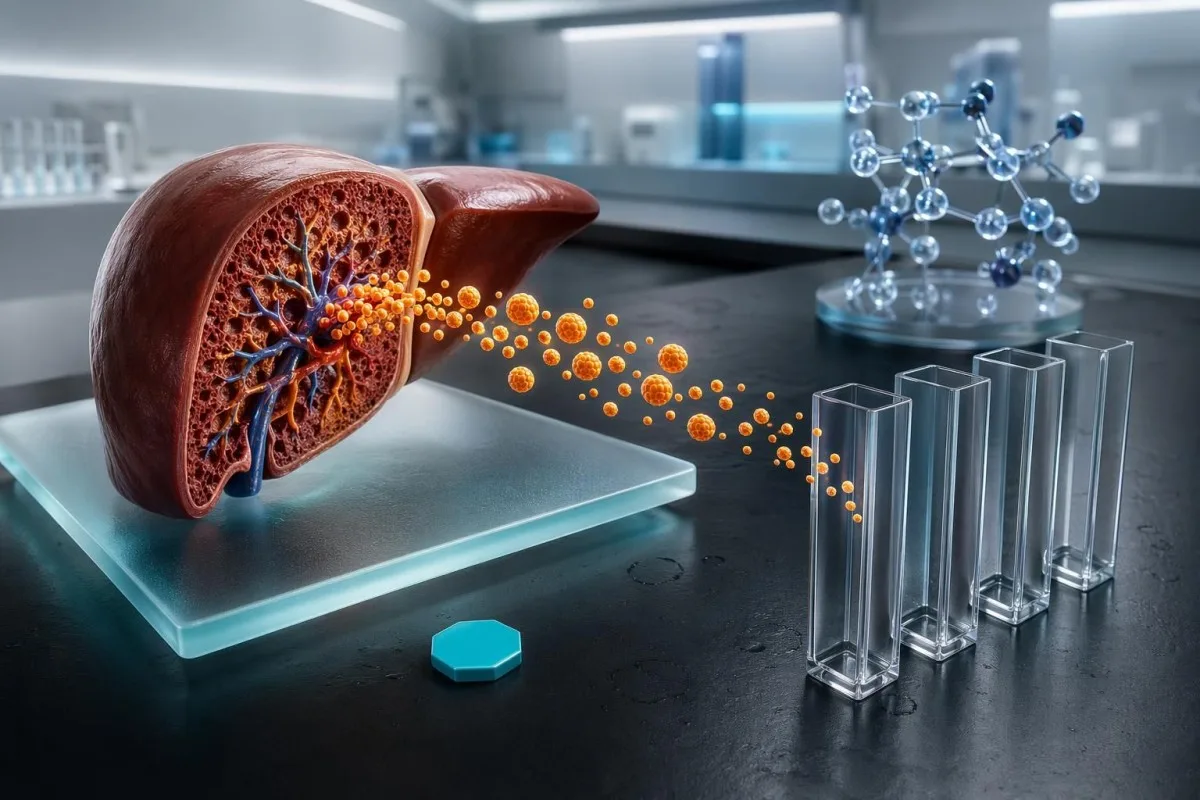
A normal A1c can hide early metabolic strain. The pattern often becomes clearer when triglycerides are read beside insulin, ApoB, thyroid markers, liver enzymes and meal timing.


- High triglycerides usually means fasting triglycerides are 150 mg/dL or higher; 500 mg/dL or higher raises pancreatitis concern.
- Normal A1c does not rule out early insulin resistance because insulin can rise for years before average glucose rises.
- Triglycerides insulin resistance is most suspicious when triglycerides are high, HDL is low, waist size is rising and fasting insulin is above about 10-15 µIU/mL.
- Nonfasting triglycerides can be useful, but a result above 175 mg/dL often deserves a fasting repeat under controlled conditions.
- Alcohol effect can raise triglycerides for 24-72 hours, especially when paired with evening carbohydrates or fatty meals.
- Thyroid clues matter because hypothyroidism can raise LDL cholesterol and triglycerides even when blood sugar looks normal.
- Medication review should include estrogens, steroids, thiazides, beta blockers, retinoids, antipsychotics and some HIV medicines.
- Follow-up labs that clarify risk include fasting insulin, fasting glucose, C-peptide, ApoB, non-HDL cholesterol, TSH, ALT, GGT, eGFR and urine ACR.
What high triglycerides mean when A1c is normal
High triglycerides with normal A1c usually means your body is moving excess fuel into triglyceride-rich particles before average glucose has crossed the diabetes line. In plain terms: A1c can look reassuring while insulin, liver fat production, alcohol handling, thyroid status or medications are already pushing triglycerides up. A fasting triglyceride level below 150 mg/dL is usually desirable; 150-499 mg/dL is common but meaningful, and 500 mg/dL or higher needs prompt follow-up because pancreatitis risk rises.
As of June 17, 2026, I read this pattern as a fuel-partitioning problem, not as proof that diabetes is present. When patients ask what high triglycerides mean, the better answer is not one number; it is whether triglycerides, HDL, ApoB, liver enzymes and insulin are moving together.
Kantesti is an AI blood test analyzer that reads triglycerides in context with glucose, A1c, liver enzymes, thyroid results and medication history rather than treating a single lipid flag as a diagnosis. Our team background is described on About Us, but clinically, the pattern I worry about is triglycerides 220 mg/dL, HDL 38 mg/dL and A1c 5.3% in a tired 44-year-old who snacks late after a normal dinner.
I am Thomas Klein, MD, and in my own review of lipid panels I have learned not to dismiss this as a cosmetic cholesterol issue. The 2021 ACC Expert Consensus notes that persistent triglycerides of 175 mg/dL or higher after lifestyle and secondary-cause review deserve risk-based management, especially when other atherogenic markers are abnormal (Virani et al., 2021).
Why A1c can look normal before metabolism is healthy
A1c can stay normal in early insulin resistance because the pancreas compensates by producing more insulin to keep glucose in range. A1c below 5.7% does not prove insulin sensitivity is normal; it only suggests average glucose over roughly 8-12 weeks has not reached the prediabetes threshold.
A1c is a glucose exposure marker, not an insulin workload marker. If you want the deeper mismatch, our guide to A1c test accuracy explains why red-cell lifespan, anemia, kidney disease and hemoglobin variants can make A1c look lower or higher than expected.
I see this often in people with A1c 5.1-5.5%, fasting glucose 88-96 mg/dL and fasting insulin 14-22 µIU/mL. Their glucose is still normal, but the pancreas is working overtime; triglycerides become one of the earliest public clues.
A practical threshold: fasting insulin above about 10 µIU/mL can be suspicious in a lean, active person, while 15-25 µIU/mL is more concerning when triglycerides are also above 150 mg/dL. Cutoffs vary by assay and population, so I treat insulin as a pattern marker rather than a standalone diagnosis.
How triglycerides reveal insulin resistance before sugar rises
Triglycerides insulin resistance happens because insulin-resistant liver and fat tissue release more fatty acids and package them into VLDL particles. The liver can overproduce VLDL while fasting glucose remains normal, especially when visceral fat and evening carbohydrates are part of the picture.
Fasting insulin and C-peptide are the two most useful first-pass clues when triglycerides are high but sugar looks normal. Our insulin blood test guide covers why fasting insulin, glucose and triglycerides together often outperform any one result.
Kantesti AI interprets triglyceride results by combining lipid fractions, glucose markers, insulin markers and clinical context through the methods described in our technology guide. The HOMA-IR formula from Matthews et al. uses fasting insulin and fasting glucose; in mg/dL units, HOMA-IR equals insulin × glucose divided by 405 (Matthews et al., 1985).
In clinic, a HOMA-IR above 2.0-2.5 often makes me pause, although ethnicity, age and assay method change the meaning. A 32-year-old strength athlete with insulin 11 µIU/mL and triglycerides 95 mg/dL is different from a 52-year-old desk worker with insulin 19 µIU/mL, triglycerides 260 mg/dL and HDL 34 mg/dL.
How fasting status and meal timing distort triglycerides
Meal timing can raise triglycerides even when fasting glucose and A1c are normal. Nonfasting triglycerides commonly rise after meals, and a late high-fat or high-carbohydrate dinner can leave the next morning's triglycerides higher than expected.
A fasting lipid panel is usually drawn after 8-12 hours without calories, with water allowed. Our guide to fasting versus nonfasting testing explains why triglycerides move more than LDL-C after meals.
Nonfasting triglycerides above 175 mg/dL are often considered abnormal in guideline-based practice, but I still ask what happened the previous 24 hours. A takeaway meal at 10 pm, dessert, and poor sleep can produce a misleadingly high morning result without representing your stable baseline.
For a cleaner repeat, I usually suggest no alcohol for 72 hours, no unusually fatty meal the night before, and a normal sleep schedule if possible. Do not crash-diet before the test; a sudden 24-hour fast can also alter free fatty acids and confuse the reading.
Why alcohol raises triglycerides even with normal blood sugar
Alcohol can raise triglycerides by increasing liver VLDL production and slowing triglyceride clearance. The effect is strongest after binge drinking, but even moderate intake can matter when triglycerides are already 200-400 mg/dL.
Alcohol is converted in the liver through pathways that change NADH balance and favor fat synthesis. In people with fatty liver tendencies, ALT may be only mildly high at 35-60 IU/L while triglycerides are doing most of the shouting.
The clinical clue is timing. If triglycerides drop from 310 mg/dL to 165 mg/dL after 3-4 weeks without alcohol, I take that as a strong signal; our fatty liver diet article explains why liver enzymes and triglycerides often improve together.
GGT can help when alcohol contribution is uncertain, although it is not specific. A GGT above about 60 IU/L in an adult, especially with triglycerides above 250 mg/dL and an AST-to-ALT shift, makes me ask more careful questions rather than moral ones.
Thyroid patterns that raise triglycerides before glucose
Hypothyroidism can raise triglycerides and LDL cholesterol while A1c and fasting glucose remain normal. Low thyroid hormone slows LDL receptor activity and can reduce triglyceride clearance, so TSH and free T4 belong in the follow-up panel.
A TSH above 4.0-5.0 mIU/L with low-normal or low free T4 can be enough to worsen lipids in susceptible people. If your TSH is only borderline, our borderline TSH guide gives the repeat-timing and antibody context I use in practice.
Some European labs use narrower TSH reference intervals than many US labs, which is why a result of 4.2 mIU/L may be flagged in one country and ignored in another. Context matters: fatigue, constipation, cold intolerance, positive TPO antibodies and rising LDL-C all change how I read the same number.
I do not treat triglycerides with thyroid hormone unless thyroid disease is actually present. But if triglycerides are 240 mg/dL, LDL-C is 165 mg/dL and TSH is 7.8 mIU/L, correcting hypothyroidism may lower lipids enough to change the medication discussion.
Medication and hormone clues doctors often miss
Several common medicines can raise triglycerides without changing A1c much. The usual list includes oral estrogens, corticosteroids, thiazide diuretics, older beta blockers, retinoids, some antipsychotics, protease inhibitors and certain immunosuppressants.
Kantesti is an AI blood test interpretation platform that can flag medication-lab timing patterns, but medication decisions still belong with the prescribing clinician. Our medication monitoring guide is useful when a triglyceride rise appears 4-12 weeks after a new prescription.
Oral estrogen is a classic example: it can increase hepatic VLDL production more than transdermal estrogen in some patients. I have seen triglycerides jump from 180 mg/dL to over 500 mg/dL after a hormone change, particularly when there was an underlying familial tendency.
Isotretinoin, used for severe acne, can push triglycerides up within 1-2 months; many dermatology protocols recheck lipids during treatment. Steroids can act faster, sometimes within days, especially when appetite, sleep and glucose regulation shift at the same time.
Which lipid numbers matter beside triglycerides
Triglycerides should be read with HDL-C, non-HDL-C, LDL-C and ApoB because cardiovascular risk comes from particle burden, not triglyceride mass alone. A triglyceride of 230 mg/dL with high ApoB is more concerning than the same triglyceride with low ApoB and a clear temporary trigger.
A standard lipid panel usually includes total cholesterol, LDL-C, HDL-C and triglycerides. When triglycerides exceed 400 mg/dL, calculated LDL-C can become unreliable, and many clinicians use direct LDL-C, non-HDL-C or ApoB instead.
The 2018 AHA/ACC cholesterol guideline recommends considering ApoB as a risk-enhancing factor, particularly when triglycerides are 200 mg/dL or higher (Grundy et al., 2019). A commonly used ApoB risk-enhancing threshold is 130 mg/dL, which roughly corresponds to a high atherogenic particle burden.
Here is the pattern I worry about: triglycerides 250 mg/dL, HDL-C 33 mg/dL, non-HDL-C 180 mg/dL and ApoB 125 mg/dL. That is not just 'fat in the blood'; it is a cluster suggesting insulin resistance and atherogenic remnant particles.
ApoB and remnant cholesterol clarify hidden risk
ApoB and remnant cholesterol clarify risk when triglycerides are high and A1c is normal. Remnant cholesterol estimates cholesterol carried in triglyceride-rich particles, while ApoB estimates the number of atherogenic particles entering artery walls.
Remnant cholesterol is often estimated as total cholesterol minus LDL-C minus HDL-C, using the same units. Our article on remnant cholesterol explains why this number becomes more interesting when triglycerides exceed 150-200 mg/dL.
Kantesti's neural network weighs ApoB, non-HDL-C and triglycerides together because LDL-C can look 'not terrible' while particle number remains high. For patients wanting the deeper particle story, our ApoB blood test guide explains why ApoB can reveal risk hidden behind normal LDL-C.
A quick clinical shortcut: non-HDL-C should generally be about 30 mg/dL higher than the LDL-C goal for the same risk category. If LDL-C is 105 mg/dL but non-HDL-C is 170 mg/dL, triglyceride-rich particles are carrying a lot of the leftover cholesterol burden.
Follow-up glucose and insulin labs that expose early strain
Follow-up testing should include fasting glucose, fasting insulin, C-peptide and sometimes a 2-hour glucose test when triglycerides are high but A1c is normal. These tests show insulin demand and post-meal glucose handling that A1c may not reveal.
Fasting glucose below 100 mg/dL is considered normal in many guidelines, and A1c below 5.7% is not prediabetes. But the disagreement between A1c and fasting sugar is common enough that we wrote a separate guide on A1c versus fasting sugar.
C-peptide helps show endogenous insulin production because it is released in equal molar amounts with insulin. A high-normal C-peptide with normal glucose and high triglycerides often means the pancreas is compensating; a low C-peptide would point in a very different direction.
For selected patients, I like a 75 g oral glucose tolerance test with insulin measured at 0, 30, 60 and 120 minutes. A glucose result can look acceptable while insulin peaks are exaggerated, which is why some patients feel 'fine' on paper but crash after carbohydrate-heavy meals.
Secondary causes worth ruling out before blaming diet
Secondary causes of high triglycerides include kidney disease, liver disease, hypothyroidism, pregnancy, uncontrolled diabetes, genetic lipid disorders and certain inflammatory states. Diet matters, but blaming food alone is lazy medicine when the triglyceride result is persistent.
Kidney clues include eGFR, creatinine and urine albumin-creatinine ratio. Early kidney leakage can coexist with insulin resistance, and our urine ACR guide explains why albumin in urine may appear before creatinine changes.
Liver clues include ALT, AST, GGT, bilirubin and platelet count. A mild ALT elevation of 45-80 IU/L with triglycerides above 200 mg/dL often points toward metabolic fatty liver, but hepatitis, alcohol and medication effects still need consideration.
Genetic clues matter when triglycerides are repeatedly above 500 mg/dL, especially with family history or pancreatitis. Familial combined hyperlipidemia can show high ApoB and variable triglycerides, while familial chylomicronemia is rarer and usually presents with extreme levels, often above 1000 mg/dL.
A 2- to 12-week retest plan that gives cleaner answers
A controlled retest is often the fastest way to clarify high triglycerides when A1c is normal. For triglycerides below 500 mg/dL and no urgent symptoms, many patients can retest after 4-12 weeks of consistent changes rather than reacting to one noisy result.
Before retesting, keep calories stable, avoid alcohol for 72 hours, fast 8-12 hours and do not add intense exercise the day before the draw. If food changes are the main intervention, our guide to foods lowering triglycerides gives practical swaps that are realistic rather than punitive.
The most reliable dietary changes are boring: reduce sugar drinks, cut refined starch portions, add soluble fiber, and replace late-night snacks with earlier protein-rich meals. In trials and clinic, weight loss of 5-10% can reduce triglycerides meaningfully, sometimes by 20-30% in insulin-resistant patients.
Exercise has a timing effect too. A brisk 30-45 minute walk after dinner can reduce post-meal triglyceride exposure, and resistance training 2-3 times weekly improves insulin sensitivity even before the scale moves.
When high triglycerides need urgent medical care
Triglycerides of 500 mg/dL or higher need prompt clinician review, and levels around 1000 mg/dL or higher can become an urgent pancreatitis risk. Severe upper abdominal pain, vomiting or feeling very unwell should not be managed with online advice.
Pancreatitis risk rises substantially as triglycerides approach and exceed 1000 mg/dL, although individual risk varies. If pain is present, lipase and amylase are more relevant than A1c, and our high lipase guide explains the red-flag pattern.
Medication treatment may include statins for cardiovascular risk, fibrates for severe triglycerides, and prescription omega-3 products in selected patients. I avoid telling patients to self-treat with supplement megadoses; quality, dose and bleeding-risk context matter.
When I, Thomas Klein, MD, see triglycerides above 500 mg/dL, I also check alcohol intake, medication changes, thyroid status, diabetes markers and family history the same week if possible. The trick is to lower immediate pancreatitis risk without missing the long-term artery-risk story.
How Kantesti reads this pattern and where our research fits
Kantesti is an AI-powered blood test analysis tool used by 2M+ people across 127 countries, and our triglyceride interpretation is built around pattern recognition rather than isolated flags. High triglycerides with normal A1c is exactly the kind of result where context, trends and secondary causes matter.
Our clinical governance is described in medical validation, and our physician oversight is listed through the Medical Advisory Board. Kantesti does not diagnose pancreatitis, diabetes or thyroid disease from one upload; it flags combinations that deserve a repeat test, a clinician review or urgent care.
Kantesti LTD. (2026). BUN/Creatinine Ratio Explained: Kidney Function Test Guide. Zenodo. https://doi.org/10.5281/zenodo.18207872. ResearchGate: research listing. Academia.edu: academic listing.
Kantesti LTD. (2026). Urobilinogen in Urine Test: Complete Urinalysis Guide 2026. Zenodo. https://doi.org/10.5281/zenodo.18226379. ResearchGate: research listing. Academia.edu: academic listing.
Frequently Asked Questions
Can triglycerides be high if A1c is normal?
Yes, triglycerides can be high while A1c is normal because insulin resistance often appears before average glucose rises. A1c below 5.7% only means average glucose has not reached the prediabetes range over roughly 8-12 weeks. Fasting triglycerides of 150 mg/dL or higher can still point to excess liver VLDL production, alcohol effect, thyroid disease, medication effects or genetic lipid risk.
What does high triglycerides mean with normal blood sugar?
High triglycerides with normal blood sugar often means the body is handling glucose by producing more insulin while sending excess fuel into triglyceride-rich particles. Fasting glucose below 100 mg/dL can look normal even when fasting insulin is above 10-15 µIU/mL. The next labs to consider are fasting insulin, C-peptide, ApoB, non-HDL cholesterol, TSH, ALT, GGT and sometimes a 2-hour glucose test.
What triglyceride level is dangerous?
A fasting triglyceride level below 150 mg/dL is generally desirable, while 150-499 mg/dL is elevated and usually calls for risk review. Triglycerides of 500 mg/dL or higher need prompt medical follow-up because pancreatitis risk begins to matter. Levels around 1000 mg/dL or higher can become urgent, especially with abdominal pain, vomiting or a history of pancreatitis.
Do I need fasting insulin if my A1c is normal?
Fasting insulin can be useful when A1c is normal but triglycerides are high, HDL is low or waist size is increasing. A fasting insulin above about 10 µIU/mL may be suspicious in a lean active person, and 15-25 µIU/mL is more concerning when paired with triglycerides above 150 mg/dL. Insulin results vary by assay, so they should be interpreted with fasting glucose, C-peptide and lipid markers rather than alone.
Can alcohol raise triglycerides for a blood test?
Alcohol can raise triglycerides for 24-72 hours by increasing liver VLDL production and slowing triglyceride clearance. The effect is stronger after binge drinking, but some people with insulin resistance or fatty liver see a rise after smaller amounts. For a cleaner triglyceride retest, many clinicians suggest avoiding alcohol for at least 72 hours and fasting 8-12 hours before the draw.
Which labs should I check after high triglycerides and normal A1c?
The most useful follow-up labs are a repeat fasting lipid panel, fasting glucose, fasting insulin, C-peptide, ApoB, non-HDL cholesterol, TSH, free T4, ALT, AST, GGT, creatinine, eGFR and urine albumin-creatinine ratio. If triglycerides are above 400 mg/dL, calculated LDL-C may be unreliable, so direct LDL-C, non-HDL-C or ApoB becomes more informative. If triglycerides are 500 mg/dL or higher, follow-up should be prompt rather than delayed for months.
Can menopause affect triglycerides even when my A1c is normal?
Yes. Triglycerides can rise around menopause as estrogen levels change and body-fat distribution shifts, even without diabetes. A fasting repeat panel, blood-pressure and waist review, and discussion of hormone therapy or other medicines can help clarify your individual risk.
Get AI-Powered Blood Test Analysis Today
Join over 2 million users worldwide who trust Kantesti for instant, accurate lab test analysis. Upload your blood test results and receive comprehensive interpretation of 15,000+ biomarkers in seconds.
📚 Referenced Research Publications
Klein, T., Mitchell, S., & Weber, H. (2026). BUN/Creatinine Ratio Explained: Kidney Function Test Guide. Kantesti AI Medical Research.
Klein, T., Mitchell, S., & Weber, H. (2026). Urobilinogen in Urine Test: Complete Urinalysis Guide 2026. Kantesti AI Medical Research.
📖 External Medical References
⚕️ Medical Disclaimer
This article is for educational purposes only and does not constitute medical advice. Always consult a qualified healthcare provider for diagnosis and treatment decisions.
E-E-A-T Trust Signals
Experience
Physician-led clinical review of lab interpretation workflows.
Expertise
Laboratory medicine focus on how biomarkers behave in clinical context.
Authoritativeness
Written by Dr. Thomas Klein with review by Dr. Sarah Mitchell and Prof. Dr. Hans Weber.
Trustworthiness
Evidence-based interpretation with clear follow-up pathways to reduce alarm.