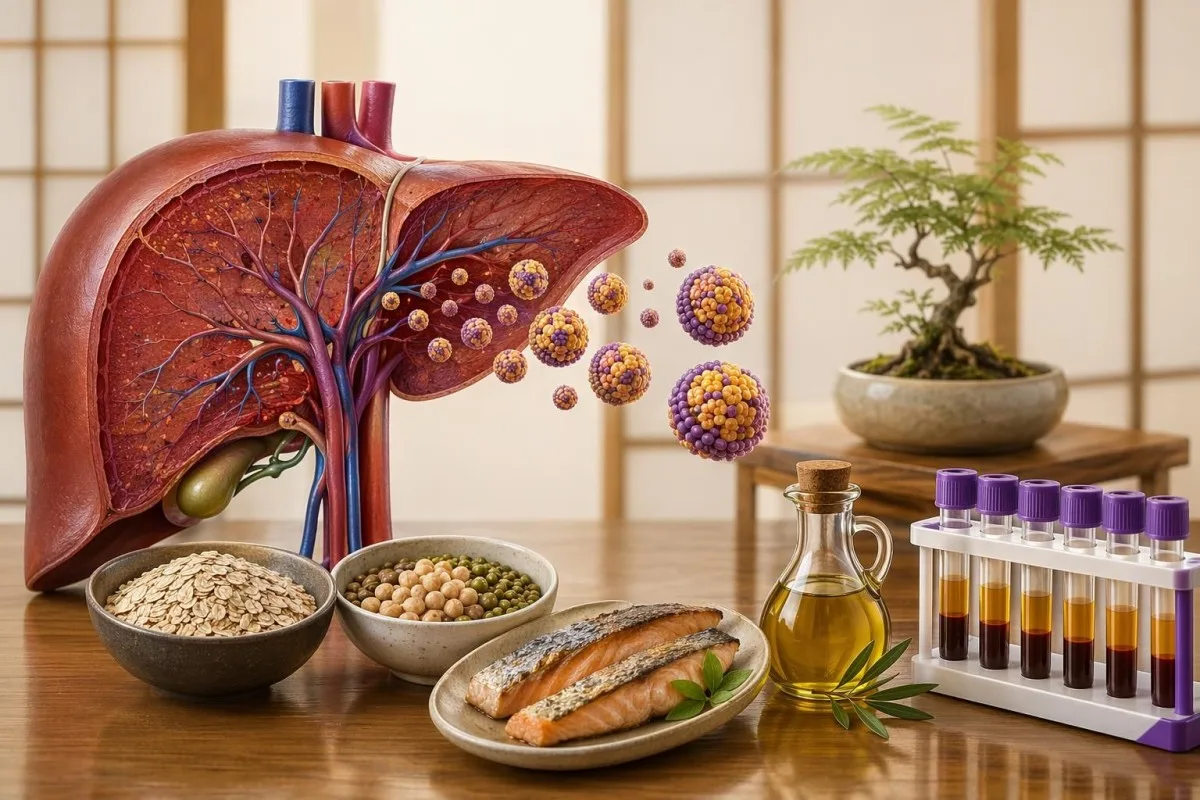
The fastest dietary wins are usually cutting alcohol, sugary drinks, refined starches, and late-night snacks while adding fish, beans, oats, vegetables, and unsaturated fats. Most people need 2-6 weeks to see a cleaner fasting triglyceride result.


- Normal triglycerides are usually below 150 mg/dL after fasting; 150-199 mg/dL is borderline high and often responds to diet within weeks.
- Severe triglycerides at or above 500 mg/dL need clinician follow-up because pancreatitis risk rises, especially above 1000 mg/dL.
- Foods that lower triglycerides most reliably replace sugar and white starch with oats, beans, lentils, vegetables, fish, nuts, and olive oil.
- Alcohol avoidance can lower fasting triglycerides quickly in alcohol-sensitive patients; I often see movement within 1-3 weeks.
- Retest timing is usually 4-12 weeks after a serious diet change, but very high values may need earlier medical action.
- Fasting accuracy improves with 8-12 hours of fasting, water only, and no hard exercise in the 24 hours before testing.
- Diabetes and insulin resistance are common hidden drivers of high triglycerides; fasting glucose, HbA1c, insulin, ALT, TSH, and non-HDL cholesterol add context.
- Omega-3 intake from oily fish twice weekly helps, but prescription-strength EPA/DHA decisions should be made with a clinician when triglycerides remain high.
Which foods lower triglycerides before a fasting retest?
Foods that lower triglycerides fastest are not magic foods; they are swaps that reduce liver fat production. Replace sugary drinks, alcohol, white bread, sweets, and large rice or pasta portions with oily fish, oats, beans, lentils, vegetables, olive oil, nuts, and plain yoghurt for 2-6 weeks before a fasting retest.
I’m Thomas Klein, MD, and when I review a triglyceride result of 220-450 mg/dL, the first diet question is usually not “how much fat?” but “how much sugar, alcohol, and refined starch?” A triglyceride lowering diet works because the liver turns excess carbohydrate and alcohol into triglyceride-rich VLDL particles.
Kantesti is an AI blood test interpretation platform that reads triglycerides with the rest of the lipid panel, not as a lonely number. If you are still learning what the lipid panel includes, our guide to lipid panel basics explains why triglycerides, HDL, LDL, and non-HDL cholesterol need to be interpreted together.
A practical plate for the next retest is simple: half non-starchy vegetables, one quarter protein, one quarter high-fiber carbohydrate, and a small unsaturated fat portion. In my clinic, patients who make only this plate change but keep fruit juice or evening alcohol often see little improvement, even after 4 weeks.
How quickly can triglycerides fall after meal swaps?
Fasting triglycerides can shift within days after alcohol or sugar reduction, but a dependable lab change usually needs 2-6 weeks. A 20-30% drop is realistic for many people with diet-responsive triglycerides, especially when the starting value is 200-499 mg/dL.
Triglycerides are more meal-sensitive than LDL cholesterol, so one weekend of cocktails, desserts, and late dinners can distort a Monday morning result. For a planned retest, I prefer 10-14 ordinary, consistent days rather than a heroic 48-hour crash diet.
If your number is mildly high, use our broader guide on retest timelines to decide whether 2, 6, or 12 weeks makes more sense. Severe triglycerides are different; waiting months without medical advice is not wise.
Weight loss changes the timeline. Losing 5-10% of body weight can meaningfully lower triglycerides, but during rapid weight loss the lipid panel may wobble for several weeks because fat is being mobilised from storage.
What triglyceride range changes diet advice into medical follow-up?
A fasting triglyceride result below 150 mg/dL is usually considered normal, 150-199 mg/dL is borderline high, 200-499 mg/dL is high, and 500 mg/dL or higher needs prompt clinician follow-up. Levels above 1000 mg/dL carry a much higher pancreatitis concern.
The 2021 ACC Expert Consensus Decision Pathway treats persistent triglycerides of 175 mg/dL or higher as clinically relevant after lifestyle and secondary causes are addressed (Virani et al., 2021). That 175 mg/dL threshold matters because it often travels with insulin resistance, low HDL, and higher remnant cholesterol.
If your result is close to the cutoff, compare it with our triglyceride range guide before overreacting. A single value of 155 mg/dL after poor sleep is not the same clinical story as three values above 250 mg/dL over 18 months.
The reason clinicians worry at 500 mg/dL is not just future heart risk. At very high concentrations, triglyceride-rich particles can trigger pancreatic irritation, and abdominal pain with vomiting at these levels should not be managed with oats and optimism.
What breakfast swaps help lower triglycerides?
The best breakfast swaps for triglycerides remove liquid sugar and refined flour while adding soluble fiber and protein. Oats, chia, berries, eggs, plain yoghurt, tofu, beans, and unsweetened coffee or tea beat cereal, pastries, fruit juice, and sweetened lattes.
A bowl of oats with 30 g of nuts and berries can add roughly 6-10 g of fiber, depending on the portion. Soluble fiber slows carbohydrate absorption and reduces hepatic VLDL output; the effect is modest, but it is repeatable.
The swap I see missed most often is juice. A 250 mL glass of orange juice can deliver about 20-25 g of sugar without the fiber structure of whole fruit, which is a poor bargain when triglycerides are 180-350 mg/dL.
For people with prediabetes, breakfast should also protect the glucose curve. Our guide to low glycemic foods gives meal examples that help both fasting glucose and triglycerides, which often rise together.
Which lunch and dinner swaps cut triglyceride production?
Lunch and dinner lower triglycerides best when refined starch portions shrink and fiber-rich carbohydrates replace them. Swap white rice, chips, naan, large pasta bowls, and sweet sauces for lentils, beans, barley, vegetables, fish, poultry, tofu, or tempeh.
A common plate I hear about is “healthy” grilled chicken with a giant mound of white rice and sweet chilli sauce. The chicken is not the problem; the 70-100 g carbohydrate load, especially with sugar sauce, can be.
Legumes are underused in triglyceride care. One cup of cooked lentils provides about 15-18 g of fiber and 16-18 g of protein, which is why I often use lentils as a half-starch, half-protein bridge food.
If cholesterol is also high, the same meal pattern helps both markers. Our article on cholesterol-lowering foods explains why oats, pulses, nuts, and unsaturated fats can improve several lipid targets at once.
Do fish, olive oil, and nuts lower triglycerides?
Oily fish, olive oil, avocado, seeds, and nuts can support lower triglycerides when they replace sugar, refined starch, butter, cream, and processed snacks. The benefit is strongest for oily fish because EPA and DHA directly affect hepatic triglyceride synthesis.
Two portions of oily fish weekly is a reasonable food target for many adults; examples include salmon, sardines, trout, herring, and mackerel. Food-dose omega-3 is not the same as prescription therapy, which can use 2-4 g/day of EPA/DHA equivalents under medical supervision.
The REDUCE-IT trial found that icosapent ethyl 4 g/day reduced major cardiovascular events in statin-treated high-risk patients with elevated triglycerides, but that was a purified prescription EPA product, not a supermarket fish-oil capsule (Bhatt et al., 2019). I mention this because patients often buy supplements expecting trial-level effects.
If you use omega-3 supplements, measuring the response can be useful. Our omega-3 index guide explains how EPA and DHA status is checked and why bleeding-risk medication history still matters.
Why do sugar, fructose, and alcohol raise triglycerides so fast?
Sugar, fructose, and alcohol raise triglycerides quickly because the liver packages excess energy into VLDL particles. Sweet drinks, desserts, fruit juice, cocktails, beer, and late-night snacks can push fasting triglycerides up within days in sensitive people.
Fructose is handled differently from glucose: much of it is processed in the liver, where surplus substrate can feed de novo lipogenesis. That is why “natural” agave syrup or large smoothie bowls are not automatically friendly to a high triglycerides diet.
Alcohol is unpredictable. I have seen a patient’s fasting triglycerides fall from 410 mg/dL to 190 mg/dL after 3 weeks of no alcohol, while another moved only 20 mg/dL because diabetes and hypothyroidism were the larger drivers.
If your triglycerides and glucose are both high, start with the sugar pattern. Our guide to high blood sugar foods covers the same drinks and refined carbohydrates that commonly worsen triglycerides.
Is a Mediterranean-style plan better than a low-fat diet?
A Mediterranean-style plan usually works better than a very low-fat, high-carbohydrate diet for triglycerides. The goal is not fat avoidance; it is replacing refined carbohydrate and saturated fat with vegetables, legumes, fish, nuts, whole grains, and olive oil.
Very low-fat diets can backfire when patients replace fat with bread, rice cakes, pretzels, and sweetened yoghurt. Triglycerides often rise when carbohydrate quality deteriorates, even if total fat grams look virtuous on paper.
The Mediterranean pattern is clinically practical because it is flexible across cultures: pulses, vegetables, fish or soy protein, whole grains, and unsaturated oils can be adapted without copying one country’s menu. That matters for Kantesti users in 127+ countries.
For a lab-focused view of this pattern, see our guide to Mediterranean diet markers. In practice, I watch triglycerides, HDL-C, non-HDL-C, HbA1c, ALT, and waist change more than any single diet score.
How should you prepare for a triglyceride retest?
For the cleanest triglyceride retest, fast for 8-12 hours, drink water, avoid alcohol for at least 48-72 hours, and skip unusually hard exercise for 24 hours. Keep the previous 1-2 weeks boringly consistent rather than using a one-day diet trick.
A non-fasting triglyceride result can still be useful, but fasting is preferred when the prior value was high or when LDL-C was calculated rather than directly measured. If triglycerides exceed 400 mg/dL, calculated LDL-C can become unreliable.
Kantesti is an AI-powered blood test analysis tool that flags whether a lipid result was fasting, non-fasting, or missing preparation context when the report provides that detail. Our guide to fasting blood tests explains which markers move most after food.
Do not dehydrate yourself to “improve” results. Water is allowed during a fast, and dehydration can make other labs look falsely concentrated, which creates a different mess for interpretation.
When do high triglycerides need treatment beyond diet?
High triglycerides need medical follow-up when fasting values are 500 mg/dL or higher, when levels stay above 200 mg/dL despite 4-12 weeks of diet changes, or when diabetes, kidney disease, thyroid disease, pregnancy, pancreatitis symptoms, or medication triggers are present.
The ACC pathway prioritises pancreatitis prevention at severe triglyceride levels, often using a very low-fat diet and medication while secondary causes are corrected (Virani et al., 2021). That is a different clinical goal from shaving 30 mg/dL off a borderline result.
Some medications raise triglycerides, including oral oestrogens, some beta blockers, thiazide diuretics, corticosteroids, isotretinoin, antipsychotics, and certain HIV therapies. Never stop a prescribed medicine abruptly; the safer move is to ask the prescriber whether the timing matches the lab change.
If isotretinoin is part of the story, our article on Accutane lab monitoring explains why triglycerides and liver enzymes are commonly followed during treatment.
Which other labs should be checked with high triglycerides?
High triglycerides should be interpreted with HDL-C, non-HDL-C, LDL-C, ApoB, fasting glucose, HbA1c, ALT, AST, TSH, creatinine/eGFR, and sometimes urine albumin-creatinine ratio. These tests identify insulin resistance, fatty liver, thyroid disease, kidney disease, and hidden particle risk.
The 2018 AHA/ACC cholesterol guideline recognises persistently elevated triglycerides as a risk-enhancing factor and supports ApoB measurement when triglycerides are at least 200 mg/dL (Grundy et al., 2019). ApoB matters because it counts atherogenic particles, not just cholesterol mass.
A triglyceride-to-HDL ratio above about 3.0 in mg/dL units often suggests insulin resistance, though cutoffs vary by ancestry and sex. Our deeper guide to the triglyceride-HDL ratio covers why the pattern can be more revealing than either value alone.
ALT is another clue. When ALT is mildly high with triglycerides and waist gain, I think about fatty liver; when TSH is high, I consider hypothyroidism as a lipid driver rather than blaming dinner alone.
What pattern suggests insulin resistance or fatty liver?
High triglycerides with low HDL-C, raised fasting insulin, borderline HbA1c, increased ALT, and central weight gain strongly suggests insulin resistance or fatty liver physiology. This pattern is common even when fasting glucose still looks normal.
I see this often in 35- to 55-year-old patients whose fasting glucose is 95 mg/dL but triglycerides are 240 mg/dL and HDL-C is 38 mg/dL. The glucose looks “normal,” yet the lipid pattern is already waving.
For early insulin resistance, fasting insulin and HOMA-IR can add useful context. Our HOMA-IR explainer shows how fasting insulin and glucose combine into a practical estimate, though it is not a universal diagnostic test.
Fatty liver diet advice overlaps heavily with triglyceride advice: remove alcohol excess, shrink refined starch portions, increase protein adequacy, and aim for 5-10% weight loss if appropriate. The liver usually responds before the mirror does.
Who needs extra caution with triglyceride meal changes?
People who are pregnant, diabetic, taking lipid medicines, underweight, recovering from eating disorders, using GLP-1 therapy, or following keto should not make aggressive triglyceride diet changes without medical context. Children with high triglycerides also need family and inherited-risk assessment.
Keto deserves nuance. Some people lower triglycerides on carbohydrate restriction, but others raise LDL-C sharply; if you are using a high-saturated-fat keto plan, check ApoB or non-HDL-C rather than celebrating triglycerides alone.
Our keto blood test guide explains which kidney, lipid, and liver markers I want before and after a strict diet shift. As Thomas Klein, MD, I am more comfortable with diet experiments when there is a baseline and a stop rule.
Children and teens are not small adults for lipid interpretation. A fasting triglyceride of 160 mg/dL in a child may carry a different implication than the same value in a 62-year-old with hypertension, especially if obesity, diabetes risk, or inherited lipid disease is present.
What is a realistic 7-day meal swap plan before retest?
A realistic 7-day plan before retest removes alcohol, sweet drinks, desserts, and large refined-starch portions while repeating high-fiber meals. Use oats or eggs at breakfast, legumes or fish at lunch, vegetables at dinner, and nuts or plain yoghurt for snacks.
Day 1-2: replace juice and sweet coffee with water, unsweetened tea, or plain coffee; swap cereal or pastries for oats, eggs, tofu, or plain yoghurt. If your usual breakfast has 50 g of added or refined carbohydrate, this is the easiest win.
Day 3-5: make lunch a legume bowl, fish salad, or leftover protein with vegetables instead of a sandwich plus crisps. For dinner, keep rice, pasta, potatoes, or bread to a fist-sized portion and add a second vegetable.
Day 6-7: keep the pattern normal rather than extreme, avoid alcohol, and stop late-night snacking. If you want a broader personalised template, our article on an AI diet plan shows how lab markers can shape meal priorities.
How can Kantesti help you compare triglyceride trends safely?
Kantesti can help you compare triglyceride trends by reading the lipid panel, preparation context, related metabolic markers, and prior results side by side. It should not replace urgent care for severe triglycerides, abdominal pain, or clinician-directed medication decisions.
Kantesti is an AI biomarker interpretation platform used by 2M+ people across 127 countries to interpret lab PDFs and photos in about 60 seconds. Our method is described in the technology guide, including how trend analysis differs from reading one abnormal flag.
Kantesti AI interprets triglyceride results by checking fasting status, HDL-C, non-HDL-C, LDL-C calculation limits, glucose markers, liver enzymes, thyroid markers, kidney function, and medication context when available. That multi-marker view is why a value of 210 mg/dL can mean “diet retest” in one person and “call your clinician” in another.
Our clinical standards are reviewed against physician workflows, and readers can see the governance approach behind our medical validation. For medical oversight, Kantesti’s Medical Advisory Board helps keep patient-facing interpretation cautious where the evidence is mixed.
The Kantesti research section below includes DOI-indexed publications on blood test interpretation methods, including RDW and kidney marker guides. They are not triglyceride trials; they show the style of transparent, citable lab education we expect from our own medical content.
Frequently Asked Questions
What foods lower triglycerides the fastest?
The fastest food changes for triglycerides are removing alcohol, sugary drinks, fruit juice, sweets, and large refined-starch portions while adding oats, beans, lentils, vegetables, oily fish, nuts, and olive oil. Many patients with fasting triglycerides between 150 and 499 mg/dL see a measurable change within 2-6 weeks. If triglycerides are 500 mg/dL or higher, diet should be started but medical follow-up should not be delayed.
Can triglycerides drop in one week?
Triglycerides can drop within one week, especially if the main trigger was alcohol, sugar, or a recent high-calorie weekend. A one-week change is often less stable than a 4- to 6-week pattern, so clinicians usually prefer a retest after consistent habits unless the value was severe. For results above 500 mg/dL, the retest plan should be clinician-directed because pancreatitis prevention may be urgent.
Should I fast before a triglyceride blood test?
A fasting triglyceride test usually means 8-12 hours without calories, with water allowed. Fasting is especially useful if a previous triglyceride result was high, if LDL-C was calculated, or if triglycerides were above 400 mg/dL. Avoid alcohol for 48-72 hours and avoid unusually hard exercise for 24 hours before the test to reduce avoidable distortion.
Are eggs bad for high triglycerides?
Eggs are not usually the main dietary driver of high triglycerides; sugar, alcohol, refined starch, excess calories, and insulin resistance are more common causes. For many adults, eggs can be part of a triglyceride lowering diet when they replace pastries, sugary cereal, or white toast. Patients with diabetes, very high LDL-C, or inherited lipid disorders should individualise egg intake with their clinician.
What triglyceride level is dangerous?
Fasting triglycerides of 500 mg/dL or higher are considered severe enough to need medical follow-up, and levels above 1000 mg/dL raise stronger concern for pancreatitis. Abdominal pain, vomiting, fever, or feeling acutely unwell with very high triglycerides should be treated as urgent. Diet helps, but severe results often require evaluation for diabetes, thyroid disease, kidney disease, medications, alcohol exposure, and sometimes lipid-lowering treatment.
Does coffee raise triglycerides?
Plain filtered coffee usually has little effect on triglycerides, but sweetened coffee drinks can add 20-60 g of sugar and raise triglycerides in susceptible patients. Unfiltered coffee may raise LDL cholesterol in some people because of diterpenes, but that is a different lipid issue. Before a fasting test, black coffee policies vary by lab, so water-only fasting is the cleanest approach if you want the least ambiguity.
Why are triglycerides high if I eat healthy?
Triglycerides can stay high despite a healthy-looking diet if portions of rice, pasta, bread, smoothies, dried fruit, alcohol, or “natural” sweeteners are larger than the liver can handle. Insulin resistance, hypothyroidism, fatty liver, kidney disease, menopause, pregnancy, genetics, and medications can also raise triglycerides. If fasting triglycerides remain above 200 mg/dL after 4-12 weeks of consistent changes, check HbA1c, fasting glucose, TSH, ALT, kidney function, ApoB, and non-HDL cholesterol.
Can walking after meals help lower my triglycerides?
Regular activity can help lower triglycerides, even without major weight loss. Start with a comfortable 10-15-minute walk after meals and gradually work toward 150 minutes of moderate activity each week; exercise complements diet rather than replacing it.
Can prescription medicines raise triglyceride levels?
Yes. Corticosteroids, oral estrogen, some diuretics, retinoids, antipsychotics, and certain HIV medicines can raise triglycerides. Do not stop a prescribed medicine yourself; ask your clinician or pharmacist to review possible contributors, especially if fasting triglycerides are 500 mg/dL or higher.
Can losing weight too quickly affect my triglyceride retest?
Yes, rapid weight loss or very low-calorie dieting can temporarily change triglycerides and other lab markers. Aim for steady, sustainable changes before a planned retest, unless your clinician has recommended a supervised weight-loss plan.
Get AI-Powered Blood Test Analysis Today
Join over 2 million users worldwide who trust Kantesti for instant, accurate lab test analysis. Upload your blood test results and receive comprehensive interpretation of 15,000+ biomarkers in seconds.
📚 Referenced Research Publications
Klein, T., Mitchell, S., & Weber, H. (2026). RDW Blood Test: Complete Guide to RDW-CV, MCV & MCHC. Kantesti AI Medical Research.
Klein, T., Mitchell, S., & Weber, H. (2026). BUN/Creatinine Ratio Explained: Kidney Function Test Guide. Kantesti AI Medical Research.
📖 External Medical References
⚕️ Medical Disclaimer
This article is for educational purposes only and does not constitute medical advice. Always consult a qualified healthcare provider for diagnosis and treatment decisions.
E-E-A-T Trust Signals
Experience
Physician-led clinical review of lab interpretation workflows.
Expertise
Laboratory medicine focus on how biomarkers behave in clinical context.
Authoritativeness
Written by Dr. Thomas Klein with review by Dr. Sarah Mitchell and Prof. Dr. Hans Weber.
Trustworthiness
Evidence-based interpretation with clear follow-up pathways to reduce alarm.