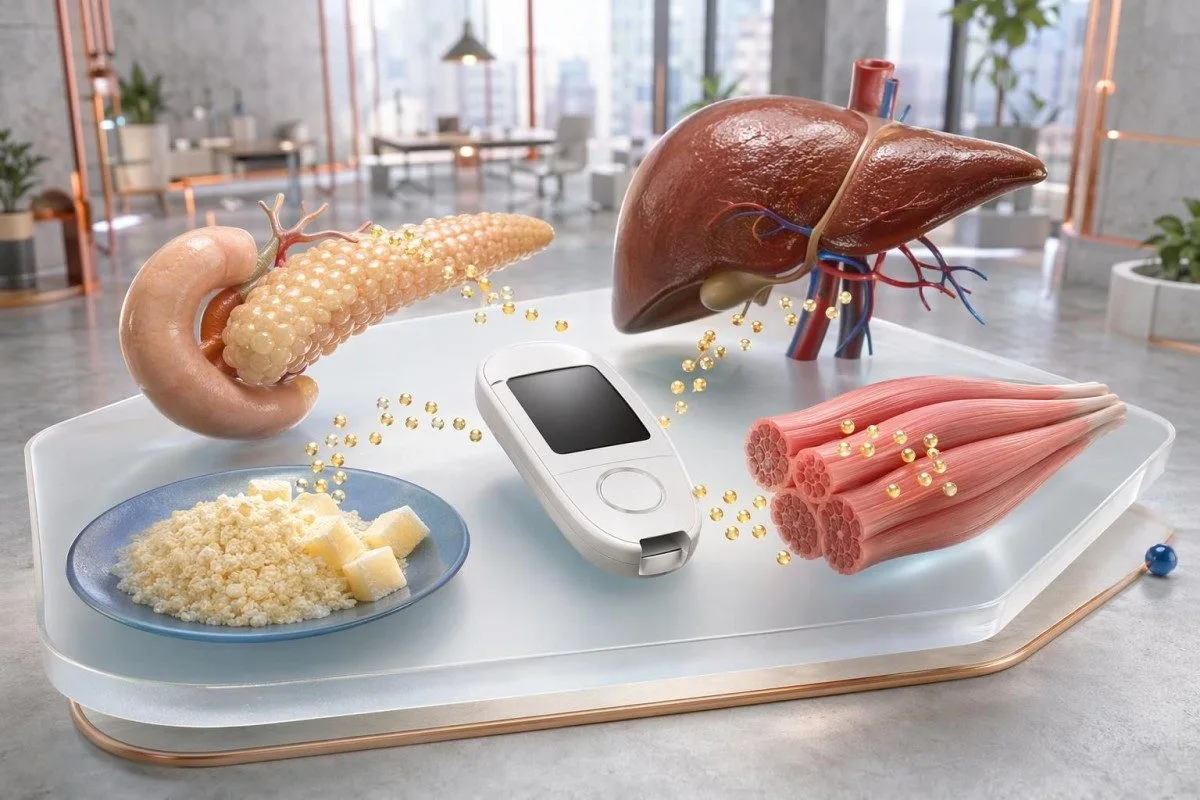
Your glucose pattern matters more than a generic “no carbs” list. Here is how I translate common lab results into practical swaps patients can actually keep.


- Fasting glucose below 100 mg/dL is normal; 100–125 mg/dL suggests prediabetes and often points to late meals, sleep debt, or insulin resistance.
- A1c below 5.7% is normal; 5.7–6.4% is prediabetes and usually reflects repeated glucose exposure over roughly 8–12 weeks.
- Two-hour post-meal glucose below 140 mg/dL is generally expected in people without diabetes; 140–199 mg/dL suggests impaired glucose handling.
- Triglycerides above 150 mg/dL often rise with excess sugar, refined starch, alcohol, or insulin resistance, especially when HDL is low.
- Liquid carbohydrates such as soda, juice, sweet tea, sports drinks, and blended smoothies are the first foods to avoid with high blood sugar because they spike quickly.
- Carb quality beats carb fear: beans, lentils, intact oats, berries, yogurt without added sugar, and vegetables often fit a high blood sugar diet.
- Prediabetes swaps work best when matched to the abnormal lab: high fasting glucose needs dinner timing changes; high post-meal glucose needs portion and fiber changes.
- Retesting after 8–12 weeks shows whether food swaps moved A1c, fasting glucose, triglycerides, and HDL in the right direction.
The lab-based list: which foods raise blood sugar fastest
The main foods to avoid with high blood sugar are liquid sugars, sweetened coffee drinks, fruit juice, regular soda, large portions of white rice or pasta, refined breakfast cereals, pastries, candy, and “healthy” snacks made mostly from flour, syrup, or dried fruit. I do not ask most patients to avoid all carbohydrates; I match swaps to fasting glucose, 1–2 hour post-meal readings, A1c, and triglycerides.
A fasting glucose below 100 mg/dL is normal, 100–125 mg/dL suggests prediabetes, and 126 mg/dL or higher on two separate tests meets a diabetes diagnostic threshold according to the American Diabetes Association Professional Practice Committee, 2026. Kantesti is an AI blood test analyzer that reads glucose beside A1c, triglycerides, HDL, liver enzymes, kidney markers, and medication context rather than treating one number as the whole story.
The odd thing I see in clinic is that two people can eat the same breakfast and get opposite lab patterns. One patient spikes to 190 mg/dL after cereal but has a fasting glucose of 92 mg/dL; another never spikes after breakfast yet wakes at 116 mg/dL because the liver is pushing glucose overnight.
As of May 27, 2026, my practical first pass is simple: remove liquid sugar first, then shrink refined starch portions, then rebuild the plate with protein, fiber, and slower carbohydrates. If you want the broader diagnostic context, our Kantesti as an organization page explains why we built nutrition guidance around measured biomarkers rather than generic diet rules.
Thomas Klein, MD usually tells patients this: if a food is sweet, drinkable, and low in protein or fiber, it is a glucose accelerator. If it is chewy, intact, high-fiber, and eaten with protein, it is usually much easier to fit.
When fasting glucose is high, start with dinner and bedtime
High fasting glucose usually means overnight glucose production, late refined carbohydrates, poor sleep, or insulin resistance are driving morning numbers. The food targets are evening sweets, large white-starch dinners, late snacks, and alcohol-containing desserts or drinks.
Fasting glucose is most useful when the sample follows 8–12 hours without calories and the patient is not acutely ill. If your fasting result is 108 mg/dL but your A1c is 5.4%, I look harder at sleep, stress hormones, and the timing of the last meal before blaming every carbohydrate.
A pattern I often see: dinner at 9:30 pm, rice or noodles as the largest plate item, fruit afterward, then a fasting glucose of 112–118 mg/dL. Moving the starch earlier, cutting the portion by one third, and adding a 10–15 minute walk can drop morning readings by 5–15 mg/dL in some patients, though the response varies.
The lab nuance matters because a fasting glucose of 101 mg/dL and triglycerides of 85 mg/dL is not the same metabolic picture as fasting glucose 101 mg/dL with triglycerides 230 mg/dL and HDL 38 mg/dL. For reference ranges and dawn-phenomenon details, see our fasting sugar guide.
My first swap is rarely “no dinner carbs.” It is usually: replace a large bowl of white rice with half the portion plus lentils or vegetables, keep protein at 25–40 g for the meal, and stop grazing 2–3 hours before sleep.
When post-meal glucose spikes, the problem is usually speed
A high post-meal reading means glucose entered the bloodstream faster than insulin and muscle uptake could handle it. The usual culprits are juice, refined cereal, white bread, white rice, low-fiber pasta, sweet sauces, and desserts eaten without protein or fiber.
A two-hour glucose below 140 mg/dL is generally expected in people without diabetes, while 140–199 mg/dL after an oral glucose tolerance test suggests impaired glucose tolerance. In day-to-day fingerstick or CGM use, many clinicians use 180 mg/dL as a practical ceiling for many adults with diabetes, but targets must be individualized.
One 46-year-old patient of mine had an A1c of 5.8% and insisted oats were the issue. His meter showed plain oats with Greek yogurt peaked at 132 mg/dL, while a “natural” fruit smoothie hit 196 mg/dL at 55 minutes; the liquid form was the problem, not the fruit itself.
The order of eating can move the curve. Protein and vegetables before starch may reduce the early glucose peak by 20–40 mg/dL in some people, especially when the carbohydrate portion is 30–45 g rather than a restaurant-sized 90–120 g load.
If you track after meals, use the same timing for comparison: one hour catches the peak, two hours shows recovery. Our after-eating range article explains why a perfect fasting result can still miss post-meal hyperglycemia.
When A1c is high, count exposure more than single meals
A high A1c reflects repeated glucose exposure over roughly the previous 8–12 weeks, not one bad meal. Foods that raise A1c are usually frequent small hits: sweet drinks, grazing on crackers, nightly desserts, oversized starch portions, and “just a little” sugar added several times daily.
A1c below 5.7% is normal, 5.7–6.4% is prediabetes, and 6.5% or higher can diagnose diabetes when confirmed appropriately. An A1c of 6.0% corresponds to an estimated average glucose near 126 mg/dL, though red-cell turnover can make that estimate wrong in some people.
Kantesti AI interprets A1c by checking whether hemoglobin, MCV, ferritin, kidney function, and recent illness could distort the number. That workflow follows the same clinical logic described in our medical validation standards: pattern first, isolated flag second.
The evidence here is more nuanced than social media makes it sound. Jenkins et al. reported in JAMA that a low-glycemic-index diet improved glycemic control in type 2 diabetes compared with a high-cereal-fiber diet over 6 months, but the real-world difference depends heavily on baseline diet and adherence.
I get suspicious when A1c rises but fasting glucose stays normal, for example A1c 6.1% with fasting glucose 91 mg/dL. That often means post-meal spikes, anemia-related distortion, or both, and our A1c versus fasting guide walks through that mismatch.
Triglycerides reveal the hidden sugar-and-starch load
High triglycerides often reveal excess refined carbohydrate, sugar, alcohol, insulin resistance, or fatty liver risk even when glucose is only mildly abnormal. The food targets are soda, juice, desserts, sweetened yogurts, large refined starch portions, and frequent ultra-processed snacks.
Fasting triglycerides below 150 mg/dL are generally considered normal, 150–199 mg/dL borderline high, 200–499 mg/dL high, and 500 mg/dL or higher raises pancreatitis concern. When triglycerides are 220 mg/dL and HDL is low, I assume insulin resistance until the pattern proves otherwise.
The triglyceride-to-HDL ratio is not a formal diagnosis, but it is a useful clue. A ratio above roughly 3.0 in mg/dL units often tracks with insulin resistance in many populations, while thresholds vary by sex, ethnicity, and lab context.
Sugar-sweetened beverages deserve special mention. Malik et al. found in Diabetes Care that higher intake of sugar-sweetened beverages was associated with higher risk of metabolic syndrome and type 2 diabetes, which matches what we see when triglycerides fall 30–80 mg/dL after patients remove daily soda or juice.
If your triglycerides are the loudest abnormality, do not only ask what foods raise blood sugar; ask what foods are being converted into liver fat and circulating triglyceride. Our TG-HDL ratio guide explains why this pattern can precede obvious diabetes.
Do not over-restrict carbs; choose slower carbohydrates
A high blood sugar diet should reduce fast, refined carbohydrates before removing all carbohydrates. Most patients do better with measured portions of beans, lentils, intact grains, vegetables, berries, plain yogurt, and nuts than with a fear-based zero-carb plan.
The nutrition consensus report by Evert et al. in Diabetes Care states that there is no single ideal macronutrient split for every adult with diabetes or prediabetes. That is exactly my experience: one person improves on 130 g/day of carbohydrate, another does well near 180 g/day, and a third needs temporary lower intake while medication is adjusted.
Fiber is the underused lever. Aiming for about 25 g/day for many women and 38 g/day for many men is reasonable, and even an extra 5–10 g/day from beans, chia, vegetables, or intact oats can blunt post-meal glucose.
Carbohydrate restriction can lower glucose quickly, but if the replacement is mostly butter, processed meat, and cheese, LDL cholesterol or ApoB may climb within 4–12 weeks. That is why I check lipids alongside glucose rather than celebrating a lower A1c in isolation.
The practical swap list is boring but effective: white bread to dense seeded bread, sweet cereal to plain oats plus protein, rice alone to rice plus lentils, juice to whole fruit, and sweet yogurt to plain yogurt with berries. Our low-glycemic foods article gives lab-based examples without turning food into a moral test.
Foods to avoid for prediabetes depend on the abnormal marker
The best foods to avoid for prediabetes are the ones that match your abnormal lab pattern: sweet drinks for triglycerides, refined breakfast carbs for post-meal spikes, late snacks for fasting glucose, and frequent grazing for A1c. Prediabetes is a warning light, not a life sentence.
Prediabetes is diagnosed by fasting glucose 100–125 mg/dL, A1c 5.7–6.4%, or two-hour OGTT glucose 140–199 mg/dL. A person with A1c 5.7% and triglycerides 90 mg/dL needs a different plan from someone with A1c 6.3%, triglycerides 260 mg/dL, and ALT mildly elevated.
Kantesti is an AI blood test interpretation platform that groups prediabetes clues with lipid, liver, kidney, thyroid, and blood-count markers in one report. That matters because weight gain from hypothyroidism, steroid use, sleep apnea, or PCOS can produce a “diet problem” that is not only a diet problem.
One patient in her early 50s dropped A1c from 6.2% to 5.8% without cutting bread entirely. Her decisive change was replacing a sweet coffee drink and pastry breakfast with eggs, plain yogurt, berries, and one slice of seeded toast; post-breakfast readings stopped crossing 180 mg/dL.
For borderline cases, I like a 12-week experiment: remove liquid sugar, cap refined starch to one fist-sized portion at meals, add 20–30 g protein at breakfast, and walk after the largest meal. Our prediabetes labs guide explains which borderline results deserve closer follow-up.
The “healthy” foods that quietly spike glucose
Many foods marketed as healthy still raise blood sugar quickly when they are liquid, low-fiber, or portion-dense. Common examples are fruit smoothies, granola, rice cakes, oat milk sweetened drinks, dried fruit bars, low-fat flavored yogurt, and large bowls of instant oats.
A smoothie with banana, mango, juice, and honey can contain 60–90 g of rapidly available carbohydrate. The same fruit eaten whole with plain yogurt and nuts may produce a much smaller glucose rise because chewing, fiber structure, fat, and protein slow absorption.
Granola is another clinic trap. A “small” bowl can deliver 45–70 g carbohydrate before milk, and some versions contain sugar, syrup, dried fruit, and low protein in the same bite.
Oat milk coffee drinks deserve a quiet warning. Depending on brand and size, a café drink can contain 30–60 g carbohydrate, and patients often do not count it because it feels like coffee rather than breakfast.
If glucose is high without a diabetes diagnosis, food is only part of the story; stress, infection, steroids, sleep loss, and lab timing can all matter. Our high glucose explainer helps separate a true metabolic pattern from a one-off result.
Before blaming food, check fasting and lab timing
Glucose and triglyceride results can look worse when the test was not truly fasting, was drawn after illness, or followed intense exercise, poor sleep, or steroid medication. Food swaps should be based on repeatable patterns, not one suspicious blood draw.
A non-fasting glucose can be completely appropriate if the clinician ordered it that way, but it should not be interpreted like an 8–12 hour fasting result. Triglycerides can also rise after a recent high-fat or high-sugar meal, sometimes by 50 mg/dL or more depending on the person.
I ask five boring questions before making a diet plan: time of last calories, sleep duration, alcohol intake, recent infection, and medications such as prednisone. A fasting glucose of 121 mg/dL the morning after 4 hours of sleep may not represent the patient’s usual baseline.
Some European labs and some US labs display different reference flags, particularly for triglycerides and glucose units. Always check whether glucose is reported in mg/dL or mmol/L; 100 mg/dL equals about 5.6 mmol/L.
If timing was messy, repeat the test before making extreme food restrictions. Our fasting test rules article lists which markers shift meaningfully after meals.
Food timing can lower glucose without changing the menu
Meal timing, food order, and walking after meals can lower post-meal glucose even when the actual foods stay similar. This is useful when patients are not ready for strict carb counting or have cultural foods they want to keep.
Eating vegetables and protein before starch may flatten the first-hour spike because gastric emptying and glucose absorption slow down. In practical terms, a meal that peaked at 178 mg/dL may peak closer to 145–155 mg/dL after the sequence changes, though individual responses vary.
Walking for 10–20 minutes after the largest meal can help skeletal muscle take up glucose without needing as much insulin. I suggest this before bedtime scrolling because it helps both post-meal glucose and, in some patients, next-morning fasting readings.
Breakfast is the meal where I see the biggest hidden damage. A cereal-and-juice breakfast can deliver 80–100 g carbohydrate with little protein, while eggs or tofu, plain yogurt, berries, and one slower starch may stay under 35–45 g carbohydrate.
For patients changing diet, I like paired labs rather than guesswork: baseline, then repeat after 8–12 weeks. Our diet lab timeline explains which markers move quickly and which lag.
If triglycerides and ALT are high, watch fructose and alcohol
High triglycerides with mildly elevated ALT often points toward insulin resistance or fatty liver risk, especially when sugar, fructose-rich drinks, and alcohol are frequent. The first swaps are sweet beverages, desserts, fruit juice, and large refined starch meals.
ALT above the lab upper limit, often around 35–45 IU/L depending on the laboratory, can rise with fatty liver, medications, viral hepatitis, alcohol, or recent heavy exercise. When ALT is 58 IU/L, triglycerides are 240 mg/dL, and fasting glucose is 112 mg/dL, I treat the food pattern as a liver-and-insulin problem, not just a sugar number.
Fructose is not poisonous in whole fruit, but it behaves differently when delivered as juice, sweetened drinks, syrup, or frequent desserts. Whole fruit usually arrives with water, fiber, and chewing; juice removes much of that brake and can deliver 25–45 g sugar in minutes.
Do not miss the HDL clue. HDL below 40 mg/dL in men or below 50 mg/dL in women, combined with triglycerides above 150 mg/dL, is a classic metabolic warning pattern.
If your main abnormality is triglycerides, our high triglycerides guide gives the pancreatitis thresholds and heart-risk context that a glucose-only diet list misses.
Special situations: GLP-1 medicines, pregnancy, kidneys, and children
Food advice changes when someone is pregnant, taking insulin or GLP-1 medicines, has kidney disease, or is a child. In these groups, avoiding high-sugar foods still matters, but safety, medication timing, hydration, and growth needs come first.
People using insulin or sulfonylureas can develop hypoglycemia if they cut carbohydrates abruptly without medication adjustment. A glucose below 70 mg/dL is low, and repeated lows are more dangerous in the short term than a modest post-meal spike.
GLP-1 medicines often reduce appetite, but patients may under-eat protein or fluid. I watch albumin, kidney function, electrolytes, and weight trajectory, because a dramatic calorie drop can make labs look better while muscle mass quietly falls.
Pregnancy targets are tighter and should be clinician-led; many practices aim for fasting glucose below 95 mg/dL and one-hour post-meal below 140 mg/dL, but targets vary by guideline and risk. Children also need age-appropriate interpretation, not adult diet rules pasted onto a growing body.
If you use incretin medicines or are losing weight quickly, our GLP-1 lab checklist covers markers I want monitored before celebrating a lower A1c.
How to retest after changing foods
Retesting after food swaps should match the biology of the marker: glucose can change within days, triglycerides within weeks, and A1c over about 8–12 weeks. A single fingerstick is useful feedback, but lab trends decide whether the plan is working.
Fasting glucose can improve in 1–2 weeks if the driver is late eating, sleep, or daily sweet drinks. A1c usually needs 8–12 weeks because it reflects glucose exposure over the lifespan of red cells.
Triglycerides can fall quickly when liquid sugar and alcohol are removed. In motivated patients, I have seen triglycerides drop from 310 mg/dL to 170 mg/dL in 6 weeks, but I have also seen no change when sleep apnea, hypothyroidism, or medication effects were the real driver.
Kantesti is an AI-powered blood test analysis tool used by people in more than 127 countries, and our trend logic compares new values with prior baselines rather than only with population reference ranges. That is particularly useful when fasting glucose moves from 118 to 104 mg/dL but the lab still flags both as abnormal or borderline.
For structured tracking, store the date, fasting duration, weight change, medications, and the exact diet experiment. Our blood test trends guide explains why slope over time is often more clinically useful than one green or red flag.
When food swaps are not enough
Food changes are not enough when glucose is very high, symptoms are present, ketones are suspected, or labs suggest diabetes complications. Seek medical care promptly for random glucose around 200 mg/dL or higher with thirst, frequent urination, weight loss, vomiting, confusion, or dehydration.
A fasting glucose of 160 mg/dL is not a “try cinnamon and wait” situation. It needs confirmation, medication review, symptom assessment, and usually additional testing such as A1c, kidney function, urine albumin-creatinine ratio, lipids, and sometimes ketones.
There is also a quieter group: A1c 6.4%, triglycerides 280 mg/dL, blood pressure high, and family history of early heart disease. Those patients may benefit from medication earlier, not because they failed at diet, but because risk is cumulative.
Thomas Klein, MD sees the best outcomes when diet, activity, medication, sleep, and lab monitoring are treated as one plan. Our validation work, including the Kantesti AI benchmark, was designed around these multi-marker patterns rather than single-result overreaction.
If you are unsure whether your result is urgent, contact your clinician rather than waiting for the next diet experiment. Kantesti can organize the pattern, but diagnosis and treatment decisions still belong with a licensed healthcare professional.
How Kantesti turns glucose labs into a food-swap checklist
Kantesti turns glucose labs into a food-swap checklist by reading fasting glucose, A1c, triglycerides, HDL, liver enzymes, kidney function, blood counts, medications, and prior trends together. That combined view reduces the chance of over-restricting carbohydrates when the real issue is timing, liquid sugar, or a non-food driver.
Our AI biomarker interpretation platform reads more than 15,000 biomarkers and can process uploaded lab reports in about 60 seconds, but the point is not speed alone. The point is safer context: A1c 5.9% with low ferritin, high RDW, and abnormal MCV may need an accuracy check before the patient is told they have worsening glucose control.
Kantesti AI also separates “avoid” from “swap.” A patient with triglycerides 260 mg/dL gets a stronger warning about soda and juice; a patient with normal triglycerides but post-meal spikes gets portion, sequence, and breakfast-specific swaps.
Our medical review process is overseen by physicians and clinical advisors, including colleagues listed on the Medical Advisory Board. Thomas Klein, MD reviews these articles with the same practical rule used in clinic: no food advice should be more restrictive than the lab pattern justifies.
For readers who want the marker-by-marker background, the biomarkers guide covers glucose, A1c, triglycerides, HDL, ALT, creatinine, and urine albumin in clinical context. Bottom line: start with the fastest glucose drivers, keep slow carbohydrates where they fit, and retest rather than guessing forever.
Frequently Asked Questions
What foods should I avoid first if my blood sugar is high?
The first foods to avoid with high blood sugar are regular soda, fruit juice, sweet tea, sweetened coffee drinks, candy, pastries, and large portions of white bread, white rice, pasta, or refined cereal. These foods can deliver 30–90 g of rapidly absorbed carbohydrate with little protein or fiber. Most patients do not need to remove all carbohydrates; slower options such as beans, lentils, intact oats, berries, and vegetables often fit when portions are measured.
What fasting glucose number means I need to change my diet?
A fasting glucose below 100 mg/dL is normal, 100–125 mg/dL suggests prediabetes, and 126 mg/dL or higher on two separate tests meets a diabetes diagnostic threshold. If your fasting glucose is repeatedly above 100 mg/dL, start by removing liquid sugar, reducing late-night refined carbohydrates, and leaving 2–3 hours between your last calories and sleep. A result near or above 126 mg/dL should be reviewed with a clinician, not managed by diet alone.
Can I still eat fruit with high blood sugar?
Most people with high blood sugar can still eat whole fruit, especially berries, apples, citrus, and other fiber-containing options in measured portions. The bigger problem is fruit juice, smoothies, dried fruit bars, and sweetened fruit bowls, which can deliver 30–80 g of sugar quickly. If your one-hour glucose rises above 180 mg/dL after fruit, try a smaller portion and pair it with plain yogurt, nuts, or a meal containing protein.
Why are my triglycerides high if my glucose is only borderline?
Triglycerides can rise before fasting glucose becomes clearly abnormal because the liver converts excess sugar, refined starch, alcohol, and surplus calories into circulating fat. A fasting triglyceride level below 150 mg/dL is generally normal, while 200–499 mg/dL is high and 500 mg/dL or higher needs urgent risk review for pancreatitis. High triglycerides with low HDL often suggests insulin resistance even when A1c is only 5.7–6.0%.
How long after changing food should I recheck A1c?
A1c should usually be rechecked after about 8–12 weeks because it reflects glucose exposure across the lifespan of red cells. Fasting glucose can change within days to weeks, and triglycerides may improve within 4–8 weeks after removing liquid sugar or excess refined carbohydrates. If A1c does not match fingerstick readings, ask about anemia, kidney disease, recent blood loss, or red-cell disorders before assuming the diet failed.
Are low-carb diets always best for high blood sugar?
Low-carb diets can lower glucose, but they are not automatically best for every patient with high blood sugar. Some people improve with 100–150 g of carbohydrate per day, while others do well with a moderate-carbohydrate plan built around beans, vegetables, intact grains, and protein. The safest plan is judged by the full lab pattern: A1c, fasting glucose, triglycerides, HDL, LDL or ApoB, kidney function, and liver enzymes.
Is it safe to skip breakfast to lower blood sugar?
Skipping breakfast is not required and can backfire if it leaves you very hungry later or leads to a larger evening meal. Choose a protein- and fiber-containing breakfast if it suits your routine; people using insulin or sulfonylureas should not skip meals without medication advice.
Can a short walk after meals help lower blood sugar?
Yes. A 10- to 15-minute easy-to-moderate walk started soon after eating can reduce the post-meal rise by helping muscles use glucose. Choose a pace that feels safe, and ask your clinician first if you have chest symptoms, a foot ulcer, or exercise restrictions.
Should I use a continuous glucose monitor to find which foods spike my blood sugar?
A continuous glucose monitor can be helpful for spotting patterns, especially if your A1c and fasting glucose do not match. Use it as a learning tool for 10–14 days, and review surprising readings with your clinician rather than removing many foods at once.
Get AI-Powered Blood Test Analysis Today
Join over 2 million users worldwide who trust Kantesti for instant, accurate lab test analysis. Upload your blood test results and receive comprehensive interpretation of 15,000+ biomarkers in seconds.
📚 Referenced Research Publications
Klein, T., Mitchell, S., & Weber, H. (2026). Women's Health Guide: Ovulation, Menopause & Hormonal Symptoms. Kantesti AI Medical Research.
Klein, T., Mitchell, S., & Weber, H. (2026). Clinical Validation of the Kantesti AI Engine (2.78T) on 100,000 Anonymised Blood Test Cases Across 127 Countries: A Pre-Registered, Rubric-Based, Population-Scale Benchmark Including Hyperdiagnosis Trap Cases — V11 Second Update. Kantesti AI Medical Research.
📖 External Medical References
American Diabetes Association Professional Practice Committee (2026). Standards of Care in Diabetes—2026. Diabetes Care.
⚕️ Medical Disclaimer
This article is for educational purposes only and does not constitute medical advice. Always consult a qualified healthcare provider for diagnosis and treatment decisions.
E-E-A-T Trust Signals
Experience
Physician-led clinical review of lab interpretation workflows.
Expertise
Laboratory medicine focus on how biomarkers behave in clinical context.
Authoritativeness
Written by Dr. Thomas Klein with review by Dr. Sarah Mitchell and Prof. Dr. Hans Weber.
Trustworthiness
Evidence-based interpretation with clear follow-up pathways to reduce alarm.