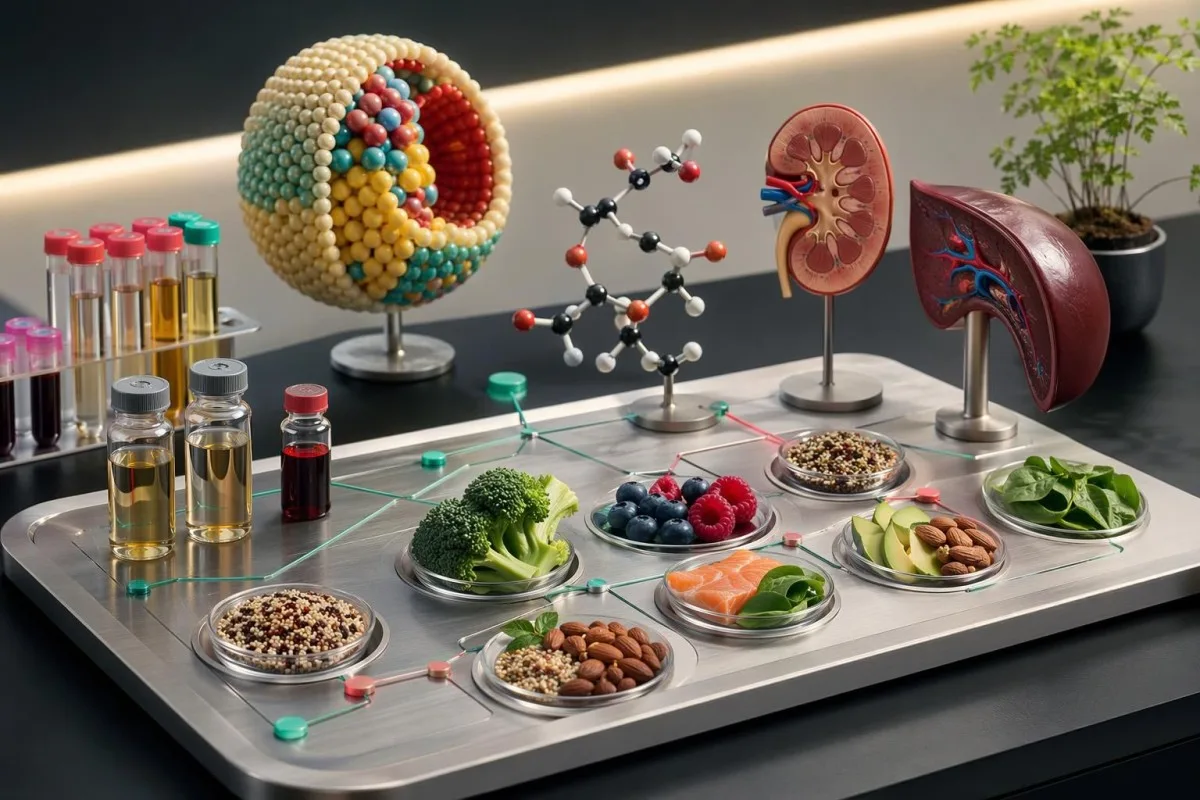
A useful lab-guided meal plan is not built from one flagged value. It comes from patterns, trends, symptoms, medication context, and knowing when food is the wrong first intervention.


- Glucose and A1c should shape carbohydrate timing and quality; A1c 5.7-6.4% is prediabetes and ≥6.5% suggests diabetes when confirmed.
- Triglycerides respond quickly to sugar, alcohol, weight change, and omega-3 intake; ≥500 mg/dL needs clinician review because pancreatitis risk rises.
- ApoB and non-HDL cholesterol are better meal-planning targets than total cholesterol when LDL particles are the main concern.
- Ferritin below 30 ng/mL often suggests depleted iron stores in symptomatic adults, even if hemoglobin is still normal.
- eGFR below 60 mL/min/1.73 m² for 3 months changes protein, sodium, potassium, and phosphate advice; do not self-prescribe high protein.
- ALT or GGT elevation can support a fatty-liver meal strategy, but ALT above 3 times the upper limit needs medical review before diet experiments.
- Vitamin D below 20 ng/mL usually supports supplementation plus dietary sources, while high calcium or high PTH changes the safety plan.
- D-dimer, PSA, ANA, WBC, tumor markers, and severe electrolyte results should not be converted into diet rules by an AI nutritionist.
- Retest timing matters because triglycerides may shift in 2-6 weeks, LDL in 6-12 weeks, and A1c usually needs 8-12 weeks.
How AI turns blood test patterns into meal priorities
An AI diet plan based on blood test results should prioritize meals from repeated patterns: A1c/glucose for carbohydrate quality, triglycerides/ApoB for fat and fiber choices, ferritin/B12/vitamin D for nutrient repletion, ALT/GGT for fatty-liver risk, and eGFR/potassium for kidney-safe protein and minerals. Severe abnormalities need clinician review before meal planning.
Kantesti is an AI blood test interpretation platform that reads uploaded lab PDFs or photos in clinical context, not as a grocery list generator. As of June 1, 2026, our approach is to group results into meal-relevant clusters and then explain uncertainty; the engineering principles are outlined in our AI technology guide.
I am Thomas Klein, MD, and when I review a panel for nutrition, I first ask whether the result is stable, fasting, medication-affected, or simply a lab-range artifact. A 42-year-old with triglycerides of 212 mg/dL, A1c 5.9%, and ALT 47 IU/L needs a different plan from someone with isolated LDL-C 132 mg/dL and normal insulin sensitivity.
A good personalized nutrition plan ranks priorities. If five biomarkers are mildly off, the first meal target is usually the cluster most likely to move risk in 8-12 weeks, not the result with the scariest red font on the PDF.
The practical hierarchy I use
First fix dangerous results, then diagnose unclear patterns, then personalize meals. In practice that means potassium 6.2 mmol/L beats fiber goals, hemoglobin 8.5 g/dL beats macro tracking, and triglycerides 620 mg/dL beats debating seed oils.
Check fasting, timing, and lab quality before changing food
A custom meal plan blood test should use results that were collected under conditions that match the biomarker. Glucose, insulin, triglycerides, iron, cortisol, and some renal markers can shift meaningfully with food intake, exercise, illness, sleep loss, or dehydration in the 24-72 hours before testing.
Fasting status matters most for insulin, triglycerides, and some metabolic calculations. A non-fasting triglyceride of 185 mg/dL after a large meal is less concerning than a fasting triglyceride of 185 mg/dL repeated twice; our deeper guide on fasting result changes explains which values swing most.
Exercise is a sneaky confounder. I once saw a 52-year-old marathon runner with AST 89 IU/L and CK over 1,500 IU/L two days after a race; a liver detox diet would have been nonsense because the pattern pointed to muscle recovery, not a primary liver problem.
Dehydration can falsely concentrate albumin, calcium, hemoglobin, and BUN. If albumin is 5.2 g/dL and BUN is 26 mg/dL after a long flight, I usually want hydration and a repeat panel before telling someone to cut protein or add supplements.
When repeating is smarter than reacting
Repeat borderline labs when the result conflicts with symptoms or the pre-test conditions were unusual. For nutrition decisions, two comparable results separated by 2-12 weeks are usually more useful than one dramatic snapshot.
Glucose, A1c, and insulin guide carbohydrate choices
Glucose and A1c are the strongest routine labs for personalizing carbohydrate amount, timing, and quality. Fasting glucose 70-99 mg/dL is usually normal, 100-125 mg/dL suggests impaired fasting glucose, and ≥126 mg/dL on repeat testing supports diabetes evaluation.
The American Diabetes Association Professional Practice Committee classifies A1c below 5.7% as normal, 5.7-6.4% as prediabetes, and ≥6.5% as diabetes when confirmed by repeat or compatible testing (American Diabetes Association Professional Practice Committee, 2024). For meal planning, A1c 5.8% plus fasting insulin 18 µIU/mL suggests a stronger need for low-glycemic structure than A1c 5.4% with insulin 5 µIU/mL.
A1c can lie. Iron deficiency, recent blood loss, kidney disease, hemoglobin variants, and shortened red-cell survival can make A1c disagree with fasting glucose; our A1c accuracy guide covers the common mismatch patterns.
When I see fasting insulin above 15 µIU/mL with triglycerides above 150 mg/dL and waist gain, I usually prioritize breakfast protein, 25-40 g/day fiber, resistance training after meals, and fewer liquid calories. The AI nutritionist should explain why the same banana is not the same metabolic event at 7 a.m. after poor sleep versus after a high-protein lunch.
Lipids, ApoB, and triglycerides shape fat and fiber
Lipid results should shape fat quality, soluble fiber, alcohol limits, and weight-loss intensity. LDL-C above 160 mg/dL, ApoB above 130 mg/dL, or triglycerides above 500 mg/dL should trigger risk review rather than a casual low-fat meal plan.
The 2018 AHA/ACC cholesterol guideline treats ApoB as a risk-enhancing marker, especially when triglycerides are ≥200 mg/dL (Grundy et al., 2019). In food terms, high ApoB usually points toward replacing butter, processed meats, and refined snacks with unsaturated fats, legumes, oats, nuts, and higher-fiber meals.
Triglycerides below 150 mg/dL are generally normal, 150-499 mg/dL are elevated, and ≥500 mg/dL is high enough that pancreatitis prevention enters the conversation. A useful reader can compare their numbers with our lipid panel guide before assuming total cholesterol tells the whole story.
Here is the nuance patients often miss: low-carb diets can lower triglycerides while raising LDL-C or ApoB in some people. If LDL-C jumps from 118 to 190 mg/dL after a ketogenic diet, the meal plan should change even if weight and glucose improved.
Liver enzymes and fatty-liver clues change meal priorities
ALT, AST, GGT, bilirubin, platelets, and triglycerides can suggest whether meals should target fatty-liver risk, alcohol exposure, medication safety, or another liver process. ALT above 40-45 IU/L is not automatically dangerous, but persistent elevation deserves pattern-based review.
For fatty-liver patterns, the meal plan usually emphasizes 7-10% body-weight loss if appropriate, Mediterranean-style fats, reduced fructose drinks, and less ultra-processed food. Our clinical companion on fatty liver meals explains why ALT can improve before imaging changes.
GGT is more diet-sensitive than many patients expect, but it is not an alcohol detector by itself. Anticonvulsants, biliary disease, fatty liver, and some supplements can raise GGT; if ALP is also high, I think harder about bile-duct patterns before giving nutrition advice.
In Kantesti trend reviews, a falling ALT from 68 to 38 IU/L over 12 weeks is more meaningful when weight, triglycerides, and glucose also improve. If ALT is 180 IU/L or bilirubin is rising, I pause the meal coaching and recommend clinician review first.
The common mistake
Do not treat every high AST as a liver diet problem. AST can rise after heavy lifting, intramuscular injections, muscle injury, or endurance events, especially when CK is also high.
Kidney and electrolyte results set nutrition safety limits
eGFR, creatinine, urine ACR, potassium, sodium, bicarbonate, calcium, and phosphate decide whether protein, salt, potassium-rich foods, and supplements are safe. eGFR below 60 mL/min/1.73 m² for 3 months suggests chronic kidney disease when other criteria fit.
KDIGO 2024 defines chronic kidney disease by kidney abnormalities present for at least 3 months, including eGFR below 60 mL/min/1.73 m² or albuminuria such as urine ACR ≥30 mg/g. That is why a high-protein plan can be useful for one person and risky for another (KDIGO, 2024).
Kantesti is an AI-powered blood test analysis tool that treats potassium 5.8 mmol/L differently from potassium 4.8 mmol/L, even when both users ask for the same weight-loss diet. For kidney-specific meal choices, patients should read our kidney diet guide rather than copying generic high-potassium advice.
Sodium below 130 mmol/L, potassium above 6.0 mmol/L, bicarbonate below 18 mmol/L, or calcium above 11.5 mg/dL should not become a recipe prompt. These are safety signals; food comes second.
Iron, B12, folate, and ferritin change nutrient density
Ferritin, hemoglobin, MCV, RDW, B12, MMA, folate, and transferrin saturation should shape nutrient density and supplementation decisions. Ferritin below 30 ng/mL often supports iron repletion in symptomatic adults, while ferritin elevation may reflect inflammation, liver disease, or iron overload.
Low ferritin with normal hemoglobin is common in menstruating adults, endurance athletes, and frequent donors. A food-first plan adds iron-rich foods with vitamin C, separates calcium from iron-heavy meals, and checks whether the person actually needs a supplement; our low ferritin diet guide gives safe food examples.
B12 below about 200 pg/mL is usually low, 200-300 pg/mL is borderline in many labs, and MMA elevation can reveal functional deficiency. I am cautious with vegan patients who have normal hemoglobin but rising MCV from 88 to 96 fL over 2 years; that slope can matter before anemia appears.
High ferritin is where many AI meal plans go wrong. Ferritin 650 ng/mL with CRP 22 mg/L and ALT 76 IU/L is not an instruction to avoid all iron forever; it is a pattern that needs clinician review for inflammation, liver disease, metabolic syndrome, or iron overload testing.
Supplement dose should follow the pattern
Iron, B12, and folate dosing should match the deficiency mechanism. Treating low MCV from thalassemia trait as iron deficiency can cause harm if ferritin and transferrin saturation do not support iron loss.
CRP and ESR can guide food, but not diagnose the cause
CRP and ESR can support an anti-inflammatory meal pattern, but they do not identify the source of inflammation. hs-CRP below 1 mg/L is lower cardiovascular risk, 1-3 mg/L is intermediate, and above 3 mg/L is higher risk when infection and injury are excluded.
A CRP of 8 mg/L after dental infection is not a broccoli deficiency. When CRP is persistently above 3 mg/L with central weight gain, high triglycerides, and A1c 5.9%, meals rich in legumes, oily fish, olive oil, berries, and nuts make more clinical sense; see our high CRP diet guide.
ESR rises with age, anemia, pregnancy, kidney disease, autoimmune disease, and some cancers. In my experience, a mildly high ESR with normal CRP and low hemoglobin often says more about anemia or protein changes than about a missing supplement.
The evidence for single anti-inflammatory supplements is honestly mixed. Food pattern, sleep, periodontal health, smoking, adiposity, and untreated inflammatory disease often move CRP more reliably than one capsule promising a 50% drop.
When CRP should pause meal planning
CRP above 50 mg/L, fever, severe pain, chest symptoms, or a rapidly rising WBC count should shift attention to medical assessment. That is not the time to ask an AI nutritionist for turmeric recipes.
Thyroid results should not become extreme diet rules
TSH, free T4, free T3, TPO antibodies, thyroglobulin antibodies, iodine status, and symptoms should be interpreted together. TSH around 0.4-4.0 mIU/L is typical for many adults, but age, pregnancy, medication timing, and lab method change meaning.
A TSH of 5.2 mIU/L with normal free T4 is not a command to start seaweed tablets. Some European labs use slightly different TSH ranges, older adults may tolerate higher TSH, and biotin can distort thyroid immunoassays; our TSH range guide covers these traps.
Diet can help thyroid care at the edges: adequate protein, selenium from food, iron repletion, iodine sufficiency, and timing levothyroxine away from calcium, iron, and coffee. But diet does not replace thyroid hormone when free T4 is low and symptoms fit hypothyroidism.
I have seen patients worsen palpitations by stacking iodine, kelp, and thyroid support blends after one borderline TSH. If TSH is suppressed below 0.1 mIU/L or free T4 is high, clinician review comes before meal personalization.
The iodine problem
Both low and excessive iodine can be relevant. In areas with iodine sufficiency, adding high-dose iodine can aggravate autoimmune thyroid patterns rather than fix fatigue.
Vitamin D, calcium, PTH, and magnesium shape supplementation
Vitamin D should be interpreted with calcium, PTH, kidney function, magnesium, medications, and fracture risk. A 25-OH vitamin D level below 20 ng/mL is commonly called deficiency, 20-29 ng/mL insufficiency, and about 30-50 ng/mL adequate by many clinical frameworks.
A nutrition plan may recommend vitamin D3, oily fish, fortified foods, and sunlight habits when 25-OH vitamin D is 14 ng/mL with normal calcium. Our vitamin D dose guide explains why the same dose is not right for a 50 kg adult and a 120 kg adult.
High calcium changes the story. Calcium 11.2 mg/dL with PTH 92 pg/mL is not a simple vitamin D meal issue; it can suggest primary hyperparathyroidism, and extra calcium or high-dose vitamin D may be unsafe until reviewed.
Magnesium is also awkward because serum magnesium can look normal while intake is low. If muscle cramps, low potassium, diuretic use, or poor diet coexist, I think about magnesium-rich foods first and supplements second, especially if eGFR is reduced.
What actually moves the lab
25-OH vitamin D usually needs 8-12 weeks to show a stable change after supplementation. Checking after 10 days creates noise, not insight.
Results that should not drive diet decisions
Some blood results should not be used to design meals because they diagnose risk, immune activity, clotting, cancer follow-up, or infection rather than nutrition needs. D-dimer, PSA, ANA, WBC differential, tumor markers, and isolated IgG food panels are common examples.
D-dimer elevation can reflect clotting, recent surgery, pregnancy, infection, cancer, or inflammation. A D-dimer of 1,200 ng/mL FEU with chest pain is not a fermented-food problem; it needs clinical triage, and our D-dimer guide explains why context is everything.
Food IgG panels are another trap. A high IgG to wheat or dairy often reflects exposure and immune memory, not a validated diagnosis of intolerance, so building a restrictive diet from those results can shrink nutrition quality without solving symptoms.
PSA, ANA, CA-125, CEA, high WBC, immature granulocytes, and platelet extremes can matter medically, but they rarely define dinner. If a meal plan changes because ANA is positive at 1:160, I want to know the symptoms, antibody pattern, complement levels, and clinician assessment first.
A useful rule
If the biomarker would normally trigger imaging, specialist review, repeat diagnostic testing, or urgent triage, do not let an AI nutritionist convert it directly into food advice.
When abnormal values need clinician review before AI meals
Clinician review should come before AI meal planning when labs suggest acute danger, severe deficiency, organ injury, clotting risk, infection, or cancer evaluation. Potassium above 6.0 mmol/L, sodium below 130 mmol/L, glucose above 250 mg/dL with symptoms, or triglycerides above 500 mg/dL are examples.
Kantesti AI treats these as follow-up triggers, not lifestyle curiosities. A lab value can be diet-relevant and still too risky for self-guided meal changes; our guide to critical blood values walks through the common thresholds patients should not ignore.
Anemia is a good example. Hemoglobin below 10 g/dL, black stools, heavy bleeding, chest pain, pregnancy, or rapid decline needs assessment before iron-rich recipes; food cannot safely explain away possible blood loss, hemolysis, kidney disease, or marrow problems.
The same caution applies to liver enzymes above 3 times the upper reference limit, eGFR below 30 mL/min/1.73 m², calcium above 11.5 mg/dL, WBC above 20 x 10^9/L with fever, or platelets below 50 x 10^9/L. These numbers deserve a human medical plan first.
How Kantesti builds a personalized nutrition plan from labs
Kantesti is an AI biomarker interpretation platform that converts lab patterns into meal priorities by combining reference ranges, trend direction, age, sex, units, symptoms, medications, and risk clusters. The goal is a safer personalized nutrition plan, not a diagnosis or a one-size macro calculator.
The method matters. Our system checks whether units changed, whether fasting status is relevant, whether a result is internally consistent, and whether a value belongs to nutrition, urgent care, or physician follow-up; our standards are described in medical validation.
Kantesti AI can read a PDF or photo in about 60 seconds, but speed is not the clinical achievement. The useful part is that a triglyceride of 230 mg/dL is interpreted differently if A1c is 6.1%, ALT is 55 IU/L, HDL is 38 mg/dL, and waist gain is present.
If you are testing the workflow with a recent report, use the free upload option and compare the output with your clinician's advice. I prefer patients bring both the AI explanation and the original lab PDF to appointments; it makes the visit more concrete.
What the AI should refuse to personalize
A safe system should refuse to generate ordinary meal plans for unstable labs. Severe electrolyte abnormalities, active diagnostic questions, and discordant results should be flagged before recipes appear.
Retest timelines: what should improve and when
Diet-related lab changes have different timelines, so retesting too early can make a good plan look ineffective. Triglycerides may improve within 2-6 weeks, LDL-C usually needs 6-12 weeks, A1c needs about 8-12 weeks, and ferritin often needs 8-12 weeks or longer.
I often tell patients to match the retest to the biology. Glucose can improve in days, ALT in weeks, LDL in months, and red-cell indices after iron may lag behind symptoms; our diet retest timeline gives practical intervals.
As Thomas Klein, MD, my rule is simple: do not celebrate or panic over a single retest unless the direction, magnitude, and context make sense. A triglyceride drop from 310 to 155 mg/dL after 6 weeks is plausible; ferritin jumping from 12 to 90 ng/mL in 7 days without infusion is suspicious.
Our physician review process is guided by the Medical Advisory Board, because lab-guided nutrition sits at the edge of medicine and behavior change. Bottom line: use AI to organize the pattern, use food to target the right physiology, and use clinicians when the number could represent disease rather than diet.
A practical retest schedule
For most stable adults, retest triglycerides, fasting glucose, ALT, and potassium in 4-8 weeks if they drove the plan. Retest A1c, LDL-C, vitamin D, ferritin, and B12 closer to 8-12 weeks unless symptoms or safety concerns justify earlier testing.
Frequently Asked Questions
Can an AI diet plan really be based on blood test results?
Yes, an AI diet plan can be based on blood test results when the labs are interpreted as patterns rather than isolated red flags. Glucose, A1c, fasting insulin, triglycerides, ApoB, ferritin, B12, vitamin D, ALT, eGFR, potassium, and urine ACR can all change meal priorities. The safest plans also check whether a result was fasting, repeated, medication-affected, or urgent. Severe abnormalities should be reviewed by a clinician before following any AI meal advice.
Which blood tests are most useful for a personalized nutrition plan?
The most useful routine blood tests for a personalized nutrition plan are A1c, fasting glucose, insulin when available, lipid panel, ApoB or non-HDL cholesterol, ferritin, CBC, B12, folate, vitamin D, ALT, AST, GGT, creatinine, eGFR, potassium, sodium, calcium, and urine ACR. A1c 5.7-6.4% points toward prediabetes risk, while triglycerides ≥150 mg/dL often point toward carbohydrate, alcohol, or weight-related priorities. Ferritin below 30 ng/mL can suggest low iron stores in symptomatic adults. eGFR below 60 mL/min/1.73 m² changes protein and mineral safety.
What labs should not be used to create a diet plan?
D-dimer, PSA, ANA, CA-125, CEA, WBC extremes, platelet extremes, and many food IgG panels should not be used as direct diet instructions. These tests relate to clotting, prostate evaluation, immune patterns, cancer follow-up, infection, marrow activity, or exposure history rather than ordinary meal planning. A D-dimer above 500 ng/mL FEU may need clinical context, not a food list. An ANA result such as 1:160 needs symptom and antibody-pattern interpretation before nutrition advice has meaning.
When should I see a doctor before using an AI nutritionist?
You should see a doctor before using an AI nutritionist if potassium is above 6.0 mmol/L, sodium is below 130 mmol/L, glucose is above 250 mg/dL with symptoms, triglycerides are above 500 mg/dL, hemoglobin is below 10 g/dL, eGFR is below 30 mL/min/1.73 m², or liver enzymes are more than 3 times the upper reference limit. These values can signal acute risk or disease needing treatment. Diet may still matter later, but it should not delay assessment. Symptoms such as chest pain, confusion, severe weakness, black stools, jaundice, or shortness of breath also need urgent care.
How long does it take for diet to change blood test results?
Diet can change some blood test results within days, but most meaningful retests need weeks. Fasting glucose may improve within 1-2 weeks, triglycerides often shift in 2-6 weeks, ALT may improve in 4-12 weeks, LDL-C commonly needs 6-12 weeks, and A1c usually needs 8-12 weeks because it reflects red-cell glucose exposure. Ferritin and B12 can take 8-12 weeks or longer depending on dose, absorption, and ongoing loss. Retesting too early can make a reasonable plan look ineffective.
Is a custom meal plan from a blood test better than a generic diet?
A custom meal plan from a blood test is usually better than a generic diet when the labs reveal a clear, stable pattern such as insulin resistance, high ApoB, low ferritin, low vitamin D, fatty-liver markers, or kidney mineral limits. The advantage is prioritization: a person with A1c 6.1% and triglycerides 240 mg/dL needs different first steps from someone with LDL-C 185 mg/dL and normal glucose. The limitation is that labs do not capture appetite, budget, culture, cooking skill, medications, or symptoms. The best plan combines biomarkers with real-life constraints and clinician review when values are unsafe.
Can heavy periods change the nutrition advice from my blood tests?
Heavy or frequent menstrual bleeding can gradually lower iron stores and ferritin, even before anemia appears. Include bleeding history with your results, and seek clinical advice for very heavy bleeding rather than relying on iron-rich foods alone.
Should I stop vitamins or supplements before a blood test?
Most routine supplements do not require special preparation, but do not stop prescribed medicines on your own. Tell the laboratory and clinician about every supplement, especially high-dose biotin, which can interfere with some thyroid and hormone assays.
Can blood tests explain why I am not losing weight on an AI meal plan?
Sometimes. Labs may uncover issues that affect energy, hunger, or safety, such as thyroid disease, anemia, kidney problems, or medication effects, but weight change still depends on calorie intake, activity, sleep, and consistency over several weeks.
Get AI-Powered Blood Test Analysis Today
Join over 2 million users worldwide who trust Kantesti for instant, accurate lab test analysis. Upload your blood test results and receive comprehensive interpretation of 15,000+ biomarkers in seconds.
📚 Referenced Research Publications
Klein, T., Mitchell, S., & Weber, H. (2026). Diarrhea After Fasting, Black Specks in Stool & GI Guide 2026. Kantesti AI Medical Research.
Klein, T., Mitchell, S., & Weber, H. (2026). Women's Health Guide: Ovulation, Menopause & Hormonal Symptoms. Kantesti AI Medical Research.
📖 External Medical References
American Diabetes Association Professional Practice Committee (2024). 2. Diagnosis and Classification of Diabetes: Standards of Care in Diabetes—2024. Diabetes Care.
KDIGO Work Group (2024). KDIGO 2024 Clinical Practice Guideline for the Evaluation and Management of Chronic Kidney Disease. Kidney International.
⚕️ Medical Disclaimer
This article is for educational purposes only and does not constitute medical advice. Always consult a qualified healthcare provider for diagnosis and treatment decisions.
E-E-A-T Trust Signals
Experience
Physician-led clinical review of lab interpretation workflows.
Expertise
Laboratory medicine focus on how biomarkers behave in clinical context.
Authoritativeness
Written by Dr. Thomas Klein with review by Dr. Sarah Mitchell and Prof. Dr. Hans Weber.
Trustworthiness
Evidence-based interpretation with clear follow-up pathways to reduce alarm.