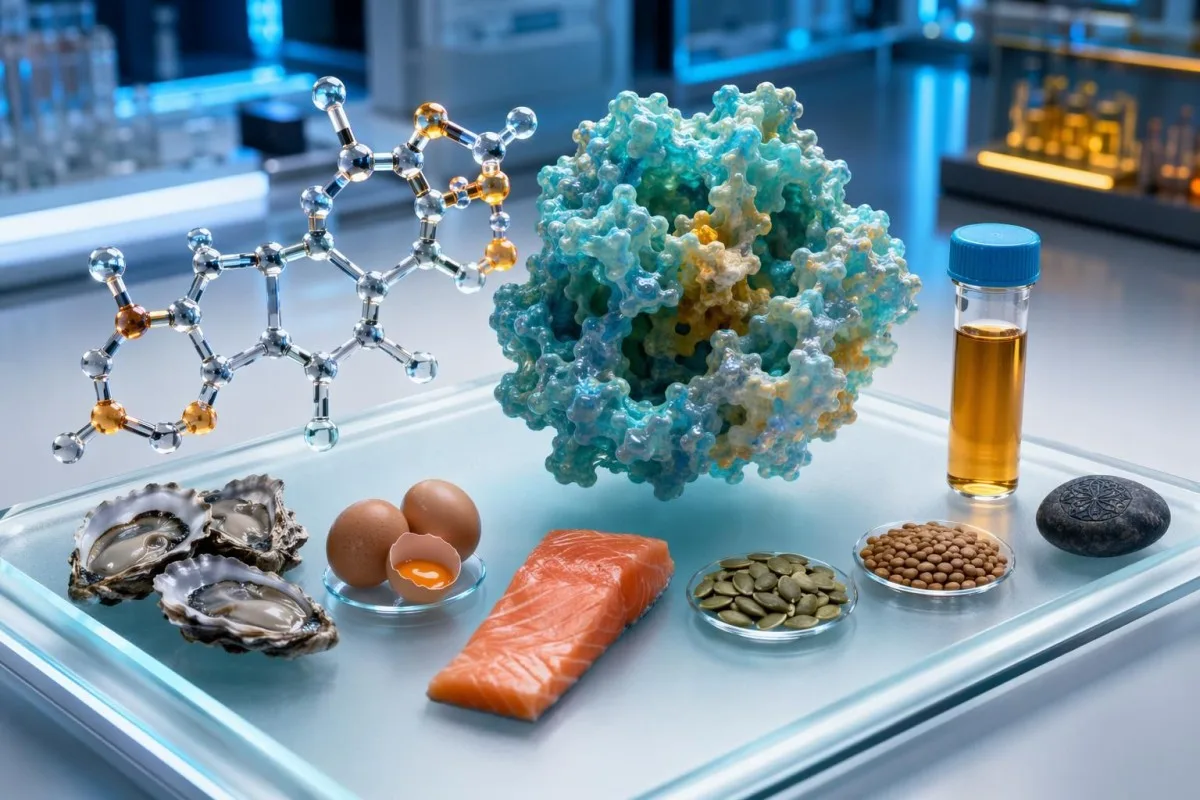
Yes, some foods can support testosterone—but the effect is usually visible only when a deficiency, insulin resistance, low energy intake, or high SHBG pattern is present. The lab panel tells you whether your diet is changing hormones or just changing expectations.


- Foods that boost testosterone usually work indirectly by correcting low zinc, low vitamin D, poor insulin sensitivity, low calorie intake, or excess body fat.
- Total testosterone is commonly considered low below about 300 ng/dL in adult men, but diagnosis requires symptoms and repeat morning testing.
- Free testosterone matters when SHBG is abnormal; high SHBG can hide low free T even when total T looks acceptable.
- Zinc and testosterone are linked most strongly in zinc deficiency; adult men need 11 mg/day, and supplement doses above 40 mg/day can suppress copper.
- Vitamin D status is best measured with 25-OH vitamin D; levels below 20 ng/mL are deficient, while many endocrine clinicians target at least 30 ng/mL.
- Insulin resistance lowers SHBG and often lowers total testosterone; HOMA-IR above about 2.5–3.0 suggests impaired insulin sensitivity in many adults.
- LH helps separate food-responsive patterns from gland or pituitary patterns; high LH with low testosterone needs medical review, not another diet hack.
- Retesting testosterone after diet change usually makes sense after 8–12 weeks, using a fasting 7–10 AM sample after decent sleep.
Do Foods That Boost Testosterone Really Move Labs?
Foods that boost testosterone can move labs when they correct a real bottleneck: low zinc, low vitamin D, insulin resistance, under-eating, or excessive alcohol-driven liver strain. They rarely turn a normal hormone panel into a superhuman one. In clinic, I look for changes in total testosterone, free testosterone, SHBG, LH, fasting insulin, HbA1c, zinc, vitamin D, liver enzymes, and body composition before giving any food credit.
I’m Thomas Klein, MD, and the pattern I see most often is not “one magic food fixed testosterone.” It is a 42-year-old man with total testosterone around 285 ng/dL, fasting insulin 18 µIU/mL, vitamin D 16 ng/mL, and SHBG 14 nmol/L; after weight loss, sleep repair, and more nutrient-dense food, the whole metabolic picture shifts.
Kantesti is an AI blood test analyzer that compares hormone values with metabolic, nutrient, liver, kidney, thyroid, and inflammation markers rather than reading testosterone alone. That matters because a low total testosterone result with low SHBG is a very different story from low total testosterone with high LH.
If you want the broader hormone-first checklist, our guide to hormonal imbalance labs explains which results usually belong together. For testosterone-supporting foods, the honest question is not “does this food raise T?” but “which abnormal lab would this food plausibly improve?”
Start With the Hormone Panel Before Changing Your Plate
A useful testosterone diet experiment starts with a morning hormone panel, not a shopping list. As of June 1, 2026, I still advise most symptomatic men to test total testosterone, free testosterone or calculated free T, SHBG, LH, FSH, prolactin, estradiol, TSH, HbA1c, fasting glucose, fasting insulin, vitamin D, zinc, magnesium, ferritin, ALT, AST, GGT, and lipids before blaming food.
Total testosterone in adult men is often flagged low below about 300 ng/dL, although several labs use age-adjusted ranges and different assay platforms. The Endocrine Society guideline states that testosterone deficiency should be diagnosed only in men with compatible symptoms and consistently low morning testosterone on repeat testing (Bhasin et al., 2018).
Free testosterone becomes especially useful when SHBG is outside the usual adult male range of roughly 10–57 nmol/L. High SHBG can make total testosterone look “fine” while free testosterone is low; low SHBG can make total testosterone look low even when free testosterone is adequate.
LH gives the most underused clue. Adult male LH is commonly around 1.7–8.6 IU/L; low testosterone with high LH points toward primary gland failure, while low testosterone with low or normal LH suggests pituitary signaling, obesity, medications, sleep apnea, or acute illness.
Kantesti’s biomarker guide covers more than 15,000 markers, which is useful when testosterone sits inside a bigger pattern. A testosterone result without SHBG, LH, insulin, and nutrient status is like hearing one instrument and guessing the whole orchestra.
Zinc-Rich Foods Help When Zinc Is Actually Low
Zinc-rich foods can support testosterone mainly when zinc intake or zinc status is low. Adult men need about 11 mg of zinc daily, and the tolerable upper intake level is 40 mg/day from food plus supplements; above that, copper deficiency becomes a real risk.
Prasad et al. reported that dietary zinc restriction lowered testosterone in healthy men, while zinc repletion improved testosterone in zinc-deficient older men (Prasad et al., 1996). That study is why I take zinc and testosterone seriously—but it is also why I do not promise a rise when zinc status is already normal.
Three ounces of cooked oysters can contain more than 30 mg of zinc, while 3 ounces of beef often provides about 5–7 mg. Pumpkin seeds, lentils, chickpeas, yogurt, and cashews contribute smaller amounts, which matters for people who avoid shellfish or red meat.
Plasma zinc is usually reported around 70–120 µg/dL, but it falls during inflammation and after meals, so I interpret it with CRP, albumin, and the diet history. If someone is taking 50 mg zinc tablets for months and their copper is low, the “testosterone stack” may be creating anemia or neuropathy risk instead.
For food-level planning, our article on zinc-rich foods gives practical intake clues. My simple rule: correct deficiency, avoid megadoses, and recheck copper if zinc supplements exceed food-level intake.
Vitamin D Foods Matter Most When 25-OH D Is Low
Vitamin D foods may support testosterone when 25-OH vitamin D is deficient, but food alone often moves the number slowly. A 25-OH vitamin D below 20 ng/mL is usually deficient, 20–29 ng/mL is often called insufficient, and many clinicians aim for at least 30 ng/mL in adults.
Pilz et al. found that vitamin D supplementation in overweight men increased total testosterone over one year, using a dose of about 3,332 IU/day (Pilz et al., 2011). That does not prove salmon or egg yolks will dramatically raise testosterone, but it does support checking vitamin D when testosterone is low.
Fatty fish may provide roughly 400–1000 IU vitamin D per serving, depending on species and source; an egg yolk usually provides far less, often around 40 IU. Fortified dairy or plant drinks can help, but labels vary by country and many patients overestimate intake by 2–3 fold.
The nuance: vitamin D can track with outdoor activity, body fat, sleep, and chronic illness. When a man’s 25-OH D rises from 14 to 34 ng/mL and testosterone rises too, I ask whether weight, training, insulin, and sleep changed at the same time.
Our guide to the vitamin D blood test explains why 25-OH D is the practical status marker. Active 1,25-OH vitamin D is usually not the right test for routine deficiency checks.
Protein and Energy Intake Are the Overlooked Testosterone Levers
Adequate calories and protein can raise testosterone when low energy availability is suppressing the hypothalamic-pituitary-gonadal axis. I worry when active men cut below about 30 kcal/kg fat-free mass/day, lose weight rapidly, and show low or low-normal LH with falling testosterone.
A surprisingly common case: a lean 35-year-old runner eats “clean,” trains six days weekly, and posts total testosterone of 240–320 ng/dL with low-normal LH. His issue is not a missing superfood; it is often too little total energy, too little carbohydrate around training, and poor sleep.
Protein needs vary, but many active adults do well around 1.2–1.6 g/kg/day, while aggressive fat-loss phases may require careful planning. Very high protein without enough calories can still leave the endocrine system reading scarcity.
Low-fat dieting is another trap. Some controlled feeding studies suggest very low-fat diets can lower testosterone modestly, though the evidence is mixed and not a license to overeat saturated fat; I usually prefer olive oil, nuts, eggs, yogurt, fish, legumes, and enough carbohydrates for training demands.
If fatigue and low muscle recovery are part of the picture, our protein requirements guide gives lab clues beyond testosterone. Albumin, prealbumin, BUN, creatinine, ferritin, and thyroid markers can all shift when intake is chronically inadequate.
Mediterranean Fats Support Hormones Without Chasing Cholesterol
Mediterranean-style fats may support testosterone indirectly by improving insulin sensitivity, inflammation, and cardiovascular risk. Cholesterol is a steroid hormone precursor, but eating more cholesterol does not reliably raise testosterone, and LDL risk still matters.
Extra-virgin olive oil, nuts, seeds, oily fish, avocado, legumes, vegetables, and minimally processed grains are the pattern I usually trust. When testosterone improves on this diet, the lab shift often comes with lower triglycerides, higher HDL, improved ALT, and lower fasting insulin rather than a direct “olive oil raised T” mechanism.
A fasting triglyceride-to-HDL ratio above about 3.0 in mg/dL units often hints at insulin resistance, especially when waist circumference is rising. If LDL-C or ApoB climbs during a high-fat experiment, I do not wave it away because libido improved.
Men sometimes bring me a panel with total testosterone up 40 ng/dL and LDL-C up 45 mg/dL after a butter-heavy diet. That trade is rarely attractive if the same hormone benefit could come from weight loss, sleep, resistance training, and unsaturated fats.
For a lab-based view of this eating pattern, see our Mediterranean diet markers. The useful target is not “high fat”; it is a pattern that improves insulin, liver enzymes, lipids, and body composition together.
Low-Glycemic Carbohydrates Can Raise SHBG by Improving Insulin Resistance
Low-glycemic carbohydrates may improve testosterone interpretation by lowering insulin resistance and raising SHBG toward a healthier range. Fasting insulin above 10–15 µIU/mL and HOMA-IR above roughly 2.5–3.0 often point to insulin resistance even when HbA1c still looks normal.
Insulin suppresses SHBG production in the liver, so obesity and insulin resistance often produce low SHBG and low total testosterone. Free testosterone may be less low than total testosterone in this pattern, which is why total T alone can exaggerate the problem.
The foods that help here are not exotic: oats, lentils, beans, berries, plain yogurt, vegetables, barley, intact grains, and high-fiber mixed meals. A practical target is 25–38 g/day of fiber, but I increase it gradually because gastrointestinal blowback makes people quit.
A1c below 5.7% is normal, 5.7–6.4% is prediabetes, and 6.5% or higher meets a diabetes threshold when confirmed. Yet fasting insulin can look abnormal years before A1c crosses the line, especially in men with abdominal weight gain and low SHBG.
Our HOMA-IR explainer shows how fasting glucose and insulin combine into a more useful signal. If SHBG rises from 12 to 25 nmol/L after diet change, total testosterone may rise even before free testosterone changes much.
Magnesium, Selenium, and Iodine Keep the Hormone Signals Cleaner
Magnesium, selenium, and iodine do not act like testosterone drugs, but deficiencies can distort the systems that regulate testosterone. Magnesium affects insulin sensitivity and sleep, selenium supports thyroid enzyme activity, and iodine deficiency can raise TSH and slow metabolic signaling.
Serum magnesium is commonly reported around 1.7–2.2 mg/dL, but it can look normal even when intake is marginal. I use it as a safety marker more than a perfect status marker, especially in people with diuretics, proton pump inhibitors, heavy sweating, or gastrointestinal disease.
Selenium intake has a narrow safety window. Adults need about 55 µg/day, while chronic intake above 400 µg/day can cause hair loss, nail changes, gastrointestinal symptoms, and abnormal thyroid patterns; one or two Brazil nuts may already exceed the daily need depending on soil content.
Iodine is trickier because both deficiency and excess can disturb thyroid labs. Urinary iodine below about 100 µg/L suggests insufficient population intake, but a single spot urine test is noisy for individuals, so I read it alongside TSH, free T4, symptoms, and diet.
For magnesium testing nuance, our magnesium lab guide is a good companion. If thyroid symptoms are present, the iodine test guide explains why more iodine is not always safer.
Eggs and Choline Support Liver Metabolism, Not Testosterone Magic
Eggs can fit a testosterone-supportive diet because they provide protein, choline, selenium, iodine, fat-soluble nutrients, and some vitamin D. One large egg contains roughly 6 g protein and about 147 mg choline, but egg intake should be judged with lipid and liver labs, not internet folklore.
The adult adequate intake for choline is 550 mg/day for men and 425 mg/day for women. Choline helps hepatic fat export, and fatty liver is often linked with low SHBG, high triglycerides, higher ALT or GGT, and lower total testosterone.
That does not mean every man should eat six eggs daily. If LDL-C, non-HDL-C, or ApoB rises after a high-egg diet, I adjust the plan; the hormone panel does not get to ignore cardiovascular biology.
A liver enzyme pattern matters here. ALT above about 40 IU/L in adult men is common in fatty liver, while GGT can rise with alcohol, fatty liver, and some medications; when ALT and GGT improve, SHBG sometimes improves too.
Our choline supplement guide covers when food is enough and when supplements are risky. For liver patterns, the liver function guide explains why ALT, AST, ALP, bilirubin, and GGT should be read together.
Crucifers and Fiber Help Hormone Balance Without Crushing Estradiol
Cruciferous vegetables and fiber may support hormone balance by improving bowel regularity, insulin sensitivity, and estrogen metabolite handling. They should not be used to “crush estrogen,” because adult men need estradiol for libido, bone density, mood, and vascular health.
Male estradiol often sits roughly around 10–40 pg/mL, depending on assay and age. Very low estradiol can cause joint discomfort, low libido, mood changes, and bone loss; very high estradiol may occur with obesity, alcohol excess, liver disease, or certain medications.
Broccoli, cabbage, cauliflower, kale, lentils, beans, chia, flax, oats, and berries are useful because they change the metabolic environment. The likely benefit is lower insulin, better gut transit, and healthier body composition—not a dramatic direct testosterone surge.
I occasionally see men taking high-dose DIM or aggressive “estrogen blockers” after reading supplement forums. If their estradiol comes back under 10 pg/mL with fatigue and low libido, the supplement may be part of the problem.
Our guide to estrogen in men walks through the lab patterns more carefully. Foods to balance hormones should support normal physiology, not force one hormone number as low as possible.
Retest After 8–12 Weeks and Control the Confounders
Retesting testosterone after a diet change usually makes sense after 8–12 weeks, using the same lab if possible. Draw the sample between 7 and 10 AM, ideally fasting, after reasonable sleep, and avoid hard training for 24–48 hours before the test.
Testosterone has a strong daily rhythm, especially in younger men, and morning values can be substantially higher than afternoon values. A result taken at 4 PM should not be compared casually with a 7:30 AM baseline.
Sleep loss can lower testosterone quickly. In real practice, I have seen men retest after two nights of travel, a viral illness, or a brutal leg workout and then panic over a 15–30% drop that resolves on repeat testing.
Acute calorie restriction also confounds interpretation. If someone begins a crash diet, loses 4 kg in 3 weeks, and testosterone falls, that does not prove the foods were bad; it may show the body detecting short-term scarcity.
For preparation details, our testosterone test prep guide gives a practical checklist. The blood test variability article helps separate true trends from ordinary lab noise.
When Food Will Not Fix Low Testosterone
Food will not reliably fix low testosterone caused by primary gland failure, pituitary disease, high prolactin, certain medications, untreated sleep apnea, severe chronic illness, or anabolic steroid withdrawal. A total testosterone below 264–300 ng/dL on two morning tests with symptoms deserves medical assessment.
High LH with low testosterone is not a zinc-deficiency pattern until proven otherwise. It often means the brain is sending a strong signal but the hormone-producing tissue is not responding adequately.
Low or normal LH with very low testosterone can be central suppression, obesity, medications, opioid use, glucocorticoids, high prolactin, pituitary disease, or acute illness. Prolactin above about 20 ng/mL in men usually needs repeat testing and context; much higher values need prompt medical review.
Erectile dysfunction, infertility, breast tenderness, headaches, visual symptoms, severe fatigue, or unexplained anemia change the urgency. Diet is still part of care, but it is not a substitute for diagnosis.
Our low testosterone guide covers next steps when the number is repeatedly low. If symptoms include sexual function concerns, the ED blood test guide explains why cardiovascular and diabetes markers belong in the same conversation.
How Kantesti Turns Diet Changes Into Biomarker Trends
Kantesti helps turn a testosterone diet experiment into a trend analysis by comparing hormone, metabolic, nutrient, liver, thyroid, and inflammation markers over time. A single testosterone value is weaker than a repeated pattern showing total T, free T, SHBG, LH, insulin, HbA1c, and nutrient status moving in a biologically coherent direction.
Kantesti is an AI blood test interpretation platform that can read a PDF or photo of lab results and place testosterone markers beside related metabolic and nutrient signals. In our analysis of large-scale anonymised result patterns, isolated “borderline low T” is much less informative than low T plus low SHBG plus high fasting insulin.
Our AI biomarker interpretation platform looks for combinations that clinicians also care about: low testosterone with high LH, low testosterone with high prolactin, low SHBG with high insulin, or high SHBG with low calculated free testosterone. Those clusters guide the next question more safely than chasing a single food.
A useful diet tracking plan records baseline labs, 8–12 week labs, body weight, waist circumference, training load, sleep average, alcohol intake, and any supplements. If total testosterone rises from 310 to 410 ng/dL but fasting insulin drops from 21 to 9 µIU/mL, the metabolic improvement may be the real driver.
For people who upload lab reports, the AI technology guide explains how our system reads structured and unstructured lab data. You can also compare slow changes with our lab trend graph approach.
Physician-Reviewed Research Notes and Safe Next Steps
The safest testosterone food plan is physician-reviewed, lab-guided, and modest in its claims. If your repeat morning testosterone remains below 264–300 ng/dL, or if LH, prolactin, hematocrit, PSA, liver enzymes, or glucose markers are abnormal, food should sit alongside proper clinical evaluation.
Kantesti is an AI-powered blood test analysis tool used by people across many countries, but our medical position is deliberately conservative: diet can correct bottlenecks, not override endocrine disease. Dr. Thomas Klein’s practical rule is to ask, “Which lab changed, why did it change, and did symptoms change with it?”
Our doctors and advisors review clinical logic through Kantesti’s Medical Advisory Board. The evidence base also matters; our clinical validation standards describe how we handle accuracy, safety, and review thresholds.
For readers who want methodology depth, Kantesti’s published validation work includes a pre-registered benchmark of anonymised blood test interpretation cases available through AI engine validation. That type of validation does not prove oysters raise testosterone; it supports safer interpretation of the labs people use to judge whether a diet helped.
The DOI items listed below are part of Kantesti’s broader 2026 medical education archive, not direct evidence for testosterone foods. I include that distinction because readers deserve clean separation between nutrition claims, clinical guidelines, and platform research.
Frequently Asked Questions
What foods boost testosterone the most?
Foods most likely to support testosterone are foods that correct a measurable problem: oysters or beef for low zinc intake, fatty fish or fortified foods for low vitamin D intake, eggs for protein and choline, legumes and oats for insulin resistance, and olive oil or nuts for healthier fat intake. The effect is usually indirect and modest, not drug-like. If total testosterone is below about 300 ng/dL, check free testosterone, SHBG, LH, fasting insulin, HbA1c, zinc, and 25-OH vitamin D before judging the food effect.
How long does it take for diet to raise testosterone?
Most diet-related testosterone changes should be judged after 8–12 weeks, not after a few days. Testosterone should be retested between 7 and 10 AM, preferably fasting, after decent sleep and no intense exercise for 24–48 hours. If weight loss, fasting insulin, vitamin D, or zinc status improves during that period, testosterone may rise as part of the same metabolic recovery.
Does zinc really increase testosterone?
Zinc can increase testosterone when zinc deficiency or low zinc intake is part of the problem, but it does not reliably raise testosterone in zinc-replete men. Adult men need about 11 mg/day of zinc, and the tolerable upper intake level is 40 mg/day from food plus supplements. Long-term high-dose zinc can lower copper and cause anemia or nerve symptoms, so plasma zinc and copper may need checking if supplements are used.
Which labs show whether testosterone foods are working?
The most useful labs are total testosterone, free testosterone or calculated free T, SHBG, LH, FSH, prolactin, estradiol, fasting insulin, fasting glucose, HbA1c, 25-OH vitamin D, zinc, magnesium, ferritin, ALT, AST, GGT, and a lipid panel. A food plan is more convincing when testosterone improves together with insulin resistance, nutrient status, liver enzymes, or body composition. A rise in total testosterone alone can be misleading if SHBG also changes.
Can low vitamin D cause low testosterone?
Low vitamin D is associated with lower testosterone in many observational studies, but association does not prove that vitamin D deficiency is the only cause. A 25-OH vitamin D level below 20 ng/mL is usually deficient, and 20–29 ng/mL is often considered insufficient. If testosterone rises after vitamin D improves, check whether weight, sleep, outdoor activity, and insulin resistance also changed.
Can food fix low testosterone without TRT?
Food can help low testosterone when the driver is low nutrient status, obesity, insulin resistance, under-eating, alcohol excess, poor sleep, or liver strain. Food is unlikely to fix repeated morning testosterone below 264–300 ng/dL when LH is high, prolactin is markedly elevated, or pituitary symptoms are present. Men with persistent symptoms and low results should get medical evaluation before assuming diet is enough.
Why did my total testosterone rise but free testosterone stay the same?
Total testosterone can rise because SHBG rises, especially after weight loss, better insulin sensitivity, thyroid changes, or reduced liver fat. Free testosterone may stay stable if the body is simply binding more testosterone rather than producing much more bioavailable hormone. This is why total testosterone, SHBG, and calculated free testosterone should be interpreted together instead of judging one number alone.
Can sleep apnea lower testosterone even if my diet is healthy?
Yes. Untreated obstructive sleep apnea can fragment sleep and is commonly linked with lower morning testosterone; seek assessment for loud snoring, witnessed breathing pauses, or daytime sleepiness rather than relying on food changes alone.
Should I use over-the-counter testosterone booster supplements while improving my diet?
Avoid relying on testosterone boosters; multi-ingredient products may contain high-dose minerals, stimulants, or undisclosed hormone-like substances. Bring the label to your clinician or pharmacist, especially if you take medicines or have liver, kidney, or prostate concerns.
Can overtraining or too much cardio lower my testosterone results?
Yes, heavy training with poor sleep, low calories, or inadequate recovery can temporarily suppress testosterone and raise stress markers. Take 1–2 easier days before testing, and avoid checking labs right after an unusually hard workout block.
Get AI-Powered Blood Test Analysis Today
Join over 2 million users worldwide who trust Kantesti for instant, accurate lab test analysis. Upload your blood test results and receive comprehensive interpretation of 15,000+ biomarkers in seconds.
📚 Referenced Research Publications
Klein, T., Mitchell, S., & Weber, H. (2026). Nipah Virus Blood Test: Early Detection & Diagnosis Guide 2026. Kantesti AI Medical Research.
Klein, T., Mitchell, S., & Weber, H. (2026). B Negative Blood Type, LDH Blood Test & Reticulocyte Count Guide. Kantesti AI Medical Research.
📖 External Medical References
⚕️ Medical Disclaimer
This article is for educational purposes only and does not constitute medical advice. Always consult a qualified healthcare provider for diagnosis and treatment decisions.
E-E-A-T Trust Signals
Experience
Physician-led clinical review of lab interpretation workflows.
Expertise
Laboratory medicine focus on how biomarkers behave in clinical context.
Authoritativeness
Written by Dr. Thomas Klein with review by Dr. Sarah Mitchell and Prof. Dr. Hans Weber.
Trustworthiness
Evidence-based interpretation with clear follow-up pathways to reduce alarm.