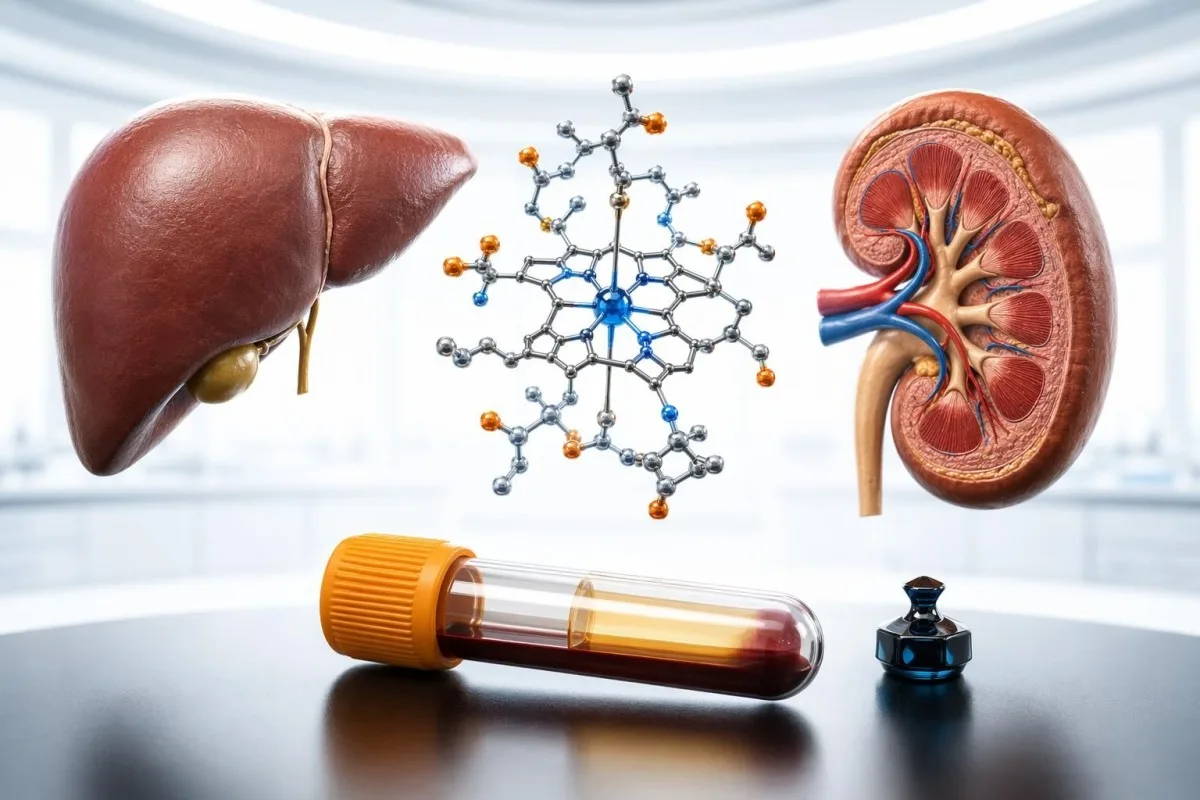
A high B12 result is not automatically vitamin toxicity. The clinical question is whether the number fits supplements, organ stress, abnormal binding proteins, or a misleading assay.


- High vitamin B12 causes most often include oral B12, injections, multivitamins, energy drinks, liver disease, kidney impairment, blood cell disorders, inflammation, cancer-associated binding proteins, or assay interference.
- Typical adult B12 range is about 200-900 pg/mL, which equals roughly 148-664 pmol/L; many labs flag results above 900-1000 pg/mL.
- Supplements of 500-1000 mcg daily can push serum B12 above range even when tissue stores are safe.
- Injections of 1000 mcg hydroxocobalamin or cyanocobalamin can keep B12 high for weeks to months, so timing matters.
- Liver clues include high ALT, AST, GGT, ALP or bilirubin with elevated B12, because the liver stores and transports large amounts of cobalamin.
- Kidney clues include eGFR below 60 mL/min/1.73 m² or abnormal urine ACR, especially when MMA is also high.
- Blood cell clues include high white cells, high platelets, basophilia, high hematocrit or abnormal smear findings, which may reflect increased B12-binding proteins.
- Functional B12 deficiency can still occur with high serum B12; methylmalonic acid above about 0.40 µmol/L and homocysteine above 15 µmol/L change the interpretation.
- Repeat testing is usually reasonable after 1-2 weeks off non-prescribed oral B12, but injected B12 may stay elevated for 2-3 months.
- Follow-up labs that often matter are CBC with differential, liver panel, creatinine/eGFR, CRP, MMA, homocysteine, active B12 and sometimes serum protein testing.
What an elevated B12 result usually means
High vitamin B12 causes are usually supplementation, recent injections, liver disease, kidney impairment, abnormal white-cell production, inflammation, cancer-associated binding proteins, or a lab assay artifact. A high number alone rarely means B12 toxicity. As of July 16, 2026, I read an unexpected B12 above 900-1000 pg/mL by asking two questions first: did extra B12 enter the body, and do the surrounding labs suggest release, reduced clearance, or a measurement problem?
Serum B12 measures total circulating cobalamin, not just the B12 your cells can use. Kantesti is an AI blood test interpretation platform that reads B12 beside CBC, liver enzymes, kidney markers and supplement history because isolated B12 is a surprisingly blunt test.
I’m Thomas Klein, MD, and in clinical practice I have seen a 28-year-old vegan with B12 at 1450 pg/mL from gummies, and a 71-year-old with B12 at 2100 pg/mL where the real clue was a rising GGT and abnormal bilirubin. The number was similar; the meaning was not.
The British Committee for Standards in Haematology guideline by Devalia et al. notes that serum B12 alone can misclassify deficiency and should be interpreted with metabolic markers when symptoms fit (Devalia et al., 2014). For baseline units and conversion, our B12 range guide explains why 1000 pg/mL is about 738 pmol/L.
How supplements and injections make B12 look high
Supplements are the commonest benign explanation for high B12, especially doses of 500-1000 mcg daily or recent 1000 mcg injections. A standard multivitamin with 2.4-25 mcg usually causes only modest movement, but high-dose tablets, sprays, energy drinks and fortified powders can push serum B12 above 900 pg/mL.
Oral B12 absorption has two routes: intrinsic-factor absorption saturates at about 1.5-2 mcg per dose, while passive diffusion absorbs roughly 1% of a large dose. That means a 1000 mcg tablet may still deliver about 10 mcg by diffusion, several times the adult daily requirement of 2.4 mcg.
Recent injections are different. A 1000 mcg intramuscular injection can leave serum B12 above the lab range for weeks, and I would not call that abnormal unless the clinical context disagrees.
The practical trick is to document dose, form and timing before ordering a broad work-up. If you are taking B12 for a documented deficiency, our low B12 supplement guide gives safer recheck intervals than guessing from one high result.
Why liver disease can raise B12 unexpectedly
Liver disease can raise B12 because the liver stores cobalamin and produces or releases B12-binding proteins. When B12 is high with ALT, AST, GGT, ALP or bilirubin abnormalities, doctors shift from dose questions to hepatobiliary pattern recognition.
A typical adult liver contains several milligrams of stored B12, enough to cover years of needs. Hepatocyte injury, cholestasis and advanced fibrosis can increase circulating B12 through release from injured cells and altered binding-protein handling.
The pattern matters more than a single enzyme. B12 at 1300 pg/mL with ALT 72 IU/L and GGT 180 IU/L points differently than B12 at 1300 pg/mL with a perfectly normal liver panel.
I pay special attention when direct bilirubin rises above about 0.3 mg/dL or ALP and GGT climb together, because that combination suggests bile-flow stress rather than a random supplement effect. Our guide to liver panel tests walks through the exact enzymes doctors compare.
How kidney impairment changes B12 interpretation
Kidney impairment can raise or confuse B12 interpretation by reducing clearance of B12-related proteins and by raising methylmalonic acid independently. An eGFR below 60 mL/min/1.73 m² changes how strongly doctors trust MMA and serum B12.
Creatinine, eGFR and urine albumin-creatinine ratio are the kidney context I want beside a high B12 result. A B12 of 1150 pg/mL with eGFR 48 mL/min/1.73 m² is not the same clinical problem as the same B12 with eGFR 105.
MMA is useful, but kidney function can raise MMA even without true B12 deficiency. In older adults, I often interpret MMA above 0.40 µmol/L cautiously if eGFR is below 45, because renal clearance becomes a confounder.
The KDIGO 2024 chronic kidney disease guideline continues to define CKD using markers such as eGFR below 60 mL/min/1.73 m² for at least 3 months or kidney damage markers such as albuminuria. For staging context, see our CKD stages guide.
Blood cell clues doctors check with elevated B12
Blood cell disorders can raise B12 by increasing haptocorrin, a B12-binding protein made by granulocytes and related cells. High B12 with high white cells, high platelets, basophilia or high hematocrit deserves a CBC-based review rather than reassurance from the B12 value alone.
Myeloproliferative neoplasms are the classic teaching example, but most patients with high B12 do not have one. The clue is the cluster: WBC above 11.0 x 10⁹/L, platelets above 450 x 10⁹/L, hematocrit above 49% in men or 48% in women, or unexplained basophils above 0.2 x 10⁹/L.
The reason this pattern matters is biochemical, not mystical. More granulocyte-line cells can produce more haptocorrin, and more haptocorrin can carry more total B12 in serum.
If the CBC is abnormal, doctors may review a smear, repeat the CBC, and consider tests such as JAK2 V617F or BCR-ABL depending on the pattern. Our CBC components guide explains which counts are percentages and which are absolute numbers.
When high B12 is a risk marker rather than a cause
High B12 can be a risk marker in some cancers and inflammatory illnesses, but it is not a cancer test. The safest interpretation is that persistent, unexplained B12 above about 1000-1500 pg/mL deserves context-driven follow-up, especially when weight loss, abnormal CBC, high CRP or liver abnormalities are present.
Arendt et al. reported in a Danish population cohort that plasma B12 above 800 pmol/L was associated with a roughly 6-fold higher first-year cancer incidence than expected, with the strongest signal soon after testing (Arendt et al., 2013). That finding does not mean B12 causes cancer; it means some illnesses raise B12-binding proteins or release stored B12.
I use symptoms to decide urgency. Unintentional weight loss over 5% in 6-12 months, night sweats, persistent fevers, new anemia or a rising alkaline phosphatase changes the conversation.
CRP and albumin add useful texture. A CRP above 10 mg/L with low albumin can suggest inflammation or chronic disease physiology, while a normal CRP, normal CBC and normal liver panel make a dangerous explanation less likely; our weight loss lab guide covers the broader work-up.
Lab artifacts that can falsely elevate B12
Assay interference can make B12 look high when biologically active B12 is not high. Macro-B12, heterophile antibodies, intrinsic-factor antibody effects and high-dose biotin can all distort immunoassay results, so repeat testing on a different method can be more useful than another supplement change.
Macro-B12 is usually an immunoglobulin-bound B12 complex that circulates slowly and may inflate total B12. It is not rare enough to ignore when B12 is very high but the patient, CBC, liver panel and kidney tests look normal.
Biotin is another nuisance. Doses above 5 mg daily, often sold for hair or nails, can interfere with some streptavidin-biotin immunoassays, although the direction of error depends on the assay design.
Arendt and Nexo proposed a diagnostic strategy for unexpected high plasma cobalamin that includes excluding supplementation, checking associated disease patterns and considering binding-protein or assay issues when the result does not fit (Arendt & Nexo, 2013). Our lab error checklist is useful when one result clashes with the rest of the panel.
Do high B12 levels cause symptoms?
High vitamin B12 symptoms are usually symptoms of the underlying cause, not symptoms from B12 itself. Most people with B12 at 1000-2000 pg/mL from supplements feel nothing, while fatigue, jaundice, swelling, nerve symptoms or weight loss usually point to liver, kidney, blood cell or functional deficiency issues.
True B12 toxicity is not well defined because B12 is water soluble and no tolerable upper intake level has been set for healthy adults. Still, I do see acne-like flares or rosacea worsening in a minority of patients after high-dose injections, usually at doses far above 1000 mcg weekly.
Functional deficiency is the twist patients hate. A person can have high total B12 but poor intracellular use, especially when MMA is high, homocysteine is high, or there are neurologic symptoms such as numbness or gait trouble.
MMA above about 0.40 µmol/L and homocysteine above 15 µmol/L support impaired B12-dependent metabolism, although kidney disease and folate status can blur the picture. Our MMA test guide explains why metabolic markers sometimes beat serum B12.
B12 reference ranges and cutoffs doctors use
Most adult laboratories report B12 as normal around 200-900 pg/mL, or about 148-664 pmol/L. Values above 900-1000 pg/mL are commonly flagged high, but the follow-up threshold depends on supplements, symptoms and whether the elevation persists.
The conversion is simple but often missed: 1 pg/mL of B12 equals about 0.738 pmol/L. A result of 1200 pg/mL is therefore about 886 pmol/L, which may look like a different severity depending on the country and lab report.
Some European labs use lower upper limits, while some US reports allow values close to 1100 pg/mL before flagging. That is why a red H flag should trigger pattern reading, not instant panic.
Kantesti AI interprets B12 results across unit systems by checking the stated reference interval on the uploaded report, not by assuming a single global cutoff. If your report mixes units, our unit conversion guide can help prevent apples-to-oranges comparisons.
When a repeat B12 test is the right next step
A repeat B12 test is reasonable when the result is unexpected, inconsistent with the rest of the panel, or possibly driven by recent supplements. For non-prescribed oral B12, many clinicians repeat after 1-2 weeks off B12 if safe; after injections, waiting 2-3 months may be more meaningful.
Do not stop prescribed B12 for pernicious anemia, bariatric surgery, ileal disease or neurologic symptoms without your clinician. In those settings, a high serum level may be the treatment goal, and the safer monitoring question is whether symptoms and MMA are improving.
If the patient is well, CBC is normal, ALT and GGT are normal, creatinine is stable and the high result follows a 1000 mcg supplement, I often document the dose and repeat later rather than ordering a scan. Medicine should be proportionate.
If B12 is above 1500 pg/mL with no supplement history, I usually repeat within 2-4 weeks and add CBC with differential, CMP, creatinine/eGFR and CRP. Our guide on repeating abnormal labs gives timing rules for one-off flags.
Follow-up labs that separate the main causes
The follow-up panel for unexplained high B12 usually includes CBC with differential, liver panel, creatinine/eGFR, CRP, MMA, homocysteine and sometimes active B12. Doctors add tests based on the abnormal cluster, not because high B12 alone diagnoses a disease.
CBC separates quiet supplement-related elevations from marrow or inflammatory clues. White cells above 11.0 x 10⁹/L, platelets above 450 x 10⁹/L or hemoglobin below the sex-specific range can change the differential in one glance.
The CMP separates liver and kidney pathways. ALT above roughly 40 IU/L, GGT above 60 IU/L in many adult men, bilirubin above 1.2 mg/dL or eGFR below 60 mL/min/1.73 m² all make a high B12 result less likely to be just a vitamin story.
Active B12, also called holotranscobalamin, can help when total B12 seems misleading, though availability varies by country. For a deeper explanation of holotranscobalamin and MMA together, read our active B12 guide.
Real-world lab patterns that change the meaning
The elevated vitamin B12 meaning changes when B12 is paired with specific lab clusters. B12 at 1400 pg/mL can be benign with normal CBC and normal CMP, concerning with high WBC and basophils, or hepatobiliary with high GGT and direct bilirubin.
A 52-year-old marathon runner once brought me B12 of 1280 pg/mL and AST 89 IU/L. Before anyone panicked, CK was over 2000 IU/L after a race, ALT was only mildly high, and the repeat after rest normalized the muscle-related markers.
Another patient had B12 of 1750 pg/mL, platelets 620 x 10⁹/L and basophils 0.24 x 10⁹/L. That pattern pushed the work-up toward hematology because the B12 result was a binding-protein clue, not a nutrition clue.
Kantesti AI compares sudden changes against prior panels because a jump from 420 to 1600 pg/mL after starting supplements reads differently than a slow rise over 18 months with worsening CBC indices. Our trend analysis guide explains why slope often beats a single snapshot.
How AI-assisted interpretation handles high B12
AI-assisted interpretation is most useful for high B12 when it reads the whole report, extracts units correctly, and flags discordant patterns for human follow-up. Kantesti is an AI-powered blood test analysis tool used by 2M+ people across 127+ countries, and our B12 logic prioritizes context over alarm.
Kantesti’s neural network checks whether B12 is high in pg/mL or pmol/L, whether the lab’s own range differs, and whether adjacent markers support a liver, kidney, CBC or assay pathway. A red H next to B12 is treated as a clue, not a diagnosis.
Our medical validation process focuses on pattern accuracy, unit handling and clinically sensible escalation, because a high B12 result can mean very different things in different panels. We describe that review process in our clinical validation materials.
Privacy also matters here, because supplement lists, family history and old PDFs can be revealing. If you want the technical side of how our models parse uploaded reports, the technology guide explains OCR, biomarker mapping and safeguards without pretending AI replaces a clinician.
When high B12 deserves medical review
Medical review is warranted when high B12 is persistent, unexplained, above about 1500-2000 pg/mL, or paired with abnormal CBC, liver, kidney or inflammatory markers. Same-week review is more appropriate if there is jaundice, dark urine, significant weight loss, fevers, night sweats, new anemia or very abnormal white-cell counts.
I tell patients not to diagnose themselves from one flagged B12 result. But I also do not ignore a persistent high result when the surrounding labs are whispering the same story.
A sensible first appointment brings the supplement list, injection dates, diet pattern, alcohol history, medication list and at least one prior lab panel if available. That often saves 20 minutes and prevents duplicate testing.
Kantesti is an AI biomarker interpretation platform with physician oversight, and the clinical standards behind our content are reviewed through our medical advisory board. Thomas Klein, MD, reviews high-B12 content with the same principle used in clinic: explain the likely benign causes first, then define the smaller group that needs timely follow-up.
Frequently Asked Questions
What are the most common high vitamin B12 causes?
The most common high vitamin B12 causes are high-dose oral supplements, recent B12 injections, multivitamins or fortified drinks. When there is no supplement explanation, doctors check liver enzymes, creatinine/eGFR, CBC with differential, CRP and sometimes MMA or active B12. A result above 900-1000 pg/mL is often flagged high, but the clinical meaning depends on the surrounding labs.
Can high B12 levels cause symptoms?
High B12 levels usually do not cause symptoms directly, especially when the level is high from oral supplements or injections. Symptoms such as jaundice, swelling, weight loss, night sweats, numbness or severe fatigue usually point to the underlying condition or to functional B12 issues. MMA above about 0.40 µmol/L and homocysteine above 15 µmol/L can suggest impaired B12 metabolism even when serum B12 is high.
How long should I stop B12 before repeating the test?
If B12 is not prescribed, many clinicians repeat serum B12 after 1-2 weeks off oral B12 supplements, fortified powders and energy drinks. If you recently had a 1000 mcg injection, serum B12 can stay high for weeks to months, so a 2-3 month interval may be more informative. Do not stop prescribed B12 for pernicious anemia, bariatric surgery, bowel disease or neurologic symptoms without medical advice.
Does high B12 mean liver disease?
High B12 does not automatically mean liver disease, but liver disease is one of the main non-supplement causes. The liver connection becomes more plausible when B12 is high with ALT, AST, GGT, ALP or bilirubin abnormalities. A high B12 result with a completely normal liver panel, normal CBC and normal kidney function is less concerning than the same B12 result with multiple abnormal markers.
Can you be B12 deficient if your B12 level is high?
Yes, functional B12 deficiency can occur even when total serum B12 is high, although it is not the usual pattern. This happens because total B12 includes cobalamin attached to binding proteins, not just B12 available inside cells. Doctors may order MMA, homocysteine and active B12 when nerve symptoms, anemia or cognitive symptoms do not match the serum B12 result.
What follow-up labs are useful for unexplained elevated B12?
Useful follow-up labs for unexplained elevated B12 include CBC with differential, liver panel, creatinine/eGFR, CRP, MMA, homocysteine and sometimes active B12. CBC abnormalities such as WBC above 11.0 x 10⁹/L or platelets above 450 x 10⁹/L may point toward blood cell overproduction or inflammation. Liver enzyme or bilirubin abnormalities shift the work-up toward hepatobiliary causes.
When is high B12 urgent?
High B12 is urgent when it occurs with warning signs such as jaundice, dark urine, severe weakness, new confusion, marked weight loss, persistent fevers, night sweats or very abnormal CBC results. A persistent unexplained B12 above about 1500-2000 pg/mL should be reviewed even without symptoms, but it is usually not an emergency by itself. The urgency comes from the associated symptoms and lab pattern, not from the B12 number alone.
Should I stop prescribed B12 injections because my blood level is high?
No—do not stop or change prescribed B12 treatment solely because a blood level is high. Your clinician can decide whether treatment remains necessary and can time repeat testing around your injection schedule and the original reason for treatment.
Get AI-Powered Blood Test Analysis Today
Join over 2 million users worldwide who trust Kantesti for instant, accurate lab test analysis. Upload your blood test results and receive comprehensive interpretation of 15,000+ biomarkers in seconds.
📚 Referenced Research Publications
Klein, T., Mitchell, S., & Weber, H. (2026). C3 C4 Complement Blood Test & ANA Titer Guide. Kantesti AI Medical Research.
Klein, T., Mitchell, S., & Weber, H. (2026). Nipah Virus Blood Test: Early Detection & Diagnosis Guide 2026. Kantesti AI Medical Research.
📖 External Medical References
⚕️ Medical Disclaimer
This article is for educational purposes only and does not constitute medical advice. Always consult a qualified healthcare provider for diagnosis and treatment decisions.
E-E-A-T Trust Signals
Experience
Physician-led clinical review of lab interpretation workflows.
Expertise
Laboratory medicine focus on how biomarkers behave in clinical context.
Authoritativeness
Written by Dr. Thomas Klein with review by Dr. Sarah Mitchell and Prof. Dr. Hans Weber.
Trustworthiness
Evidence-based interpretation with clear follow-up pathways to reduce alarm.