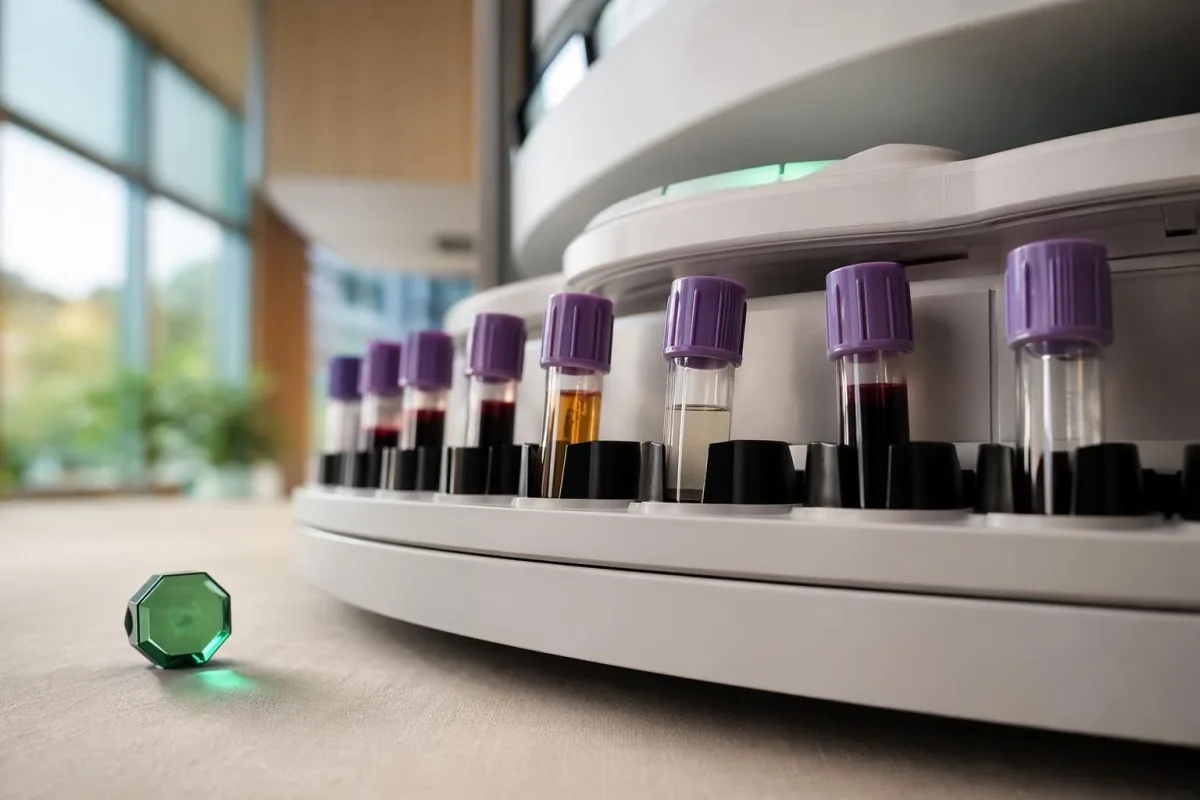
For most healthy men in their 20s, a useful baseline means CBC, metabolic panel, lipids, glucose or HbA1c, plus targeted thyroid, iron, vitamin D, hormone, kidney urine, and infection tests when risk fits. The point is not to hunt for disease; it is to know your own normal before age, medication, weight change, alcohol, shift work, or training muddy the picture.


- Core baseline panel for many men in their 20s includes CBC, CMP or BMP, lipid panel, fasting glucose or HbA1c, and blood pressure paired with body-weight context.
- Lipids should usually be checked at least once in early adulthood; LDL-C above 160 mg/dL or non-HDL-C above 190 mg/dL is not just a lifestyle footnote.
- HbA1c below 5.7% is generally normal, 5.7-6.4% suggests prediabetes, and 6.5% or higher meets the diabetes threshold when confirmed.
- Creatinine and eGFR are useful but imperfect in muscular young men; urine albumin-creatinine ratio can reveal early kidney stress before creatinine rises.
- ALT and AST can rise after hard training; I usually avoid checking liver enzymes within 48-72 hours of unusually heavy exercise unless symptoms demand it.
- Ferritin below about 30 ng/mL can suggest depleted iron stores even when hemoglobin remains normal, especially in endurance athletes, vegetarians, and frequent donors.
- Testosterone is not a routine screening test for every 25-year-old; when symptoms fit, draw total testosterone before 10 a.m. and repeat a low result.
- Trends beat flags because a creatinine moving from 0.85 to 1.15 mg/dL, or triglycerides doubling within a year, can matter even if the lab still prints normal.
What baseline labs should a healthy man in his 20s ask for?
A practical blood test for men in their 20s usually starts with CBC, CMP or BMP, lipid panel, fasting glucose or HbA1c, and targeted add-ons based on family history, diet, training, sexual health, medications, and symptoms. Kantesti is an AI blood test analyzer that helps turn those baseline numbers into personal trends rather than one-off green or red flags.
The baseline I like for a low-risk 22-year-old is deliberately boring: CBC, electrolytes, creatinine/eGFR, ALT/AST, lipids, and glucose metabolism. If you want a deeper marker menu, our biomarker guide maps thousands of common and specialist tests into clinical categories.
In my clinic, the first panel is less about diagnosing today and more about preserving a clean snapshot before life gets noisy. A man who starts creatine, gains 12 kg of muscle, works nights, or begins acne medication will have a very different lab context six months later.
A normal range is population-based, not personal. Your ALT of 18 IU/L, LDL-C of 92 mg/dL, or hemoglobin of 15.1 g/dL becomes more valuable when it is compared with your own later results, which is why personal baseline tracking often finds risk earlier than a single annual flag.
Thomas Klein, MD, usually tells young men this: do not order every fashionable biomarker on the first pass. Start with tests that change decisions, then add focused markers when the story asks for them.
How should men time fasting, exercise, and repeat testing?
Timing can change baseline blood work more than most men expect, especially for triglycerides, glucose, creatinine, CK, AST, testosterone, and cortisol. For clean blood work for young men, keep the first baseline boring: normal sleep, no unusual workout, normal hydration, and no new supplement experiment that week.
For fasting labs, 8-12 hours without calories is usually enough; water is fine and often prevents falsely high albumin, sodium, and BUN. Our guide to fasting rules explains which results actually move after meals.
Hard training is the classic trap. After a heavy leg day or endurance race, CK can exceed 1,000 IU/L, AST can rise above ALT, and creatinine may look higher because muscle turnover and dehydration are both in play.
I usually repeat a surprising abnormal result before labeling a healthy 24-year-old. Kantesti AI flags timing-sensitive combinations, but a clinician still needs to know whether the test followed a bachelor-party weekend, a viral illness, or a new pre-workout powder.
The practical interval is simple: repeat mildly abnormal, low-risk markers in 2-8 weeks under cleaner conditions. If potassium is above 6.0 mmol/L, glucose is very high, or hemoglobin is unexpectedly low, do not wait casually; those need same-day clinical judgment.
Why does a CBC matter before symptoms appear?
A CBC gives a baseline for oxygen-carrying capacity, immune cell pattern, platelet count, and red-cell size before illness or medication changes the picture. In adult men, hemoglobin is commonly around 13.5-17.5 g/dL, and values below the lab’s male range deserve follow-up rather than a shrug.
The CBC is where I often catch early patterns that men dismiss as fitness or stress. A falling MCV, rising RDW, or hemoglobin drifting from 15.4 to 13.8 g/dL can precede obvious fatigue by months.
White cells need absolute counts, not just percentages. A lymphocyte percentage of 48% may look alarming, but if the absolute lymphocyte count is 2.4 x 10⁹/L, the result can be normal; our CBC differential guide walks through that common mismatch.
Platelets are another trend marker. A platelet count of 145 x 10⁹/L may be normal for one man for years, while a new jump to 520 x 10⁹/L after infection, iron deficiency, or inflammation changes the risk conversation.
One anecdote stays with me: a 27-year-old cyclist had normal hemoglobin but rising RDW over three tests. Ferritin later came back at 18 ng/mL, and fixing the iron deficit changed his training recovery more than any performance supplement he had bought.
Which kidney and electrolyte markers are useful in your 20s?
Creatinine, eGFR, sodium, potassium, bicarbonate, calcium, and sometimes urine albumin-creatinine ratio are the kidney-related baseline tests I use most in young men. A normal eGFR is usually above 90 mL/min/1.73 m², but muscle mass can make creatinine-based estimates look worse than kidney function really is.
A muscular 25-year-old with creatinine of 1.25 mg/dL is not automatically sick; he may simply produce more creatinine. The better question is whether creatinine is stable, whether urine albumin is normal, and whether blood pressure is quietly high.
The urine albumin-creatinine ratio is often underused in young men with family kidney disease, hypertension, diabetes risk, or anabolic steroid exposure. KDIGO 2024 defines albuminuria as ACR of at least 30 mg/g when persistent, and confirmation over 3 months separates noise from chronic kidney disease (KDIGO CKD Work Group, 2024).
Electrolytes also tell lifestyle stories. Low sodium below 135 mmol/L can follow overhydration, endurance events, or certain medications, while potassium above 5.5 mmol/L should be repeated quickly to exclude sample handling error and real cardiac risk.
If BUN and creatinine disagree, patterns help more than either number alone. Our research-backed BUN creatinine guide explains why a high ratio can suggest dehydration or high protein intake, while a low ratio can point toward low protein intake or liver context.
How should liver enzymes be read in young men?
ALT, AST, ALP, GGT, bilirubin, and albumin are useful liver baseline markers, but they are easily distorted by alcohol, hard exercise, body composition, viral illness, and supplements. ALT above about 40-50 IU/L in a young man is worth contextual review, not automatic panic.
The pattern matters. ALT-predominant elevation often fits liver-cell irritation, while AST higher than ALT after intense training can be muscle-driven, especially when CK is high and GGT is normal.
I see this every summer: a fit 23-year-old gets labs two days after a brutal workout, AST is 89 IU/L, ALT is 46 IU/L, and he spends a weekend thinking he has liver disease. A repeat after 7 days of rest often looks boring; our liver enzyme guide shows the clues I use.
GGT adds useful context when alcohol or bile-duct stress is on the table. A GGT above 60 IU/L in an adult male, especially with elevated ALP or bilirubin, usually deserves a more deliberate hepatobiliary review.
Bilirubin is the exception that worries people unnecessarily. Mild isolated total bilirubin around 1.2-2.5 mg/dL with normal ALT, AST, ALP, and CBC often fits Gilbert syndrome, particularly after fasting or illness.
Which cholesterol markers matter most before age 30?
A baseline lipid panel before 30 should include total cholesterol, LDL-C, HDL-C, triglycerides, and non-HDL-C; ApoB and Lp(a) are useful when family history or discordant results raise suspicion. LDL-C above 160 mg/dL in a man in his 20s is a risk signal, not merely an age problem to revisit later.
According to the 2018 AHA/ACC cholesterol guideline, risk-enhancing factors include persistently elevated LDL-C of 160 mg/dL or higher, triglycerides of 175 mg/dL or higher, and elevated Lp(a) or ApoB in selected patients (Grundy et al., 2019). That guidance is aimed at decisions, but the baseline value is useful long before medication is discussed.
Young men often ask whether HDL can cancel out high LDL. It usually cannot; an LDL-C of 178 mg/dL with HDL-C of 70 mg/dL still leaves a high lifetime particle burden, especially if ApoB is elevated.
ApoB counts atherogenic particles, which is why it helps when LDL-C looks fine but triglycerides or metabolic risk are climbing. If triglycerides exceed 200 mg/dL, the AHA/ACC guideline treats ApoB as a reasonable secondary marker; our ApoB explainer goes into the mismatch.
One baseline Lp(a) is enough for many people because it is largely inherited. I consider it especially in a 20-something man whose father, brother, or uncle had premature coronary disease before age 55.
Should glucose and HbA1c be checked in your 20s?
Glucose and HbA1c are reasonable baseline tests in many men in their 20s, especially with abdominal weight gain, family history, high triglycerides, low HDL, sleep apnea risk, or steroid exposure. HbA1c below 5.7% is normal, 5.7-6.4% suggests prediabetes, and 6.5% or higher supports diabetes when confirmed.
The USPSTF recommends diabetes screening from age 35 to 70 in adults with overweight or obesity, but younger adults are not magically protected (USPSTF, 2021). I test earlier when a 26-year-old has a waist circumference above 102 cm, triglycerides above 150 mg/dL, or a strong family pattern.
Fasting glucose can miss early insulin resistance. A fasting glucose of 92 mg/dL may look normal while fasting insulin is 18 µIU/mL and triglycerides-to-HDL ratio is rising; that is the metabolic smoke before the fire.
Kantesti is an AI lab test interpretation service that reads HbA1c alongside triglycerides, HDL-C, ALT, weight context, and repeat patterns rather than treating sugar as an isolated number. For a deeper clinical framework, see our insulin resistance guide.
HbA1c has blind spots. Iron deficiency, hemoglobin variants, recent blood loss, or rapid red-cell turnover can make the result disagree with glucose, and I take that mismatch seriously in young men from diverse genetic backgrounds.
When is thyroid testing worth adding?
TSH is worth adding when a young man has fatigue, unexplained weight change, cold intolerance, palpitations, constipation, anxiety symptoms, high cholesterol, or a family history of thyroid disease. A typical adult TSH reference range is about 0.4-4.0 mIU/L, though labs and clinicians differ near the edges.
Routine thyroid screening for every asymptomatic 21-year-old is debated. I add it when the story fits, because mild thyroid dysfunction can push LDL-C, heart rate, weight, mood, and training recovery in directions that look like lifestyle failure.
A high TSH with normal free T4 is called subclinical hypothyroidism, but the label hides nuance. TSH of 4.8 mIU/L after poor sleep and illness is different from TSH of 9.5 mIU/L with positive TPO antibodies and LDL-C of 170 mg/dL.
Biotin is a genuine lab trap. Doses of 5-10 mg daily, common in hair and nail supplements, can distort some thyroid immunoassays, so I usually stop biotin 48-72 hours before testing when safe to do so.
Our thyroid panel guide explains when free T4, free T3, TPO antibodies, and thyroglobulin antibodies actually add value. Most men do not need the full panel first.
Which nutrient labs are useful for young men?
Ferritin, B12, folate, vitamin D, magnesium, and zinc are not mandatory for every healthy man, but they are useful when diet, symptoms, athletic load, gut issues, or blood donation raise the probability of deficiency. Ferritin below about 30 ng/mL can indicate depleted iron stores even when hemoglobin is still normal.
Men do get iron deficiency. I see it in endurance athletes, frequent donors, vegetarians, men with celiac disease, and those using acid-suppressing medication long term.
B12 is similar: serum B12 below 200 pg/mL is usually low, 200-350 pg/mL is a gray zone, and methylmalonic acid can clarify borderline cases. The symptom pattern matters because neuropathy can appear before anemia.
Vitamin D is best measured as 25-hydroxyvitamin D, not the active 1,25-dihydroxy form for routine deficiency screening. Many labs call below 20 ng/mL deficient, while 20-30 ng/mL is often treated as insufficient depending on bone risk, sun exposure, and local guidance.
If you are supplementing without labs, you may be treating the wrong problem. Our guide to vitamin deficiency testing covers which markers are reliable and which are mostly marketing noise.
Should testosterone be part of routine blood work?
Testosterone should not be a reflex screening test for every man in his 20s, but it is appropriate when low libido, erectile dysfunction, infertility concerns, low morning erections, delayed puberty history, pituitary symptoms, or unexplained low bone density are present. A low total testosterone result should be drawn before 10 a.m. and confirmed on a separate morning.
Normal testosterone ranges vary widely by assay, but many labs flag total testosterone below about 300 ng/dL as low in adult men. In a symptomatic 24-year-old, I want total testosterone, SHBG, calculated free testosterone, LH, FSH, prolactin, and sometimes iron studies before anyone talks about treatment.
Sleep is not a footnote here. One week of restricted sleep can lower morning testosterone enough to create a misleading result, and obesity lowers SHBG, which can make total testosterone look worse than free testosterone.
Avoid testing after a night shift, acute illness, heavy alcohol, or a very late bedtime if you can. Our testosterone preparation guide gives the practical timing rules that prevent unnecessary anxiety.
Thomas Klein, MD, is cautious about testosterone panels because numbers can become identity labels. The clinical question is not whether a man is in the top quartile; it is whether symptoms, repeated labs, and safety markers fit a diagnosis.
Which optional markers are worth considering?
Optional baseline markers such as hs-CRP, uric acid, ApoB, Lp(a), urine ACR, and sometimes ferritin can be useful when selected for a specific risk question. hs-CRP below 1 mg/L is generally low cardiovascular inflammatory risk, 1-3 mg/L is intermediate, and above 3 mg/L is higher risk when persistent and not due to infection.
The word optional does not mean useless. It means the test should have a job, such as clarifying inherited cardiovascular risk, kidney risk, metabolic inflammation, gout tendency, or supplement safety.
Uric acid is a good example. A value above 7.0 mg/dL in men can increase gout risk, but I do not treat a number alone in an asymptomatic 22-year-old; I look at kidney function, alcohol pattern, fructose intake, body weight, and family history.
hs-CRP is fragile. A cold, dental infection, hard workout, or vaccine response can push it above 3 mg/L, so I repeat it after 2-3 weeks of wellness before calling it persistent inflammation.
If your report simply says CRP, it may not be the high-sensitivity cardiac version. Our CRP comparison guide explains why a routine CRP of 8 mg/L and an hs-CRP of 2.1 mg/L answer different clinical questions.
Which infection and sexual health tests belong in a baseline?
Sexual health and infection screening should be based on exposure risk, vaccination status, partners, symptoms, and local recommendations, not embarrassment. HIV, syphilis serology, hepatitis B, hepatitis C, chlamydia, gonorrhea, and sometimes hepatitis immunity testing can be more important than another wellness biomarker.
A negative STI panel is not a moral certificate; it is a time-stamped result with window periods. HIV antigen-antibody tests often detect infection earlier than antibody-only tests, but timing after exposure still matters.
Syphilis screening usually uses either a traditional sequence, such as RPR followed by treponemal confirmation, or a reverse sequence starting with treponemal testing. Our STD blood test guide explains what blood tests can and cannot detect.
Hepatitis B is a vaccination and immunity question as much as an infection question. A young man in healthcare, travel work, contact sports, or higher-risk sexual networks may need HBsAg, anti-HBs, and anti-HBc interpreted together.
Hepatitis C screening is now more common than many men expect because effective treatment changes long-term liver risk. If you have abnormal ALT or a past exposure risk, our hepatitis results guide shows why antibody and RNA results mean different things.
How do you turn one blood test into a useful trend?
A single baseline becomes clinically useful when future results are compared under similar conditions: same time of day, similar fasting state, similar training load, and ideally the same lab method. Kantesti’s neural network is built to identify marker clusters and direction of travel, not just isolated high-low labels.
I usually want a repeat baseline every 12-24 months in a healthy man in his 20s, sooner if weight, medication, training, diet, or symptoms change. The goal is not obsessive testing; it is to keep enough data to recognize drift.
A triglyceride result rising from 72 to 148 mg/dL, ALT moving from 19 to 44 IU/L, and fasting glucose rising from 84 to 99 mg/dL tells a metabolic story even if every value remains near normal. That is why trend analysis is more useful than screenshot-by-screenshot interpretation.
Kantesti is an AI-powered blood test analysis tool used by people across 127+ countries to compare lab PDFs and photos in context. Our technology guide explains how structured extraction, unit conversion, and pattern recognition reduce common reading errors.
Do not outsource judgment completely. If a result is critical, if you have chest pain, fainting, severe weakness, black stools, fever, or rapid weight loss, trends can wait; a clinician should see you.
Research notes and Kantesti clinical governance
Kantesti’s baseline guidance is reviewed against clinical standards, physician oversight, and published interpretation methodology rather than search-volume trends. As of June 7, 2026, our medical review process prioritizes safety triggers, unit accuracy, reference-range context, and uncertainty statements for young adults with low pre-test probability.
Our doctors and advisors are listed through the medical advisory board, and Kantesti’s clinical standards are described in our medical validation materials. That matters because preventive labs in a 24-year-old create many borderline results that should not be overdiagnosed.
APA citation: Kantesti Research Group. (2026). BUN/Creatinine Ratio Explained: Kidney Function Test Guide. Zenodo. https://doi.org/10.5281/zenodo.18207872. ResearchGate: ResearchGate link. Academia.edu: Academia.edu link. This kidney interpretation paper supports the baseline discussion of BUN, creatinine, hydration, and protein-intake patterns in young men.
APA citation: Kantesti Research Group. (2026). Urobilinogen in Urine Test: Complete Urinalysis Guide 2026. Zenodo. https://doi.org/10.5281/zenodo.18226379. ResearchGate: ResearchGate link. Academia.edu: Academia.edu link. The related urinalysis guide is useful when a baseline blood panel needs urine context for kidney or liver clues.
Bottom line from Thomas Klein, MD: a baseline is not a diagnosis, and normal is not a guarantee. It is a reference point that becomes more valuable every year you keep it.
Frequently Asked Questions
What blood test should a man in his 20s get as a baseline?
A practical baseline blood test for a man in his 20s usually includes a CBC, CMP or BMP, lipid panel, fasting glucose or HbA1c, and targeted tests based on risk. Targeted add-ons may include TSH, ferritin, B12, vitamin D, urine albumin-creatinine ratio, STI screening, hepatitis tests, ApoB, Lp(a), or testosterone when symptoms fit. The baseline is most useful when repeated every 12-24 months under similar conditions.
Do men in their 20s need cholesterol testing?
Yes, most men should know their cholesterol values at least once in early adulthood, especially if there is family history of early heart disease. LDL-C below 100 mg/dL is often favorable, LDL-C of 160 mg/dL or higher is a risk-enhancing level, and LDL-C of 190 mg/dL or higher can suggest familial hypercholesterolemia. ApoB and Lp(a) are useful add-ons when family history or triglycerides make standard LDL-C less informative.
Should a healthy 25-year-old get testosterone checked?
A healthy 25-year-old does not automatically need testosterone testing, but symptoms can justify it. Testing is appropriate for low libido, erectile dysfunction, infertility concerns, low morning erections, unexplained low bone density, or signs of pituitary disease. Total testosterone should be drawn before 10 a.m., and a low result should be repeated on a different morning before diagnosis.
How often should young men repeat preventive blood work?
Many healthy men in their 20s can repeat preventive blood work every 12-24 months, depending on risk and prior results. Repeat sooner after major weight change, new medication, anabolic steroid exposure, high alcohol intake, intense endurance training, new symptoms, or abnormal baseline values. A mildly abnormal low-risk result is often repeated in 2-8 weeks under cleaner conditions before further workup.
Does fasting matter for baseline blood tests in men?
Fasting matters for some baseline tests but not all of them. Triglycerides, fasting glucose, insulin, and some metabolic calculations are more interpretable after 8-12 hours without calories, while CBC, creatinine, liver enzymes, HbA1c, and many thyroid tests do not strictly require fasting. Water is allowed and can reduce dehydration-related false highs in albumin, sodium, BUN, and hematocrit.
What lab results are urgent for men in their 20s?
Urgent results include potassium above about 6.0 mmol/L, very low hemoglobin, glucose above 300 mg/dL with symptoms, platelets below 50 x 10⁹/L, severe neutropenia, or markedly abnormal liver tests with jaundice or confusion. Chest pain, fainting, severe weakness, black stools, high fever, or rapid weight loss should override any plan to simply monitor trends. Critical lab ranges vary by laboratory, so same-day clinician review is safest when the report labels a result critical.
What can I do if I feel faint during blood draws?
Tell the phlebotomist beforehand so you can have the blood drawn while lying down, and ask whether you can drink water beforehand. Stay lying or seated until you feel steady, and avoid standing up suddenly.
Can I use blood tests from a workplace physical as my baseline?
Yes, if the report includes the actual values, units, reference ranges, and collection date. Keep a copy and compare future results using the same laboratory when possible, since methods and reference intervals can differ.
Can creatine supplements make my kidney blood test look abnormal?
Yes, creatine can raise creatinine in some people without true kidney damage, especially if you are muscular or train heavily. Tell your clinician before testing; they may compare prior results, check urine albumin, or consider cystatin C if the picture is unclear.
Get AI-Powered Blood Test Analysis Today
Join over 2 million users worldwide who trust Kantesti for instant, accurate lab test analysis. Upload your blood test results and receive comprehensive interpretation of 15,000+ biomarkers in seconds.
📚 Referenced Research Publications
Klein, T., Mitchell, S., & Weber, H. (2026). BUN/Creatinine Ratio Explained: Kidney Function Test Guide. Kantesti AI Medical Research.
Klein, T., Mitchell, S., & Weber, H. (2026). Urobilinogen in Urine Test: Complete Urinalysis Guide 2026. Kantesti AI Medical Research.
📖 External Medical References
KDIGO CKD Work Group (2024). KDIGO 2024 Clinical Practice Guideline for the Evaluation and Management of Chronic Kidney Disease. Kidney International.
⚕️ Medical Disclaimer
This article is for educational purposes only and does not constitute medical advice. Always consult a qualified healthcare provider for diagnosis and treatment decisions.
E-E-A-T Trust Signals
Experience
Physician-led clinical review of lab interpretation workflows.
Expertise
Laboratory medicine focus on how biomarkers behave in clinical context.
Authoritativeness
Written by Dr. Thomas Klein with review by Dr. Sarah Mitchell and Prof. Dr. Hans Weber.
Trustworthiness
Evidence-based interpretation with clear follow-up pathways to reduce alarm.