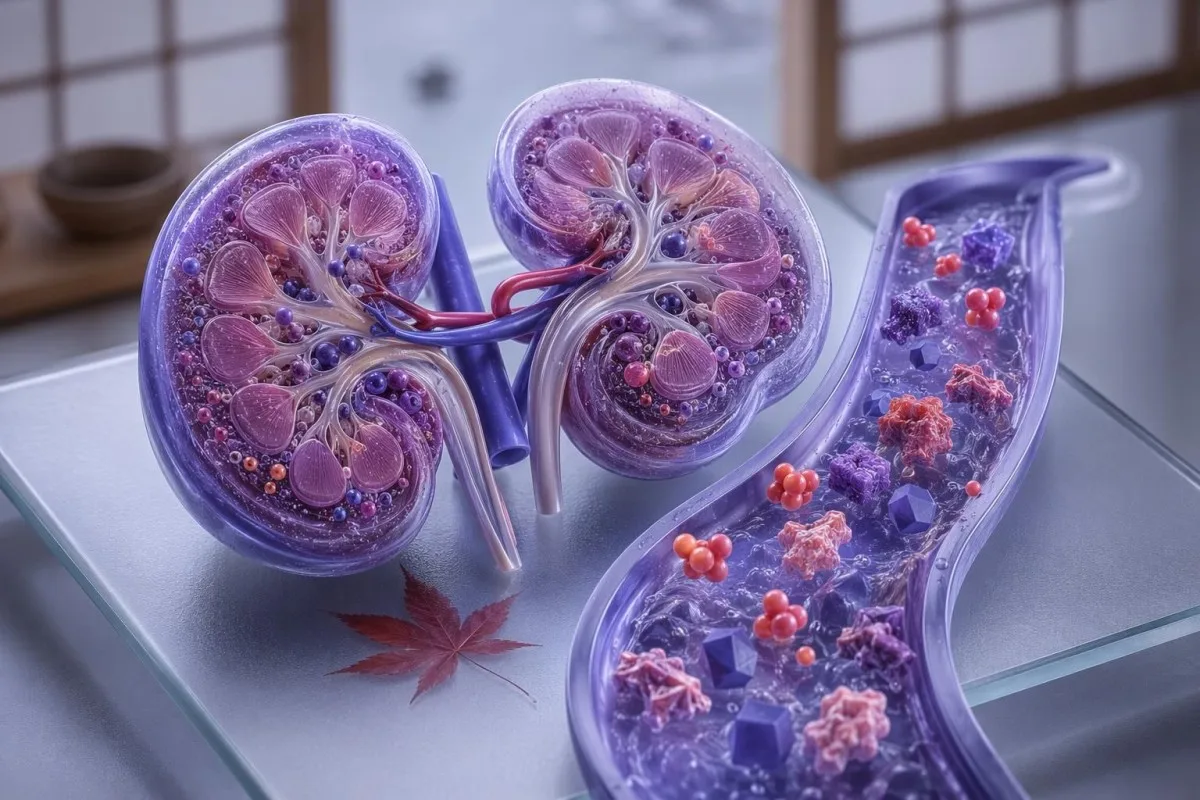
Tumor lysis syndrome can turn a reassuring-looking morning into an emergency within hours. A potassium of 6.0 mmol/L or higher, a rapidly rising creatinine, fainting, palpitations, seizure, severe weakness, or sharply reduced urine after cancer treatment requires immediate contact with the oncology team or emergency care—not a wait for the next clinic appointment.


- Emergency symptoms such as palpitations, fainting, seizure, severe weakness, confusion, or very little urine need emergency assessment even before repeat results return.
- Potassium of 6.0 mmol/L or higher is a classic tumor lysis syndrome threshold and may trigger dangerous heart-rhythm changes.
- Phosphate above 4.5 mg/dL in adults can be part of laboratory tumor lysis syndrome; the combination with low calcium and kidney injury matters most.
- Uric acid of 8.0 mg/dL or higher after treatment can signal brisk cellular breakdown and crystal-related kidney stress.
- Creatinine rising by 0.3 mg/dL within 48 hours meets acute kidney injury criteria and deserves same-day oncology review during a high-risk treatment window.
- Two abnormalities developing together within 24 hours are more persuasive for tumor lysis syndrome than one isolated flagged result.
- Do not self-treat suspected tumor lysis syndrome with electrolyte drinks, potassium supplements, antacids, or leftover medicines.
- Timing matters because laboratory changes often begin 12 to 72 hours after effective treatment, but can occur before treatment in rapidly growing cancers.
What tumor lysis syndrome labs show in the first hours
Tumor lysis syndrome labs show the contents of rapidly broken-down cancer cells entering the circulation faster than the kidneys can clear them. The usual cluster is rising potassium, phosphate, uric acid and lactate dehydrogenase (LDH), followed by falling calcium and a rise in creatinine.
The practical concern is not a single red flag; it is the speed and combination of changes. In my clinical experience, potassium and phosphate can rise on the same day, while calcium falls as phosphate binds it, and kidney filtration may then deteriorate over the next 12 to 24 hours.
Tumor lysis syndrome may occur after chemotherapy, targeted therapy, radiation, corticosteroids, or occasionally before any treatment has started. How chemotherapy changes labs offers useful context, but suspected lysis is one situation where a general educational interpretation must never delay a call to the treating team.
As of July 21, 2026, Kantesti is an AI blood test analyzer that can organize reported electrolyte and kidney values into a time sequence, but it does not diagnose tumor lysis syndrome or replace urgent clinician-led triage. Dr. Thomas Klein’s rule in practice is simple: a fast-moving lab pattern always outweighs a reassuring symptom check-in.
Why speed changes the risk
A potassium increase from 4.2 to 5.7 mmol/L over 6 hours can be more concerning than a stable 5.7 mmol/L measured repeatedly over weeks. The laboratory’s reference interval is a starting point, not a safety guarantee during cancer therapy.
The typical sequence of tumor lysis syndrome blood tests
Potassium and uric acid often rise early, phosphate follows or rises alongside them, calcium then falls, and creatinine may climb as the kidneys struggle. The exact order varies with treatment type, hydration, baseline kidney function and the cancer burden.
Damaged cancer cells release intracellular potassium and phosphate immediately; breakdown of nucleic acids produces purines that become uric acid. Howard and colleagues describe the syndrome as a metabolic emergency in which these simultaneous releases, rather than uric acid alone, produce the dangerous physiology (Howard et al., 2011).
LDH is not part of the formal Cairo-Bishop laboratory definition, yet an LDH more than twice the upper reference limit often tells us there is substantial cell turnover and raises pre-treatment concern. For a closer explanation of this nonspecific but useful marker, see our LDH and reticulocyte guide.
Some patients develop low calcium before a visibly high phosphate result because the values are being measured at different points in a fast process. A single normal phosphate result does not rule out evolving lysis if potassium, uric acid, urine output, or creatinine is changing quickly.
Why calcium usually changes later
Phosphate binds circulating calcium and can form deposits in renal tubules, so calcium may fall after phosphate rises. Clinicians usually avoid giving calcium routinely unless symptoms or ECG findings require it, because additional calcium can worsen calcium-phosphate deposition.
Tumor lysis syndrome potassium: levels that need urgent care
A potassium result of 6.0 mmol/L or higher during a tumor lysis risk period needs immediate clinical assessment, and any potassium elevation with palpitations, fainting, chest discomfort, or muscle weakness is an emergency. Heart rhythm risk depends on the number, the rate of rise, kidney function and the ECG.
Adult potassium reference intervals commonly run from about 3.5 to 5.0 mmol/L, although exact limits vary by laboratory. Potassium at or above 6.0 mmol/L meets one laboratory tumor lysis syndrome threshold and can alter cardiac electrical conduction even when a person feels fairly well.
The number may be falsely high when cellular elements break during collection or when the sample is delayed. That possibility is real, but it is not a reason to dismiss a result during chemotherapy; our guide to collection-related potassium errors explains why clinicians repeat the test promptly while obtaining an ECG.
Do not take potassium-containing oral rehydration products, salt substitutes, or supplements unless your oncology team explicitly tells you to. A person with a potassium of 5.8 mmol/L and a new creatinine rise is usually managed far more urgently than a person with 5.8 mmol/L and stable chronic kidney disease.
Tumor lysis syndrome phosphate and falling calcium
Tumor lysis syndrome phosphate rises because damaged cells release stored phosphate, while calcium falls as it binds phosphate. In adults, phosphate above 4.5 mg/dL is one Cairo-Bishop laboratory threshold; in children the threshold is 6.5 mg/dL.
Adult phosphate reference ranges are often about 2.5 to 4.5 mg/dL, or 0.81 to 1.45 mmol/L; children normally run higher because of bone growth. An isolated phosphate of 4.7 mg/dL is not automatically dangerous, but a rise from 3.1 to 5.8 mg/dL alongside falling calcium is a very different clinical story.
Low calcium can cause tingling around the mouth, hand or foot cramps, twitching, or—when severe—confusion and seizures. Read more about ordinary range variation in our phosphate range guide, but do not assume treatment-related high phosphate is a dietary issue.
A calcium-phosphate product above roughly 60 mg²/dL² raises concern for tissue and kidney deposition, though clinicians use this as a supporting signal rather than a stand-alone diagnosis. Kantesti AI flags the phosphate-calcium direction of change because a “normal” total calcium can be misleading when albumin is low.
Do not chase calcium at home
Calcium tablets or antacids are not safe self-treatment for a falling calcium during suspected lysis. The oncology team may prioritize intravenous fluids, phosphate control, cardiac monitoring and treatment of the underlying metabolic cascade.
Uric acid: the lab change that can injure the kidneys
Uric acid of 8.0 mg/dL or higher can meet a laboratory tumor lysis syndrome criterion and may contribute to acute kidney injury when urine is acidic or flow is low. Uric acid is a risk marker, not a direct measure of how sick someone feels.
Typical uric acid ranges are roughly 3.4 to 7.0 mg/dL for adult men and 2.4 to 6.0 mg/dL for adult women, although laboratories differ. A level rising from 5.2 to 8.4 mg/dL in 24 hours after therapy deserves more attention than a longstanding value of 8.4 mg/dL in someone with gout.
Allopurinol prevents formation of new uric acid but does not rapidly remove uric acid already present; rasburicase breaks down existing uric acid and is used for selected high-risk situations. Patients with glucose-6-phosphate dehydrogenase deficiency need special screening because rasburicase can cause serious complications in that setting.
Hydration plans are individualized—especially for people with heart failure or kidney impairment—so “drink as much as possible” is poor advice. Our uric acid range article helps with background interpretation, but treatment-era changes should go directly to oncology.
LDH and cancer burden: useful warning signs before treatment
High LDH indicates cell turnover or tissue injury and helps clinicians identify patients who may need preventive tumor lysis monitoring, but it cannot diagnose lysis by itself. An LDH level more than twice the laboratory upper limit commonly increases concern when paired with bulky, treatment-sensitive cancer.
LDH is present in many tissues, so infection, liver injury, vigorous exercise and sample hemolysis can also raise it. The informative question is whether LDH is rising with cancer burden, uric acid, potassium, and phosphate—not whether it is flagged in isolation.
In a patient I reviewed before intensive lymphoma treatment, LDH was 2,300 U/L, uric acid 9.1 mg/dL and creatinine 1.4 mg/dL; the values changed the monitoring plan before the first dose was given. That prevention step matters more than waiting to see whether symptoms develop.
Kantesti is an AI blood test interpretation platform that can display LDH alongside renal and electrolyte results, making it easier to notice a pre-treatment risk pattern in an uploaded report. It cannot see tumour volume on imaging, which is one reason clinicians never use laboratory data alone for risk stratification.
Why a normal LDH does not clear all risk
Some highly treatment-sensitive cancers produce lysis with only modest LDH elevation, particularly when baseline tumour burden is not obvious from blood work. Risk assessment also considers cancer type, white-cell count, treatment potency and kidney reserve.
Creatinine, urea and urine output: the kidney danger signals
A creatinine increase of 0.3 mg/dL or more within 48 hours meets acute kidney injury criteria and needs same-day oncology contact during suspected tumor lysis syndrome. A drop in urine output can be equally urgent, even if creatinine has not yet risen.
Creatinine lags behind real-time filtration loss, particularly in people with low muscle mass, so waiting for a large increase can be unsafe. The KDIGO definition also includes a 1.5-fold creatinine rise from baseline within 7 days; if your usual creatinine is 0.7 mg/dL, a rise to 1.1 mg/dL is clinically meaningful.
Urea, called BUN in many reports, often rises with dehydration and reduced kidney perfusion but is less specific than creatinine. A basic metabolic panel review can clarify routine results, while suspected lysis requires a clinician to assess fluids, medications, ECG and repeat timing together.
Little or no urine for 6 to 8 hours, new swelling, breathlessness, or sudden nausea after treatment should prompt urgent contact even without a portal result. Dr. Thomas Klein has seen creatinine look only modestly abnormal while potassium was already high enough to require immediate monitoring.
How clinicians define laboratory versus clinical tumor lysis syndrome
Laboratory tumor lysis syndrome means at least two metabolic abnormalities occurring from 3 days before to 7 days after treatment; clinical tumor lysis syndrome adds kidney injury, seizure, dangerous arrhythmia or sudden death. The time window prevents a coincidental abnormal test from being mislabelled.
The Cairo-Bishop criteria use uric acid at least 8.0 mg/dL, potassium at least 6.0 mmol/L, phosphate at least 4.5 mg/dL in adults, or calcium at most 7.0 mg/dL as threshold values. They also allow a 25% change from baseline, although Howard et al. argue that a percentage change without an out-of-range result can overcall clinically trivial variation (Howard et al., 2011).
Clinical tumor lysis syndrome is not “stage two” of a harmless condition; it is the point at which biochemical release is affecting organs. A creatinine above 1.5 times the upper limit of normal was included in the original criteria, but many clinicians now also apply the more sensitive KDIGO acute kidney injury framework.
Kantesti’s biomarker guide explains what each analyte measures, whereas a treating oncology service determines whether the full timing, cancer and clinical criteria are met. That distinction protects patients from both false reassurance and needless alarm.
When to call the oncology team, go to emergency care, or call emergency services
Call the oncology emergency number immediately for a new potassium elevation, rapidly rising phosphate or uric acid, creatinine increase, or markedly reduced urine after treatment. Call emergency services for collapse, seizure, severe breathlessness, persistent chest pain, a racing or irregular heartbeat, or confusion.
Urgent care clinics can repeat basic tests, but they may not have rapid oncology input, cardiac monitoring, dialysis access or medications required for severe electrolyte shifts. If you are in an active cancer-treatment window and feel unwell, contact the cancer service first; they can direct you to the right emergency department.
Bring the treatment name, date and time of the last dose, your medication list, your usual kidney results, and a photo of the newest report. A blood test visit checklist can help organize the details, but do not wait to complete paperwork before seeking care.
One misconception worries me: people sometimes wait because they expect dramatic pain. Tumor lysis syndrome may begin with no pain at all; an abnormal ECG or a decline in urine output can appear before the person feels seriously ill.
Why repeat testing is often every 4 to 6 hours
High-risk patients may have potassium, phosphate, calcium, uric acid, creatinine and LDH checked every 4 to 6 hours because a safe result can become unsafe within one treatment day. Lower-risk patients may be monitored less frequently according to their treatment protocol.
For high-risk haematological cancers, frequent inpatient monitoring commonly starts before treatment and continues through the period of greatest cellular breakdown. The British Committee for Standards in Haematology guideline recommends risk-adapted biochemical monitoring and preventive hydration or urate-lowering therapy rather than a one-size schedule (Jones et al., 2015).
The meaningful unit is often the slope: potassium rising 0.4 mmol/L over 4 hours, phosphate rising 1.2 mg/dL, or creatinine rising 0.2 mg/dL from a morning baseline. Our lab delta-check explainer shows why laboratories verify implausible jumps, but true clinical jumps still need urgent action.
Kantesti is an AI-powered blood test analysis tool that can compare dated laboratory reports and highlight directional changes; it cannot monitor patients continuously or notify an oncology unit. For active lysis risk, the hospital’s prescribed sampling schedule always comes first.
Could the result be wrong? Lab errors and common lookalikes
A hemolyzed sample can falsely elevate potassium, but it cannot safely explain away a high result in someone at risk for tumor lysis syndrome. Clinicians repeat questionable samples urgently and interpret them with the ECG, symptoms and concurrent phosphate, uric acid and creatinine.
Difficult sample collection, prolonged tourniquet time, fist clenching, delayed processing and marked white-cell elevation can all produce pseudohyperkalemia. A repeat plasma potassium collected carefully may settle the question, but the repeat should be arranged now—not after a night of waiting.
High phosphate may occur with chronic kidney disease, hypoparathyroidism, vitamin D excess or phosphate-containing preparations; high uric acid has many causes outside cancer. The feature that separates lysis is a temporally linked cluster after therapy or in a cancer with high spontaneous-turnover risk.
Kantesti AI can identify a result that conflicts with a prior pattern, but a clinical laboratory decides whether a specimen is hemolyzed or needs recollection. Our AI lab-quality checklist explains why a report image is not a substitute for the original laboratory comment.
Urine tests and fluid balance clues that add context
A urinalysis cannot rule out tumor lysis syndrome, but new granular casts, concentrated urine, crystals or declining output may support concern for kidney stress. The most actionable bedside measure is often documented urine volume over time.
Uric acid crystals are not always seen, and their absence does not exclude intratubular injury. Granular casts can reflect tubular stress, while a high specific gravity may indicate dehydration; both require interpretation with hydration status and the serum results.
If your team asks you to record intake and output, measure rather than estimate whenever possible. Less than 0.5 mL/kg/hour of urine output for 6 hours is an acute kidney injury criterion in hospital settings, although home measurements are inherently less precise.
Our guide to granular urinary casts explains why sediment findings are supportive rather than diagnostic. Do not force fluids if you are breathless, swollen, or under fluid restriction—call the oncology team for individualized advice.
What prevention looks like before the first cancer treatment
Preventing tumor lysis syndrome starts before treatment with risk assessment, intravenous or carefully prescribed oral hydration, urate-lowering medicine and planned repeat labs. People with bulky, rapidly proliferating or highly treatment-sensitive cancers and impaired kidneys need the closest preparation.
Clinicians assess tumour type, tumour burden, LDH, baseline uric acid, potassium, phosphate, calcium and kidney function before selecting prophylaxis. A high white-cell count, pre-existing kidney disease or dehydration can move someone into a higher monitoring category even when their first electrolyte panel is normal.
Allopurinol dosing must be adjusted in kidney impairment, while rasburicase is reserved for specific higher-risk settings and requires awareness of G6PD status. Dietary changes are not adequate prevention for treatment-related lysis; this is a medication-and-monitoring problem, not a “purine foods” problem.
For background on kidney reserve, our eGFR guide can help you understand the baseline. The oncology team should provide a written plan stating who to call, when labs will be repeated and what symptoms override a scheduled appointment.
Questions to ask your oncology team before you leave
Ask whether your cancer and treatment place you at low, intermediate or high tumor lysis risk, which values trigger a call, and where you should go after hours. A concrete plan is safer than trying to interpret every portal flag alone.
Useful questions include: “What is my baseline creatinine and uric acid?”, “Will I receive allopurinol or rasburicase?”, “How often will labs be checked in the first 72 hours?”, and “Should I avoid any supplements or electrolyte drinks?” The answers differ meaningfully between a low-risk solid tumour regimen and treatment for aggressive blood cancer.
Ask for the direct daytime and after-hours number, not only a general hospital switchboard. A blood cancer testing overview may help you understand the broader work-up, but it cannot predict lysis risk without your treatment details and imaging.
Kantesti serves people in more than 127 countries, where lab units and portal systems differ; keep the original report, unit, collection time and reference interval together. Writing down the question “what changed from yesterday?” often produces a more useful conversation than focusing on a single H or L flag.
How to use an uploaded report safely during cancer treatment
An uploaded report can help you spot a trend, but no app, website or delayed message is safe for triaging possible tumor lysis syndrome. New symptoms or a concerning treatment-era cluster should go straight to your oncology team or emergency service.
Use digital tools to preserve dates, units and previous values, especially when care moves between hospitals or countries. Do not change prescribed medicines, add calcium or potassium products, or postpone repeat testing based on an automated explanation.
Kantesti AI interprets tumor lysis syndrome-related laboratory patterns by comparing electrolyte, uric acid and renal-function changes in context, while clinical escalation remains with the treating team. Our clinical validation standards explain the boundaries of responsible AI-supported laboratory interpretation.
I recommend bringing questions generated from your results to a clinician who knows the cancer diagnosis, regimen and fluid plan. The doctors on our Medical Advisory Board support the same patient-first principle: technology can clarify a report, but urgent symptoms and critical values require human medical care now.
Frequently Asked Questions
What lab values indicate tumor lysis syndrome?
Laboratory tumor lysis syndrome is commonly defined by at least two abnormalities occurring from 3 days before through 7 days after cancer treatment: uric acid at least 8.0 mg/dL, potassium at least 6.0 mmol/L, phosphate at least 4.5 mg/dL in adults, or calcium at most 7.0 mg/dL. A 25% change from baseline is also included in the Cairo-Bishop criteria, although clinicians interpret percentage changes cautiously when the result remains within range. The diagnosis depends on timing, cancer type and the pattern of results rather than one isolated abnormal value.
Is potassium 5.5 dangerous during chemotherapy?
A potassium of 5.5 mmol/L is not automatically an emergency, but it needs prompt oncology review when it occurs during a tumor lysis syndrome risk window or rises quickly from baseline. Potassium of 6.0 mmol/L or higher warrants immediate clinical assessment and usually an ECG because of heart-rhythm risk. Palpitations, fainting, chest discomfort, severe weakness or shortness of breath require emergency care regardless of the exact potassium number.
How quickly do tumor lysis syndrome labs change?
Tumor lysis syndrome laboratory abnormalities often develop within 12 to 72 hours after effective cancer treatment, which is why high-risk patients may have blood tests every 4 to 6 hours. Potassium and uric acid can rise early, phosphate may rise with them, calcium can fall, and creatinine can increase as kidney filtration worsens. The syndrome can also occur before treatment in cancers with very rapid spontaneous cell turnover.
Can tumor lysis syndrome happen with normal creatinine?
Yes, tumor lysis syndrome can begin while creatinine is still normal because creatinine is a delayed marker of reduced filtration. A new potassium of 5.8 mmol/L, phosphate of 5.6 mg/dL and uric acid of 8.4 mg/dL may require urgent action even before creatinine increases. Falling urine output, symptoms, ECG findings and the direction of repeat tests help clinicians identify danger early.
What symptoms of tumor lysis syndrome need emergency help?
Call emergency services for seizure, collapse, severe confusion, persistent chest pain, severe breathlessness, or a fast or irregular heartbeat during cancer treatment. New muscle weakness, severe cramps, tingling, vomiting or very low urine output should prompt an immediate call to the oncology emergency number because they may reflect potassium, calcium or kidney changes. Tumor lysis syndrome can be serious even when symptoms are mild or absent, so a critical laboratory call should never be ignored.
Can I drink electrolyte drinks if my tumor lysis labs are abnormal?
Do not start electrolyte drinks, potassium-containing rehydration products, salt substitutes, calcium tablets or supplements for suspected tumor lysis syndrome unless the oncology team specifically instructs you to do so. Many drinks contain potassium, which can worsen hyperkalemia when the potassium level is above 5.0 mmol/L. Fluid plans must also be individualized for people with heart failure, kidney impairment, swelling or breathlessness.
Why might my oncology team order an ECG when my tumor lysis labs are abnormal?
Potassium and calcium changes can disrupt the heart’s electrical rhythm before you feel obvious symptoms. An ECG helps clinicians detect concerning rhythm changes promptly and decide whether monitoring or urgent treatment is needed.
Get AI-Powered Blood Test Analysis Today
Join over 2 million users worldwide who trust Kantesti for instant, accurate lab test analysis. Upload your blood test results and receive comprehensive interpretation of 15,000+ biomarkers in seconds.
📚 Referenced Research Publications
Klein, T., Mitchell, S., & Weber, H. (2026). B Negative Blood Type, LDH Blood Test & Reticulocyte Count Guide. Kantesti AI Medical Research.
Klein, T., Mitchell, S., & Weber, H. (2026). Diarrhea After Fasting, Black Specks in Stool & GI Guide 2026. Kantesti AI Medical Research.
📖 External Medical References
⚕️ Medical Disclaimer
This article is for educational purposes only and does not constitute medical advice. Always consult a qualified healthcare provider for diagnosis and treatment decisions.
E-E-A-T Trust Signals
Experience
Physician-led clinical review of lab interpretation workflows.
Expertise
Laboratory medicine focus on how biomarkers behave in clinical context.
Authoritativeness
Written by Dr. Thomas Klein with review by Dr. Sarah Mitchell and Prof. Dr. Hans Weber.
Trustworthiness
Evidence-based interpretation with clear follow-up pathways to reduce alarm.