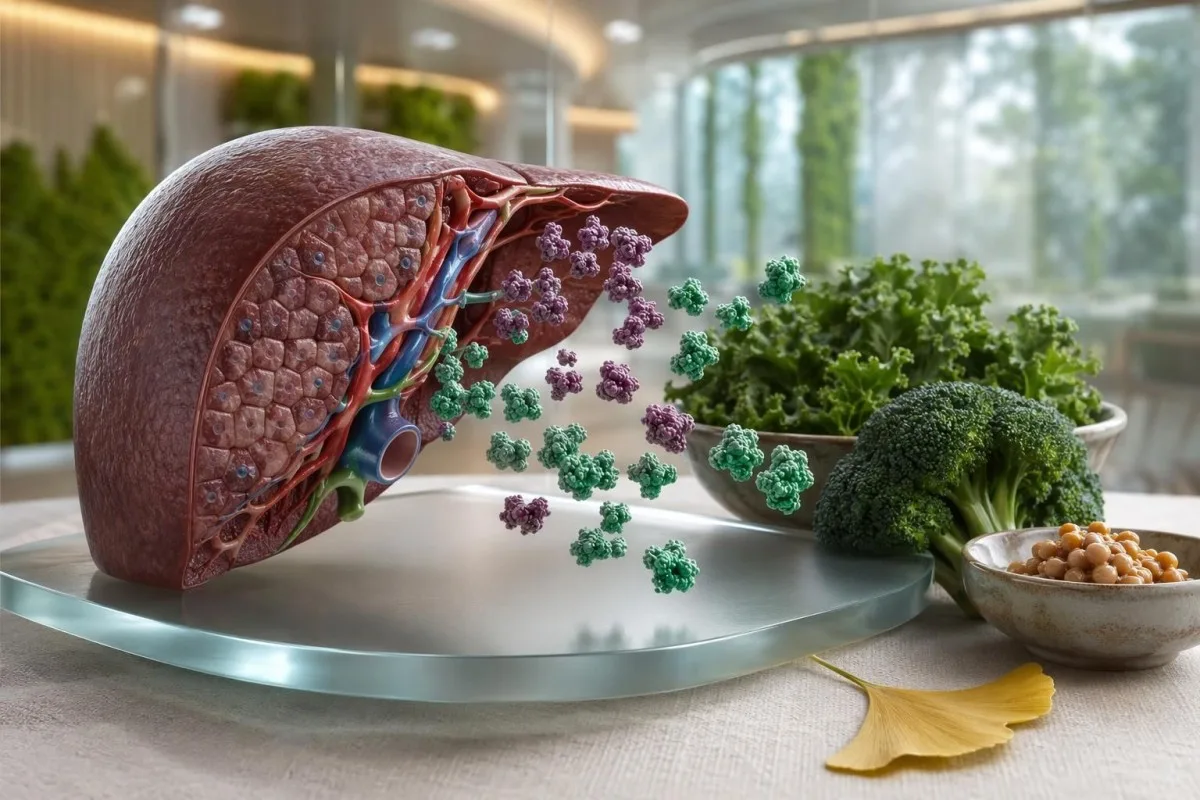
Leafy greens are not forbidden on warfarin; sudden changes in their amount are the real problem. This food-by-food guide separates vitamin K1 from K2 and gives you a safer way to eat normally.


- Consistency over avoidance is the safest food rule for warfarin: keep vitamin K intake similar from week to week rather than removing vegetables.
- Vitamin K1 comes mainly from green plants; 1 cup of cooked kale provides roughly 500–550 µg.
- Vitamin K2 is concentrated in fermented foods and some animal foods; natto can provide about 850 µg per 100 g, largely as MK-7.
- INR targets are commonly 2.0–3.0 for atrial fibrillation and most venous clots, although mechanical valves may require a higher individualized range.
- A sudden diet change can shift INR within several days because warfarin reduces activation of factors II, VII, IX and X.
- Raw vegetables absorb poorly without fat; adding olive oil, yoghurt dressing, nuts, or avocado can raise vitamin K absorption.
- Vitamin K supplements can destabilize warfarin even at low doses; tell the anticoagulation clinic before starting K2, multivitamins, greens powders, or meal replacements.
- Vitamin K blood testing is rarely used to guide warfarin dosing; INR and a careful dietary history are more clinically useful.
Why consistent vitamin K intake matters more than avoidance
People taking warfarin should eat a consistent amount of foods rich in vitamin K, not avoid them. A large salad after months without greens can lower INR, while abruptly stopping greens can raise INR and bleeding risk; as of July 21, 2026, that remains the practical advice I give patients. Dr. Thomas Klein has seen this pattern repeatedly in anticoagulation reviews.
Warfarin blocks vitamin K epoxide reductase, the recycling enzyme that lets the liver activate clotting factors II, VII, IX and X. Factor VII has a short half-life of roughly 4–6 hours, whereas factor II lasts about 60–72 hours, so an INR change may not be immediate or neatly predictable. For the laboratory context, our coagulation testing guide explains why PT and INR are reported together.
In clinic, the difficult case is often not the patient who eats spinach every day; it is the person who starts juicing kale, begins a restrictive diet, or returns from travel eating completely differently. Kantesti is an AI blood test analyzer that places INR trends alongside medication and nutrition context, but a prescribing clinician must make any warfarin dose change. A stable weekly pattern gives the anticoagulation team something they can safely dose around.
The practical weekly rule
Choose a normal pattern you can maintain: for example, a side of broccoli three nights weekly and a salad at lunch twice weekly. Do not try to hit an exact microgram target without clinical advice, because preparation, portion size and absorption vary more than most food charts imply.
Vitamin K1 versus K2 foods: what actually differs
Vitamin K1, called phylloquinone, is the dominant form in leafy vegetables, while vitamin K2, called menaquinones, is made by bacteria and appears in fermented and selected animal foods. Both can affect warfarin response because they participate in the same vitamin K cycle.
Vitamin K1 supplies most dietary vitamin K in people eating plant-rich diets, while K2 includes several compounds such as MK-4 and MK-7. MK-4 is found in small amounts in eggs and meat, whereas longer-chain forms such as MK-7 occur in fermented foods. Booth's review in Annual Review of Nutrition describes vitamin K as a family of related compounds rather than one interchangeable nutrient (Booth, 2009).
The label “K2” can make a supplement seem separate from greens, but that is a risky distinction for someone using warfarin. Kantesti AI interprets INR-related reports as medication-sensitive results, not as a license to self-correct with supplements. If a clinician suspects inadequate vitamin K intake, the first step is usually a dietary pattern review, not an over-the-counter capsule; our vitamin K and INR overview explains why.
A useful but imperfect shorthand
Think “K1 = green plants” and “K2 = fermentation and some animal foods,” but do not assume K2 has no anticoagulant relevance. The biological effect varies with dose, formulation, intestinal absorption, liver function and the individual warfarin dose.
High vitamin K vegetables: portions that change the conversation
Cooked kale, collards, spinach, Swiss chard, turnip greens and broccoli are the high vitamin K vegetables most likely to alter a previously stable warfarin routine. The portion matters: a heaped bowl is clinically different from a garnish.
One cup of cooked kale contains roughly 500–550 µg of vitamin K1, one cup of cooked spinach about 800–900 µg, and one-half cup of cooked broccoli about 90–110 µg. These are estimates, not laboratory measurements: cultivar, cooking water, packing density and serving size all move the number. A plant-based diet lab guide can help readers think beyond one nutrient.
A patient who has a daily spinach omelette may be more stable than someone who avoids greens for six days then eats a large restaurant salad on Sunday. Sconce and colleagues found that low-dose vitamin K supplementation improved anticoagulation stability in selected patients with unexplained INR variability, which supports the principle that steadiness—not fear of vitamin K—is physiologically sensible (Sconce et al., 2007). Do not copy that study by starting a supplement yourself.
How to handle a new vegetable habit
Tell your anticoagulation service before beginning daily green smoothies, meal-delivery plans, fasting regimens, or a weight-loss programme that changes vegetable intake. Many clinics arrange an INR check about 3–7 days after a meaningful and sustained diet change, although local protocols differ.
Vitamin K foods list: everyday K1 sources beyond leafy greens
Vitamin K1 is not limited to dark green leaves; herbs, soy oil, rapeseed oil, asparagus, edamame, green beans and cabbage also contribute meaningful amounts. Foods with modest amounts can add up when eaten daily.
Parsley is unusually concentrated: one tablespoon can provide about 60 µg of vitamin K1, which matters when a tabbouleh-style meal or herb sauce becomes a new daily habit. A half-cup of cooked cabbage commonly provides around 80 µg, and a tablespoon of soybean oil provides approximately 25 µg. Portion awareness beats eliminating foods you enjoy.
Oils are easy to overlook because food databases report them in tablespoons, while home cooks pour by eye. Switching from a low-vitamin-K oil to soybean or rapeseed oil every day can be enough to matter in a person taking a small warfarin dose. The same “small changes add up” logic applies to smoothies, fortified nutrition drinks and greens powders; see our fat-soluble vitamin guide for the broader nutrient context.
Foods that surprise patients
Pesto, matcha-containing drinks, seaweed snacks and concentrated herb sauces can deliver more vitamin K than their small serving size suggests. Packaging rarely makes the vitamin K amount prominent, so bring the product or a photo of its ingredients to the anticoagulation appointment.
Vitamin K2 foods: natto, cheeses, eggs and fermented choices
Natto is the most concentrated widely documented food source of vitamin K2, while cheeses, egg yolks and poultry tend to provide smaller, more variable amounts. For warfarin users, a new daily K2 food is still a diet change worth reporting.
Natto may contain roughly 850 µg of menaquinones per 100 g, principally MK-7, though recipes and fermentation methods vary. Hard and semi-hard cheeses can contribute tens of micrograms per 100 g, not hundreds in most cases; egg yolks and poultry are generally lower. That spread is why a generic “K2 foods list” cannot predict anyone's INR precisely.
The big practical issue is novelty. A person who has eaten eggs for years usually does not need to worry about two eggs at breakfast, while a person adding natto or a high-dose MK-7 supplement after seeing social-media claims should pause and call the clinic. Our review of vitamin K2 supplement safety covers the supplement-specific pitfalls.
Do not confuse fermented with harmless
Yoghurt and kefir are often low in vitamin K2 compared with natto, but brands and cultures differ. If you change your fermented-food intake from occasional to daily, record it with the date so an unexpected INR shift has a plausible clue.
Cooking, food fat and absorption: why the same vegetable can act differently
Vitamin K absorption rises when plant foods are eaten with dietary fat, and chopping or cooking can make vitamin K more available from plant cells. A raw salad without dressing does not necessarily have the same biological effect as sautéed greens with oil.
Vitamin K is fat-soluble, so bile flow, pancreatic function, dietary fat and intestinal health influence absorption. In a person without malabsorption, adding a modest fat source—such as 1 tablespoon of olive oil, nuts or avocado—to greens can increase uptake. This is one reason dietary intake charts are only a starting point, not an INR forecast.
I pay closer attention when INR becomes unstable alongside chronic diarrhoea, pale stools, unexplained weight loss or cholestatic liver tests. Poor bile delivery can reduce absorption of fat-soluble vitamins, while liver disease can independently impair clotting-factor production; our cholestasis test pattern guide explains the ALP, GGT and bilirubin clues. Kantesti is an AI-powered blood test analysis tool that can organize liver-panel trends, but it cannot distinguish dietary change from illness without clinical review.
A sensible cooking approach
Keep the preparation method as stable as the food itself when INR has been difficult to manage. If you normally steam broccoli, changing to oil-rich roasted broccoli every night deserves the same attention as increasing the portion.
Warfarin-safe meal patterns that still include vegetables
A warfarin-safe diet includes vegetables in planned, repeatable portions across the week rather than “good” and “bad” food lists. The best pattern is one you can maintain through workdays, weekends and travel.
A workable template is to choose two or three green vegetables and use comparable portions each week: for example, half a cup of cooked broccoli on three evenings and a side salad on two lunches. Keep restaurant salads, green juices and herb-heavy sauces as occasional additions unless your INR monitoring plan accounts for them. This is particularly relevant during diet resets; our before-and-after diet testing guide outlines what can shift after a major dietary change.
Avoid trying to “balance” a high-vitamin-K meal by skipping the next day's greens. That creates alternating peaks and troughs, which is harder for warfarin dosing than a stable higher baseline. In my experience, most patients find a written seven-day food pattern more useful than calorie tracking when their INR has been bouncing.
Travel and celebrations
Pack a short medication and food summary before travel, especially if you expect different cuisines or buffet meals. A three-day sequence of unusually large green salads can be clinically relevant, but so can reduced eating during gastroenteritis or a long journey.
INR targets, timing and when a food change needs a check
Most warfarin indications use a target INR of 2.0–3.0, but some mechanical heart valves require an individualized target near 2.5–3.5. Your own prescribed range—not an online chart—determines whether a result is too low or too high.
An INR below the prescribed range means clot protection may be inadequate, while an INR above range raises bleeding risk. A substantial sustained change in vitamin K intake can affect INR over several days, but infection, antibiotics, alcohol, missed tablets, diarrhoea and liver dysfunction can shift it too. Witt et al. recommend structured management that checks adherence, interacting drugs, diet and illness rather than assuming a single cause (Witt et al., 2016).
Dr. Thomas Klein's practical rule is simple: phone the anticoagulation team before a planned major diet change and urgently seek advice for unexpected bruising, black stools, pink or red urine, vomiting blood, severe headache, new weakness, or a significant head injury. For a laboratory explanation of prolonged clotting time, read high prothrombin time with normal aPTT.
Do not adjust the tablet yourself
A single high-vitamin-K meal is not a reason to double or skip warfarin. Home INR devices can be useful for selected patients, but unexpected readings still need the dosing plan supplied by the anticoagulation service.
Supplements, multivitamins and greens powders: the hidden vitamin K problem
Vitamin K supplements, multivitamins, greens powders and meal replacements can destabilize warfarin because their vitamin K dose is concentrated and often newly introduced. The label may list phylloquinone, vitamin K1, menaquinone, MK-4 or MK-7.
Even a multivitamin with 25–100 µg of vitamin K can matter if it is started or stopped suddenly. A greens powder may contain spinach, kale, parsley, alfalfa or matcha without a clearly stated vitamin K total, and batch-to-batch botanical variation is plausible. “Natural” does not mean pharmacologically irrelevant.
Kantesti AI reads laboratory results in context, but no algorithm can safely infer supplement ingredients from an INR alone. Keep every tub, tea blend, nutrition shake and vitamin bottle on a medication list, then compare dates against your INR history using our blood test trend analysis guide. This is one of those situations where the packaging matters as much as the laboratory number.
What about probiotics?
The evidence that standard probiotic products meaningfully change warfarin response is limited and inconsistent, but products vary. The safer approach is to report a new daily probiotic, especially when it is combined with fermented foods, dietary restriction or gastrointestinal symptoms.
Vitamin K deficiency, liver disease and the limits of testing
A high INR does not automatically prove vitamin K deficiency, and a normal or abnormal INR cannot measure dietary vitamin K intake by itself. Clinicians interpret INR alongside medication exposure, liver tests, absorption symptoms and clinical bleeding history.
True vitamin K deficiency is more likely with prolonged poor intake, fat malabsorption, cholestasis, pancreatic disease, extended broad-spectrum antibiotic exposure or severe illness. In untreated deficiency, PT often rises first because factor VII has the shortest half-life; however, warfarin produces the same broad laboratory direction by design. A liver panel explanation is useful when INR and bilirubin or ALP move together.
Plasma phylloquinone testing is technically possible but not routinely used to titrate warfarin, partly because a recent meal can influence the result. PIVKA-II can reflect undercarboxylated clotting proteins in specialised contexts, yet it is not a standard community anticoagulation test. Kantesti is an AI lab test interpretation service that flags related liver and coagulation patterns for discussion, rather than diagnosing vitamin K deficiency from one result.
When liver disease changes the picture
A rising INR in liver disease may reflect reduced clotting-factor synthesis rather than excess warfarin effect alone. Never take vitamin K to “fix” an unexplained high INR unless the clinician managing your anticoagulation advises it.
Who needs extra caution with vitamin K food changes
People with recent INR instability, mechanical valves, advanced liver disease, bowel disease, bariatric surgery or frequent antibiotic use need a lower threshold for contacting their anticoagulation team about diet changes. Their response to the same meal may be less predictable.
Mechanical-valve anticoagulation can have little margin for error because the thrombotic consequences of an INR below target are serious. People with coeliac disease, inflammatory bowel disease, pancreatic insufficiency or prior bariatric procedures may also absorb fat-soluble nutrients inconsistently. If diarrhoea lasts more than 24–48 hours, call for medication-specific advice rather than waiting for the next routine INR.
Antibiotics deserve special attention because some change vitamin K availability in the gut and many also alter warfarin metabolism. The direction of INR change depends on the drug, the illness and food intake, so guessing is unsafe. Our blood test PDF upload checklist can help you preserve the exact result, date and reference range before discussing it with a clinician.
Pregnancy and breastfeeding
Warfarin management in pregnancy is specialist territory, and dietary advice must be individualized. Breastfeeding decisions also depend on the parent’s indication, dose, infant factors and the wider treatment plan; do not rely on a generic nutrition article for those decisions.
A 10-minute action plan for a changed diet or unexpected INR
When your diet changes, write down what changed, when it changed, and whether the change will continue; then contact the clinician who manages your warfarin if the shift is substantial. Clear dates make an INR result far easier to interpret.
Start with four notes: warfarin dose and missed doses, new foods or supplements, illness or alcohol change, and the exact INR date. A weekly diary is enough—there is no need to weigh every lettuce leaf. Add portion language clinicians can understand, such as “one large bowl of cooked spinach nightly” rather than simply “ate healthier.”
If your INR is mildly out of range and you feel well, follow the dose and retesting instructions from your anticoagulation service. If you have active bleeding, fainting, chest pain, stroke-like symptoms, severe headache or head trauma, seek emergency care immediately. For general preparation before a medical review, use our new doctor visit blood-test checklist.
Questions to bring to the clinic
Ask whether your usual vegetable pattern is acceptable, whether any new product contains vitamin K, and when the next INR should be checked after your planned change. Ask for your individualized target range in writing; “normal INR” is not the right goal for most people on warfarin.
How to use blood-test context without changing warfarin yourself
INR is interpretable only in context: the target range, warfarin dose, timing of the last dose, medication changes, diet and liver function all matter. A flagged result is a prompt for clinical follow-up, not an instruction to change tablets.
Kantesti is an AI biomarker interpretation platform that organizes INR, liver-panel and nutrition-related clues into a readable timeline. This can be useful when a result appears before an appointment, especially if you preserve the laboratory name, units, reference range and draw date. Our AI lab-result accuracy checklist explains the details that prevent a misleading interpretation.
Kantesti does not prescribe warfarin, replace an anticoagulation clinic or determine an emergency diagnosis. Our physician-led standards and methodology are described in the medical validation overview, and the clinicians responsible for oversight are listed on our Medical Advisory Board. A good report should make a safer conversation with your clinician, not encourage self-treatment.
The most useful trend question
Instead of asking “Is this INR bad?”, ask “What changed in the 7–14 days before this INR?” That question captures medication adherence, antibiotics, illness, alcohol, supplements and sustained food changes—the usual reasons a previously stable result shifts.
Research transparency and clinical review
Reliable warfarin nutrition advice needs transparent limits: food data estimate exposure, INR measures effect, and prescribing decisions remain clinical. This article has been medically reviewed for patient education and does not replace individualized anticoagulation care.
Kantesti LTD develops health-information tools for readers across multiple health systems, where laboratory units and anticoagulation pathways may differ. We publish implementation research because clinical decision support must be evaluated rather than merely asserted; see our technology and clinical reasoning guide for the framework. The sources below concern Kantesti's research activity, not evidence that a food can replace anticoagulation management.
For additional patient education, browse the Kantesti health blog and bring unresolved questions to the clinician who prescribes your warfarin. The evidence around dietary consistency is strong in practice, but the precise food amount that shifts a particular person's INR remains genuinely individual.
Clinical review note
Dr. Thomas Klein, Chief Medical Officer, reviewed this article on July 21, 2026. It prioritizes safety because an INR change can have several causes at once, and a dietary explanation should never delay evaluation for medication interactions, bleeding or liver disease.
Frequently Asked Questions
Do I have to avoid spinach while taking warfarin?
No, most people taking warfarin do not need to avoid spinach; they need to eat a similar amount of spinach from week to week. One cup of cooked spinach can provide roughly 800–900 µg of vitamin K1, so abruptly adding it every day after rarely eating it can lower INR. Tell your anticoagulation clinic before making spinach smoothies, large salads or other sustained changes. Do not change your warfarin dose on your own after one spinach-containing meal.
Which foods are highest in vitamin K?
The foods highest in vitamin K1 are usually cooked spinach, kale, collard greens, Swiss chard and turnip greens; a cup of cooked kale provides roughly 500–550 µg. Natto is an exceptionally concentrated vitamin K2 food and may contain about 850 µg of menaquinones per 100 g. Parsley, broccoli, cabbage, herbs and some vegetable oils also contribute meaningful vitamin K. Food values vary by portion, preparation and product, so the weekly pattern matters more than one database number.
Can I take vitamin K2 with warfarin?
Do not start vitamin K2, including MK-7 or MK-4 supplements, while taking warfarin without explicit advice from the clinician managing your INR. K2 participates in the same vitamin K-dependent clotting pathway as K1 and may reduce warfarin's effect, particularly when it is newly introduced or taken daily. Supplement doses can range from 45 µg to more than 200 µg per capsule, and concentrated products are less predictable than an established food routine. Contact the anticoagulation clinic before starting, stopping or switching any vitamin K supplement.
How quickly can eating more vitamin K affect INR?
A substantial, sustained increase in vitamin K intake can affect INR over several days, although the exact timing differs between individuals. Factor VII has a half-life of about 4–6 hours, while factor II has a half-life near 60–72 hours, so the laboratory response reflects multiple clotting factors changing at different speeds. Antibiotics, illness, missed warfarin doses, alcohol and liver dysfunction can shift INR at the same time. Contact your anticoagulation service for a testing plan when a major dietary change is expected to continue.
What should I do if my INR is low after eating greens?
A low INR after eating greens should be managed using the dosing instructions from your anticoagulation service, not by taking extra warfarin yourself. For many indications, the usual INR target is 2.0–3.0, but mechanical-valve targets may be closer to 2.5–3.5 or otherwise individualized. Record the amount and timing of greens, supplements, missed doses, alcohol, illness and new medicines before you call. A single meal may not explain the result, so clinicians look at the whole 7–14 day context.
Is vitamin K blood testing useful for people on warfarin?
Vitamin K blood testing is not routinely used to adjust warfarin because a recent meal can influence circulating phylloquinone and the result does not directly show anticoagulant effect. INR is the standard laboratory measure used to monitor warfarin response, interpreted against an individualized target range such as 2.0–3.0. Clinicians may investigate liver tests, medication interactions, absorption symptoms or diet when INR becomes unstable. A high or low INR should never be interpreted as proof of vitamin K deficiency without that wider assessment.
Can antibiotics or a stomach bug change my INR even if my vegetable intake stays the same?
Yes. Diarrhea, vomiting, poor appetite, and some antibiotics can alter your INR by changing vitamin K intake, absorption, or warfarin handling. Tell your anticoagulation service promptly if symptoms persist beyond 24 hours or an antibiotic is prescribed, and never change the dose yourself.
Get AI-Powered Blood Test Analysis Today
Join over 2 million users worldwide who trust Kantesti for instant, accurate lab test analysis. Upload your blood test results and receive comprehensive interpretation of 15,000+ biomarkers in seconds.
📚 Referenced Research Publications
Klein, T., Mitchell, S., & Weber, H. (2026). Women's Health Guide: Ovulation, Menopause & Hormonal Symptoms. Kantesti AI Medical Research.
Klein, T., Mitchell, S., & Weber, H. (2026). Multilingual AI Assisted Clinical Decision Support for Early Hantavirus Triage: Design, Engineering Validation, and Real-World Deployment Across 50,000 Interpreted Blood Test Reports. Kantesti AI Medical Research.
📖 External Medical References
⚕️ Medical Disclaimer
This article is for educational purposes only and does not constitute medical advice. Always consult a qualified healthcare provider for diagnosis and treatment decisions.
E-E-A-T Trust Signals
Experience
Physician-led clinical review of lab interpretation workflows.
Expertise
Laboratory medicine focus on how biomarkers behave in clinical context.
Authoritativeness
Written by Dr. Thomas Klein with review by Dr. Sarah Mitchell and Prof. Dr. Hans Weber.
Trustworthiness
Evidence-based interpretation with clear follow-up pathways to reduce alarm.