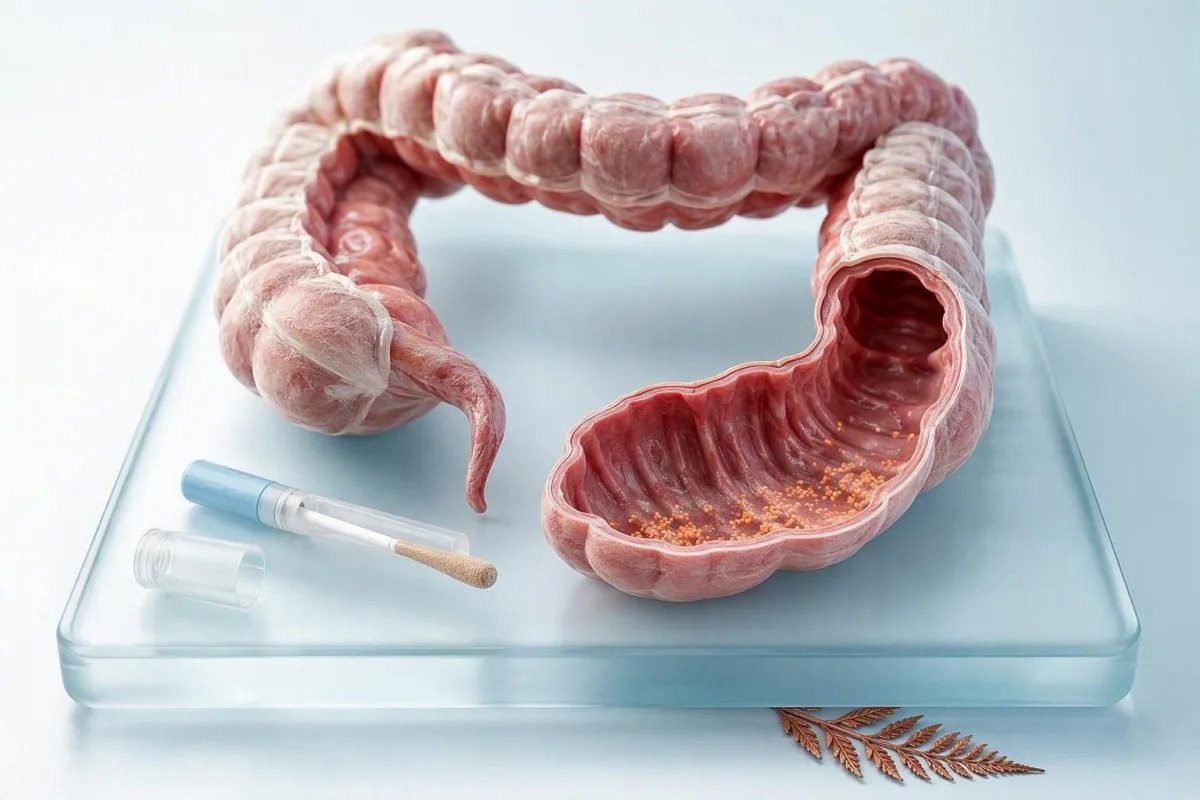
A positive FIT test means human haemoglobin was found in your stool. It does not diagnose cancer, but it does require a diagnostic colonoscopy—ideally arranged within 2 weeks and completed within 3 months; seek same-day care sooner for heavy rectal bleeding, fainting, severe pain, or black tarry stool.


- Positive FIT test means the fecal immunochemical test detected human haemoglobin in stool; it cannot identify the source of bleeding.
- Colonoscopy timing should ideally be within 3 months of a positive screening FIT; delays beyond 9 months are associated with higher colorectal cancer risk.
- Cancer probability after a positive FIT is commonly about 3% to 10%, while advanced polyps are found in roughly 20% to 40%, depending on age and programme threshold.
- FIT threshold varies by service; symptomatic UK pathways often use 10 µg haemoglobin per gram of faeces, while screening thresholds can be higher.
- Emergency symptoms include ongoing heavy bleeding, black tarry stool, collapse, severe abdominal pain, or breathlessness at rest.
- Do not repeat FIT to cancel a positive result; a later negative sample cannot reliably exclude an intermittently bleeding polyp or cancer.
- Common non-cancer causes include haemorrhoids, anal fissures, diverticular disease, colitis, polyps, and bleeding from the upper digestive tract less commonly.
- Blood tests such as full blood count, ferritin, and transferrin saturation help identify iron-deficiency anaemia while you wait for colonoscopy.
What a Positive FIT Test Means Today
A positive FIT test means that a fecal immunochemical test detected human haemoglobin in a stool sample, so bleeding somewhere in the lower bowel is possible. It is not an emergency diagnosis by itself, but it is a result to act on promptly rather than watch for a few months.
In my clinical practice, the most useful first sentence I can offer is this: a positive result is a referral trigger, not a cancer verdict. The FIT detects the globin part of human haemoglobin, which is usually broken down during passage from the stomach and small bowel; that makes the test relatively focused on bleeding from the colon or rectum. A single microscopic bleed can produce a positive result, even when you feel entirely well.
As of September 4, 2026, screening programmes still differ in their reporting and thresholds. In symptomatic UK primary-care pathways, 10 µg haemoglobin per gram of faeces is a commonly used threshold for urgent colorectal assessment, whereas population-screening programmes may use a higher threshold such as 80 or 120 µg/g. A “positive” result from one laboratory is therefore not numerically interchangeable with another.
Thomas Klein, MD, advises patients to call the clinician or screening service that ordered the test within 2 working days if no referral plan is already stated. Keep the report, note any rectal bleeding or bowel-habit change, and avoid self-treating with iron unless a clinician has confirmed deficiency. Our guide to FIT and FOBT differences explains why this newer stool test is more specific for human blood than older guaiac testing.
Why Colonoscopy Is Needed After a Positive Result
Colonoscopy is the standard next test after a positive FIT because it can find, sample, and often remove the cause of bleeding in one procedure. Repeating a stool test cannot safely replace it, because bowel bleeding can be intermittent.
A FIT cannot distinguish a small adenoma from a large cancer, a bleeding haemorrhoid, or colitis. Colonoscopy examines the rectum and colon directly, permits removal of most polyps, and allows tissue examination when an affected area needs clarification. In screening populations, roughly 3% to 10% of people with a positive FIT have colorectal cancer, while about 20% to 40% have advanced adenomas or advanced serrated lesions; age, sex, threshold, and prior screening change those figures substantially.
The US Preventive Services Task Force states that a positive non-colonoscopy colorectal screening test requires colonoscopy for the screening benefit to be realised (Davidson et al., 2021). That wording matters: FIT is a two-step screening strategy, not a finished test. I have seen patients reassured by a subsequent negative home kit, only for colonoscopy to later identify a polyp that had simply not bled on the second day.
Kantesti is an AI blood test analyzer, so it can help organise related full blood count and iron-study results, but it does not diagnose the source of a positive stool test or replace endoscopy. If you have several reports, use a doctor-visit lab summary to bring dates, medications, haemoglobin values, and symptoms together for the referral appointment.
How Quickly Should You Arrange Colonoscopy?
Most people with a positive FIT should have colonoscopy completed within 3 months, and referral should start within days to a few weeks. A wait of several weeks is usually manageable if you are otherwise well, but a delay of 9 months or longer is not a comfortable “watch and wait” interval.
The practical target I use is simple: contact the ordering service within 48 hours, secure a referral within 2 weeks, and aim for colonoscopy within 3 months. Access varies, and a clinician may choose CT colonography or specialist assessment first for someone too frail for sedation. What should not happen is an open-ended delay with no named service responsible for follow-up.
Corley and colleagues studied more than 70,000 FIT-positive patients and found that colorectal cancer incidence and stage began to worsen when colonoscopy occurred after about 6 months, with clearer adverse associations after 9 months (Corley et al., 2017). This observational study cannot prove that every individual delay causes progression, yet it is persuasive enough to guide service targets. A positive FIT paired with iron-deficiency anaemia deserves particular persistence.
If you are waiting, ask one concrete question: “What is my booked diagnostic date, and who should I call if it passes?” Record the name and number. Patients who also have low ferritin without heavy periods should mention it explicitly, because occult bowel loss is one possible explanation in adults.
Red-Flag Symptoms That Need Faster Care
A positive FIT plus heavy bleeding, black tarry stool, fainting, severe abdominal pain, or new breathlessness warrants same-day urgent assessment. These symptoms may indicate substantial blood loss, bowel obstruction, or another problem that should not wait for a routine endoscopy slot.
Go to emergency care or call local emergency services for repeated large-volume bright-red rectal bleeding, collapse, confusion, chest pain, or breathlessness at rest. Black, sticky, tar-like stool can indicate digested blood from higher in the digestive tract, particularly if it comes with dizziness or weakness. Iron tablets and bismuth can darken stool, but they do not usually make it sticky and tarry; uncertainty deserves assessment rather than internet detective work.
Contact your clinician the same day for persistent vomiting, a swollen abdomen with inability to pass stool or gas, fever above 38.0°C, or worsening cramping abdominal pain. New unintentional weight loss of more than 5% of body weight over 6 to 12 months, ongoing fatigue, or a clearly changing bowel pattern also strengthens the case for expedited review. The combination matters more than any one symptom alone.
A full blood count can reveal anaemia, but a normal haemoglobin does not rule out colorectal disease because bleeding may be small or intermittent. Read our practical guide to low red blood cell symptoms if fatigue, paleness, racing heartbeat, or exertional breathlessness has appeared alongside the FIT result.
Common Non-Cancer Causes of a Positive FIT
Haemorrhoids, anal fissures, polyps, diverticular disease, colitis, and medication-associated mucosal bleeding can all cause a positive FIT. None of these explanations is a reason to skip colonoscopy unless the treating clinician has made another clear plan.
Haemorrhoids are common, especially with constipation, pregnancy, and prolonged straining, but they are a frequent trap in clinical reasoning. Seeing bright-red blood on paper and having known piles does not prove they caused the positive FIT. In adults aged 50 years or older, I generally regard a positive test as requiring bowel evaluation even when haemorrhoids seem plausible.
Benign polyps often bleed before they cause pain or a changed bowel habit; that is precisely why FIT screening works. Inflammatory bowel disease, infectious colitis, diverticulitis, and radiation-related bowel changes may also raise FIT values. A raised fecal calprotectin result can support intestinal inflammation, but it answers a different question and cannot exclude a polyp or cancer.
The evidence around medicines is nuanced. Aspirin, anticoagulants, and anti-inflammatory drugs may make an existing bleeding source more detectable, but they do not make a positive FIT meaningless; do not stop prescribed antiplatelet or anticoagulant treatment without the prescriber’s advice. Thomas Klein, MD, has seen avoidable clots occur when patients stopped medication abruptly after reading that it might influence a stool test.
Can Periods, Food, or Exercise Cause a False Positive?
Menstrual contamination and visible bleeding from the anal area can affect a FIT sample, but red meat and most foods do not cause a positive modern FIT. The fecal immunochemical test is not the same as an older fecal occult blood test that reacted to dietary peroxidases.
A person who is menstruating should usually wait until bleeding has stopped before collecting a routine screening sample, following the kit’s own instructions. If the sample was collected during a period, tell the service rather than assuming the result is invalid; some systems may repeat it, while others will still recommend investigation based on age and symptoms. Visible urinary blood can also contaminate a sample, so timing matters.
Unlike guaiac-based fecal occult blood tests, FIT does not normally require avoiding red meat, citrus fruit, vitamin C, or broccoli. That distinction reduces false alarms and makes adherence easier. People often remember restrictions from a parent’s older test and unnecessarily delay screening; our explanation of FOBT results and false positives separates the two methods.
Strenuous endurance exercise can occasionally be associated with transient gut irritation or bleeding, particularly in dehydration or heat. If a marathon or ultradistance event occurred within 24 to 48 hours of collection, mention it, but do not dismiss the result yourself. The related phenomenon of runner’s haematuria affects urine, not stool, and the two should not be confused.
Why Repeating FIT Is Usually the Wrong Next Step
A second negative FIT does not cancel a first positive FIT because polyps and cancers may bleed intermittently. Colonoscopy remains the appropriate diagnostic test unless a specialist chooses an alternative because of individual risk or access constraints.
The most common question I hear is, “Can I just redo it?” In a person with no symptoms and a sampling concern, the screening programme may occasionally request another specimen; that is a service-specific decision. But a self-arranged repeat test has a dangerous psychological effect: a negative result can make someone cancel the referral despite no direct look at the bowel.
FIT results fluctuate because bleeding is episodic, the sample comes from one bowel movement, and haemoglobin degrades with delayed or overheated transport. A result below a laboratory threshold means “not detected at this sample level,” not “the bowel is proven normal.” This is one reason a positive test has a different clinical meaning from a borderline blood result that can sensibly be rechecked.
If concern about a false positive is stopping you from booking, discuss the exact circumstances with the endoscopy team. For a broader comparison of strategy and limitations, see FIT versus colonoscopy. A colonoscopy has its own limits, but it offers an actionable finding that a repeat kit cannot.
How to Prepare Safely for Colonoscopy
The bowel preparation, not the camera itself, is the part that most determines whether colonoscopy can reliably detect small lesions. Follow the written preparation schedule exactly, and contact the unit before changing diabetes medicines, iron, antiplatelets, or anticoagulants.
Most centres use a split-dose laxative regimen: part the evening before and part about 4 to 6 hours before the procedure, with the final dose finished according to local fasting instructions. This timing consistently gives a cleaner right colon than taking all preparation the previous day. Clear yellow liquid stool near the end is generally the goal, although the unit’s own guidance always takes priority.
Dehydration is the preventable problem I see most often. Unless you have been told to restrict fluids for heart or kidney disease, drink clear liquids regularly while preparing; many units suggest roughly 2 to 3 litres across the preparation window. People with chronic kidney disease, heart failure, diabetes, or a history of low sodium need individual advice rather than a generic volume target.
Ask specifically about oral iron, which is commonly paused 5 to 7 days before colonoscopy because it darkens residual stool, and about GLP-1 medicines, insulin, and anticoagulants. Our coagulation panel guide explains why normal clotting results do not tell you whether it is safe to stop a prescribed anticoagulant without a plan.
What Happens During the Colonoscopy Appointment
Colonoscopy usually takes 20 to 45 minutes, although a total visit can last 2 to 4 hours because of consent, sedation, recovery, and possible polyp removal. Most patients remember pressure, bloating, or brief cramps more than sharp pain.
At check-in, the team should confirm the positive FIT result, symptoms, allergies, previous operations, and medication plan. Sedation practices vary: some people choose no sedation, some receive inhaled analgesia, and others receive intravenous sedation. You can ask whether a chaperone, a same-sex endoscopist where feasible, or communication support is available—practical details affect whether patients complete the test.
The endoscopist advances a flexible camera through the bowel and uses carbon dioxide or air to improve visibility. Carbon dioxide is absorbed faster and often reduces post-procedure bloating. Polyps under 10 mm are commonly removed during the same examination, and tissue samples may be taken from an affected area even when the lining appears only subtly changed.
After sedation, do not drive, operate machinery, sign legal documents, or drink alcohol for 24 hours. Mild gas and a small streak of blood after polyp removal can occur, but increasing pain, fever, dizziness, or persistent bleeding needs urgent contact with the endoscopy unit. The Bristol stool chart can help you describe bowel changes accurately before and after the procedure.
What Colonoscopy Results Can Show
A colonoscopy after a positive FIT may find no significant abnormality, a removable polyp, inflammation, diverticular disease, haemorrhoids, or cancer. A normal examination is reassuring, but its follow-up interval depends on bowel-prep quality, completeness, family history, and local screening policy.
If no cause is found and the bowel preparation was excellent, clinicians often return an average-risk patient to routine screening rather than repeat colonoscopy immediately. A normal colonoscopy is not a lifetime guarantee: missed lesions are uncommon but possible, especially with poor preparation, incomplete examination, or a lesion type that is flat and subtle. Ask whether the caecum was reached and whether preparation was rated adequate.
Adenomas and serrated polyps are not cancer, but some can become cancer over years. Surveillance timing depends on the number, size, cellular features, and completeness of removal; a single small low-risk adenoma is handled very differently from 5 or more adenomas or a lesion 10 mm or larger. Pathology results commonly take 1 to 3 weeks, which can feel longer than it is.
If tissue examination identifies cancer, the next steps often include CT staging, blood tests, multidisciplinary review, and referral to colorectal surgery or oncology. A CEA value may be measured for baseline monitoring, but CEA cannot diagnose colorectal cancer or rule it out. Our article on CEA and CA 19-9 trends explains why tumour markers are adjuncts, not screening tests.
Blood Tests That Add Useful Context While You Wait
A full blood count and iron studies can identify iron-deficiency anaemia, which strengthens the need to investigate occult gastrointestinal blood loss. Normal blood results do not make a positive FIT safe to ignore.
For non-pregnant adults, haemoglobin below roughly 130 g/L in men or 120 g/L in women meets common anaemia definitions, although laboratories and clinical context vary. Ferritin below 30 µg/L often supports depleted iron stores; with inflammation, ferritin can look falsely reassuring because it rises as an acute-phase protein. A low transferrin saturation, often below 20%, adds useful context.
Kantesti is an AI lab test interpretation service that places haemoglobin, mean cell volume, ferritin, C-reactive protein, and kidney function in one longitudinal view. That is useful when a positive FIT sits beside fatigue or low iron, but it must support—not postpone—the endoscopy pathway. We recommend downloading original laboratory reports and sharing them with the clinician who owns the referral.
A falling MCV, rising RDW, and declining ferritin can precede overt anaemia by months. The iron studies guide explains why serum iron alone varies too much during the day to diagnose deficiency. If you develop palpitations, chest discomfort, or breathlessness while waiting, request assessment sooner rather than simply increasing dietary iron.
Medicines, Age, and Family History That Change Triage
Anticoagulants, antiplatelets, a first-degree relative with colorectal cancer, prior polyps, and inflammatory bowel disease should all be flagged at referral after a positive FIT. These factors influence risk assessment and procedure planning, but none makes a positive result automatically harmless.
Aspirin, clopidogrel, warfarin, apixaban, rivaroxaban, and similar medicines may increase the visibility of bleeding from a lesion that was already there. Do not stop them independently: the risk of stroke, venous thrombosis, or coronary events may outweigh procedure-related bleeding risk. The endoscopy team will provide a medication-specific plan based on kidney function, indication, and whether polyp removal is anticipated.
A first-degree relative diagnosed with colorectal cancer before age 50 years, or two first-degree relatives diagnosed at any age, may indicate a higher-risk family pathway. Tell the clinician about relatives with colon cancer, endometrial cancer, ovarian cancer, or numerous polyps, including their ages at diagnosis. Family history is often recorded incompletely because people remember “cancer” but not the organ or age; a quick family call can change triage.
Kantesti is an AI biomarker interpretation platform that can help families track consented laboratory trends, but a family-risk assessment cannot diagnose inherited cancer syndromes. For a practical record to bring to primary care, review cancer-related family risk markers. Genetic counselling may be appropriate even when routine blood tests are normal.
When Colonoscopy Is Delayed, Incomplete, or Not Suitable
CT colonography is a common alternative when colonoscopy is incomplete or unsafe, but it cannot remove polyps or take tissue samples. A positive FIT still needs a documented diagnostic plan even when standard colonoscopy is not feasible.
Frailty, severe heart or lung disease, difficult bowel anatomy, anticoagulation complexity, or an incomplete first examination may lead a specialist to recommend CT colonography. It uses bowel preparation and gas insufflation, usually without sedation, and is good at detecting larger growths. If it identifies a suspicious polyp or affected area, colonoscopy may still be needed for removal or tissue examination.
Capsule colon imaging is available in selected settings, but availability and follow-up pathways are inconsistent. It is not a shortcut around bowel preparation, and a positive finding still commonly leads to conventional endoscopy. If appointments are cancelled repeatedly, ask for the reason, the alternative, and the target date in writing; uncertainty is harder to resolve when everyone assumes someone else has rebooked it.
Kantesti’s medical content is reviewed with clinical oversight, and our medical validation approach explains how we separate pattern interpretation from diagnosis. A digital report can organise your questions, but only the treating service can decide whether urgent imaging, anaesthetic review, or a different test is clinically appropriate.
What to Do After a Normal Colonoscopy
A high-quality normal colonoscopy after a positive FIT is reassuring, but new bleeding, iron-deficiency anaemia, or persistent symptoms still deserve reassessment. The next screening interval should come from the endoscopy report rather than an assumed universal rule.
Read the report for three items: preparation quality, whether the examination reached the caecum, and the recommended follow-up date. In many programmes, an average-risk person with a complete high-quality normal colonoscopy returns to routine screening after several years, but national policies differ. Do not keep doing annual private FIT tests unless your clinician recommends it; unnecessary testing can create confusing cycles of repeat procedures.
Persistent fatigue or low ferritin after a normal colonoscopy may require assessment for upper gastrointestinal loss, coeliac disease, menstrual loss, kidney disease, dietary deficiency, or malabsorption. A negative colonoscopy does not investigate every part of the digestive tract. The gluten challenge guidance is relevant only if coeliac testing is being considered and you are currently eating gluten.
I tell patients that reassurance should be specific, not vague: “The colon was adequately examined on this date, and here is what would bring me back sooner.” New black stool, recurrent visible rectal bleeding, unexplained weight loss, or a haemoglobin fall of 10 g/L or more from a prior baseline should prompt a clinician review. Keep the report with your health history records.
Questions to Ask at Your FIT Follow-Up Appointment
The most useful follow-up questions are when the diagnostic test will occur, whether symptoms change urgency, and how medicines should be managed. A written list reduces missed details when an unexpected positive screening result makes the conversation feel rushed.
Ask: “What was my FIT value and threshold, if it was reported quantitatively?”, “Is colonoscopy the right next test for me?”, and “What symptoms mean I should call sooner?” A higher quantitative value can correlate with a greater likelihood of significant bowel findings, but no single number diagnoses cancer. The outcome of a proper investigation matters far more than trying to interpret a result in isolation.
Bring a medication list with doses, previous colonoscopy and pathology reports, family cancer history, and dates of bleeding or bowel changes. If fatigue is part of the picture, include haemoglobin, MCV, ferritin, and transferrin saturation results. Kantesti AI can help you recognise those blood-test patterns and produce a time-ordered report, while the specialist decides what they mean for your bowel investigation.
My final clinical point is deliberately plain: do not let embarrassment slow you down. Colorectal teams discuss stool, rectal bleeding, and bowel habits every day; clear answers improve care. Our physicians and governance process are described by the Medical Advisory Board, and you can use the Kantesti technology guide to understand where AI interpretation is helpful and where direct medical assessment remains indispensable.
Frequently Asked Questions
How urgent is a positive FIT test?
A positive FIT test is usually urgent enough to start referral within days and complete colonoscopy within about 3 months, but it is not automatically an emergency if you feel well. Observational evidence found worse colorectal cancer outcomes when follow-up colonoscopy was delayed beyond roughly 6 months, with clearer risk after 9 months. Seek same-day care if the positive result occurs with heavy rectal bleeding, black tarry stool, fainting, severe abdominal pain, chest pain, or breathlessness at rest.
What are the chances that a positive FIT test means cancer?
A positive FIT test means colorectal cancer is possible but not certain; cancer is found in approximately 3% to 10% of FIT-positive screening participants, depending on age, sex, test threshold, and the screening programme. Advanced polyps or advanced serrated lesions are found more often, commonly in about 20% to 40% of people. Colonoscopy is needed because it can distinguish cancer from polyps, haemorrhoids, inflammation, and other causes of stool blood.
Can haemorrhoids cause a positive FIT test?
Haemorrhoids can contribute to a positive FIT test because they may release human haemoglobin into stool, especially during constipation or straining. However, known haemorrhoids do not reliably explain a positive result in an adult who is eligible for bowel screening. Colonoscopy or another clinician-directed bowel investigation remains appropriate because haemorrhoids and polyps can coexist.
Should I repeat my FIT test if it is positive?
A repeat FIT test is usually not the right way to dismiss a positive FIT result because bowel bleeding is intermittent and a later negative sample can miss the same lesion. The original positive result should lead to colonoscopy unless the screening service or specialist specifically requests a repeat because of a collection problem. A negative repeat does not replace direct bowel assessment after a confirmed positive result.
What FIT level is considered positive?
A FIT level is considered positive when faecal haemoglobin meets or exceeds the threshold used by that laboratory or screening programme. Symptomatic UK pathways commonly use 10 µg haemoglobin per gram of faeces, while population-screening services may use thresholds around 80 or 120 µg/g. A higher value can increase concern for significant bowel disease, but no numerical FIT value confirms or excludes cancer without diagnostic investigation.
Can food or medication make a FIT test positive?
Red meat, vitamin C, and vegetables do not usually cause a positive modern fecal immunochemical test because FIT detects human globin rather than dietary peroxidase activity. Anticoagulants, aspirin, and anti-inflammatory medicines may make an existing bleeding source easier to detect, but they do not make a positive result irrelevant. Do not stop warfarin, apixaban, clopidogrel, aspirin, or similar prescribed medicines without advice from the clinician managing them.
Get AI-Powered Blood Test Analysis Today
Join over 2 million users worldwide who trust Kantesti for instant, accurate lab test analysis. Upload your blood test results and receive comprehensive interpretation of 15,000+ biomarkers in seconds.
📚 Referenced Research Publications
Klein, T., Mitchell, S., & Weber, H. (2026). Kantesti. (2026). RDW Blood Test: Complete Guide to RDW-CV, MCV & MCHC. Zenodo.. Kantesti AI Medical Research.
Klein, T., Mitchell, S., & Weber, H. (2026). Kantesti. (2026). BUN/Creatinine Ratio Explained: Kidney Function Test Guide. Zenodo.. Kantesti AI Medical Research.
📖 External Medical References
⚕️ Medical Disclaimer
This article is for educational purposes only and does not constitute medical advice. Always consult a qualified healthcare provider for diagnosis and treatment decisions.
E-E-A-T Trust Signals
Experience
Physician-led clinical review of lab interpretation workflows.
Expertise
Laboratory medicine focus on how biomarkers behave in clinical context.
Authoritativeness
Written by Dr. Thomas Klein with review by Dr. Sarah Mitchell and Prof. Dr. Hans Weber.
Trustworthiness
Evidence-based interpretation with clear follow-up pathways to reduce alarm.