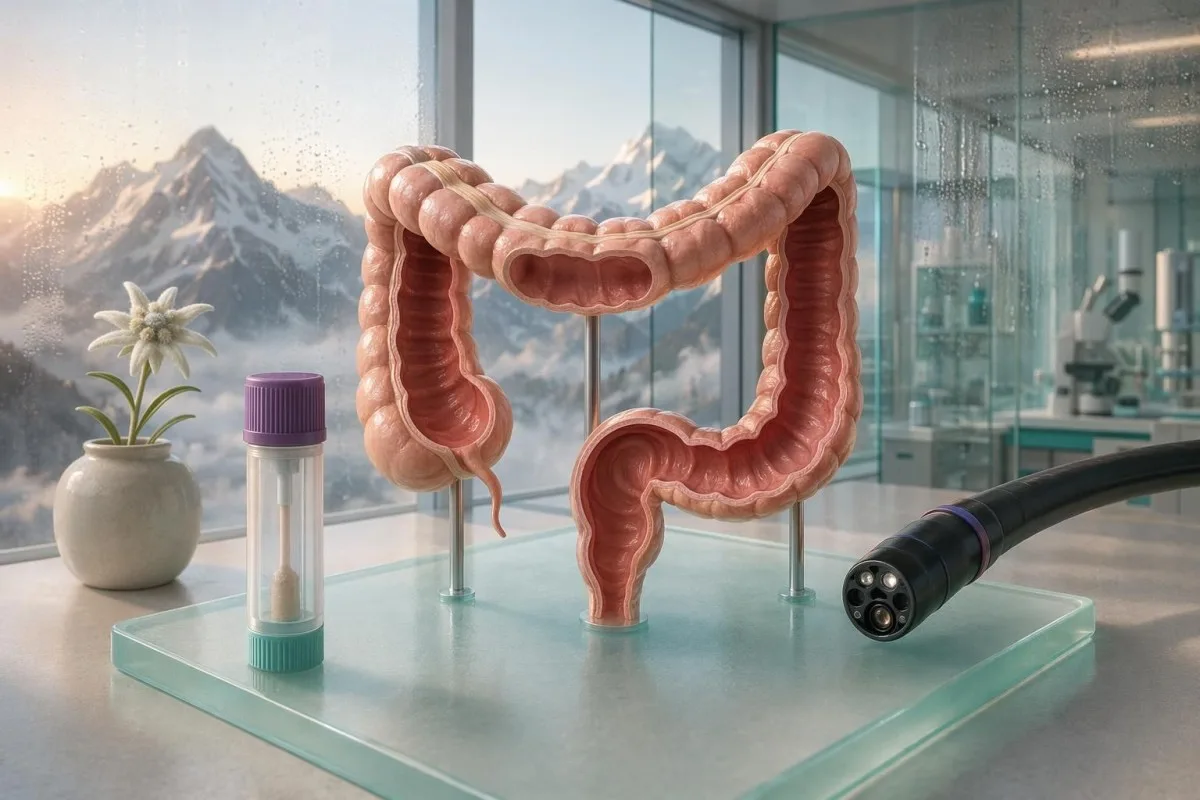
A practical physician’s comparison of the at-home FIT stool test and colonoscopy, with timing, accuracy, risk, and follow-up rules made plain.


- Best short answer: FIT is easier and done yearly; colonoscopy is more complete, removes polyps, and is required after a positive FIT.
- FIT accuracy: A single FIT detects roughly 79% of colorectal cancers and has about 94% specificity in pooled studies, but it misses many advanced adenomas.
- Colonoscopy interval: A high-quality normal colonoscopy is usually repeated every 10 years in average-risk adults.
- Positive FIT test next step: Colonoscopy should usually happen within 1–3 months and preferably not later than 6 months.
- Do not repeat FIT: A positive FIT should not be repeated to see if it clears; repeating can falsely reassure and delay diagnosis.
- Age to start: Most average-risk adults should begin colorectal cancer screening at age 45 and continue through 75, with individualized decisions from 76–85.
- Negative FIT limit: A negative FIT does not rule out colon cancer when red flags such as iron-deficiency anemia, weight loss, or persistent rectal bleeding are present.
- Blood tests are not substitutes: CBC, ferritin, CRP, and CEA can support risk assessment, but no routine blood test replaces FIT or colonoscopy for screening.
Quick answer: when FIT or colonoscopy makes more sense
For most average-risk adults, FIT is the easier yearly screening choice; colonoscopy is the more complete test and the required follow-up after a positive FIT. FIT can find many cancers by detecting hidden blood in stool, but it does not remove polyps. Colonoscopy sees the bowel lining, removes precancerous polyps, and is usually repeated every 10 years after a normal high-quality exam. If your FIT is positive, the next step is colonoscopy—not another FIT.
I’m Thomas Klein, MD, Chief Medical Officer at Kantesti LTD, and my usual framing is simple: FIT is a screening invitation, colonoscopy is a diagnostic and preventive procedure. As of June 14, 2026, the US Preventive Services Task Force recommends colorectal cancer screening for average-risk adults aged 45–75, with individualized screening from 76–85 (USPSTF, 2021).
Kantesti is an AI blood test interpretation platform that helps patients put CBC, ferritin, CRP, liver markers, and other blood results into context around digestive investigations, but FIT and colonoscopy remain the actual colon cancer screening tools. We describe our clinical governance openly on About Us, because screening advice should never feel like a black box.
Here is the practical split I use in clinic: choose FIT if you are average risk, reluctant to book an invasive test, or likely to complete a yearly at-home test; choose colonoscopy first if you have prior polyps, strong family history, inflammatory bowel disease, iron-deficiency anemia, or bowel symptoms that need direct assessment. For broader prevention planning, our guide to preventive lab checks explains where blood work fits and where it does not.
Accuracy numbers: FIT test vs colonoscopy in real life
FIT test vs colonoscopy accuracy differs because FIT detects bleeding, while colonoscopy detects visible bowel abnormalities directly. In a major Annals of Internal Medicine meta-analysis, one-time FIT sensitivity for colorectal cancer was about 79% and specificity about 94%, but sensitivity for advanced adenomas was much lower (Lee et al., 2014).
A single FIT is not meant to be perfect. Its power comes from repetition: annual FIT testing catches cancers that may not have been bleeding on last year’s sample. Colonoscopy has higher single-test sensitivity for cancer, often quoted above 90% in high-quality exams, but it is still operator-dependent and can miss flat serrated lesions, especially in the right colon.
Kantesti’s clinicians review screening evidence using the same caution we use for lab interpretation: a test’s headline sensitivity is less useful than knowing what disease stage, cutoff, and patient population produced that number. Our clinical validation standards follow that principle because a 94% specificity figure means something different in a low-risk 46-year-old than in a 72-year-old with anemia.
The cutoff matters. Many FIT programs use thresholds around 10–20 micrograms of hemoglobin per gram of stool, and lowering the cutoff finds more cancers but also creates more colonoscopy referrals. That trade-off is why two countries can both use FIT and still have different positivity rates.
A normal colonoscopy is only as reassuring as the exam quality: bowel preparation, cecal intubation, withdrawal time, and adenoma detection rate all matter. If a report says the prep was poor or the exam was incomplete, the usual 10-year reassurance may not apply.
How FIT works at home and why diet usually does not matter
FIT detects human hemoglobin in stool, so it is more specific to lower intestinal bleeding than older guaiac stool tests. Most FIT kits use an antibody-based method, and patients usually collect one small stool sample at home without changing diet or stopping ordinary foods.
The reason diet usually does not interfere is biochemical: FIT reacts to human globin, not plant peroxidases or red meat compounds. Upper gastrointestinal bleeding is also less likely to trigger FIT because globin is partly digested before it reaches the colon, which is useful for colon screening but not a full gut bleeding assessment.
Timing still matters. A FIT sample left in a hot bathroom for several days can degrade, and mailing delays can lower measured hemoglobin. In our experience, patients get the most reliable result when they collect the sample on a normal bowel day and return it within the kit’s stated window, often 24–72 hours.
Do not use FIT as a general bowel inflammation test. If mucus, diarrhea, or cramping is the main issue, stool inflammatory markers may be more relevant; our fecal calprotectin guide explains why a calprotectin result above 50 micrograms/g often changes the inflammatory bowel disease discussion.
One subtle point: hemorrhoids can cause a positive FIT, but you should not assume hemorrhoids are the explanation until colonoscopy has checked the colon. I have seen too many patients lose 6–9 months because visible piles made everyone relax.
What colonoscopy adds that FIT cannot provide
Colonoscopy can both detect and remove precancerous polyps, which is the major advantage over FIT. FIT looks for bleeding; colonoscopy examines the bowel lining and allows biopsy or polyp removal during the same procedure when safe.
Adenomas and serrated polyps may sit quietly for years before turning malignant, and many do not bleed consistently. That is why FIT is less sensitive for advanced adenomas than for established cancer. Colonoscopy changes the biology of risk by removing the precursor, not merely by finding cancer earlier.
The trade-off is effort. You need bowel prep, time off work, escort arrangements if sedated, and a facility that performs enough procedures to maintain quality. People sometimes underestimate the prep more than the scope; split-dose preparation, where the second dose is taken within about 4–6 hours of the procedure, usually gives cleaner exams.
If your main concern is bloating, chronic abdominal discomfort, or bowel habit change, a blood panel and stool workup may run alongside endoscopy. Our guide to gut health blood tests explains why CBC, CRP, ferritin, albumin, and thyroid markers can support the story but cannot replace looking inside the colon.
Colonoscopy quality is not a small print issue. A report should mention bowel preparation quality and whether the cecum was reached; without those two details, I am slower to accept a long repeat interval.
Positive FIT test next step: why colonoscopy should not wait
The positive FIT test next step is diagnostic colonoscopy, ideally within 1–3 months and preferably within 6 months. Repeating FIT after a positive result is not a safe workaround because bleeding from cancers and advanced polyps can be intermittent.
Corley and colleagues found in JAMA that delays after a positive fecal test were associated with higher colorectal cancer risk and more advanced stage, especially when colonoscopy was delayed beyond about 10 months (Corley et al., 2017). That paper changed how I talk to patients: a positive FIT is not an emergency ambulance problem, but it is a calendar problem.
A positive FIT does not mean cancer. Depending on age and program cutoff, many positive FIT results come from benign polyps, hemorrhoids, diverticular disease, or other non-cancer sources. Still, the whole value of FIT is lost if the follow-up colonoscopy never happens.
If you are scheduled for colonoscopy, ask whether you need pre-procedure blood work, medication holds, or anesthesia review. Our pre-surgery blood test guide is useful for understanding why hemoglobin, platelets, kidney function, and coagulation markers are sometimes checked before procedures.
My own rule as Thomas Klein, MD: if a patient tells me they had a positive FIT and nobody has booked colonoscopy within 2 weeks, I ask them to call the screening program or clinician that day. Administrative drift is not a medical plan.
Convenience, safety, and preparation differences
FIT is more convenient because it is done at home and needs no sedation, while colonoscopy requires bowel preparation and carries small but real procedural risks. For average-risk people who will not attend colonoscopy screening, annual FIT is far better than doing nothing.
Colonoscopy complications are uncommon but not zero. Large screening studies commonly estimate perforation around 3–4 per 10,000 procedures and major bleeding roughly 8–15 per 10,000, with higher bleeding risk after larger polyp removal. Those numbers are low, but they matter when screening millions of healthy adults.
Medication planning separates FIT from colonoscopy. FIT usually does not require stopping aspirin, anticoagulants, or anti-inflammatory medicines unless your clinician gives a specific reason; colonoscopy may require a medication plan if polypectomy is likely. For coagulation context, our research guide on aPTT and D-dimer explains why clotting tests are interpreted in patterns, not one number at a time.
People on warfarin, DOACs, or antiplatelet therapy should not improvise a hold schedule before colonoscopy. The safest decision balances clotting risk against bleeding risk, and our practical article on blood thinner labs explains why INR, anti-Xa testing, kidney function, and timing can all matter.
A small convenience point patients rarely hear: FIT works best as a yearly habit linked to a birthday month or annual health admin day. Colonoscopy works best when you book the day after a normal week, not after travel, dehydration, or a string of night shifts.
When a negative FIT is not reassuring enough
A negative FIT does not rule out colorectal cancer when red-flag features are present. Iron-deficiency anemia, unexplained weight loss, persistent rectal bleeding, progressive bowel habit change, or a palpable abdominal or rectal mass should prompt medical assessment even if FIT is negative.
Iron-deficiency anemia is the red flag I worry about most, especially in adult men and postmenopausal women. A ferritin below 30 ng/mL often supports iron deficiency, but inflammation can push ferritin upward, so transferrin saturation, MCV, RDW, and CRP may change the interpretation.
Kantesti is an AI blood test analyzer; it cannot read a FIT card, but it can interpret the blood markers that often travel with bowel-symptom workups. When a user uploads a CBC showing low hemoglobin plus falling MCV, Kantesti AI flags the pattern differently from an isolated borderline result.
If ferritin is low without heavy menstrual loss, the gastrointestinal tract deserves attention. We cover that pattern in low ferritin without heavy periods, and our iron deficiency anemia guide explains why ferritin can fall months before hemoglobin crosses the lab’s low line.
One clinical anecdote stays with me: a fit 58-year-old cyclist had three negative FITs but a hemoglobin of 11.2 g/dL and ferritin of 9 ng/mL. Colonoscopy found a right-sided cancer that simply had not bled on the sample days.
Symptoms that change the screening conversation
FIT is a screening test for people without alarm symptoms; symptoms can move the decision toward diagnostic evaluation. Persistent rectal bleeding, new bowel narrowing, nighttime diarrhea, mucus with weight loss, or pain with anemia should not be handled as routine screening alone.
A 46-year-old with occasional constipation and no anemia may reasonably start with FIT if local guidelines allow. A 46-year-old with six weeks of rectal bleeding and a falling hemoglobin needs a different pathway. Same age, different risk signal.
Mucus alone is not a colon cancer marker, but mucus plus blood, weight loss, anemia, or persistent diarrhea changes the tone. Our article on mucus in stool lays out which combinations usually justify stool inflammation testing, CBC, and direct bowel assessment.
Clinicians disagree a bit on how aggressively to scope younger adults with vague symptoms, and that uncertainty is honest. What I do not like is using a negative FIT as a reason to ignore a symptom trend that is getting worse over 4–8 weeks.
Keep a symptom log for 14 days before your appointment: stool frequency, visible blood, weight change, fever, night symptoms, and medicines such as NSAIDs. It often saves a visit because the pattern is clearer than memory.
Other stool tests can answer different gut questions
FIT is not the same as stool tests for infection, inflammation, digestion, or H. pylori. A colon cancer screening test asks whether hidden lower-gut bleeding is present; other stool tests look for organisms, immune activity, pancreatic function, or upper-gut bacterial markers.
I often see patients arrive with a stack of stool results and one assumption: if one stool test was negative, the bowel is fine. That is not how it works. FIT, calprotectin, culture, ova and parasite testing, pancreatic elastase, and H. pylori antigen each answer a narrow question.
H. pylori stool antigen, for example, checks for a stomach-associated infection and is used differently from FIT. If you are comparing stool tests after indigestion or ulcer symptoms, our H. pylori stool test guide explains why proton pump inhibitors can cause false negatives if not stopped long enough.
FIT is also not a microbiome test. Microbiome panels may be interesting for research or selected cases, but they do not replace colon cancer screening. When cancer screening is due, the choice is still between accepted screening options such as FIT, colonoscopy, CT colonography, flexible sigmoidoscopy, or stool DNA-FIT depending on country and risk.
A practical tip: keep the original test name and units. A report saying fecal Hb 8 micrograms/g is not the same as a report saying negative by a lab with a 20 micrograms/g cutoff.
Where blood tests fit around colon screening
Blood tests can support colon cancer risk assessment, but they do not replace FIT or colonoscopy for screening. CBC, ferritin, liver enzymes, albumin, CRP, and sometimes CEA can add context when symptoms, anemia, or known cancer follow-up are involved.
Kantesti AI interprets blood results by looking for clusters: low hemoglobin with low MCV and low ferritin is a different pattern from isolated mild anemia after a viral illness. Our technology guide explains how pattern recognition is paired with clinical rules rather than treating each marker as a separate alarm.
A normal CBC does not rule out colon cancer. Early cancers and many advanced adenomas can exist with hemoglobin of 14.0 g/dL, normal platelets, and normal CRP. That is exactly why population screening exists before symptoms and blood abnormalities appear.
Kantesti’s neural network is useful after colonoscopy too: if a polyp was removed and follow-up blood work shows anemia, kidney changes, or inflammation, it helps organize the question list for the clinician. For safe boundaries, our article on AI interpretation limits explains when AI should prompt review rather than reassure.
The phrase I use with patients is this: blood tests can tell us the body is reacting; FIT and colonoscopy tell us whether the colon is part of the reason.
Why CEA and newer blood cancer tests are not substitutes
CEA is not a recommended screening test for average-risk colorectal cancer. It can be useful in follow-up after a diagnosed colorectal cancer, but its sensitivity and specificity are too limited for deciding whether an asymptomatic person needs colonoscopy.
CEA can rise with colorectal cancer, but it can also rise with smoking, liver disease, pancreatitis, inflammatory bowel disease, and other cancers. A normal CEA also cannot exclude early colon cancer. That combination makes it a poor standalone screening tool.
If a patient with known colorectal cancer has a rising CEA after treatment, that is a follow-up question, not a screening question. Our CEA blood test guide explains why trends over time usually matter more than one borderline value.
Newer blood-based cancer screening tests are promising, but as of 2026 they have not replaced FIT or colonoscopy for mainstream colorectal screening. Some perform better for established cancers than for advanced precancerous polyps, which matters because prevention depends on finding lesions before cancer.
I am cautiously optimistic about blood-based screening, but I am not casual about it. A convenient test that misses many preventable precancers can look attractive while quietly giving up the strongest advantage of colonoscopy.
Liquid biopsy and stool DNA: useful, but not the same question
Liquid biopsy and stool DNA tests may detect cancer-associated signals, but they do not provide the same preventive benefit as colonoscopy. A positive noninvasive cancer signal still needs colonoscopy to locate, diagnose, and treat the source.
Stool DNA-FIT tests combine blood detection with molecular markers shed into stool, and they may detect more cancers than FIT alone in some studies. They also tend to produce more false positives, which means more colonoscopies. That is not bad if follow-up happens, but it is frustrating if patients expected a definitive answer.
Blood-based multi-cancer tests are a different category. They may detect circulating tumor DNA or methylation patterns, yet a negative result cannot replace recommended colorectal screening. Our liquid biopsy guide explains why cancer signal strength depends on tumor biology, shedding, stage, and assay design.
The clinical problem is not only finding cancer. It is preventing cancer by removing advanced adenomas and serrated lesions. FIT and stool DNA are detection tools; colonoscopy is the tool that can act during the same encounter.
If you choose a noninvasive test because colonoscopy access is limited, make sure you can access colonoscopy if it is positive. Screening without follow-up is like a smoke alarm with no exit plan.
Age, family history, and risk level change the answer
Average-risk adults usually start colorectal cancer screening at age 45, but family history and medical history can move screening earlier or change the test choice. Prior advanced polyps, Lynch syndrome, inflammatory bowel disease, or a first-degree relative with early colorectal cancer often require colonoscopy-based surveillance.
The USPSTF recommendation covers average-risk adults, not people with inherited syndromes or high-risk bowel disease. If your parent or sibling had colorectal cancer before age 60, many clinicians consider colonoscopy earlier and more often than the usual 10-year average-risk interval.
Kantesti is an AI-powered blood test analysis tool used by more than 2M people across 127+ countries, and we regularly see family-history notes attached to uploaded lab reports. That context matters because an iron panel in a 35-year-old with a Lynch syndrome family history is not interpreted like the same panel in a low-risk 35-year-old.
Unexplained weight loss is another risk shifter. A 5% unintentional body weight loss over 6–12 months, especially with anemia, appetite change, or bowel symptoms, deserves a clinician’s review rather than routine screening logic; our weight loss lab guide gives a structured first-pass lab list.
Patients over 75 need a more personal calculation: prior screening history, life expectancy, frailty, bowel prep tolerance, and willingness to treat a discovered cancer. There is no dignity in forcing a frail person through a test that would not change care.
Cost, access, and privacy: the unglamorous deciding factors
The best colon cancer screening test is the one you can complete correctly and follow up if positive. FIT is cheaper, private, and scalable; colonoscopy is more resource-intensive but gives diagnosis and prevention in one procedure.
In countries with organized FIT programs, mailed kits can reach people who would never book a colonoscopy first. That equity advantage is real. In opportunistic systems, the problem is different: people may buy a test but not know who will arrange colonoscopy if it is positive.
Privacy matters more than clinicians sometimes admit. Some patients avoid FIT because stool collection feels embarrassing; others avoid colonoscopy because sedation, transport, and time off work are hard to arrange. A good screening plan respects those barriers instead of lecturing around them.
Store reports carefully: FIT result, colonoscopy report, pathology report, and recommended interval. A future clinician needs the pathology wording, not just the phrase polyps removed. If a report mentions adenoma size, villous features, dysplasia, or serrated histology, your next interval may change.
Digital organization helps, but privacy rules should be plain. Kantesti handles uploaded blood-test data with GDPR-aligned, privacy-focused processes; stool and colonoscopy reports should be handled with the same seriousness even when they feel routine.
Bottom line: match the test to risk, not fear
FIT vs colonoscopy is not a contest; it is a matching decision. FIT is a strong, low-burden yearly option for average-risk screening, while colonoscopy is preferred for positive FIT, high-risk history, red-flag symptoms, iron-deficiency anemia, or when polyp removal is the goal.
If you are 45–75 and average risk, do not wait for the perfect test. Annual FIT completed every year beats a colonoscopy you keep postponing for 5 years. If you can comfortably access colonoscopy and want a 10-year interval after a normal exam, that is also a reasonable route.
If your FIT is positive, book colonoscopy. If your FIT is negative but you have anemia, weight loss, persistent bleeding, or a strong family history, speak to a clinician rather than filing the result away. Our research article on digestive symptom patterns is useful for separating everyday stool changes from signals that deserve a proper workup.
As Thomas Klein, MD, I would rather see a patient choose a simple test they will repeat reliably than avoid screening because colonoscopy sounds intimidating. But I would also rather see a prompt colonoscopy after one positive FIT than five reassuring repeat FITs that delay the answer.
Kantesti’s Medical Advisory Board reviews our blood-test interpretation approach, and the same clinical principle applies here: test results need context, follow-up, and a human plan. Screening saves lives when the chain is complete.
Frequently Asked Questions
Is FIT as good as colonoscopy for colon cancer screening?
FIT is not as complete as colonoscopy, but it is an effective colon cancer screening test when done every year. A single FIT detects about 79% of colorectal cancers with about 94% specificity in a major meta-analysis, while colonoscopy directly visualizes the colon and can remove precancerous polyps. FIT is usually better for people who will reliably test yearly, and colonoscopy is better for people who need diagnosis, polyp removal, or high-risk surveillance.
What should I do after a positive FIT test?
The next step after a positive FIT test is diagnostic colonoscopy, not repeating the FIT. Most clinicians aim for colonoscopy within 1–3 months, and delays beyond 6 months should be avoided when possible. A positive FIT does not mean cancer, but it does mean hidden blood was detected and the colon needs direct evaluation.
Can I repeat a FIT if the first one is positive?
Repeating FIT after a positive result is usually the wrong strategy because colorectal bleeding can be intermittent. A second negative FIT can falsely reassure you and delay colonoscopy. The medical value of FIT depends on completing the follow-up pathway, so a positive result should lead to colonoscopy even if you feel well.
Does a negative FIT rule out colon cancer?
A negative FIT does not completely rule out colon cancer because some cancers and many advanced polyps do not bleed on the day the sample is collected. A negative FIT is reassuring for average-risk screening when repeated yearly, but it is not enough when iron-deficiency anemia, unexplained weight loss, persistent rectal bleeding, or progressive bowel changes are present. In those situations, clinical review and often colonoscopy are still needed.
How often should FIT and colonoscopy be done?
For average-risk adults, FIT is typically done every year, while a high-quality normal colonoscopy is usually repeated every 10 years. Some national programs use FIT every 2 years, depending on age range and health system design. People with prior polyps, inflammatory bowel disease, inherited syndromes, or strong family history often need a different colonoscopy schedule.
Do blood tests detect colon cancer instead of FIT or colonoscopy?
Routine blood tests do not replace FIT or colonoscopy for colon cancer screening. CBC, ferritin, CRP, liver enzymes, albumin, and CEA can provide clues such as anemia or inflammation, but early colorectal cancer can exist with normal blood results. CEA is mainly used in follow-up after diagnosed colorectal cancer, not as a screening test for average-risk adults.
Who should choose colonoscopy instead of FIT first?
Colonoscopy is usually preferred first for people with a positive FIT, prior advanced polyps, strong family history, Lynch syndrome, inflammatory bowel disease, iron-deficiency anemia, or alarm symptoms. Average-risk adults without symptoms can reasonably choose annual FIT if they will complete it consistently and follow up a positive result. Risk level, access, bowel-prep tolerance, and personal preference all matter.
Should I stop aspirin or blood thinners before doing a FIT?
Do not stop aspirin, anticoagulants, or antiplatelet medicines without the prescriber’s advice. Most FIT programs do not require medication changes; follow the kit instructions and arrange colonoscopy if the result is positive.
Get AI-Powered Blood Test Analysis Today
Join over 2 million users worldwide who trust Kantesti for instant, accurate lab test analysis. Upload your blood test results and receive comprehensive interpretation of 15,000+ biomarkers in seconds.
📚 Referenced Research Publications
Klein, T., Mitchell, S., & Weber, H. (2026). aPTT Normal Range: D-Dimer, Protein C Blood Clotting Guide. Kantesti AI Medical Research.
Klein, T., Mitchell, S., & Weber, H. (2026). Serum Proteins Guide: Globulins, Albumin & A/G Ratio Blood Test. Kantesti AI Medical Research.
📖 External Medical References
⚕️ Medical Disclaimer
This article is for educational purposes only and does not constitute medical advice. Always consult a qualified healthcare provider for diagnosis and treatment decisions.
E-E-A-T Trust Signals
Experience
Physician-led clinical review of lab interpretation workflows.
Expertise
Laboratory medicine focus on how biomarkers behave in clinical context.
Authoritativeness
Written by Dr. Thomas Klein with review by Dr. Sarah Mitchell and Prof. Dr. Hans Weber.
Trustworthiness
Evidence-based interpretation with clear follow-up pathways to reduce alarm.