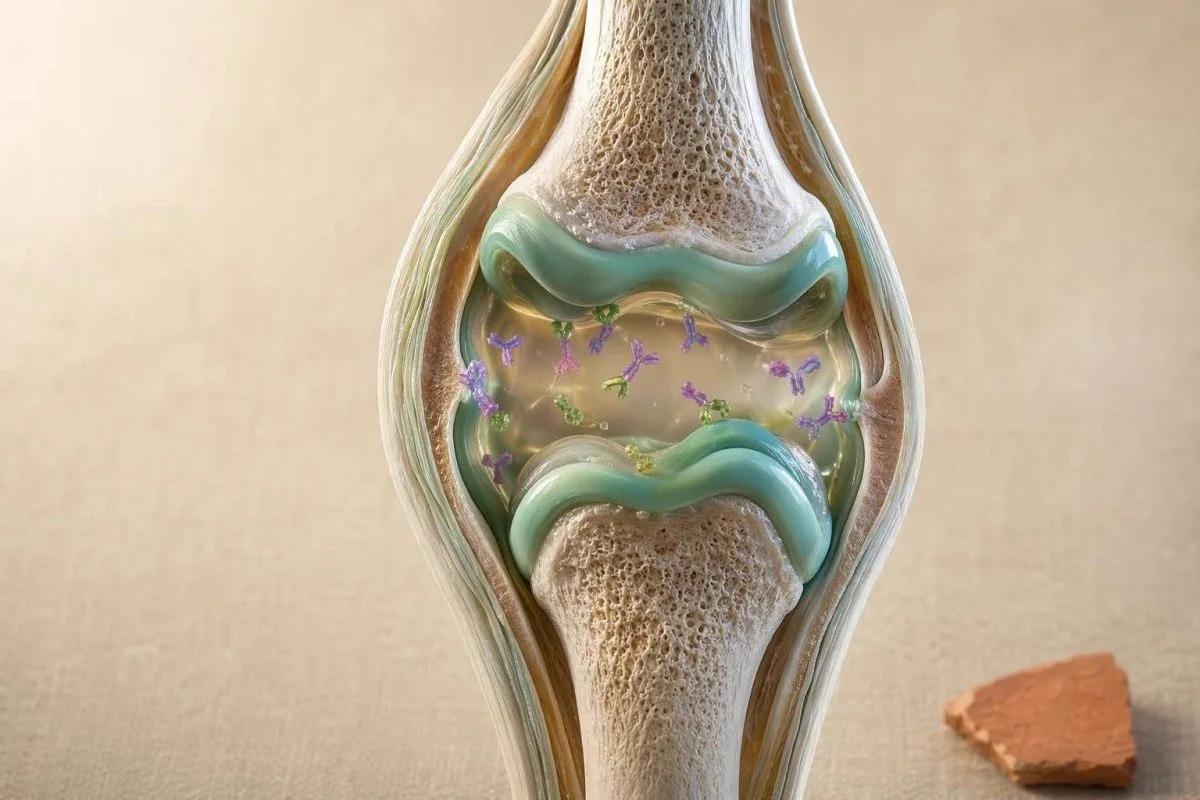
Anti-CCP is one of the few autoimmune blood markers that can warn about rheumatoid arthritis before permanent joint damage appears. The number matters, but the pattern around it matters more.


- Anti-CCP test positivity means antibodies to citrullinated proteins are present; in the right symptom pattern, this strongly supports rheumatoid arthritis risk.
- Anti-CCP normal range is often below 20 U/mL, but some laboratories use below 7 U/mL or assay-specific units.
- Low positive anti-CCP usually means a result just above the lab cutoff and up to 3 times the upper limit of normal.
- High positive anti-CCP means more than 3 times the upper limit of normal and carries higher rheumatoid arthritis probability in the 2010 ACR/EULAR framework.
- Anti-CCP vs rheumatoid factor differs because anti-CCP is usually more specific for rheumatoid arthritis, while RF is more often positive in infections, ageing, and other autoimmune disease.
- Preclinical rheumatoid arthritis can show anti-CCP years before swollen joints, morning stiffness, or X-ray erosions become obvious.
- Negative anti-CCP does not rule out rheumatoid arthritis; about 20-30% of confirmed RA cases are seronegative for anti-CCP and rheumatoid factor.
- Next step after a positive result is not panic or self-treatment; it is a symptom review, joint exam, ESR or CRP, rheumatoid factor, and often rheumatology referral.
What a positive anti-CCP test usually means
A positive anti-CCP test means your immune system has made antibodies against citrullinated proteins; in someone with small-joint pain, swelling, or morning stiffness, it strongly raises the likelihood of rheumatoid arthritis. Anti-CCP differs from rheumatoid factor because it is usually more specific for RA and can appear before X-rays show erosions. A low positive result is often borderline risk, while a high positive result, especially above 3 times the laboratory cutoff, is treated as a stronger warning signal.
As of April 30, 2026, I tell patients that anti-CCP is a risk marker, not a diagnosis by itself. You can upload an anti-CCP blood test to Kantesti AI and see how the result sits beside RF, ESR, CRP, CBC, symptoms, age, and trend data in about 60 seconds.
The practical question is not simply positive or negative. A 29 U/mL result from a lab with a cutoff of 20 U/mL does not carry the same weight as 246 U/mL in a person with 90 minutes of morning stiffness and swollen MCP joints.
When I, Thomas Klein, MD, review these reports, I look first for the joint pattern: wrists, MCPs, PIPs, and MTPs matter more than vague body aches. If rheumatoid factor is also reported, our separate rheumatoid factor guide explains why RF alone is less clean than anti-CCP.
What anti-CCP is actually measuring in the immune system
The anti-CCP blood test measures antibodies against cyclic citrullinated peptides, which are laboratory versions of citrullinated proteins seen in rheumatoid arthritis biology. Citrullination is a normal chemical change in proteins, but in susceptible people the immune system can start treating those altered proteins as targets.
Citrullination happens when enzymes called peptidylarginine deiminases convert arginine into citrulline inside proteins. The anti-CCP test does not measure citrulline itself; it measures the immune response to citrullinated structures.
That distinction matters. A patient can have citrullinated proteins after infection, smoking-related airway irritation, or gum tissue response, yet only some people develop the durable anti-citrullinated protein antibody pattern that predicts RA.
Anti-CCP is part of the broader ACPA family, and different labs use second-generation or third-generation assays. For readers comparing many immune markers at once, our autoimmune panel guide explains why a single antibody rarely tells the full story.
In our analysis of 2M+ blood test uploads, the most confusing reports are those that list anti-CCP without the laboratory’s cutoff. Kantesti AI flags that missing context because 17 U/mL can be negative in one assay and positive in another.
Anti-CCP normal range, units, and lab cutoffs
The anti-CCP normal range is commonly below 20 U/mL, but normal depends on the assay, country, and reporting unit. Some European laboratories use cutoffs near 7 U/mL, while other immunoassays report arbitrary units that should not be converted across platforms.
A negative anti-CCP result is typically below the laboratory’s upper limit of normal. A low positive result is usually above the cutoff but not more than 3 times that cutoff, matching the 2010 ACR/EULAR classification language.
Here is the bit patients miss: the same numerical value can mean different things if the reference interval changes. Our biomarkers guide tracks more than 15,000 markers partly because unit and range mismatches are a real source of misinterpretation.
The anti-CCP normal range is not adjusted for fasting, time of day, or recent meals. Unlike glucose or triglycerides, anti-CCP is an antibody signal, so a coffee before the test is not the reason it came back positive.
If your report says weak positive, moderate positive, or strong positive, keep the exact number and unit. Clinicians disagree on some borderline values, but they rarely ignore a result that is 5 to 10 times the upper reference limit.
Low positive versus high positive anti-CCP results
A low positive anti-CCP result suggests antibody detection just beyond the lab cutoff, while a high positive anti-CCP result suggests a stronger and more clinically persuasive autoimmune signal. The 2010 ACR/EULAR criteria define high-positive serology as more than 3 times the upper limit of normal.
A low positive anti-CCP can be real, early, or occasionally nonspecific. I have seen a 34 U/mL result settle into the background for years, and I have seen a similar value become the first clue in a patient who developed swollen wrists 8 months later.
A high positive anti-CCP result is harder to dismiss. In the ACR/EULAR system, high-positive anti-CCP earns more classification points than low-positive anti-CCP because the probability of RA rises with titre strength.
Nishimura et al. reported in Annals of Internal Medicine that anti-CCP testing has high specificity for rheumatoid arthritis, often around 95% or higher depending on assay and population. Specificity is why I take a high positive result seriously, especially if the patient has 30-60 minutes of morning stiffness.
For borderline reports, compare your value with the lab’s own range before searching online charts. Our article on blood test normal ranges shows why the reference interval is a statistical tool, not a personal diagnosis.
How anti-CCP differs from rheumatoid factor
Anti-CCP is usually more specific for rheumatoid arthritis than rheumatoid factor, while RF is more sensitive in some older datasets but less discriminating. Rheumatoid factor can be positive in chronic infection, hepatitis C, Sjögren’s syndrome, lung disease, and healthy older adults.
Rheumatoid factor is an antibody against the Fc portion of IgG, which makes it a broader immune signal. Anti-CCP points more directly toward an RA-type citrullinated protein response.
Aletaha et al. built the 2010 ACR/EULAR rheumatoid arthritis classification criteria around joint involvement, symptom duration, acute-phase markers, and serology. In that framework, anti-CCP and RF both count, but high-positive serology has more weight than low-positive serology.
In practice, RF creates more false alarms. I have reviewed RF values of 40-80 IU/mL in people with hepatitis C antibodies, chronic bronchiectasis, or Sjögren’s features where anti-CCP was negative and the joint exam did not fit RA.
Kantesti follows clinically validated interpretation rules rather than treating a red flag as a diagnosis. Our medical validation standards describe how our AI checks lab values against medical context instead of ranking markers in isolation.
Why anti-CCP can predict rheumatoid arthritis before joint damage
Anti-CCP can predict rheumatoid arthritis before joint damage because the antibody response may begin years before persistent synovitis and bone erosions appear. The immune system often moves first; X-rays are late witnesses.
Nielen et al. found in Arthritis & Rheumatism that RA-related autoantibodies can precede symptoms, with some people testing positive years before clinical disease. This is why a positive anti-CCP result can feel strange: the lab may be ahead of the joints.
The usual sequence is mucosal immune activation, antibody formation, intermittent arthralgia, objective synovitis, and only later erosive damage. Not everyone travels that road, but high-titre anti-CCP makes clinicians watch more closely.
ESR and CRP may be normal during the preclinical phase. Our guide to inflammation blood tests explains why antibody markers and inflammatory markers are not measuring the same thing.
I tell patients that prediction is not destiny. A smoker with high anti-CCP, RF positivity, and ultrasound power Doppler signal is in a different risk category from a nonsmoker with a barely positive result and no joint findings.
Positive anti-CCP with no swollen joints
A positive anti-CCP result without swollen joints means increased RA risk, not established rheumatoid arthritis. The next step is careful symptom tracking, targeted joint examination, and repeat clinical assessment rather than immediate lifelong treatment.
The highest-yield symptoms are morning stiffness lasting more than 30 minutes, pain across both hands or feet, and swelling that changes ring fit or shoe comfort. One sore knee after a hike does not carry the same implication.
Risk rises when anti-CCP is high positive, RF is also positive, first-degree relatives have RA, or ultrasound shows subclinical synovitis. In symptomatic anti-CCP-positive cohorts, roughly 20-50% progress to inflammatory arthritis within 1-3 years, depending on selection criteria.
I usually ask patients to photograph visible swelling and record stiffness duration twice weekly for 6-8 weeks. That low-tech diary often tells me more than repeating anti-CCP after 14 days.
If your positive antibody was discovered inside a broad screen, our ANA positive guide is useful because it shows the same principle: antibody tests need a clinical story before they become diagnoses.
Negative anti-CCP but rheumatoid symptoms persist
A negative anti-CCP test does not rule out rheumatoid arthritis. About 20-30% of people with confirmed RA are seronegative for anti-CCP and rheumatoid factor, especially early in the disease or in less erosive phenotypes.
Seronegative RA is a clinical diagnosis built from persistent synovitis, joint distribution, imaging, and exclusion of mimics. If both anti-CCP and RF are negative but the wrists and MCP joints are swollen for 6 weeks, the workup should continue.
Psoriatic arthritis, viral arthritis, lupus, thyroid disease, gout, and polymyalgia rheumatica can all imitate parts of RA. Our article on negative ANA symptoms walks through why negative autoimmune screening can still leave real disease on the table.
Kantesti AI does not label a negative anti-CCP result as all clear when ESR, CRP, platelets, anemia, and symptom entries point toward inflammatory arthritis. That safeguard is one reason our AI-powered blood test interpretation platform asks for age, sex, medications, and symptoms.
A normal anti-CCP result is most reassuring when the joint exam is normal, symptoms are brief, and inflammatory markers are quiet. It is less reassuring when stiffness lasts 90 minutes every morning and the second and third MCP joints are visibly puffy.
Reading anti-CCP with ESR, CRP, CBC, and imaging
Anti-CCP is most useful when read with ESR, CRP, CBC, rheumatoid factor, and sometimes ultrasound or MRI. A single antibody result tells you immune direction; inflammatory markers and imaging tell you whether tissue response is active now.
ESR is often considered elevated above about 20 mm/hr in younger adults, but age and sex shift that interpretation. CRP above 10 mg/L usually suggests active inflammation, though infection, obesity, and recent injury can also raise it.
CBC clues matter more than most patients expect. Anemia of chronic inflammation, platelets above 450 x 10^9/L, or persistent neutrophilia can support the idea that the immune system is active rather than merely producing an isolated antibody.
Ultrasound can show synovial thickening and power Doppler activity before plain X-rays show erosions. For deeper context on ESR variation, see our ESR range guide.
CRP interpretation has a common trap: standard CRP and hs-CRP are not the same clinical tool. Our CRP versus hs-CRP article explains why a heart-risk hs-CRP result should not be overread as an arthritis flare marker.
False positives and non-RA causes of anti-CCP
False positive anti-CCP results are uncommon but real, especially at low titres. Anti-CCP can occasionally appear in other autoimmune diseases, chronic lung disease, tuberculosis, psoriatic arthritis, Sjögren’s syndrome, and some chronic inflammatory states.
The false-positive problem is smaller than with RF, but it is not zero. A low positive anti-CCP in a person with no small-joint symptoms should be handled with curiosity, not a prescription pad.
Smoking is a special case because it can increase citrullinated protein exposure in the airways and is strongly linked with anti-CCP-positive RA risk. Gum disease may be relevant too, partly through mucosal immune activation, although the evidence is less tidy than patients want.
I have seen anti-CCP positivity in patients later diagnosed with connective tissue disease overlap rather than classic RA. If lupus-type features are present, our lupus blood test guide explains why dsDNA, complement C3/C4, urine protein, and CBC patterns change the differential.
Very high anti-CCP still deserves respect. A false positive at 23 U/mL is one conversation; a result at 340 U/mL with symmetric hand stiffness is another.
Should anti-CCP be repeated or trended over time?
Anti-CCP usually does not need frequent repeat testing once clearly positive. Unlike CRP or ESR, anti-CCP titre changes are not reliable enough to guide day-to-day disease activity decisions.
Repeating anti-CCP can make sense when the first result was borderline, the lab report had missing units, or the clinical picture changed. I usually wait at least 8-12 weeks if repeat testing is needed, unless a rheumatologist advises differently.
Patients often ask whether treatment should make anti-CCP become negative. Most disease-modifying drugs aim to control synovitis, pain, swelling, function, CRP, ESR, and imaging progression rather than chasing antibody disappearance.
Lab variation can be surprisingly annoying. Our blood test variability guide explains why a shift from 68 to 74 U/mL may be analytical noise, while a shift from negative to high positive is more meaningful.
Trend graphs help when you compare the right markers. Anti-CCP belongs in the baseline risk column; CRP, ESR, hemoglobin, platelets, symptoms, and medication dates belong in the monitoring column.
What doctors usually do after a positive anti-CCP
After a positive anti-CCP test, doctors usually confirm symptoms, examine small joints, order RF, ESR, CRP, CBC, and consider rheumatology referral. The urgency rises when swelling is objective or symptoms have lasted more than 6 weeks.
A same-week emergency visit is not needed for anti-CCP positivity alone. It becomes time-sensitive when a patient cannot close the hand, has rapidly worsening swelling, fever, severe single-joint pain, or signs that infection or crystal arthritis could be present.
The 2010 ACR/EULAR criteria are classification criteria, not a home diagnosis checklist. They work best after a clinician confirms that true synovitis is present and that another condition does not explain it better.
Early RA treatment can prevent erosions, disability, and work loss, so waiting 12 months to see what happens is rarely wise when symptoms fit. Our physicians on the Medical Advisory Board review how we frame these risks for patient-facing interpretation.
If you already have a PDF or photo of your report, try the free blood test analysis. Bring the output to your clinician as a discussion aid, not as a substitute for a joint exam.
What you can do while waiting for rheumatology review
While waiting after a positive anti-CCP result, focus on smoking cessation, dental health, gentle movement, vaccination review, and avoiding unproven immune supplements. No diet or supplement has been proven to erase anti-CCP or prevent RA in every patient.
Smoking cessation is the highest-yield modifiable step for anti-CCP-positive risk, especially in genetically susceptible people. Even cutting from 20 cigarettes daily to zero changes airway immune exposure within weeks, though antibody risk biology may take longer to settle.
Movement should be joint-friendly: walking, cycling, swimming, and light resistance work are usually better than sudden high-impact training during active swelling. If a joint is hot, visibly swollen, and painful, rest it and seek medical review rather than forcing range-of-motion drills.
Nutrition can support cardiovascular and metabolic health, which matters because RA increases heart risk. Our supplement timing guide is useful before combining turmeric, omega-3, iron, vitamin D, or anticoagulant-related products.
Please do not start high-dose steroids from an old prescription to test whether symptoms improve. Steroids can mask infection, change CRP, raise glucose, and make the diagnostic picture harder when you finally see the specialist.
How Kantesti AI interprets anti-CCP in context
Kantesti AI interprets anti-CCP results by reading the value, unit, reference range, related inflammatory markers, trend history, and symptom context. Our platform does not treat positive anti-CCP as automatic RA or negative anti-CCP as automatic reassurance.
Kantesti's neural network checks whether the result is low positive or high positive using the lab’s own cutoff. It also looks for RF, ESR, CRP, hemoglobin, platelets, WBC differential, liver enzymes, kidney function, and medication clues that affect next steps.
Our blood test PDF upload workflow is designed for real-world reports, including photos with awkward formatting and mixed units. If the reference range is not visible, our AI tells you that interpretation confidence is limited.
I like AI most when it slows people down. A patient with anti-CCP 22 U/mL and no symptoms needs a different message from a patient with anti-CCP 310 U/mL, RF 95 IU/mL, CRP 28 mg/L, and swollen wrists.
For safety, Kantesti AI includes blind-spot warnings and encourages clinician review when inflammatory arthritis is plausible. Our AI interpretation guide explains where fast analysis helps and where a physical examination still wins.
Bottom line on anti-CCP results and RA risk
The bottom line is that anti-CCP is a high-value rheumatoid arthritis risk marker, but it must be interpreted with titre strength, symptoms, RF, ESR, CRP, and joint examination. High-positive anti-CCP before joint damage is a chance to act early, not a reason to panic.
Thomas Klein, MD, CMO at Kantesti LTD, UK Company No. 17090423, authored this article with physician review standards aligned to our clinical safety workflow. Kantesti serves 2M+ users across 127+ countries and 75+ languages, but the final medical decision still belongs with your clinician.
If you want a structured second look at your report, use our platform to review anti-CCP beside the rest of your labs. For patient stories showing how pattern-based interpretation changes follow-up, see our real patient cases.
Our research archive includes Kantesti LTD. (2026). Clinical Validation of the Kantesti AI Engine (2.78T) on 100,000 Anonymised Blood Test Cases Across 127 Countries: A Pre-Registered, Rubric-Based, Population-Scale Benchmark Including Hyperdiagnosis Trap Cases — V11 Second Update. Figshare. https://doi.org/10.6084/m9.figshare.32095435.
It also includes Kantesti LTD. (2026). Women's Health Guide: Ovulation, Menopause & Hormonal Symptoms. Figshare. https://doi.org/10.6084/m9.figshare.31830721. You can learn more about our organisation at About Kantesti or upload a report through the free demo.
Frequently Asked Questions
What does anti-CCP positive mean?
A positive anti-CCP test means antibodies against citrullinated proteins were detected in your blood, which increases the likelihood of rheumatoid arthritis when symptoms fit. Many labs use below 20 U/mL as negative, but cutoffs vary by assay. A result just above the cutoff is usually called low positive, while a value above 3 times the upper limit of normal is considered high positive in the 2010 ACR/EULAR framework.
What is the normal range for anti-CCP?
The anti-CCP normal range is commonly below 20 U/mL, but some laboratories use below 7 U/mL or other assay-specific units. You should interpret your number only against the reference range printed on your own report. Anti-CCP is not affected by fasting, meal timing, or coffee in the way glucose or triglycerides can be.
Is anti-CCP more accurate than rheumatoid factor?
Anti-CCP is usually more specific for rheumatoid arthritis than rheumatoid factor, often reaching about 95% specificity in diagnostic studies depending on the population tested. Rheumatoid factor can be positive in chronic infections, hepatitis C, Sjögren’s syndrome, lung disease, and healthy older adults. Doctors often order both tests because dual positivity, especially at high titre, increases concern for RA.
Can anti-CCP predict rheumatoid arthritis before symptoms?
Yes, anti-CCP can appear years before rheumatoid arthritis symptoms or X-ray damage in some people. Blood donor studies, including Nielen et al. in Arthritis & Rheumatism, showed that RA-related antibodies can precede clinical disease. Prediction is not certainty: the risk is higher with high anti-CCP, positive RF, smoking history, family history, and inflammatory joint symptoms.
Does a high anti-CCP result mean severe rheumatoid arthritis?
A high anti-CCP result increases the probability of rheumatoid arthritis and is associated with a higher risk of erosive disease, but it does not measure current severity by itself. Current activity is better judged with swollen joint count, pain, function, ESR, CRP, and imaging. A person can have very high anti-CCP and mild current symptoms, or negative anti-CCP with active seronegative RA.
Can anti-CCP become negative after treatment?
Anti-CCP can fall in some patients after treatment, but doctors do not usually use it as the main treatment target. RA medications are judged by symptom control, joint swelling, function, CRP, ESR, and prevention of erosions. Repeating anti-CCP every few weeks is rarely useful once the result is clearly positive.
What should I do if anti-CCP is positive but I feel fine?
If anti-CCP is positive but you have no joint symptoms, schedule a non-urgent medical review rather than assuming you have rheumatoid arthritis. Track morning stiffness, hand or foot swelling, and symmetric joint pain for 6-8 weeks. The concern is higher if the anti-CCP is above 3 times the lab cutoff, rheumatoid factor is positive, or a first-degree relative has RA.
Can anti-CCP antibodies explain fatigue or joint pain on their own?
No. Anti-CCP antibodies are a blood marker of immune activity and do not themselves cause symptoms; fatigue or pain needs assessment for inflammation and other common causes. Contact your clinician sooner if you develop persistent joint swelling, prolonged morning stiffness, fever, or unexplained weight loss.
Should my children or siblings be tested if my anti-CCP is positive?
Routine anti-CCP screening for healthy relatives is not usually recommended. Family members should seek medical advice if they develop persistent small-joint swelling, morning stiffness, or unexplained joint pain lasting more than a few weeks.
Can lifestyle changes lower my risk if anti-CCP is positive?
Yes, lifestyle steps can support joint health, even though they do not erase anti-CCP antibodies. Avoid smoking, treat gum disease, keep a healthy weight, stay active within comfort, and seek review promptly if morning stiffness or joint swelling develops.
Get AI-Powered Blood Test Analysis Today
Join over 2 million users worldwide who trust Kantesti for instant, accurate lab test analysis. Upload your blood test results and receive comprehensive interpretation of 15,000+ biomarkers in seconds.
📚 Referenced Research Publications
Klein, T., Mitchell, S., & Weber, H. (2026). Women's Health Guide: Ovulation, Menopause & Hormonal Symptoms. Kantesti AI Medical Research.
Klein, T., Mitchell, S., & Weber, H. (2026). Clinical Validation of the Kantesti AI Engine (2.78T) on 100,000 Anonymised Blood Test Cases Across 127 Countries: A Pre-Registered, Rubric-Based, Population-Scale Benchmark Including Hyperdiagnosis Trap Cases — V11 Second Update. Kantesti AI Medical Research.
📖 External Medical References
⚕️ Medical Disclaimer
This article is for educational purposes only and does not constitute medical advice. Always consult a qualified healthcare provider for diagnosis and treatment decisions.
E-E-A-T Trust Signals
Experience
Physician-led clinical review of lab interpretation workflows.
Expertise
Laboratory medicine focus on how biomarkers behave in clinical context.
Authoritativeness
Written by Dr. Thomas Klein with review by Dr. Sarah Mitchell and Prof. Dr. Hans Weber.
Trustworthiness
Evidence-based interpretation with clear follow-up pathways to reduce alarm.