Serum tryptase can be a very useful clue after anaphylaxis, but only when the clock, the baseline, and the clinical story line up.


- Tryptase test is most useful 30 minutes to 2 hours after symptoms start, and it may still help up to about 4 hours.
- Significant mast cell activation is usually defined as acute tryptase greater than baseline × 1.2 + 2 ng/mL.
- Baseline tryptase should be repeated when well, usually at least 24 to 48 hours after full recovery from the reaction.
- Normal tryptase does not rule out anaphylaxis, especially with food reactions, asthma, or low baseline values.
- Baseline above 20 ng/mL is a minor diagnostic criterion for systemic mastocytosis when the clinical picture fits.
- Baseline above 8 ng/mL can raise the possibility of hereditary alpha-tryptasemia, particularly with family history or recurrent symptoms.
- Histamine blood test has a much shorter timing window than tryptase because histamine clears within minutes.
- DAO blood test is not a validated mast cell activation test and should not be used alone to diagnose histamine intolerance or MCAS.
What the tryptase test answers after an allergic reaction
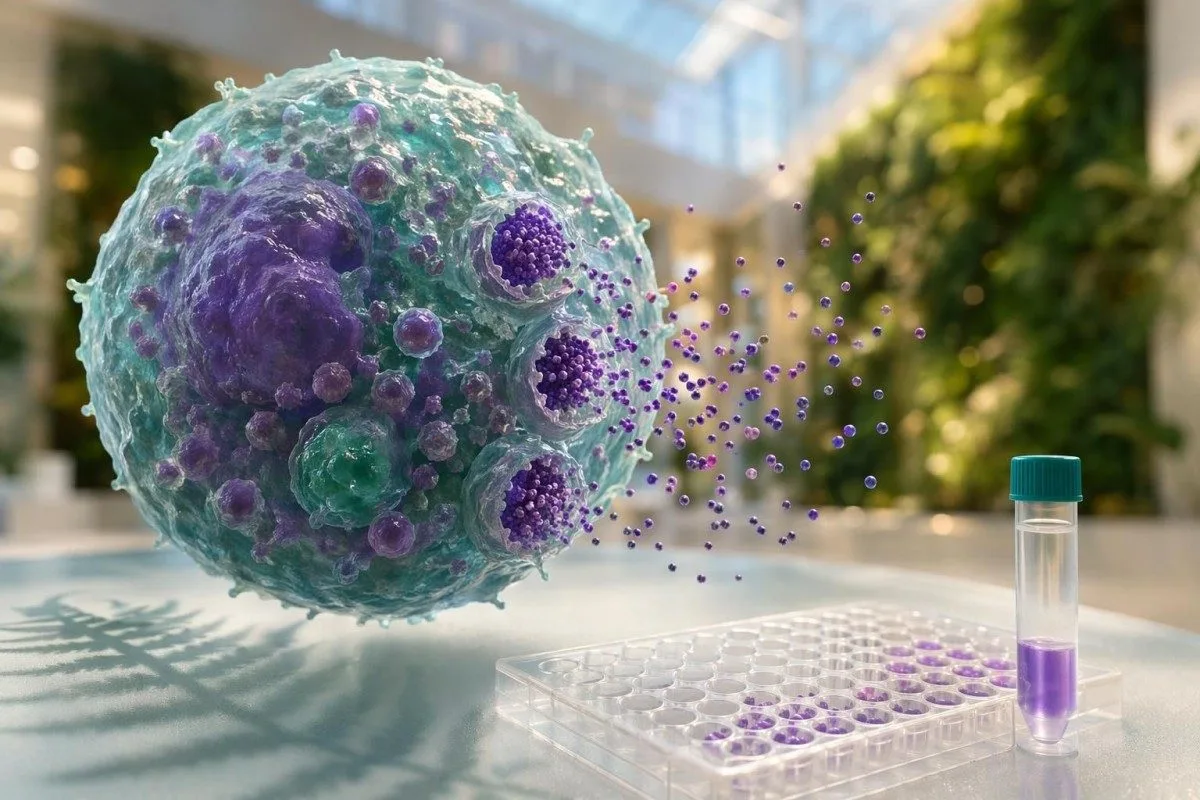
A tryptase test checks whether mast cells likely released their granules during a reaction. The best acute sample is usually taken 30 minutes to 2 hours after symptoms begin, then compared with a later baseline sample. A meaningful rise is not just “high”; it is acute tryptase above baseline × 1.2 + 2 ng/mL.
I’m Thomas Klein, MD, and when I review suspected anaphylaxis cases, the most useful detail is often the timestamp rather than the number itself. A tryptase of 9.2 ng/mL can be strongly positive if the person’s baseline is 4.5 ng/mL, while 14 ng/mL may be unhelpful if their usual baseline is 13 ng/mL.
The test is one piece of the allergy story, not the whole diagnosis. If you are comparing tryptase with IgE testing, our guide to allergy blood testing explains why allergen-specific IgE identifies triggers while tryptase documents mast cell activation.
In our work at Kantesti AI, we see many reports where the lab flag says “normal,” yet the timing and baseline reveal a clinically meaningful rise. That is why our AI asks for symptom timing, medications, previous baselines, kidney markers, and the exact units before giving an interpretation.
What serum tryptase measures inside mast cells
Serum tryptase measures mast-cell-derived protease, mostly released from storage granules during mast cell activation. Mature beta-tryptase rises during systemic reactions, while baseline total tryptase also reflects inherited tryptase gene copy number and mast cell burden.
Mast cells sit near skin, airway, gut, and blood vessel interfaces, which is why reactions can cause hives, wheeze, vomiting, flushing, or low blood pressure within minutes. Tryptase is more specific to mast cells than histamine, but it is not perfectly sensitive for every reaction type.
Most laboratories report total serum tryptase in ng/mL or micrograms per litre; for practical interpretation, 1 ng/mL equals 1 microgram/L. Many labs use an upper reference limit near 11.4 ng/mL, although some European laboratories use different cutoffs depending on assay and population.
When Kantesti AI reads a tryptase result, it treats the value as a biomarker with context rather than a standalone verdict. Our biomarker guide tracks how reference ranges, units, sex, age, collection time, and previous results can change the meaning of a single number.
Why timing after symptoms changes the result
Tryptase rises quickly after systemic mast cell activation, usually peaks around 1 to 2 hours, and often falls toward baseline within 6 to 24 hours. A sample taken too late can look normal even after genuine anaphylaxis.
The World Allergy Organization guidance recommends obtaining acute tryptase as soon as feasible after stabilising the patient, ideally within the first 1 to 2 hours and alongside a later baseline sample (Cardona et al., 2020). In real emergency departments, I am happy if the sample lands before 4 hours.
A common mistake is drawing tryptase the next morning after a night-time reaction. By 10 to 12 hours, many patients have returned close to baseline, especially if the initial rise was modest and the reaction was mainly cutaneous or gastrointestinal.
Turnaround time does not affect the biology, but it affects anxiety. If your report is delayed, our article on blood test result timelines explains why specialised immunoassays often take longer than routine CBC or chemistry panels.
When baseline repeat testing changes interpretation
Baseline repeat testing changes interpretation because the diagnostic question is often relative rise, not absolute height. A later well-state tryptase, usually taken at least 24 to 48 hours after symptoms resolve, lets clinicians apply the baseline × 1.2 + 2 ng/mL rule.
The consensus formula from Valent and colleagues defines mast cell activation as event tryptase greater than baseline × 1.2 + 2 ng/mL when symptoms fit the episode (Valent et al., 2012). For a baseline of 5 ng/mL, the event threshold is above 8 ng/mL; for a baseline of 12 ng/mL, it is above 16.4 ng/mL.
I see this pattern often: an emergency tryptase of 10.1 ng/mL is dismissed as “normal,” then the baseline comes back at 3.8 ng/mL. That is a 165% rise, and it tells a very different story than the lab flag alone.
Baseline matters so much that trend tracking can be more useful than a single PDF. Our article on personalized baselines explains why your own previous result may outperform a broad reference interval in borderline cases.
What high baseline tryptase can mean
High baseline tryptase can reflect hereditary alpha-tryptasemia, systemic mastocytosis, chronic kidney disease, myeloid disease, or normal biological variation near the assay cutoff. Persistent baseline tryptase above 20 ng/mL is one minor criterion for systemic mastocytosis, not a diagnosis by itself.
A baseline tryptase of 12 to 18 ng/mL is not rare in allergy clinics, and it should be interpreted slowly. The practical question is whether the person has recurrent anaphylaxis, flushing, venom reactions, osteoporosis, abnormal blood counts, enlarged spleen, or a family pattern of similar symptoms.
Hereditary alpha-tryptasemia is caused by extra TPSAB1 alpha-tryptase copies and often produces baseline tryptase above about 8 ng/mL. Lyons and colleagues described this inherited multisystem trait in Nature Genetics, linking elevated basal tryptase with symptoms such as flushing, connective tissue features, and anaphylaxis tendency (Lyons et al., 2016).
Reference intervals can mislead when the result is near the cutoff. Our guide to blood test normal ranges is useful here because tryptase interpretation depends on why the result was ordered, not just whether it sits inside a printed interval.
Why a normal tryptase does not rule out anaphylaxis
A normal tryptase does not rule out anaphylaxis because some reactions release little measurable tryptase, samples may be taken late, and food-triggered reactions often show smaller rises than venom or medication reactions. The clinical diagnosis still comes first.
Food anaphylaxis is the classic trap. A teenager with peanut-triggered wheeze, vomiting, hives, and throat tightness may have a tryptase of 6 ng/mL if the sample is late or their baseline is only 2 ng/mL.
Tryptase is more likely to rise in severe hypotensive reactions, venom reactions, and some medication reactions. It is less dependable when symptoms are mostly skin-limited or gut-limited, which is why allergists do not use tryptase as the gatekeeper for prescribing adrenaline auto-injectors.
When the immune story is broader, I often check whether the CBC, eosinophils, immunoglobulins, and inflammatory markers fit the presentation. Our guide on immune system blood tests shows how those markers answer different questions from tryptase.
How tryptase fits into a mast cell test panel
A mast cell test panel usually includes acute and baseline tryptase, and sometimes urinary N-methylhistamine, prostaglandin D2 metabolites, leukotriene E4, CBC, liver tests, kidney function, and targeted allergy testing. No single mast cell test diagnoses mast cell activation syndrome alone.
The most useful panels are event-linked. Testing random mediators on a quiet Tuesday often creates noise, while collecting during or soon after a reproducible episode can show a pattern that matches flushing, presyncope, wheeze, diarrhoea, or urticaria.
CBC clues can matter more than patients expect. Persistent eosinophils above 0.5 × 10^9/L suggest allergic, parasitic, medication-related, or inflammatory causes that are separate from tryptase, and our high eosinophil guide walks through that differential.
Valent et al. emphasised three pillars for mast cell activation syndrome: typical episodic symptoms, a validated mediator rise, and response to mediator-targeting therapy (Valent et al., 2012). In clinic, I still find that framework cleaner than chasing dozens of unvalidated markers.
Histamine blood test and DAO blood test compared with tryptase
A histamine blood test has a much shorter collection window than tryptase, while a DAO blood test is not a validated mast cell activation test. Histamine may peak and clear within minutes; tryptase usually gives clinicians a wider 1 to 4 hour window.
Plasma histamine can be helpful in research settings, but it is fussy: timing, chilling, handling, and rapid processing all matter. A sample drawn 90 minutes after symptoms may miss histamine even when the same event produces a measurable tryptase rise.
The DAO blood test is often marketed for histamine intolerance, yet clinicians disagree on how to use it because DAO activity in serum does not reliably prove gut histamine handling. Values such as below 10 U/mL appear in some commercial reports, but there is no universally accepted diagnostic cutoff for MCAS or food intolerance.
If symptoms are mainly bloating, loose stools, flushing after meals, or reactions to fermented foods, the differential is wider than mast cells alone. Our article on blood tests for gut health explains why blood work can support the workup but cannot replace careful food and symptom history.
There is overlap with food sensitivity marketing, and that can confuse people. Before paying for broad IgG panels, read our discussion of food intolerance testing because many positive IgG results reflect exposure rather than disease.
Medications and conditions that change tryptase interpretation
Medications usually do not falsely raise tryptase directly, but they change reaction severity, symptom patterns, and clinical risk. Beta-blockers, ACE inhibitors, opioids, NSAIDs, alcohol exposure, and recent immunotherapy can all alter how a suspected mast cell event presents.
Beta-blockers and ACE inhibitors matter most in venom allergy and severe anaphylaxis because they may make reactions harder to treat or more haemodynamically unstable. They do not make a tryptase result automatically positive, but they raise the stakes when symptoms include syncope or low blood pressure.
Kidney function deserves a glance whenever baseline tryptase is persistently high. Reduced renal clearance can contribute to higher levels, and a creatinine or eGFR pattern helps avoid overcalling a mast cell disorder from one isolated number.
Drug timing is often missing from lab reports, so patients should write down doses taken in the previous 24 to 48 hours. Our medication monitoring timeline gives a practical way to organise medication dates before specialist review.
How to order and collect a tryptase test correctly
A tryptase test is usually ordered as serum total tryptase, collected in a standard serum tube, and interpreted with the exact symptom onset time. Fasting is not required, but the lab request should clearly state whether the sample is acute or baseline.
In emergency care, treatment comes before testing. Adrenaline, oxygen, fluids, and airway support should never wait for a tube, and the tryptase sample can be drawn after the patient is clinically safer.
For planned baseline testing, I usually prefer a quiet day: no current infection, no recent anaphylaxis, and at least 24 to 48 hours after full symptom resolution. If the baseline is unexpectedly high, repeating it once can separate a stable personal baseline from a collection or lab issue.
If you upload a lab report, make sure the collection time and units are visible. Our blood test PDF upload feature is designed to read the timestamp, reference interval, unit, and lab comments instead of treating the result as a naked number.
How Kantesti AI interprets tryptase patterns
Kantesti AI interprets tryptase by comparing the acute value with baseline, symptom timing, unit conventions, kidney markers, CBC patterns, and related allergy results. Our platform does not diagnose anaphylaxis from a single value; it flags whether the pattern supports mast cell activation and what follow-up is sensible.
The reason our AI-powered blood test interpretation is useful here is that tryptase has arithmetic hidden inside the interpretation. Kantesti’s neural network applies the 20% plus 2 rule, checks whether the sample was drawn inside the biologically useful window, and warns when a normal flag may be misleading.
Our clinical standards are documented on the Medical Validation page, including how physician review and rubric-based testing are used for higher-risk interpretations. For broader benchmarking, we also publish a clinical benchmark that includes hyperdiagnosis trap cases where overcalling a lab abnormality would be unsafe.
As of April 30, 2026, our AI interprets more than 15,000 biomarkers across uploaded PDFs and photos, but mast cell testing remains one of those areas where the human story has unusual weight. A timestamp, trigger, blood pressure reading, and treatment response can change the interpretation more than a decimal point.
When high tryptase needs urgent care or referral
High tryptase needs urgent care when it occurs with breathing difficulty, throat tightness, fainting, low blood pressure, confusion, or rapidly spreading hives after a likely trigger. Persistent baseline elevation, especially above 20 ng/mL, deserves allergy or haematology review rather than reassurance alone.
A very high acute tryptase, such as 40 to 100 ng/mL during collapse, strongly supports systemic mast cell activation, but it does not identify the trigger. The culprit could be venom, a medication, latex, food, exercise cofactor, or less commonly a clonal mast cell disorder.
Thomas Klein, MD advice from clinic is simple: do not wait for a tryptase result if anaphylaxis symptoms are evolving. Our critical blood result guide explains the same principle for other urgent labs, where clinical instability beats laboratory neatness.
Kantesti’s medical content is reviewed through physicians and specialist advisors, and our Medical Advisory Board helps set guardrails for high-risk interpretations. Tryptase is exactly the kind of result where the safest answer may be “seek urgent assessment now.”
Age, pregnancy, and population differences in tryptase
Tryptase reference intervals are broadly similar across many adult groups, but baseline values can differ with genetics, kidney function, mast cell burden, and assay choice. Pregnancy does not make tryptase useless, but anaphylaxis in pregnancy is a medical emergency regardless of the lab value.
Children can have low baseline tryptase, so the relative-rise formula is especially helpful. A child whose baseline is 2 ng/mL may meet the mast cell activation threshold with an acute value just above 4.4 ng/mL, even if the laboratory prints that as normal.
Older adults are more likely to have comorbid kidney disease, cardiovascular medication use, and clonal blood disorders, so a persistent baseline of 18 to 25 ng/mL deserves more caution than the same single result in a healthy 25-year-old. The evidence here is honestly mixed, and specialist judgement matters.
Small shifts between laboratories can be assay noise rather than biology. Our article on blood test variability explains why repeating a borderline baseline at the same laboratory can prevent needless alarm.
What to record before your allergy appointment
Before an allergy appointment, record symptom onset time, trigger exposure, treatment time, acute tryptase collection time, baseline tryptase date, blood pressure if known, and any cofactor such as exercise, alcohol, infection, NSAID use, or menstruation. These details often matter more than the printed flag.
A practical timeline starts 6 hours before symptoms and ends 24 hours after recovery. Include foods, stings, new medicines, exercise, fever, dental procedures, contrast scans, supplements, and whether adrenaline or antihistamines were used.
Families should keep each person’s baseline separate because hereditary alpha-tryptasemia can cluster across relatives. Our family medical records app helps store results by person, date, unit, and lab so one relative’s baseline is not accidentally compared with another’s.
If you plan to upload results, photograph the whole report rather than cropping to the number. Our blood test app guide explains why collection date, reference range, lab method, and comments are part of safe interpretation.
Where low-histamine diets fit—and where they do not
Low-histamine diets may help selected patients with meal-linked flushing, headache, diarrhoea, or urticaria, but diet response does not prove mast cell activation syndrome. Tryptase, histamine metabolites, symptoms, and trigger reproducibility still need to be interpreted separately.
I usually suggest short, structured diet trials rather than indefinite restriction. A 2 to 4 week low-histamine trial with re-challenge is more informative than six months of fear-based avoidance, especially when weight loss or nutrient gaps start to appear.
DAO supplements are a separate question from DAO testing. Some patients report fewer meal-related symptoms, but response to a supplement does not validate a serum DAO cutoff or diagnose MCAS.
Kantesti can help connect nutrition plans to documented lab patterns, but we avoid telling users that a single DAO result explains every symptom. If you want a safer starting point, use our free blood test analysis to review the whole report before making restrictive diet decisions.
Research publications and safe next steps
The safest next step after a suspicious reaction is paired testing: acute tryptase as early as feasible, baseline tryptase when well, and specialist review if the formula is met or baseline remains high. Kantesti can organise the data, but emergency symptoms still require emergency care.
Kantesti LTD is a UK company, and our About Us page explains how our medical, engineering, and data teams work together on blood test interpretation. In my experience, the best AI in this area is not the loudest answer; it is the one that says when a result is uncertain.
Kantesti AI. (2026). Clinical Validation Framework v2.0 (Medical Validation Page). Zenodo. DOI: 10.5281/zenodo.17993721. ResearchGate: publication search. Academia.edu: publication search.
Kantesti AI. (2026). AI Blood Test Analyzer: 2.5M Tests Analyzed | Global Health Report 2026. Zenodo. DOI: 10.5281/zenodo.18175532. ResearchGate: publication search. Academia.edu: publication search.
Bottom line: if symptoms were severe, treat the event seriously even when tryptase is normal. If you already have results, upload them to Kantesti with timing notes so our platform can separate a reassuring pattern from one that needs allergy or haematology follow-up.
Frequently Asked Questions
What is the best time to take a tryptase test after an allergic reaction?
The best time to take a tryptase test is usually 30 minutes to 2 hours after symptoms begin, with usefulness often extending to about 4 hours. Tryptase commonly peaks around 1 to 2 hours and may return toward baseline within 6 to 24 hours. A later baseline sample, taken when well and usually at least 24 to 48 hours after recovery, is needed for the baseline × 1.2 + 2 ng/mL calculation.
What tryptase level means mast cell activation?
Mast cell activation is usually supported when the acute tryptase is greater than baseline × 1.2 + 2 ng/mL and the symptoms fit anaphylaxis or a mast cell activation episode. For example, a baseline of 5 ng/mL gives a significant acute threshold above 8 ng/mL. A value can be clinically meaningful even if the laboratory does not flag it as high.
Does a normal tryptase test rule out anaphylaxis?
A normal tryptase test does not rule out anaphylaxis. Food-triggered reactions, late sampling, low baseline tryptase, and reactions dominated by skin or gut symptoms may produce little measurable rise. Anaphylaxis remains a clinical diagnosis based on symptoms such as breathing difficulty, throat tightness, low blood pressure, vomiting, hives, or collapse after a likely trigger.
What does high baseline tryptase mean?
High baseline tryptase can mean hereditary alpha-tryptasemia, systemic mastocytosis, kidney impairment, a myeloid disorder, or a stable personal baseline near the assay cutoff. Persistent baseline tryptase above 20 ng/mL is a minor criterion for systemic mastocytosis, but it is not diagnostic on its own. Baseline levels above about 8 ng/mL can also fit hereditary alpha-tryptasemia, especially when symptoms or family history support it.
Is a histamine blood test better than a tryptase test?
A histamine blood test is not generally better than a tryptase test because histamine clears from blood within minutes and requires very careful sample handling. Tryptase usually offers a wider practical window, especially from 30 minutes to 4 hours after symptom onset. Histamine or urinary N-methylhistamine may help in selected cases, but timing and laboratory handling are major limitations.
Can a DAO blood test diagnose mast cell activation syndrome?
A DAO blood test cannot diagnose mast cell activation syndrome. DAO activity is sometimes used in discussions of histamine intolerance, but there is no universally accepted serum DAO cutoff that proves MCAS. Mast cell activation syndrome requires compatible episodic symptoms, a validated mediator rise such as tryptase using the 20% plus 2 formula, and clinical response to targeted treatment.
Should I repeat tryptase if my first result was high?
You should usually repeat tryptase as a baseline test if the first result was taken during or soon after a reaction. The repeat sample is commonly collected when you are well, at least 24 to 48 hours after symptoms have fully resolved. Persistent baseline elevation above 20 ng/mL, or recurrent reactions with a significant acute rise, should be reviewed by an allergy or mast cell specialist.
What should I do if anaphylaxis symptoms return before I can have a tryptase blood draw?
Use your prescribed epinephrine immediately for breathing difficulty, throat tightness, faintness, or widespread hives with vomiting, and call emergency services. A tryptase sample can be considered after urgent treatment begins, but testing must never postpone emergency care.
Can a tryptase test tell me what triggered my allergic reaction?
No. Tryptase can support that mast cells were activated, but it does not identify the trigger. Your clinician may use the history, allergen-specific IgE blood tests, skin testing, or supervised challenge testing when appropriate.
Can I take antihistamines before a tryptase test?
Yes, antihistamines usually do not erase a tryptase rise because they block histamine effects rather than removing tryptase from the blood. Do not delay needed allergy treatment, but tell your clinician exactly what you took and when.
Get AI-Powered Blood Test Analysis Today
Join over 2 million users worldwide who trust Kantesti for instant, accurate lab test analysis. Upload your blood test results and receive comprehensive interpretation of 15,000+ biomarkers in seconds.
📚 Referenced Research Publications
Klein, T., Mitchell, S., & Weber, H. (2026). Clinical Validation Framework v2.0 (Medical Validation Page). Kantesti AI Medical Research.
Klein, T., Mitchell, S., & Weber, H. (2026). AI Blood Test Analyzer: 2.5M Tests Analyzed | Global Health Report 2026. Kantesti AI Medical Research.
📖 External Medical References
⚕️ Medical Disclaimer
This article is for educational purposes only and does not constitute medical advice. Always consult a qualified healthcare provider for diagnosis and treatment decisions.
E-E-A-T Trust Signals
Experience
Physician-led clinical review of lab interpretation workflows.
Expertise
Laboratory medicine focus on how biomarkers behave in clinical context.
Authoritativeness
Written by Dr. Thomas Klein with review by Dr. Sarah Mitchell and Prof. Dr. Hans Weber.
Trustworthiness
Evidence-based interpretation with clear follow-up pathways to reduce alarm.