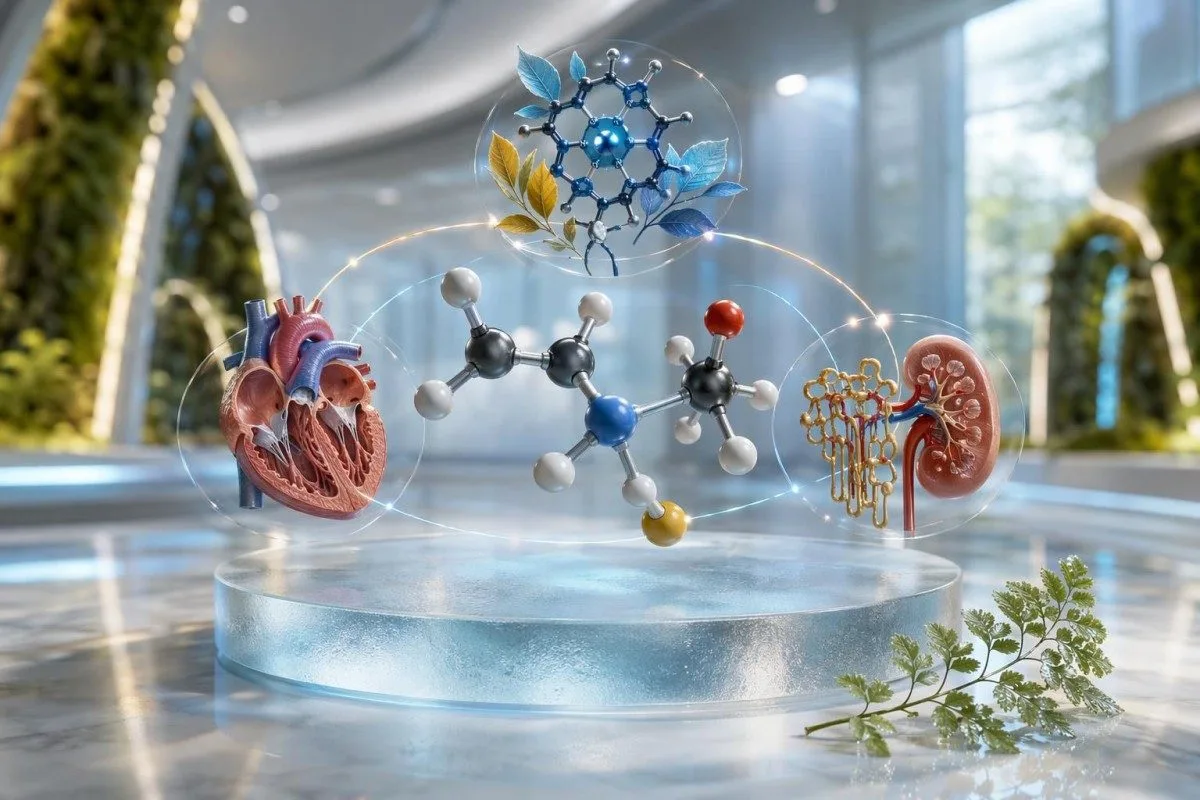
Homocysteine is a small number with a surprisingly broad story: methylation, B vitamins, kidney clearance, vascular risk, and sometimes medication effects all meet here.


- Normal range for homocysteine is usually about 5–15 µmol/L in adults, though many clinicians prefer <10–12 µmol/L in people with vascular risk.
- High homocysteine levels are commonly grouped as mild 15–30 µmol/L, moderate 30–100 µmol/L, and severe >100 µmol/L.
- Homocysteine and B12 connect because B12 is needed to recycle homocysteine into methionine; low or functionally low B12 can push homocysteine above 15 µmol/L.
- Folate status matters because folate supplies methyl groups for homocysteine metabolism; serum folate <3 ng/mL often suggests deficiency.
- Kidney function changes interpretation because homocysteine often rises when eGFR falls below 60 mL/min/1.73 m², even when vitamin levels look adequate.
- Medication review is sensible if homocysteine is high, especially with metformin, proton pump inhibitors, methotrexate, phenytoin, carbamazepine, or nitrous oxide exposure.
- Repeat testing usually makes sense after 6–8 weeks of correcting B12, folate, kidney, thyroid, or medication factors, using the same lab when possible.
- Heart risk interpretation should include LDL-C, ApoB, blood pressure, smoking, diabetes markers, hs-CRP, and family history; homocysteine alone should not drive treatment decisions.
What Is the Normal Range for Homocysteine?
The normal range for homocysteine in most adult labs is about 5–15 µmol/L, but I usually treat 10–15 µmol/L as a gray zone when B12 symptoms, kidney disease, or high cardiovascular risk are present. High homocysteine levels above 15 µmol/L can point toward B12, folate, B6, kidney, thyroid, medication, or genetic contributors. Our Kantesti AI interpretation looks at that pattern, not just the flag.
A homocysteine result of 8 µmol/L is usually reassuring, while 18 µmol/L is mildly elevated and deserves a second look. The nuance is that a 13 µmol/L result in a 31-year-old vegan with numb toes is more interesting to me than the same result in an 82-year-old with stable stage 3 kidney disease.
Labs do not all use the same cutoffs. Some European laboratories flag values above 12 µmol/L, while many US and UK reports still show an upper reference limit near 15 µmol/L; our article on blood test normal ranges explains why a reference interval is not the same as an ideal personal target.
Thomas Klein, MD, here: in clinic, I rarely act on homocysteine alone. I ask three questions first: was the sample handled properly, is there a B-vitamin or renal clue nearby, and does the patient have vascular risk that changes the threshold for action?
How the Homocysteine Blood Test Is Measured
A homocysteine blood test measures total homocysteine in plasma or serum, reported in micromoles per litre. The result can drift upward if the laboratory sample sits unprocessed for too long, which is one reason a surprising high value should sometimes be repeated before anyone panics.
Most labs prefer fasting for 8–12 hours, although fasting is not as critical as it is for some triglyceride testing. If the same person tests at 8 a.m. fasting one month and 4 p.m. after a protein-heavy lunch the next, a 2–4 µmol/L difference would not shock me.
Pre-analytical handling matters more than many patients are told. Homocysteine can rise in an unseparated sample because cellular elements continue releasing it; prompt centrifugation and cooling can prevent a falsely higher result by several µmol/L in some settings.
If you are combining homocysteine with glucose, insulin, or lipids, check the practical rules in our fasting blood test guide. I usually tell patients: water is fine, keep supplements consistent, and do not test the morning after an unusually high-protein celebration meal.
What Counts as Mild, Moderate, or Severe Elevation?
High homocysteine levels are usually classified as mild at 15–30 µmol/L, moderate at 30–100 µmol/L, and severe above 100 µmol/L. The higher the number, the more I shift from lifestyle discussion toward a deliberate search for deficiency, renal impairment, medication effects, or rare metabolic disease.
A value of 16 or 17 µmol/L is often real but not usually an emergency. In our analysis of 2M+ blood tests, the most common pattern around that range is not a rare genetic disorder; it is a mix of borderline B12, lower folate intake, reduced eGFR, smoking, or medication history.
A value of 45 µmol/L changes the tone of the conversation. At that level, I want B12, methylmalonic acid, folate, creatinine, eGFR, TSH, liver enzymes, CBC indices, and a medication review rather than a vague instruction to eat more greens.
A repeat result is most useful when the repeat conditions match the original conditions. Our guide to blood test variability is worth reading before interpreting a 3 µmol/L change as a dramatic biological shift.
How Homocysteine Connects to Heart and Stroke Risk
Homocysteine is a cardiovascular risk marker, not a stand-alone diagnosis of heart disease. Values above 15 µmol/L are associated with higher vascular risk in population studies, but lowering the number with vitamins has not reliably prevented heart attacks in randomized trials.
The Homocysteine Studies Collaboration reported in JAMA that a 25% lower usual homocysteine concentration was associated with about 11% lower ischemic heart disease risk and 19% lower stroke risk after adjustment (Homocysteine Studies Collaboration, 2002). That is meaningful epidemiology, but it does not prove that a pill lowering homocysteine fixes the artery.
The evidence here is honestly mixed. In the HOPE-2 trial, folic acid plus vitamins B6 and B12 lowered homocysteine by about 2.4 µmol/L, but did not significantly reduce the combined endpoint of cardiovascular death, myocardial infarction, and stroke, although stroke alone was reduced (Lonn et al., 2006).
When I review cardiovascular labs, homocysteine sits behind LDL-C, ApoB, blood pressure, diabetes status, smoking, and family history. If you want the broader marker list, our guide to heart blood tests gives the hierarchy I use in real consultations.
Why Homocysteine and B12 Belong Together
Homocysteine and B12 belong together because vitamin B12 helps convert homocysteine back into methionine. If B12 is low, borderline, or functionally unavailable, homocysteine can rise even before hemoglobin or MCV becomes obviously abnormal.
A serum B12 below 200 pg/mL is usually deficient, while 200–300 pg/mL is the range where I look harder if symptoms fit. A methylmalonic acid above about 0.40 µmol/L supports functional B12 deficiency more specifically than homocysteine, because folate deficiency can also raise homocysteine.
Savage and colleagues showed in The American Journal of Medicine that methylmalonic acid and total homocysteine were highly sensitive for detecting clinically significant cobalamin and folate deficiency (Savage et al., 1994). That paper still matches what I see: the CBC can look calm while the metabolic markers are already waving.
One common trap is the patient taking a multivitamin for 10 days before testing. Their serum B12 may look improved, but homocysteine and methylmalonic acid can lag; our vitamin B12 test guide explains why timing and symptoms matter.
Why Kidney Function Changes the Meaning
Kidney function changes homocysteine interpretation because the kidneys help clear and metabolize homocysteine. When eGFR falls below 60 mL/min/1.73 m², homocysteine commonly rises into the 15–30 µmol/L range even when B12 and folate are not frankly deficient.
A creatinine of 1.1 mg/dL can be normal in one person and a kidney warning in another, especially when age, sex, and muscle mass differ. That is why I prefer eGFR and trend data over a single creatinine when interpreting homocysteine.
The pattern I often see is homocysteine 18–24 µmol/L with eGFR 45–59 and normal serum B12. In that situation, aggressive vitamin dosing may lower the number slightly, but the more honest explanation is reduced renal clearance plus baseline vascular risk.
If your report shows both high homocysteine and kidney markers near the edge, read our eGFR age guide. The decision is different for a fit 38-year-old with eGFR 58 than for an 86-year-old with stable eGFR 58 for five years.
Medication, Lifestyle, and MTHFR Clues
Medications and lifestyle can raise homocysteine by reducing B-vitamin absorption, changing folate metabolism, or increasing methylation demand. Metformin, proton pump inhibitors, methotrexate, phenytoin, carbamazepine, valproate, cholestyramine, and nitrous oxide exposure are worth asking about.
Metformin is a classic example because long-term use can lower B12 in a subset of patients. I get especially interested when homocysteine is high, B12 is 220–350 pg/mL, and the patient has tingling, poor balance, glossitis, or brain fog.
Smoking, heavy alcohol use, low vegetable intake, high coffee intake in some studies, and untreated hypothyroidism can also push levels upward. A TSH above 4–5 mIU/L with high homocysteine is not proof of causation, but it is a pattern I would not ignore.
MTHFR variants are over-discussed online and under-contextualized in clinics. A common MTHFR variant does not automatically mean disease; I care more about the actual homocysteine value, folate status, B12 markers, renal function, and medication timeline, as outlined in our medication monitoring guide.
Age, Pregnancy, Vegan Diets, and Athletic Patterns
Age, pregnancy, diet pattern, and training load can all shift homocysteine interpretation. Older adults and people eating little or no animal-source B12 are more likely to run high, while pregnancy often lowers homocysteine because plasma volume and folate needs change.
A homocysteine of 14 µmol/L in pregnancy is more concerning than the same value outside pregnancy, because many pregnant patients sit lower than that. I would pair it with B12, folate, CBC indices, thyroid tests, and obstetric context rather than using the non-pregnant adult range blindly.
Vegans and strict vegetarians can have normal hemoglobin for years while B12 stores slowly fall. Our vegan lab checklist includes B12, MMA, homocysteine, ferritin, vitamin D, iodine-related thyroid markers, and omega-3 context for exactly that reason.
Athletes are a mixed group. High protein intake, intense training, dehydration, and supplement cycles can all blur interpretation, so our AI-powered blood test interpretation encourages trend comparison rather than reacting to one off-season result.
Follow-Up Labs That Make Sense After a High Result
A high homocysteine result should usually be followed by B12, methylmalonic acid, folate, CBC indices, creatinine, eGFR, TSH, liver enzymes, and cardiovascular risk markers. The exact list depends on symptoms, age, medication exposure, kidney status, and how high the value is.
For a homocysteine of 16–22 µmol/L, I often start with B12, MMA, folate, CBC, creatinine/eGFR, and TSH. For a result above 30 µmol/L, I add more urgency and review medications, diet history, neurologic symptoms, family clotting history, and sometimes referral thresholds.
CBC clues can be subtle. A rising MCV above 95 fL, high RDW, or low-normal hemoglobin may support B12 or folate stress even before classic macrocytic anemia appears; our vitamin deficiency marker guide lays out those early patterns.
If ferritin, iron saturation, or inflammation markers are abnormal too, do not force everything into one explanation. A patient can have low B12, borderline kidney function, and inflammatory high ferritin at the same time; medicine is annoyingly allowed to have more than one answer.
How Clinicians Lower Homocysteine Safely
Clinicians lower homocysteine by treating the cause, not by chasing the number alone. Typical tools include B12 replacement, folate or folinic acid, vitamin B6 when appropriate, kidney-risk management, thyroid correction, smoking cessation, and medication review.
For confirmed or likely B12 deficiency, oral cyanocobalamin or methylcobalamin 1,000 mcg daily is commonly used, and injections may be chosen for severe neurologic symptoms, malabsorption, or very low levels. I do not like tiny 25 mcg doses when there are numbness, balance changes, or MMA elevation.
Folic acid 400–1,000 mcg daily can lower homocysteine when folate intake is low, but it should not be used to hide untreated B12 deficiency. High folate can improve anemia while nerve injury from B12 deficiency keeps progressing, which is the old teaching that still matters.
Vitamin B6 is sometimes used at 10–25 mg/day, but chronic high-dose B6 can cause neuropathy, especially at doses above 50–100 mg/day. If you take several products, check overlap with our supplement timing guide before adding another capsule.
When a High Result Needs Faster Medical Attention
Homocysteine above 100 µmol/L needs prompt clinician review because severe elevation can reflect inherited homocysteine metabolism disorders or profound acquired deficiency. Neurologic symptoms, unexplained clots, eye lens problems, developmental history, or a strong family pattern should speed up evaluation.
Most adults with mild high homocysteine do not need an emergency department. But a value of 120 µmol/L, especially with a history of clots at a young age or neurologic changes, is a different category and should not wait for a routine annual visit.
Chest pain, one-sided weakness, sudden speech difficulty, severe shortness of breath, or a swollen painful calf should be treated as urgent symptoms regardless of the homocysteine result. A biomarker does not overrule the clinical picture.
For clot-related symptoms, doctors may use D-dimer, imaging, coagulation tests, and specialist input. Our D-dimer guide explains why a clot work-up is symptom-driven, not homocysteine-driven.
When to Repeat Homocysteine Testing
Repeat homocysteine testing usually makes sense 6–8 weeks after correcting B12, folate, medication, thyroid, or diet factors. Testing sooner can miss the biological response, while waiting 6 months may lose the chance to confirm that the chosen fix actually worked.
If the first result was borderline, repeat it fasting, in the morning, and ideally at the same laboratory. A drop from 18 to 11 µmol/L after 8 weeks of B12 and folate correction is clinically more persuasive than a drop from 18 to 15 tested under different conditions.
If kidney function is the main driver, the goal may be stability rather than normalization. A person with eGFR 42 and homocysteine 21 µmol/L may remain mildly elevated despite good B-vitamin status, and that should not automatically trigger escalating supplement doses.
Kantesti's trend analysis is designed for exactly these repeat questions. Uploading serial reports into our blood test history tracker can show whether homocysteine, eGFR, MCV, B12, and lipids are moving together or telling separate stories.
Reading Homocysteine Beside Other Heart Markers
Homocysteine should be read beside LDL-C, ApoB, HDL-C, triglycerides, hs-CRP, HbA1c, blood pressure, kidney function, and smoking status. A value of 18 µmol/L means something different in a non-smoker with ApoB 70 mg/dL than in a smoker with ApoB 125 mg/dL and HbA1c 6.2%.
ApoB is often more actionable than homocysteine because it counts atherogenic particles. If LDL-C looks acceptable but ApoB is high, our ApoB risk guide explains why the artery may still be seeing too many particles.
Inflammation adds another layer. hs-CRP above 2 mg/L can support higher vascular risk when repeated and unexplained, but a cold, dental infection, or recent hard workout can temporarily distort it; see our hs-CRP comparison for the distinction.
This is one of those areas where context beats a single cutoff. In my experience, patients make better decisions when we show the full pattern: homocysteine, ApoB, eGFR, A1c, blood pressure, family history, and the boring but decisive details like smoking and sleep.
How Kantesti AI Interprets Homocysteine Reports
Kantesti AI interprets homocysteine by comparing the value, units, lab reference range, B12-folate markers, CBC indices, kidney function, medications, symptoms, and cardiovascular context. Our platform does not label a result as good or bad in isolation because isolated homocysteine interpretation is how people get misled.
As of April 30, 2026, Kantesti serves users across 127+ countries and 75+ languages, so our AI has to handle µmol/L units, different lab intervals, and translated reports without flattening the clinical nuance. A value of 14 µmol/L may be green on one report and flagged on another.
Kantesti's neural network checks whether high homocysteine sits with low B12, high MMA, macrocytosis, reduced eGFR, elevated TSH, or high ApoB. That pattern recognition is described in our medical validation standards, where we explain how physician review and benchmark testing shape the output.
You can upload a PDF or phone photo through our AI lab analysis tool, and most reports are interpreted in about 60 seconds. It is not a replacement for your clinician, but it can help you walk into the appointment with the right questions instead of a screenshot and a knot in your stomach.
Kantesti Research, Medical Review, and Next Steps
Kantesti publishes structured medical education with physician oversight, and this homocysteine guide was written in the clinical voice of Thomas Klein, MD, Chief Medical Officer at Kantesti LTD. If your result is high, the safest next step is to organize the neighboring labs before deciding on supplements or cardiology work-up.
Our doctors and scientific advisors review high-risk medical topics through the standards described by the Medical Advisory Board. You can also read more about Kantesti as an organization if you want to know who is behind the analysis.
For a practical next step, upload your report to try free AI blood test analysis. I would especially do this if homocysteine is above 15 µmol/L and your report also includes B12, folate, MCV, RDW, creatinine, eGFR, TSH, cholesterol, or HbA1c.
Kantesti LTD. (2026). RDW Blood Test: Complete Guide to RDW-CV, MCV & MCHC. Zenodo. https://doi.org/10.5281/zenodo.18202598. ResearchGate: publication search. Academia.edu: publication search.
Kantesti LTD. (2026). BUN/Creatinine Ratio Explained: Kidney Function Test Guide. Zenodo. https://doi.org/10.5281/zenodo.18207872. ResearchGate: publication search. Academia.edu: publication search.
Frequently Asked Questions
What is the normal range for homocysteine?
The normal range for homocysteine is usually about 5–15 µmol/L in adults, although some clinicians prefer values below 10–12 µmol/L in people with cardiovascular risk or B12 symptoms. Values of 15–30 µmol/L are commonly called mildly elevated. Values above 30 µmol/L deserve more structured follow-up, and values above 100 µmol/L need prompt medical review.
Is homocysteine of 12 high?
A homocysteine of 12 µmol/L is often within the printed lab reference range, but it can be borderline depending on age, pregnancy status, kidney function, B12 status, and vascular risk. I would not panic over 12 µmol/L in an otherwise well adult with normal B12, folate, eGFR, and CBC. I would look more closely if the same person has numbness, vegan diet, metformin use, eGFR below 60 mL/min/1.73 m², or strong family heart history.
Can B12 be normal but homocysteine still be high?
Yes, B12 can appear normal while homocysteine is high because serum B12 does not always reflect functional B12 activity inside cells. A B12 level of 200–300 pg/mL can be borderline, especially if methylmalonic acid is above about 0.40 µmol/L or neurologic symptoms are present. Folate deficiency, kidney disease, hypothyroidism, smoking, and medications can also raise homocysteine even when B12 looks acceptable.
Does lowering homocysteine prevent heart attacks?
Lowering homocysteine does not reliably prevent heart attacks in randomized trials, even though high homocysteine is associated with vascular risk in observational studies. In HOPE-2, folic acid plus vitamins B6 and B12 lowered homocysteine by about 2.4 µmol/L but did not significantly reduce the combined outcome of cardiovascular death, heart attack, and stroke. Homocysteine should be interpreted with LDL-C, ApoB, blood pressure, diabetes markers, smoking status, kidney function, and family history.
How does kidney function affect homocysteine?
Reduced kidney function can raise homocysteine because the kidneys help clear and metabolize it. Homocysteine often rises when eGFR falls below 60 mL/min/1.73 m², and values in the 15–30 µmol/L range are common in chronic kidney disease. In that setting, B-vitamin replacement may help if deficiency is present, but mild elevation may persist because clearance is reduced.
Should I fast before a homocysteine blood test?
Many clinicians prefer an 8–12 hour fast before a homocysteine blood test because meals, timing, and protein intake can add noise to borderline results. Fasting is not always mandatory, but repeat tests are easier to compare when done in the morning under similar conditions. Water is fine, and supplements should be kept consistent unless your clinician asks you to pause them.
What follow-up labs should I ask for if homocysteine is high?
Useful follow-up labs after high homocysteine usually include vitamin B12, methylmalonic acid, folate, CBC with MCV and RDW, creatinine, eGFR, TSH, liver enzymes, and cardiovascular markers such as LDL-C, ApoB, HbA1c, and hs-CRP. If homocysteine is above 30 µmol/L, the review should also include medications, diet pattern, neurologic symptoms, kidney history, and family clotting history. Values above 100 µmol/L should be reviewed promptly by a clinician.
Do I need MTHFR genetic testing if my homocysteine is high?
Usually not. Common MTHFR variants rarely change treatment; clinicians typically focus on repeat testing, B12 and folate status, kidney function, medications, and overall cardiovascular risk instead.
Can heavy exercise affect my homocysteine result?
A hard workout shortly before testing may nudge some results temporarily, especially if you are dehydrated. For a cleaner comparison, avoid unusually intense exercise and alcohol for 24 hours before the blood draw unless your clinician gives different instructions.
Can homocysteine be temporarily high after being sick?
Yes, a recent infection, poor intake, dehydration, or inflammation can temporarily affect homocysteine. If the elevation is mild and you feel well, your clinician may repeat the test in a few weeks before making treatment decisions.
Get AI-Powered Blood Test Analysis Today
Join over 2 million users worldwide who trust Kantesti for instant, accurate lab test analysis. Upload your blood test results and receive comprehensive interpretation of 15,000+ biomarkers in seconds.
📚 Referenced Research Publications
Klein, T., Mitchell, S., & Weber, H. (2026). RDW Blood Test: Complete Guide to RDW-CV, MCV & MCHC. Kantesti AI Medical Research.
Klein, T., Mitchell, S., & Weber, H. (2026). BUN/Creatinine Ratio Explained: Kidney Function Test Guide. Kantesti AI Medical Research.
📖 External Medical References
⚕️ Medical Disclaimer
This article is for educational purposes only and does not constitute medical advice. Always consult a qualified healthcare provider for diagnosis and treatment decisions.
E-E-A-T Trust Signals
Experience
Physician-led clinical review of lab interpretation workflows.
Expertise
Laboratory medicine focus on how biomarkers behave in clinical context.
Authoritativeness
Written by Dr. Thomas Klein with review by Dr. Sarah Mitchell and Prof. Dr. Hans Weber.
Trustworthiness
Evidence-based interpretation with clear follow-up pathways to reduce alarm.