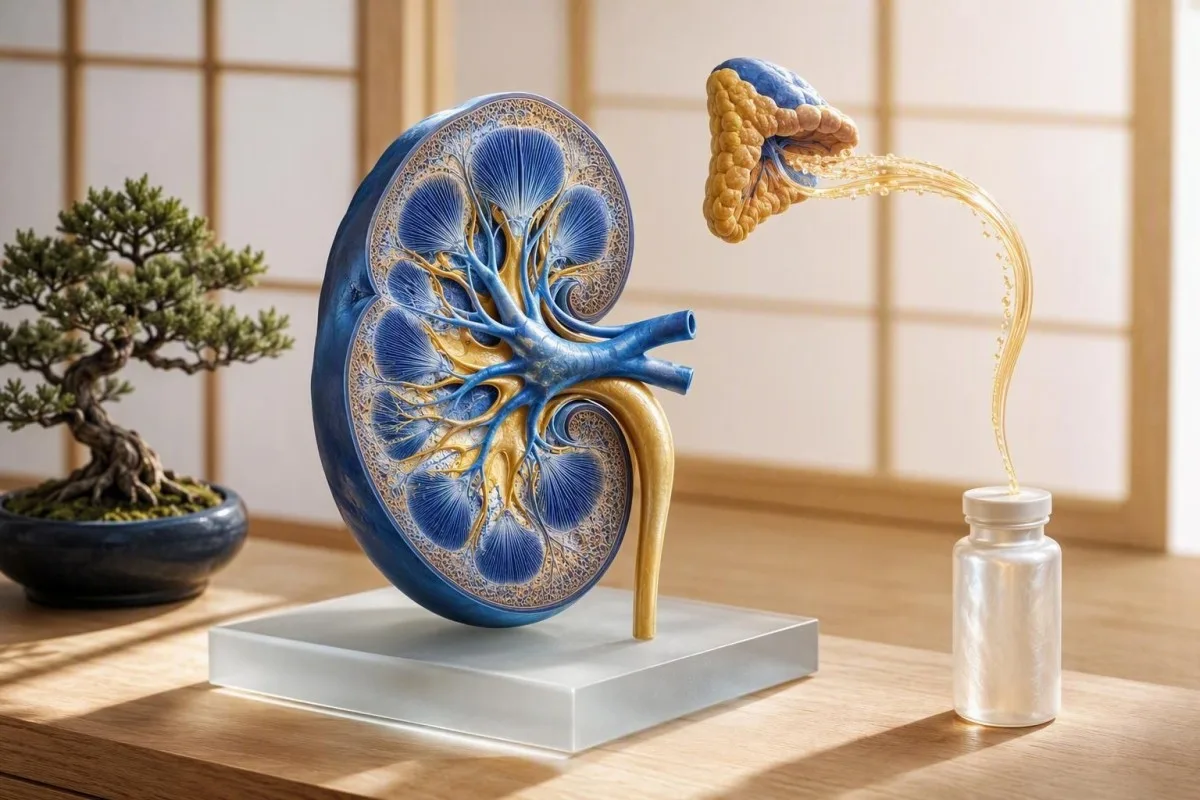
Most high blood pressure has more than one contributor, but a meaningful minority has a treatable medical driver. These lab patterns help you and your clinician decide when to look beyond routine hypertension.


- Secondary hypertension should be considered when blood pressure begins abruptly before age 30, becomes severe, or remains uncontrolled on 3 medicines including a diuretic.
- eGFR below 60 mL/min/1.73 m² for 3 months or more can indicate chronic kidney disease, a common contributor to high blood pressure.
- Urine ACR of 30 mg/g or higher signals albumin leakage and can precede an obvious rise in creatinine.
- Low potassium below 3.5 mmol/L with hypertension is a reason to consider aldosterone testing, although many affected patients have normal potassium.
- Aldosterone-renin ratio is a screening calculation, not a diagnosis; several blood pressure medicines can distort it.
- TSH below 0.4 mIU/L or above 4.0 mIU/L may warrant thyroid follow-up when symptoms or difficult-to-control blood pressure coexist.
- NSAIDs, decongestants, stimulants, steroids, oral contraceptives, and liquorice products can raise blood pressure or alter sodium and potassium.
- Blood pressure of 180/120 mmHg or higher with chest pain, breathlessness, weakness, confusion, or visual change needs emergency assessment.
When hypertension causes deserve a targeted blood-test workup
Secondary hypertension is more likely when blood pressure starts suddenly, appears before age 30 without a strong family pattern, worsens rapidly, or stays above target despite 3 appropriately chosen medicines including a diuretic. In practice, the useful first tests are creatinine with eGFR, sodium, potassium, bicarbonate, calcium, fasting glucose or HbA1c, TSH, and a urine albumin-creatinine ratio.
The term resistant hypertension has a precise clinical meaning: blood pressure remains above goal despite 3 drug classes at tolerated doses, one usually being a diuretic, or it is controlled only with 4 or more drugs. The American Heart Association statement by Carey et al. (2018) recommends confirming medication adherence and out-of-office readings before labelling someone resistant, because poor technique and the white-coat effect are common mimics.
As Dr. Thomas Klein, I often meet people who were told they have “essential” hypertension after one high reading in a rushed clinic. A repeat home average of 135/85 mmHg or higher is generally abnormal, while a single reading of 170/100 mmHg during acute pain, panic, or a kidney stone does not by itself prove persistent hypertension.
Kantesti is an AI blood test analyzer that places creatinine, potassium, bicarbonate, thyroid markers, and prior results into one longitudinal pattern rather than treating each flag as a separate problem. Readers who want the laboratory vocabulary behind those markers can use our biomarker reference guide, but a clinician still decides which suspected cause needs confirmatory testing.
Patterns that should move the appointment forward
A new blood pressure above 160/100 mmHg in a person under 40, a creatinine rise after starting an ACE inhibitor or ARB, recurrent potassium below 3.5 mmol/L, or episodic headache-plus-palpitations should prompt a focused review within days to weeks rather than a routine annual check. The reason is not that these findings prove a rare disease; it is that the combination changes the pre-test probability enough to make testing worthwhile.
Kidney blood tests that can explain high blood pressure
Kidney disease can both cause and result from hypertension, and eGFR below 60 mL/min/1.73 m² for at least 3 months is one criterion for chronic kidney disease. Creatinine, eGFR, potassium, bicarbonate, and urine albumin show more than any one result alone.
A creatinine value has no single “safe” number because muscle mass, diet, creatine supplements, and hydration affect it; the eGFR trend is usually more informative. KDIGO’s 2024 guideline classifies persistent eGFR of 45–59 as G3a chronic kidney disease, and the risk rises substantially when albuminuria is present (KDIGO, 2024).
Bicarbonate, reported as total CO2 on many panels, is usually about 22–29 mmol/L. A value below 22 mmol/L alongside declining eGFR can reflect reduced renal acid handling, whereas a high bicarbonate above 30 mmol/L with low potassium steers my thinking more toward diuretics, vomiting, or mineralocorticoid excess.
Do not over-interpret a one-off eGFR of 58 after a marathon, diarrhoea, or a large cooked-meat meal. A planned repeat, good hydration, and sometimes cystatin C can settle the question; our guides on CKD stages and ACR and the BUN-creatinine ratio explain why the surrounding context matters.
Why a urine test can find kidney clues before creatinine rises
Urine albumin-creatinine ratio, or ACR, can detect kidney damage before eGFR falls, especially in diabetes, obesity, glomerular disease, and longstanding hypertension. An ACR below 30 mg/g is usually normal, 30–300 mg/g is moderately increased, and above 300 mg/g is severely increased albuminuria.
Albumin in urine matters because it reflects a leaky glomerular filtration barrier, not merely “protein from eating too much.” A first-morning sample reduces variation; vigorous exercise, fever, urinary infection, menstruation, and marked hyperglycaemia can temporarily increase ACR, so an unexpected result often deserves confirmation on 2 of 3 samples over roughly 3 months.
A dipstick that reports protein can miss lower-grade albuminuria, while microscopy may reveal red cells or casts that change the referral pathway. Red cells plus protein and rising creatinine are a more concerning trio than isolated trace protein; our practical ACR preparation guide covers collection mistakes that I see surprisingly often.
Urine sodium is occasionally useful, but it does not diagnose dietary salt intake from a single spot sample. A 24-hour urine sodium collection can estimate intake more reliably, yet collection errors are common; a broader urinalysis interpretation guide helps distinguish an abnormal result from a useful diagnostic pattern.
Aldosterone testing: the low-renin pattern doctors look for
Primary aldosteronism is a common, treatable form of secondary hypertension in which aldosterone is inappropriately high and renin is suppressed. The screening test is a paired morning aldosterone and renin measurement used to calculate an aldosterone-renin ratio, or ARR.
Low potassium is a useful clue, but it is not required: fewer than half of people with primary aldosteronism have obvious hypokalaemia in many modern series. A potassium below 3.5 mmol/L, spontaneous or diuretic-associated, together with hypertension is enough to start a conversation about aldosterone testing.
Most laboratories interpret a positive screen using local assay-specific thresholds, commonly an ARR above 20–30 when aldosterone is at least 10 ng/dL and renin is suppressed. That shorthand can mislead because renin may be reported as plasma renin activity in ng/mL/hour or direct renin concentration in mIU/L; the numbers cannot be swapped. Funder et al. (2016) advise screening people with resistant hypertension, hypertension plus low potassium, adrenal incidentaloma, sleep apnoea, or a family history of early-onset hypertension or stroke.
Kantesti AI interprets aldosterone testing alongside potassium, creatinine, bicarbonate, and medication timing, because an ARR result divorced from those details can be wrong in either direction. For a more technical pre-test discussion, see our aldosterone and renin guide.
Medicines can change the ratio
Spironolactone, eplerenone, amiloride, and triamterene can invalidate ARR interpretation and often require a supervised washout; ACE inhibitors, ARBs, diuretics, beta-blockers, and NSAIDs also shift renin or aldosterone. Never stop blood-pressure treatment on your own for testing, particularly if your usual readings exceed 160/100 mmHg.
Electrolyte patterns that separate disease from medication effects
Potassium, sodium, chloride, and bicarbonate can reveal whether hypertension treatment or hormone excess is changing kidney salt handling. Potassium below 3.5 mmol/L suggests potassium loss, while potassium above 5.0 mmol/L commonly appears with reduced kidney function, ACE inhibitors, ARBs, or potassium-sparing drugs.
The most informative combination is often low potassium plus high bicarbonate, rather than either result alone. Thiazide and loop diuretics are frequent explanations, but if the person is not taking a diuretic, that pattern raises the possibility of aldosterone excess or another mineralocorticoid state.
Hyponatraemia below 135 mmol/L is not a usual sign of untreated hypertension. It more often reflects thiazide treatment, excess water intake, heart or liver disease, or SIADH; sodium below 125 mmol/L, especially with headache, vomiting, confusion, or seizure, needs same-day medical care.
Kantesti AI is an AI lab test interpretation service that can flag a potassium change after a new antihypertensive while preserving the important warning that a result is not a medication order. If your prescription recently changed, our potassium timing guide explains why clinicians commonly recheck renal function and potassium within 1–2 weeks.
Thyroid dysfunction can shift pulse pressure and heart rate
Hyperthyroidism can raise systolic blood pressure and pulse rate, while hypothyroidism is more often linked with higher diastolic pressure. TSH is usually the best first test, followed by free T4 when TSH is outside the laboratory interval or symptoms make the result hard to reconcile.
In many adult laboratories, TSH is approximately 0.4–4.0 mIU/L and free T4 about 0.8–1.8 ng/dL, although the printed range on your report wins. A low TSH with high free T4 supports overt hyperthyroidism; a high TSH with low free T4 supports overt hypothyroidism, while isolated borderline results are much less definitive.
The blood pressure pattern offers a small but useful clue: thyroid excess often produces a widened pulse pressure, tremor, heat intolerance, and resting pulse above 90 beats per minute. Thyroid deficiency may bring fatigue, constipation, dry skin, raised LDL cholesterol, and diastolic readings that remain stubbornly high despite otherwise sensible treatment.
Biotin can falsely lower TSH and falsely raise some free T4 assay results, particularly at hair-and-nail supplement doses of 5–10 mg daily. Ask the laboratory or clinician whether to stop it for 48 hours before testing, and use our thyroid test decoder to understand the panel rather than chasing a single flagged number.
Rare endocrine causes: when targeted tests are justified
Pheochromocytoma, Cushing syndrome, and acromegaly are uncommon causes of hypertension, so testing is most accurate when symptoms create a clear clinical reason. Random cortisol or catecholamine tests in everyone with high blood pressure generate far more false alarms than diagnoses.
Plasma free metanephrines or 24-hour urinary fractionated metanephrines are appropriate when hypertension comes in abrupt spells with pounding headache, sweating, pallor, and palpitations, or when an adrenal mass is found. A calm, supine collection after rest reduces false positives; acute illness, caffeine, nicotine, and several medicines can complicate the result.
Cushing syndrome becomes more plausible when resistant hypertension occurs with new diabetes, proximal muscle weakness, easy bruising, facial rounding, or broad purple stretch marks. The usual first-line tests are late-night salivary cortisol, 1-mg overnight dexamethasone suppression, or 24-hour urinary free cortisol—not a single morning cortisol.
In my experience, rare-cause testing is most helpful when a clinician writes down the symptom sequence before ordering the laboratory request. Our metanephrine preparation article explains why a poorly prepared result can lead to weeks of unnecessary worry.
What blood tests cannot diagnose: sleep apnoea and metabolic drivers
Blood tests do not diagnose obstructive sleep apnoea, but they can reveal related risk patterns such as high bicarbonate, elevated HbA1c, dyslipidaemia, and erythrocytosis. Loud snoring, witnessed pauses, daytime sleepiness, resistant hypertension, and morning headaches justify a formal sleep assessment.
A serum bicarbonate of 27 mmol/L or higher can be a clue to chronic hypoventilation in selected people with obesity and sleep-disordered breathing, but it is neither sensitive nor diagnostic. A sleep study, rather than a blood panel, tells us whether repeated airway obstruction is present and how severe it is.
HbA1c of 5.7–6.4% indicates prediabetes and 6.5% or higher on confirmatory testing supports diabetes in most non-pregnant adults. Insulin resistance does not automatically mean secondary hypertension, yet it often travels with central adiposity, fatty liver, sleep apnoea, and sodium sensitivity—the cluster matters more than any isolated glucose value.
High haematocrit can result from dehydration, smoking, testosterone therapy, altitude, or sleep-related oxygen dips, so it needs context before anyone assumes a cause. For practical screening signals, see our guide to lab clues for sleep apnoea.
Confirm the reading before chasing rare hypertension causes
Accurate home or ambulatory measurement should come before an extensive secondary-hypertension workup unless blood pressure is dangerously high or symptoms are urgent. A cuff that is too small, talking during the reading, recent caffeine, and unsupported feet can each add misleading points.
For home monitoring, use a validated upper-arm cuff, sit quietly for 5 minutes, keep the arm supported at heart level, and take 2 readings one minute apart in the morning and evening for 7 days. Discarding day 1 and averaging the remaining readings is a practical protocol used by many clinics.
White-coat hypertension means clinic readings are high while home or daytime ambulatory readings are not; masked hypertension is the reverse and is easier to miss. The latter is particularly relevant when kidney disease, diabetes, left ventricular hypertrophy, or strong family cardiovascular risk is present despite “fine” office values.
I encourage patients to record pulse, time, caffeine, nicotine, pain, sleep, and missed doses next to readings for one week. Those contextual details make side-by-side result comparisons more clinically useful than a long list of isolated numbers.
How to prepare for kidney, thyroid, and aldosterone testing
Preparation changes secondary-hypertension labs, especially aldosterone-renin testing, potassium, creatinine, and thyroid hormones. The safest plan is to ask the ordering clinician and laboratory for instructions tailored to your medicines rather than using an internet washout schedule.
For creatinine and potassium, avoid unusually strenuous exercise for 24–48 hours, arrive normally hydrated, and tell the clinician about creatine, potassium supplements, and recent diarrhoea or vomiting. Hard exercise can transiently raise creatinine and potassium; a haemolysed laboratory sample can also falsely elevate potassium, which is why unexpected results are often repeated.
For ARR testing, potassium should be corrected if low because hypokalaemia can suppress aldosterone and produce a falsely reassuring result. Sodium restriction immediately before the test may also alter the physiology, so many centres request a usual salt intake and morning collection after a period of upright activity or a specified rest protocol.
Kantesti’s AI biomarker interpretation platform identifies implausible changes across visits, but it cannot know whether a tube was haemolysed or whether you missed medicine for 3 days unless you add that context. Our lab result accuracy checklist is a useful final review before you treat a surprising flag as fact.
Why trends often matter more than one abnormal result
A rising creatinine, falling potassium, or progressively suppressed renin is more diagnostically useful than a single borderline result. Repeating a stable panel under comparable conditions usually clarifies whether a laboratory change is biologic, medication-related, or simply variation.
Creatinine may vary 10–20% with hydration, meat intake, and muscle metabolism, while potassium can shift by 0.2–0.4 mmol/L from collection conditions alone. A change from 0.9 to 1.0 mg/dL creatinine is often trivial; a rise from 0.9 to 1.4 mg/dL after starting an ACE inhibitor deserves a medication and renal-artery discussion.
Kantesti is an AI-powered blood test analysis tool that compares prior panels in about 60 seconds and highlights linked shifts rather than merely marking results outside a population range. This is particularly useful when thiazide treatment slowly lowers sodium and potassium over several months, a pattern that can be missed on separate reports.
Trend review works best when dates, medication changes, illness, exercise, and fasting status are saved with each report. Our longitudinal lab analysis guide explains how to build a personal baseline without mistaking normal noise for deterioration.
Questions that make a hypertension lab appointment more productive
The best question is not “Which test should I demand?” but “Which pattern in my history makes this test useful?” Bring your home readings, complete medication list, family history of early stroke or hypertension, and previous kidney and electrolyte results.
Ask whether your blood pressure meets the definition of resistant hypertension and whether the current regimen includes an adequate diuretic strategy. Ask whether creatinine and potassium changed after treatment began, because a creatinine rise of more than about 30% after an ACE inhibitor or ARB is a recognised reason to reassess volume status, NSAID exposure, and renovascular risk.
If aldosterone testing is proposed, ask which medicines need adjustment, who will manage the blood pressure during any change, and which laboratory method will report renin. The details are mildly tedious, frankly, but they prevent an ambiguous ratio from becoming an expensive scan or a needless diagnosis.
A concise one-page timeline often helps more than a folder of unmarked reports. You can build one using our doctor-visit lab summary guide, then discuss decisions with the clinicians on our medical advisory board principles in mind: transparent limitations, clinical context, and no automated diagnosis.
When high blood pressure and abnormal labs need urgent care
Blood pressure of 180/120 mmHg or higher with chest pain, severe breathlessness, new weakness, trouble speaking, confusion, fainting, severe headache, or sudden visual change needs emergency assessment. Do not wait for an aldosterone, thyroid, or repeat kidney test if symptoms suggest acute organ injury.
Potassium below 2.5 mmol/L or above 6.0 mmol/L can affect heart rhythm, particularly with weakness, palpitations, or reduced kidney function. Severe sodium abnormalities—usually below 120 mmol/L or above 160 mmol/L—also warrant urgent clinical direction even if the person feels unexpectedly well.
For non-urgent hypertension, the next step is usually a planned review within 1–4 weeks, not panic and not indefinite delay. As of July 30, 2026, the sensible sequence remains: confirm readings, review substances and adherence, repeat key abnormalities, then order targeted endocrine or imaging tests when the pattern supports them.
Kantesti’s clinical methodology is designed to surface patterns for discussion, not replace examination, ECG, imaging, or a prescribing clinician. Read how we handle clinical safeguards in our medical validation overview, and seek local urgent care immediately if your symptoms or readings cross the thresholds above.
Frequently Asked Questions
What blood tests check for secondary hypertension?
Initial blood tests for possible secondary hypertension commonly include creatinine with eGFR, sodium, potassium, bicarbonate, calcium, fasting glucose or HbA1c, and TSH, plus a urine albumin-creatinine ratio. Aldosterone and renin testing is added when hypertension is resistant, potassium is below 3.5 mmol/L, an adrenal finding is present, or the family history is suggestive. The correct panel depends on symptoms, medicines, age of onset, and home blood-pressure readings. No single blood test can diagnose every cause of high blood pressure.
Can low potassium mean I have too much aldosterone?
Low potassium can be a clue to primary aldosteronism, particularly when potassium is below 3.5 mmol/L and hypertension is difficult to control. However, thiazide or loop diuretics, vomiting, diarrhoea, low magnesium, and liquorice products are more common explanations. Many people with primary aldosteronism have normal potassium, so a normal result does not exclude it. A paired aldosterone-renin ratio is the usual screening test and must be interpreted with medication effects in mind.
What kidney test result is concerning with high blood pressure?
An eGFR below 60 mL/min/1.73 m² that persists for 3 months or longer can indicate chronic kidney disease, especially when urine ACR is 30 mg/g or higher. An ACR above 300 mg/g indicates severely increased albuminuria and needs timely clinical assessment. A single borderline creatinine result can reflect dehydration, exercise, meat intake, or supplements, so repeat testing is often appropriate. A rapid creatinine increase, reduced urine output, swelling, or potassium above 6.0 mmol/L needs faster medical review.
Should I stop blood pressure medicines before aldosterone testing?
Do not stop blood pressure medicines without instructions from the clinician ordering aldosterone testing. Spironolactone, eplerenone, amiloride, diuretics, ACE inhibitors, ARBs, beta-blockers, and NSAIDs can alter renin or aldosterone and affect the ratio. Some patients need a supervised medicine substitution or washout lasting several weeks, while others can be tested with cautious interpretation. This decision is especially important when usual readings are above 160/100 mmHg.
Can thyroid problems cause high blood pressure?
Thyroid disease can contribute to high blood pressure because excess thyroid hormone often raises systolic pressure and pulse, while thyroid deficiency can raise diastolic pressure. In many laboratories, TSH below 0.4 mIU/L or above 4.0 mIU/L prompts free T4 testing, although the laboratory-specific range should be used. Thyroid dysfunction is only one possible contributor, and borderline TSH results often need repeat testing rather than immediate treatment. Symptoms such as tremor, heat intolerance, constipation, fatigue, or unexplained heart-rate changes make thyroid testing more informative.
Which medications can raise blood pressure?
Common medication-related causes of raised blood pressure include NSAIDs, pseudoephedrine-containing decongestants, stimulant medicines, systemic corticosteroids, some antidepressants, oral contraceptives, and calcineurin inhibitors. Liquorice products containing glycyrrhizin can also raise pressure and lower potassium, sometimes producing a pattern that resembles aldosterone excess. The effect may appear within hours for decongestants or over days to weeks for sodium-retaining medicines. Bring all prescriptions, over-the-counter products, teas, powders, and supplements to a medication review.
Get AI-Powered Blood Test Analysis Today
Join over 2 million users worldwide who trust Kantesti for instant, accurate lab test analysis. Upload your blood test results and receive comprehensive interpretation of 15,000+ biomarkers in seconds.
📚 Referenced Research Publications
Klein, T., Mitchell, S., & Weber, H. (2026). Kantesti Editorial Team. (2026). Urobilinogen in Urine Test: Complete Urinalysis Guide 2026. Zenodo.. Kantesti AI Medical Research.
Klein, T., Mitchell, S., & Weber, H. (2026). Kantesti Editorial Team. (2026). Iron Studies Guide: TIBC, Iron Saturation & Binding Capacity. Zenodo.. Kantesti AI Medical Research.
📖 External Medical References
⚕️ Medical Disclaimer
This article is for educational purposes only and does not constitute medical advice. Always consult a qualified healthcare provider for diagnosis and treatment decisions.
E-E-A-T Trust Signals
Experience
Physician-led clinical review of lab interpretation workflows.
Expertise
Laboratory medicine focus on how biomarkers behave in clinical context.
Authoritativeness
Written by Dr. Thomas Klein with review by Dr. Sarah Mitchell and Prof. Dr. Hans Weber.
Trustworthiness
Evidence-based interpretation with clear follow-up pathways to reduce alarm.