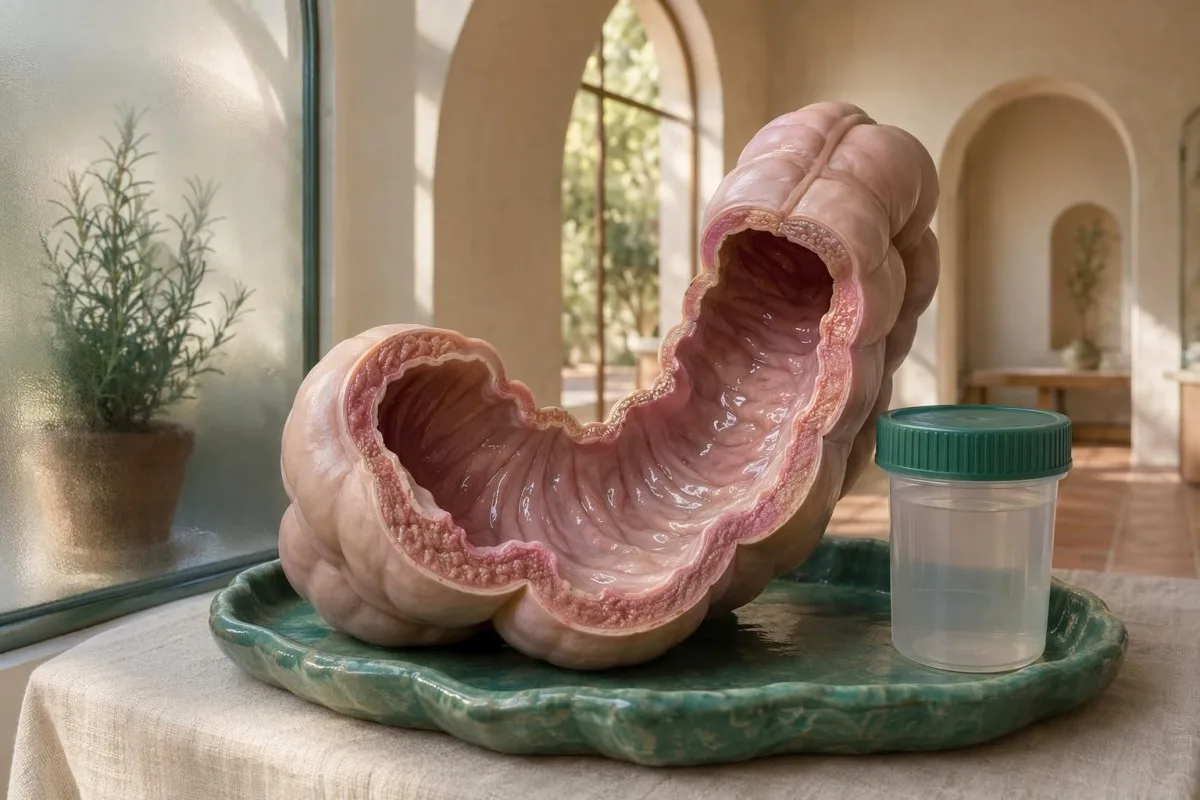
Most mucus is a short-lived gut irritation signal, but mucus plus bleeding, anemia, fever, weight loss, or persistent diarrhea deserves proper testing. Here is how I separate nuisance mucus from a pattern that needs stool studies, inflammation markers, CBC interpretation, and sometimes colonoscopy.


- Mucus in stool is usually benign when it appears briefly with constipation, a mild stomach bug, or known IBS and no bleeding, fever, anemia, or weight loss.
- Bristol stool chart types 1–2 suggest constipation irritation, while types 6–7 with mucus suggest diarrhea that may need infection or inflammation testing.
- Fecal calprotectin below 50 µg/g usually argues against active inflammatory bowel disease; results above 250 µg/g deserve prompt clinical review.
- CBC patterns matter: hemoglobin below 13.0 g/dL in men or 12.0 g/dL in women with mucus and bowel change is a colonoscopy trigger.
- CRP and ESR can support inflammation, but normal CRP does not rule out mild ulcerative colitis limited to the rectum.
- Stool test for parasites is most useful after travel, untreated water exposure, daycare contact, eosinophils above 0.5 × 10⁹/L, or diarrhea lasting more than 7–14 days.
- FIT testing in symptomatic adults is often used at a threshold around 10 µg hemoglobin/g feces in UK pathways, but visible rectal bleeding still needs clinical judgment.
- Colonoscopy referral is more likely when mucus persists beyond 6 weeks with bleeding, nocturnal diarrhea, iron deficiency, raised calprotectin, or family history of bowel cancer or IBD.
What mucus in stool usually means
Mucus in stool is usually a sign that the lining of the colon is irritated, not automatically a cancer warning. I worry when mucus comes with blood, black stool, fever, night-time diarrhea, unintentional weight loss above 5% of body weight, anemia, or symptoms lasting more than 4–6 weeks. In those cases, ask for stool studies, fecal calprotectin, CBC, CRP, iron markers, and a clear plan for colonoscopy referral.
A small amount of mucus is normal because goblet cells in the colon produce mucins that lubricate stool; most adults simply never notice it. In clinic, a single week of mucus after constipation or a viral gut upset behaves very differently from mucus plus hemoglobin 10.5 g/dL or fecal calprotectin 600 µg/g.
I’m Thomas Klein, MD, and the pattern I see most often is this: patients panic after seeing a clear jelly-like film, then their symptoms disappear once Bristol type 1–2 stools soften to type 3–4. Kantesti is an AI blood test analyzer that helps patients read the blood-test side of this story, but stool symptoms still need ordinary clinical common sense; our company background is described on About Us.
The first practical split is duration and company. Mucus alone for 24–72 hours after a spicy meal, a new magnesium supplement, or a bout of constipation is usually watched; mucus with bleeding, elevated inflammatory markers, or a new bowel habit after age 45 is investigated, often starting with fecal calprotectin ranges.
Use the stool consistency chart before naming a disease
A stool consistency chart gives mucus a context: mucus with Bristol type 1–2 usually points toward constipation and straining, while mucus with Bristol type 6–7 points toward diarrhea, infection, or inflammation. The Bristol stool chart is not a diagnosis, but it is better than saying “normal” or “loose” without detail.
Bristol type 3–4 is generally the target because stool is formed without being hard; type 1–2 suggests slow transit and mechanical irritation of the rectum. When patients show me photos, the mucus often coats hard pellets, and the problem improves once fluid, soluble fiber, and bowel routine normalize over 1–2 weeks.
Bristol type 6–7 changes the conversation. Loose stool with mucus, urgency, and cramps lasting more than 7 days is where I start thinking about stool culture or PCR, C. difficile testing after antibiotics, and sometimes the broader patterns covered in our digestive symptom guide.
Do not over-read color in isolation. Yellow mucus after rapid transit can look alarming, but the red flags are blood, black tar-like stool, dehydration, fever above 38.0°C, and persistent nocturnal bowel movements that wake you from sleep.
When mucus is probably benign gut irritation
Mucus is more likely benign when it is clear or whitish, appears for less than 1–2 weeks, and follows constipation, a mild gastroenteritis, known IBS, a new diet, or anal irritation. The absence of bleeding, fever, weight loss, and abnormal labs matters more than the amount of visible mucus.
Constipation is the underrated cause. Hard stool can scrape across the rectal lining, causing mucus and sometimes a tiny streak of bright red blood from a fissure; the story is different if bleeding is mixed through the stool or keeps recurring.
IBS can produce mucus without damaging the bowel wall, especially when cramps improve after a bowel movement and symptoms fluctuate with stress or meals. I still reassess the label if a patient develops anemia, wakes at 3 a.m. to pass stool, or loses 4–5 kg without trying, because IBS should not do those things.
Food shifts can be surprisingly obvious in the timeline. A sudden jump to 25–35 g/day of fiber, sugar alcohols, creatine blends, prebiotics, or very high-fat meals can loosen stool and mucus for several days; if bloating is the main problem, the lab logic is different and our bloating lab guide may help.
Red flags that change mucus from watchful waiting to testing
Mucus needs medical assessment when it is paired with rectal bleeding, black stool, fever, dehydration, persistent diarrhea, anemia, raised inflammatory markers, or a new bowel habit after midlife. I usually set the threshold at symptoms persisting beyond 4–6 weeks, sooner if blood or weight loss is present.
Visible blood is not automatically cancer, but it should never be dismissed as “just hemorrhoids” without looking at age, bowel change, and CBC. Bright red blood on tissue after hard stool suggests an anal source; blood mixed with diarrhea and mucus pushes me toward colitis testing.
Inflammatory symptoms cluster. Fever above 38.0°C, night sweats, nocturnal diarrhea, pulse above 100/min, or CRP above 50 mg/L makes infection, IBD flare, or another inflammatory process more likely than simple irritation; our guide to inflammation blood tests explains why CRP and ESR can disagree.
A family history changes the threshold. One first-degree relative with colorectal cancer before age 50, two relatives at any age, or known Lynch syndrome should move mucus plus bowel change into a faster review lane, even if the first stool test looks reassuring.
Stool studies to ask for, including parasite testing
Stool studies are most useful when mucus comes with diarrhea, fever, travel, food poisoning exposure, antibiotics, immune suppression, or symptoms lasting more than 7–14 days. A stool test for parasites is especially relevant after untreated water exposure, camping, daycare contact, travel, or eosinophils above 0.5 × 10⁹/L.
For acute diarrhea, many labs now use multiplex stool PCR panels for Salmonella, Shigella, Campylobacter, Shiga-toxin E. coli, Giardia, Cryptosporidium, and norovirus. PCR is fast, often same day to 48 hours, but it can detect DNA after symptoms are already resolving, so a positive result still needs clinical interpretation.
Traditional ova and parasite microscopy can miss intermittent shedding. When suspicion is high, collecting 2–3 specimens on separate days improves yield, and Giardia or Cryptosporidium antigen/PCR often performs better than microscopy alone; eosinophil patterns are covered in our eosinophils and worms article.
C. difficile testing is a separate question. Mucus with watery diarrhea after antibiotics, hospitalization, chemotherapy, or long-term proton pump inhibitor use deserves toxin/PCR testing, but formed stool is usually not accepted because colonization without disease is common.
Fecal calprotectin and lactoferrin show bowel inflammation
Fecal calprotectin and fecal lactoferrin are stool markers that rise when neutrophils enter the intestinal lining. A fecal calprotectin below 50 µg/g usually argues against active IBD, while values above 250 µg/g are much more concerning for inflammatory bowel disease, infection, or significant mucosal inflammation.
The evidence is useful but not perfect. Waugh et al. reported in Health Technology Assessment that fecal calprotectin helps separate inflammatory from non-inflammatory bowel disease and can reduce unnecessary colonoscopy when used before referral (Waugh et al., 2013).
Borderline results are where people get stuck. A calprotectin of 70–150 µg/g can follow NSAID use, a recent gut infection, heavy exercise, or even a sampling issue; I usually repeat it in 2–6 weeks if symptoms are mild and there is no bleeding or anemia.
Very high results deserve respect. Calprotectin above 500 µg/g is common in active IBD or infectious colitis, but it does not tell you which one; that distinction needs stool pathogens, CBC, CRP, and sometimes endoscopy rather than guessing from one marker.
CBC patterns that make mucus more concerning
A CBC changes the risk assessment because mucus plus anemia, high platelets, high neutrophils, or eosinophilia points beyond simple IBS. Adult hemoglobin below 13.0 g/dL in men or 12.0 g/dL in women is anemia by WHO-style thresholds and should be explained, especially with bowel habit change.
Iron-deficiency anemia is the CBC pattern I dislike most in this setting. Low MCV below 80 fL, high RDW above many lab reference ranges, and ferritin under 30 ng/mL can mean chronic blood loss even when stool looks normal to the patient.
Platelets can be a quiet inflammation marker. A platelet count above 450 × 10⁹/L may reflect iron deficiency, IBD activity, infection, or cancer-associated inflammation; it is not diagnostic, but it makes me less comfortable with “wait and see.”
Differential counts add another layer. Neutrophils above roughly 7.5 × 10⁹/L can fit bacterial infection or steroid effect, while eosinophils above 0.5 × 10⁹/L raise allergy, drug reaction, parasitic disease, or eosinophilic gut disorders; our CBC differential guide walks through those patterns.
Infection, medication and post-infectious mucus patterns
Mucus after a gut infection can persist for 2–8 weeks even after the pathogen is gone, especially when stool remains loose or urgency continues. Testing is more urgent when symptoms are severe, bloody, febrile, or follow antibiotics, hospitalization, contaminated food, or travel.
Post-infectious IBS is real and frustrating. After bacterial gastroenteritis, some patients develop months of urgency and mucus despite normal CBC and calprotectin; the evidence here is mixed on exact duration, but 3–6 months is not unusual in primary care.
Medication history often solves the puzzle. Antibiotics, metformin, magnesium citrate, orlistat, colchicine, NSAIDs, and some GLP-1 medicines can shift stool toward Bristol 5–7, and mucus may simply be the irritated lining trying to protect itself.
Not every stool symptom is lower bowel. Upper-gut testing, such as H. pylori stool results, is useful for dyspepsia and ulcers, but it does not explain classic rectal mucus with urgency; matching the test to the symptom location prevents wasted panels.
Celiac, IBD and malabsorption can overlap with mucus
Celiac disease, inflammatory bowel disease, bile acid diarrhea, and malabsorption can all produce mucus-like stool changes, but their lab patterns differ. Celiac disease is usually screened with tissue transglutaminase IgA plus total IgA while the patient is still eating gluten.
Celiac disease often presents with iron deficiency, low folate, low vitamin D, or loose stool rather than dramatic weight loss. A negative tTG-IgA is less reliable if total IgA is low or the patient stopped gluten weeks earlier, which is why the pre-test diet matters.
IBD is more likely when mucus is paired with blood, urgency, nocturnal stool, raised calprotectin, anemia, low albumin, or high platelets. Ulcerative proctitis can produce small-volume mucus and urgency with a normal CRP, so normal blood inflammation markers do not fully exclude rectal disease.
Bile acid diarrhea is a missed cause of watery urgency after gallbladder removal, ileal disease, or certain infections. If celiac screening is on the table, our celiac blood test guide explains why antibody choice and gluten exposure change the result.
When mucus should prompt colonoscopy referral
Colonoscopy is considered when mucus is persistent and paired with bleeding, iron-deficiency anemia, positive FIT, raised calprotectin, unexplained weight loss, new bowel habit after age 45–50, or strong family history. NICE NG12 recommends urgent assessment pathways for adults with concerning bowel symptoms and abnormal FIT or anemia patterns (NICE, 2025).
A positive FIT does not diagnose cancer; it detects human hemoglobin in stool. In UK symptomatic pathways, fecal hemoglobin around 10 µg/g feces is often used as an action threshold, but visible rectal bleeding or anemia can still justify referral even with a low FIT.
Arasaradnam et al. advise in the British Society of Gastroenterology chronic diarrhea guideline that persistent diarrhea should be investigated using history, blood tests, stool tests, and endoscopic assessment when alarm features are present (Arasaradnam et al., 2018). That guideline is one reason I dislike treating 8 weeks of mucus-diarrhea with repeated antispasmodics and no calprotectin or CBC.
Age changes the risk calculation. A 24-year-old with intermittent mucus and normal calprotectin is usually managed differently from a 58-year-old with a new alternating bowel habit and fatigue; our weight loss lab guide covers the blood-test patterns that make referral more urgent.
Children, pregnancy and older adults need different thresholds
Children, pregnant patients, and older adults should not be judged by the same thresholds as a healthy 30-year-old. Mucus with dehydration, poor feeding, growth faltering, severe pain, fever, or blood in a child deserves same-day medical advice.
In infants, a small amount of mucus can appear with viral illness, swallowed secretions, or milk protein intolerance, but blood flecks, persistent vomiting, fever, or poor weight gain are not watch-and-wait signs. Pediatric reference ranges also differ, so an adult WBC or hemoglobin cutoff can mislead.
During pregnancy, constipation and hemorrhoids are common, but inflammatory bowel disease can also flare or first appear. Persistent mucus with blood, anemia, or diarrhea should be discussed promptly because dehydration and iron deficiency affect both mother and fetus.
Older adults have less reserve. A 76-year-old with mucus, new anemia, albumin 31 g/L, and 3 kg weight loss over a month needs faster assessment than a low-risk younger patient; for age-specific lab interpretation, see our pediatric blood ranges when children are involved.
Questions to ask your clinician before the appointment ends
The best appointment ends with a test plan, a safety-net plan, and a timeline. If mucus has persisted more than 2–4 weeks, ask which result would trigger stool culture, calprotectin, CBC, iron studies, FIT, or gastroenterology referral.
I suggest patients bring three facts: when mucus started, Bristol stool type, and whether symptoms wake them at night. Add exposures such as antibiotics in the last 12 weeks, travel, untreated water, daycare contact, new supplements, and family history of bowel cancer or IBD.
Ask for specifics, not a vague “full panel.” Useful first-line blood tests often include CBC with differential, CRP, ESR, ferritin, transferrin saturation, albumin, liver enzymes, kidney function, and celiac serology when diarrhea or iron deficiency is present.
Kantesti is an AI-powered blood test analysis tool used by people in 127+ countries, and our AI explains abnormal clusters in plain language within about 60 seconds. The engineering approach behind that interpretation is described in our technology guide, but a clinician should still examine ongoing rectal bleeding or severe pain.
How blood-test interpretation fits beside stool testing
Blood tests do not diagnose the cause of mucus by themselves, but they show whether the body is reacting systemically. Kantesti is an AI biomarker interpretation platform that weighs CBC, CRP, ESR, ferritin, albumin, liver markers, kidney markers, and trends together rather than treating each flag as a separate problem.
In our analysis of large-scale blood-test uploads, the worrying patterns are usually clusters: low hemoglobin with low MCV, high RDW, ferritin under 30 ng/mL, platelets above 450 × 10⁹/L, or albumin below 35 g/L. A single borderline CRP of 6 mg/L after a cold means far less than the same CRP with anemia and months of diarrhea.
Trend matters more than one screenshot. Hemoglobin drifting from 14.2 to 12.4 g/dL over 9 months, even while still near a lab’s reference range, can matter if stool symptoms changed at the same time; Kantesti flags that kind of direction-of-travel problem for review.
Our clinical standards are documented in medical validation, including why our reports separate educational interpretation from diagnosis. If your results include critical potassium, severe anemia, or signs of dehydration, the right next step is urgent care, not another app readout.
Research notes and medical review standards
As of June 7, 2026, the safest interpretation of mucus in stool is pattern-based: symptom duration, stool form, stool tests, inflammation markers, CBC changes, and age-related cancer risk are read together. No single mucus description reliably separates IBS, infection, IBD, parasites, and colorectal cancer.
Thomas Klein, MD, reviews Kantesti digestive-lab articles with the same rule I use in clinic: do not reassure from one normal marker if the history is getting worse. Lamb et al. describe in the British Society of Gastroenterology IBD guideline that diagnosis and monitoring rely on clinical assessment, biomarkers, endoscopy, histology, and imaging rather than symptoms alone (Lamb et al., 2019).
Kantesti’s published educational references also cover adjacent interpretation problems, including urine pigment patterns and iron-marker interpretation. The formal references are listed below as DOI-linked records, and our physician governance is described through the Medical Advisory Board.
Bottom line: short-lived clear mucus with constipation is usually not an emergency, but mucus plus blood, anemia, calprotectin above 250 µg/g, fever, nocturnal diarrhea, or weight loss is a medical signal. If the story does not fit the lab results, repeat the history before repeating random tests.
Frequently Asked Questions
Is mucus in stool normal?
A small amount of mucus in stool can be normal because the colon produces mucus to lubricate and protect its lining. It is more reassuring when it lasts less than 1–2 weeks, appears with constipation or a mild stomach bug, and there is no blood, fever, weight loss, or anemia. Persistent mucus beyond 4–6 weeks, especially with diarrhea or bowel habit change, should be discussed with a clinician.
When should I worry about mucus in stool?
You should worry about mucus in stool when it comes with rectal bleeding, black stool, fever above 38.0°C, night-time diarrhea, dehydration, unexplained weight loss over 5%, or anemia. Hemoglobin below 13.0 g/dL in men or 12.0 g/dL in women needs an explanation when bowel symptoms are present. Mucus with fecal calprotectin above 250 µg/g or a positive FIT should prompt medical follow-up.
Can IBS cause mucus in stool?
IBS can cause visible mucus in stool, especially when cramps improve after a bowel movement and symptoms fluctuate with stress or meals. IBS should not cause persistent fever, progressive weight loss, iron-deficiency anemia, blood mixed through stool, or repeated night-time diarrhea. If those red flags appear, clinicians usually check CBC, CRP, fecal calprotectin, stool studies, and sometimes colonoscopy.
What stool tests should I ask for if I see mucus?
The right stool tests depend on symptoms and exposure history, but common options include stool culture or PCR, C. difficile toxin/PCR, fecal calprotectin, fecal lactoferrin, FIT, and parasite testing. A stool test for parasites is most useful after travel, untreated water exposure, daycare contact, immune suppression, eosinophils above 0.5 × 10⁹/L, or diarrhea lasting more than 7–14 days. Formed stool without diarrhea often has lower yield for infection testing.
What does the Bristol stool chart tell me about mucus?
The Bristol stool chart helps interpret mucus by showing whether stool is hard, formed, loose, or watery. Mucus with Bristol type 1–2 often reflects constipation and rectal irritation, while mucus with type 6–7 suggests diarrhea that may need infection or inflammation testing. Type 3–4 stool with brief mucus and no red flags is usually less concerning.
Does mucus in stool mean colon cancer?
Mucus in stool alone does not mean colon cancer, and many cases are caused by constipation, IBS, infection, or temporary gut irritation. Cancer concern rises when mucus is paired with rectal bleeding, a positive FIT, iron-deficiency anemia, unexplained weight loss, new bowel habit after age 45–50, or a strong family history. Those patterns should lead to clinician review and possible colonoscopy referral rather than reassurance based on mucus appearance.
Can blood tests find the cause of mucus in stool?
Blood tests cannot identify the exact cause of mucus in stool, but they can show whether the symptom is linked to inflammation, infection, malabsorption, or hidden blood loss. Useful tests include CBC with differential, CRP, ESR, ferritin, transferrin saturation, albumin, kidney function, liver enzymes, and celiac serology when diarrhea or iron deficiency is present. A normal blood panel does not fully rule out mild rectal inflammation, so stool tests and clinical history still matter.
Can mucus leak from my anus even when I am not passing stool?
Yes, rectal irritation or inflammation can cause mucus discharge between bowel movements, sometimes with urgency or pain. If this persists, arrange an examination and mention any recent anal sexual contact, since treatable rectal infections may need swab testing.
How should I collect a stool sample if there is mucus in it?
Pass stool into a clean, dry container or collection device rather than toilet water, then use the kit’s scoop to include a small portion containing mucus if visible. Keep urine and toilet paper out of the sample, follow the lab’s storage instructions, and return it promptly.
Can hemorrhoids or an anal fissure cause mucus on the toilet paper?
Yes, hemorrhoids or a small fissure can leave clear mucus on the stool or toilet paper, especially after hard stools. Book a check if bleeding persists more than 1–2 weeks, pain is severe, or mucus is mixed with diarrhea.
Get AI-Powered Blood Test Analysis Today
Join over 2 million users worldwide who trust Kantesti for instant, accurate lab test analysis. Upload your blood test results and receive comprehensive interpretation of 15,000+ biomarkers in seconds.
📚 Referenced Research Publications
Klein, T., Mitchell, S., & Weber, H. (2026). Urobilinogen in Urine Test: Complete Urinalysis Guide 2026. Kantesti AI Medical Research.
Klein, T., Mitchell, S., & Weber, H. (2026). Iron Studies Guide: TIBC, Iron Saturation & Binding Capacity. Kantesti AI Medical Research.
📖 External Medical References
National Institute for Health and Care Excellence (2025). Suspected cancer: recognition and referral. NICE guideline NG12. NICE Guideline.
⚕️ Medical Disclaimer
This article is for educational purposes only and does not constitute medical advice. Always consult a qualified healthcare provider for diagnosis and treatment decisions.
E-E-A-T Trust Signals
Experience
Physician-led clinical review of lab interpretation workflows.
Expertise
Laboratory medicine focus on how biomarkers behave in clinical context.
Authoritativeness
Written by Dr. Thomas Klein with review by Dr. Sarah Mitchell and Prof. Dr. Hans Weber.
Trustworthiness
Evidence-based interpretation with clear follow-up pathways to reduce alarm.