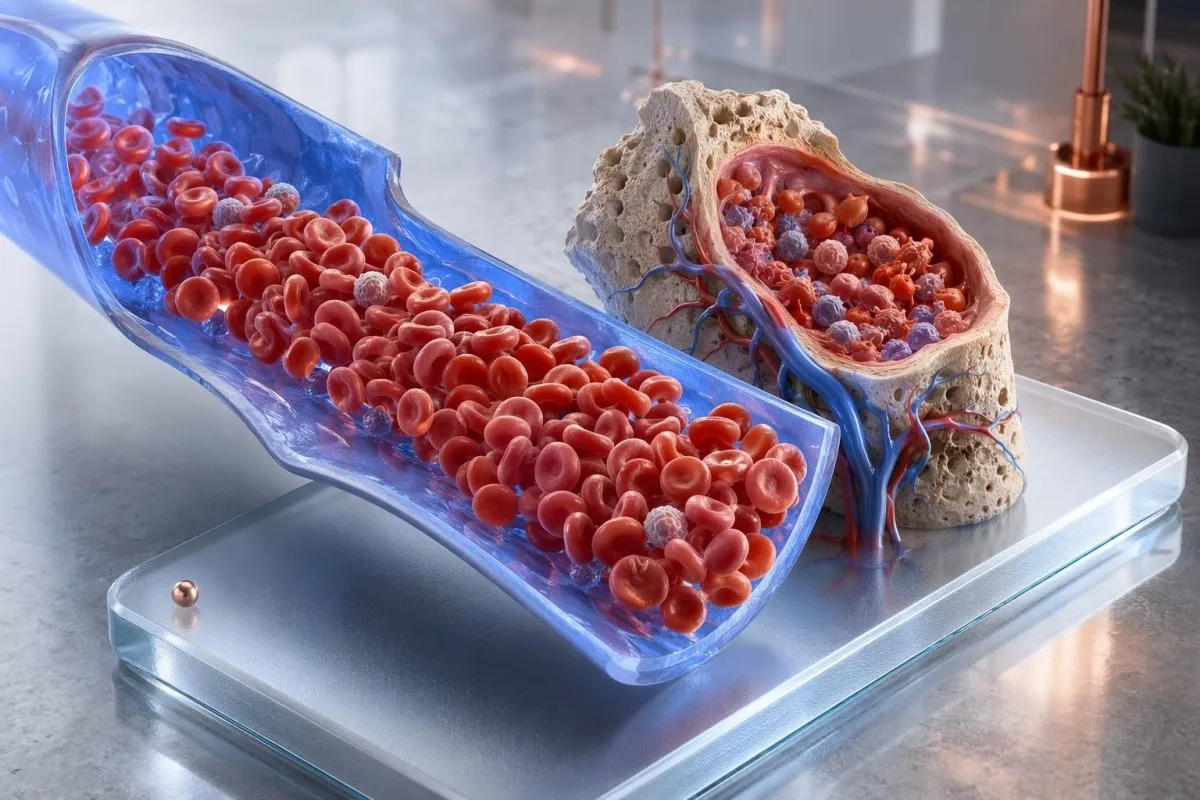
Polycythemia symptoms often make sense only when hematocrit, EPO, oxygen saturation and clotting history are read together. The pattern matters more than a single red flag.


- Polycythemia means too many circulating red cells; doctors suspect it when hematocrit is above about 49% in men or 48% in women.
- High hematocrit symptoms include headaches, flushing, dizziness, visual blur, ringing ears and burning hands or feet, especially when hematocrit rises above 52-55%.
- Itching after hot showers is a classic clue for polycythemia vera, but it is not diagnostic without CBC, EPO and usually JAK2 testing.
- Erythropoietin test results help split causes: low EPO suggests primary marrow overproduction, while normal or high EPO points toward oxygen, kidney, medication or altitude triggers.
- Oxygen saturation below 92% at rest supports hypoxia-driven secondary polycythemia, but sleep apnea and carbon monoxide exposure can hide behind normal daytime readings.
- JAK2 testing is usually considered when hematocrit is persistently high, EPO is low or normal-low, or platelets and white cells are also elevated.
- Clotting history raises urgency; prior DVT, stroke, heart attack, miscarriage with clotting, or unusual abdominal clots should move evaluation faster.
- Borderline results should be repeated with hydration and clinical context because dehydration, diuretics and recent altitude travel can falsely concentrate hematocrit.
What polycythemia symptoms mean on a CBC
Polycythemia symptoms such as headaches, flushing, shower itching and previous clots become concerning when they line up with a persistently high hematocrit, a low or inappropriately normal EPO result, and no obvious oxygen-related cause. I’m Thomas Klein, MD, and in clinic I treat this as a pattern diagnosis, not a one-number diagnosis. Kantesti is an AI blood test analyzer that helps patients organize that pattern before they speak with a clinician.
A hematocrit above 49% in adult men or 48% in adult women meets the World Health Organization threshold that can trigger evaluation for polycythemia vera when other criteria fit. A single CBC after a hard workout, fever, vomiting or poor fluid intake can mislead, which is why I usually want a repeat CBC before anyone panics; our hematocrit levels guide walks through that first distinction.
The symptom cluster matters. A patient with hematocrit 51%, no symptoms and recent mountain travel is a different story from a 58-year-old with hematocrit 54%, shower itching, platelets 620 x 10^9/L and a previous calf clot.
Kantesti Ltd is a UK health technology company; readers who want to understand our clinical governance can read more on About Us. Our analysis never replaces urgent medical care, but it can make a messy CBC report easier to discuss in the 8-12 minutes many patients actually get with a doctor.
High hematocrit patterns that are not all the same
High hematocrit can reflect true red-cell overproduction, chronic oxygen stress, medication effects or simple plasma-volume loss. The practical split is relative polycythemia from concentration versus absolute polycythemia from increased red cell mass.
Hematocrit is the percentage of blood volume occupied by red cells; a value of 55% means red cells occupy 55 mL of every 100 mL of blood. In my experience, patients remember that image better than the term hematocrit.
Relative polycythemia is common after dehydration, diuretics, high heat exposure or heavy endurance training with inadequate fluids. If albumin, total protein, sodium or BUN are also high, I look hard for concentration before calling it marrow disease; see our guide to dehydration false highs.
Absolute polycythemia is more stubborn. If hemoglobin and hematocrit stay high on 2 CBCs separated by at least 2-4 weeks, and the patient was not dehydrated or recently at altitude, doctors usually move to EPO, oxygen saturation and sometimes JAK2 testing.
Headache, flushing and vision changes: viscosity clues
Headache with high hematocrit can occur because thicker blood flows less smoothly through small vessels, especially when hematocrit climbs above the low-50% range. Flushing, blurred vision and tinnitus add weight to the signal.
Not every headache in someone with hematocrit 50% is from polycythemia. I still check blood pressure, migraine history, sleep, caffeine withdrawal, CRP, thyroid status and anemia patterns because those are common and treatable; our headache lab guide covers the broader differential.
The polycythemia-type headache is often dull, pressure-like and worse in the morning or after a hot shower. A patient once told me it felt as if her head was overfilled; her hematocrit was 57%, EPO was low, and she had aquagenic itching she had never mentioned because it sounded too odd.
Flushing is not just a cosmetic clue. A ruddy face plus burning hands or feet, called erythromelalgia when painful and red, makes me look carefully at platelet count because platelet activation can contribute even when hematocrit is only moderately high.
Itching after hot showers: why it points toward PV
Itching after warm showers is one of the more specific symptom clues for polycythemia vera, though it can still occur with dry skin, allergy, kidney disease or liver disease. The clue becomes stronger when it appears with high hematocrit, low EPO, high platelets or high basophils.
Aquagenic pruritus often starts within 5-20 minutes after bathing and may leave no visible rash. That absence of rash is the part patients find frustrating; they itch intensely, but the skin looks normal by the time anyone examines it.
The 2016 WHO classification lists low serum EPO as a minor criterion for polycythemia vera and JAK2 mutation as a major criterion when hemoglobin or hematocrit thresholds are met (Arber et al., 2016). For readers comparing itch with rashes, eczema or allergy clues, our skin symptoms guide gives a useful parallel pathway.
Here is a small clinical trick. If a patient says antihistamines barely help and the itching is provoked by warm water rather than soap, I ask about early satiety, left upper abdominal fullness and night sweats because splenic enlargement can travel with myeloproliferative disease.
Clotting history changes the urgency
A previous clot makes high hematocrit more urgent because polycythemia can increase thrombosis risk, particularly in polycythemia vera. A history of DVT, pulmonary embolism, stroke, heart attack or unusual abdominal vein clot should shorten the timeline for medical review.
The CYTO-PV trial in the New England Journal of Medicine found that keeping hematocrit below 45% in polycythemia vera reduced cardiovascular death and major thrombosis compared with a 45-50% target; events occurred in 2.7% versus 9.8% of patients (Marchioli et al., 2013). That is why hematologists care about a few percentage points.
Clot history should be specific. A provoked calf clot after knee surgery is different from an unprovoked clot at age 42, recurrent miscarriages with antiphospholipid antibodies, or Budd-Chiari syndrome involving hepatic veins.
If D-dimer, PT/INR, aPTT, fibrinogen or protein C appear on your report, they answer different clotting questions than hematocrit does. I often point patients to our coagulation test guide and the deeper blood clotting guide when they are trying to understand why one abnormal clotting result does not diagnose polycythemia.
The erythropoietin test: low vs high EPO
The erythropoietin test measures the kidney hormone that tells bone marrow to make red cells. In polycythemia evaluation, low EPO suggests primary marrow overproduction, while normal or high EPO suggests the body is responding to oxygen stress or another EPO stimulus.
Many laboratories report adult EPO around 2.6-18.5 mIU/mL, but ranges vary by assay. A result below the lab’s lower limit is a meaningful clue, not a final diagnosis.
Kantesti is an AI blood test interpretation platform that reads EPO beside hematocrit, hemoglobin, RBC count, MCV, platelets, oxygen clues and medication history rather than treating it as a stand-alone hormone. Our biomarker guide explains why that context-based interpretation matters across 15,000+ markers.
A normal EPO does not fully exclude polycythemia vera. I have seen PV patients with EPO near the low-normal edge, especially when iron deficiency, inflammation or lab-to-lab variation muddy the picture.
Oxygen saturation: the clue EPO cannot replace
Oxygen saturation helps identify secondary polycythemia caused by chronic low oxygen. A resting pulse oximetry value below 92% makes hypoxia a serious candidate, but normal daytime saturation does not rule out sleep apnea or carbon monoxide exposure.
Sleep apnea is the sneaky one. A patient may sit in clinic at 97% oxygen saturation, then spend 90 minutes overnight below 90%; the CBC only sees the chronic signal, not the tidy daytime snapshot.
The British Society for Haematology guideline discusses secondary erythrocytosis evaluation with attention to hypoxic lung disease, smoking, sleep apnea and congenital oxygen-affinity disorders (McMullin et al., 2019). Our article on sleep apnea labs explains why bicarbonate, hematocrit and metabolic markers can give indirect hints.
Carbon monoxide exposure is another trap. Smokers or people exposed to faulty heaters can have normal pulse oximetry because standard devices may misread carboxyhemoglobin as oxygenated hemoglobin; co-oximetry is the better test when the story fits.
When doctors consider JAK2 testing
JAK2 testing is usually considered when high hematocrit is persistent and cannot be explained by dehydration, altitude, smoking, testosterone or low oxygen. A low EPO result, high platelets or high white cells makes the case stronger.
About 95% of polycythemia vera cases carry the JAK2 V617F mutation, and many of the remaining cases have JAK2 exon 12 mutations. That high yield is why hematologists reach for JAK2 once the pre-test probability is real.
The WHO framework combines hemoglobin or hematocrit thresholds, bone marrow findings, JAK2 mutation status and EPO level rather than using one marker in isolation (Arber et al., 2016). Kantesti AI flags this as a pattern problem under our validation standards, not as a direct-to-diagnosis shortcut.
Testing too early can create confusion. If hematocrit is 49.5% after a stomach bug, EPO is normal and the repeat CBC is normal 3 weeks later, a JAK2 result was probably never the first move.
Secondary causes doctors look for before labeling PV
Secondary polycythemia means red cells rise because another signal is telling the body to produce more. The most common signals I look for are low oxygen, smoking or carbon monoxide, testosterone therapy, altitude exposure, kidney disease and some rare EPO-producing growths.
Testosterone is a big one in 2026 because prescriptions and non-prescribed anabolic use are both common. Hematocrit above 54% during testosterone therapy is a widely used safety threshold where clinicians usually pause, reduce dose or change route; our TRT safety labs gives the timing details.
Altitude can raise hemoglobin for weeks. After returning from high altitude, I often recheck CBC after 4-8 weeks if the patient is well and the hematocrit is not dangerously high.
Kidney-driven EPO deserves respect. Renal artery narrowing, cystic kidney disease and certain kidney masses can increase EPO, so a high EPO plus high hematocrit is not automatically a lung story.
CBC companions: WBC, platelets, MCV and ferritin
CBC companion markers can separate simple erythrocytosis from a myeloproliferative pattern. Polycythemia vera often brings elevated platelets, elevated white cells, low-normal MCV from iron restriction, or low ferritin from increased red-cell production and phlebotomy history.
A platelet count above 450 x 10^9/L is thrombocytosis, and a WBC count above 11 x 10^9/L in many adult labs is leukocytosis. When both travel with high hematocrit, I worry more about marrow signaling than dehydration.
Iron deficiency can mask polycythemia vera. The paradoxical pattern is a high RBC count with low MCV, sometimes with hematocrit only borderline high; our RBC and low MCV guide explains why thalassemia trait and iron restriction can look similar at first glance.
Ferritin below 30 ng/mL often supports iron deficiency in otherwise healthy adults, but inflammation can falsely raise ferritin. I avoid telling patients to start iron until the cause of high hematocrit is understood because iron can fuel more red-cell production in some PV cases.
Relative polycythemia from dehydration or diuretics
Relative polycythemia occurs when plasma volume falls and hematocrit looks high even though red-cell mass has not truly increased. Dehydration, diuretics, vomiting, diarrhea, heat illness and very low-carb dieting can all create this concentration effect.
I see this pattern after weekend endurance events and after new blood pressure medicines. Hematocrit may rise from 47% to 51%, albumin from 4.4 to 5.2 g/dL, and BUN from 16 to 28 mg/dL without any marrow disease.
The trick is to compare multiple concentration markers. High albumin is rarely caused by overproduction; it is usually a volume clue, and our albumin dehydration guide gives a clean example of this pattern.
Do not overcorrect with excessive water. If sodium is low, kidney function is reduced, or heart failure is present, aggressive fluid intake can be dangerous; the safer move is clinician-guided repeat testing.
What to do if your result is borderline
Borderline high hematocrit usually deserves confirmation before specialist testing. If hematocrit is just above range and symptoms are mild or absent, many clinicians repeat CBC in 2-4 weeks with normal hydration and no recent strenuous exercise.
Bring your previous CBCs if you have them. A hematocrit that has drifted from 43% to 50% over 5 years tells a different story than one random 50% result after food poisoning.
If symptoms are present, the repeat plan changes. Shower itching, erythromelalgia, new headaches, splenic fullness or a clot history should push EPO and oxygen review earlier; our repeat testing guide explains when waiting is reasonable and when it is not.
Ask the lab or clinician which unit and reference range they used. Some European laboratories flag hematocrit differently, and women after menopause may have ranges that overlap more with male thresholds than patients expect.
How Kantesti AI reads high hematocrit safely
Kantesti is an AI-powered blood test analysis tool used by 2M+ people across 127 countries, and high hematocrit is one of the patterns where context is everything. Our AI looks for combinations: hemoglobin, hematocrit, RBC count, MCV, platelets, WBC, ferritin, EPO and oxygen-related clues.
Kantesti’s neural network does not diagnose polycythemia vera from a photo of one CBC. It can, however, flag a result such as hematocrit 55%, platelets 590 x 10^9/L and low EPO as a combination that should not be brushed off.
Our technology guide explains how the system reads PDFs and photos, standardizes units and compares results with age, sex and previous trends. The clinical guardrail is simple: high-risk symptom patterns are routed toward medical review, not reassurance.
This is where AI is genuinely useful. Patients often upload 4 separate reports from 3 laboratories; a human can read them, but it takes time, and trend errors creep in when units change from L/L to percent or hemoglobin switches from g/dL to g/L.
When to seek urgent care and specialist review
Urgent care is appropriate when high hematocrit comes with chest pain, one-sided weakness, trouble speaking, severe shortness of breath, coughing blood, fainting, or a swollen painful leg. These symptoms can signal clotting or oxygen emergencies, not routine lab follow-up.
A hematocrit above 60% with symptoms is not a casual outpatient problem in my practice. Even if the cause is secondary, viscosity and oxygen delivery can become unstable enough to warrant same-day assessment.
Specialist review is usually hematology when EPO is low, JAK2 is positive, platelets or WBC are high, or splenomegaly is present. Pulmonology, sleep medicine, nephrology or endocrinology may be the better first referral when oxygen, kidney or testosterone clues dominate.
Thomas Klein, MD, and our clinical reviewers keep this advice aligned with physician oversight through Kantesti’s Medical Advisory Board. Bottom line: symptoms plus persistent high hematocrit deserve a structured workup, and clot symptoms deserve immediate medical attention.
Frequently Asked Questions
What hematocrit level suggests polycythemia?
Polycythemia is suspected when hematocrit is persistently above about 49% in adult men or 48% in adult women, especially when hemoglobin is also high. A single borderline result should usually be repeated because dehydration and recent altitude exposure can concentrate the sample. Hematocrit above 52-56% is more convincing and usually prompts EPO, oxygen saturation and medication review. Hematocrit above 60% with symptoms needs faster medical assessment.
Can you have polycythemia with normal oxygen saturation?
Yes, polycythemia can occur with normal daytime oxygen saturation. Sleep apnea may cause oxygen dips during the night while daytime pulse oximetry remains 95-100%. Carbon monoxide exposure can also fool standard pulse oximeters because carboxyhemoglobin may be misread as oxygenated hemoglobin. If the CBC pattern fits, doctors may use overnight oximetry, sleep testing or co-oximetry.
What does a low erythropoietin test mean with high hematocrit?
A low erythropoietin test with high hematocrit suggests the bone marrow may be making red cells without the normal kidney hormone signal. Many labs use an EPO reference range around 2.6-18.5 mIU/mL, so values below the local lower limit are meaningful. Low EPO is a minor WHO criterion for polycythemia vera when other findings fit. Doctors often consider JAK2 testing when low EPO is paired with persistent high hematocrit.
Does itching after a shower mean polycythemia vera?
Itching after a warm shower can be a classic symptom of polycythemia vera, but it does not diagnose it by itself. Aquagenic pruritus often begins 5-20 minutes after bathing and may occur without a visible rash. The symptom becomes more concerning when hematocrit is above 48-49%, EPO is low, platelets are high, or there is a clotting history. Dry skin, allergy, kidney disease and liver disease can also cause itching.
When should doctors order JAK2 testing?
Doctors usually order JAK2 testing when hematocrit is persistently high and common causes such as dehydration, altitude, testosterone therapy, smoking and low oxygen do not explain it. Testing is especially useful when EPO is low or low-normal, platelets exceed 450 x 10^9/L, white cells are elevated, or the spleen is enlarged. About 95% of polycythemia vera cases have the JAK2 V617F mutation. JAK2 exon 12 testing may be considered if V617F is negative but suspicion remains high.
Which polycythemia symptoms need emergency care?
High hematocrit with chest pain, one-sided weakness, trouble speaking, severe shortness of breath, fainting, coughing blood, or a swollen painful leg needs urgent medical care. These symptoms can reflect stroke, heart attack, pulmonary embolism or another clotting emergency. Hematocrit above 60% with neurologic or breathing symptoms is particularly concerning. Do not wait for outpatient EPO or JAK2 results if emergency symptoms are present.
If I have a JAK2 mutation, do my children need testing?
The JAK2 mutation linked to polycythemia vera is usually acquired during life, not inherited directly from a parent. Children generally do not need testing just because you test positive; mention any family history of persistently high blood counts to your clinician.
Should I start aspirin if my hematocrit is high?
Do not start daily aspirin solely because one hematocrit result is high; it can cause bleeding, and the benefit depends on the cause and your clotting history. Ask a clinician for individualized advice, especially if you use anticoagulants, anti-inflammatory pain medicines, or have a history of ulcers.
Can testosterone therapy cause high hematocrit?
Yes. Testosterone can stimulate red blood cell production and may push hematocrit too high, especially with higher doses or injections. Do not stop it on your own; ask the prescriber about repeat CBC monitoring, dose adjustment, or checking for sleep apnea.
Get AI-Powered Blood Test Analysis Today
Join over 2 million users worldwide who trust Kantesti for instant, accurate lab test analysis. Upload your blood test results and receive comprehensive interpretation of 15,000+ biomarkers in seconds.
📚 Referenced Research Publications
Klein, T., Mitchell, S., & Weber, H. (2026). aPTT Normal Range: D-Dimer, Protein C Blood Clotting Guide. Kantesti AI Medical Research.
Klein, T., Mitchell, S., & Weber, H. (2026). Serum Proteins Guide: Globulins, Albumin & A/G Ratio Blood Test. Kantesti AI Medical Research.
📖 External Medical References
⚕️ Medical Disclaimer
This article is for educational purposes only and does not constitute medical advice. Always consult a qualified healthcare provider for diagnosis and treatment decisions.
E-E-A-T Trust Signals
Experience
Physician-led clinical review of lab interpretation workflows.
Expertise
Laboratory medicine focus on how biomarkers behave in clinical context.
Authoritativeness
Written by Dr. Thomas Klein with review by Dr. Sarah Mitchell and Prof. Dr. Hans Weber.
Trustworthiness
Evidence-based interpretation with clear follow-up pathways to reduce alarm.