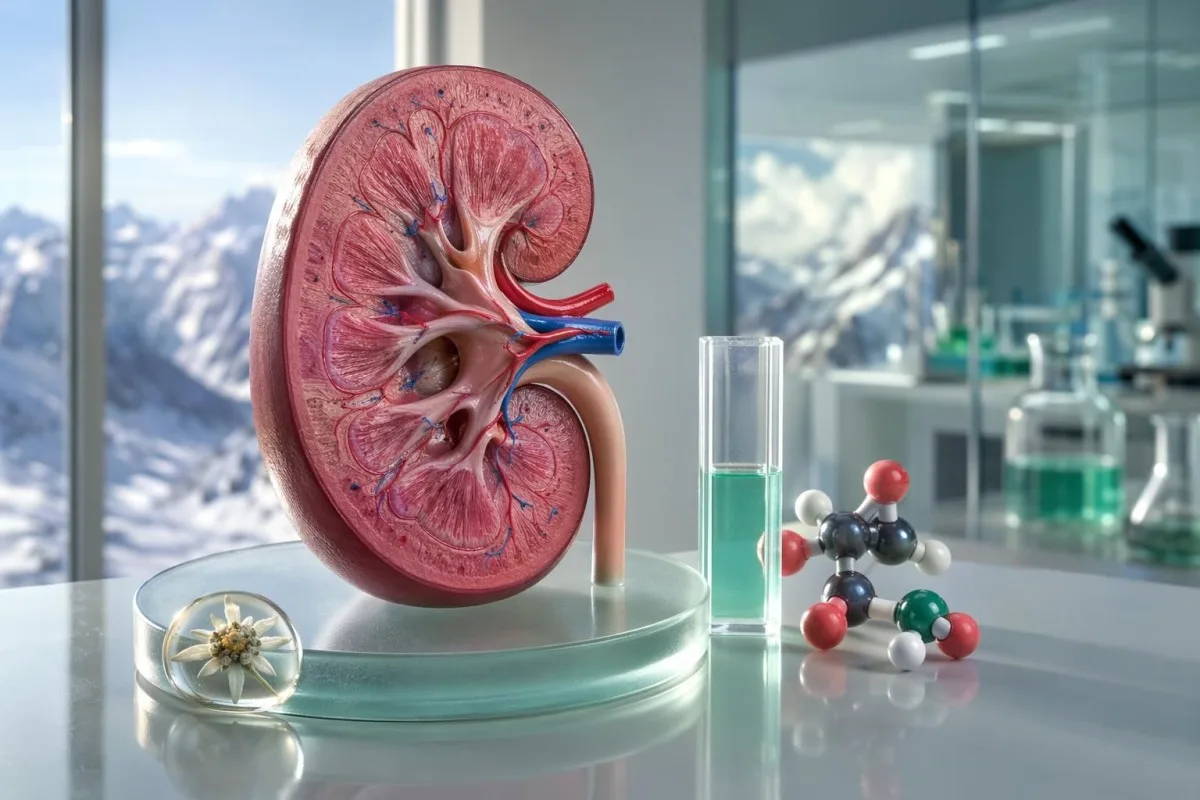
Two reports can describe the same urea waste signal with different names and units. The risk is not the lab choice — it is comparing the numbers without converting them first.



- BUN vs urea usually refers to the same nitrogen waste pathway, but BUN reports only the nitrogen part while urea reports the whole molecule.
- Urea to BUN conversion is simple: urea in mmol/L × 2.8 = BUN in mg/dL; BUN in mg/dL × 0.357 = urea in mmol/L.
- Blood urea nitrogen vs urea differs mainly by geography: the United States commonly reports BUN, while the UK, Europe, Australia and many other countries usually report urea.
- Normal BUN is often about 7–20 mg/dL in adults, which roughly matches urea about 2.5–7.1 mmol/L.
- Normal urea is commonly about 2.5–7.8 mmol/L in adults, but each lab’s analyzer and population may shift the range slightly.
- High BUN or urea can reflect dehydration, high protein intake, gastrointestinal bleeding, steroid use, kidney disease or reduced kidney blood flow.
- Creatinine and eGFR usually carry more diagnostic weight than BUN or urea alone when assessing chronic kidney function.
- Apps can misread kidney labs when BUN mg/dL is treated as urea mmol/L, creating an apparent 2.8-fold error.
- Urgent review is sensible when BUN is above 60–80 mg/dL, urea is above 21–29 mmol/L, or symptoms such as confusion, vomiting, chest pain or very low urine output appear.
Why the same kidney waste marker has two lab names
BUN vs urea is mostly a naming and unit problem, not two completely different kidney tests. BUN means blood urea nitrogen and reports only the nitrogen inside urea; urea reports the whole molecule, so the number is larger unless the lab uses a converted SI unit.
The United States commonly reports BUN in mg/dL, while the UK, much of Europe, Australia, New Zealand, South Africa and many international hospital systems report urea in mmol/L. I’m Thomas Klein, MD, and the most common mistake I see in cross-border reports is a patient comparing 18 mg/dL BUN with 6.4 mmol/L urea as if the numbers used the same scale.
Kantesti is an AI blood test interpretation platform that reads kidney results in context across country-specific naming systems, because a lab value of 6.4 can be normal urea in mmol/L but nonsensical if treated as BUN in mg/dL. Our background as Kantesti Ltd matters here: we see reports from 127+ countries, and the same renal marker can arrive with 6 different labels.
The molecule is chemically simple: urea contains 2 nitrogen atoms, and nitrogen accounts for about 46.6% of the urea molecule by mass. That is why urea in mg/dL is about 2.14 times BUN in mg/dL, and why blood urea nitrogen vs urea can look alarming until the units are reconciled.
A practical anchor helps: a BUN of 14 mg/dL roughly equals urea of 5.0 mmol/L. If your report changed from BUN to urea after moving country, switching clinics or uploading results into an app, read the unit before reading the flag.
The math behind urea to BUN conversion
Urea to BUN conversion depends on whether the urea result is reported in mmol/L or mg/dL. Urea in mmol/L × 2.8 gives BUN in mg/dL, while BUN in mg/dL × 0.357 gives urea in mmol/L.
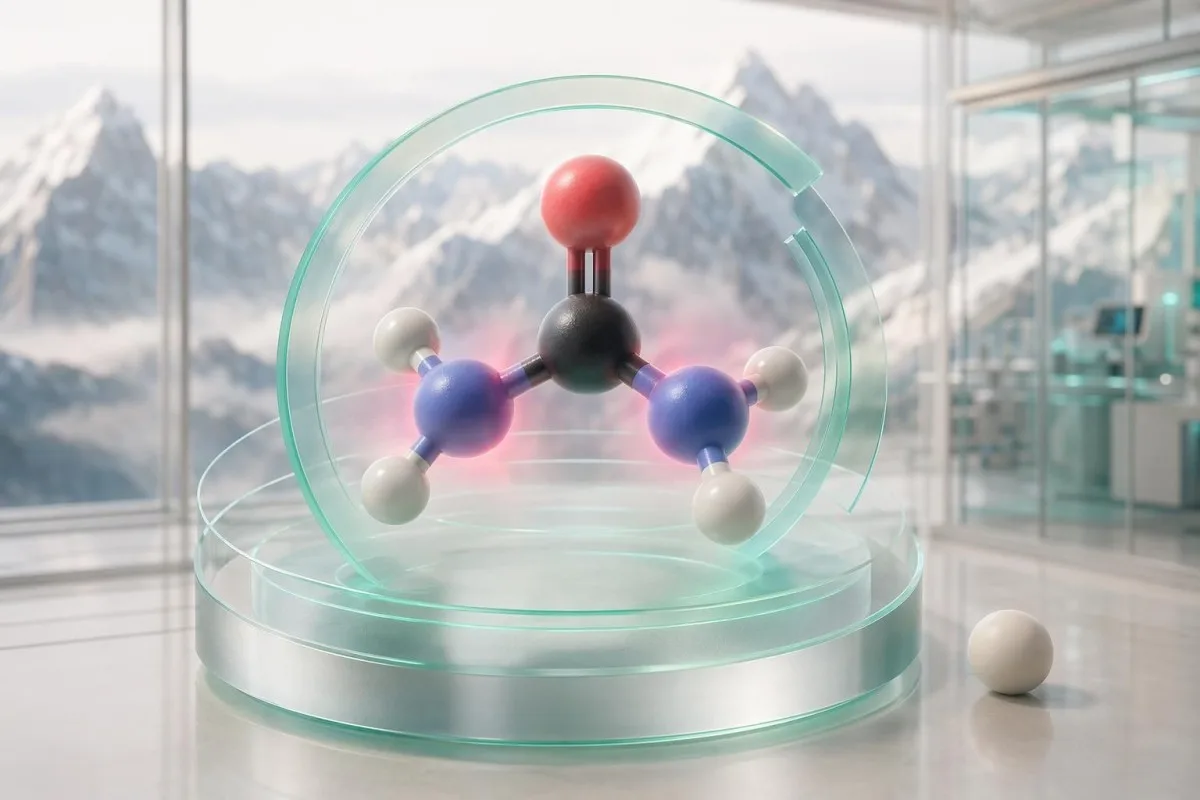
Here is the formula I use at the desk: BUN mg/dL = urea mmol/L × 2.8. The reverse is urea mmol/L = BUN mg/dL × 0.357, so a BUN of 20 mg/dL converts to about 7.1 mmol/L urea.
If urea is reported in mg/dL rather than mmol/L, the formula changes: BUN mg/dL = urea mg/dL ÷ 2.14. A urea of 43 mg/dL is therefore about 20 mg/dL BUN, not double kidney trouble.
I see spreadsheet errors every week where someone divides by 2.8 twice or converts a value that the lab has already converted. For a broader unit-safety primer, our guide to different lab units explains why cholesterol, glucose, creatinine and urea all need separate conversion factors.
Reference ranges that look different but often match
A typical adult BUN range is about 7–20 mg/dL, and a typical adult urea range is about 2.5–7.8 mmol/L. These ranges overlap after conversion, even though the printed numbers look unrelated.
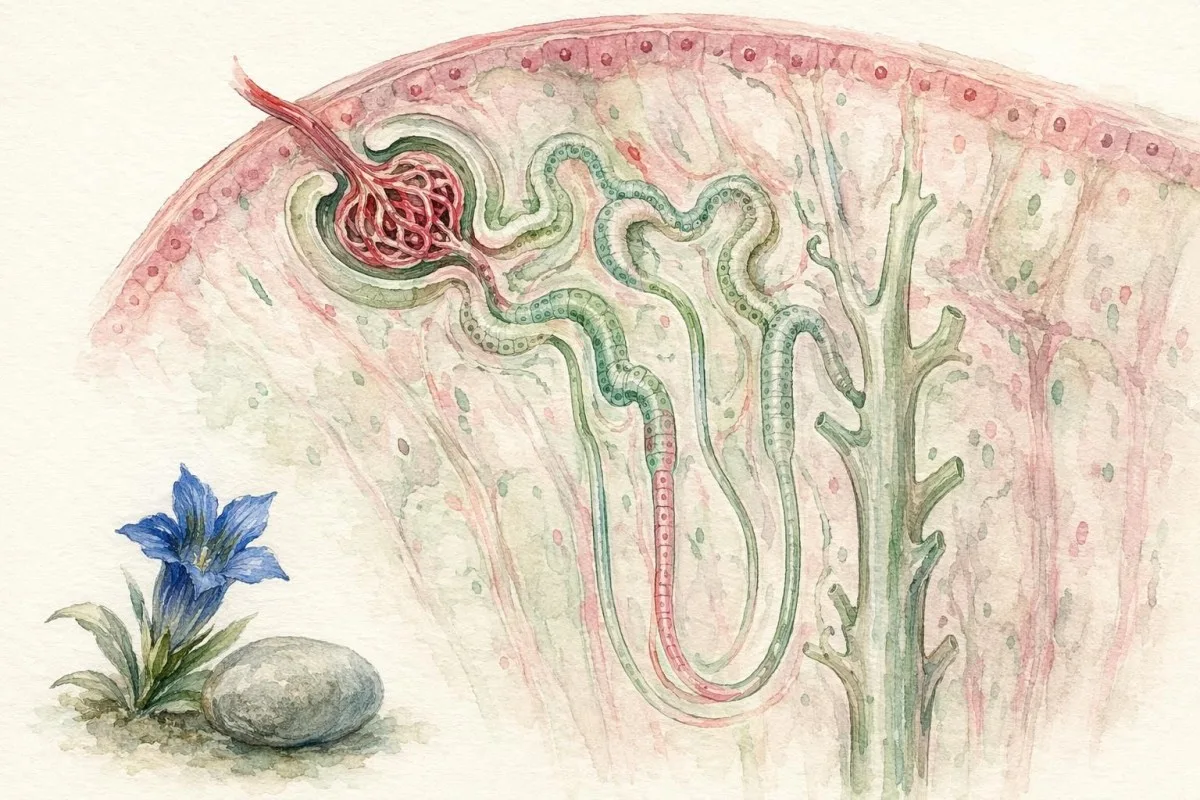
Many US labs flag BUN above 20 or 21 mg/dL, while many UK-style reports flag urea above about 7.8 mmol/L. Converted back, 7.8 mmol/L urea is about 22 mg/dL BUN, which is close enough that the clinical meaning is usually the same.
The low end also shifts. BUN below 6–7 mg/dL can appear with low protein intake, pregnancy, severe liver synthetic problems or overhydration, and our separate guide to low BUN results goes deeper into that pattern.
Do not treat the reference interval as a universal law. A lab serving older adults, hospitalized patients or a high-altitude region may validate a slightly different interval; a urea of 8.0 mmol/L after a long trail run is not the same story as 8.0 mmol/L with swelling, anemia and an eGFR of 38 mL/min/1.73 m².
The quieter clue is trend. A person whose urea has been 4.2, 4.5 and 4.8 mmol/L for 3 years but suddenly reads 7.6 mmol/L may deserve a hydration, medicine and kidney review even if the result barely sits inside the printed range.
Which countries usually report BUN or urea
Country practice explains most BUN and urea naming differences. As of June 14, 2026, BUN remains common in US-style lab reports, while urea is the usual term in many SI-unit healthcare systems.
In our analysis of 2M+ blood test uploads, US reports most often use BUN, Canadian reports are mixed, and UK or Australian reports usually use urea. International hospital networks sometimes standardize on mmol/L even when the patient portal is translated into English.
A patient recently showed me a US urgent care BUN of 18 mg/dL from March and a London urea of 7.2 mmol/L from April. The app graph made it look like a fall from 18 to 7.2, but conversion showed the London value was about 20 mg/dL BUN — essentially stable.
If you travel, work remotely or keep results from several countries, store the original PDF rather than copying only the number. Our blood test app checklist explains why the unit, assay name, collection date and fasting state should stay attached to every result.
Why kidney apps and PDFs sometimes mix units
Kidney apps and PDF import tools can misread BUN and urea when the lab name, unit and reference range are separated during scanning. A urea of 6.0 mmol/L wrongly stored as BUN 6.0 mg/dL can make a normal kidney result look low.
The usual failure is not artificial intelligence being “bad”; it is messy input. Lab PDFs often put the marker name in one column, the number in another, and the unit in tiny type, so an optical scan may capture 6.0 but miss mmol/L.
Kantesti AI treats unit detection as a clinical safety step, not a cosmetic formatting step. Our technology guide describes how marker aliases, reference intervals and country context are checked before a result is interpreted.
Manual entry has its own trap. If a patient types “urea 45” without the unit, that could mean 45 mg/dL urea, roughly BUN 21 mg/dL, or 45 mmol/L urea, roughly BUN 126 mg/dL; those are radically different clinical situations.
One small habit prevents most errors: enter the result exactly as printed, including capitalization and unit. If the report says “Urea 6.1 mmol/L,” do not shorten it to “BUN 6.1” in a notes app.
How diet, dehydration and protein intake shift both numbers
BUN and urea rise when the body produces more urea or clears less of it. Dehydration, high protein intake, gastrointestinal protein absorption and reduced kidney perfusion can raise the result even when kidney structure is normal.

After a very high-protein dinner, a normal adult can see BUN move by 3–8 mg/dL the next day. That is why I ask about protein powder, steak, fasting, vomiting and endurance exercise before I start worrying about a single mild urea rise.
A high-protein diet is not automatically kidney disease, but it can expose borderline physiology. Our article on high protein kidney labs explains why urea may climb while eGFR stays normal, especially in athletes and people using whey or collagen daily.
Dehydration concentrates urea because less plasma water reaches the kidney and more urea is reabsorbed along the tubules. In practice, a BUN of 28 mg/dL with creatinine 0.9 mg/dL after a hot 10 km run often behaves differently from BUN 28 mg/dL with creatinine 2.1 mg/dL and ankle swelling.
Steroids, tetracycline-class antibiotics and upper gastrointestinal bleeding can also increase urea production or absorption. Coffee alone is rarely the whole explanation, but poor fluid intake plus a salty meal plus 40 g of protein powder can easily nudge a borderline result.
Why creatinine and eGFR matter more than either name
Creatinine and eGFR usually matter more than BUN or urea for chronic kidney assessment. KDIGO recommends staging chronic kidney disease by eGFR and albuminuria rather than by urea alone (KDIGO CKD Work Group, 2024).
BUN and urea are influenced by diet, hydration, gut bleeding and catabolism, while creatinine more closely tracks muscle creatine turnover and kidney filtration. The 2009 CKD-EPI equation by Levey et al. improved eGFR estimation from serum creatinine, which is why modern reports often place eGFR beside creatinine rather than beside urea.
A normal eGFR is usually above 90 mL/min/1.73 m² in younger adults, although values around 60–89 can be normal with age if urine albumin is absent and the trend is stable. Our guide to eGFR by age gives the context patients often need when a portal marks eGFR as “borderline.”
Stevens et al. described in the New England Journal of Medicine why estimated GFR is an estimate, not a direct measurement, and why cystatin C or measured clearance may help in unusual body composition (Stevens et al., 2006). I pay particular attention when urea, creatinine, eGFR and urine albumin all move in the same direction.
The pattern I trust least is isolated urea. A urea of 9.0 mmol/L with eGFR 104 and normal urine albumin may be a diet or hydration story; a urea of 9.0 mmol/L with eGFR 48 and albumin-creatinine ratio 18 mg/mmol is a kidney-risk story.
Reading BUN creatinine ratio when the report says urea
The BUN creatinine ratio should be calculated only after urea is converted to BUN in mg/dL. Using urea mmol/L directly in the ratio gives a falsely low ratio and can hide dehydration or reduced kidney blood flow.
The classic adult BUN creatinine ratio is about 10:1 to 20:1 when BUN and creatinine are both in mg/dL. If a report says urea 10 mmol/L and creatinine 1.0 mg/dL, the converted BUN is 28 mg/dL, so the ratio is about 28:1.
A high ratio often points toward dehydration, reduced kidney perfusion, upper gastrointestinal bleeding or heavy protein intake, while a low ratio may occur with low protein intake or impaired urea production. Our detailed BUN creatinine guide walks through the same calculation with worked examples.
The ratio can mislead in frail older adults because creatinine may be deceptively low from reduced muscle mass. A BUN of 22 mg/dL and creatinine of 0.55 mg/dL creates a 40:1 ratio, but the true story may be sarcopenia plus mild dehydration rather than severe kidney disease.
When I review a ratio, I look for corroboration: blood pressure, urine specific gravity, sodium, bicarbonate, albumin, medications and the patient’s baseline. One number rarely earns the final diagnosis.
When a urea or BUN result is urgent
High BUN or urea becomes urgent when the number is very high, rising quickly or paired with symptoms. BUN above 60–80 mg/dL, or urea above 21–29 mmol/L, often deserves same-day clinical advice.
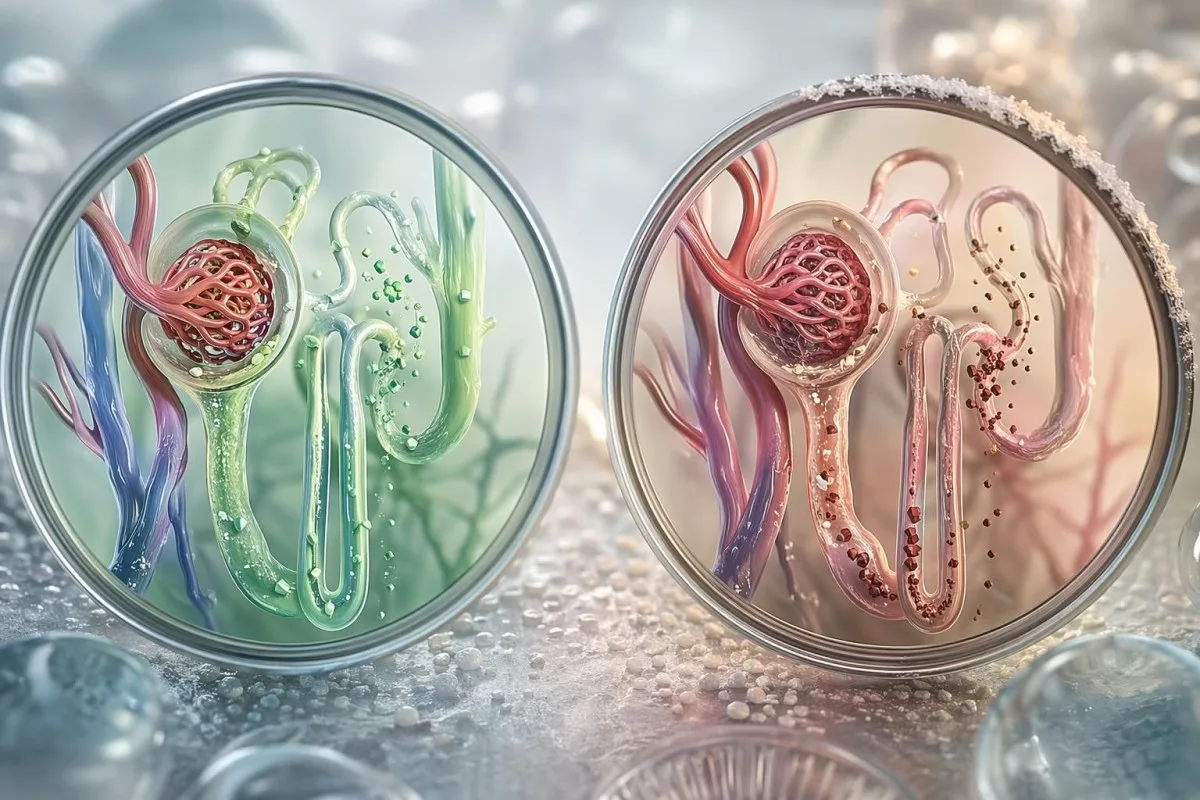
Symptoms change the threshold. Confusion, repeated vomiting, chest pain, breathlessness, severe weakness, very low urine output or new swelling matter more than whether the urea is 18 or 24 mmol/L.
Our patient-facing guide to high BUN danger explains why a BUN of 35 mg/dL may be outpatient follow-up in one person and emergency assessment in another. The difference is usually the company it keeps: potassium 6.2 mmol/L, bicarbonate 15 mmol/L or creatinine doubling in 48 hours changes the plan.
Potassium is the result I do not ignore. A potassium above 6.0 mmol/L, especially with kidney impairment or ECG symptoms, can be dangerous even if urea is only moderately high.
Fast rises matter too. A shift from urea 5 to 16 mmol/L over 3 days after diarrhoea, sepsis or a new diuretic is more concerning than a stable urea of 9 mmol/L for 5 years.
Pregnancy, children and older adults need different context
Pregnancy, childhood and older age change how BUN and urea should be interpreted. A “normal adult” range can be too high, too low or simply unhelpful in these groups.
During pregnancy, BUN and urea often fall because plasma volume expands and kidney filtration increases. A BUN of 6 mg/dL can be normal in pregnancy, while the same value in a non-pregnant adult on a very low-protein diet may prompt a nutrition discussion.
Children need age-specific ranges because growth, protein intake and kidney maturation vary by stage. Our pediatric lab ranges guide is useful when a toddler’s urea looks low by adult standards but fits their age.
Older adults are tricky for the opposite reason. Creatinine may look reassuring because muscle mass is lower, while urea rises with dehydration, diuretics, reduced thirst and lower kidney reserve.
In my clinic notes, I rarely write “high urea” without adding age, muscle mass, medicine list and fluid history. A 78-year-old taking furosemide with urea 11 mmol/L is not the same case as a 28-year-old bodybuilder with the same number after 180 g of protein.
Common conversion mistakes I see in real reports
The most common mistake is comparing the printed BUN and urea numbers without converting units. The second most common mistake is assuming an app’s graph is correct when the underlying unit changed between visits.

Thomas Klein, MD note from practice: if a kidney graph suddenly drops by about 65%, I check for BUN-to-urea conversion before I check for a medical miracle. A move from BUN 18 mg/dL to urea 6.4 mmol/L is not an improvement; it is almost the same result after conversion.
Another error is mixing creatinine units in the same calculation. Creatinine 80 µmol/L is about 0.90 mg/dL, so using 80 as if it were mg/dL will destroy any BUN creatinine ratio.
Use a two-column view when comparing old and new reports. Our side-by-side blood test guide shows the safer habit: marker name, result, unit, reference range, date and clinical note all visible at once.
The third mistake is trusting the asterisk more than the biology. A urea just above range after fasting, sweating or a high-protein meal may deserve a repeat; a normal-range result with falling eGFR and rising urine albumin deserves more attention.
How Kantesti handles international kidney lab naming
Kantesti handles BUN and urea by mapping lab aliases, units and reference ranges before generating interpretation. The goal is to prevent a normal urea result from being treated as an abnormal BUN result.
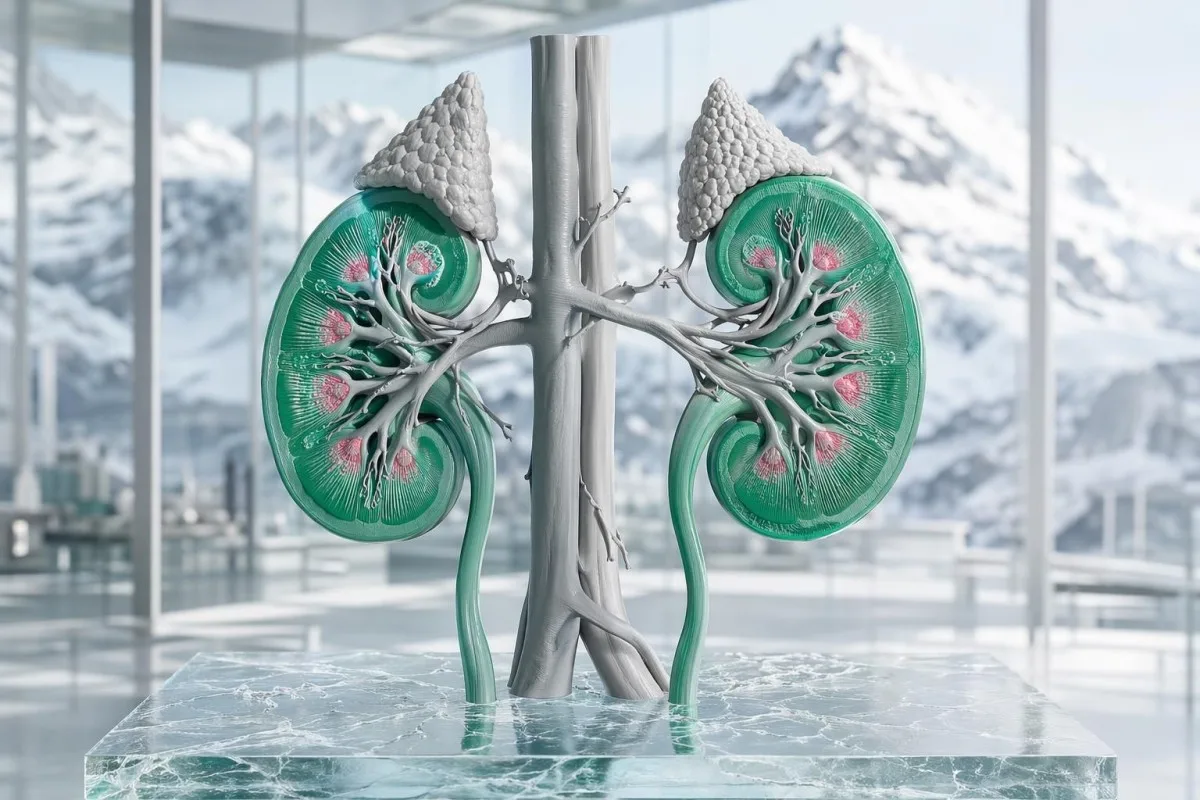
Kantesti is an AI blood test analyzer that checks whether a result is labeled BUN, blood urea nitrogen, urea, serum urea or plasma urea before applying thresholds. That mapping sounds boring, but it is clinically useful when a PDF crosses languages and lab systems.
Kantesti's neural network also looks at co-markers: creatinine, eGFR, sodium, potassium, bicarbonate, albumin, urine albumin-creatinine ratio and previous results. Our clinical validation page describes how we test interpretation consistency against physician-reviewed scenarios.
Kantesti AI does not diagnose kidney disease from urea alone. It ranks the likely explanations and flags patterns that should be reviewed, such as urea 18 mmol/L with creatinine 2.4 mg/dL or potassium 6.1 mmol/L.
For biomarker coverage, our biomarker guide lists more than 15,000 markers, including regional names and common abbreviation variants. That is the quiet infrastructure behind a result that looks simple on screen.
A safe checklist for comparing old and new kidney reports
The safe way to compare kidney reports is to standardize the name, unit and date before judging the trend. Convert urea and BUN first, then compare creatinine, eGFR and urine albumin in the same time window.
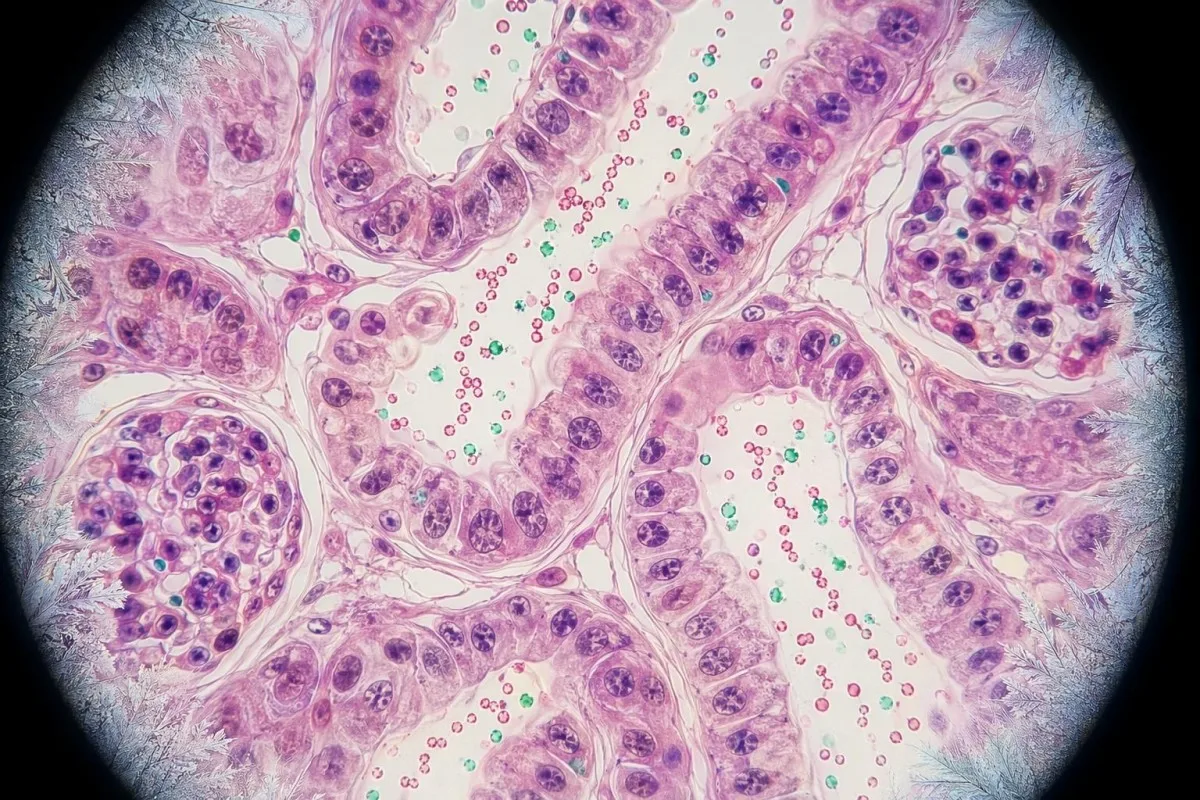
Step 1: copy the exact marker name and unit. Step 2: convert urea mmol/L to BUN mg/dL by multiplying by 2.8, or convert BUN mg/dL to urea mmol/L by multiplying by 0.357.
Step 3: write down creatinine and eGFR from the same collection date. A BUN-equivalent of 24 mg/dL with creatinine 0.8 mg/dL after poor hydration is a different decision than 24 mg/dL with creatinine 1.8 mg/dL and eGFR 42.
Step 4: check the trend rather than one value. Kantesti is an AI-powered blood test analysis tool used by 2M+ people across 127 countries, and trend analysis is often where unit errors become visible.
If you keep years of results, use a graph that preserves units and reference ranges. Our lab trend graph guide explains why slopes, sudden jumps and lab-method changes tell different stories.
My quick patient rule
If the lab name changed, assume the unit may have changed too. Convert before you worry, and ask for medical advice if the converted value is high, rising or paired with symptoms.
Medical review, research notes and next reading
This article was medically written from a physician interpretation perspective and updated for June 14, 2026. The clinical framing follows kidney guideline logic: urea is useful, but eGFR, creatinine, urine albumin and symptoms determine risk.

I’m Thomas Klein, MD, Chief Medical Officer at Kantesti AI, and our doctors review kidney-lab logic with the same caution we use for abnormal potassium, creatinine and urine albumin. Our Medical Advisory Board supports that process because small unit errors can create large clinical misunderstandings.
Kantesti medical publications include adjacent laboratory interpretation work that helps patients think about urine, iron and biomarker context beyond one isolated number. For related peer-indexed materials, see our urinalysis guide and iron studies guide.
Formal citation: Kantesti Medical Team. (2026). Urobilinogen in Urine Test: Complete Urinalysis Guide 2026. Zenodo. DOI: 10.5281/zenodo.18226379. ResearchGate: record lookup. Academia.edu: record lookup.
Formal citation: Kantesti Medical Team. (2026). Iron Studies Guide: TIBC, Iron Saturation & Binding Capacity. Zenodo. DOI: 10.5281/zenodo.18248745. ResearchGate: record lookup. Academia.edu: record lookup.
External clinical anchors used in this article include KDIGO 2024 for CKD evaluation, Levey et al. 2009 for CKD-EPI creatinine eGFR estimation and Stevens et al. 2006 for measured versus estimated GFR. Those sources do not make urea irrelevant; they explain why urea should not carry the whole kidney diagnosis alone.
Frequently Asked Questions
Is BUN the same as urea?
BUN and urea usually reflect the same waste pathway, but they are not numerically the same result. BUN reports only the nitrogen part of urea, while urea reports the whole molecule. A BUN of 14 mg/dL is approximately equal to urea of 5.0 mmol/L or urea of 30 mg/dL. Always compare the unit before comparing the number.
How do I convert urea to BUN?
To convert urea in mmol/L to BUN in mg/dL, multiply by 2.8. For example, urea 6.0 mmol/L equals about BUN 16.8 mg/dL. To convert BUN in mg/dL to urea in mmol/L, multiply by 0.357. If urea is reported in mg/dL, divide by 2.14 to get BUN in mg/dL.
Why does my lab say urea not BUN?
Your lab says urea not BUN because many countries use SI-style reporting and name the full molecule rather than the nitrogen fraction. Urea is common in the UK, Europe, Australia and many international hospital systems, while BUN is common in the United States. A urea of 5.5 mmol/L is roughly BUN 15.4 mg/dL, which is often normal. The name difference alone does not mean the lab ordered a different kidney test.
What is the normal range for BUN vs urea?
A common adult BUN reference range is about 7–20 mg/dL. A common adult urea reference range is about 2.5–7.8 mmol/L, which roughly corresponds to BUN 7–22 mg/dL. Labs may use slightly different ranges depending on analyzer method and patient population. Pregnancy, childhood and older age can shift the expected range.
Can an app misread urea as BUN?
Yes, an app can misread urea as BUN if the unit is missing or incorrectly parsed from a PDF. Urea 6.0 mmol/L is approximately BUN 16.8 mg/dL, but if it is stored as BUN 6.0 mg/dL it may look falsely low. The safest upload or manual entry includes the marker name, number, unit, reference range and date. Any graph with a sudden 2.8-fold jump or drop should be checked for unit conversion.
Is high urea always kidney failure?
High urea is not always kidney failure. Urea can rise after dehydration, high protein intake, steroid use, gastrointestinal bleeding, fever, intense exercise or reduced kidney blood flow. Kidney disease becomes more likely when high urea is paired with high creatinine, low eGFR below 60 mL/min/1.73 m², abnormal urine albumin or a rising trend. Symptoms such as confusion, vomiting or very low urine output need prompt medical review.
Which should I follow: BUN, urea, creatinine or eGFR?
For kidney risk, creatinine, eGFR and urine albumin usually carry more weight than BUN or urea alone. BUN and urea are useful clues for hydration, protein metabolism and acute illness, but they are influenced by diet and fluid status. KDIGO guidelines stage chronic kidney disease using eGFR and albuminuria, not urea alone. If results disagree, compare trends and ask a clinician to review the full renal panel.
Get AI-Powered Blood Test Analysis Today
Join over 2 million users worldwide who trust Kantesti for instant, accurate lab test analysis. Upload your blood test results and receive comprehensive interpretation of 15,000+ biomarkers in seconds.
📚 Referenced Research Publications
Klein, T., Mitchell, S., & Weber, H. (2026). Urobilinogen in Urine Test: Complete Urinalysis Guide 2026. Kantesti AI Medical Research.
Klein, T., Mitchell, S., & Weber, H. (2026). Iron Studies Guide: TIBC, Iron Saturation & Binding Capacity. Kantesti AI Medical Research.
📖 External Medical References
KDIGO CKD Work Group (2024). KDIGO 2024 Clinical Practice Guideline for the Evaluation and Management of Chronic Kidney Disease. Kidney International.
Stevens LA et al. (2006). Assessing Kidney Function — Measured and Estimated Glomerular Filtration Rate. New England Journal of Medicine.

⚕️ Medical Disclaimer
This article is for educational purposes only and does not constitute medical advice. Always consult a qualified healthcare provider for diagnosis and treatment decisions.
E-E-A-T Trust Signals
Experience
Physician-led clinical review of lab interpretation workflows.
Expertise
Laboratory medicine focus on how biomarkers behave in clinical context.
Authoritativeness
Written by Dr. Thomas Klein with review by Dr. Sarah Mitchell and Prof. Dr. Hans Weber.
Trustworthiness
Evidence-based interpretation with clear follow-up pathways to reduce alarm.