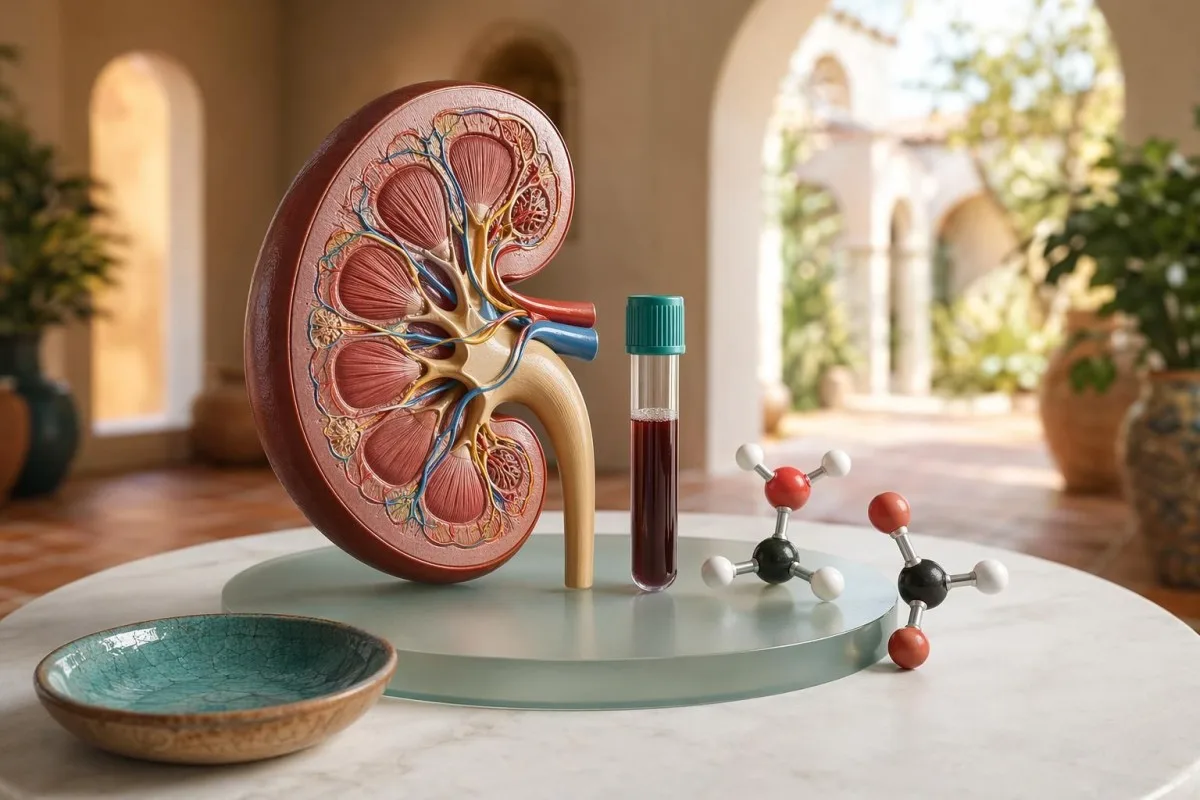
High BUN is most dangerous when it rises quickly, appears with abnormal creatinine/eGFR, or comes with symptoms such as confusion, low urine, vomiting, dark stools, or severe weakness. A mild isolated rise after poor fluid intake or a high-protein meal is often less urgent, but it still deserves a pattern-based check.



- Normal BUN is usually about 7–20 mg/dL in adults, roughly 2.5–7.1 mmol/L when expressed as urea nitrogen equivalents.
- Mild high BUN around 21–30 mg/dL often reflects dehydration, high protein intake, recent exercise, or diuretic use if creatinine is normal.
- Concerning BUN above 40–50 mg/dL deserves same-day clinical review when paired with rising creatinine, low eGFR, high potassium, or low urine output.
- Emergency BUN pattern is usually BUN above 80–100 mg/dL plus symptoms such as confusion, persistent vomiting, breathlessness, severe weakness, or very little urine.
- BUN/creatinine ratio above 20:1 can suggest dehydration or reduced kidney blood flow; a ratio above 30:1 with anemia or dark stools raises concern for upper digestive bleeding.
- High BUN symptoms are not specific: nausea, metallic taste, itching, fatigue, cramps, confusion, swelling, and reduced urine can overlap with kidney failure or dehydration.
- Blood urea nitrogen high with normal creatinine is often less alarming than high BUN with falling eGFR, potassium ≥5.5 mmol/L, or bicarbonate/CO2 below 18 mmol/L.
- Next step after an isolated high BUN is usually to review fluids, protein intake, medicines, and repeat a renal panel; do not stop prescribed medicines without a clinician.
High BUN: what should you do today?
High BUN is dangerous when the number is high, rising fast, or paired with symptoms or kidney abnormalities. If your BUN is 21–30 mg/dL and creatinine/eGFR are normal, dehydration or protein intake is common; if it is above 50 mg/dL with abnormal creatinine, low urine, confusion, vomiting, dark stools, or potassium ≥5.5 mmol/L, arrange same-day care or emergency assessment.
As of June 12, 2026, the safest way to answer is high BUN dangerous is to read BUN beside creatinine, eGFR, electrolytes, urine output, medicines, and symptoms. I am Thomas Klein, MD, and in practice I worry much more about a BUN of 38 mg/dL with rising creatinine than a one-off BUN of 26 mg/dL after a dehydrating weekend.
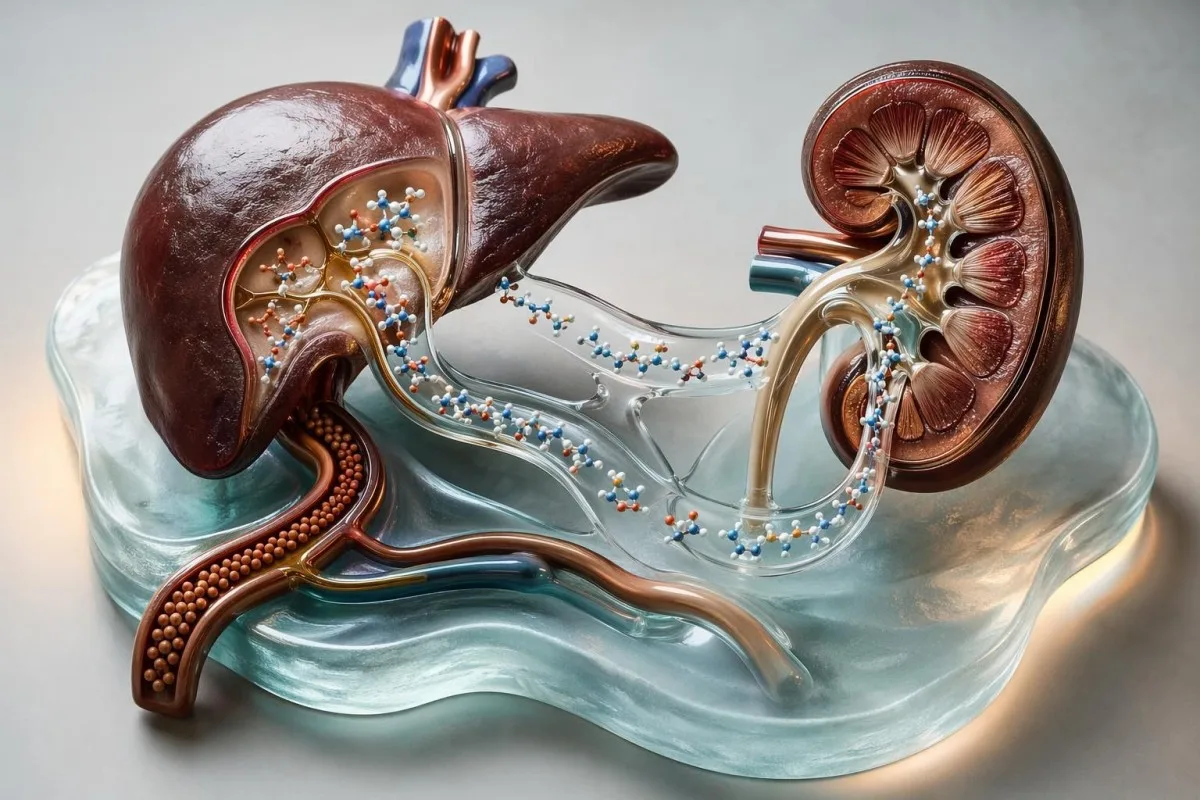
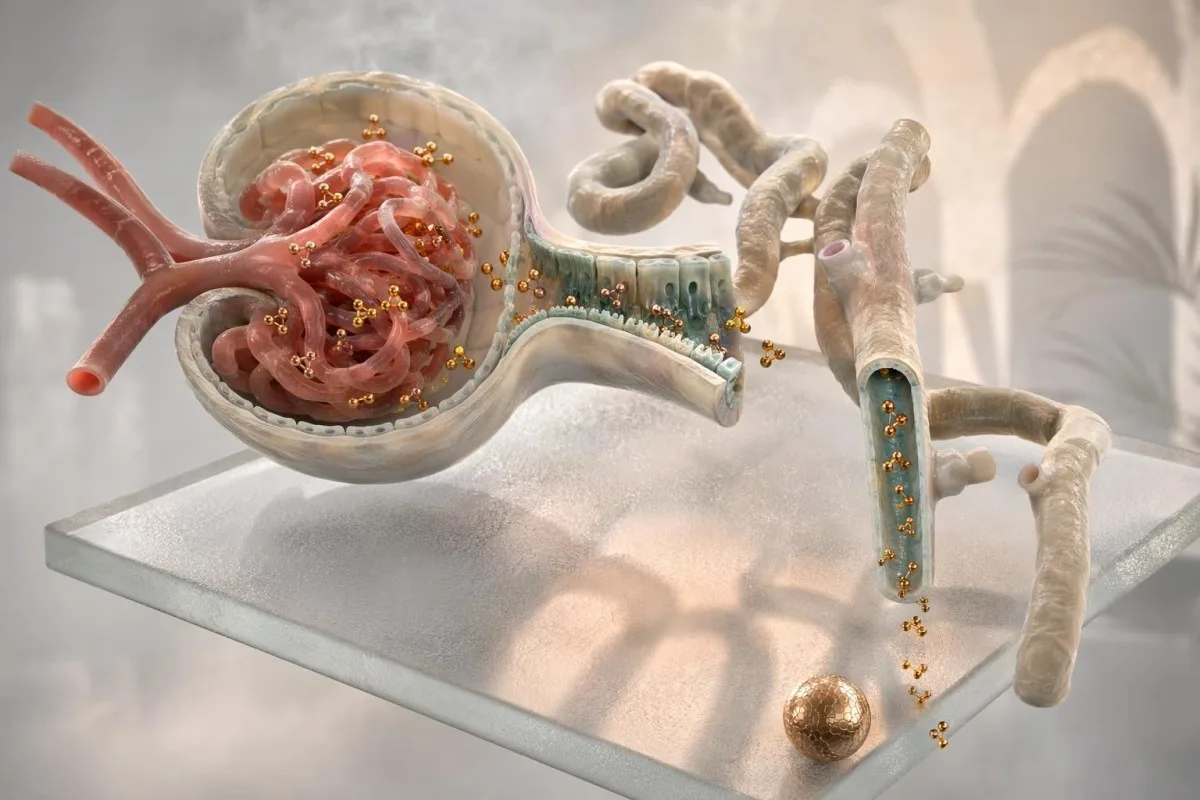
Blood urea nitrogen is the nitrogen part of urea, a waste product made when the liver breaks down protein and cleared mostly by the kidneys. If you want the plain-English foundation first, our guide to what BUN means explains why hydration and kidney blood flow can move the value quickly.
Kantesti is an AI blood test interpretation platform that reads BUN alongside creatinine, eGFR, potassium, bicarbonate/CO2, albumin, hemoglobin, and recent trends rather than treating one red flag as a diagnosis. That matters because a BUN of 32 mg/dL can be a nuisance in one person and a warning sign in another.
BUN ranges, urea units, and the ratio trap
Adult BUN is commonly reported as 7–20 mg/dL, but some countries report urea instead. A BUN of 28 mg/dL equals roughly 10 mmol/L urea, so the unit on the report changes how scary the number looks.
The usual adult BUN reference interval is about 7–20 mg/dL, although some laboratories use 6–24 mg/dL depending on method and population. Urea in mmol/L is not the same unit: divide BUN in mg/dL by about 2.8 to estimate urea mmol/L, or multiply urea mmol/L by 2.8 to estimate BUN mg/dL.
The BUN/creatinine ratio is often more revealing than BUN alone, especially when dehydration, reduced kidney blood flow, or digestive bleeding is possible. Our detailed BUN creatinine ratio guide walks through why a ratio above 20:1 often means a different problem than a ratio near 10:1.
One trap: creatinine can look deceptively normal in older adults with low muscle mass, even when kidney reserve is limited. I have seen frail patients with creatinine of 0.8 mg/dL and BUN of 46 mg/dL who were clinically dry and unwell, because the creatinine did not reflect their true filtration reserve.
When dehydration is the most likely reason
Dehydration commonly raises BUN before creatinine rises, especially when fluid intake has been low. A BUN of 22–35 mg/dL with normal creatinine, normal potassium, high urine specific gravity, and recent sweating, vomiting, diarrhoea, fasting, or diuretic use often fits a volume pattern.
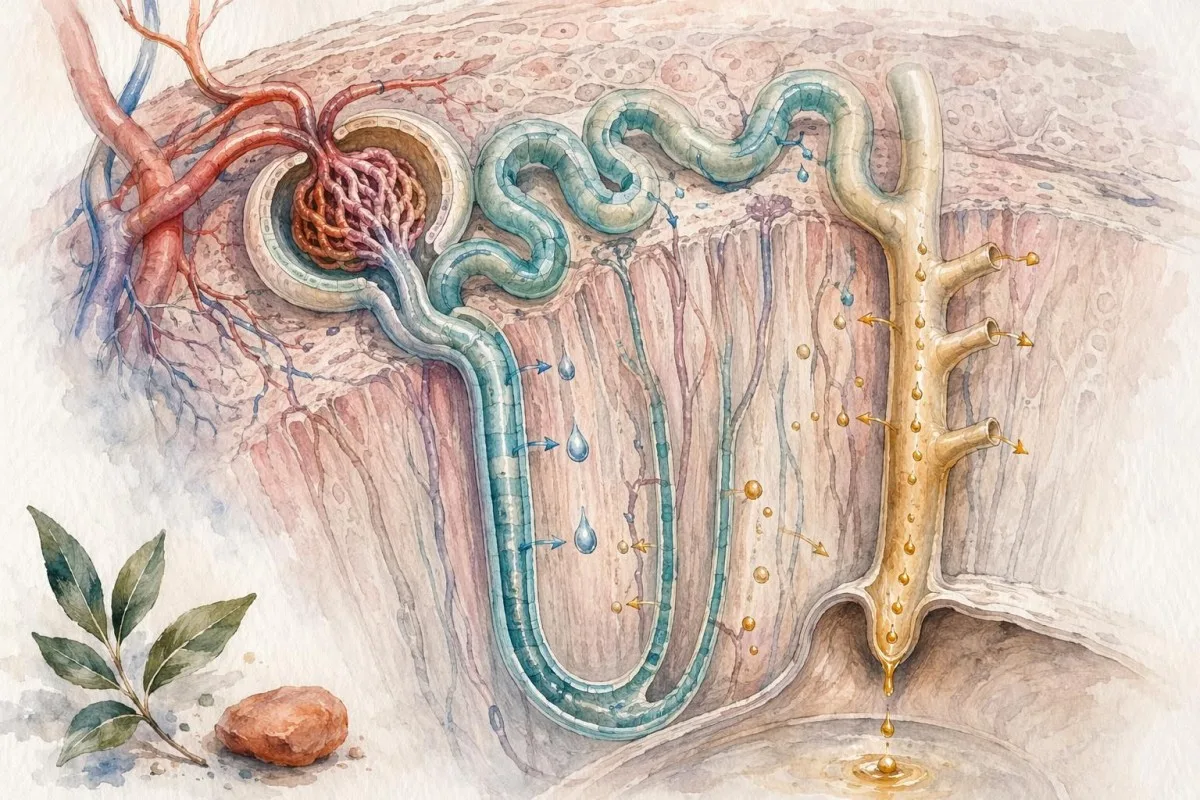
The kidney reabsorbs more urea when blood flow to the kidney is reduced, so pre-renal dehydration can lift BUN disproportionately. This is why a BUN/creatinine ratio above 20:1 often appears after heat exposure, low fluid intake, bowel prep, or a long-haul flight with little drinking.
Urine specific gravity helps here: values above about 1.020–1.030 suggest concentrated urine, although glucose, contrast dye, and some medicines can distort the reading. Our article on urine concentration explains why a high BUN plus concentrated urine is a stronger dehydration clue than either result alone.
Do not overcorrect with gallons of water in one sitting. Most stable adults with mild isolated BUN elevation can rehydrate steadily over 24–48 hours, but people with heart failure, kidney disease, low sodium, or swelling need clinician guidance because excess fluid can be harmful.
When high BUN points toward kidney stress
High BUN becomes more concerning when creatinine is also high or eGFR is falling. A BUN above 40 mg/dL with creatinine rising by 0.3 mg/dL in 48 hours, eGFR below 60 mL/min/1.73 m², potassium ≥5.5 mmol/L, or low urine output should not be written off as dehydration.
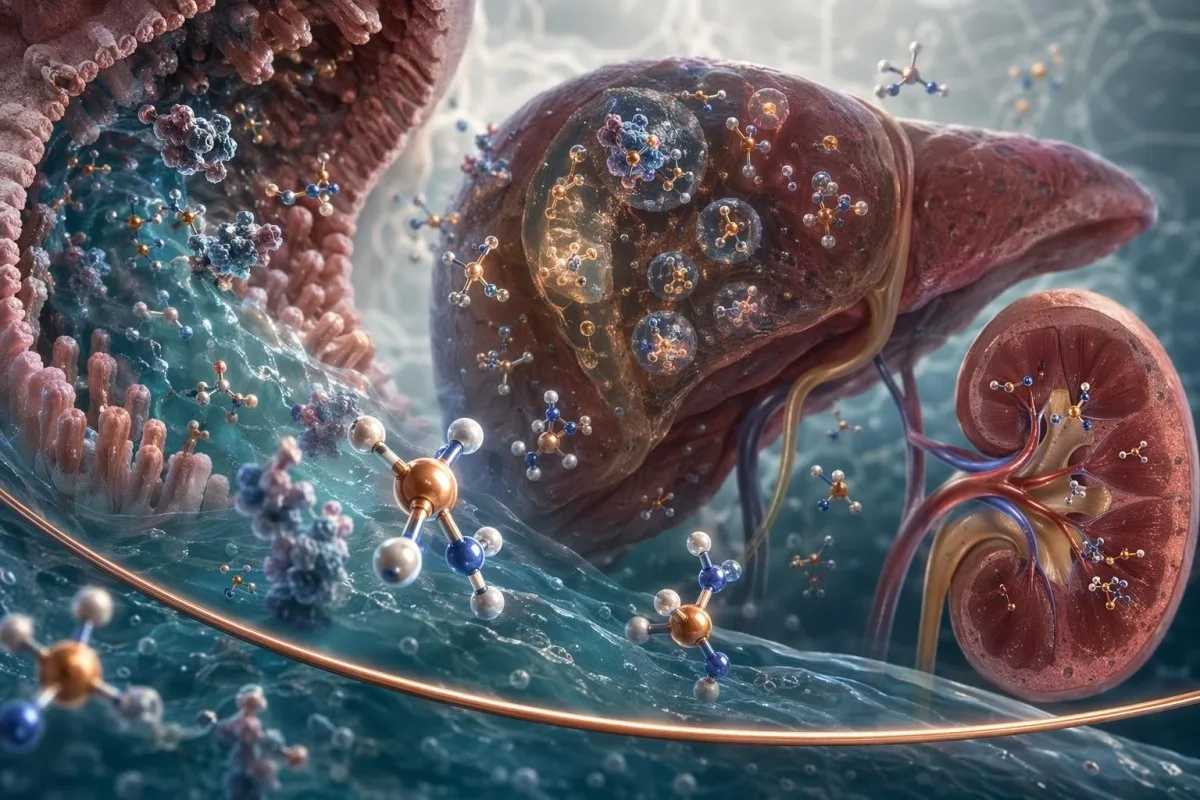
The 2024 KDIGO chronic kidney disease guideline stages CKD with eGFR and urine albumin, not BUN alone, because BUN changes with diet, fluid status, steroids, and bleeding (KDIGO CKD Work Group, 2024). Still, a rising BUN can be an early clue that the kidneys are under hemodynamic stress.
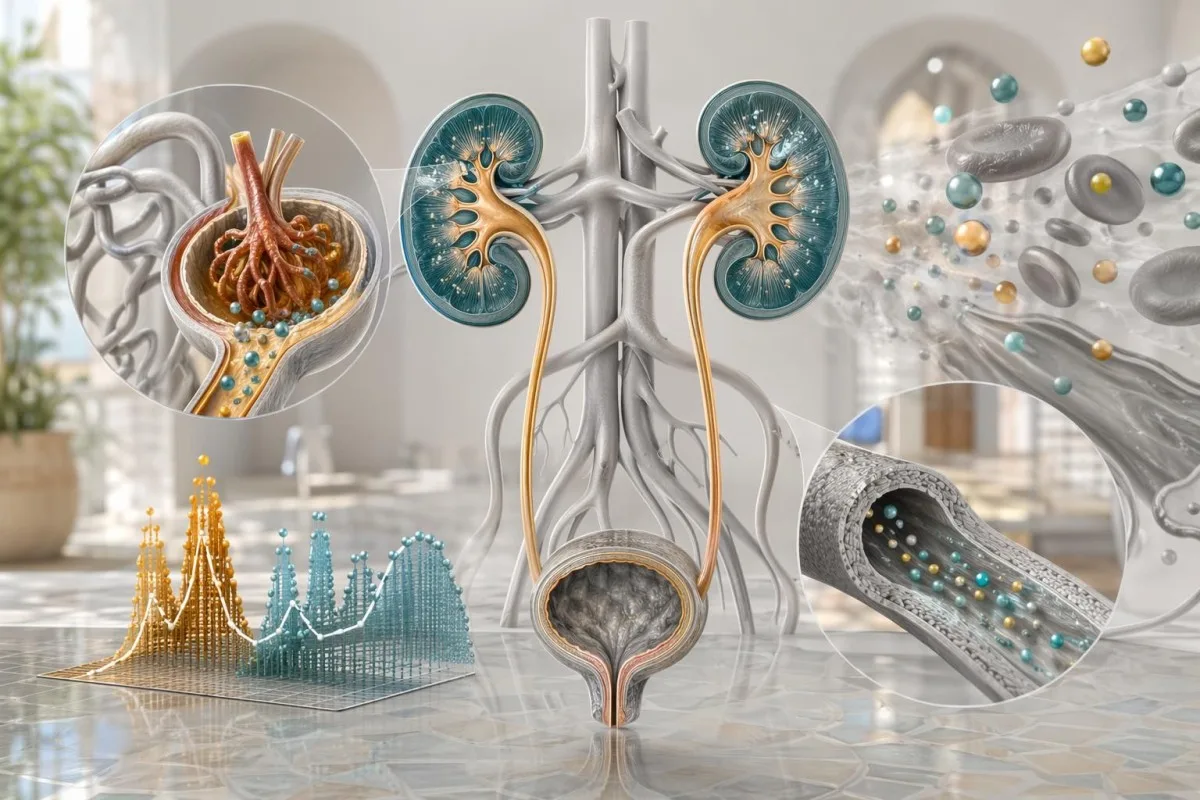
The pattern I watch closely is BUN rising together with creatinine, potassium, phosphate, and acidosis. If your report shows high BUN and high creatinine, our high creatinine guide helps separate muscle, medicines, dehydration, and true kidney filtration loss.
A urine albumin-creatinine ratio above 30 mg/g is a different kind of kidney warning than BUN; it suggests kidney filter leakage even when BUN is normal. That is one reason a renal workup may include urine ACR, urinalysis, blood pressure, medication review, and repeat eGFR rather than simply repeating BUN.
High BUN can be a hidden clue to digestive bleeding
Upper digestive bleeding can raise BUN because digested blood protein is absorbed and converted into urea. A BUN/creatinine ratio above 30:1, new low hemoglobin, black tarry stools, dizziness, or vomiting material that looks like coffee grounds needs urgent medical review.

This pattern is easy to miss because the kidney numbers may look only moderately abnormal. The 2021 American College of Gastroenterology guideline treats suspected upper gastrointestinal bleeding as time-sensitive, especially when there is fainting, low blood pressure, anemia, or ongoing black stools (Laine et al., 2021).
I have seen patients arrive with a BUN of 48 mg/dL, creatinine 0.9 mg/dL, and hemoglobin newly down by 2 g/dL; the BUN was not a kidney problem, it was a digestion-of-blood-protein clue. If your CBC also looks off, compare it with our anemia pattern guide.
Do not use stool color alone to decide safety. Iron tablets, bismuth, and some foods can darken stool, but black sticky stool plus weakness, breathlessness, rapid heartbeat, or a BUN/creatinine ratio above 30:1 is a different situation.
Medicines, protein, and catabolic states that raise BUN
Common high BUN causes include diuretics, dehydration, high protein intake, corticosteroids, tetracycline-class antibiotics, gastrointestinal bleeding, fever, and tissue breakdown. ACE inhibitors, ARBs, and NSAIDs can also change kidney blood flow, especially when combined with low fluid intake.
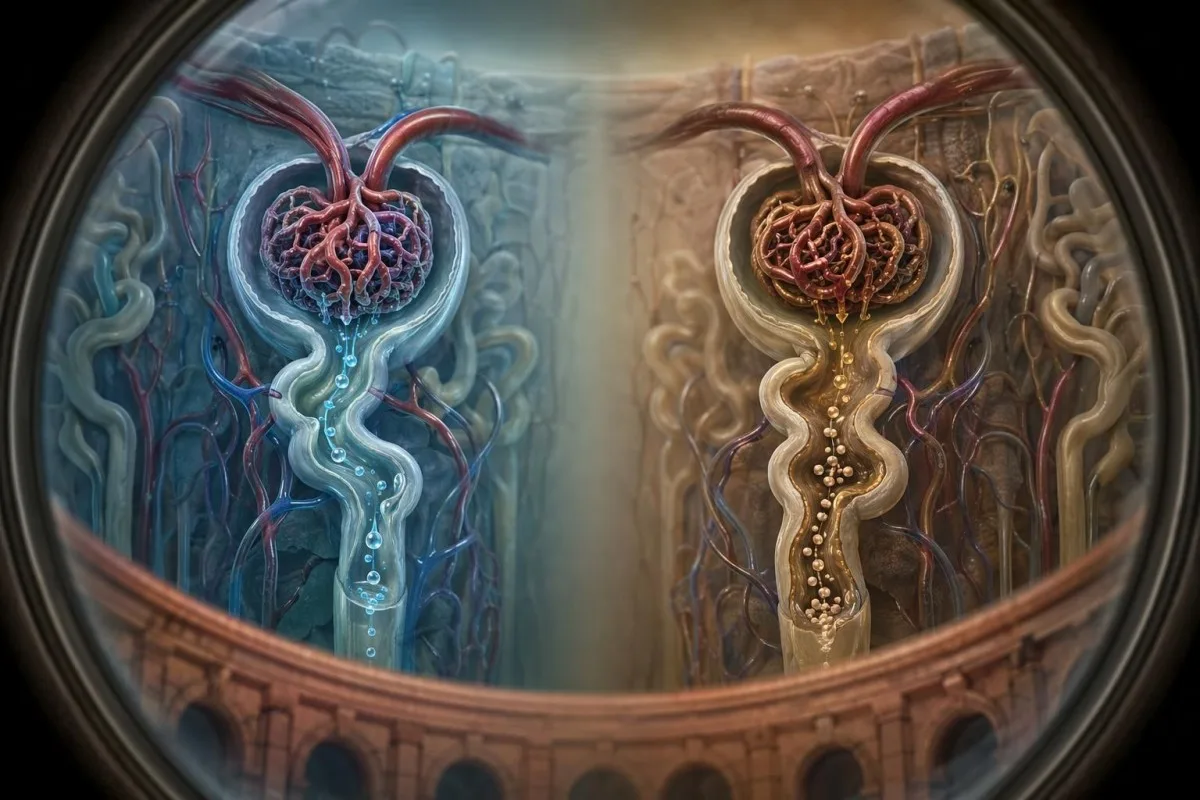
A practical medication pattern is the so-called triple hit: an ACE inhibitor or ARB, a diuretic, and an NSAID during an illness with poor drinking. That combination can reduce kidney blood flow enough to raise BUN and creatinine within 2–5 days in susceptible patients.
High protein intake can raise BUN without kidney damage, particularly above about 1.6–2.2 g/kg/day in strength athletes or during aggressive weight loss. If your BUN changed after diet changes, our medication monitoring timeline gives a useful framework for what to recheck and when.
Please do not stop blood pressure, heart, or transplant medicines because a lab app flags BUN. The safer move is to ask whether the prescriber wants a repeat renal panel, urine test, potassium check, or temporary sick-day plan during vomiting, diarrhoea, or fever.
Symptoms that change a high BUN result into an urgent problem
High BUN symptoms that need urgent attention include confusion, severe sleepiness, persistent vomiting, chest pain, breathlessness, fainting, very low urine, swelling with shortness of breath, seizures, or black stools. These symptoms can reflect kidney failure, dehydration shock, electrolyte trouble, or bleeding rather than BUN itself.

Uremic symptoms usually appear when several kidney-related toxins accumulate, not because BUN alone crosses a magical line. Nausea, metallic taste, itching, cramps, hiccups, and cognitive slowing become more concerning when BUN is above 80–100 mg/dL or when eGFR is very low.
Emergency clinicians often order a basic metabolic panel first because sodium, potassium, CO2/bicarbonate, creatinine, and glucose can reveal immediate risk. Our explainer on the ER metabolic panel covers why potassium ≥6.0 mmol/L can be more urgent than the BUN number.
One deceptively dangerous story is the older person with a BUN of 55 mg/dL, dizziness on standing, and new confusion after 3 days of poor intake. That may be reversible dehydration, but the confusion and fall risk make it a same-day assessment, not a wait-and-see result.
Urgent BUN cutoffs: when to call, repeat, or go in
There is no universal emergency BUN cutoff, but BUN above 50 mg/dL deserves careful same-day context and BUN above 80–100 mg/dL is often treated as severe azotemia when symptoms or kidney abnormalities are present. The action depends on the pattern, not the red flag alone.

KDIGO acute kidney injury criteria rely on creatinine rise and urine output, such as creatinine increasing by at least 0.3 mg/dL within 48 hours or urine output below 0.5 mL/kg/hour for 6 hours, rather than BUN alone (KDIGO AKI Work Group, 2012). That is why a BUN of 45 mg/dL can be less urgent than a smaller BUN rise with rapidly worsening creatinine.
Use the BUN number as a triage signal: 21–30 mg/dL usually means review hydration and repeat if well; 31–50 mg/dL means check creatinine, eGFR, potassium, CO2, urine, medicines, and symptoms; above 50 mg/dL needs prompt clinical interpretation. Our critical-value guide to abnormal blood results gives similar symptom-first triage logic.
If the lab calls the result critical, follow the lab or clinician instruction even if you feel okay. Some laboratories set critical urea thresholds rather than BUN thresholds, so always confirm the exact unit before comparing your result with online cutoffs.
What to repeat after an isolated high BUN
After an isolated high BUN, the usual repeat check is a renal panel plus creatinine, eGFR, electrolytes, CO2/bicarbonate, and sometimes urinalysis within days to 2 weeks. Faster repeat testing is needed if the BUN is above 40–50 mg/dL or symptoms are present.

For a well adult with BUN 24–32 mg/dL, normal creatinine, and a clear dehydration trigger, many clinicians repeat after 48 hours to 2 weeks depending on risk. Thomas Klein, MD, usually asks patients to record fluid intake, protein supplements, diuretics, NSAID use, and illness symptoms before the repeat because that history often explains the number.
A useful repeat bundle includes BUN, creatinine, eGFR, sodium, potassium, chloride, CO2/bicarbonate, calcium, albumin, urinalysis, and urine albumin-creatinine ratio if kidney risk is present. Our guide on repeating abnormal labs explains why repeating too soon after a dehydrating event can produce another misleading result.
If BUN normalizes after hydration and the rest of the panel stays stable, the episode is usually less worrisome. If BUN remains above 30–35 mg/dL or the ratio stays high without a clear reason, ask about occult blood loss, kidney perfusion, medicines, and dietary protein.
Pregnancy, children, and older adults need different judgment
BUN interpretation changes in pregnancy, childhood, and older age because normal fluid volume, muscle mass, protein turnover, and kidney filtration differ. A BUN that looks only mildly high in a younger adult can be more meaningful in a frail older person or a pregnant patient with symptoms.

Pregnancy usually lowers BUN because plasma volume and kidney filtration increase; many pregnant patients run BUN values below the non-pregnant reference range. A BUN of 24 mg/dL in late pregnancy is not automatically an emergency, but it deserves context if there is vomiting, high blood pressure, protein in urine, or reduced fetal movement.
Children have age-dependent reference ranges, and babies can shift electrolytes quickly during diarrhoea, fever, or poor feeding. If a child has high BUN plus lethargy, dry mouth, fewer wet nappies/diapers, or fast breathing, use a paediatric clinician rather than adult cutoffs; our pregnancy lab red flags shows how symptom-first triage changes in pregnancy.
Older adults are tricky because creatinine can stay low when muscle mass is low. A BUN of 42 mg/dL with creatinine 0.9 mg/dL in an 82-year-old who is dizzy may represent significant dehydration or reduced kidney reserve, even though the creatinine looks reassuring.
Athletes and high-protein diets: when BUN rises but kidneys are fine
High protein intake and intense training can raise BUN without kidney disease, especially when creatinine, eGFR, urine albumin, and electrolytes remain stable. The clue is timing: BUN often rises after protein loading, endurance events, heat exposure, or creatine/protein supplement changes.

A 90 kg athlete eating 180 g of protein daily is taking about 2 g/kg/day, enough to increase urea production even with healthy kidneys. If that same athlete trains in heat and arrives mildly dehydrated, BUN can move from 18 to 31 mg/dL while creatinine and urine albumin remain acceptable.
The pattern becomes less reassuring if urine albumin is elevated, eGFR is falling, potassium is high, or blood pressure is persistently above 130/80 mmHg. Our high protein diet labs section goes deeper into distinguishing expected urea production from kidney strain.
Most athletic BUN rises settle after 24–72 hours of normal eating, rest, and hydration. I usually prefer repeat testing after a rest day rather than the morning after a brutal long run, because creatinine kinase, AST, and BUN can all be temporarily distorted.
How Kantesti AI reads a high BUN pattern
Kantesti AI interprets high BUN by comparing the value with kidney markers, electrolytes, CBC clues, medication patterns, symptoms, and prior results. A BUN of 34 mg/dL is classified differently when eGFR is 92 versus 38 mL/min/1.73 m².
Kantesti is an AI-powered blood test analysis tool used across 127+ countries, so our system has to handle BUN in mg/dL, urea in mmol/L, and local laboratory ranges without treating every flagged result the same. The engine checks whether the report uses BUN, urea, or urea nitrogen before assigning clinical context.
Our methodology links BUN with creatinine, eGFR, potassium, CO2, sodium, albumin, hemoglobin, platelets, liver markers, and trend direction. You can read more about the underlying approach in our AI technology guide, which explains why a single biomarker rarely gets a standalone verdict.
Kantesti AI does not diagnose kidney failure or digestive bleeding from BUN alone. It flags patterns for follow-up, and our clinical governance standards are described in the medical validation materials because patient safety depends on transparent limits as much as fast interpretation.
Questions to ask your clinician before you panic
The best questions after high BUN are about pattern, trend, and cause: What is my creatinine, eGFR, potassium, CO2, urine result, BUN/creatinine ratio, hemoglobin, and medication risk? Those answers usually matter more than whether the BUN flag is one point above range.
Ask whether the BUN rise is isolated, new, or part of a trend over 3–12 months. A stable BUN of 23 mg/dL in a high-protein eater may be benign, while a climb from 14 to 33 mg/dL over 2 weeks after starting a diuretic deserves a medication review.
Ask if you should check urine albumin-creatinine ratio, urinalysis, blood pressure, and repeat renal panel. Our biomarkers guide helps patients see where BUN fits among 15,000+ markers rather than treating it like a standalone kidney verdict.
Kantesti is an AI lab test interpretation service that can organize these questions from a PDF or photo of your blood test, but the final medical decision belongs with your clinician. If you have low urine, severe weakness, confusion, black stools, or BUN above 80–100 mg/dL, the question is not whether to wait for an appointment; it is where to be assessed safely.
Bottom line: match the BUN number to the clinical pattern
High BUN is dangerous when it signals dehydration with poor perfusion, kidney injury, digestive bleeding, medication harm, or severe azotemia with symptoms. Mild isolated BUN elevation is common; high BUN plus abnormal creatinine, low eGFR, potassium ≥5.5 mmol/L, acidosis, anemia, dark stools, or low urine needs quicker action.
My practical rule is simple: do not panic over one mildly high BUN, but do not ignore a high BUN that travels with symptoms or other abnormal labs. In our analysis of millions of lab reports, the riskiest patterns are usually clusters: BUN plus creatinine, BUN plus potassium, BUN plus low hemoglobin, or BUN plus low urine output.
Kantesti is an AI biomarker interpretation platform, and our medical team reviews clinical logic where BUN can mislead because dehydration, protein intake, and lab units create false alarms. Our doctors and advisors are listed on the medical advisory board page, and that human oversight matters for YMYL kidney content.
The research publications listed below describe Kantesti’s validation framework and 2026 global health report; they are not a substitute for KDIGO or ACG clinical guidelines. If your result is worrying today, use the triage rules above first, then bring the full lab panel and symptom timeline to a clinician.
Frequently Asked Questions
Is a BUN of 25 dangerous?
A BUN of 25 mg/dL is mildly high in many adult reference ranges and is not usually dangerous by itself. It often reflects dehydration, a high-protein meal, diuretic use, or recent intense exercise when creatinine, eGFR, potassium, and urine output are normal. It becomes more concerning if it is new, rising, paired with creatinine elevation, or accompanied by vomiting, confusion, swelling, low urine, or dark stools.
What BUN level should send me to the ER?
There is no single ER cutoff for BUN, but BUN above 80–100 mg/dL is often treated as severe azotemia when symptoms or kidney abnormalities are present. Go for urgent or emergency care if high BUN comes with confusion, severe weakness, persistent vomiting, chest pain, breathlessness, fainting, seizures, very low urine, black stools, potassium ≥6.0 mmol/L, or rapidly rising creatinine. A BUN above 50 mg/dL with abnormal creatinine, eGFR, potassium, CO2, or urine output should be discussed the same day.
Can dehydration cause blood urea nitrogen high?
Yes, dehydration is one of the most common reasons for blood urea nitrogen high, especially when creatinine is normal and the BUN/creatinine ratio is above 20:1. Low fluid intake, sweating, diarrhoea, vomiting, fasting, or diuretics can reduce kidney blood flow and increase urea reabsorption. If symptoms are mild and the rest of the renal panel is normal, clinicians often repeat testing after 24–72 hours of safer hydration.
What are high BUN symptoms?
High BUN symptoms can include nausea, poor appetite, metallic taste, itching, fatigue, cramps, hiccups, sleepiness, confusion, swelling, breathlessness, and reduced urine. These symptoms are not specific to BUN and usually reflect dehydration, kidney failure, electrolyte disturbance, or another illness. Symptoms become more concerning when BUN is above 50 mg/dL, especially above 80–100 mg/dL, or when creatinine, potassium, CO2, or urine output are abnormal.
Why is my BUN high but creatinine normal?
High BUN with normal creatinine often points toward dehydration, high protein intake, upper digestive bleeding, corticosteroid use, fever, or catabolic stress rather than intrinsic kidney failure. A BUN/creatinine ratio above 20:1 supports dehydration or reduced kidney blood flow, while a ratio above 30:1 with anemia or black stools raises concern for upper digestive bleeding. In older adults with low muscle mass, creatinine can look falsely reassuring, so eGFR, urine testing, and symptoms still matter.
Does a high-protein diet raise BUN?
Yes, a high-protein diet can raise BUN because protein breakdown produces urea. Intake around 1.6–2.2 g/kg/day, common in strength training or weight-loss plans, may increase BUN even when kidneys are healthy. The result is more reassuring when creatinine, eGFR, urine albumin, potassium, blood pressure, and symptoms remain normal.
Is BUN more important than eGFR for kidney disease?
BUN is not more important than eGFR for staging chronic kidney disease. KDIGO guidelines use eGFR and urine albumin to classify CKD risk because BUN changes with hydration, protein intake, medicines, and bleeding. BUN is still useful as a context marker, especially when it rises quickly or clusters with creatinine, potassium, CO2, urine changes, or symptoms.
Can fasting before a blood test affect my BUN result?
A routine overnight fast usually does not cause a major BUN increase, but limiting fluids during fasting can concentrate the blood and raise it mildly. Unless your clinician gives different instructions, plain water is generally acceptable before many blood tests and may help avoid dehydration.
Can a simple bladder infection raise my BUN?
A straightforward bladder infection usually does not raise BUN by itself. Fever, poor fluid intake, vomiting, kidney infection, or urinary blockage can affect kidney function, so seek prompt care for flank pain, fever, or reduced urine.
Get AI-Powered Blood Test Analysis Today
Join over 2 million users worldwide who trust Kantesti for instant, accurate lab test analysis. Upload your blood test results and receive comprehensive interpretation of 15,000+ biomarkers in seconds.
📚 Referenced Research Publications
Klein, T., Mitchell, S., & Weber, H. (2026). Clinical Validation Framework v2.0 (Medical Validation Page). Kantesti AI Medical Research.
Klein, T., Mitchell, S., & Weber, H. (2026). AI Blood Test Analyzer: 2.5M Tests Analyzed | Global Health Report 2026. Kantesti AI Medical Research.
📖 External Medical References
KDIGO CKD Work Group (2024). KDIGO 2024 Clinical Practice Guideline for the Evaluation and Management of Chronic Kidney Disease. Kidney International.
KDIGO AKI Work Group (2012). KDIGO Clinical Practice Guideline for Acute Kidney Injury. Kidney International Supplements.



⚕️ Medical Disclaimer
This article is for educational purposes only and does not constitute medical advice. Always consult a qualified healthcare provider for diagnosis and treatment decisions.
E-E-A-T Trust Signals
Experience
Physician-led clinical review of lab interpretation workflows.
Expertise
Laboratory medicine focus on how biomarkers behave in clinical context.
Authoritativeness
Written by Dr. Thomas Klein with review by Dr. Sarah Mitchell and Prof. Dr. Hans Weber.
Trustworthiness
Evidence-based interpretation with clear follow-up pathways to reduce alarm.