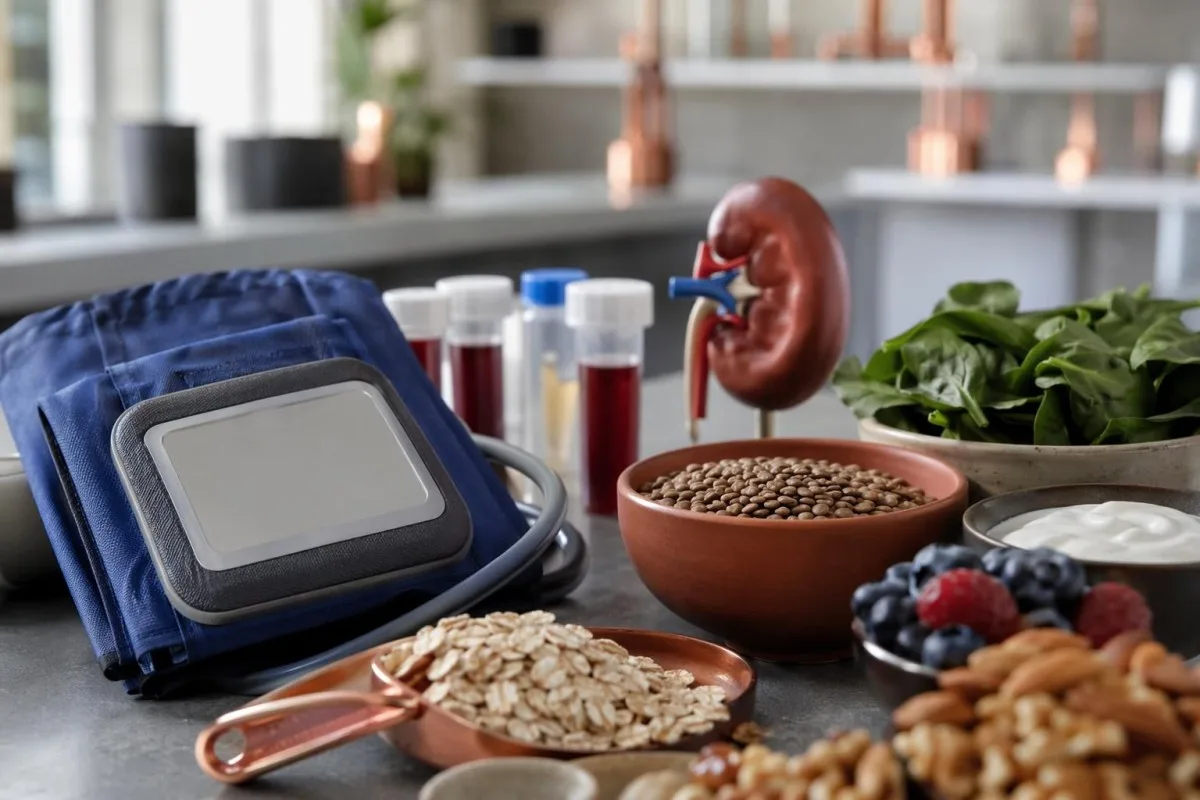
Home cuff readings matter, but labs show whether the biology behind your pressure is improving safely. The useful rechecks are sodium balance, potassium, kidney filtration, urine albumin, lipids and glucose trends.


- DASH diet labs should usually include serum sodium, potassium, creatinine/eGFR, urine albumin-creatinine ratio, fasting lipids and fasting glucose or HbA1c.
- 24-hour urine sodium is the best practical test for sodium intake; 100 mmol/day is roughly 2,300 mg of sodium.
- Serum potassium normally runs about 3.5–5.0 mmol/L; values above 5.5 mmol/L need prompt clinician review, especially with ACE inhibitors, ARBs or spironolactone.
- eGFR below 60 mL/min/1.73 m² for more than 3 months suggests chronic kidney disease, even if creatinine looks only mildly high.
- Urine ACR below 30 mg/g, or below 3 mg/mmol, is considered normal to mildly increased; persistent elevation changes blood pressure risk.
- LDL cholesterol can fall within 6–12 weeks on a lower-saturated-fat DASH pattern, but ApoB or non-HDL cholesterol may better reflect particle burden.
- HbA1c reflects roughly 8–12 weeks of glucose exposure, so it is too slow to judge a 10-day diet experiment.
- DASH diet results timeline is fastest for cuff pressure and urinary sodium, slower for lipids, and slowest for HbA1c and urine albumin trends.
Which labs confirm DASH benefits beyond cuff readings?
The most useful labs after starting the DASH diet for blood pressure are serum sodium, potassium, creatinine with eGFR, urine albumin-creatinine ratio, fasting lipid panel, fasting glucose and HbA1c. Home readings can drop within 2 weeks, but these markers show whether sodium balance, kidney strain and cardiometabolic risk are moving in the right direction.
I am Thomas Klein, MD, and in clinical practice I rarely judge a blood pressure diet from the cuff alone. A person can show a 7 mmHg systolic drop after 14 days and still have a 24-hour urine sodium of 180 mmol/day, which tells me the improvement may be weight, alcohol, sleep or measurement technique rather than true sodium reduction.
The original DASH trial lowered systolic pressure by about 5.5 mmHg overall and by roughly 11.4 mmHg in participants with hypertension (Appel et al., 1997). The DASH-Sodium trial later showed that combining DASH with lower sodium reduced pressure more than either move alone, especially in people starting above 140/90 mmHg (Sacks et al., 2001). For cuff ranges, our plain guide to blood pressure readings helps separate normal variability from a real trend.
Kantesti is an AI blood test analyzer that places DASH-related lab changes into context instead of treating each value as a lonely red flag. Our clinical standards are reviewed through medical validation, because potassium of 5.2 mmol/L means something very different in a 28-year-old athlete than in a 72-year-old on an ARB with eGFR 48.
DASH diet results timeline for blood pressure labs
The DASH diet results timeline is not one timeline: cuff pressure and urine sodium may shift in 1–2 weeks, serum potassium can change within days in higher-risk patients, lipids usually need 6–12 weeks, and HbA1c needs about 8–12 weeks. Testing too early creates noise.
As of June 6, 2026, I usually suggest a baseline panel before major diet changes, then a targeted repeat rather than a giant wellness bundle. If someone is taking lisinopril, losartan, eplerenone or spironolactone, potassium and creatinine deserve an earlier check at 1–2 weeks; if not, 6–12 weeks is often enough for lipids and glucose.
A practical schedule looks like this: urine sodium at 2–4 weeks if salt reduction is the main goal, BMP or CMP at 1–4 weeks if kidney or potassium risk exists, lipids at 8–12 weeks, and HbA1c at 12 weeks. Our article on diet lab timelines explains why cholesterol and A1c lag behind the scale.
One small trap: a dramatic first-week blood pressure drop after DASH is sometimes just less restaurant food and less fluid retention. That is still good. But a stable urine sodium drop from 170 mmol/day to 95 mmol/day gives me much more confidence that the sodium physiology has actually changed.
Sodium balance: serum sodium versus 24-hour urine sodium
Serum sodium does not measure how much salt you eat; 24-hour urine sodium is the better marker of sodium intake. Adult serum sodium is usually 135–145 mmol/L, while 24-hour urine sodium near 100 mmol/day roughly corresponds to 2,300 mg of dietary sodium.
This is where many patients get misled. A serum sodium of 140 mmol/L can appear perfectly normal in someone eating 4,000 mg of sodium daily, because the body defends blood concentration by adjusting thirst, urine volume and hormones.
A 24-hour urine sodium above 150 mmol/day, about 3,450 mg sodium, usually means the DASH salt target is not being met. A spot urine sodium can be useful for population studies, but for one patient trying to verify a new routine, the 24-hour collection is clunky yet more honest.
Low serum sodium is a different problem. If sodium is below 135 mmol/L, I think about water intake, diuretics, kidney handling, adrenal disease and medications, not whether the person sprinkled less salt on beans. Our guide to sodium blood results covers the common causes and urgent cutoffs.
Potassium safety: when DASH becomes a lab issue
DASH is naturally high in potassium, and that is usually one reason it helps blood pressure. Serum potassium should generally stay around 3.5–5.0 mmol/L; levels above 5.5 mmol/L are clinically significant, particularly in kidney disease or when using ACE inhibitors, ARBs, potassium-sparing diuretics or salt substitutes.
Most healthy kidneys handle the potassium in lentils, potatoes, yoghurt, spinach and bananas without drama. The patients I worry about are different: eGFR below 45 mL/min/1.73 m², diabetes with albuminuria, older age, dehydration, or a new prescription that slows potassium excretion.
Salt substitutes deserve special respect. Many replace sodium chloride with potassium chloride, and a generous shake can add hundreds of milligrams of potassium without tasting obviously dangerous. If potassium rises from 4.6 to 5.4 mmol/L after a diet change, I ask about these products before blaming the beans.
When blood pressure medication changes overlap with DASH, potassium should be rechecked sooner than cholesterol. Our focused guide on potassium after BP medicines explains why the 7–14 day window is common after ACE inhibitor, ARB or spironolactone adjustments.
Kidney function: creatinine, eGFR and urine ACR
Kidney follow-up after DASH should include creatinine with eGFR and, for many adults with hypertension, a urine albumin-creatinine ratio. eGFR below 60 mL/min/1.73 m² for more than 3 months suggests chronic kidney disease, while urine ACR above 30 mg/g, or 3 mg/mmol, signals kidney and vascular risk.
Creatinine can look reassuring until you compare it with body size and age. I have seen muscular patients flagged with creatinine of 1.35 mg/dL and normal measured function, and frail older adults with creatinine of 0.9 mg/dL but eGFR in the 50s.
KDIGO 2024 places CKD risk on a grid using both eGFR and albuminuria, which is why urine ACR is not an optional extra in many hypertension patients (KDIGO, 2024). ACR below 30 mg/g is low risk, 30–300 mg/g is moderately increased, and above 300 mg/g is severely increased if persistent.
A better diet can lower blood pressure before it lowers albumin leakage. If urine ACR is 80 mg/g at baseline, I usually want at least 2 repeat samples over 3–6 months before calling it a trend. For details, see our guide to urine ACR testing.
BUN and creatinine ratio during high-fiber DASH eating
BUN and the BUN-creatinine ratio help distinguish kidney strain from hydration and protein effects during DASH. Adult BUN is often about 7–20 mg/dL, and a BUN-creatinine ratio above 20:1 often points toward dehydration, high protein intake or reduced kidney perfusion rather than diet success or failure.
DASH is not a high-protein diet by design, but people often add Greek yoghurt, fish, beans and protein snacks when they cut processed food. That can nudge BUN upward even when eGFR is unchanged and blood pressure is improving.
The pattern matters. BUN of 24 mg/dL with creatinine 0.9 mg/dL after a week of sweating, less alcohol and more fiber may be simple volume contraction; BUN of 24 with creatinine rising from 1.0 to 1.5 mg/dL is a different conversation.
Some European labs report urea rather than BUN, so unit conversion can make the same result look unfamiliar. Our deeper BUN creatinine guide walks through the ratio, hydration clues and the common unit mismatch that confuses patients.
Lipids to recheck after a DASH blood pressure diet
A fasting or nonfasting lipid panel after 8–12 weeks can show whether DASH is improving heart risk beyond blood pressure. LDL cholesterol, non-HDL cholesterol and triglycerides often matter more than total cholesterol alone; ApoB is useful when triglycerides are high or metabolic risk is present.
Kantesti is an AI-powered blood test analysis tool used by people who want their lipid trends interpreted with diet, medication and baseline risk in view. A fall in LDL from 142 to 128 mg/dL is modest; the same change in a 45-year-old with diabetes and albuminuria carries more weight than in a low-risk 25-year-old.
DASH tends to lower saturated fat when it replaces processed meats, butter-heavy meals and refined snacks with legumes, low-fat dairy, nuts and whole grains. In practice, I expect LDL to move more when the patient changes the fat source, not just the salt shaker.
If triglycerides are above 200 mg/dL, calculated LDL becomes less satisfying and non-HDL cholesterol or ApoB may tell the story better. Our guide to the lipid panel explains what each fraction measures and when fasting still adds value.
Glucose, insulin and HbA1c trends after DASH
DASH can improve glucose risk, but the right marker depends on timing. Fasting glucose can change within days, fasting insulin and HOMA-IR may shift over weeks, and HbA1c mainly reflects the previous 8–12 weeks of glucose exposure.
A fasting glucose below 100 mg/dL is generally normal, 100–125 mg/dL suggests prediabetes, and 126 mg/dL or higher on repeat testing supports diabetes diagnosis. If someone cuts sweet drinks and late-night snacks, fasting glucose may improve before their HbA1c budges.
Insulin is trickier because reference ranges vary and fasting time matters. In our reviews, a fasting insulin that drops from 18 to 10 µIU/mL with stable glucose often signals better insulin sensitivity, even if both numbers remain inside broad lab reference intervals.
HbA1c below 5.7% is generally normal, 5.7–6.4% suggests prediabetes, and 6.5% or higher meets the diabetes cutoff when confirmed. For the mismatch between insulin resistance and apparently normal A1c, our HOMA-IR guide gives a more granular view.
Uric acid: a quiet DASH marker many people miss
Uric acid can improve on DASH, especially when the diet replaces sugary drinks, alcohol-heavy routines and processed meats. Adult uric acid is often about 3.5–7.2 mg/dL in men and 2.6–6.0 mg/dL in women, though lab ranges differ.
I do not order uric acid for every person with hypertension. I do consider it when there is gout, kidney stone history, high triglycerides, metabolic syndrome or a baseline uric acid above 7 mg/dL.
DASH may lower uric acid by roughly 0.3 mg/dL on average, and sometimes closer to 1 mg/dL in people starting high. That is not a gout treatment by itself, but it can reduce the biochemical pressure behind future flares.
Do not celebrate a uric acid of 5.8 mg/dL if the patient just stopped a diuretic without medical advice. Medication changes can move this marker quickly. Our uric acid explainer on gout risk ranges gives the diet, kidney and medicine context.
Magnesium, calcium and bicarbonate in the DASH pattern
Magnesium, calcium and bicarbonate are not DASH scorecards, but they help explain cramps, weakness, arrhythmia symptoms and acid-base changes during diet shifts. Serum magnesium is commonly about 1.7–2.2 mg/dL, total calcium about 8.6–10.2 mg/dL, and CO2 bicarbonate about 22–29 mmol/L.
A DASH pattern supplies magnesium from legumes, nuts, greens and whole grains, yet serum magnesium may barely move because most magnesium sits inside cells and bone. A normal serum value can coexist with low intake, diarrhoea losses or diuretic-related depletion.
Calcium interpretation needs albumin. Total calcium of 8.4 mg/dL may be normal after correction if albumin is low, while ionized calcium is the cleaner test when symptoms or parathyroid disease are in the picture.
Bicarbonate below 22 mmol/L can reflect kidney acid handling, diarrhea, some diabetes medicines or a lab handling issue. If muscle twitching or palpitations appear after diet or diuretic changes, our magnesium blood test article is a useful next read.
Inflammation and vascular risk markers that add context
hs-CRP and urine albumin are context markers, not direct proof that DASH is working. hs-CRP below 1 mg/L is often considered lower cardiovascular inflammatory risk, 1–3 mg/L average risk, and above 3 mg/L higher risk when no acute infection or injury is present.
Kantesti is an AI biomarker interpretation platform that treats hs-CRP differently if the same report shows high neutrophils, recent vaccination notes or a rising urine ACR. A CRP of 4.2 mg/L after a respiratory illness is not the same as 4.2 mg/L repeated three times over 6 months.
DASH may reduce inflammatory tone indirectly through weight loss, better glycemia, less saturated fat and more plant fiber. But the evidence here is honestly mixed, so I avoid promising that hs-CRP will fall just because a person eats more lentils.
If hs-CRP is above 10 mg/L, I usually think beyond vascular prevention and look for infection, autoimmune activity, injury or another inflammatory driver. Our guide to CRP versus hs-CRP explains why the exact assay name changes interpretation.
How to build a practical DASH lab panel
A practical DASH follow-up panel is usually smaller than people expect: BMP or CMP, fasting lipid panel, HbA1c or fasting glucose, urine ACR, and 24-hour urine sodium when sodium adherence is uncertain. Add insulin, ApoB, uric acid or magnesium only when the clinical story supports them.
The baseline panel should answer three questions: is the diet safe, is cardiovascular risk improving, and is kidney pressure easing? For many adults that means sodium, potassium, chloride, CO2, BUN, creatinine/eGFR, calcium, albumin, lipids and glucose markers.
Our biomarker guide maps thousands of markers, but more testing is not automatically better. I would rather have a clean baseline and a well-timed 12-week repeat than 40 exotic markers collected after poor sleep, dehydration and a hard workout.
Kantesti AI interprets diet-related lab changes by comparing patterns across electrolytes, kidney filtration, lipids and glucose rather than ranking isolated highs and lows. For readers curious about how the model reads uploaded reports, the technology guide explains the workflow without turning your lab result into a black box.
Medications and supplements that change recheck timing
Medication context can make DASH lab monitoring urgent rather than routine. ACE inhibitors, ARBs, mineralocorticoid antagonists, loop or thiazide diuretics, NSAIDs, lithium and potassium supplements can all change potassium, sodium, creatinine or uric acid within days to weeks.
A 58-year-old patient once proudly replaced salt with a potassium-based substitute while taking losartan and spironolactone. His blood pressure improved, but potassium returned at 5.8 mmol/L; the diet was not wrong, the combination was unsafe without monitoring.
Thiazide diuretics can lower potassium and raise uric acid, while spironolactone can raise potassium and lower blood pressure beautifully. NSAIDs can reduce kidney blood flow, so creatinine may rise when dehydration, DASH changes and pain medication all collide.
If you start, stop or change blood pressure medicine, do not use a generic diet timeline. Our medication monitoring timeline shows why the first recheck is often 1–2 weeks for electrolytes and kidney function, not 3 months.
Turn DASH lab results into a trend, not a verdict
One lab report cannot prove that DASH has succeeded; a trend across 2–3 time points is far more reliable. The best pattern is falling home pressure, lower urine sodium, stable potassium, stable or improved eGFR, lower urine ACR when elevated, and improving lipids or glucose over 8–12 weeks.
When Thomas Klein, MD reviews DASH follow-up, I look first for contradictions. Blood pressure down with creatinine up 30% is not a simple victory; LDL down with triglycerides up after more fruit juice is not the same as broad metabolic improvement.
Kantesti medical reviewers and our medical advisory board push for pattern-based interpretation because patients act on these reports. If you want the company context behind that editorial standard, our About Us page describes the clinical and engineering team behind the work.
Kantesti LTD. (2026). Clinical Validation Framework v2.0. Zenodo. DOI: 10.5281/zenodo.17993721. ResearchGate: publication search. Academia.edu: publication search.
Kantesti LTD. (2026). AI Blood Test Analyzer: 2.5M Tests Analyzed | Global Health Report 2026. Zenodo. DOI: 10.5281/zenodo.18175532. ResearchGate: publication search. Academia.edu: publication search.
Frequently Asked Questions
What labs should I recheck after starting the DASH diet?
After starting the DASH diet, the most useful recheck labs are serum sodium, potassium, creatinine with eGFR, urine albumin-creatinine ratio, fasting lipid panel, fasting glucose and HbA1c. If salt reduction is the main goal, a 24-hour urine sodium at 2–4 weeks can show whether sodium intake really fell. If you take ACE inhibitors, ARBs, spironolactone or have kidney disease, potassium and creatinine may need repeat testing within 1–2 weeks.
How soon does the DASH diet lower blood pressure?
The DASH diet can lower blood pressure within about 2 weeks in many adults, although the size of the drop varies. In the original DASH trial, systolic pressure fell by about 5.5 mmHg overall and by about 11.4 mmHg in participants with hypertension. Lipids and HbA1c move more slowly, so a normal 10-day lab panel does not prove the diet failed.
Does normal serum sodium mean I am eating the right amount of salt?
Normal serum sodium does not mean your sodium intake is low. Serum sodium is usually 135–145 mmol/L because the body regulates blood concentration through thirst, urine output and hormones. A 24-hour urine sodium is the better test for salt intake; 100 mmol/day is roughly equal to 2,300 mg of sodium.
Can the DASH diet make potassium too high?
The DASH diet can contribute to high potassium in people with kidney disease or those taking ACE inhibitors, ARBs, spironolactone, eplerenone, potassium supplements or potassium-based salt substitutes. Serum potassium is usually about 3.5–5.0 mmol/L. A result above 5.5 mmol/L should be reviewed promptly, and a result around 6.0 mmol/L or higher may need same-day assessment.
Which kidney test matters most for blood pressure risk?
For blood pressure risk, creatinine with eGFR and urine albumin-creatinine ratio should be interpreted together. eGFR below 60 mL/min/1.73 m² for more than 3 months suggests chronic kidney disease, while urine ACR above 30 mg/g or 3 mg/mmol suggests kidney and vascular stress. A normal creatinine alone can miss early albumin leakage.
When should I recheck cholesterol after starting DASH?
Cholesterol is usually worth rechecking about 8–12 weeks after starting a consistent DASH pattern. LDL cholesterol may fall when DASH replaces saturated fat and refined foods, but non-HDL cholesterol or ApoB may better reflect risk if triglycerides are above 200 mg/dL. Testing after only 1–2 weeks often captures random variation rather than a stable lipid response.
Can DASH improve blood sugar labs?
DASH can improve blood sugar labs when it reduces refined carbohydrates, excess calories and late-night snacking. Fasting glucose may change within days to weeks, while HbA1c reflects about 8–12 weeks of glucose exposure. HbA1c below 5.7% is generally normal, 5.7–6.4% suggests prediabetes, and 6.5% or higher supports diabetes diagnosis when confirmed.
What should I do if I feel dizzy as my blood pressure improves on DASH?
Sit or lie down, and contact your prescriber if dizziness recurs or readings are unusually low; your medication dose may need review. Do not stop blood pressure medicines on your own, and seek urgent care for fainting, chest pain or severe shortness of breath.
Can exercise or a urinary infection temporarily raise my urine albumin-creatinine ratio?
Yes. Hard exercise, fever, dehydration, urinary tract infection, and a high blood-pressure episode can temporarily increase urine albumin. If the result is elevated, your clinician may repeat a first-morning urine sample after you have recovered and avoided strenuous exercise for 24 hours.
Do I need to fast before my DASH follow-up lab panel?
Ask the lab or clinician because the order matters. Electrolytes, creatinine/eGFR, and urine ACR do not require fasting, but fasting for 8–12 hours may be requested when triglycerides or fasting glucose are being compared.
Get AI-Powered Blood Test Analysis Today
Join over 2 million users worldwide who trust Kantesti for instant, accurate lab test analysis. Upload your blood test results and receive comprehensive interpretation of 15,000+ biomarkers in seconds.
📚 Referenced Research Publications
Klein, T., Mitchell, S., & Weber, H. (2026). Kantesti LTD. (2026). Clinical Validation Framework v2.0. Zenodo.. Kantesti AI Medical Research.
Klein, T., Mitchell, S., & Weber, H. (2026). Kantesti LTD. (2026). AI Blood Test Analyzer: 2.5M Tests Analyzed | Global Health Report 2026. Zenodo.. Kantesti AI Medical Research.
📖 External Medical References
KDIGO Work Group (2024). KDIGO 2024 Clinical Practice Guideline for the Evaluation and Management of Chronic Kidney Disease. Kidney International.
⚕️ Medical Disclaimer
This article is for educational purposes only and does not constitute medical advice. Always consult a qualified healthcare provider for diagnosis and treatment decisions.
E-E-A-T Trust Signals
Experience
Physician-led clinical review of lab interpretation workflows.
Expertise
Laboratory medicine focus on how biomarkers behave in clinical context.
Authoritativeness
Written by Dr. Thomas Klein with review by Dr. Sarah Mitchell and Prof. Dr. Hans Weber.
Trustworthiness
Evidence-based interpretation with clear follow-up pathways to reduce alarm.