
Hormone panel results explained means reading the whole report by timing, medicines, symptoms, and hormone clusters rather than reacting to one red flag. A single high or low value can be harmless if the sample was drawn at the wrong hour, wrong cycle day, or soon after a medication change.



- Timing changes hormone blood test results: testosterone is usually checked before 10 am, cortisol around 8 am, and progesterone about 7 days after ovulation.
- TSH and free T4 should be read together; TSH around 0.4-4.0 mIU/L with normal free T4 often means a different story than an isolated TSH flag.
- Progesterone above 3 ng/mL in the mid-luteal phase usually confirms ovulation, but the best test day depends on actual ovulation date.
- Total testosterone below 300 ng/dL in adult men should usually be repeated on a separate morning before diagnosing deficiency.
- Estradiol may range from roughly 20-750 pg/mL across the menstrual cycle, so cycle day matters more than the lab flag alone.
- Prolactin above 25 ng/mL in nonpregnant women or 20 ng/mL in men deserves context from stress, sleep, medicines, and thyroid status.
- Biotin at 5-10 mg daily can distort several immunoassay hormone tests, especially thyroid results, for 48-72 hours in some patients.
- Hormone clusters such as high LH plus high testosterone plus insulin resistance suggest a different pathway than a single abnormal LH result.
Why one flagged hormone rarely explains the whole panel
A hormone panel is best interpreted as a pattern, not a verdict from one abnormal result. Kantesti is an AI blood test analyzer that reads hormone blood test results alongside age, sex, timing, medications, and neighboring biomarkers, because a red flag at 9 pm can mean something very different from the same flag at 8 am.
I am Thomas Klein, MD, and in clinical practice I see this weekly: a patient arrives worried about one bolded hormone value, yet the real clue sits two lines away. A TSH of 4.6 mIU/L with normal free T4, negative antibodies, and no symptoms is not the same problem as TSH 4.6 mIU/L with falling free T4 and rising TPO antibodies.
Reference intervals are statistical, not moral judgments. Many labs set the central 95% of a tested population as normal, which means about 1 in 20 healthy people can have a flagged result by design; our biomarker guide explains why this happens across thousands of markers.
The practical question is not only high or low. I ask: Was the sample taken at the right time, is the hormone biologically linked to the other results, and does the patient’s story fit? If the answer is no, a repeat test in 2-8 weeks is often safer than a new diagnosis.
How timing changes hormone blood test results
Timing can change hormone blood test results enough to create a false abnormal pattern. Cortisol, testosterone, LH, FSH, estradiol, and progesterone all vary by clock time, menstrual cycle day, sleep, shift work, and recent illness.

Morning total testosterone is often 20-40% higher than late-afternoon testosterone in younger men. That is why most clinicians prefer a draw before 10 am, especially when checking possible hypogonadism.
Progesterone is the classic trap. A result of 1.2 ng/mL may look low on cycle day 14, but if ovulation happened on day 20, the correct mid-luteal test might be day 27; patients tracking irregular cycles should read our guide to lab variability before assuming the hormone failed.
Cortisol has one of the steepest daily slopes in routine endocrine testing. A typical 8 am serum cortisol may sit around 5-25 µg/dL, while an evening value should be much lower; comparing those two without the collection time is basically comparing two different tests.
What thyroid hormone clusters tell doctors
Thyroid panels are read by pairing TSH with free T4, free T3, antibodies, and medication timing. A typical adult TSH reference interval is about 0.4-4.0 mIU/L, but the same TSH value can mean compensation, recovery, pregnancy physiology, or early thyroid disease.
A high TSH with low free T4 suggests primary hypothyroidism; a low TSH with high free T4 suggests hyperthyroidism. A high TSH with normal free T4 is often called subclinical hypothyroidism, and treatment decisions are more individualized when TSH is between 4.5 and 10 mIU/L.
The American Thyroid Association guideline by Jonklaas et al. notes that levothyroxine dosing is monitored mainly with TSH in most primary hypothyroidism cases, although pituitary disease changes that rule (Jonklaas et al., 2014). Patients who want a deeper marker-by-marker breakdown can compare their report with our thyroid panel guide.
Kantesti AI flags thyroid patterns differently when biotin use, pregnancy, lithium, amiodarone, or recent dose changes appear in the history. Biotin at 5-10 mg daily can make some immunoassay thyroid results look falsely hyperthyroid, which is why our clinical review checks for supplement timing before calling a TSH pattern real.
How doctors read female hormone panel results
Female hormone panel results are interpreted against cycle day, ovulation timing, contraception use, and age. Estradiol can range from roughly 20-150 pg/mL in the early follicular phase, rise much higher near ovulation, and fall again after menopause.
A day-3 FSH of 6 IU/L and estradiol of 45 pg/mL may fit a normal early follicular pattern. A day-3 FSH of 16 IU/L, especially with estradiol already above 80 pg/mL, can suggest reduced ovarian reserve, though clinicians disagree on exact cutoffs.
Progesterone above 3 ng/mL about 7 days after ovulation usually confirms ovulation; many fertility clinics prefer values above 10 ng/mL in natural cycles, but the evidence here is honestly mixed. Our estradiol range guide shows why fixed reference ranges can mislead across the same month.
A patient once sent me a progesterone of 0.8 ng/mL labeled low on day 21. Her ovulation app later showed ovulation on day 22, and her repeat value 7 days later was 14.6 ng/mL; that is a timing error, not luteal failure. For this exact reason, mid-luteal testing should follow ovulation, not the calendar.
How doctors read male hormone panel results
Male hormone panel results require total testosterone, free testosterone or calculated free testosterone, SHBG, LH, and sometimes prolactin. A total testosterone below 300 ng/dL should usually be confirmed with a second morning test before diagnosing testosterone deficiency.

The Endocrine Society guideline by Bhasin et al. recommends diagnosing hypogonadism only when symptoms and consistently low morning testosterone are both present (Bhasin et al., 2018). In practice, that means one tired week and one 4 pm testosterone of 286 ng/dL should not trigger lifelong therapy.
SHBG is the quiet variable patients rarely notice. Obesity, insulin resistance, hypothyroidism, and androgen use can lower SHBG, while aging, liver disease, hyperthyroidism, and some anticonvulsants can raise it; our free testosterone guide explains why total and free values can disagree.
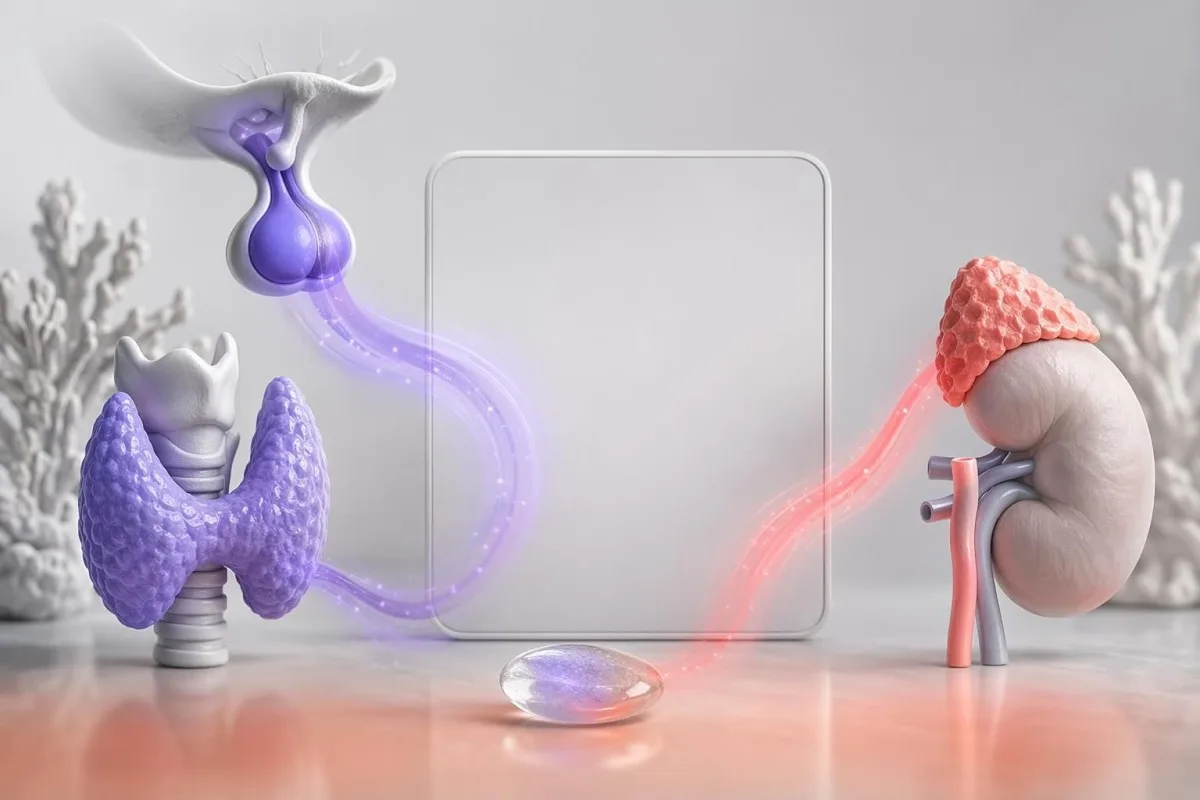
LH separates testicular signaling problems from brain signaling problems. Low testosterone with high LH suggests primary gonadal failure, while low testosterone with low or normal LH suggests central suppression from sleep loss, opioids, anabolic steroids, severe illness, or pituitary disease.
What cortisol and adrenal clusters can show
Cortisol results are meaningful only when the collection time and test type are known. An 8 am serum cortisol around 5-25 µg/dL is commonly seen in adults, but a random daytime cortisol cannot diagnose or exclude Cushing syndrome or adrenal insufficiency.
Kantesti is an AI lab test interpretation service that treats cortisol as a time-stamped marker, not a standalone stress score. A high morning cortisol after night-shift work, prednisone withdrawal, or acute infection has a different meaning from high late-night salivary cortisol on repeated samples.
Doctors look for clusters: cortisol with ACTH, sodium, potassium, glucose, eosinophils, blood pressure, and steroid history. Low morning cortisol with low sodium and high potassium is more concerning than low cortisol alone; our cortisol timing guide explains why the same number can be reassuring or unsafe.
I am cautious with commercial single-point cortisol panels. In my experience, they often amplify anxiety in patients with insomnia, because poor sleep can shift cortisol rhythm without proving adrenal disease. Repeated late-night salivary cortisol, 24-hour urinary free cortisol, or an overnight dexamethasone suppression test may be needed when symptoms truly fit.
Why prolactin needs stress and medicine context
Prolactin is commonly elevated by stress, sleep, sex, exercise, chest wall stimulation, hypothyroidism, pregnancy, and several medicines. Many labs flag prolactin above about 25 ng/mL in nonpregnant women or 20 ng/mL in men, but mild elevations often need a calm repeat test.
A prolactin of 34 ng/mL drawn after a difficult sample collection is not the same as 180 ng/mL on two relaxed morning samples. Antipsychotics, metoclopramide, some antidepressants, opioids, verapamil, and estrogen therapy can all raise prolactin through dopamine pathway effects.
The pattern matters: high prolactin plus low libido, low testosterone, irregular periods, or headaches pushes the work-up further. High prolactin plus high TSH may point back to hypothyroidism, because thyrotropin-releasing hormone can stimulate prolactin release.
Before imaging is considered, many clinicians repeat fasting morning prolactin after 20-30 minutes of rest and ask the lab about macroprolactin. Patients comparing wider endocrine panels can use our guide to hormonal imbalance labs to see which neighboring markers make prolactin more or less concerning.
What PCOS patterns look like on hormone reports
PCOS patterns usually involve clinical symptoms plus androgen and metabolic clues, not one isolated LH or testosterone result. High free testosterone, low SHBG, irregular ovulation, and insulin resistance carry more diagnostic weight than a simple LH-to-FSH ratio.
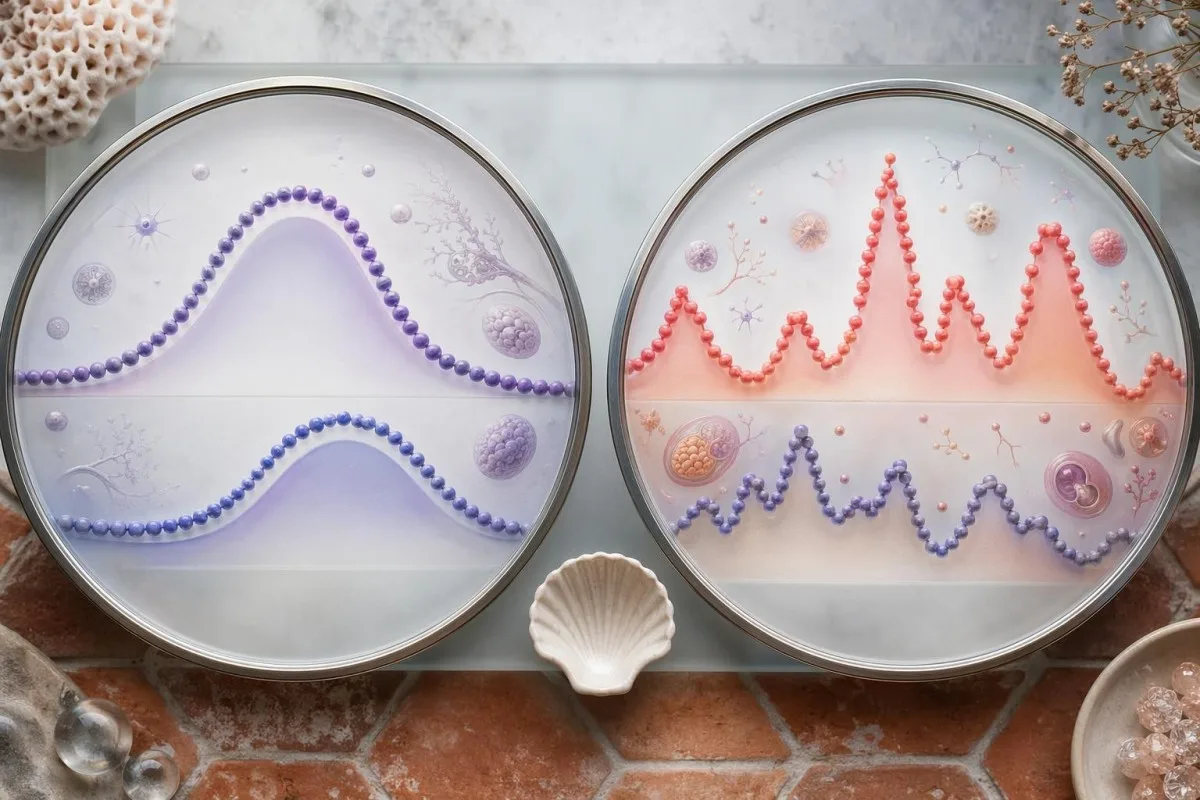
The 2023 international PCOS guideline led by Teede et al. emphasizes diagnostic criteria that combine ovulatory dysfunction, clinical or biochemical hyperandrogenism, and ovarian morphology or AMH in selected settings (Teede et al., 2023). An LH:FSH ratio above 2 can occur in PCOS, but it is not required and is not reliable enough alone.
In hormone blood test results, the useful cluster is often free testosterone high, SHBG low, fasting insulin high, triglycerides high, and HbA1c drifting upward. A fasting insulin above 15-20 µIU/mL may suggest insulin resistance in the right context, even when HbA1c is still 5.3%.
Kantesti AI interprets PCOS-style reports by checking whether androgen results line up with metabolic markers and symptoms. Our PCOS blood test guide goes deeper into why normal total testosterone can coexist with high free testosterone when SHBG is suppressed.
Why perimenopause makes panels look inconsistent
Perimenopause can make hormone panel results swing widely from month to month. FSH may be 8 IU/L one cycle and 38 IU/L the next, because ovarian signaling becomes intermittent before periods stop completely.

Postmenopause is often supported by FSH persistently above about 25-30 IU/L with low estradiol, but there is no universal cutoff that fits every lab and every patient. In perimenopause, a normal FSH does not rule out hot flushes, sleep disruption, or cycle shortening caused by changing ovarian reserve.
I see a common mistake: testing estradiol once, finding 210 pg/mL, and being told hormones are fine. Estradiol can spike during perimenopause, sometimes higher than expected, then crash weeks later; symptoms often track the swings more than the average value.
Doctors also watch non-hormone markers during this transition, including LDL cholesterol, ApoB, HbA1c, ferritin, and TSH. Our perimenopause blood test guide explains why a hormone panel without cardiometabolic context can miss the risk shift after 40.
How fertility hormone panels are patterned
Fertility hormone panels are usually read in timed clusters: day-2 to day-4 FSH, LH, estradiol, AMH, TSH, prolactin, and mid-luteal progesterone. AMH reflects follicle pool signal, while progesterone confirms whether ovulation likely happened that cycle.
AMH is age-dependent and assay-dependent, so a single universal normal range is risky. As a rough clinical pattern, AMH below 1.0 ng/mL may suggest reduced ovarian reserve, while AMH above 4-5 ng/mL can appear in PCOS, but both need age and ultrasound context.
Day-3 estradiol matters because a high early estradiol can artificially suppress FSH and make ovarian reserve look better than it is. This is one of those areas where context matters more than the number, and patients should avoid comparing AMH values across different assay platforms without checking units.
Fertility panels should include both partners early, not after 12 months of guesswork. Our women’s health guide covers ovulation and menopause patterns, but semen analysis and male hormones can be just as decisive in couple-level infertility work-ups.
Which medicines and supplements distort hormone results
Medicines and supplements can shift hormone results through true physiology or assay interference. Biotin, steroids, oral contraceptives, thyroid medicine, testosterone therapy, opioids, dopamine blockers, and anti-seizure medicines are among the most common culprits.

Biotin is the sneaky one. Doses of 5-10 mg, common in hair and nail supplements, can interfere with some thyroid, reproductive hormone, and cardiac immunoassays; many clinicians ask patients to stop it for 48-72 hours before testing, but the exact pause depends on dose and lab method.
Oral contraceptives usually raise SHBG and suppress LH and FSH, so female hormone panel results may not represent natural cycle physiology while taking them. Testosterone therapy suppresses LH and FSH as expected, which is not a pituitary failure pattern if the patient is actively using testosterone.
Our platform checks medication timelines because a result drawn 10 days after starting prednisone or 6 weeks after changing levothyroxine can be transitional. The same logic appears in our medication monitoring guide, where lab timing is often the difference between action and watchful waiting.
When repeat testing beats immediate action
Repeat testing is often the safest next step when a hormone result is mildly abnormal, poorly timed, or inconsistent with symptoms. Many endocrine decisions require two comparable results, drawn under similar conditions, before treatment is started.
For low testosterone, two separate morning values are preferred because sleep, illness, calories, and training load can swing levels. For thyroid medicine changes, TSH often needs about 6 weeks to settle after a levothyroxine dose adjustment.
Kantesti’s neural network compares current and previous reports so a borderline hormone is treated differently if it has drifted for 18 months rather than appeared once. A TSH rising from 1.7 to 2.9 to 4.8 mIU/L tells a more useful story than a one-off TSH of 4.8.
Use the same lab when possible, or at least check units and assay method. A patient changing from nmol/L to ng/dL for testosterone may think the result has exploded; our lab trend graph guide shows how slopes and units prevent that kind of panic.
Which hormone patterns need faster follow-up
Most hormone flags are not emergencies, but certain clusters need faster medical review. Severe cortisol abnormalities with low sodium, very high prolactin with neurological symptoms, thyroid storm symptoms, or abnormal calcium-PTH patterns should not wait months.
Call urgent care or emergency services for severe weakness, confusion, fainting, chest pain, new severe headache with vision changes, or dehydration with vomiting. A sodium below 125 mmol/L with suspected adrenal insufficiency is a very different situation from a mildly high DHEA-S on a wellness panel.
Very high prolactin, especially above 100-200 ng/mL, deserves clinician review if paired with headaches, vision symptoms, absent periods, or low testosterone. A calcium above 11.5 mg/dL with high or inappropriately normal PTH also needs a prompt plan, because kidney stones, rhythm issues, and bone loss can follow.
When the result is frightening but the symptoms are stable, a second opinion can help separate urgent patterns from noise. Our blood test second opinion article explains when another clinician review is more useful than repeating every hormone on the sheet.
How Kantesti explains hormone panels safely
Kantesti explains hormone panels by combining flagged values with timing, units, medications, symptoms, and related biomarker clusters. Kantesti is an AI biomarker interpretation platform designed to make hormone blood test results understandable while still encouraging medical care for diagnosis and treatment decisions.

Our AI does not diagnose from a screenshot. It identifies patterns such as high TSH plus low free T4, low testosterone plus low LH, or high androgen markers plus insulin resistance, then explains what those clusters commonly suggest and what to discuss with a clinician.
Kantesti Ltd is a UK company, and our clinical governance is described on About Us. Readers who want the technical side can review our technology guide, which explains how structured lab extraction, unit normalization, and context checks work before an interpretation is shown.
As Thomas Klein, MD, I care most about reducing the two common harms: ignoring a dangerous cluster and overreacting to a harmless flag. Our clinical validation process and medical advisory board are there for that reason: hormone reports should become clearer, not scarier.
Frequently Asked Questions
What is the best way to understand hormone panel results?
The best way to understand hormone panel results is to read hormone clusters with timing, symptoms, medicines, and units. Testosterone is usually best checked before 10 am, cortisol near 8 am or with a specific late-night test, and progesterone about 7 days after ovulation. A single flagged value can be misleading if the sample was drawn at the wrong time or during illness. Mild abnormalities are often repeated in 2-8 weeks before a diagnosis is made.
Why are my female hormone panel results different each month?
Female hormone panel results can change each month because estradiol, LH, FSH, and progesterone naturally rise and fall across the cycle. Estradiol may be around 20-150 pg/mL early in the cycle and much higher near ovulation, while progesterone should rise after ovulation. Perimenopause can exaggerate these swings, with FSH sometimes moving from normal to menopausal-range in different cycles. The test date should be matched to cycle day or ovulation date before the result is judged.
What male hormone panel results suggest low testosterone?
Low testosterone is usually considered when morning total testosterone is repeatedly below about 300 ng/dL and symptoms are present. Doctors also check SHBG, free testosterone, LH, FSH, and prolactin to identify whether the pattern is primary gonadal failure, central suppression, medication effect, obesity-related SHBG change, or another cause. One afternoon testosterone result is not enough for diagnosis. Sleep loss, acute illness, calorie restriction, opioids, and anabolic steroid use can all lower results.
Can medications change hormone blood test results?
Yes, medications and supplements can change hormone blood test results through real biological effects or assay interference. Biotin at 5-10 mg daily can distort some immunoassay results for thyroid and other hormones, often requiring a 48-72 hour pause if the clinician agrees. Oral contraceptives can raise SHBG and suppress LH and FSH, while prednisone can suppress adrenal-axis markers. Always list prescriptions, supplements, and recent dose changes when reviewing a hormone panel.
When should abnormal hormone results be repeated?
Abnormal hormone results should usually be repeated when the abnormality is mild, the timing was wrong, or the result does not match symptoms. TSH is often rechecked after about 6 weeks when thyroid medication changes, and low testosterone is commonly confirmed with a second morning sample. Prolactin is often repeated after rest because stress can raise it. Urgent symptoms such as confusion, fainting, severe headache, vision changes, or sodium below 125 mmol/L need faster clinical review.
Are AI explanations of hormone panels safe to use?
AI explanations can be useful when they show context, limitations, and follow-up questions rather than giving a diagnosis. A safe interpretation should account for timing, cycle day, medicines, pregnancy status, units, and related biomarkers such as glucose, SHBG, sodium, calcium, and thyroid antibodies. AI should not replace a clinician when results are severe, symptoms are concerning, or treatment is being considered. For hormone panels, the safest use is preparation for a better medical conversation.
Get AI-Powered Blood Test Analysis Today
Join over 2 million users worldwide who trust Kantesti for instant, accurate lab test analysis. Upload your blood test results and receive comprehensive interpretation of 15,000+ biomarkers in seconds.
📚 Referenced Research Publications
Klein, T., Mitchell, S., & Weber, H. (2026). Urobilinogen in Urine Test: Complete Urinalysis Guide 2026. Kantesti AI Medical Research.
Klein, T., Mitchell, S., & Weber, H. (2026). Iron Studies Guide: TIBC, Iron Saturation & Binding Capacity. Kantesti AI Medical Research.
📖 External Medical References




⚕️ Medical Disclaimer
This article is for educational purposes only and does not constitute medical advice. Always consult a qualified healthcare provider for diagnosis and treatment decisions.
E-E-A-T Trust Signals
Experience
Physician-led clinical review of lab interpretation workflows.
Expertise
Laboratory medicine focus on how biomarkers behave in clinical context.
Authoritativeness
Written by Dr. Thomas Klein with review by Dr. Sarah Mitchell and Prof. Dr. Hans Weber.
Trustworthiness
Evidence-based interpretation with clear follow-up pathways to reduce alarm.