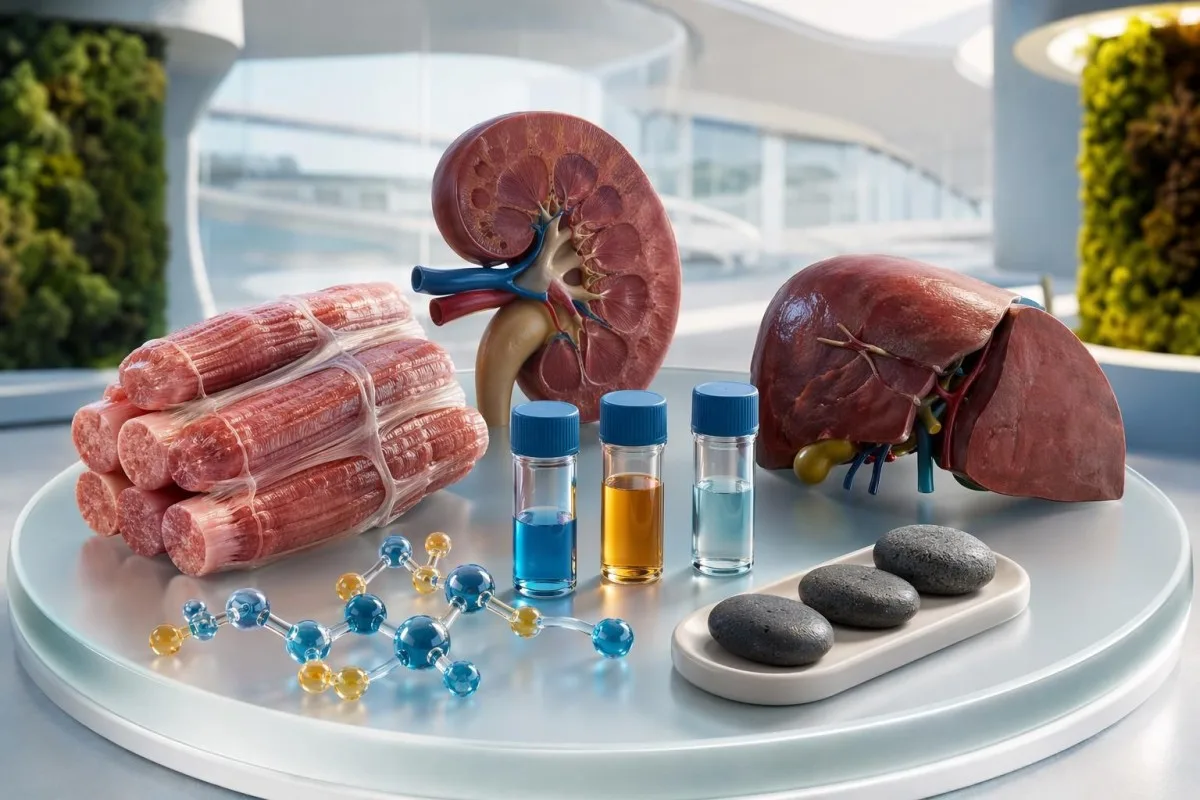
A practical, physician-written lab checklist for lifters who train hard and want to know which results are normal adaptation, which are supplement effects, and which deserve medical follow-up.


- Core panel for serious lifters should include CBC, CMP, CK, cystatin C, urine ACR, lipids with ApoB, HbA1c, fasting insulin, thyroid, testosterone markers, ferritin, vitamin D, magnesium, and hs-CRP.
- Creatine kinase can rise 5- to 30-fold after heavy eccentric training, but CK above 5000 U/L with dark urine or weakness needs same-day medical review.
- Kidney checks should not rely on creatinine alone because high muscle mass and creatine can raise creatinine without true kidney injury.
- Urine ACR below 30 mg/g is generally normal; persistent ACR of 30 mg/g or higher suggests kidney stress even when eGFR looks fine.
- Liver enzymes AST and ALT can rise from muscle damage, while GGT and bilirubin patterns help separate training effects from liver or bile duct stress.
- ApoB is often more useful than LDL-C alone in enhanced or high-calorie bulking phases; ApoB of 130 mg/dL or higher is a risk-enhancing result in AHA/ACC guidance.
- Hormone testing should use morning samples, ideally before 10 a.m.; low testosterone should be repeated before labeling a lifter hypogonadal.
- Hematocrit above 54% is a safety threshold that warrants prompt clinician review, especially with testosterone use, sleep apnea, smoking, or dehydration.
- Retest timing matters: avoid hard training for 48-72 hours before safety labs unless your clinician specifically wants post-training stress data.
The core blood test checklist for serious lifters
A blood test for bodybuilders should include CBC, CMP, CK, creatinine with cystatin C, urine ACR, lipids with ApoB, HbA1c or fasting insulin, thyroid markers, testosterone with SHBG, LH, FSH, estradiol, ferritin, vitamin D, magnesium, and hs-CRP. I use this checklist because it separates muscle adaptation from kidney strain, liver stress, cardiovascular risk, and hormone suppression.
As Thomas Klein, MD, I have reviewed lifter panels where a single red flag looked scary until the training log explained it. A 28-year-old who trained legs 18 hours before testing may show CK above 3000 U/L and AST near 90 U/L, while his GGT, bilirubin, urine ACR, and symptoms are completely calm.
The first pass is pattern recognition, not panic. Our blood test for bodybuilders workflow looks at the combination of timing, symptoms, supplements, and prior baselines rather than treating one high number as a diagnosis.
Bodybuilding blood work is most useful when it is paired with a training note: last heavy session, creatine dose in grams, caffeine use, sleep, illness, and whether the draw was fasted. For a broader athlete-focused checklist, I often point readers to our guide on athlete recovery labs.
Muscle breakdown markers: CK, AST, LDH and myoglobin
Creatine kinase, AST, LDH, and myoglobin are the main muscle breakdown markers in lifters. CK is the most training-sensitive marker; values can rise 5- to 30-fold after eccentric lifting, while CK above 5000 U/L with dark urine, severe weakness, or dehydration should be treated as possible rhabdomyolysis.
A typical adult male CK reference range is roughly 39-308 U/L, but muscular athletes often sit above the printed lab range without disease. The clinical clue is change: CK of 700 U/L in a well-adapted powerlifter may be routine, while CK of 7000 U/L after a new high-volume squat block is a different conversation.
AST is present in muscle as well as liver, so AST can rise after training even when the liver is fine. When AST is high but ALT is only mildly raised and GGT is normal, I check the training window before ordering a liver panic panel; our explainer on exercise-shifted lab values walks through that exact pattern.
Myoglobin is cleared quickly and may be missed if testing happens late. If urine becomes cola-colored, output drops, or muscle pain feels disproportionate, do not wait 72 hours for a cleaner baseline; same-day assessment is safer.
Kidney strain versus high muscle mass
Kidney strain in weightlifters is best checked with creatinine, cystatin C, eGFR, BUN, electrolytes, and urine albumin-creatinine ratio. Creatinine alone can overcall kidney disease in muscular people because creatinine production rises with muscle mass and creatine intake.
Creatinine of 1.3 mg/dL may be normal for a 105 kg bodybuilder, but it can be concerning in a 55 kg sedentary person. KDIGO 2024 emphasizes interpreting kidney risk with both eGFR and albuminuria categories, and persistent urine ACR of 30 mg/g or higher is a kidney damage marker even when eGFR remains above 90 mL/min/1.73 m².
Cystatin C is less dependent on muscle mass than creatinine, so it is useful when creatinine looks high in a muscular lifter. I often request it when eGFR by creatinine is 55-75 mL/min/1.73 m² but the person has no hypertension, no diabetes, and a clean urinalysis; our guide to cystatin C rechecks explains when that second estimate helps.
BUN rises with high protein intake, dehydration, and gastrointestinal bleeding, so it is not a kidney diagnosis by itself. A BUN of 28 mg/dL after 250 g protein and poor fluids is different from BUN 28 mg/dL with rising creatinine, potassium 5.8 mmol/L, and ankle swelling.
Urine ACR is the quiet test many lifters skip. ACR below 30 mg/g is generally normal, 30-300 mg/g is moderately increased, and above 300 mg/g is severely increased; repeat testing matters because a brutal session or fever can transiently raise it.
Liver stress or training enzyme spill?
Liver safety in bodybuilders is assessed with ALT, AST, GGT, ALP, bilirubin, albumin, and INR. AST and ALT can rise after lifting, but GGT, bilirubin, ALP, albumin and INR help distinguish muscle enzyme spill from true hepatobiliary stress.
ALT is more liver-enriched than AST, but neither is perfectly liver-specific. ALT normal ranges often run around 7-56 U/L and AST around 10-40 U/L, yet I have seen AST 120 U/L after deadlifts with normal GGT, normal bilirubin, and CK above 4000 U/L.
The pattern that bothers me is not AST 75 U/L alone. I worry more when ALT stays above 100 U/L for more than 2-4 weeks, GGT exceeds about 60 U/L in an adult male, bilirubin rises above 1.2 mg/dL without Gilbert syndrome, or INR is prolonged; our deep dive on AST muscle versus liver shows why one enzyme rarely tells the full story.
Oral anabolic agents, heavy alcohol use, acetaminophen, some antifungals, and concentrated green tea extracts can all move liver labs. The uncomfortable truth is that several supplement labels are incomplete, so a clean-looking product can still produce a cholestatic pattern with high ALP and GGT.
If ALT and AST are high, repeat after 5-7 days without heavy training, alcohol, or new supplements unless symptoms are present. Jaundice, right upper quadrant pain, confusion, vomiting, or INR elevation is not a wait-and-see situation.
Lipids and ApoB: the safety panel lifters underestimate
The lipid safety panel for bodybuilders should include LDL-C, HDL-C, triglycerides, non-HDL-C, ApoB, and Lp(a) at least once. This matters because bulking diets, anabolic exposure, low body fat phases, sleep apnea, and genetics can produce high-risk lipid patterns even in very lean people.
LDL-C below 100 mg/dL is often considered optimal for lower-risk adults, but risk targets tighten when family history, diabetes, hypertension, or high Lp(a) is present. The 2019 AHA/ACC cholesterol guideline lists ApoB of 130 mg/dL or higher as a risk-enhancing factor, particularly when triglycerides are 200 mg/dL or higher (Grundy et al., 2019).
I see two lifter patterns often: very low HDL after androgen exposure, and high LDL-C during aggressive high-saturated-fat bulks. A triglyceride-to-HDL ratio above about 3.0 in mg/dL units often suggests insulin resistance, though it is not a diagnostic test; our ApoB interpretation guide is more useful when LDL-C and risk do not seem to match.
Lp(a) is mostly inherited and should be checked once in adulthood. A level above 50 mg/dL, or above 125 nmol/L depending on the assay, raises lifetime atherosclerotic risk even when the person looks metabolically perfect.
Do not assume cardio fitness cancels particle burden. Coronary artery disease still occurs in strength athletes, and the risk is usually cumulative over years rather than visible in a single prep season.
Hormone patterns: testosterone, SHBG, LH, FSH and estradiol
A hormone panel for male bodybuilders should include total testosterone, free testosterone or calculated free testosterone, SHBG, LH, FSH, estradiol, prolactin, TSH, and free T4. These labs show whether a low testosterone result is primary, secondary, thyroid-related, medication-related, or simply mistimed.
Morning testosterone is the rule because levels are highest early in the day. Bhasin et al. and the Endocrine Society recommend diagnosing hypogonadism only when symptoms are present and low testosterone is confirmed on repeat morning testing, not from one afternoon result after poor sleep (Bhasin et al., 2018).
Total testosterone can mislead when SHBG is high or low. SHBG often falls with insulin resistance and obesity, while it can rise with hyperthyroidism, liver disease, and calorie restriction; our testosterone test preparation guide covers why a 7 a.m. fasted draw is cleaner than a random 4 p.m. result.
LH and FSH are the compass. Low testosterone with high LH suggests primary testicular failure, while low testosterone with low or normal LH suggests pituitary suppression, recent anabolic exposure, severe energy deficit, opioids, sleep apnea, or systemic illness.
Estradiol in adult males is often roughly 10-40 pg/mL, but assays vary and symptoms do not track perfectly. I am cautious about treating a number alone because joint pain, libido, mood, and fluid retention can move in opposite directions between individuals.
If anabolic agents were used: the lab red flags
If a lifter uses or has used anabolic agents, the highest-yield safety labs are CBC with hematocrit, lipids with ApoB, liver panel, blood pressure, kidney markers, estradiol, testosterone, LH, FSH, and PSA when age-appropriate. The goal is harm detection, not moral judgment.
Hematocrit above 54% is a widely used safety threshold that deserves prompt clinician review. A hematocrit of 52% after dehydration is one issue; 56% with headaches, high blood pressure, snoring, and testosterone exposure is a much more concerning pattern.
The lipid shift can be fast. HDL-C may drop below 40 mg/dL and LDL-C may climb within weeks of androgen exposure, which is why I prefer ApoB and non-HDL-C rather than HDL alone; our guide on hematocrit levels explains why red cell concentration changes the risk conversation.
LH and FSH often fall during exogenous androgen exposure because the pituitary is suppressed. After stopping, recovery is variable: some men normalize in 3-6 months, while others have prolonged low LH, low FSH, low testosterone, infertility concerns, or mood symptoms.
PSA is not a bodybuilding marker, but it matters in men with age or prostate risk factors. Ejaculation, cycling, prostatitis, urinary symptoms, and testing timing can all move PSA, so interpretation should be calm and structured.
Recovery labs: inflammation, ferritin, CBC and cortisol clues
Recovery-focused blood work should include CBC with differential, ferritin, iron saturation, hs-CRP, ESR, morning cortisol when clinically indicated, vitamin D, B12, folate, and thyroid markers. These labs do not prove overtraining, but they can reveal inflammation, iron depletion, immune suppression, or under-fueling.
hs-CRP below 1 mg/L is often considered low cardiovascular inflammation, 1-3 mg/L intermediate, and above 3 mg/L higher risk when infection and injury are excluded. After a hard training block, CRP can rise transiently, so I do not interpret a single 6 mg/L result without asking about illness, DOMS, dental infections, and sleep.
Ferritin is tricky because it stores iron but also rises as an acute-phase reactant. A male lifter with ferritin 25 ng/mL and normal hemoglobin may still have early iron depletion, while ferritin 350 ng/mL after illness can be inflammation rather than iron overload; our CRP versus hs-CRP guide helps separate assay types.
CBC patterns can reveal more than anemia. Low neutrophils, low lymphocytes, or platelets drifting down across 2-3 tests may point toward viral recovery, medication effects, low energy availability, or, rarely, marrow problems.
Cortisol testing is overused in fitness circles. A morning cortisol around 5-25 mcg/dL is common in many labs, but the real diagnostic value comes when symptoms suggest adrenal disease, steroid withdrawal, or pituitary problems.
Supplement safety: creatine, protein, vitamins and minerals
Supplement safety labs for lifters should include creatinine with cystatin C, BUN, electrolytes, ALT, AST, GGT, calcium, magnesium, ferritin, B12, folate, 25-OH vitamin D, and sometimes zinc or copper. The dose, product quality, and baseline labs matter more than the marketing claim.
Creatine monohydrate at 3-5 g/day is well studied, but it can raise serum creatinine because creatinine is a breakdown product of creatine. That does not automatically mean kidney damage, which is why cystatin C and urine ACR are useful in muscular users.
High protein diets can push BUN upward without kidney disease. A bodybuilder eating 2.2 g/kg/day protein may show BUN in the mid-20s mg/dL, but I worry more when BUN rises with low eGFR, high potassium, or albuminuria; our creatine and lab guide explains the creatinine trap in detail.
Vitamin D deficiency is usually defined as 25-OH vitamin D below 20 ng/mL, while many clinicians aim for 30-50 ng/mL. Levels above 100 ng/mL raise concern for toxicity risk, especially if calcium is high or kidney stones occur.
Zinc and copper deserve paired thinking. Chronic high-dose zinc, such as 50 mg/day for months, can lower copper and contribute to anemia, neutropenia, or neurologic symptoms; I see this more often than most gym forums admit.
Glucose and insulin: bulking, cutting and hidden resistance
Metabolic labs for bodybuilders should include fasting glucose, HbA1c, fasting insulin, triglycerides, HDL-C, ALT, waist measures, and sometimes HOMA-IR or CGM data. Lean appearance does not exclude insulin resistance, especially during high-calorie bulking or poor sleep.
Fasting glucose is normal at 70-99 mg/dL, prediabetes begins at 100-125 mg/dL, and diabetes is suggested at 126 mg/dL or higher on confirmatory testing. HbA1c below 5.7% is normal, 5.7-6.4% is prediabetes, and 6.5% or higher meets a diabetes threshold when confirmed.
Fasting insulin has no universal cutoff, but many metabolically healthy adults sit around 2-10 µIU/mL. A fasting insulin of 18 µIU/mL with triglycerides 210 mg/dL and HDL 36 mg/dL tells a different story than fasting insulin 18 µIU/mL after a refeed; our HOMA-IR explainer shows how glucose and insulin combine.
HbA1c can be falsely low when red cells turn over quickly and falsely high in some iron-deficiency states. This is why a lifter with A1c 5.2% but fasting glucose 108 mg/dL and high triglycerides still deserves metabolic follow-up.
During contest prep, low fasting glucose can reflect depleted glycogen or low carbohydrate intake rather than superior health. Symptoms matter: shakiness, confusion, fainting, or glucose below 54 mg/dL should not be brushed off as discipline.
Hydration, electrolytes and blood pressure clues
Hydration and electrolyte safety labs include sodium, potassium, chloride, bicarbonate or CO2, calcium, magnesium, albumin, hematocrit, BUN, creatinine, and urine specific gravity when available. These markers explain cramps, palpitations, dizziness, and falsely high concentration-based results.
Serum sodium is usually 135-145 mmol/L and potassium is commonly 3.5-5.0 mmol/L. Potassium above 6.0 mmol/L is potentially dangerous, although hemolysis during sample handling can falsely elevate it.
Albumin and hematocrit often rise with dehydration because the sample is more concentrated. If albumin is 5.3 g/dL, hematocrit is 53%, and BUN/creatinine ratio is high after sauna use, I ask about fluid loss before assuming disease; our electrolyte panel guide covers the same sodium-potassium-CO2 pattern.
Bicarbonate or CO2 below about 22 mmol/L may suggest metabolic acidosis, intense recent exercise, diarrhea, kidney issues, or lab handling effects. A low CO2 paired with high anion gap, vomiting, confusion, or rapid breathing needs timely review.
Blood pressure belongs next to the labs. A lifter with hematocrit 54%, LDL-C 170 mg/dL, and blood pressure 150/95 mmHg has a cardiovascular risk cluster even if every set in the gym is improving.
Best timing: how to avoid misleading bodybuilding labs
For baseline bodybuilding blood work, avoid hard training for 48-72 hours, test in the morning, keep hydration normal, and fast for 8-12 hours if lipids, glucose or insulin are included. Do not stop prescribed medicines just to make labs look cleaner.
Timing changes interpretation more than most people realize. CK, AST, LDH, WBC, creatinine, glucose, cortisol, and testosterone can all shift within 24-72 hours of heavy training, poor sleep, dehydration, or a large evening meal.
For hormones, I prefer a 7-10 a.m. draw after a normal night of sleep. For lipids and glucose, fasting is still useful when triglycerides, insulin, or HOMA-IR are being interpreted; our guide on fasting versus non-fasting labs explains which results move most.
Biotin can interfere with some immunoassays, including thyroid and hormone tests. Many clinicians ask patients to stop high-dose biotin, often 5-10 mg/day, for 48-72 hours before testing, but the exact hold depends on the assay and the reason biotin is used.
There are times when I intentionally want post-training labs. If the question is exertional rhabdomyolysis, heat illness, or exercise-triggered symptoms, testing right after the event may be clinically necessary.
How Kantesti reads bodybuilding blood work in context
Kantesti AI interprets bodybuilding blood work by reading the uploaded report, checking units and reference ranges, comparing prior trends, and matching marker patterns across muscle, kidney, liver, lipid, hormone and recovery systems. Our AI does not replace your clinician; it helps you ask better, faster questions.
Kantesti has analyzed 2M+ blood tests across 127+ countries, and in lifters we repeatedly see the same trap: CK, AST, creatinine, and BUN are read as isolated disease signals when they are partly training signals. Our AI-powered blood test interpretation platform flags those conflicts in about 60 seconds when users upload a PDF or photo.
The platform is built for trend analysis because one result is a snapshot, not a biography. If ApoB drifts from 82 to 128 mg/dL over 9 months, or urine ACR repeats above 30 mg/g twice, that slope matters more than a single green or red flag.
Our medical standards are reviewed through clinical validation processes, and we publish benchmarking work such as the Kantesti AI Engine benchmark. If you want to test your own report safely, the free blood test analysis page is the simplest starting point.
The practical output is not just normal or abnormal. Kantesti AI explains why a result may be training-related, when repeat testing is sensible, and when symptoms or thresholds mean you should contact a clinician.
Red flags, referral points and Kantesti research publications
Urgent medical review is appropriate for CK above 5000 U/L with dark urine, potassium above 6.0 mmol/L, hematocrit above 54% with symptoms, chest pain with abnormal cardiac markers, jaundice, severe weakness, fainting, or rapidly rising creatinine. These are safety signals, not performance data.
I tell lifters the same thing I tell clinic patients: the gym rewards tolerance, but medicine rewards early pattern recognition. Thomas Klein, MD and our Medical Advisory Board review content with the assumption that a reader may be making a real health decision today.
Kantesti LTD is a UK company focused on AI-assisted lab interpretation, and our Kantesti organization page explains the clinical and engineering team behind the product. Kantesti AI can help organize patterns, but it cannot examine you, hear your lungs, check your blood pressure, or decide whether emergency care is needed.
Kantesti LTD. (2026). Diarrhea After Fasting, Black Specks in Stool & GI Guide 2026. Figshare. DOI: 10.6084/m9.figshare.31438111. ResearchGate: ResearchGate publication. Academia.edu: Academia record.
Kantesti LTD. (2026). Women's Health Guide: Ovulation, Menopause & Hormonal Symptoms. Figshare. DOI: 10.6084/m9.figshare.31830721. ResearchGate: ResearchGate publication. Academia.edu: Academia record. As of May 23, 2026, these publications support our broader standards for symptom-linked lab interpretation, including hormone and gastrointestinal contexts that often overlap with physique sports.
Frequently Asked Questions
What blood tests should bodybuilders get every year?
Bodybuilders should usually get CBC, CMP, CK, creatinine, cystatin C, urine ACR, lipid panel with ApoB, HbA1c, fasting glucose, fasting insulin, TSH, free T4, testosterone with SHBG, LH, FSH, estradiol, ferritin, vitamin D, magnesium, and hs-CRP at least yearly. Enhanced lifters or people with abnormal results may need testing every 8-16 weeks under clinician guidance. The safest schedule depends on blood pressure, symptoms, age, medications, supplement use, and prior trends.
How long should I avoid lifting before blood work?
For baseline safety labs, avoid hard lifting for 48-72 hours before the draw because CK, AST, LDH, WBC, creatinine, and cortisol can rise after heavy training. If the purpose is to evaluate exertional illness or possible rhabdomyolysis, testing immediately after symptoms may be necessary. Keep hydration and food intake normal so the result reflects your usual physiology rather than a staged perfect day.
Can creatine make kidney labs look abnormal?
Creatine can raise serum creatinine because creatinine is a breakdown product of creatine and muscle metabolism. A creatinine of 1.3 mg/dL in a muscular creatine user may not mean kidney disease, especially if cystatin C, urine ACR, potassium, and blood pressure are normal. Persistent urine ACR of 30 mg/g or higher, falling eGFR, or rising potassium deserves medical follow-up.
What CK level is dangerous for a bodybuilder?
CK can rise above 1000 U/L after hard resistance training, especially eccentric work, but CK above 5000 U/L is a common threshold for possible rhabdomyolysis evaluation. The danger depends on symptoms and kidney markers: dark urine, reduced urination, severe weakness, dehydration, rising creatinine, or potassium abnormalities are more concerning than CK alone. Same-day medical assessment is reasonable when high CK and those symptoms occur together.
Which hormone labs matter most for male bodybuilders?
The most useful male hormone panel includes total testosterone, free or calculated free testosterone, SHBG, LH, FSH, estradiol, prolactin, TSH, and free T4. Testosterone should be checked in the morning, ideally before 10 a.m., and a low result should be repeated before diagnosing hypogonadism. LH and FSH help separate primary testicular problems from pituitary suppression, recent anabolic exposure, calorie restriction, sleep apnea, or medication effects.
Why are AST and ALT high after weightlifting?
AST and ALT can rise after weightlifting because muscle cells contain these enzymes, especially AST. A lifter may show AST of 80-120 U/L after heavy deadlifts while GGT, bilirubin, ALP, albumin, and INR remain normal. Persistent ALT above 100 U/L, high GGT, jaundice, or abnormal INR points more toward liver or bile duct stress and should be reviewed clinically.
Is bodybuilding blood work different for natural and enhanced lifters?
The core labs overlap, but enhanced lifters need closer attention to hematocrit, ApoB, LDL-C, HDL-C, liver enzymes, blood pressure, estradiol, LH, FSH, testosterone, and age-appropriate PSA. Hematocrit above 54% is a safety threshold that should prompt clinician review, particularly with headaches, high blood pressure, snoring, or dehydration. Lipid changes can appear within weeks, so trends matter more than one isolated panel.
Should I get an ECG if I use pre-workout stimulants or anabolic agents?
An ECG is reasonable to discuss with a clinician if you have palpitations, fainting, chest discomfort, unexplained breathlessness, persistent high blood pressure, or a family history of early heart disease. It is not a substitute for urgent assessment when symptoms occur during exercise.
What extra blood-test considerations apply to female bodybuilders?
Female lifters should interpret testosterone, SHBG, LH, FSH, and estradiol alongside menstrual-cycle timing and hormonal contraception, which can change results. New missed periods, unusually heavy bleeding, or fatigue should prompt a clinician to consider pregnancy testing, iron deficiency, and evaluation for low energy availability.
Should I stop supplements before bodybuilding blood tests?
Do not stop prescribed medicines, but list all supplements and doses for your clinician. For routine safety labs, avoid new pre-workouts, high-dose niacin, extreme caffeine, alcohol, and unusually large protein loads for 24–48 hours unless your doctor advises otherwise.
Get AI-Powered Blood Test Analysis Today
Join over 2 million users worldwide who trust Kantesti for instant, accurate lab test analysis. Upload your blood test results and receive comprehensive interpretation of 15,000+ biomarkers in seconds.
📚 Referenced Research Publications
Klein, T., Mitchell, S., & Weber, H. (2026). Kantesti LTD. (2026). Diarrhea After Fasting, Black Specks in Stool & GI Guide 2026. Figshare.. Kantesti AI Medical Research.
Klein, T., Mitchell, S., & Weber, H. (2026). Kantesti LTD. (2026). Women's Health Guide: Ovulation, Menopause & Hormonal Symptoms. Figshare.. Kantesti AI Medical Research.
📖 External Medical References
KDIGO Work Group (2024). KDIGO 2024 Clinical Practice Guideline for the Evaluation and Management of Chronic Kidney Disease. Kidney International.
⚕️ Medical Disclaimer
This article is for educational purposes only and does not constitute medical advice. Always consult a qualified healthcare provider for diagnosis and treatment decisions.
E-E-A-T Trust Signals
Experience
Physician-led clinical review of lab interpretation workflows.
Expertise
Laboratory medicine focus on how biomarkers behave in clinical context.
Authoritativeness
Written by Dr. Thomas Klein with review by Dr. Sarah Mitchell and Prof. Dr. Hans Weber.
Trustworthiness
Evidence-based interpretation with clear follow-up pathways to reduce alarm.