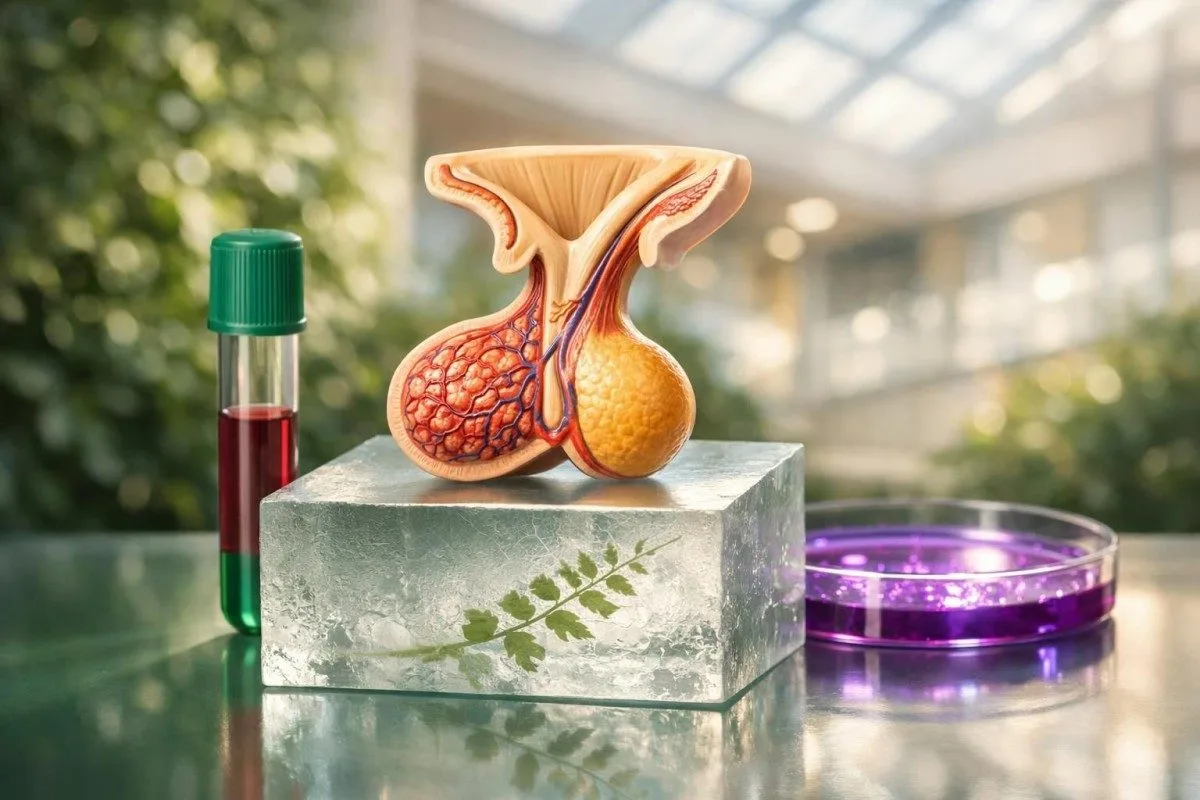
The LH blood test measures luteinizing hormone from the pituitary. Typical ranges are about 1.7-8.6 IU/L in men, 2.4-12.6 IU/L in the follicular phase, 14-95.6 IU/L at mid-cycle, and 7.7-58.5 IU/L after menopause; high or low results help separate fertility, pituitary, and testosterone-related problems.


- Adult men usually have an LH normal range around 1.7-8.6 IU/L.
- Follicular phase LH is often 2.4-12.6 IU/L, while the mid-cycle surge can rise to 14-95.6 IU/L.
- Low LH below about 1.0 IU/L with low sex hormones often points to hypothalamic or pituitary suppression.
- High LH levels in women outside ovulation raise concern for PCOS, menopause, or primary ovarian insufficiency.
- High LH levels in men above about 8.6-10 IU/L with low testosterone suggest primary testicular dysfunction.
- Timing matters because LH is released in pulses roughly every 60-120 minutes, so one random sample can mislead.
- Repeat testing is usually best on cycle day 2-5 for women and 7-10 am for men if testosterone is being checked too.
- Medication effects from birth control, testosterone therapy, anabolic steroids, GnRH drugs, and high-dose biotin can distort interpretation.
LH normal range by sex, age, and menstrual phase
LH blood test measures luteinizing hormone, the pituitary signal that triggers ovulation and supports testosterone production; typical ranges are 1.7-8.6 IU/L in adult men, 2.4-12.6 IU/L in the follicular phase, 14-95.6 IU/L at mid-cycle, 1.0-11.4 IU/L in the luteal phase, and 7.7-58.5 IU/L after menopause. If you already have a hormone panel, Kantesti AI can place the number in clinical context. I almost never read LH without an FSH age chart.
The unit IU/L is numerically the same as mIU/mL, which trips people up more often than you'd think. Some European labs set the male upper reference closer to 8.0-9.0 IU/L, so a value of 8.8 IU/L can be flagged in one report and called normal in another.
Children usually have very low LH, often below 0.3-0.7 IU/L until puberty begins. Postmenopausal women commonly have LH well above 15 IU/L, so a value that looks high on a generic lab flag can be completely expected.
I see this pattern all the time: a 31-year-old with LH 18 IU/L on cycle day 3 and irregular periods deserves a work-up; the same 18 IU/L taken a day before ovulation may be physiologic. That is why I get uneasy when patients send only the number and not the cycle timing.
Kantesti AI interprets LH best when it is uploaded with FSH, estradiol, prolactin, and testosterone, not by itself. If you want the full list of related markers, our marker guide is the quickest place to see what is usually ordered together.
Why one lab may flag another lab's normal result
LH is usually measured by chemiluminescent immunoassay, and reference intervals vary because labs calibrate against different populations and platforms. A male LH of 8.9 IU/L may be high in one report and normal in another; in my experience, symptoms and the paired testosterone value matter more than the red highlight alone.
Why timing can change your LH result more than most patients expect
LH is pulsatile, so timing can change the result by a lot even on the same day. Outside menopause, LH is released in bursts roughly every 60-120 minutes, and the blood level can easily double between samples.
For cycle evaluation, I usually want the sample on day 2-5 unless the question is whether a surge is happening. Our PCOS timing guide explains why a day-21 hormone panel often misleads patients with irregular cycles.
Fasting is usually not required for serum LH, but morning collection still helps if testosterone is being checked at the same draw. If you are unsure what actually counts as fasting, our fasting rules cover the practical part without the usual fluff.
Urine ovulation kits and serum LH are related but not interchangeable. A diluted urine sample can miss a surge, while a serum LH of 16 IU/L may be meaningful only if paired with symptoms, cervical mucus changes, or a later progesterone rise.
As Thomas Klein, MD, I am slow to call a single LH abnormal when the timing is sloppy. Trend data matter more; a trend comparison across two or three cycles often explains more than one dramatic-looking value.
What high LH levels usually mean in women
High LH in women most often reflects ovulation, menopause, PCOS, or reduced ovarian feedback. High LH outside the mid-cycle surge becomes more concerning when estradiol is low or periods are absent.
In PCOS, LH is often normal-high rather than spectacularly high. An LH/FSH ratio above 2:1 used to be taught as classic, but Laven and colleagues in Human Reproduction showed years ago that the ratio is too inconsistent to diagnose PCOS on its own.
Menopause pushes LH up because the ovary no longer provides steady estrogen and inhibin feedback. In a woman with 12 months of no periods, hot flushes, and LH over 20 IU/L, the number is usually confirming a story we already suspected.
Primary ovarian insufficiency is the high-LH pattern that clinicians should not miss in younger patients. When a 33-year-old has LH 24 IU/L, FSH 32 IU/L, and estradiol 28 pg/mL on a non-surge day, I stop thinking about PCOS and start thinking about ovarian failure until proven otherwise.
There is another angle here—high LH with acne, scalp hair thinning, and irregular cycles often leads people straight to PCOS, but thyroid and iron problems can muddy the picture. Our women's hormone guide is useful when symptoms cross specialties.
Hair shedding is a good example. These hair loss labs help sort whether the endocrine story is truly androgen-driven or partly thyroid or iron related.
High LH that is probably physiologic
A mid-cycle serum LH rise can last roughly 24-48 hours, sometimes shorter, and values above 20 IU/L may be entirely normal if the sample sits just before ovulation. If cycles are regular and progesterone rises about 7 days later, I usually call it physiologic rather than abnormal.
What low LH levels can mean in women
Low LH in women usually points to hypothalamic or pituitary suppression, not an ovary that is simply working too little. LH below 1.0 IU/L with low estradiol and missing periods is a classic central pattern.
Low energy availability is a huge cause, and it is not limited to elite athletes. I have seen women with BMI 21-23, running 40 km/week and skipping breakfast, show LH values of 0.4-0.9 IU/L because the brain is reading chronic under-fueling rather than starvation.
High prolactin can suppress GnRH and drag LH down. A prolactin level above about 25 ng/mL in women deserves context and often a repeat, which is why our prolactin guide belongs beside any low-LH workup.
Stress, sleep loss, and thyroid disease can magnify the picture, although thyroid disease alone rarely explains a profoundly low LH. The athlete lab guide is useful if training load is high. So is our piece on blood tests for anxiety when sleep debt and chronic stress are front and center.
If cycles disappear for 3 months or more, do not keep guessing. In my clinic, a low LH plus low estradiol pattern often prompts me to repeat testing and check pituitary hormones before telling someone it is just stress.
High LH levels in men: when the pituitary is compensating
High LH in men usually means the pituitary is compensating for impaired testicular function. LH above 8.6-10 IU/L with low morning testosterone strongly suggests primary hypogonadism.
The common causes are prior chemotherapy, genetic conditions such as Klinefelter syndrome, testicular injury, and sometimes mumps orchitis or autoimmune damage. Age can raise LH modestly too, but aging alone should not be a lazy explanation when symptoms are significant.
A useful but under-discussed pattern is compensated hypogonadism: total testosterone may still sit in the normal range while LH is elevated. The European Male Ageing Study used LH 9.4 U/L or higher with normal testosterone for this pattern, and those men were more likely to become frankly hypogonadal over time.
I saw a 54-year-old cyclist with testosterone 430 ng/dL, LH 11.2 IU/L, and SHBG 68 nmol/L who had fatigue and falling libido. The testosterone looked passable until we reviewed testosterone ranges more carefully. Then we checked SHBG interpretation, which explained why the pituitary was already pushing harder.
Men over 50 often get broad screening but not the right hormone context. Our guide to men over 50 labs explains where LH fits when symptoms and fertility questions show up together.
Low LH levels in men: the pattern that points upstream
Low LH in men usually points upstream, meaning hypothalamic or pituitary suppression. LH below 1.0-1.5 IU/L with low testosterone is the classic biochemical pattern of secondary hypogonadism.
Obesity, untreated sleep apnea, opioid medication, anabolic steroid exposure, severe illness, and pituitary tumors all belong on the list. Anabolic steroids are a big one; LH can remain near zero for weeks or months after a cycle ends.
When low LH travels with low or inappropriately normal free T4, I start thinking about broader pituitary disease rather than isolated sex-hormone trouble. That is why a free T4 guide is surprisingly relevant in a male LH workup.
Symptoms matter. As of April 13, 2026, endocrine guidance still asks for confirmation when testosterone is below 300 ng/dL on two morning samples, and our fatigue lab checklist can help frame the conversation when exhaustion is the first complaint.
I tell patients this all the time: a low LH is not a character flaw, and it is not always permanent. Remove the suppressor—opioids, steroid use, sleep deprivation, major weight gain—and the axis sometimes recovers better than people expect.
How doctors interpret LH with FSH, prolactin, estradiol, and testosterone
LH is most informative when paired with FSH, prolactin, estradiol, testosterone, and SHBG. High LH plus low sex steroid suggests primary gland failure, while low LH plus low sex steroid suggests central suppression.
A simple pattern helps: high LH + high FSH + low estradiol or testosterone points to primary gonadal failure; low LH + low FSH + low sex steroid points upstream to the hypothalamus or pituitary. High LH with normal testosterone in men, or normal-high LH with normal estradiol in women, is the gray zone where symptoms and repeat testing matter most.
Prolactin changes the story fast. A prolactin elevation can suppress LH even when MRI findings are absent, and our Medical Advisory Board reviews these mixed panels because pattern recognition is where generic internet advice usually falls apart.
Kantesti AI flags discordant combinations that people miss on paper reports, and our clinical validation explains how we handle age, sex, cycle phase, and assay-specific ranges. That matters because a standard panel guide will remind you that routine chemistry panels usually do not include LH at all.
Lab abbreviations create needless confusion. The abbreviation guide is useful when a report lists LH, FSH, PRL, E2, TT, FT4, and patients are left guessing which abnormal line actually matters.
When MRI becomes reasonable
Pituitary imaging becomes more relevant when low LH sits beside low free T4, low morning cortisol, new headaches, or visual symptoms. LH abnormalities alone rarely justify MRI, but combined pituitary deficits absolutely change the threshold.
Medications, supplements, and test pitfalls that can skew LH
Several common exposures can skew LH interpretation: hormonal contraception, testosterone therapy, anabolic steroids, GnRH drugs, severe illness, and some assay interferences. Very high biotin, often 5-10 mg/day or more, can interfere with certain immunoassays, although the effect varies by platform.
Combined oral contraceptives, many hormonal devices, and GnRH medicines used during fertility treatment can flatten or exaggerate LH depending on timing. If I am trying to assess a natural cycle, I usually want at least 6 weeks off combined hormonal contraception, though recovery can take 2-3 months.
Biotin is a classic red herring. Our article on biotin and thyroid covers the lab principle well, and the same warning can matter for LH on some streptavidin-biotin assay systems.
At-home hormone testing is improving, but LH is still vulnerable to timing error and sample quality issues. Read our piece on at-home testing before spending money on finger-prick panels that may not answer the real question.
One practical tip: urine LH kits answer a narrow question—whether a surge is occurring—not whether the broader endocrine axis is healthy. I have had PCOS patients with repeatedly positive strips and no reliable ovulation because the surge pattern was erratic.
When to repeat an LH blood test and what to order with it
Repeat an LH blood test when the timing was unclear, the value does not match symptoms, or treatment decisions depend on it. For most women I repeat on cycle day 2-5 with FSH and estradiol; for most men I repeat between 7 and 10 am with testosterone and SHBG.
Persistent amenorrhea for more than 3 months, testosterone below 300 ng/dL on two separate mornings, or LH that is clearly out of range without an obvious explanation deserves follow-up. I, Thomas Klein, MD, usually add prolactin, TSH or free T4, and sometimes ferritin when the history hints at under-fueling or chronic illness.
Urgent endocrine review becomes more pressing when LH abnormalities sit alongside visual changes, severe headaches, milk discharge, or multiple low pituitary hormones. Those are the patients I do not want waiting months while repeating random home tests.
This is where structured interpretation helps. Uploading the report to our free demo lets Kantesti sort timing, reference ranges, and companion hormones in about a minute. You can always contact us if the pattern still looks confusing.
Most patients feel better once there is a plan: repeat the right test, on the right day, with the right companions. That sounds obvious, but in hormone workups it is half the battle.
Companion tests by scenario
For irregular cycles I often add FSH, estradiol, prolactin, TSH or free T4, and sometimes AMH. For male hypogonadism I usually add total testosterone, SHBG, prolactin, and ferritin when fatigue is prominent; pituitary clues matter more when two hormone axes look blunted at once.
How Kantesti AI reads an LH blood test in context
Kantesti AI interprets an LH blood test by looking at the number in context: age, sex, menstrual timing, symptoms, medications, and neighboring hormones. The same LH of 14 IU/L can be normal ovulation, menopause, or a misleading random sample, and our model treats those as different clinical stories.
We built our AI blood test platform for exactly this kind of missing-marker problem. Across more than 2 million users in 127+ countries and 75+ languages, we keep seeing that people are handed an LH flag with almost no explanation.
Our endocrine review standards come from real physicians, not anonymous checklist writing. If you want the broader company background, see About Us. If you want to see how real reports changed the next step, read our success stories.
Kantesti's neural network reads PDFs and phone photos, checks unit conversions, and highlights when a repeat test is smarter than panic. The nuts and bolts are in our technology guide. Our PDF upload guide shows how the document parsing works on an actual lab report.
Bottom line: LH is rarely the whole diagnosis, but it is often the clue that changes the workup. When I review a panel with LH, I am really asking whether the pituitary is speaking too loudly, too quietly, or at the wrong moment.
Research publications and supporting reading
Two open-access papers are useful if you want a broader symptom frame around endocrine testing and lifestyle triggers. We archive similar explainers in the Kantesti blog.
Women's Health Guide: Ovulation, Menopause & Hormonal Symptoms. (2026). Figshare. https://doi.org/10.6084/m9.figshare.31830721. ResearchGate. Academia.edu. This is the more directly relevant paper for LH because ovulation timing, menopausal transition, and ovarian feedback are exactly where serum LH gets misread.
Diarrhea After Fasting, Black Specks in Stool & GI Guide 2026. (2026). Figshare. https://doi.org/10.6084/m9.figshare.31438111. ResearchGate. Academia.edu. I included this one because under-fueling, fasting, and GI losses can suppress hypothalamic LH pulses in real patients even when the fertility workup first looks purely gynecologic.
If you are reading this as a patient, the practical takeaway is simple: abnormal LH is often a systems clue, not a standalone diagnosis. The best interpretation usually comes from cycle timing, symptom history, and companion markers rather than the red flag alone.
Frequently Asked Questions
What is a normal LH level for a woman?
A normal LH level for a woman depends on cycle phase and menopausal status. Many labs use about 2.4-12.6 IU/L in the follicular phase, 14-95.6 IU/L at mid-cycle, 1.0-11.4 IU/L in the luteal phase, and 7.7-58.5 IU/L after menopause. The same result can be normal on one day and abnormal on another, which is why cycle day matters more than most patients expect.
What is a normal LH level for a man?
A normal LH level for an adult man is usually around 1.7-8.6 IU/L, although some labs use upper limits closer to 9-10 IU/L. An LH above about 8.6-10 IU/L with low morning testosterone suggests primary testicular dysfunction. An LH below about 1.0-1.5 IU/L with low testosterone suggests hypothalamic or pituitary suppression.
What LH level indicates ovulation?
A serum LH above about 14-20 IU/L can fit the ovulatory surge, but no single cutoff proves ovulation because assays differ and the surge lasts only about 24-48 hours. A mid-cycle LH of 18 IU/L may be completely normal, while the same 18 IU/L on cycle day 3 is a different story. Clinicians often confirm true ovulation with later progesterone testing or ultrasound rather than LH alone.
Does high LH mean PCOS?
High LH does not automatically mean PCOS. Many women with PCOS have normal-high LH, and an LH/FSH ratio above 2:1 is not accurate enough to diagnose the condition by itself. High LH can also reflect normal ovulation, menopause, or primary ovarian insufficiency, so estradiol, FSH, symptoms, and cycle timing are needed.
Can low LH cause low testosterone?
Low LH can absolutely cause low testosterone because LH is the pituitary signal that tells the testes to make testosterone. In men, LH below about 1.0-1.5 IU/L with total testosterone below 300 ng/dL on two morning samples is a classic secondary hypogonadism pattern. Common causes include obesity, sleep apnea, opioids, anabolic steroids, high prolactin, and pituitary disease.
Do I need to fast before an LH blood test?
Fasting is usually not required for an LH blood test. Timing still matters because LH is pulsatile, and men often have testosterone checked at the same draw, so a morning sample between 7 and 10 am is usually smarter. Women being evaluated for irregular cycles are often tested on cycle day 2-5 rather than fasting.
When is an abnormal LH result a pituitary red flag?
LH becomes a stronger pituitary red flag when it is low alongside other pituitary hormones rather than abnormal in isolation. Low LH with low free T4, low morning cortisol, headaches, visual symptoms, or prolactin well above 25 ng/mL deserves more urgent endocrine review. A single odd LH value without symptoms is usually less worrisome than a multi-hormone pattern.
Can I use a home urine LH ovulation test instead of an LH blood test?
Not fully. Urine kits are designed to detect an LH surge to help time ovulation, whereas a blood test helps assess baseline hormone signaling. A home test cannot diagnose conditions such as PCOS, menopause, pituitary disease, or low testosterone.
Does pregnancy affect an LH blood test?
Yes. During pregnancy, rising estrogen and progesterone normally suppress pituitary LH, so LH is not useful for confirming pregnancy or assessing ovulation. Use a urine or blood hCG test if pregnancy is possible, and tell your clinician before interpreting reproductive hormone results.
Can stress or heavy exercise lower LH even if my pituitary is normal?
Yes. Ongoing calorie deficit, significant weight loss, intense training, or major stress can suppress hypothalamic signaling and lower LH, especially if periods stop or testosterone drops. This is often reversible once the strain is addressed, though your clinician may check other hormones if symptoms persist.
Get AI-Powered Blood Test Analysis Today
Join over 2 million users worldwide who trust Kantesti for instant, accurate lab test analysis. Upload your blood test results and receive comprehensive interpretation of 15,000+ biomarkers in seconds.
📚 Referenced Research Publications
Klein, T., Mitchell, S., & Weber, H. (2026). Women's Health Guide: Ovulation, Menopause & Hormonal Symptoms. Kantesti AI Medical Research.
Klein, T., Mitchell, S., & Weber, H. (2026). Diarrhea After Fasting, Black Specks in Stool & GI Guide 2026. Kantesti AI Medical Research.
⚕️ Medical Disclaimer
This article is for educational purposes only and does not constitute medical advice. Always consult a qualified healthcare provider for diagnosis and treatment decisions.
E-E-A-T Trust Signals
Experience
Physician-led clinical review of lab interpretation workflows.
Expertise
Laboratory medicine focus on how biomarkers behave in clinical context.
Authoritativeness
Written by Dr. Thomas Klein with review by Dr. Sarah Mitchell and Prof. Dr. Hans Weber.
Trustworthiness
Evidence-based interpretation with clear follow-up pathways to reduce alarm.