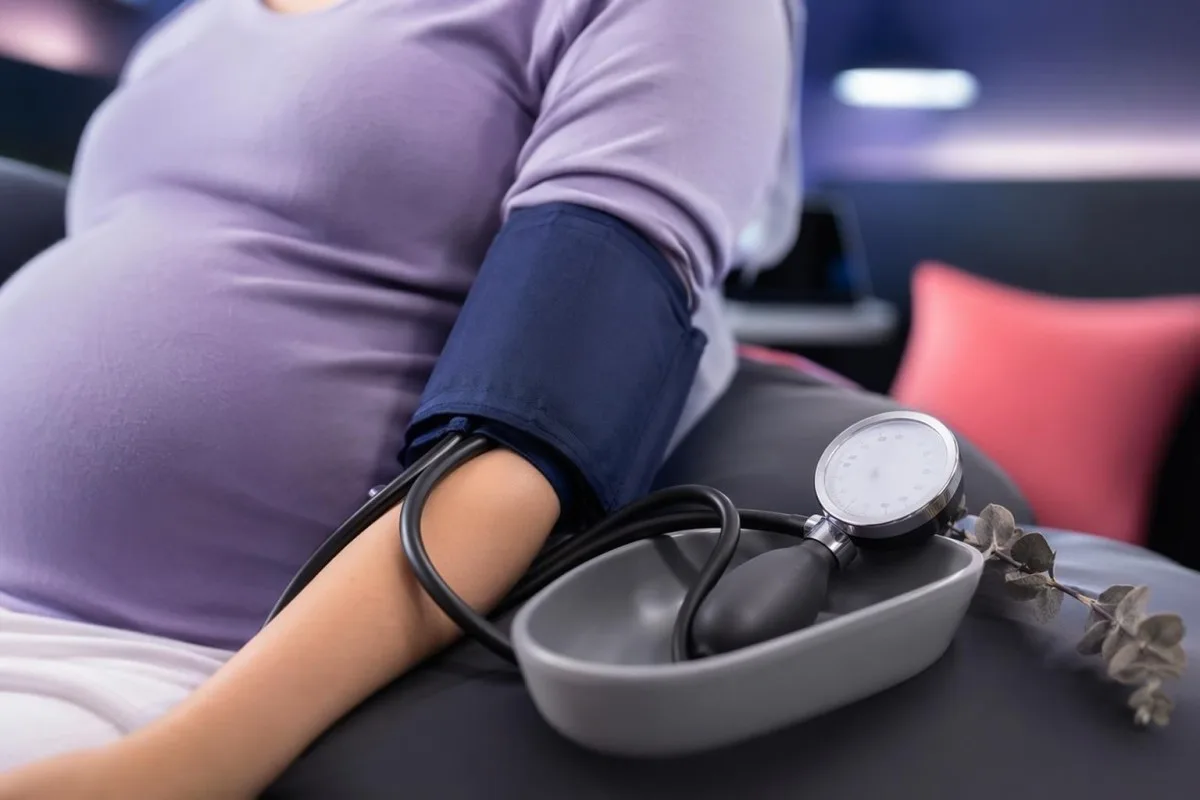
In pregnancy, blood pressure is usually reassuring when it stays below 140/90 mmHg, but the trimester, your baseline, and symptoms matter. Call your maternity unit or clinician the same day for repeated readings of 140/90 or higher, and seek urgent triage for 160/110 or higher, severe headache, visual symptoms, chest pain, breathlessness, or right-upper-abdominal pain.


- Normal range for blood pressure in pregnancy is generally below 140/90 mmHg, but many healthy pregnant patients sit around 90–120/60–80 mmHg.
- First trimester readings often fall by 5–10 mmHg from pre-pregnancy baseline because blood vessels relax early.
- Second trimester is usually the lowest-pressure period; a mild dip is expected, not automatically a problem.
- Third trimester blood pressure commonly returns toward baseline, but repeated readings of 140/90 mmHg or higher need a same-day call.
- Severe-range pressure is 160 systolic or 110 diastolic mmHg or higher and should be treated as urgent pregnancy triage.
- Preeclampsia warning signs include severe headache, visual changes, right-upper-abdominal pain, sudden swelling, breathlessness, or reduced fetal movement.
- Home readings are often wrong if the cuff is too small, placed over clothing, used at wrist level, or taken within 30 minutes of caffeine, exercise, or stress.
- Lab checks after high blood pressure while pregnant usually include urine protein, platelets, creatinine, AST, ALT, and sometimes uric acid or angiogenic markers.
What blood pressure range is expected in pregnancy?
As of June 5, 2026, the practical normal range for blood pressure in pregnancy is below 140/90 mmHg, with many healthy readings clustering around 90–120/60–80 mmHg. Call your maternity unit the same day if a repeated home or clinic reading is 140/90 mmHg or higher; go to urgent triage for 160/110 mmHg or higher or concerning symptoms.
ACOG Practice Bulletin No. 222 defines gestational hypertension as systolic blood pressure of 140 mmHg or higher or diastolic blood pressure of 90 mmHg or higher after 20 weeks, measured on two occasions at least 4 hours apart (ACOG, 2020). That definition matters because pregnancy care uses different triage logic than a routine adult check; see our broader blood pressure range guide only if you need non-pregnancy context.
Kantesti is an AI blood test interpretation platform that helps pregnant and postpartum patients understand the lab side of hypertension risk, such as platelets, creatinine, liver enzymes, and urine protein. Blood pressure itself still needs real-time clinical triage; an app cannot listen to fetal heart rate, examine reflexes, or decide whether you need magnesium sulfate.
In my clinic, I worry less about a single 132/86 mmHg reading after a stressful school run than about a patient whose usual 96/62 mmHg becomes 138/88 mmHg with a new headache. Pregnancy blood pressure is a trend problem, not a trophy number.
How blood pressure changes by trimester
Blood pressure in pregnancy usually falls slightly in the first and second trimesters, then rises back toward pre-pregnancy baseline in the third trimester. A 5–10 mmHg mid-pregnancy drop is common and usually reflects normal vascular relaxation rather than illness.
The first trimester is hormonally noisy. Progesterone, nitric oxide signaling, and placental vascular development reduce systemic vascular resistance before blood volume fully expands, so a patient who lived at 118/76 mmHg may suddenly see 104/66 mmHg at 10 weeks.
The second trimester is often the nadir. When I review prenatal blood test timing, I pair the visit date with the blood pressure because a 112/70 mmHg reading at 22 weeks and the same reading at 37 weeks may mean different things.
By the third trimester, pressure often creeps upward as blood volume, cardiac output, and vascular tone shift again. A third-trimester rise of 10–15 mmHg from your personal mid-pregnancy low can be ordinary; a rise paired with proteinuria, headache, or right-upper-abdominal pain is not ordinary.
Why home blood pressure readings go wrong
Home blood pressure readings in pregnancy are useful only when the cuff fits, the arm is supported at heart level, and the reading is repeated after 5 minutes of quiet rest. The most common false-high pattern I see is a small cuff on a larger upper arm.
A cuff that is too small can push systolic pressure upward by 5–20 mmHg, enough to turn a reassuring 132/84 mmHg into an anxiety-provoking 150/96 mmHg. Wrist devices are especially fussy in pregnancy because a wrist held below heart level can read falsely high.
Do not take a reading over clothing, after climbing stairs, while talking, or with crossed legs. If your first result is high, sit quietly, empty your bladder if needed, breathe normally, and repeat after 5–15 minutes; write down both numbers rather than deleting the scary one.
The phrase normal range can mislead when a device is wrong or the conditions are messy. Our guide to misleading normal ranges explains the same principle in lab testing: context can change what a number means.
My quick home-reading rule
Use the same validated upper-arm device, same arm, same chair, and same time window when possible. A morning and evening pair for 3–7 days is more useful than 10 panicked checks in one hour.
How to read a pregnancy blood pressure chart
A useful pregnancy blood pressure chart shows gestational week, symptoms, cuff type, and repeated readings, not just a list of numbers. The safest chart highlights direction: rising from baseline is often more informative than one isolated value.
I like charts with four columns: date, gestational week, blood pressure, and notes such as headache, visual spots, swelling, medication, or poor sleep. A 128/82 mmHg reading at 34 weeks may be fine, but if your baseline was 92/58 mmHg and you have new visual symptoms, it deserves a call.
The CHIPS randomized trial compared less-tight versus tight control of non-severe hypertension in pregnancy and found that tighter control reduced severe maternal hypertension without increasing the risk of perinatal loss or high-level neonatal care (Magee et al., 2015). That trial is one reason clinicians take repeated 150s seriously even before the numbers reach 160/110 mmHg.
Kantesti’s trend approach to labs mirrors how I read blood pressure: slow drift matters. If you already track ferritin, glucose, thyroid, or kidney markers, our blood test trend analysis guide shows why a slope can be more clinically honest than a green tick.
When to call your clinician or maternity triage
Call the same day for repeated blood pressure of 140/90 mmHg or higher in pregnancy, and seek urgent triage for 160/110 mmHg or higher. Do not wait for the next routine appointment if the high reading is paired with headache, visual symptoms, chest pain, breathlessness, or right-upper-abdominal pain.
Severe-range hypertension in pregnancy is systolic blood pressure of 160 mmHg or higher or diastolic blood pressure of 110 mmHg or higher. ACOG recommends that severe readings be confirmed within a short interval and treated promptly because stroke risk rises as pressure remains elevated (ACOG, 2020).
NICE guideline NG133 advises urgent assessment for severe hypertension and hospital assessment when preeclampsia is suspected, especially with symptoms or abnormal maternal tests (NICE, 2019). In plain English: a 162/104 mmHg reading is still urgent because the systolic number alone crosses the severe threshold.
I’m Thomas Klein, MD, and the call I never regret is the one that turns out to be a false alarm. The call I do regret is the patient who waited 18 hours with a 158/108 mmHg reading and a headache because she thought diastolic had to hit 110 first; our critical values guide uses the same safety-first logic for lab results.
Preeclampsia red flags that change the plan
Preeclampsia is suspected when high blood pressure after 20 weeks is accompanied by proteinuria or signs of organ stress. Severe headache, visual disturbance, right-upper-abdominal pain, breathlessness, or sudden swelling should trigger urgent maternity advice even if your last reading was only mildly high.
A headache that is new, severe, persistent, or not relieved by usual measures is different from ordinary pregnancy tiredness. Visual symptoms such as flashing lights, blurred vision, or dark spots are neurologic warning signs, not just eye strain.
Pain under the right ribs or in the upper abdomen can reflect liver capsule irritation in severe preeclampsia or HELLP syndrome. If a patient tells me, “It feels like bad indigestion but higher and sharper,” I ask about blood pressure immediately and do not dismiss it as reflux.
Headache has many causes in pregnancy, but the combination of headache plus high blood pressure changes the risk category. Our headache lab guide covers anemia, thyroid, and inflammatory checks, but pregnancy hypertension symptoms need direct maternity triage first.
Red flags worth writing down
Record the time symptoms began, the blood pressure reading, medication taken, fetal movement changes, and whether symptoms are worsening. That 60-second timeline often helps triage nurses decide whether you need immediate assessment.
Blood and urine tests after high blood pressure while pregnant
After high blood pressure while pregnant, clinicians usually check urine protein, platelet count, creatinine, AST, ALT, and sometimes uric acid or angiogenic markers. These tests look for kidney strain, liver involvement, clotting risk, and preeclampsia patterns.
A urine protein-to-creatinine ratio of 0.3 mg/mg or higher is commonly used as evidence of significant proteinuria in suspected preeclampsia. A 24-hour urine protein level of 300 mg or more is another classic diagnostic threshold, though many units now use spot ratios because they are faster.
Platelets below 100,000/µL are a severe-feature threshold in preeclampsia, and creatinine above 1.1 mg/dL or doubling from baseline can signal kidney involvement. Our urine ACR kidney guide explains why small protein leaks can matter before creatinine rises.
AST or ALT above roughly twice the laboratory upper limit is concerning when paired with hypertension, especially with right-upper-abdominal pain. I often cross-check the platelet trend with our platelet range guide and the liver pattern with our liver function guide because HELLP syndrome is a pattern diagnosis, not a single abnormal value.
Chronic, gestational, and white-coat hypertension
Chronic hypertension is present before pregnancy or before 20 weeks, gestational hypertension starts after 20 weeks without preeclampsia features, and white-coat hypertension means clinic readings are high while reliable home readings are normal. The label affects monitoring frequency and delivery planning.
A patient with chronic hypertension may enter pregnancy already taking medication, while gestational hypertension is diagnosed later. The timing matters because high pressure before 20 weeks is less likely to be caused by the placenta alone and more likely to reflect baseline cardiovascular or kidney risk.
White-coat hypertension is real, but it is not a free pass. In my experience, a clinic reading of 152/96 mmHg with consistent home readings around 118/74 mmHg still deserves a calibrated device check and a clear written threshold for calling.
Kantesti is an AI-powered blood test analysis tool used by people in 127+ countries, and our organization’s clinical governance is described on About Us. For pregnancy hypertension, we treat lab interpretation as supportive context; the diagnosis still belongs to your obstetric or maternity team.
When low blood pressure in pregnancy matters
Low blood pressure in pregnancy is often benign if you feel well, especially when readings are around 90/60 mmHg during the second trimester. Call promptly if low readings come with fainting, chest pain, shortness of breath, heavy vomiting, dehydration, bleeding, or reduced fetal movement.
A reading of 88/56 mmHg can be normal for a healthy pregnant patient who has always run low and feels fine. The same reading is not normal if it follows severe vomiting, fever, diarrhea, palpitations, or a collapse at home.
Heat, standing still, dehydration, and lying flat late in pregnancy can reduce venous return and make people feel woozy. I tell patients to shift position slowly, hydrate, and avoid locking the knees while standing in queues; simple, boring advice often prevents the next episode.
If low pressure keeps recurring, clinicians may check hemoglobin, electrolytes, glucose, thyroid function, and hydration markers. Our low blood pressure labs guide explains which blood tests can uncover anemia, adrenal, kidney, or salt-balance contributors.
Medications, salt, potassium, and supplement traps
Pregnancy blood pressure treatment should be clinician-led; labetalol, nifedipine, and methyldopa are commonly used, while ACE inhibitors and ARBs are generally avoided in pregnancy. Do not stop or start blood pressure medication because of one home reading.
Potassium-rich diets can support cardiovascular health, but potassium supplements are not harmless when kidney function is impaired or medications change. A potassium level above 5.5 mmol/L can become clinically significant, and our potassium timing guide explains why rechecking after medication changes is sensible.
Low-dose aspirin is often recommended for patients at higher preeclampsia risk, but dose and timing vary by country; many clinicians use 81 mg daily in the United States, while UK practice may use 75–150 mg. This is one of those areas where the evidence is good but the exact protocol depends on your risk profile and local guideline.
Be careful with “natural” blood pressure supplements in pregnancy. Garlic extracts, high-dose magnesium, hawthorn, licorice, and stimulant-containing blends can interact with medication or electrolytes; our blood pressure supplement guide is written for lab safety, but pregnancy-specific approval must come from your clinician.
Choosing a cuff and comparing clinic with home
Use a validated upper-arm blood pressure monitor in pregnancy, with a cuff bladder that fits your arm circumference. Bring the device to clinic at least once so your maternity team can compare it against their measurement.
If the cuff size says 22–32 cm and your mid-upper-arm circumference is 36 cm, the reading is not trustworthy. Large-arm and extra-large cuffs exist for a reason; asking for the right cuff is not being difficult.
Clinic readings and home readings can differ by 5–15 mmHg even when both devices are decent. What worries me is not a small difference, but a consistent mismatch where home says 118/72 mmHg and clinic says 154/98 mmHg without a plan to verify technique.
Kantesti is an AI biomarker interpretation platform, and Kantesti’s neural network is built to flag inconsistencies in lab context rather than replace clinical measurement. Our AI technology guide explains how pattern checks work for blood tests; blood pressure device calibration still needs human confirmation.
Who needs lower thresholds for concern?
Patients with kidney disease, diabetes, autoimmune disease, chronic hypertension, twins or higher-order pregnancy, previous preeclampsia, or age over 40 often need closer monitoring. A reading that seems only mildly high may trigger faster review in these groups.
Previous preeclampsia is one of the strongest clinical clues I ask about. If you delivered early for preeclampsia before, a 138/88 mmHg reading with swelling at 29 weeks may be handled more cautiously than the same number in a low-risk first pregnancy.
Thyroid disease, iron deficiency, and diabetes can complicate the symptom picture because fatigue, palpitations, swelling, and headaches overlap. Our guides to TSH in pregnancy and iron in pregnancy help separate common lab issues from hypertensive warning signs.
Blood clot symptoms deserve separate triage because pregnancy already raises clotting tendency. If high blood pressure appears with one-sided leg swelling, chest pain, or breathlessness, read our D-dimer pregnancy guide for context, but seek clinical advice first.
Postpartum blood pressure is still pregnancy care
Preeclampsia and severe hypertension can occur after delivery, most commonly within the first 7 days but sometimes up to 6 weeks postpartum. A new severe headache or 160/110 mmHg reading after birth is still urgent.
The fluid shifts after delivery can raise blood pressure just when families expect the risk to be over. I have seen patients readmitted on day 5 postpartum with pressures around 170/112 mmHg after having normal readings during labor.
Postpartum warning symptoms include severe headache, visual changes, chest pain, breathlessness, right-upper-abdominal pain, confusion, seizures, or sudden swelling. Our new mothers lab guide covers anemia, thyroid, infection, and metabolic checks, but postpartum hypertension symptoms need urgent maternity advice.
Gestational diabetes history also affects long-term cardiovascular risk, not just glucose. After recovery, our guide to diabetes after gestational diabetes explains A1c, fasting glucose, and follow-up timing that many patients are never properly told.
How Kantesti supports safer follow-up
Kantesti can help interpret pregnancy-related blood and urine results in context, but urgent blood pressure decisions belong to your maternity unit or clinician. If your reading is 160/110 mmHg or you have red-flag symptoms, seek care first and interpret labs later.
When I, Thomas Klein, review a suspected preeclampsia panel, I look for clusters: platelets falling from 220,000/µL to 128,000/µL, creatinine rising from 0.55 to 0.92 mg/dL, AST doubling, and urine protein increasing. None of those numbers is as dramatic as 170/110 mmHg, but together they tell a story.
Our doctors and advisors review Kantesti’s clinical standards because pregnancy content has to be conservative, specific, and honest about uncertainty. You can read more about the physicians behind our work on the Medical Advisory Board page.
Kantesti’s medical validation process is described in our clinical standards, including how our AI handles abnormal clusters and safety flags. Bottom line from a clinician: use home readings to call early, use labs to understand organ involvement, and never let a reassuring app screen override symptoms that feel wrong.
Frequently Asked Questions
What is the normal range for blood pressure in pregnancy?
The normal range for blood pressure in pregnancy is generally below 140/90 mmHg, with many healthy readings around 90–120/60–80 mmHg. Blood pressure often drops by about 5–10 mmHg in the first or second trimester and returns toward baseline in the third trimester. A repeated reading of 140/90 mmHg or higher after 20 weeks should prompt same-day contact with your maternity unit or clinician.
When should I go to hospital for high blood pressure while pregnant?
Go to maternity triage or seek urgent care for blood pressure of 160/110 mmHg or higher in pregnancy, even if only one number is severe. You should also seek urgent advice for severe headache, visual changes, chest pain, breathlessness, right-upper-abdominal pain, seizure, confusion, or reduced fetal movement. Do not wait overnight to see whether severe-range pressure settles.
Is 140 over 90 dangerous during pregnancy?
A single 140/90 mmHg reading is not automatically dangerous, but a repeated 140/90 mmHg or higher reading in pregnancy needs same-day clinical advice. After 20 weeks, this threshold is used to evaluate gestational hypertension and possible preeclampsia. Your clinician may ask for repeat readings, urine protein testing, platelets, creatinine, and liver enzymes.
Can preeclampsia happen with normal blood pressure at home?
Classic preeclampsia includes high blood pressure after 20 weeks, but symptoms can appear before a clearly abnormal home pattern is captured. Severe headache, visual symptoms, right-upper-abdominal pain, breathlessness, sudden swelling, or feeling acutely unwell should still prompt maternity advice. Home cuffs can also miss high pressure if the cuff is too large, the wrist is positioned incorrectly, or readings are taken at the wrong time.
What labs are checked for preeclampsia?
Common preeclampsia labs include urine protein-to-creatinine ratio, platelet count, creatinine, AST, ALT, and sometimes uric acid or angiogenic markers such as PlGF depending on local practice. A urine protein-to-creatinine ratio of 0.3 mg/mg or higher supports significant proteinuria. Platelets below 100,000/µL, creatinine above 1.1 mg/dL, or liver enzymes above twice the upper limit are concerning when paired with hypertension.
Is low blood pressure in pregnancy a problem?
Low blood pressure in pregnancy is often normal if you feel well, especially around 90/60 mmHg in the second trimester. It becomes concerning when it causes fainting, chest pain, breathlessness, palpitations, severe vomiting, dehydration, bleeding, or reduced fetal movement. Persistent symptomatic low pressure may lead clinicians to check hemoglobin, electrolytes, glucose, thyroid function, and hydration markers.
How do I take an accurate pregnancy blood pressure reading at home?
Use a validated upper-arm cuff, sit with your back supported, keep feet flat, support the arm at heart level, and rest quietly for 5 minutes before measuring. Avoid caffeine, exercise, nicotine, and stressful activity for about 30 minutes beforehand. If the first reading is high, repeat after 5–15 minutes and record both readings with the time and any symptoms.
Will high blood pressure mean I need a caesarean birth?
High blood pressure alone does not mean you need a caesarean birth, and many people can have a vaginal birth. Your team may recommend induction; the safest approach depends on your condition, your baby's wellbeing, and how urgently birth is needed.
Can I exercise if my blood pressure has been high during pregnancy?
Avoid starting or continuing strenuous exercise until your maternity clinician has reviewed repeated high readings or symptoms. Gentle activity may be appropriate when you feel well, but it does not replace assessment for gestational hypertension or preeclampsia.
Should I take aspirin to prevent preeclampsia if my blood pressure is normal?
Do not start aspirin on your own, but ask early in pregnancy if you qualify. Many clinicians recommend low-dose aspirin from around 12 weeks for people with higher preeclampsia risk, such as prior preeclampsia, chronic hypertension, kidney disease, diabetes, or certain autoimmune conditions.
Get AI-Powered Blood Test Analysis Today
Join over 2 million users worldwide who trust Kantesti for instant, accurate lab test analysis. Upload your blood test results and receive comprehensive interpretation of 15,000+ biomarkers in seconds.
📚 Referenced Research Publications
Klein, T., Mitchell, S., & Weber, H. (2026). B Negative Blood Type, LDH Blood Test & Reticulocyte Count Guide. Kantesti AI Medical Research.
Klein, T., Mitchell, S., & Weber, H. (2026). Diarrhea After Fasting, Black Specks in Stool & GI Guide 2026. Kantesti AI Medical Research.
📖 External Medical References
National Institute for Health and Care Excellence (2019). Hypertension in pregnancy: diagnosis and management. NICE Guideline NG133.
⚕️ Medical Disclaimer
This article is for educational purposes only and does not constitute medical advice. Always consult a qualified healthcare provider for diagnosis and treatment decisions.
E-E-A-T Trust Signals
Experience
Physician-led clinical review of lab interpretation workflows.
Expertise
Laboratory medicine focus on how biomarkers behave in clinical context.
Authoritativeness
Written by Dr. Thomas Klein with review by Dr. Sarah Mitchell and Prof. Dr. Hans Weber.
Trustworthiness
Evidence-based interpretation with clear follow-up pathways to reduce alarm.