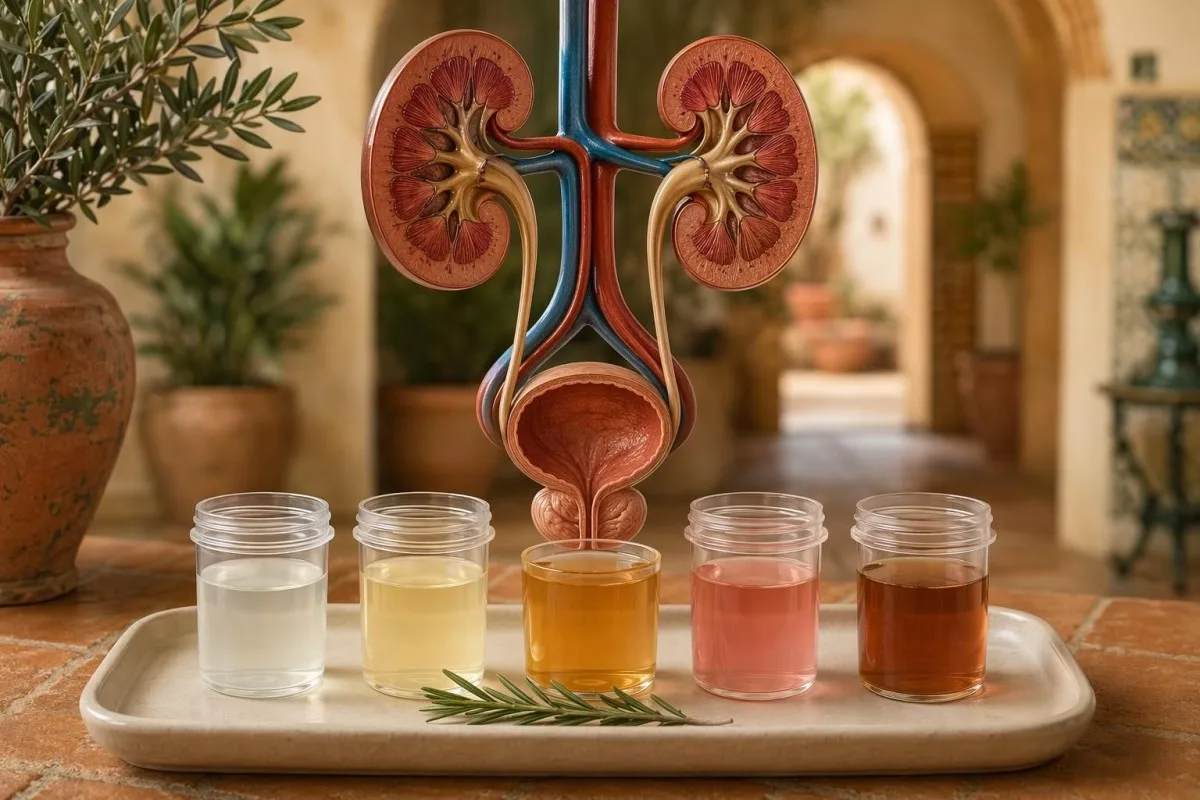
Most urine color changes are harmless, but the pattern matters: shade, timing, pain, fever, foam, cloudiness, stool color and recent medication all change the meaning.


- Pale straw to light yellow usually reflects normal hydration; typical adult urine output is about 800-2,000 mL per day.
- Dark yellow or amber urine most often means concentrated urine; a urine specific gravity above 1.020 supports dehydration in the right context.
- Tea-colored or cola-colored urine can signal bilirubin, blood pigment, or muscle breakdown and should be checked urgently if persistent or paired with pain, fever, jaundice, or weakness.
- Cloudy urine causes include UTI, crystals, vaginal contamination, high phosphate, and dehydration; nitrite or leukocyte esterase on dipstick changes the next step.
- Foamy urine causes range from a fast stream to proteinuria; urine albumin-creatinine ratio below 30 mg/g is considered normal by KDIGO.
- Pink or red urine after beetroot may be benign, but visible blood or repeated dipstick blood needs microscopy, usually looking for more than 3 RBCs per high-power field.
- Orange urine is common after phenazopyridine, rifampicin, B vitamins, and dehydration, but orange urine with pale stools suggests a bile-flow problem.
- Dipstick testing is reasonable when urine color change lasts more than 24-48 hours, recurs, or comes with burning, fever, back pain, pregnancy, diabetes, or kidney disease.
Quick urine color chart: what each shade usually means
A urine color chart is a quick safety screen: pale yellow usually means adequate hydration, dark yellow often means concentration, red can mean blood or beetroot, brown can mean bilirubin or pigment, and cloudy or foamy urine needs context. I’m Thomas Klein, MD, and I tell patients that color is a clue — not a diagnosis.
The most useful first question is not “what color is it?” but “did it change suddenly?” A first-morning urine sample is often darker because antidiuretic hormone concentrates urine overnight; a normal adult may produce about 800-2,000 mL of urine in 24 hours, depending on fluid intake, sweat, diet, and kidney function.
Kantesti is an AI blood test interpretation platform that helps connect urine clues with blood markers such as creatinine, eGFR, bilirubin, ALT, ALP, glucose, CRP, and albumin. For a deeper urine-by-urine-marker explanation, our complete urinalysis guide covers dipstick, microscopy, urobilinogen, ketones, and specific gravity in one place.
A color chart becomes medically useful when it triggers the right test. Urine dipstick can detect blood, protein, glucose, ketones, bilirubin, nitrite, leukocyte esterase, pH, and specific gravity in roughly 60-120 seconds, but positive results often need confirmation by microscopy, urine albumin-creatinine ratio, culture, or blood tests.
Clear urine: hydration success or too much water?
Clear urine usually means dilute urine from recent fluid intake, but repeated clear urine with thirst, night urination, or weight loss can point toward diabetes, high calcium, kidney concentrating problems, or medication effects. A single clear sample after drinking 750-1,000 mL of water is rarely concerning.
Most healthy kidneys can dilute urine to a specific gravity near 1.001-1.005 after a large fluid load. That is normal physiology, not kidney failure, and I see it often in patients who drink aggressively before an appointment because they worry they “won’t be able to pee.”
The concerning pattern is clear urine plus high volume: urinating more than 3 liters per day, waking more than twice nightly to pass urine, or craving water constantly. In that situation, a clinician usually checks glucose, sodium, calcium, creatinine, and sometimes urine osmolality; our guide to constant thirst labs explains why sugar and sodium are checked first.
Diuretics, lithium, caffeine, alcohol, SGLT2 inhibitors, and late-evening fluid loading can all make urine look pale. If someone has dizziness, confusion, headache, or nausea after drinking very large amounts, low sodium becomes the safety issue; serum sodium below 125 mmol/L can become dangerous, especially if it falls quickly.
Pale yellow urine: the normal hydration zone
Pale straw to light yellow urine is generally the target zone for day-to-day hydration. It usually reflects a balanced mix of water and urochrome pigment, with urine specific gravity often between about 1.005 and 1.020 in a well-hydrated adult.
The pigment that makes urine yellow comes mainly from breakdown products of heme metabolism, including urochrome and urobilin-related compounds. That is why urine can look slightly more yellow after fasting, overnight sleep, or a day with more sweating and less drinking.
Specific gravity gives color a number. Normal urine specific gravity is commonly reported as 1.005-1.030, and values above 1.020 often fit concentrated urine when the person has been sweating, fasting, exercising, or taking less fluid; we explain those cutoffs in our specific gravity guide.
Athletes can be tricked by color alone. A marathon runner may drink enough water to lighten urine while still losing sodium in sweat; if cramps, confusion, vomiting, or severe headache appear, electrolytes matter more than shade.
Dark yellow or amber urine: common dehydration clues
Dark yellow or amber urine most often means concentrated urine from dehydration, overnight fasting, heat exposure, exercise, or low fluid intake. If the color lightens after 500-750 mL of water and a meal, it is usually less worrying than persistent dark urine.
The practical dehydration pattern is dark urine plus dry mouth, low urine frequency, headache, fast pulse, or weight drop after sweating. In blood tests, dehydration can raise urea or BUN before creatinine rises; a BUN-to-creatinine ratio above 20:1 can support volume depletion, though it is not diagnostic by itself.
In our analysis of 2M+ blood tests, we regularly see mildly high albumin, borderline creatinine, and high-normal sodium in people who had a hard workout, sauna session, or long-haul flight before labs. The reason we connect this to urine color is simple: concentrated blood and concentrated urine often travel together, and our BUN hydration guide walks through that pattern.
Do not force water endlessly. Older adults, people with heart failure, kidney disease, adrenal problems, or low sodium history may need fluid limits; for them, amber urine is a conversation starter rather than an instruction to drink 3 liters.
Brown or tea-colored urine: liver, pigment and muscle clues
Brown, tea-colored, or cola-colored urine deserves prompt attention if it lasts more than one void or comes with yellow eyes, pale stools, fever, abdominal pain, back pain, severe muscle soreness, or weakness. The main concerns are bilirubin, blood pigment, myoglobin, severe dehydration, and medication effects.
Bilirubin in urine is abnormal because unconjugated bilirubin is not water-soluble and should not appear on a dipstick. When conjugated bilirubin spills into urine, clinicians think about bile duct obstruction, hepatitis, cholestasis, or medication-related liver injury; the EASL cholestatic liver disease guideline describes dark urine and pale stools as classic cholestasis clues (EASL, 2009).
One detail patients rarely hear: brown urine with a dipstick positive for “blood” but very few red cells on microscopy can mean myoglobin from muscle injury rather than urinary bleeding. After extreme exercise, seizures, heat illness, or crush injury, clinicians often check creatine kinase; CK above 5,000 IU/L raises concern for rhabdomyolysis-related kidney stress.
Dark urine plus high bilirubin, high ALP, high GGT, or rising ALT is a different pathway from dehydration. Our bilirubin pattern guide explains why direct and indirect bilirubin tell different stories, especially when stool becomes clay-colored.
Pink or red urine: food dye, blood or stone?
Pink or red urine can come from beetroot, blackberries, food dyes, rifampicin, phenazopyridine, menstruation contamination, stones, infection, kidney inflammation, or urinary tract bleeding. Visible red urine that repeats should be treated as blood until testing proves otherwise.
Microscopic hematuria is commonly defined as more than 3 red blood cells per high-power field on a properly collected urine specimen. Dipstick blood is sensitive but not specific; hemoglobin, myoglobin, oxidizing agents, and menstrual contamination can all create misleading positives.
I once saw a 31-year-old cyclist panic over bright red urine after a beetroot-heavy lunch and a hard ride. The reassuring part was a normal microscopy result 24 hours later; the lesson was not “ignore red urine,” but “confirm it with the right test.”
Stones often add flank pain, nausea, urinary urgency, or crystals, and calcium oxalate crystals have a distinctive envelope-like appearance under microscopy. If a report mentions crystals or recurrent stone symptoms, our urine crystal guide explains what clinicians check next.
Orange, blue or green urine: medicines are often the clue
Orange, blue, and green urine are most often caused by medicines, supplements, dyes, or contrast agents, but greenish cloudy urine with fever or urinary pain can still need infection testing. Timing after a new tablet is the strongest clue.
Phenazopyridine can turn urine vivid orange within 1-2 hours, and rifampicin can discolor urine, tears, and sweat orange-red. High-dose riboflavin, often 25-100 mg or more in B-complex products, commonly produces fluorescent yellow urine that looks alarming but is usually harmless.
Blue or green urine has a shorter list: methylene blue, propofol, amitriptyline, indomethacin, some dyes, and occasionally bacterial pigments. I do not diagnose by color here; I ask for the medication start date, dose, kidney function, fever, and whether the color appears in every void.
Medication color changes are also a good reason to keep a dated list of prescriptions, over-the-counter products, and supplements. Our medication lab timeline is useful when a new medicine changes urine color and liver, kidney, or electrolyte tests are being followed.
Cloudy urine causes: UTI, crystals and contamination
Cloudy urine causes include urinary tract infection, white cells, bacteria, crystals, phosphate, mucus, semen, vaginal fluid contamination, dehydration, and high protein. Cloudiness alone does not prove infection, but cloudiness plus burning, urgency, fever, or nitrite positivity changes the risk.
Urine pH helps explain some cloudy samples. Alkaline urine, often pH above 7.5, can precipitate phosphate crystals that make urine look milky, while refrigeration can also create harmless crystal haze in a sample that looked clear when fresh.
Simerville, Maxted, and Pahira’s American Family Physician review reported nitrite dipstick sensitivity of about 19-48% and specificity of 92-100% for culture-confirmed UTI, which means a positive nitrite is meaningful but a negative nitrite does not rule out infection (Simerville et al., 2005). For a focused next-step guide, see our explanation of nitrite-positive urine.
Culture matters when symptoms are recurrent, pregnancy is involved, fever is present, or antibiotics failed. A classic clean-catch culture threshold is 100,000 CFU/mL, but symptomatic women can have clinically significant infection at lower counts; our urine culture interpretation explains mixed growth, colony counts, and organism names.
Foamy urine causes: when bubbles suggest protein
Foamy urine causes range from a fast stream and toilet turbulence to proteinuria, concentrated urine, pregnancy-related kidney stress, and rarely semen or cleaning products in the bowl. Persistent foam that sits for more than 30-60 seconds deserves a urine protein or albumin check.
A urine dipstick protein result of 1+ roughly corresponds to 30 mg/dL, 2+ to 100 mg/dL, 3+ to 300 mg/dL, and 4+ to about 1,000 mg/dL, though concentration can distort these estimates. The better early kidney screen is often the urine albumin-creatinine ratio, especially in diabetes, hypertension, pregnancy, and known kidney disease.
KDIGO 2024 classifies albuminuria as A1 below 30 mg/g, A2 from 30-300 mg/g, and A3 above 300 mg/g, because albumin level predicts kidney and cardiovascular risk even when eGFR still looks normal (KDIGO CKD Work Group, 2024). Kantesti is an AI-powered blood test analysis tool that reads kidney blood markers beside urine albumin clues rather than treating creatinine as a stand-alone number.
If foam is persistent, ask for quantification rather than reassurance by appearance alone. Our guide to protein in urine covers dipstick levels, and our article on urine ACR testing explains why albumin can rise before creatinine does.
Sweet smell, sticky urine or ketone clues
Sweet-smelling urine, sticky residue, unexpected thirst, weight loss, blurry vision, or frequent urination should prompt glucose and ketone testing, especially in pregnancy or known diabetes. Urine glucose often appears when blood glucose exceeds roughly 180 mg/dL, though kidney thresholds vary.
A dipstick glucose result is not a diagnosis of diabetes, but it is a strong reason to check fasting glucose, HbA1c, and sometimes random glucose the same day. Random plasma glucose of 200 mg/dL or higher with classic symptoms meets diagnostic criteria for diabetes in most guidelines.
Ketones change the safety calculation. Moderate or large urine ketones with vomiting, abdominal pain, deep breathing, dehydration, or glucose above 250 mg/dL can signal diabetic ketoacidosis risk and needs urgent medical care, not a routine appointment.
SGLT2 inhibitor medicines can cause glucose in urine by design, even when blood glucose is not very high. Our glucose urine guide explains that mechanism, while our diabetes blood test guide covers which blood results diagnose versus monitor diabetes.
Pregnancy, children and older adults: lower threshold to check
Pregnancy, childhood, older age, diabetes, kidney disease, and immunosuppression lower the threshold for checking abnormal urine color. The same cloudy or dark sample that can wait 24 hours in a well adult may need same-day review in a pregnant patient with pain, fever, or high blood pressure.
In pregnancy, protein, blood pressure, symptoms, and gestational age matter more than shade alone. New proteinuria after 20 weeks, blood pressure at or above 140/90 mmHg, headache, visual symptoms, upper abdominal pain, or swelling should trigger prompt assessment; our pregnancy lab red flags gives a practical checklist.
Children dehydrate faster because their fluid reserve is smaller, and urine color can darken quickly during fever, diarrhea, or poor intake. No urine for 8-12 hours, lethargy, sunken eyes, very dry mouth, or persistent vomiting deserves urgent pediatric advice.
Older adults may have atypical infection symptoms, but I try not to over-treat urine appearance alone. Confusion without urinary symptoms has many causes, and a positive urine culture can represent asymptomatic bacteriuria; age-specific context is why we keep a separate pediatric lab range guide for families comparing child and adult results.
Foods and supplements that change urine color
Foods and supplements can change urine color within hours, and the effect usually fades within 24-48 hours after stopping the trigger. Beetroot, blackberries, rhubarb, fava beans, carrots, B vitamins, vitamin C, and some herbal products are common culprits.
Beeturia — red or pink urine after beetroot — is reported in roughly 10-14% of people, though estimates vary and iron status may influence who notices it. The useful test is timing: red urine that appears after beetroot and resolves by the next day behaves differently from red urine that appears repeatedly with no dietary trigger.
High-dose vitamin C can occasionally interfere with some dipstick reactions, including glucose and blood, depending on the strip chemistry. This is one reason I ask patients to bring supplement bottles or photos; “just a vitamin” can still affect a result.
If you are trying to learn your own pattern, track the meal, supplement dose, urine color, symptoms, and time to resolution. Our supplement tracking guide shows how to record before-and-after lab changes without turning every color shift into a health scare.
When a urine dipstick or clinician review is needed
A urine dipstick or clinician review is sensible when abnormal color lasts more than 24-48 hours, recurs, or comes with pain, fever, jaundice, pale stools, pregnancy, visible blood, persistent foam, severe thirst, or reduced urine output. Same-day care is safer when systemic symptoms appear.
As of June 22, 2026, my practical triage rule is simple: symptoms outrank shade. Fever above 38°C, flank pain, vomiting, new confusion, severe weakness, yellow eyes, cola-colored urine after intense exercise, or no urine for 8-12 hours should not wait for a home experiment.
Use a clean-catch, midstream sample when possible, and test it promptly. Delays longer than 2 hours at room temperature can change pH, bacterial growth, ketones, and crystal formation; refrigeration helps but can create crystal cloudiness that confuses the visual story.
Repeat testing is often better than guessing from one odd sample. If the first dipstick shows blood, protein, bilirubin, glucose, or ketones, our guide to repeating abnormal labs explains why confirmation timing matters.
How blood tests help explain abnormal urine color
Blood tests help explain abnormal urine color when the clue points toward kidney function, liver and bile flow, diabetes, inflammation, anemia, or muscle injury. Urine color starts the question; blood markers often tell us which organ system needs attention.
Kantesti is an AI biomarker interpretation platform used by people across 127+ countries to interpret blood test PDFs and photos in about 60 seconds. The platform does not diagnose a urine color by sight; it places related blood markers — creatinine, eGFR, ALT, ALP, bilirubin, glucose, CRP, CBC and electrolytes — into clinical context using our AI technology guide.
Our medical team designed the system to flag patterns, not isolated numbers. For example, dark urine plus raised direct bilirubin and ALP suggests a different follow-up than dark urine plus CK 12,000 IU/L after a brutal workout; our clinical validation work explains how pattern-based review is tested.
I’m Thomas Klein, MD, and one reason I like trend analysis is that patients often remember urine changes better than lab dates. A borderline eGFR of 62 mL/min/1.73 m² means something different if it was 90 last year, 63 last month, or measured during dehydration.
Kantesti’s doctors and data scientists are listed on our medical advisory board, and our organization details are available on our team page. If urine color comes with severe symptoms, use urgent medical care first; AI interpretation is for context, preparation, and follow-up questions, not emergency triage.
Frequently Asked Questions
What urine color means dehydration?
Dark yellow or amber urine most commonly suggests concentrated urine from dehydration, especially if urine specific gravity is above 1.020 and the color improves after fluids. Morning urine is often darker because the kidneys concentrate urine overnight. Dehydration is more concerning when paired with dizziness, fast pulse, dry mouth, low urine output, or confusion. Older adults, people with kidney disease, and people on diuretics should avoid aggressive fluid loading without medical advice.
What are the most common dark urine causes?
The most common dark urine causes are dehydration, morning concentration, intense exercise, B vitamins, certain medicines, bilirubin from liver or bile-flow problems, blood pigment, and myoglobin from muscle injury. Tea-colored or cola-colored urine that persists, especially with yellow eyes, pale stools, fever, flank pain, or severe muscle soreness, should be checked promptly. A dipstick positive for bilirubin is abnormal and usually needs liver blood tests such as ALT, ALP, GGT, and bilirubin fractions. A dipstick positive for blood with few red cells on microscopy can suggest hemoglobin or myoglobin rather than simple urinary bleeding.
What are cloudy urine causes if there is no pain?
Cloudy urine without pain can come from dehydration, phosphate crystals, vaginal fluid contamination, semen, mucus, protein, or a urine sample that sat too long before testing. Urine pH above about 7.5 can allow phosphate crystals to form a milky haze. Infection is still possible without pain, but symptoms such as urgency, fever, burning, pelvic discomfort, or a positive nitrite or leukocyte esterase result make UTI more likely. Recurrent cloudy urine should be checked with a clean-catch urinalysis and, when appropriate, culture.
What are foamy urine causes and when should I worry?
Foamy urine is often caused by a fast urine stream, toilet turbulence, concentrated urine, or cleaning products in the bowl. Persistent foam that lasts more than 30-60 seconds, especially with swelling, high blood pressure, diabetes, pregnancy, or kidney disease, should prompt urine protein or albumin-creatinine ratio testing. KDIGO classifies urine albumin-creatinine ratio below 30 mg/g as normal, 30-300 mg/g as moderately increased, and above 300 mg/g as severely increased. New or worsening foam with leg swelling or reduced urine output needs clinician review.
Can beetroot make urine look like blood?
Yes, beetroot can turn urine pink or red, usually within several hours and often resolving within 24-48 hours. Beeturia is reported in about 10-14% of people, although estimates vary. Red urine should not automatically be blamed on food if it repeats, appears with pain, or occurs without a clear dietary trigger. Microscopy showing more than 3 red blood cells per high-power field supports true hematuria and needs follow-up.
When should I see a doctor for urine color change?
See a clinician if abnormal urine color lasts more than 24-48 hours, keeps recurring, or comes with fever above 38°C, flank pain, burning, visible blood, yellow eyes, pale stools, persistent foam, pregnancy, severe thirst, vomiting, or reduced urine output. Same-day assessment is safer for cola-colored urine after extreme exercise, dark urine with weakness, or no urine for 8-12 hours. A urine dipstick can be done quickly, but abnormal blood, protein, bilirubin, glucose, ketones, nitrite, or leukocyte esterase often needs confirmation. Urgent symptoms should be handled through emergency or same-day medical care, not home color tracking.
Does clear urine mean my kidneys are healthy?
Clear urine usually means the urine is dilute because you recently drank fluid, but it does not prove kidney health. Persistently clear urine with excessive thirst, night urination, weight loss, or urinating more than 3 liters per day can occur with diabetes, high calcium, kidney concentrating problems, or some medicines. Kidney health is better assessed with creatinine, eGFR, urine albumin-creatinine ratio, blood pressure, and trend over time. A single clear sample after drinking water is usually not concerning.
What should I record before contacting a clinician about a urine color change?
Take a photo in normal light and note when the change began, recent fluids, foods, supplements, new medicines, and symptoms such as burning, pain, or fever. These details help distinguish a temporary pigment change from a problem needing urine testing.
Can urine look different after it sits in the toilet or collection cup?
Yes. Exposure to air and cooling can darken urine or allow crystals to form, making it look cloudy; assess freshly passed urine rather than a sample that has been sitting for hours. If a laboratory sample cannot be delivered quickly, follow the laboratory’s storage instructions.
Get AI-Powered Blood Test Analysis Today
Join over 2 million users worldwide who trust Kantesti for instant, accurate lab test analysis. Upload your blood test results and receive comprehensive interpretation of 15,000+ biomarkers in seconds.
📚 Referenced Research Publications
Klein, T., Mitchell, S., & Weber, H. (2026). C3 C4 Complement Blood Test & ANA Titer Guide. Kantesti AI Medical Research.
Klein, T., Mitchell, S., & Weber, H. (2026). Nipah Virus Blood Test: Early Detection & Diagnosis Guide 2026. Kantesti AI Medical Research.
📖 External Medical References
Simerville JA et al. (2005). Urinalysis: A Comprehensive Review. American Family Physician.
Kidney Disease: Improving Global Outcomes CKD Work Group (2024). KDIGO 2024 Clinical Practice Guideline for the Evaluation and Management of Chronic Kidney Disease. Kidney International.
⚕️ Medical Disclaimer
This article is for educational purposes only and does not constitute medical advice. Always consult a qualified healthcare provider for diagnosis and treatment decisions.
E-E-A-T Trust Signals
Experience
Physician-led clinical review of lab interpretation workflows.
Expertise
Laboratory medicine focus on how biomarkers behave in clinical context.
Authoritativeness
Written by Dr. Thomas Klein with review by Dr. Sarah Mitchell and Prof. Dr. Hans Weber.
Trustworthiness
Evidence-based interpretation with clear follow-up pathways to reduce alarm.