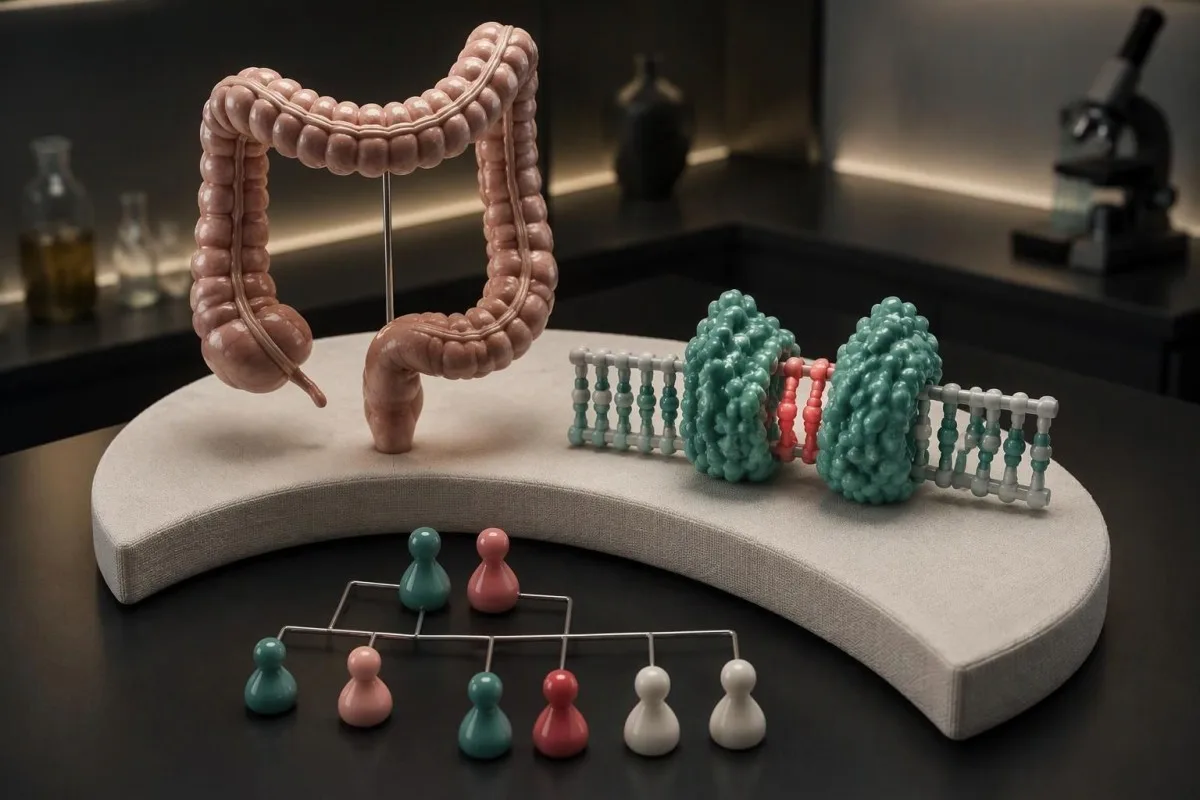
Irsiy xavf bo‘yicha ijobiy natija saratonga moyillikni anglatadi — saraton tashxisini emas. Salbiy natija tekshirilgan narsaga bog‘liq, noaniq variant esa davolashni belgilamasligi kerak; o‘smadagi MSI va nomuvofiqlikni tuzatish tizimini skriningdan o‘tkazish turli savollarga javob beradi.

Asosiy xulosalar
- Ijobiy germinal natija Linch sindromi bilan bog‘liq patogen yoki ehtimoliy patogen variant aniqlanganini anglatadi; bu saraton borligini anglatmaydi.
- Asosiy genlar paneli odatda MLH1, MSH2, MSH6, PMS2 va tegishli EPCAM deletsiya variantlarini qamrab oladi — 5 ta gen, ammo xavf profillari bir-birining o‘rnini bosa olmaydi.
- Haqiqiy manfiy natija laboratoriya oilada ma’lum bo‘lgan patogen variantni aniqlamaganini anglatadi; oilaviy variant aniqlanmagan holatda panelning manfiy natijasi axborot bermasligi mumkin.
- Noaniq variant ahamiyati noaniq variant yoki VUS deb ataladi; bu tasnif Linch sindromi tashxisi ijobiy degani emas.
- O‘smalarni skrining qilish MSI tekshiruvi yoki nomuvofiqlikni tuzatuvchi 4 ta oqsil uchun immunogistokimyodan foydalanadi; o‘smadagi g‘ayritabiiy natija irsiy variant borligini isbotlamaydi.
- Kolonoskopiyani rejalashtirish genga xos: Buyuk Britaniyaning 2020-yilgi irsiy kolorektal saraton bo‘yicha qo‘llanmasida MLH1/MSH2 uchun 25 yoshdan, MSH6/PMS2 uchun 35 yoshdan boshlash, odatda har 2 yilda bir marta o‘tkazish tavsiya etiladi.
- Oilaviy irsiylanish geterozigotali, Linch sindromi bilan bog‘liq patogen varianti bo‘lgan shaxsning har bir farzandida ushbu variantni meros qilib olish ehtimoli 50% ekanini bildiradi.
- Aspirin bilan profilaktika xavfsizlik masalasini individual muhokama qilishni talab etadi: CAPP2 tadqiqotida kuniga 600 mg sinab ko‘rilgan, ammo bu sinovdagi doza o‘z-o‘zini davolash uchun tavsiya emas.
Linch sindromi test natijalari aslida nimani anglatadi?
Linch sindromi uchun genetik tekshiruv saratonga irsiy moyillikni aniqlaydi, hozirda saraton bor-yo‘qligini emas. Patogen yoki ehtimoliy patogen germinal variant Linch sindromi tashxisini tasdiqlaydi; manfiy natijaning 2 xil talqini bor, noaniq klinik ahamiyatli variant esa saratonga irsiy xavf borligini tasdiqlamaydi.
“ ijobiy namuna haqidagi ma’lumotni ilova qilishni talab etadi. Ijobiy germinal natija odatda qon yoki so‘lakdan olingan konstitutsional namunadagi DNKga taalluqli; ijobiy o‘sma skriningi esa mavjud saratonning xususiyatlariga taalluqli. Bular 2 ta alohida topilma bo‘lib, odatda faqat birinchisi qarindoshlarda prediktiv tekshiruv o‘tkazish uchun ahamiyatli bo‘lgan irsiy moyillikni tasdiqlaydi.
Hisobotda tasniflashning 5 ta atamasi bo‘lishi mumkin: patogen, ehtimoliy patogen, noaniq klinik ahamiyatli, ehtimoliy benign va benign. Laboratoriyalar ba’zan bularni ijobiy, noaniq yoki manfiy deb umumlashtiradi, bu esa noaniq topilma bilan klinik chora ko‘rishni talab qilmaydigan topilma o‘rtasidagi farqni yashirishi mumkin. Faqat portalda rang bilan ko‘rsatilgan holat belgisiga emas, variant tasnifi satriga qarang.
Masalan, saraton kasalligi bo‘lmagan 2 nafar aka-uka yoki opa-singilni tasavvur qiling: birida oiladagi patogen MSH2 varianti bor, ikkinchisi esa aynan shu variantga tekshirilganda manfiy natija oladi. Birinchisiga profilaktika rejasi kerak; ikkinchisiga odatda shu oilaviy variant bo‘yicha Linch sindromiga xos kuzatuv kerak emas. Bu natijalarning hech biri o‘z-o‘zidan aka-uka yoki opa-singildan birortasida hozirda polip bor-yo‘qligini bildirmaydi.
Kantesti - bu AI qon testi analizatori muntazam laboratoriya natijalarini izohlashga yordam beradi, ammo umumiy qon tahlilining normal bo‘lishi Linch sindromi bilan bog‘liq 5 ta asosiy genning birortasidagi o‘zgarishni ham istisno qila olmaydi. Bizning tashkilotimiz va klinik doiramiz diagnostik genetika laboratoriyasidan farq qiladi: irsiy xavfga oid qarorlar uchun asl hisobot va malakali klinik talqin zarur.
Germinal test, MSI va nomuvofiqlikni tuzatish tizimini skriningdan o‘tkazish bir-biridan farq qiladi
Germinal tekshiruv Linch sindromi bilan bog‘liq variant konstitutsional DNKda mavjud yoki yo‘qligini aniqlaydi, holbuki MSI va nomuvofiqlikni tuzatuvchi oqsillar uchun immunogistokimyo saraton to‘qimasini tekshiradi. Immunogistokimyo 4 ta oqsilni baholaydi; MSI takrorlanuvchi DNK ketma-ketliklaridagi beqarorlikni o‘lchaydi. O‘smani skrining qilishning hech bir usuli yakka holda Linch sindromini isbotlamaydi.

Nomuvofiqlikni tuzatuvchi oqsillar uchun immunogistokimyo, odatda IHC, deb qisqartiriladi, MLH1, PMS2, MSH2 va MSH6 oqsillari ifodalanishini tekshiradi. 1 yoki undan ortiq oqsilning yo‘qligi tuzatish tizimidagi nuqsonga ishora qilishi mumkin, ammo patolog saraton bo‘lmagan hujayralardagi ichki bo‘yalish nazoratlari yaroqli ekanini tasdiqlashi kerak. Nazoratlarning muvaffaqiyatsizligi yo‘qolish haqiqatan g‘ayritabiiy ekanini emas, balki natijani talqin qilib bo‘lmasligini anglatishi mumkin.
An MSI-yuqori result means the tested cancer shows substantial microsatellite instability. Some assays use 5 markers, while sequencing-based methods assess many more sites; their cutoffs are assay-specific. An MSI percentage is not your percentage chance of inheriting Lynch syndrome, a distinction also relevant to сифат ва миқдорий натижалар.
Blood-based germline testing does not measure circulating cancer DNA unless a different test was specifically ordered. Constitutional DNA is usually obtained from white cellular elements, and saliva contains cells suitable for many genetics assays. After an allogeneic stem-cell transplant, these 2 specimen types can be problematic because donor-derived DNA may affect interpretation.
Cancer tissue can contain both inherited variants and changes acquired only by that cancer. Paired tumor–normal sequencing compares 2 specimens to help separate those possibilities, although interpretation still depends on assay coverage and quality. Ask whether your report describes a constitutional finding, a tissue-only finding, or an unresolved possibility requiring a separate germline test.
Linch sindromi genlar paneli nimalarni o‘z ichiga olishi kerak?
A Lynch syndrome gene panel usually includes MLH1, MSH2, MSH6, PMS2 and relevant EPCAM deletions. Testing should assess both small sequence changes and larger deletions or duplications where appropriate; a list of 5 gene names alone does not establish complete analytical coverage.
MLH1, MSH2, MSH6 and PMS2 encode the 4 mismatch-repair proteins commonly assessed by IHC. EPCAM is different: certain deletions near its end can silence the neighboring MSH2 gene. An EPCAM finding therefore needs its exact deletion boundaries reviewed; not every change in EPCAM causes Lynch syndrome.
Two technical blind spots deserve explicit questions: copy-number changes and difficult-to-sequence regions. PMS2 has a closely related pseudogene that complicates some analyses, so specialist methods may be necessary. The broader lesson—that copy count and sequence findings are not interchangeable—is explained in our copy-number screening guide, although SMA and Lynch syndrome have different inheritance.
A broader hereditary cancer panel may examine 20, 50 or more genes because overlapping family histories can suggest another syndrome. More genes can produce more uncertain findings and incidental risks unrelated to the original concern. Before testing, ask which additional findings would change surveillance and whether you can discuss their implications before receiving results.
A negative sequencing result may not exclude every mechanism associated with inherited risk. Rare constitutional MLH1 methylation changes, mosaicism, or structural changes outside the assay's scope can require additional investigation. If an older report lists only 1 gene or lacks deletion analysis, a genetics service can decide whether updated testing would answer a genuinely unresolved question.
Kimlar test topshirish va genetik maslahat olishni ko‘rib chiqishi kerak?
Testing is most informative when a relative has a known Lynch-associated variant, a cancer has suspicious mismatch-repair findings, or personal and family histories suggest inherited risk. A pedigree covering 3 generations helps determine who should be tested first and how a negative result would be interpreted.

Young-onset colorectal or endometrial cancer, multiple Lynch-associated cancers in 1 person, and cancers across successive generations can justify assessment. However, a small family, adoption, early deaths or few relatives with a uterus can hide the pattern. Absence of a striking family history is therefore weaker evidence than a confirmed negative test for a known familial variant.
When possible, test an affected relative before an unaffected relative. If a hypothetical parent had colorectal cancer at 43 and stored tissue is available, their tumor findings and germline result may be more informative than a broad panel in a healthy child. Our guide to oilaviy tarix bo'yicha saratonni tekshirish explains why routine laboratory screening is not a substitute.
Clinical prediction tools can estimate the probability of carrying a mismatch-repair variant. A PREMM5 score of at least 2.5% is a commonly used threshold for considering genetic evaluation, but referral criteria vary and tumor findings can justify assessment independently. A risk score selects people for evaluation; it does not convert a 2.5% estimate into a diagnosis.
Before ordering a test, discuss at least 3 practical issues: possible uncertain or incidental findings, implications for relatives, and local insurance or employment rules. Kantesti's maxfiylik va ma’lumotlar haqidagi ma’lumotlarni can help you review our handling of uploaded records, but genetics laboratories and healthcare services have their own consent, retention and disclosure policies.
Ijobiy natijalar va MSH6 mutatsiyasining ma’nosi
A pathogenic or likely pathogenic MSH6 germline variant supports a diagnosis of Lynch syndrome; it does not diagnose cancer. For MSH6 mutation meaning, distinguish 3 details: the exact variant, its laboratory classification and whether it was found in constitutional DNA or only in cancer tissue.
Lynch syndrome usually involves a pathogenic variant in 1 of the 2 copies of a mismatch-repair gene. Cancer development commonly requires additional changes in affected cells, including loss of the remaining functional repair pathway. This explains why inherited predisposition can be present from birth while cancer may develop much later—or never develop.
Risk differs across genes, organs, ages and family backgrounds. MSH6-associated colorectal cancer often develops later than MLH1- or MSH2-associated colorectal cancer, which helps explain different surveillance starting ages. For someone with a uterus, endometrial risk deserves a separate discussion; 1 combined label such as 'moderate lifetime cancer risk' can obscure very different organ-specific decisions.
“ likely does not make a likely pathogenic variant equivalent to a VUS. The ACMG/AMP framework describes likely pathogenic as greater than 90% certainty that a variant is disease-causing, not a greater than 90% chance that its carrier will develop cancer (Richards et al., 2015). That distinction prevents a classification probability from becoming a misleading personal risk estimate.
Kantesti - bu AI qon tahlili natijalari platformasi that can help contextualize hemoglobin and ferritin, but those 2 measurements cannot calculate penetrance for an MSH6 variant. Our tasdiqlash va klinik chegaralarimiz should not be interpreted as validation for germline variant classification. Ask your genetics team for a gene-specific surveillance letter rather than a generic positive-result summary.
Salbiy natija qachon xavfni haqiqatan ham kamaytiradi?
A true negative excludes the specific pathogenic variant already established in your family; an uninformative negative finds no explanatory variant when the family's genetic cause remains unknown. These 2 negative results can lead to very different surveillance recommendations despite identical wording in a patient portal.
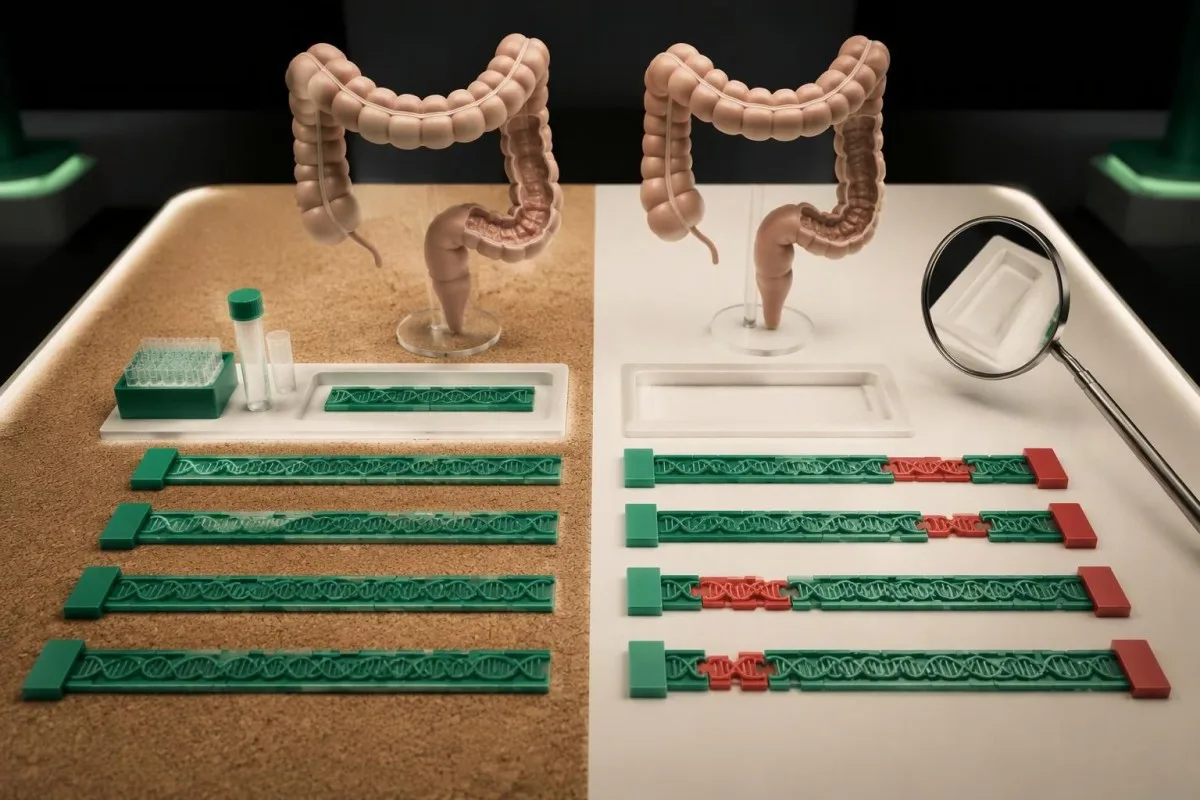
For a hypothetical adult whose mother has a confirmed pathogenic MLH1 variant, a validated negative test for that exact variant usually removes the mother's Lynch-associated inherited risk. It does not remove unrelated risks from the other parent, personal polyps or lifestyle. General-population screening—or another family-history schedule—may still apply; 'negative' never means zero lifetime cancer risk.
An unaffected person with 2 close relatives who had colorectal cancer may receive a negative broad panel without anyone identifying the family's cause. That result cannot establish whether the family has an undetected genetic mechanism, another inherited condition, or shared non-genetic risk. Surveillance should continue to reflect the documented pedigree rather than automatically reverting to the population schedule.
Three report details can change interpretation: the familial variant identifier, the test's detection methods and its stated limitations. Confirm that the laboratory actually tested the same variant found in the relative, particularly when reports use different transcript versions. Our tibbiy hisobot manbalarini tekshirish explain why the original laboratory wording matters more than an automated paraphrase.
Kantesti cannot make a negative inherited-risk report more conclusive by combining it with normal routine laboratory values. Even 10 normal blood-test results do not repair missing gene coverage or exclude a family-specific variant. A genetics review is more useful than repeating the same panel annually unless technology, the pedigree or the original interpretation has materially changed.
Noaniq genetik variant bo‘lsa, nima qilish kerak?
A ahamiyatsiz variant, or VUS, means evidence is insufficient to classify a genetic change as disease-causing or benign. A VUS is 1 of 5 standard classification categories and should not, by itself, trigger Lynch-specific surgery, intensified surveillance or predictive testing that labels relatives as affected.
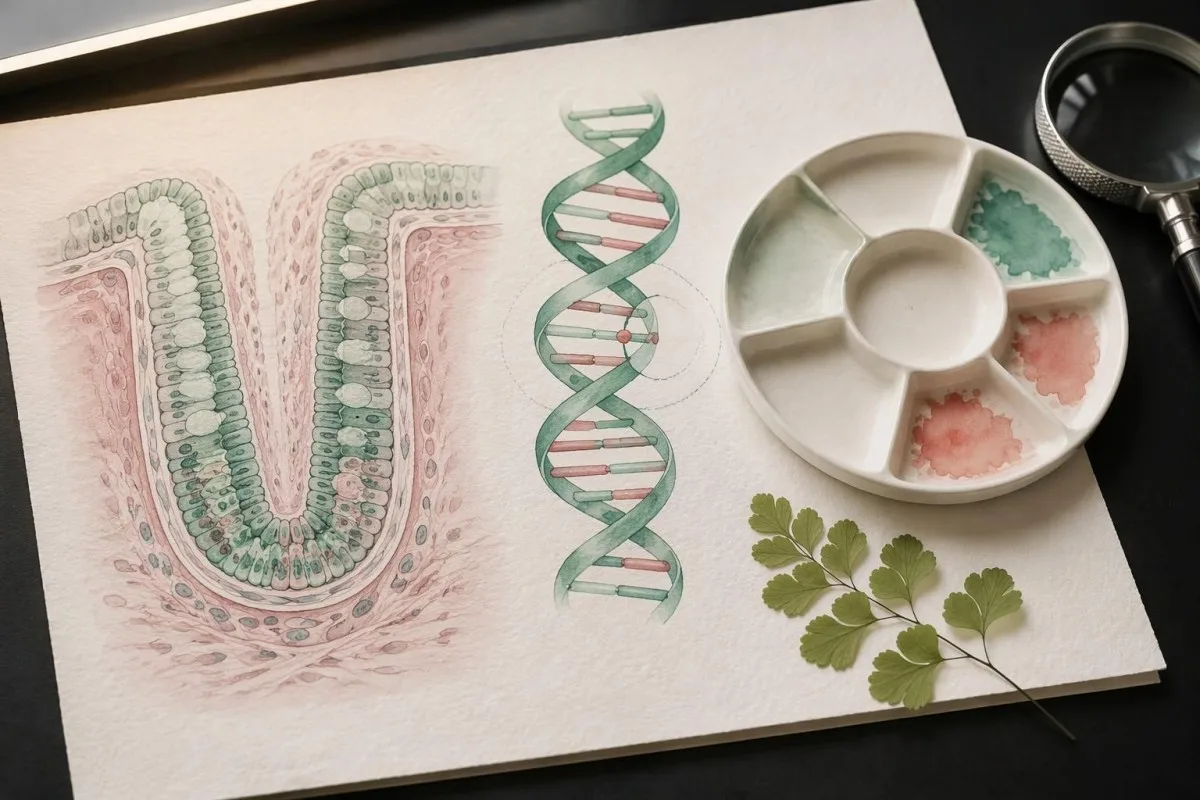
ACMG/AMP guidance states that a VUS should not be used in clinical decision-making (Richards et al., 2015). A person with a VUS may still need earlier colonoscopy because of 2 relatives with young-onset colorectal cancer, but the reason is the family history—not proof that the uncertain variant causes Lynch syndrome. Keep those rationales separate in the surveillance letter.
Laboratories evaluate several evidence types, including population frequency, functional experiments, segregation within families and consistency with established disease mechanisms. A computer prediction alone is not enough to establish pathogenicity. Even agreement between 2 prediction tools may reflect similar underlying training data rather than 2 independent pieces of biological evidence.
Reclassification can move a VUS toward benign or pathogenic, but there is no universal 12-month deadline for resolution. Ask who will contact you if the laboratory changes its classification and whether your contact details are linked to a recontact process. Our tibbiy kontent standartlari also distinguish unresolved evidence from clinically actionable conclusions.
Testing selected relatives can sometimes help a laboratory study an uncertain variant, but that is different from routine predictive cascade testing. If 1 relative carries the VUS and another does not, those results alone should not decide who needs surgery or who can stop screening. Request written clarification when a family study is being performed for evidence gathering rather than diagnosis.
Nega o‘smada Linch sindromi bo‘lmagan holda ham skrining natijasi me’yordan chetga chiqishi mumkin?
Abnormal tumor mismatch repair can result from sporadic MLH1 methylation, acquired changes in both copies of a repair gene, or inherited Lynch syndrome. These are at least 3 distinct explanations; tumor follow-up tests help distinguish them, especially when germline testing finds no pathogenic variant.
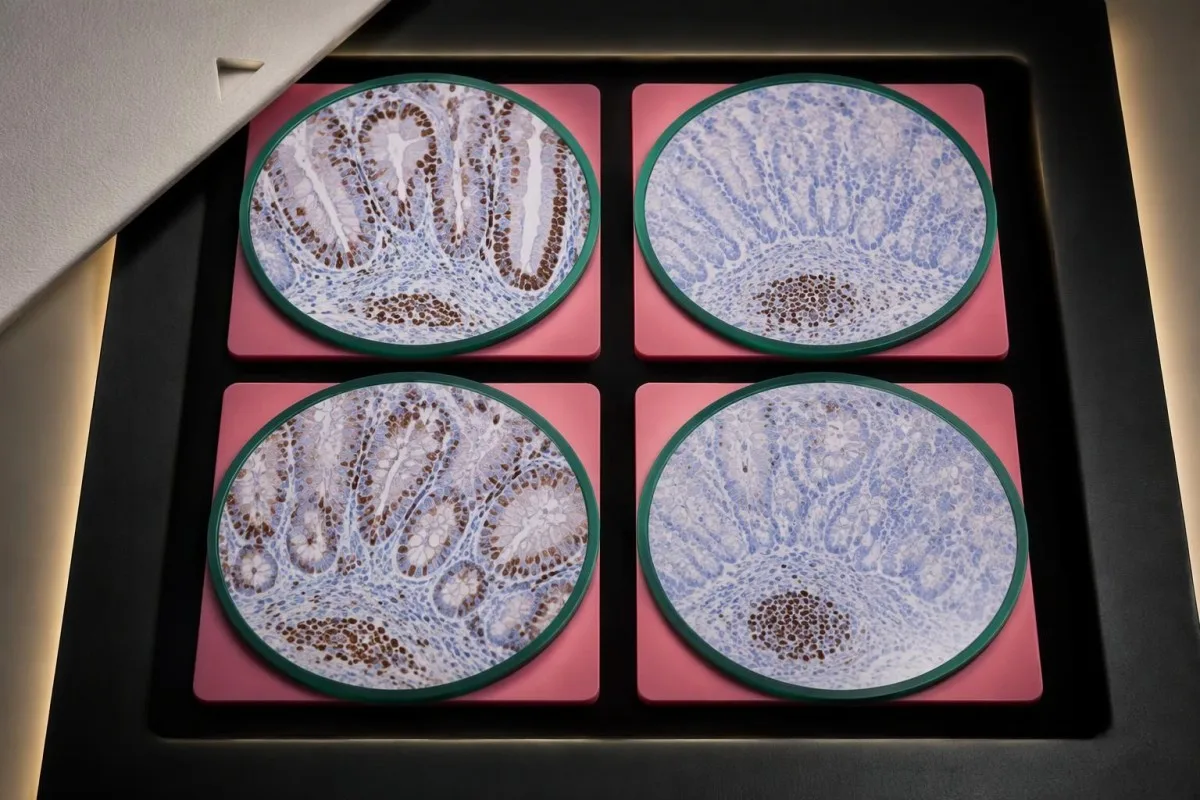
Loss of MLH1 and PMS2 often occurs together because these 2 proteins function as a pair. In colorectal cancer, MLH1 promoter methylation testing and sometimes BRAF V600E testing can support a sporadic explanation. BRAF is not the corresponding exclusion tool for endometrial cancer, and unusually young onset or a strong pedigree may still warrant specialist review.
Loss of MSH2 with MSH6, or isolated loss of MSH6 or PMS2, can guide germline assessment toward particular genes. However, these 4-protein patterns are clues, not a guaranteed gene diagnosis: staining artifacts, treatment effects and unusual biological mechanisms can complicate interpretation. A retained stain also does not prove that a protein functions normally.
Double-somatic findings describe 2 acquired events affecting mismatch repair within the cancer, without an explanatory germline variant identified. Paired tumor–normal analysis can support that conclusion and avoid incorrectly labeling an entire family with Lynch syndrome. An unresolved mismatch-repair-deficient cancer is not automatically double-somatic; management may still depend on family history and the completeness of testing.
Tumor markers such as CEA, reported in ng/mL, cannot establish whether mismatch-repair loss is inherited. Our explanation of elevated CEA limitations separates monitoring markers from hereditary diagnosis. Ask for 2 summaries when relevant: one explaining cancer treatment implications, including possible immunotherapy relevance, and another explaining what relatives should do.
Ijobiy natija kolonoskopiya kuzatuvini qanday o‘zgartiradi?
Confirmed Lynch syndrome generally requires regular colonoscopy, with starting age and interval tailored to the gene and family history. The 2020 BSG/ACPGBI/UKCGG guideline recommends starting at 25 years for MLH1/MSH2 va 35 years for MSH6/PMS2, with colonoscopy generally every 2 yoshdan boshlab boshlash mumkin.
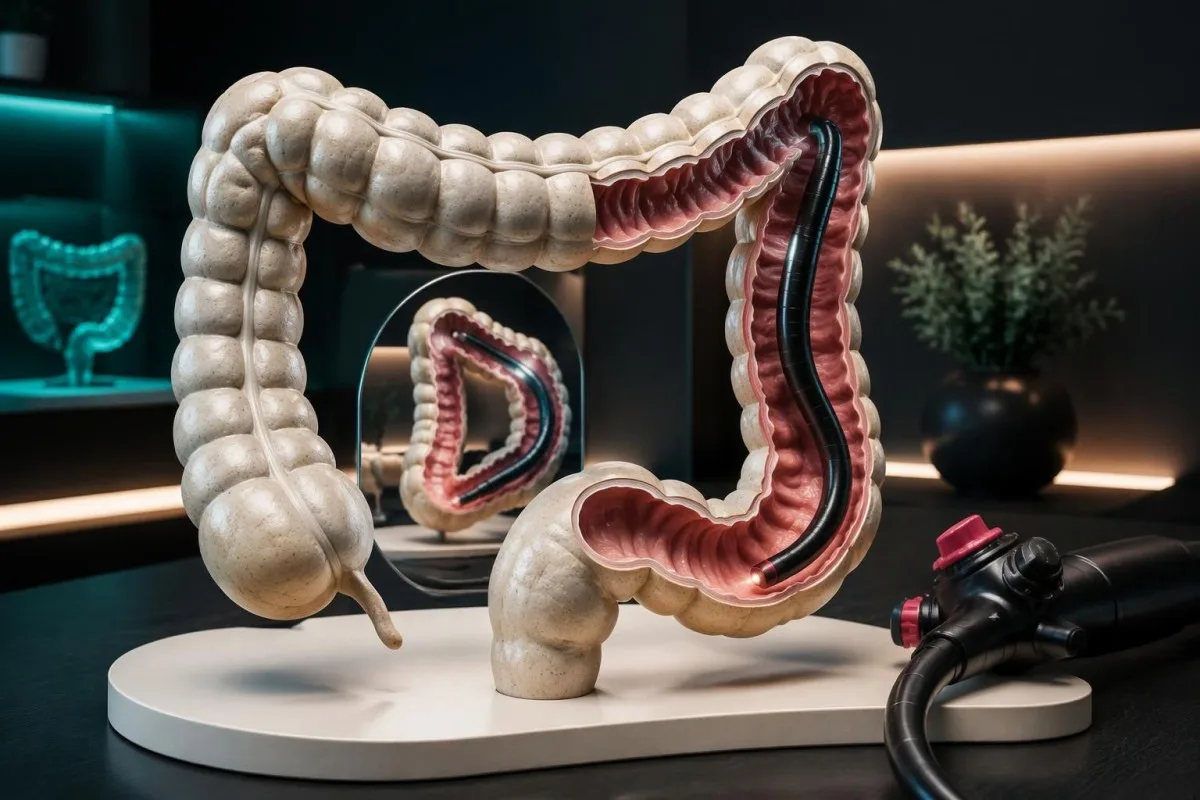
UK recommendations illustrate why a positive MSH6 result does not necessarily generate the same schedule as a positive MLH1 result (Monahan et al., 2020). US guidance commonly starts MLH1/MSH2 surveillance at 20–25 years and MSH6/PMS2 surveillance at 30–35 years, with intervals ranging from 1–3 years depending on gene and guideline. EPCAM-related surveillance is commonly aligned with MSH2.
A family member's unusually early cancer, previous colorectal cancer, adenomas or an inadequate examination can justify a different schedule. A normal colonoscopy means no concerning finding was identified at that examination; it does not remove the inherited predisposition. If your recommended interval is 2 years, ask whether the next date is measured from the completed high-quality examination or a planned repeat.
FIT and FOBT do not replace Lynch surveillance colonoscopy. Stool tests detect blood rather than reliably finding and removing precancerous polyps, so a negative stool test cannot reset a 1–2-year colonoscopy plan. Our ijobiy FIT kuzatuv qo'llanmasini ko'rib chiqing explains why an abnormal stool result still needs diagnostic assessment.
Preparation quality, complete examination and polyp removal matter alongside the calendar interval. Keep the endoscopy report, including whether the colon was fully examined and whether any polyp requires an earlier repeat. The limitations described in our FOBT result interpretation also explain why new symptoms need review between scheduled procedures rather than waiting for the next surveillance date.
Endometriy va tuxumdon saratonining oldini olish borasida nimalar o‘zgaradi?
Lynch syndrome can increase endometrial and, for some genes, ovarian cancer risk, but screening and preventive surgery are separate decisions. Some US guidance considers endometrial tissue sampling every 1–2 years from age 30–35; a survival benefit from routine screening has not been established.

A Pap test or HPV test does not screen the endometrium or ovaries. These 2 tests primarily support cervical cancer prevention, so a reassuring cervical result cannot exclude a Lynch-associated endometrial problem. Our HPV va Pap natijalarini talqin qilish helps distinguish which organ a screening result actually addresses.
New bleeding after menopause, persistent bleeding between periods, or a meaningful change from your usual menstrual pattern deserves prompt assessment rather than waiting 12 months for surveillance. Premenopausal symptoms have many benign explanations, but an inherited-risk history changes the threshold for investigation. Our Ko‘p hayz qon ketishi bo‘yicha qo‘llanma also identifies circumstances needing urgent care.
Risk-reducing hysterectomy can prevent endometrial cancer, but removing the ovaries is a separate choice with different benefits and harms. Timing depends on the gene, completed childbearing, previous cancer and preferences; removal before natural menopause can affect bone, cardiovascular and sexual health. For PMS2, ovarian risk is not clearly increased, so treating all 4 mismatch-repair genes identically can lead to unnecessary intervention.
Screening practice differs internationally because detection studies have not established the same benefit as prevention by surgery. Transvaginal ultrasound and CA-125, reported in U/mL, have not been proven to reliably prevent ovarian cancer deaths in Lynch syndrome. Ask for a written plan covering symptoms, any proposed tissue sampling, fertility goals and the specific rationale for considering 1 operation rather than another.
Yana qaysi saraton turlarini genlarga xos tarzda muhokama qilish kerak?
Additional Lynch surveillance depends on the gene, family history and local guidance; it is not a universal annual scan of every organ. Upper urinary tract, stomach, small bowel and certain skin cancers deserve consideration, while the benefit of several proposed screening tests remains uncertain across the 4 mismatch-repair genes.
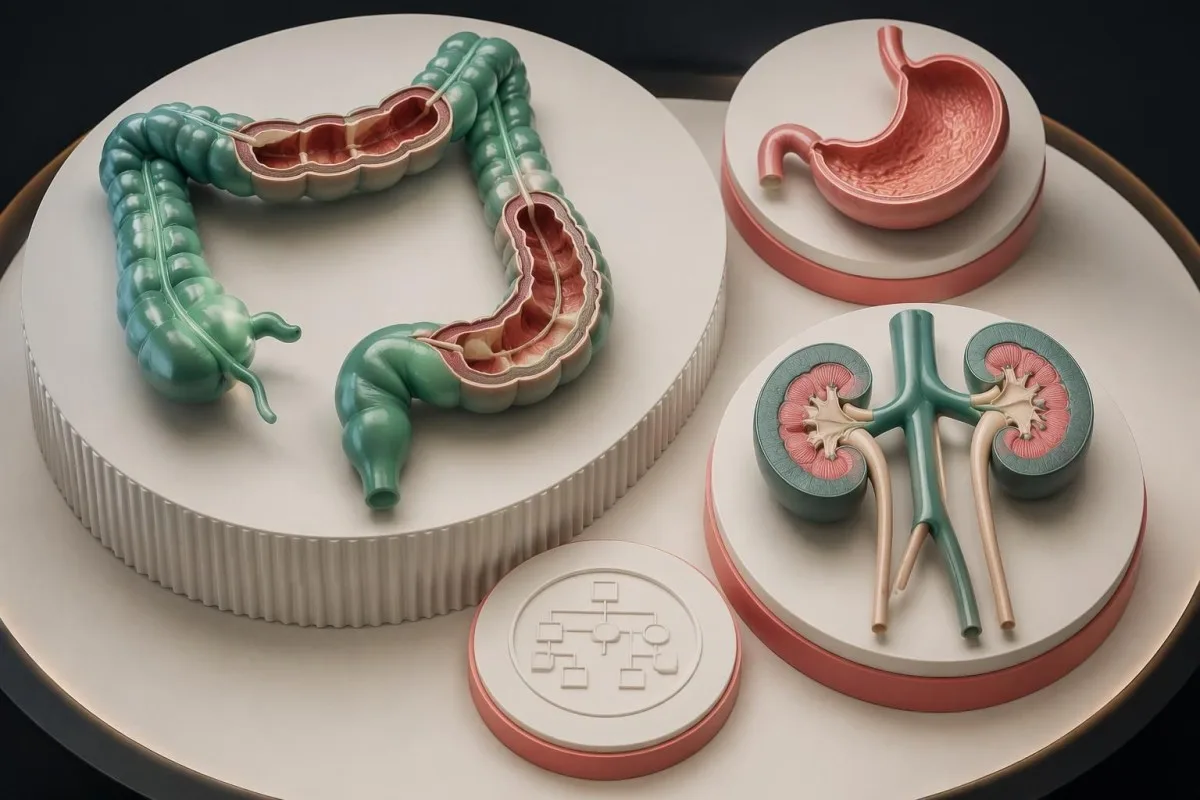
Upper urinary tract cancer involves the renal pelvis or ureter and is particularly relevant to some MSH2 families. Visible blood in urine needs assessment even after 1 apparently benign episode, although infections and stones are common alternatives. Our urinary cancer warning signs address symptom urgency; bladder and upper-tract cancers are not anatomically identical.
Routine urinalysis or urine cytology has not been shown to provide a clear mortality benefit for every person with Lynch syndrome. Some services consider annual testing when family history or gene-specific risk warrants it, while others emphasize symptoms. A negative urine dipstick cannot guarantee the absence of a small upper-tract cancer, and a positive result still has more than 1 possible cause.
Upper gastrointestinal surveillance is another area of disagreement. Some US protocols consider endoscopy from age 30–40 at 2–4-year intervals for selected people, whereas the 2020 UK guideline does not recommend routine gastric or small-bowel surveillance outside a clinical trial (Monahan et al., 2020). Helicobacter pylori testing and eradication are a distinct preventive discussion, not proof that endoscopy is unnecessary.
Sebaceous skin growths can be part of the Muir–Torre phenotype, a Lynch-associated presentation that may prompt dermatological assessment. Pancreatic screening is generally restricted to selected higher-risk people, often involving a relevant family history and a specialist program. Rather than requesting 10 unrelated annual tests, ask which additional organ has a documented risk increase in your gene and family.
Aspirin yoki muntazam qon tahlillari saratonning oldini olishga yordam beradimi?
Aspirin can reduce colorectal cancer risk in Lynch syndrome, but dose and suitability require a clinician's assessment. CAPP2 randomized 861 participants ga 600 mg aspirin daily or placebo and found a long-term colorectal cancer benefit; routine blood tests cannot replace genetic testing or colonoscopy.
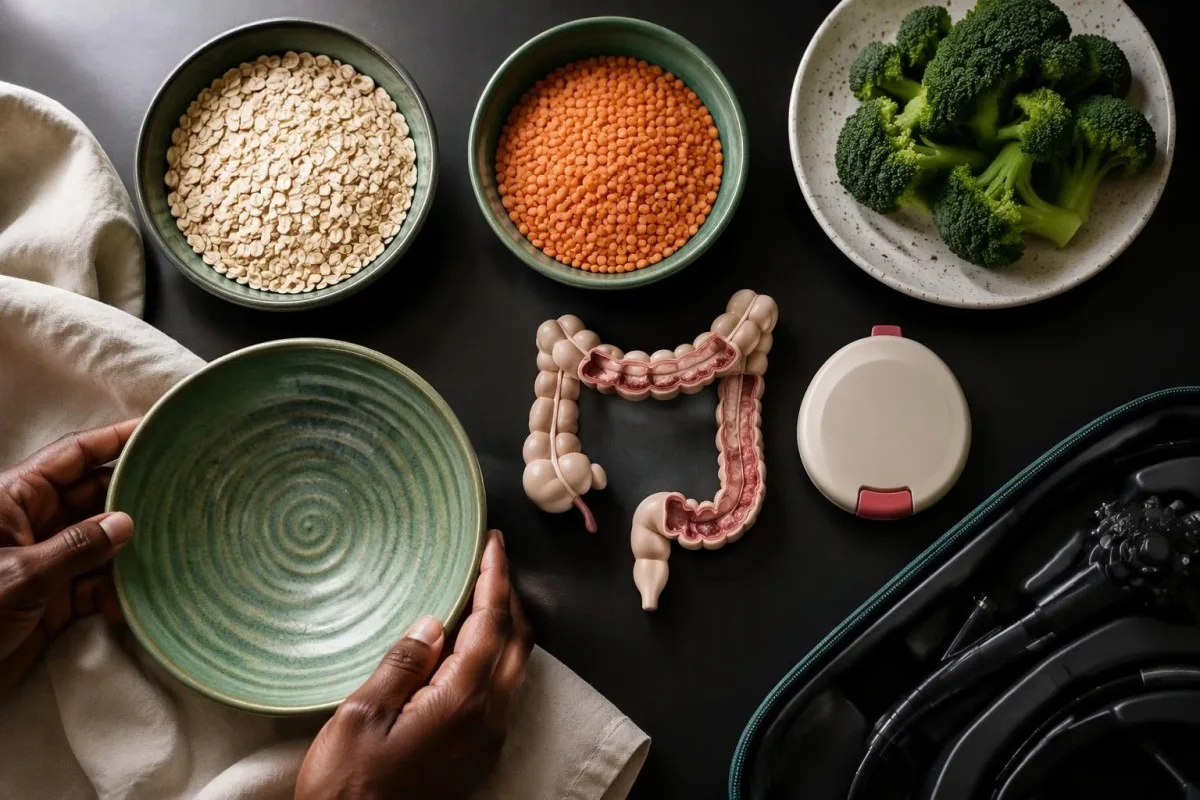
CAPP2 reported colorectal cancer in 40 of 427 aspirin-assigned participants versus 58 of 434 placebo-assigned participants during long-term follow-up, with a hazard ratio of 0.65 (Burn et al., 2020). Benefit was delayed rather than immediate. The trial's 600 mg dose is evidence about that regimen, not permission to start high-dose aspirin without reviewing bleeding risk and other medicines.
Aspirin planning should consider at least 3 safety factors: previous gastrointestinal bleeding or ulcer disease, anticoagulant use and allergy or intolerance. Lower-dose approaches are used in practice, but the optimal dose for an individual is not determined by their gene name alone. Ask the prescriber to explain the evidence behind the chosen dose, intended duration and any stomach-protection strategy.
Iron deficiency may develop before anemia and can justify investigation even when a recent complete blood count was reassuring. A ferritin below about 15 ng/mL strongly supports depleted iron stores in an otherwise uncomplicated adult, but inflammation can make ferritin less reliable. Our past ferritin simptom qo'llanmamiz explains why replacing iron does not remove the need to identify its cause.
Kantesti can help explain routine hemoglobin and iron-panel trends, but neither a normal hemoglobin in g/dL nor 1 normal ferritin result rules out colorectal cancer. Our temir ko‘rsatkichlarini talqin qilish is useful for understanding iron physiology, not diagnosing Lynch syndrome. Nutrition and exercise support general health; no supplement repairs an inherited pathogenic mismatch-repair variant.
Ijobiy natijadan keyin qarindoshlar nima qilishi kerak?
Each child of a person with a heterozygous Lynch-associated pathogenic variant has a 50% chance of inheriting that variant, regardless of sex. Adult relatives should be offered targeted cascade testing when appropriate, using the exact familial variant rather than assuming that every relative needs a broad panel.
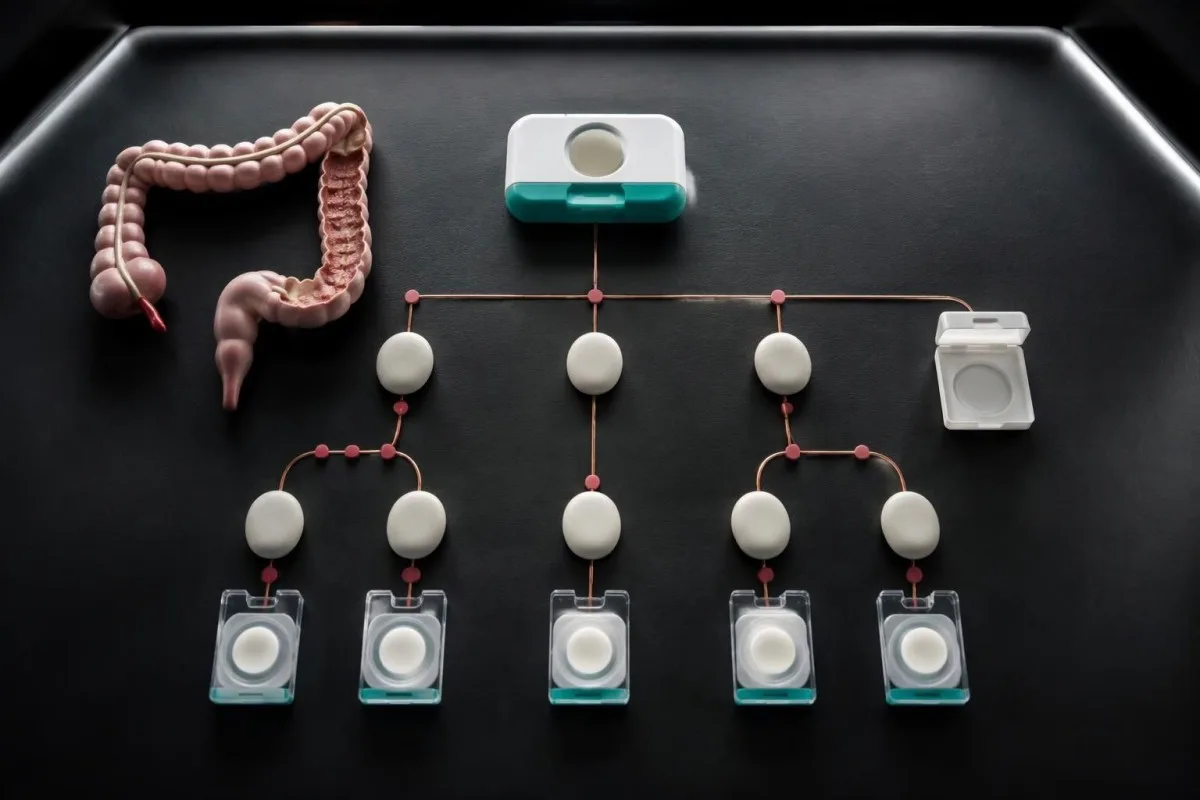
The 50% probability applies independently to each pregnancy; it does not mean exactly half the children in a particular family will inherit the variant. A sibling's probability depends on the family structure and which parent carries it. If a shared parent has the variant, each sibling generally has a 50% chance; if the variant arose newly in one sibling, the calculation changes.
A family letter should identify the gene, exact variant, laboratory classification and route to genetic counseling. Sharing the relevant genetics report can prevent a relative from being tested for the wrong target. Our oilaviy natijalarni xavfsiz baham ko'rish describes consent-based workflows, but sending a report is not the same as another person consenting to genetic testing.
Predictive testing is usually deferred until adulthood because routine Lynch surveillance generally begins later; exceptionally early family cancers can change that discussion. Two pathogenic variants affecting both copies of the same mismatch-repair gene can cause constitutional mismatch repair deficiency, a different condition with childhood implications. If both reproductive partners carry pathogenic variants in the same gene, each pregnancy can have a 25% chance of that biallelic condition.
Kantesti's family-history features can support organization of health information, but they cannot infer that an untested relative carries the variant. Our ko'p avlod roziligi bo'yicha ko'rsatmalar explains why 1 person's result should not automatically populate another person's record as a diagnosis. Relatives may need time to decide about testing; offer accurate information without presenting inherited predisposition as an inevitable cancer outcome.
Keyingi qadamlaringiz va qo‘llab-quvvatlovchi tadqiqotlar ko‘lami
The next step is to match the result to 3 records: the original genetics report, relevant tumor testing and a verified family history. Then obtain a written surveillance plan that states which recommendations follow from a pathogenic variant and which follow from personal or family history.
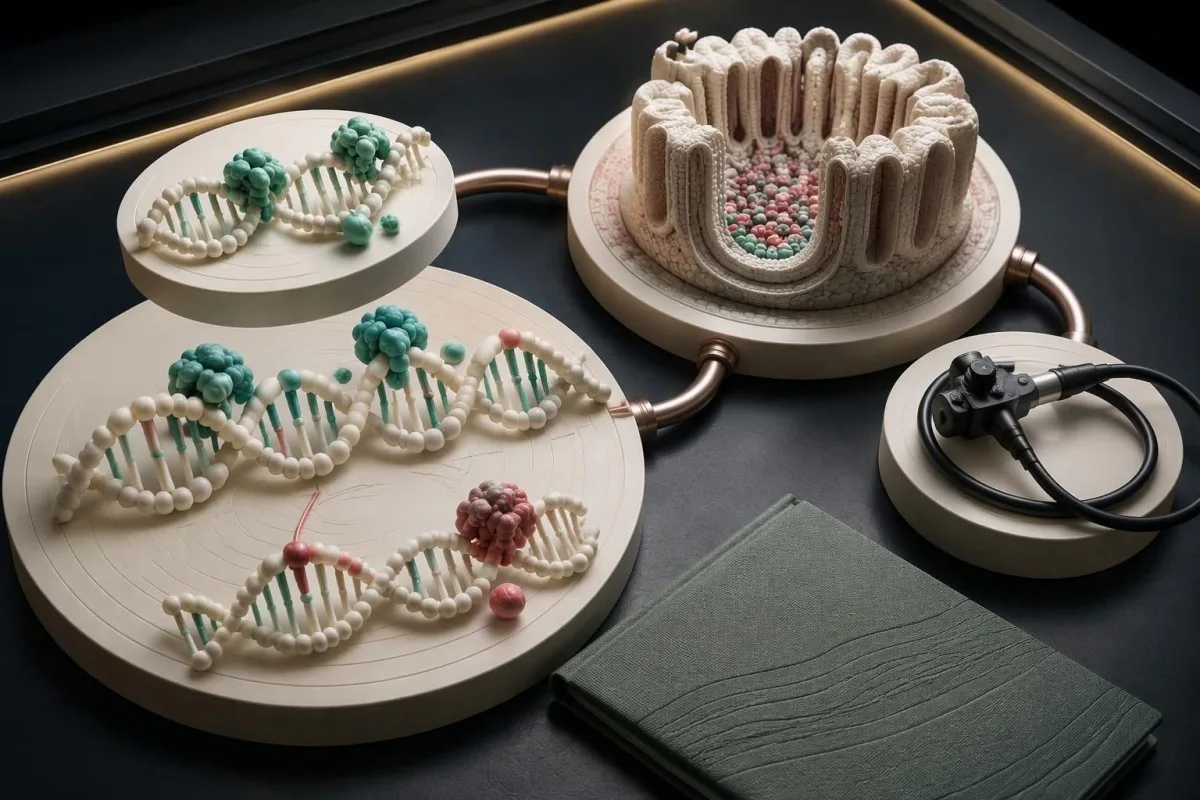
Bring 5 questions to the follow-up appointment: Is this germline or tumor-only? What is the exact classification? Was the familial variant excluded? Does further tumor analysis remain necessary? What should relatives do? Request specific dates for surveillance rather than 'regular checks,' and identify who owns the plan if genetics, gastroenterology and oncology services are all involved.
Kantesti - bu AI asosidagi qon tahlili analiz vositasi that can support understanding of routine laboratory reports, not a service that confirms any of the 5 Lynch-associated genes. Our хариуцлагатай AI-ийн хязгаарлалтууд explain why original-source verification and clinician review matter. Do not allow an automated summary to override a laboratory's VUS classification or change a specialist's surveillance interval.
The 2 Zenodo publications listed below are background resources on routine iron and coagulation testing; neither is a Lynch syndrome genetic-testing study. The koagulatsiya tekshiruvi natijalarini talqin qilish bo‘yicha qo‘llanmamiz may clarify laboratory terminology during medication discussions, but a normal aPTT in seconds does not establish that aspirin is safe or exclude gastrointestinal bleeding risk.
New symptoms require diagnostic assessment even if your next surveillance examination is 1 year away. Persistent rectal bleeding, unexplained iron deficiency, visible blood in urine or postmenopausal bleeding should not be dismissed because an inherited-risk result was negative. Heavy bleeding with fainting, severe abdominal pain or black tarry stool with weakness warrants urgent medical care rather than waiting for genetic clarification.
Tez-tez beriladigan savollar
Lynch sindromi bo‘yicha genetik testning ijobiy natijasi menda saraton borligini anglatadimi?
Lynch sindromi uchun ijobiy germinal test saratonga irsiy moyillikni aniqlaydi, mavjud saratonni emas. Odatda, natija Lynch sindromi bilan bog‘liq genning 1 nusxasiga ta’sir qiluvchi patogen yoki ehtimol patogen variantni aniqlaydi. Saraton xavfi gen, yosh, a’zo va oilaviy anamnezga qarab farq qiladi, shuning uchun ijobiy natija saraton muqarrarligini bashorat qilmaydi. Keyingi tegishli qadam — saratonni davolash zarur deb taxmin qilish emas, balki genetik maslahat olish va muayyan genga xos kuzatuv rejasini tuzishdir.
Salbiy genetik test Linch sindromi borligini inkor eta oladimi?
A negative test is most conclusive when it excludes the exact pathogenic variant already confirmed in the family. There are 2 main negative-result situations: a true negative for that familial variant and an uninformative negative when the family's cause remains unknown. A negative panel may not exclude mechanisms outside its analytical coverage or another explanation for a strong cancer history. Screening should therefore follow the genetics team's interpretation of the report, personal history and pedigree.
MSH6 mutatsiyasi nimani anglatadi?
Konstitutsional DNKda MSH6 ning patogen yoki patogen bo‘lishi ehtimoli yuqori bo‘lgan varianti Lynch sindromi tashxisini tasdiqlaydi, MSH6 VUS esa buni tasdiqlamaydi. MSH6 — Lynch sindromini baholashda odatda tekshiriladigan nomuvofiqlikni tuzatuvchi 4 ta oqsil genidan biri. MSH6 bilan bog‘liq Lynch sindromida kolorektal saraton ko‘pincha MLH1 yoki MSH2 bilan bog‘liq kasalliklarga qaraganda kechroq rivojlanadi, biroq endometriy bilan bog‘liq xavfga ham alohida e’tibor qaratish kerak. Faqat saraton to‘qimasida aniqlangan o‘zgarishni irsiy deb ta’riflashdan oldin qo‘shimcha baholash talab etiladi.
MSI-yuqori daraja Lynch sindromi bilan bir xilmi?
MSI-yuqori holat tekshirilgan saratondagi takrorlanuvchi DNK beqarorligini tavsiflaydi va irsiy Linch sindromi bilan bir xil ma’noni anglatmaydi. O‘simtani skrining qilishda 4 ta oqsil: MLH1, PMS2, MSH2 va MSH6 uchun immunogistokimyodan ham foydalanish mumkin. Sporadik metillanish yoki orttirilgan o‘zgarishlar irsiy patogen variant bo‘lmasa ham nomuvofiqlikni tuzatish tizimi buzilishiga olib kelishi mumkin. Germinal baholash va zarur hollarda o‘simtani qo‘shimcha tekshirish ushbu topilmaning qarindoshlar uchun ahamiyatini aniqlaydi.
Qarindoshlar Lynch sindromi VUSiga tekshirilishi kerakmi?
A Lynch-associated VUS should not ordinarily be used for predictive testing that determines whether relatives are affected or can stop surveillance. A VUS is 1 of 5 standard variant classification categories and does not establish pathogenicity. A genetics laboratory may sometimes request selected family testing to gather evidence, but that is a different purpose from diagnostic cascade testing. Relatives' surveillance should reflect their personal and family histories while the variant remains uncertain.
Linch sindromi bo‘lgan odamlarga kolonoskopiya qanchalik tez-tez kerak bo‘ladi?
Linch sindromida kolonoskopiya oralig‘i gen, tekshiruv natijalari, oilaviy anamnez va mahalliy tavsiyalarga bog‘liq. Buyuk Britaniyaning 2020-yilgi irsiy kolorektal saraton bo‘yicha qo‘llanmasi kolonoskopiyani, odatda, har 2 yilda bir marta o‘tkazishni tavsiya etadi: MLH1/MSH2 uchun 25 yoshdan, MSH6/PMS2 uchun esa 35 yoshdan boshlab. AQShda qo‘llanadigan jadvallarda odatda tekshiruvlar oralig‘i 1–3 yilni tashkil etadi; MLH1/MSH2 uchun boshlash yoshi MSH6/PMS2 ga qaraganda ertaroq. FIT yoki FOBT natijasining manfiy bo‘lishi tavsiya etilgan kolonoskopiya jadvalining o‘rnini bosmaydi.
Agar Linch sindromi testim ijobiy chiqsa, aspirin qabul qilishni boshlashim kerakmi?
Klinik mutaxassis bilan foyda va zararlarni muhokama qilmasdan, faqat Lynch sindromi natijasi ijobiy bo‘lgani uchun aspirin qabul qilishni boshlamang. CAPP2 tadqiqotida 861 ishtirokchiga kuniga 600 mg miqdorida aspirin berildi va uzoq muddatda kechikib namoyon bo‘ladigan kolorektal saratonning oldini olish foydasi kuzatildi, biroq bu doza hammaga tavsiya etiladigan doza emas. Avvalgi me’da-ichak qon ketishi, yara kasalligi, antikoagulyantlar qabul qilish va preparatni ko‘tara olmaslik qarorga ta’sir qilishi mumkin. Tanlangan doza va qabul qilish muddati kuzatuv choralari bilan birga qayd etilishi kerak, chunki aspirin kolonoskopiyaning o‘rnini bosmaydi.
Qon tahlili natijalarini qanday o‘qish kerak
Laboratoriya hisobotingizni yuklang va Kantesti sun’iy intellekti har bir biomarkerni soniyalar ichida sodda tilda tushuntiradi. Dunyo bo‘ylab 2 milliondan ortiq kishi foydalanadi.
Adabiyotlar
- Klein, T., Mitchell, S., & Weber, H. (2026). Temir tahlillari bo‘yicha qo‘llanma: TIBC, temir bilan to‘yinganlik va bog‘lash qobiliyati. Kantesti AI tibbiy tadqiqotlari. DOI
- Klein, T., Mitchell, S., & Weber, H. (2026). aPTTning me’yoriy oralig‘i: D-dimer, Protein C va qon ivishi bo‘yicha qo‘llanma. Kantesti AI tibbiy tadqiqotlari. DOI
- Monahan KJ et al. (2020). Guidelines for the management of hereditary colorectal cancer from the British Society of Gastroenterology (BSG)/Association of Coloproctology of Great Britain and Ireland (ACPGBI)/United Kingdom Cancer Genetics Group (UKCGG). Gut. DOI
- Richards S va boshq. (2015). Ketma-ketlik variantlarini talqin qilish bo‘yicha standartlar va ko‘rsatmalar: Amerika Tibbiy Genetika va Genomika kolleji hamda Molekulyar patologiya assotsiatsiyasining qo‘shma konsensus tavsiyasi. Tibbiyotdagi genetika. DOI
- Burn J et al. (2020). Cancer prevention with aspirin in hereditary colorectal cancer (Lynch syndrome), 10-year follow-up and registry-based 20-year data in the CAPP2 study: a double-blind, randomised, placebo-controlled trial. The Lancet. DOI
- 2M+Tahlil qilingan testlar
- 127+Mamlakatlar
- 100+Tillar
Tibbiy guruh haqida


E-E-A-T ishonch signallari
Tajriba
Shifokor boshchiligidagi laboratoriya talqin qilish ish jarayonlarini klinik ko‘rib chiqish.
Tajriba
Laboratoriya tibbiyoti biomarkerlarning klinik kontekstda qanday o‘zini tutishini yoritadi.
Vakolatlilik
Doktor Thomas Klein tomonidan tibbiy jihatdan ko‘rib chiqilgan, doktor Sarah Mitchell va professor doktor Hans Weber hissalari bilan.
Ishonchlilik
Xavotirni kamaytirish uchun aniq keyingi qadamlar yo‘nalishlari bilan dalillarga asoslangan talqin.






Tibbiy ogohlantirish
Ushbu maqola faqat ta’lim maqsadlari uchun mo‘ljallangan va tibbiy maslahatni anglatmaydi. Tashxis va davolash bo‘yicha qarorlar uchun har doim malakali sog‘liqni saqlash mutaxassisiga murojaat qiling.
Nashr etilgan · Tahririyat jamoasi bilan bog‘laning
Angliya va Uelsda ro‘yxatdan o‘tgan Kantesti Ltd tomonidan nashr etilgan, kompaniya raqami. 17090423, London, Birlashgan Qirollik.
