
Davolash farzandingizning suvsizlanish darajasi va alomatlariga bog‘liq, faqat musbat natijaga emas. Yaqinda og‘iz orqali emlanganlik va virus ajralishining davom etishi natijani talqin qilishni qiyinlashtirishi mumkin.

Asosiy xulosalar
- Rotavirus PCR musbat natija najasda rotavirusning genetik materiali aniqlanganini anglatadi; u suvsizlanish darajasini o‘lchamaydi va hozirgi alomatlar sababini avtomatik ravishda tasdiqlamaydi.
- Alomatlar bilan kechadigan kasallik odatda 3–8 kun davom etadi, ammo uyda parvarish qilishning o‘zi yetarliligini bolaning qancha suyuqlik yo‘qotishi va icha olishi belgilaydi.
- Virusning uzoq vaqt ajralib chiqishi sezgir najas PCR testining bir necha hafta davomida, ayrim bolalarda og‘ir kasallikdan keyin hatto 4 haftadan ortiq vaqt davomida ham musbat chiqishiga olib kelishi mumkin.
- Yaqinda og‘iz orqali emlanganlik najasda virus aniqlanishini, ayniqsa dastlabki 1–2 hafta ichida, izohlashi mumkin; odatiy PCR testi vaksina shtammini yovvoyi turdagi virusdan farqlamasligi mumkin.
- Og‘iz orqali rehidratatsiya eritmasi paketda ko‘rsatilgan aniq hajmdagi suv bilan aralashtirilishi kerak; kukunni ikki baravar ko‘p solish tuz konsentratsiyasini xavfli darajaga yetkazishi mumkin.
- Suvsizlanishni davolash NICE tavsiyalariga ko‘ra, 4 soat davomida har kg vaznga 50 ml og‘iz orqali regidratatsiya eritmasi, shuningdek, organizmning odatiy ehtiyojlari uchun zarur miqdor beriladi va klinik holat qayta baholanadi.
- Shoshilinch baholash siydik miqdori sezilarli kamayganda, suyuqlikni ichida ushlab turolmaganda yoki hushyorligi yomonlashganda zarur; taxminan 8 soat siymaganlik xavotirga sabab bo‘ladi, chaqaloqlarga esa maslahatni ertaroq olish kerak.
- Favqulodda belgilar uyg‘otish qiyinlashishi, yashil qusindi, qorin sohasida kuchli xurujsimon og‘riq yoki shok belgilari kiradi; 3 oylikdan kichik chaqaloqda 38°C yoki undan yuqori harorat ham shoshilinch tibbiy ko‘rikni talab qiladi.
- Antibiotics rotavirusni davolamaydi, ijobiy natijaning o‘zi esa antibiotik yoki odatda buyuriladigan virusga qarshi dori tayinlashga asos bo‘lmaydi.
- Bolani bog‘chaga qaytarish Buyuk Britaniyadagi qoidalarga ko‘ra, odatda qusish yoki ich ketishi to‘xtaganidan keyin kamida 48 soat o‘tishi talab qilinadi — PCR testini takroran topshirib, manfiy natija olish emas.
Rotavirus PCR testining musbat natijasi nimani anglatadi?
A rotavirus PCR testi ijobiy natija najas namunasida rotavirus genetik materiali borligini anglatadi. Farzandingiz natijaning o‘zi uchun emas, suvsizlanish yoki bezovta qiluvchi alomatlar uchun davolanishi kerak; ahvoli yaxshi bo‘lgan bolaga dori kerak bo‘lmasligi mumkin, ayniqsa u tuzalgan bo‘lsa yoki avvalgi 1–2 hafta ichida og‘iz orqali vaksina olgan bo‘lsa.
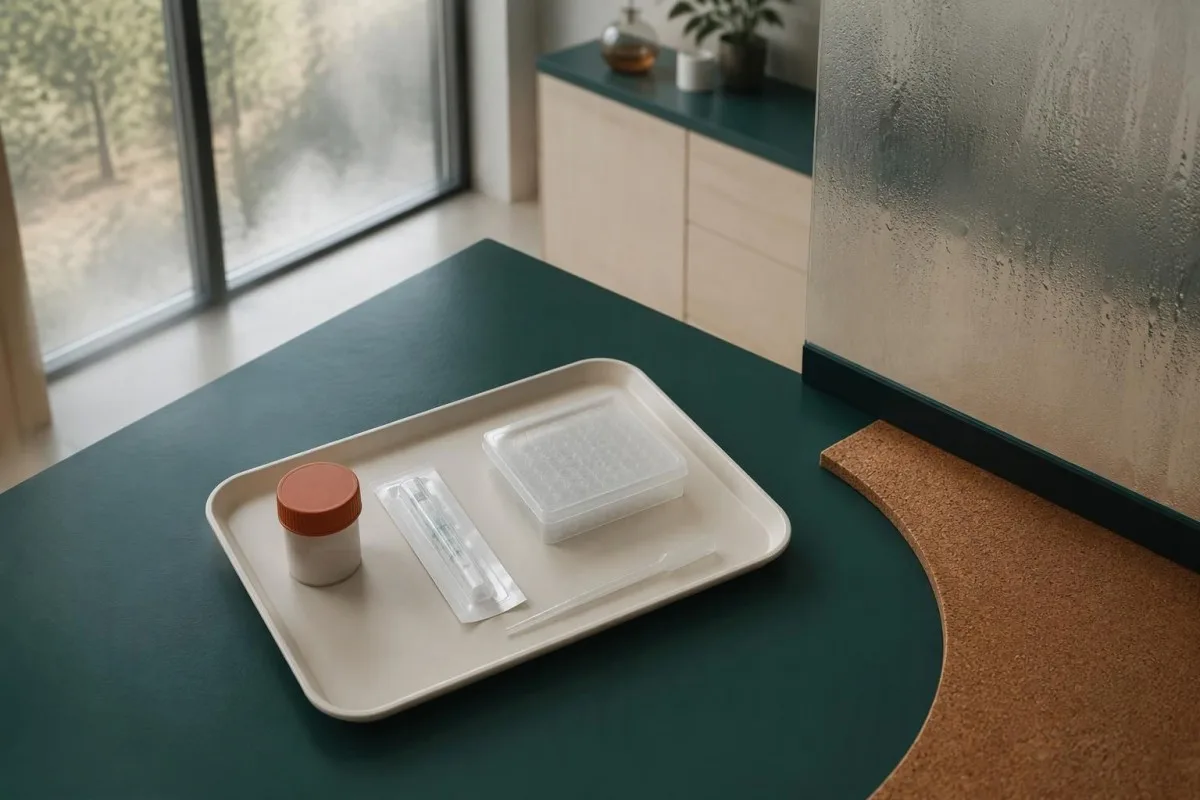
Najas PCR testi aniqlash testidir, og‘irlik darajasini baholash shkalasi emas. Rotavirus tarkibida RNK bo‘lgani sababli, molekulyar tekshiruvda ko‘paytirishdan oldin teskari transkripsiya bosqichi o‘tkaziladi; ko‘plab oshqozon-ichak panellari rotavirus A ni tekshirilayotgan bir nechta patogendan biri sifatida qayd etadi.
A rotavirusga najas testi ijobiy natija 3 xil holatga mos kelishi mumkin: hozirgi simptomli kasallik, tuzalgandan keyin virus ajralishining davom etishi yoki og‘iz orqali vaksina dozasidan keyin vaksinadan kelib chiqqan virus aniqlanishi. Shu sababli laboratoriya xulosasidagi bir xil ibora turli klinik qarorlarga olib kelishi mumkin.
Sikl chegarasi qiymatlari davolash yoki yuqumlilikni ishonchli aniqlay olmaydi. Masalan, faraziy Ct 35 avtomatik ravishda zararsiz degani emas, Ct 20 esa shifoxonada davolanishni avtomatik ravishda talab qilmaydi; namunani saqlash va ishlov berish, tahlil usuli va najas tarkibi bu raqamlarga ta’sir qiladi.
Kantesti - bu AI qon testi analizatori, najasdagi virusni aniqlash xizmati emas; bitta ijobiy molekulyar natija ahvoli yomonlashayotgan bolani ko‘rikdan o‘tkazish o‘rnini bosa olmaydi. Ma’lumot tashkilotimiz haqida qon tahlillariga e’tibor qaratishimizni va ushbu maqolada tahlil xulosasini talqin qilish klinik saralashdan nega alohida ko‘rib chiqilishini tushuntiradi.
Musbat natija farzandingiz alomatlarini izohlaydimi?
Faol rotavirusli gastroenterit najas PCR natijasi ijobiy bo‘lib, yangi boshlangan suvdek ich ketishi, qusish va ba’zan isitma kuzatilganda ehtimolga yaqinroq bo‘ladi. Alomatlar odatda virus yuqqanidan taxminan 2 kun o‘tib boshlanadi va taxminan 3–8 kun davom etadi, ammo emlanganlik holati hamda bolaning umumiy salomatligi kasallik kechishini o‘zgartirishi mumkin.
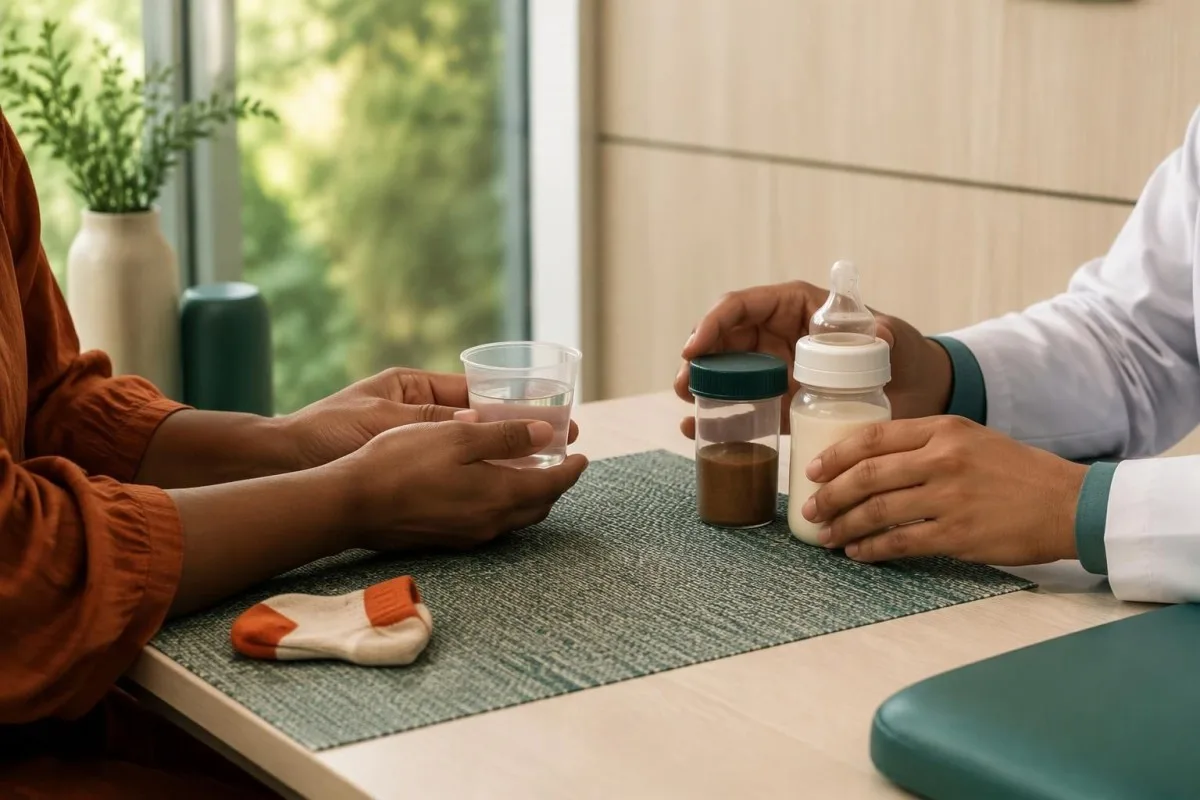
Alomatlar vaqt jadvali virus aniqlanishi klinik jihatdan ahamiyatli ekanini aniqlashga yordam beradi. Qusish boshlangan birinchi kunni, birinchi suyuq najas kelgan vaqtni va alomatlar yengillashayotgan-yengillashmayotganini qayd eting; suvdek ich ketishining 2-kunida olingan ijobiy namuna tuzalgandan 3 hafta o‘tib olingan namunadan boshqacha ma’noni anglatadi.
Masalan, faraziy 18 oylik bolada bugun 6 marta suvdek ich kelishi, takroriy qusish va yaqinda ijobiy chiqqan PCR natijasi klinik jihatdan ahamiyatli gastroenterit borligini ko‘rsatadi. Keyingi qaror — bola yo‘qotgan suyuqlikni qoplay olyaptimi-yo‘qmi; ikkinchi test virus borligini isbotlay oladimi-yo‘qmi emas.
Multiplex panellar 1 dan ortiq patogenni aniqlashi mumkin. A second positive target may represent another cause, coinfection, or incidental detection; severe localized pain or stool with visible blood should not be explained away simply because rotavirus also appears on the report.
For children who use the toilet, the najas konsistensiyasi bo‘yicha qo‘llanmamiz can help describe changes, but type 7 stool does not identify a specific pathogen. In infants, compare with their usual stool pattern because normal breastfed stools can already be loose.
Sog‘aygandan keyin rotavirus qancha vaqt ajralib chiqadi?
Rotavirus shedding can outlast symptoms, and sensitive PCR may detect viral RNA for several weeks after a child feels well. The most intense shedding generally occurs around the acute illness, but detection beyond 4 weeks can occur; there is no universal day when every child’s PCR becomes negative.
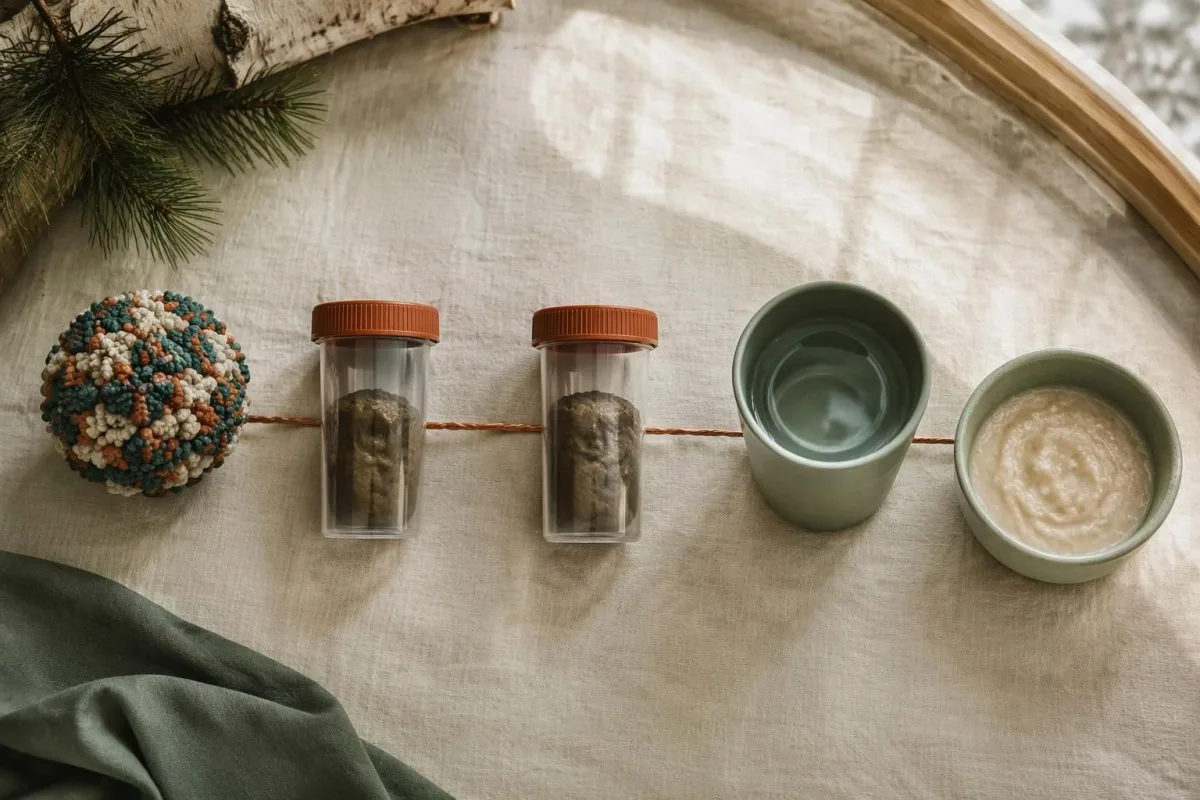
Test sensitivity changes the apparent shedding period. A less-sensitive antigen test may become negative before PCR because molecular assays can detect smaller amounts of viral material; 2 tests performed on the same recovery day may therefore disagree without either laboratory making an error.
The Lancet report “Extended excretion of rotavirus after severe diarrhoea in young children” documented prolonged excretion using molecular methods (Richardson et al., 1998). Its findings support a several-week detection window after severe illness, but they should not be treated as a fixed timetable for every vaccinated child with mild symptoms.
A positive PCR after recovery does not prove the child is equally infectious throughout that period. A hypothetical child who is eating normally 21 days after illness may still have detectable RNA; PCR alone cannot determine how much viable virus is being transmitted at home.
Children with significant immune deficiency can have a different shedding course, especially when diarrhea continues beyond 2 weeks. Our explanation of adenovirus detection and shedding illustrates the broader distinction between molecular persistence and active illness, although the timelines are not interchangeable.
Yaqinda og‘iz orqali emlanganlik najas PCR testining musbat chiqishiga sabab bo‘lishi mumkinmi?
Recent oral rotavirus vaccination can cause a positive stool PCR because the vaccines contain live attenuated virus that can be shed in stool. Detection is particularly plausible during the first 1–2 weeks after a dose, and routine gastrointestinal panels may not distinguish vaccine-derived virus from wild-type rotavirus.
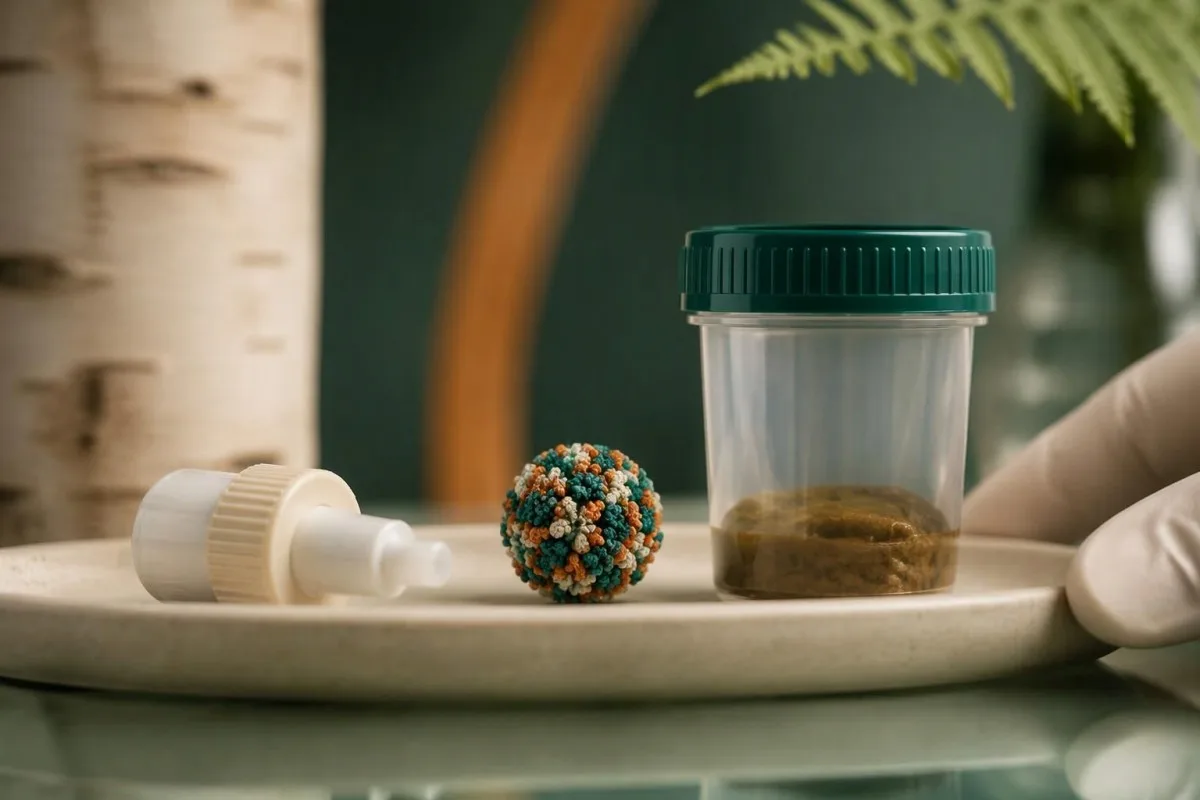
The vaccination date belongs beside the specimen date. In a hypothetical 9-week-old whose sample was collected 7 days after an oral dose, vaccine-related detection is a realistic explanation; that history is more useful than simply labeling the result a false positive.
Yen et al. described fecal shedding after the first dose of pentavalent rotavirus vaccine in Vaccine (2011). That publication demonstrates why detection soon after vaccination needs product and timing context; findings for 1 vaccine product should not be assumed to describe every oral vaccine identically.
Vaccination does not make dehydration signs safe to ignore. The first week after a dose also deserves attention if an infant develops repeated episodes of severe abdominal pain, pallor, unusual lethargy, or green vomiting because intussusception requires urgent assessment, regardless of the stool result.
Ask whether the laboratory offers vaccine-strain differentiation if the distinction would change care, particularly for an immunocompromised infant or an outbreak investigation. Our guide to qualitative and quantitative reports explains why 1 word—“detected”—does not supply strain identity, viral quantity, or clinical severity.
Uyda farzandingiz suvsizlanganini qanday tekshirishingiz mumkin?
Assess dehydration by combining urine output, drinking, alertness, and physical signs, rather than relying on thirst or 1 wet diaper. Children younger than 1 year, particularly those under 6 months, are at greater risk because fluid losses can represent a larger proportion of their body weight.
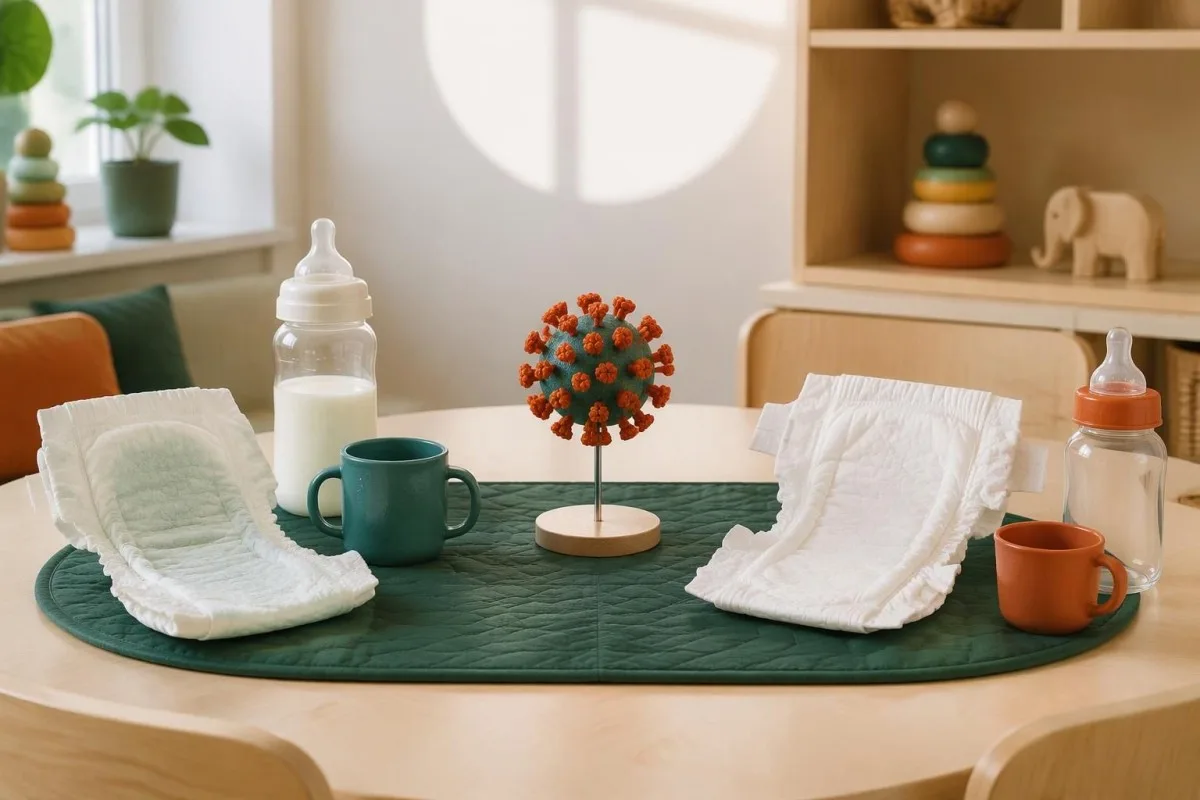
Urine output is useful only when compared with the child’s normal pattern. Markedly fewer wet diapers, dark concentrated urine, or no urine for about 8 hours should prompt urgent advice; seek help sooner in a young infant or when reduced urine accompanies poor drinking or drowsiness.
NICE identifies more than 5 diarrheal stools or more than 2 vomiting episodes in the previous 24 hours as dehydration risk factors in young children (NICE, 2009). These are screening clues, not a rule that a child with fewer episodes cannot become dehydrated.
Weight change can support assessment when reliable measurements exist. A hypothetical fall from 10.0 kg to 9.5 kg is a 5% weight loss, but different scales, clothing, and timing can distort the estimate; do not delay care while trying to obtain a precise home measurement.
Kantesti’s bolalar salomatligida sun’iy intellekt xavfsizligi bo‘yicha yo‘riqnomamiz explains why digital interpretation cannot establish hydration from 1 laboratory value. Our dark urine explanation also distinguishes concentrated urine from color changes that need a different investigation.
Qaysi ogohlantirish belgilari shoshilinch yoki favqulodda yordamni talab qiladi?
Seek emergency care for difficulty waking, collapse, signs of shock, green vomit, or severe abdominal pain, even when rotavirus PCR is positive. A baby under 3 months with a temperature of 38°C or higher needs urgent medical assessment; a viral result does not exclude another serious condition.
Worsening responsiveness and poor circulation matter more than the stool count. A child who is unusually floppy, hard to wake, breathing abnormally, or pale and mottled needs emergency assessment; do not wait for an 8-hour urine threshold or another episode of diarrhea.
For infants aged 3–6 months, a temperature of 39°C or higher warrants prompt medical advice. Any age group needs urgent assessment when repeated vomiting prevents fluid replacement, urine falls markedly, or the caregiver notices a clear decline over a few hours.
Visible blood is not a typical reason to assume uncomplicated rotavirus. Even 1 episode of blood in stool deserves medical advice, particularly with fever, abdominal pain, or lethargy; our stool blood warning guide explains why appearance can change the urgency.
A hypothetical 4-year-old with a positive panel and pain concentrated in the right lower abdomen still needs assessment for another diagnosis. The appendicitis testing explanation shows why a reassuring test—or a convincing alternative laboratory finding—cannot replace abdominal examination.
Og‘iz orqali beriladigan regidratatsiya eritmasini qanday tayyorlash va berish kerak?
Use a commercial oral rehydration solution, mixed exactly as directed, to replace water and electrolytes lost through diarrhea. The WHO reduced-osmolarity formulation contains sodium at 75 mmol/L and glucose at 75 mmol/L; its total osmolarity is 245 mOsm/L, although other approved formulations differ.
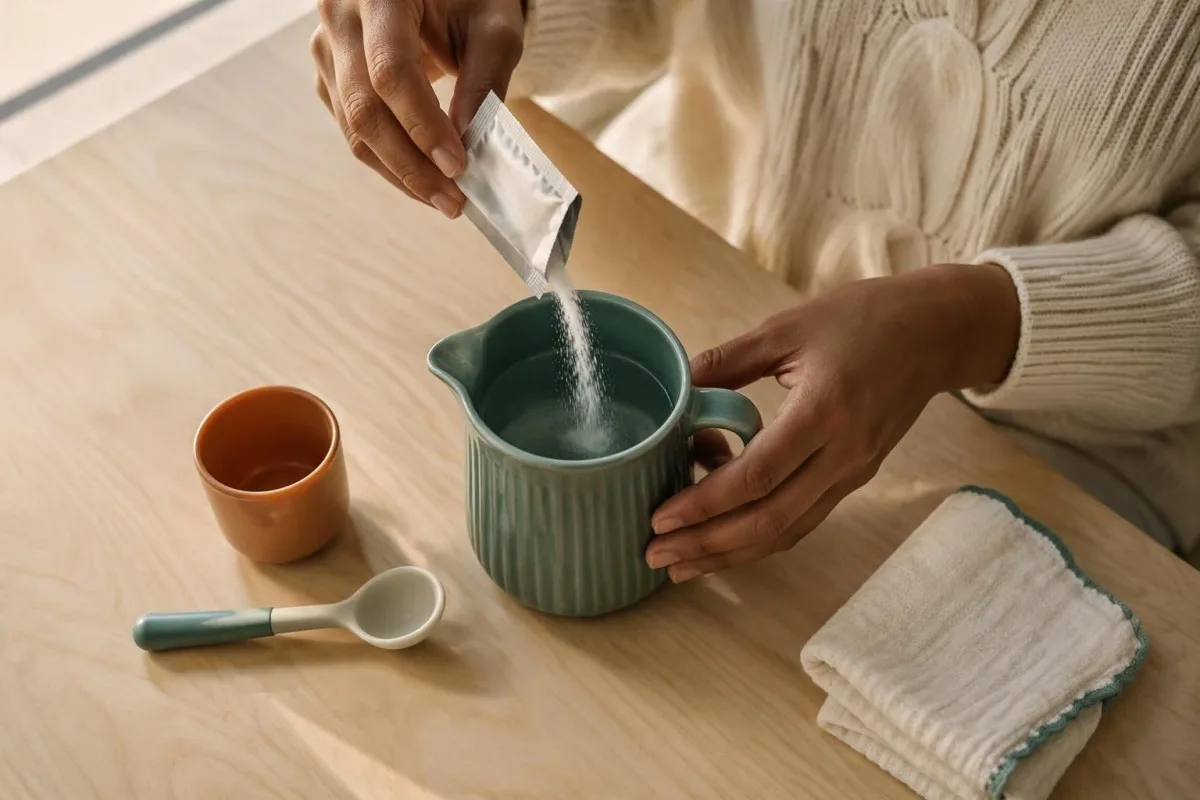
Packet size determines the required water volume. Some products require 200 mL and others 1 L, so never assume that every sachet makes the same amount; doubling the powder in the usual water volume doubles the intended concentration rather than making treatment more effective.
Start with a small, frequent amount—for example, 5 mL every 2–5 minutes during an initial trial—and adjust to the child’s weight, tolerance, and agreed hydration plan. An oral dosing device or spoon can make small amounts easier to control than asking a nauseated child to finish a full cup.
Glucose and sodium work together in intestinal absorption. This is why 1 bottle of plain water, fruit juice, or sports drink is not an equivalent replacement for properly mixed ORS; our elektrolitlar paneli izohi describes the salts clinicians assess when illness is more severe.
Follow the product’s storage instructions, because many prepared solutions need to be discarded within 24 hours. Use safe drinking water and a clean container; do not add extra sugar, salt, juice, or formula to the prepared solution.
Farzandingiz regidratatsiya eritmasini qayta-qayta qussa-chi?
Vomiting does not automatically mean oral rehydration has failed, because small amounts may still be absorbed between episodes. After vomiting, pause for about 5–10 minutes and restart more slowly; urgent assessment is needed when the child cannot retain enough fluid or becomes less alert.
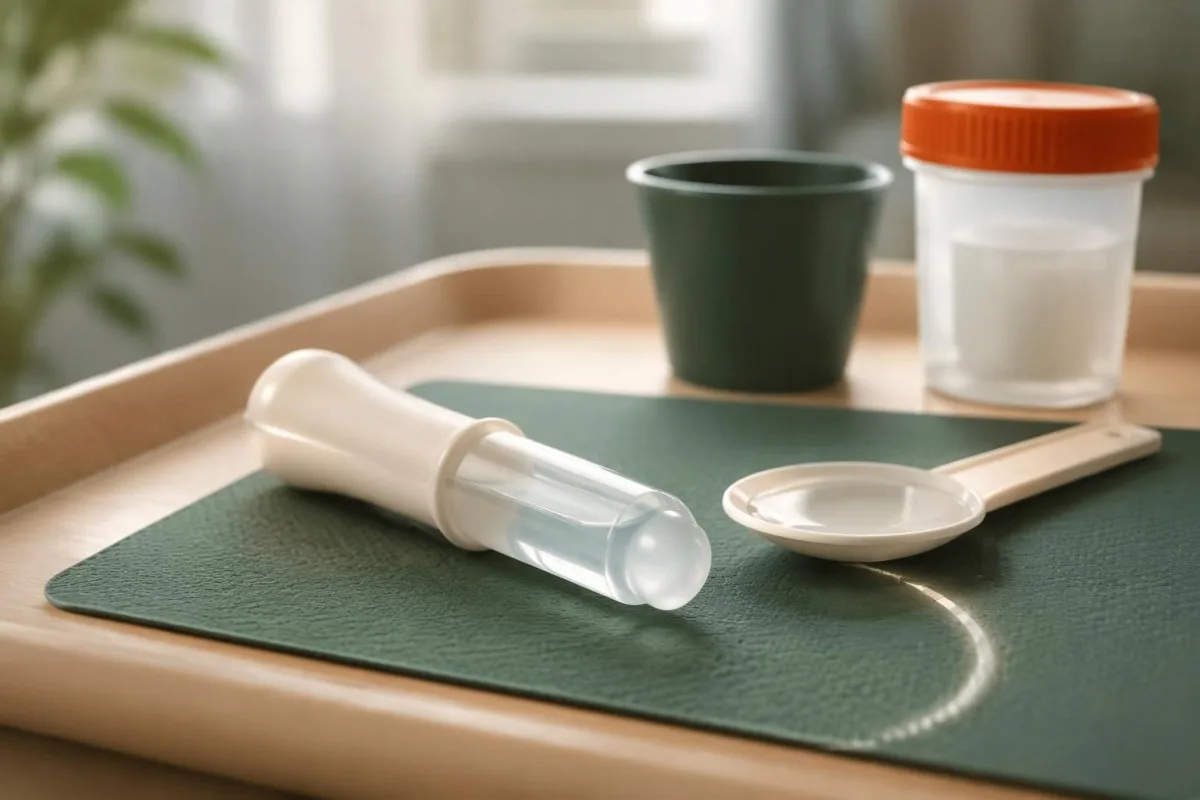
The size of each drink can affect vomiting. A hypothetical toddler who vomits after a 100 mL cup may tolerate 2–5 mL at a time; this is a short-term delivery strategy, not proof that the child is receiving an adequate total volume.
Track what stays down over 30–60 minutes alongside urine and behavior, rather than counting only attempted drinks. Persistent vomiting with declining urine or alertness needs urgent assessment, and green vomit needs emergency evaluation without another home rehydration trial.
Reduced intake can also cause low glucose in young children. A child who has taken almost no calories for 12 hours and becomes unusually sleepy needs assessment rather than continued unsupervised sipping; our past glyukoza sabablari bo'yicha qo'llanmamiz explains the mechanism, but pediatric thresholds need clinical interpretation.
A clinician may consider an antiemetic in selected children or use a nasogastric tube before intravenous fluids when oral delivery is unsuccessful. These are different decisions from treating the virus: 1 antiemetic dose does not replace reassessment, and electrolyte abnormalities can affect medication safety.
Bolaga qancha og‘iz orqali regidratatsiya eritmasi kerak?
The required ORS volume depends on body weight, dehydration, and continuing losses. For children under 5 years with clinical dehydration, NICE recommends 50 mL/kg over 4 hours to replace the deficit, in addition to maintenance fluid, with regular clinical reassessment (NICE, 2009).
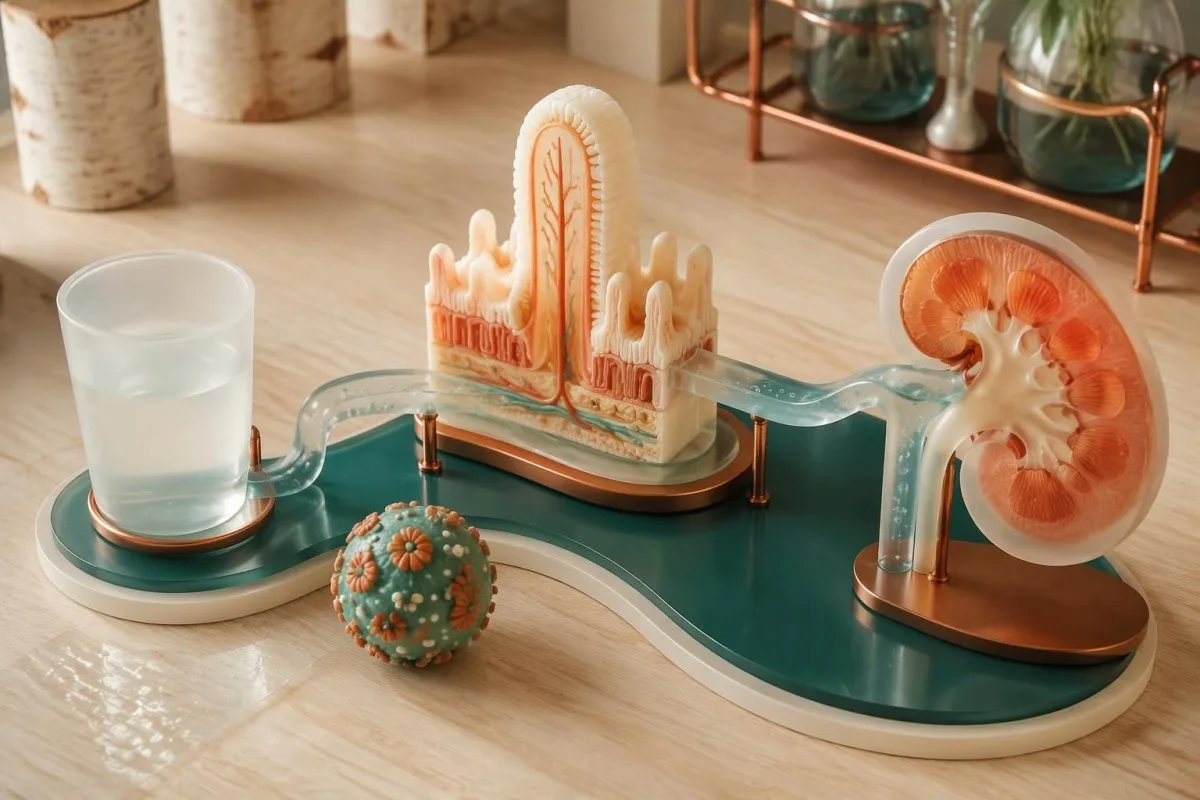
A worked volume is not a universal home prescription. For a hypothetical 10 kg child, 50 mL/kg equals 500 mL over 4 hours, or an average deficit-replacement component of 125 mL/hour; maintenance needs and continuing diarrhea are additional, and the child’s clinician should set the complete plan.
After rehydration, NICE suggests 5 mL/kg of ORS after each large watery stool for children at increased risk of recurrent dehydration. In the same hypothetical 10 kg child, that is 50 mL per large watery stool—not another full 500 mL course each time.
Guidelines use different deficit estimates because dehydration classifications differ. Some international protocols use approximately 75 mL/kg over 4 hours for “some dehydration,” whereas NICE uses 50 mL/kg for clinical dehydration; do not average 2 protocols or assume one volume is right without assessing the child.
Hypernatremic dehydration needs supervised management because correcting sodium too quickly can be harmful. A hypothetical sodium result of 151 mmol/L should trigger clinical review, not extra plain water at home; our high sodium warning guide explains why symptoms and correction speed matter.
Farzandingiz odatdagidek emishi, aralashma ichishi va ovqatlanishi mumkinmi?
Continue breastfeeding during gastroenteritis, and return to usual full-strength milk and age-appropriate foods after rehydration. Rotavirus commonly causes 3–8 days of symptoms, but withholding nutrition for that entire period is unnecessary; dehydration treatment and feeding are complementary rather than competing goals.
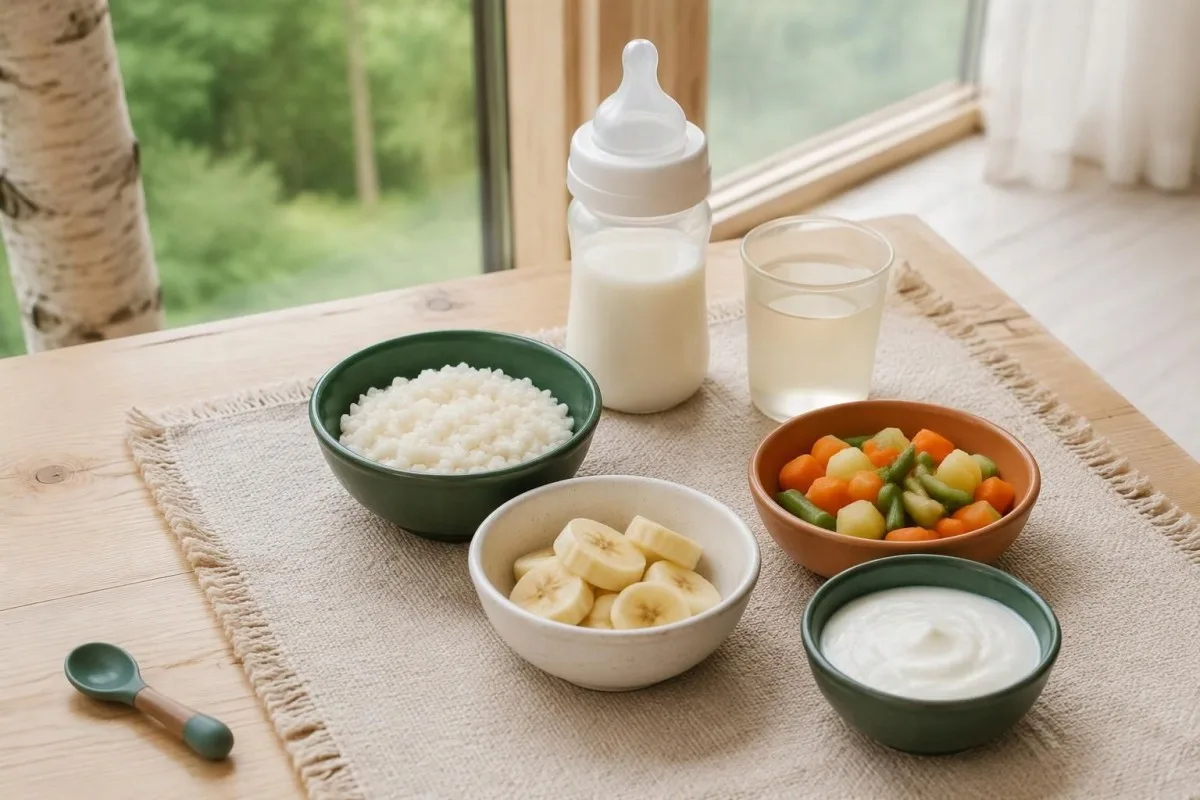
Formula should not routinely be diluted. Adding extra water to 1 normal feed reduces calories and changes its nutrient balance; infants should receive their usual correctly prepared formula unless their clinician recommends a specific alternative.
During an initial 4-hour rehydration phase, follow the clinician’s feeding plan; breastfeeding generally continues, while solids may be paused until rehydration is achieved. Afterwards, offer familiar foods in small portions rather than restricting the child to a prolonged banana-and-rice diet.
Temporary lactose malabsorption can follow intestinal illness, but lactose-free feeding is not automatically necessary. If watery stools repeatedly worsen after milk or continue beyond 1–2 weeks, discuss the pattern with a clinician; our lactose intolerance testing guide explains why symptoms and test selection need context.
A hypothetical 2-year-old eating less for 24 hours but drinking well and urinating normally can often be offered small, frequent meals without pressure. Avoid juice and fizzy drinks during diarrhea because their sugar concentration can worsen stool losses; infants still depend heavily on their usual milk feeds.
Nega antibiotiklar bolalarda rotavirusni davolamaydi?
Antibiotics do not treat rotavirus because it is a virus, and routine pediatric care has no standard antiviral prescription for uncomplicated rotavirus gastroenteritis. A report with 1 positive rotavirus target therefore does not justify antibiotics; treatment focuses on hydration, feeding, and assessment for complications.
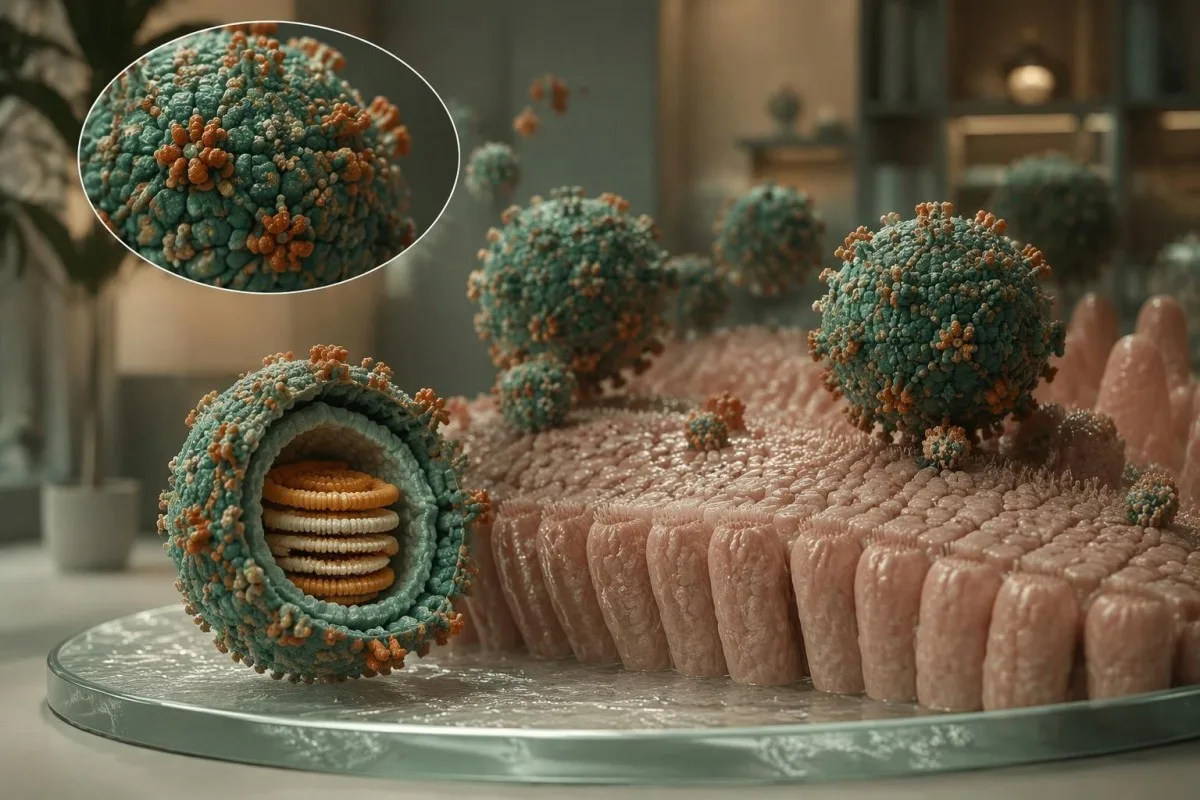
Antibacterial drugs target structures or processes that rotavirus does not possess. Giving an antibiotic for 3 days cannot stop viral RNA replication, and unnecessary treatment can cause adverse effects, disrupt intestinal bacteria, and complicate the interpretation of continued diarrhea.
A separate bacterial diagnosis can change the decision, but 2 detected organisms do not automatically require 2 medicines. Our Campylobacter antibiotic decision guide explains why bacterial treatment depends on severity and risk factors rather than the panel’s positive wording alone.
Do not give diarrhea-stopping medicines to young children without medical advice. For a hypothetical 3-year-old, reducing stool frequency with an unsuitable medicine does not correct dehydration; also avoid ibuprofen when the child is dehydrated or drinking poorly because kidney stress can increase.
Probiotic evidence is strain-specific and honestly mixed, so 1 commercially available product should not be assumed to shorten every rotavirus illness. Zinc recommendations also differ between national programs; neither probiotics nor supplements replace ORS, and parents should follow local pediatric guidance rather than combine several remedies.
Qachon qon tahlillari yoki qo‘shimcha najas tahlillari foydali bo‘ladi?
Most otherwise well children with uncomplicated gastroenteritis do not need blood tests. Testing becomes more useful when intravenous fluids are required, dehydration is severe, glucose disturbance is suspected, or symptoms do not fit the expected course; diarrhea that has not improved by day 7 may warrant further assessment.
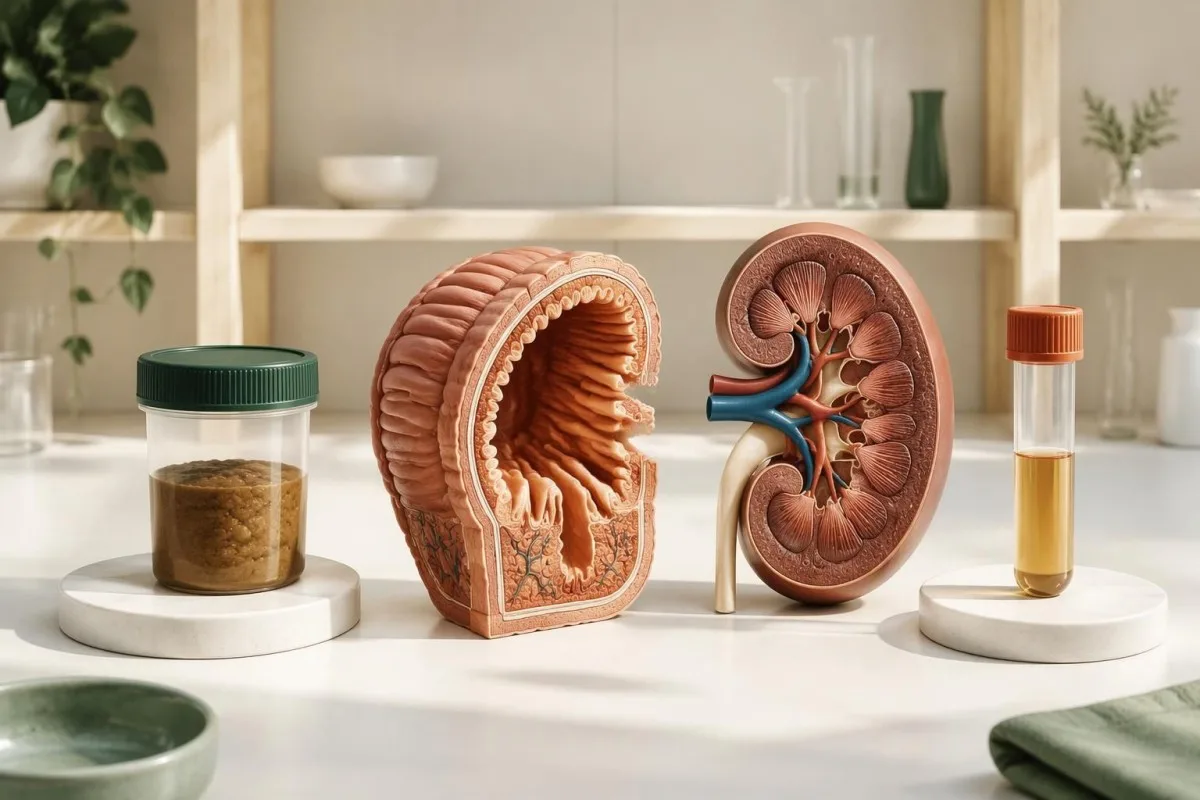
Electrolytes and glucose can reveal problems that a stool PCR cannot measure. NICE recommends appropriate laboratory assessment when intravenous fluids are needed or hypernatremia is suspected; 1 positive viral target cannot tell the clinician whether sodium, potassium, kidney function, or glucose is safe.
Kantesti AI explanations cannot establish hydration from 1 creatinine result or an adult-derived BUN/creatinine ratio. Our BUN va kreatinin bo‘yicha yo‘riqnomamiz explains the relationship, but pediatric creatinine values depend strongly on age and muscle mass, and adult ratio thresholds should not be imported into infant care.
Additional stool testing should answer a specific clinical question. Diarrhea lasting 14 days, recent travel, visible blood, immune deficiency, or a suspected outbreak can justify investigating another cause; repeatedly requesting the same panel may simply rediscover persistent viral material.
Kantesti - bu AI qon tahlili natijalari platformasi that can help explain clinician-ordered blood results, but 1 explanation is not a pediatric diagnosis or a treatment order. Our klinik validatsiya doirasi describes the distinction between evaluating an interpretation system and proving that it can safely manage an acutely ill child.
Bolalar muassasasiga qaytishdan oldin farzandingizga takroriy PCR testi kerakmi?
A repeat negative rotavirus PCR is usually unnecessary after clinical recovery. Many UK childcare policies require at least 48 hours without vomiting or diarrhea, rather than laboratory clearance; local public-health instructions, outbreak arrangements, and immune deficiency can change the advice.
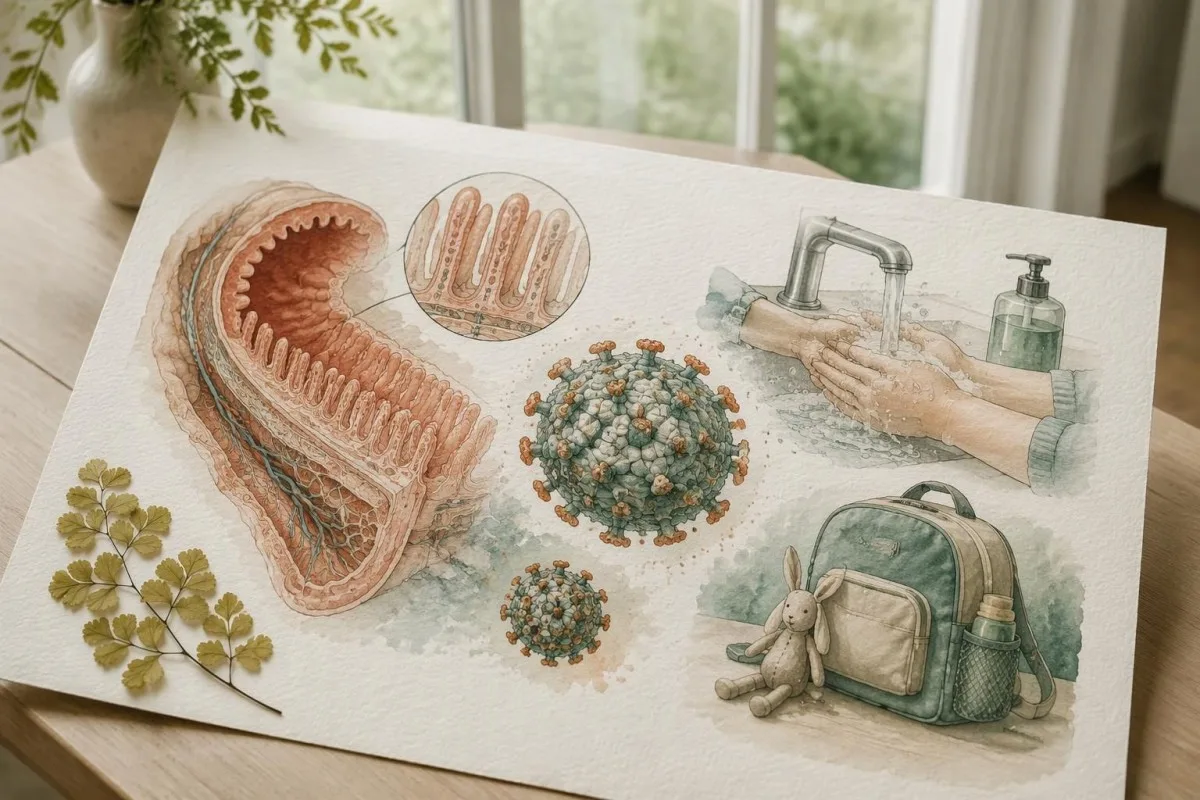
A test of cure can create confusion when shedding continues. A hypothetical child who has been symptom-free for 72 hours may still test positive without needing medicine or a new isolation period; childcare decisions should follow the applicable policy, not an assumed requirement that RNA must disappear.
Bizning norovirusdan tiklanish va yuqumlilik bo‘yicha qo‘llanmamiz explains a similar distinction between symptom resolution and molecular detection. The commonly used 48-hour exclusion period does not mean transmission risk instantly becomes zero for either virus.
Handwashing and careful diaper handling remain useful after symptoms stop. Wash with soap and water for at least 20 seconds after toileting or diaper changes and before food preparation; clean contaminated surfaces using a product suitable for the surface and effective against the relevant virus.
UK gastroenteritis guidance advises avoiding swimming pools for 2 weeks after the last episode of diarrhea. Tell the childcare setting about symptoms and follow its local rules, while keeping recently vaccinated infants’ diaper hygiene careful without assuming vaccine-related PCR detection requires prolonged exclusion.
Oilalar ushbu hisobot, sun’iy intellekt va tadqiqotlardan qanday foydalanishi kerak?
Use the stool report to support clinical decisions, not to override symptoms. Before contacting your child’s clinician, gather 4 items: the symptom timeline, urine and drinking history, oral vaccine dates, and the complete laboratory report; these usually add more decision value than the word “positive” alone.
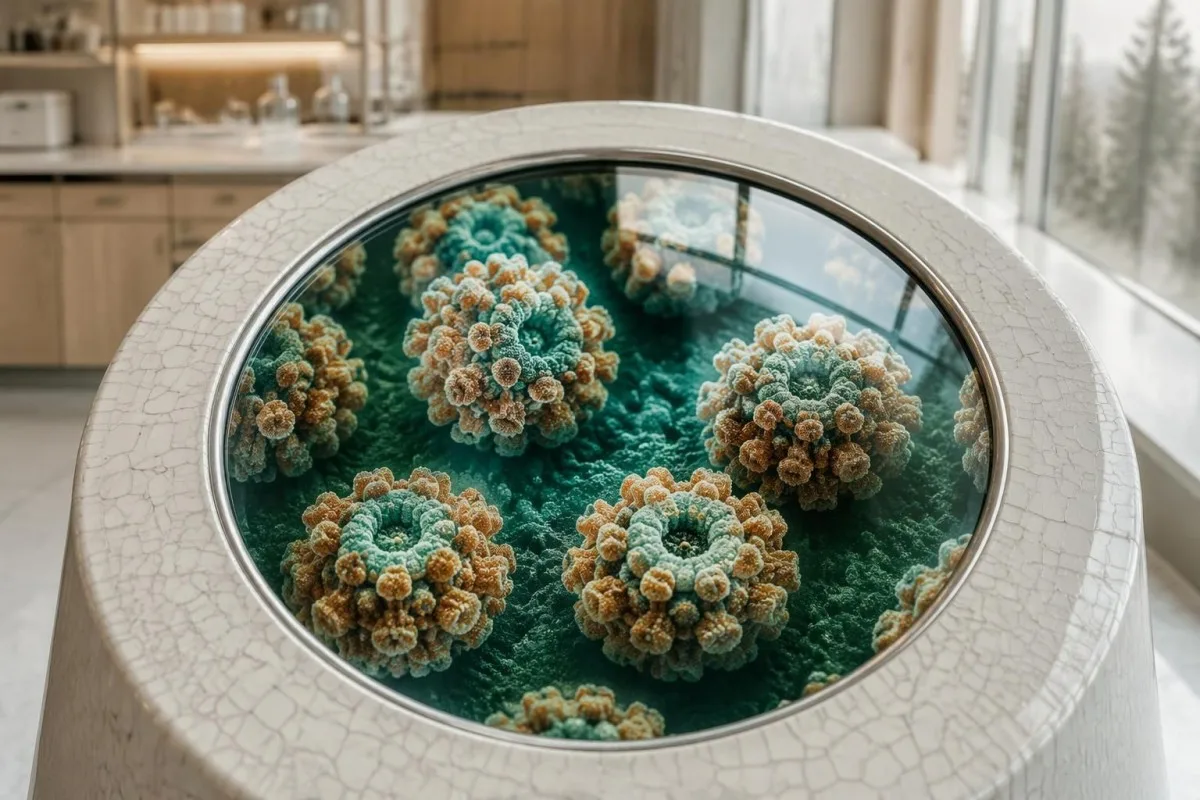
Kantesti - bu AI lab test interpretatsiya xizmati focused on blood results, and 1 AI-generated explanation should never delay urgent pediatric assessment. Our mas’uliyatli sun’iy intellekt tamoyillarimiz describe why uncertainty and the boundary between explanation and clinical care must remain visible.
A useful handover describes what has changed. For example, a hypothetical parent can report that vomiting began 36 hours ago, the child has had 1 wet diaper in 8 hours, and ORS is repeatedly vomited; these concrete observations help a clinician prioritize care without needing a repeat PCR first.
The external sources supporting this article address 3 distinct questions: NICE provides pediatric dehydration management, Richardson et al. describe prolonged shedding, and Yen et al. examine vaccine shedding. Our tibbiy kontent standartlari explain why a source about molecular detection cannot, by itself, establish a safe treatment plan.
The 2 Kantesti publications listed below are background resources about blood-test analysis and hematology interpretation. They are hosted on Zenodo and are not rotavirus treatment trials, pediatric triage validation studies, or evidence that AI can distinguish vaccine-derived from wild-type virus; the clinical references should guide those separate questions.
Tez-tez beriladigan savollar
Rotavirus PCR natijasining musbat chiqishi bolam davolanishi kerakligini anglatadimi?
Rotavirus PCR natijasining musbatligi farzandingizga avtomatik ravishda dori kerakligini anglatmaydi. Suvsizlanish yoki klinik jihatdan ahamiyatli alomatlar bo‘lsa, davolash zarur; ahvoli yaxshi bo‘lgan bolada esa avvalgi 1–2 hafta ichida og‘iz orqali emlanganidan keyin virus ajralishi yoki aniqlanishi davom etishi mumkin. Musbat PCR suyuqlik yo‘qotilishini o‘lchay olmaydi yoki boshqa kasallikni istisno etmaydi. Siydik ajralishi kamayganida, suyuqlikni ushlab tura olmaganda yoki hushyorligi yomonlashganda shoshilinch tibbiy ko‘rikdan o‘ting.
Bolalarda rotavirus ajralishi qancha vaqt davom etadi?
Rotavirusning ajralib chiqishi simptomlar yo‘qolgandan keyin ham davom etishi mumkin, najasning sezgir PCR tahlili esa bir necha hafta davomida musbat bo‘lib qolishi mumkin. 4 haftadan ortiq vaqt davomida aniqlanish holatlari, ayniqsa og‘ir kasallikdan keyin, qayd etilgan, ammo har bir bola uchun virus tozalanishining aniq muddati belgilanmagan. PCR natijasining musbatligi tiklanish davrida yuqumlilik darajasi bir xil bo‘lishini isbotlamaydi. Ich ketishining davom etishi yoki immunitet tanqisligi faqat testlarni takrorlashni emas, balki individual klinik maslahatni talab qiladi.
Rotavirusga qarshi vaksina najas tahlilining ijobiy chiqishiga sabab bo‘lishi mumkinmi?
Og‘iz orqali qabul qilinadigan rotavirus vaksinasi dozadan keyin vaksina tarkibidagi virus najas bilan ajralib chiqishi mumkinligi sababli najas PCR tahlilida ijobiy natijaga olib kelishi mumkin. Bu izoh, ayniqsa, dastlabki 1–2 hafta davomida dolzarb, biroq muddat vaksina mahsuloti va test usuliga qarab farq qiladi. Oshqozon-ichak trakti uchun mo‘ljallangan standart PCR panellari vaksina tarkibidagi virusni yovvoyi turdagi rotavirusdan farqlay olmasligi mumkin. Shifokorga emlangan sana va namuna olingan sanani ayting hamda suvsizlanish yoki qorinning kuchli og‘rishini vaksinaning odatiy ta’siri deb e’tiborsiz qoldirmang.
Bolamga qancha miqdorda og‘iz orqali regidratatsiya eritmasini berishim kerak?
ORS hajmi bolangizning vazni, suvsizlanish darajasi va davom etayotgan suyuqlik yo‘qotishlariga bog‘liq. NICE klinik suvsizlanishi bo‘lgan 5 yoshgacha bo‘lgan bolalarga 4 soat davomida 50 mL/kg berishni, bunga qo‘shimcha ravishda ehtiyojni qoplovchi suyuqlik berish va holatini qayta baholashni tavsiya qiladi. Shunday qilib, shartli 10 kg vaznli bola suyuqlik tanqisligini qoplash uchun 500 mL olishi kerak, biroq bu uyda qo‘llash uchun to‘liq va individual tavsiya emas. Mahsulotni ko‘rsatmalarga aniq rioya qilgan holda aralashtiring va bolangiz yetarli suyuqlikni ichida ushlab turolmasa, tibbiy maslahat oling.
Bolalarda rotavirusni davolashda antibiotiklar yordam beradimi?
Antibiotiklar rotavirusni davolamaydi, chunki rotavirus bakteriya emas, virusdir. Rotavirusga 1 ta ijobiy natija ko‘rsatgan najas tahlili antibiotiklar yoki odatiy virusga qarshi dori buyurish uchun asos bo‘lmaydi. Asoratsiz kasallikni davolashning asosiy usullari ORS, ovqatlantirish va suvsizlanishni kuzatishdan iborat. Alohida tashxis qo‘yilgan bakterial kasallik boshqa davolashni talab qilishi mumkin, ammo bu qaror simptomlar, kasallikning og‘irligi va qo‘zg‘atuvchiga bog‘liq.
Rotavirus bilan kasallangan bolani qachon shifoxonaga olib borish kerak?
Uyg‘otish qiyinlashsa, hushdan ketish, shok belgilari, yashil qusindi yoki qorinning qattiq og‘rig‘i bo‘lsa, rotavirus testi musbat chiqqan-taqmaganidan qat’i nazar, shoshilinch tibbiy ko‘rik zarur. 3 oygacha bo‘lgan chaqaloqning harorati 38°C yoki undan yuqori bo‘lsa ham, zudlik bilan tibbiy ko‘rikdan o‘tkazish kerak. Siydik miqdorining keskin kamayishi, taxminan 8 soat davomida siydik chiqmasligi yoki ichgan suyuqligini qayta-qayta ushlab turolmaslik shoshilinch maslahat olishni talab qiladi; yosh chaqaloqlarga bundan ham tezroq yordam kerak. Hushi to‘liq joyida bo‘lmagan bolaga og‘iz orqali suyuqlik ichirishga majburlamang.
Farzandim yasliga qaytishidan oldin rotavirusga testi manfiy chiqishi kerakmi?
Sog‘aygandan keyin yasli yoki bolalar parvarishi muassasasiga qaytishdan oldin rotavirus uchun takroriy PCR tahlilining manfiy natijasi odatda talab qilinmaydi. Buyuk Britaniyadagi ko‘plab qoidalarga ko‘ra, qusish yoki ich ketishi to‘xtaganidan keyin kamida 48 soat o‘tishi kerak, biroq mahalliy qoidalar va epidemiya bo‘yicha ko‘rsatmalar ustuvor hisoblanadi. Alomatlar yo‘qolgandan keyin ham najas PCR tahlili musbat chiqishi mumkin, shuning uchun tuzalganlikni tasdiqlash uchun test topshirish noaniqlik davrini keraksiz ravishda uzaytirishi mumkin. Qo‘llarni yaxshilab yuvishda davom eting va mahalliy suzish cheklovlariga rioya qiling; Buyuk Britaniyaning gastroenterit bo‘yicha ko‘rsatmalarida oxirgi ich ketishi holatidan keyin 2 hafta kutish belgilangan.
Qon tahlili natijalarini qanday o‘qish kerak
Laboratoriya hisobotingizni yuklang va Kantesti sun’iy intellekti har bir biomarkerni soniyalar ichida sodda tilda tushuntiradi. Dunyo bo‘ylab 2 milliondan ortiq kishi foydalanadi.
Adabiyotlar
- Klein, T., Mitchell, S., & Weber, H. (2026). AI qon tahlil analizatori: 2,5M ta test tahlil qilindi | Global Health Report 2026. Kantesti AI tibbiy tadqiqotlari. DOI
- Klein, T., Mitchell, S., & Weber, H. (2026). RDW qon tahlili: RDW-CV, MCV va MCHC bo‘yicha to‘liq qo‘llanma. Kantesti AI tibbiy tadqiqotlari. DOI
- National Institute for Health and Care Excellence (2009). Diarrhoea and vomiting caused by gastroenteritis in under 5s: diagnosis and management. NICE clinical guideline CG84.
- Richardson S et al. (1998). Extended excretion of rotavirus after severe diarrhoea in young children. The Lancet.
- Yen C et al. (2011). Detection of fecal shedding of rotavirus vaccine in infants following their first dose of pentavalent rotavirus vaccine. Vaccine.
- 2M+Tahlil qilingan testlar
- 127+Mamlakatlar
- 100+Tillar
Tibbiy guruh haqida


E-E-A-T ishonch signallari
Tajriba
Shifokor boshchiligidagi laboratoriya talqin qilish ish jarayonlarini klinik ko‘rib chiqish.
Tajriba
Laboratoriya tibbiyoti biomarkerlarning klinik kontekstda qanday o‘zini tutishini yoritadi.
Vakolatlilik
Doktor Thomas Klein tomonidan tibbiy jihatdan ko‘rib chiqilgan, doktor Sarah Mitchell va professor doktor Hans Weber hissalari bilan.
Ishonchlilik
Xavotirni kamaytirish uchun aniq keyingi qadamlar yo‘nalishlari bilan dalillarga asoslangan talqin.





Tibbiy ogohlantirish
Ushbu maqola faqat ta’lim maqsadlari uchun mo‘ljallangan va tibbiy maslahatni anglatmaydi. Tashxis va davolash bo‘yicha qarorlar uchun har doim malakali sog‘liqni saqlash mutaxassisiga murojaat qiling.
Nashr etilgan · Tahririyat jamoasi bilan bog‘laning
Angliya va Uelsda ro‘yxatdan o‘tgan Kantesti Ltd tomonidan nashr etilgan, kompaniya raqami. 17090423, London, Birlashgan Qirollik.
