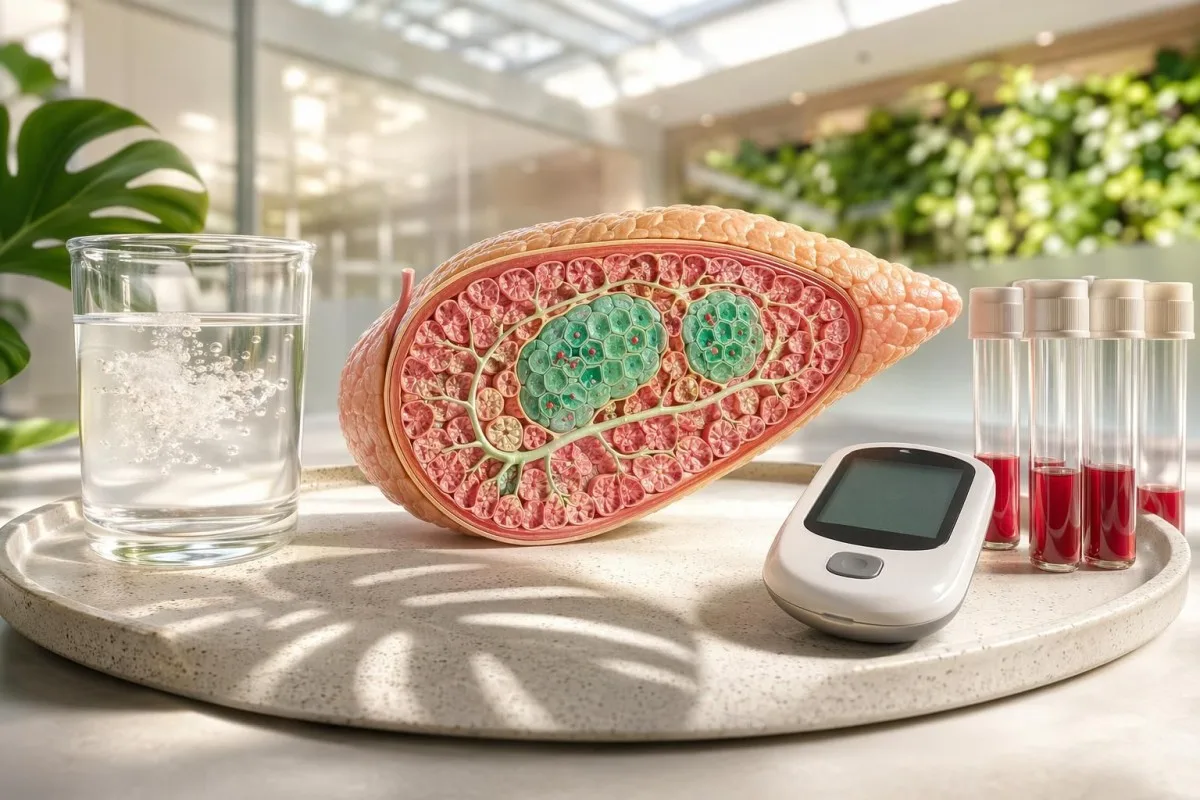
Panduan saringan postpartum yang praktikal untuk sesiapa yang diberitahu gula kehamilan mereka sudah normal semula, tetapi masih mahu tahu apa yang perlu dilakukan seterusnya.


- Ujian Toleransi Glukosa Oral 75 g pada 4-12 minggu postpartum ialah ujian pilihan selepas diabetes gestasi kerana ia mengesan masalah glukosa 2 jam yang mungkin terlepas oleh glukosa puasa.
- Ambang batas diabetes ialah glukosa plasma puasa ≥126 mg/dL, glukosa OGTT 2 jam ≥200 mg/dL, HbA1c ≥6.5%, atau glukosa rawak ≥200 mg/dL dengan simptom.
- Ambang pradiabetes ialah glukosa puasa 100-125 mg/dL, glukosa OGTT 2 jam 140-199 mg/dL, atau HbA1c 5.7-6.4%.
- HbA1c awal postpartum boleh menjadi rendah secara palsu selepas kehilangan darah semasa bersalin atau kadar pertukaran sel darah merah yang tinggi, jadi ia tidak seharusnya menggantikan OGTT pada 4-12 minggu.
- Glukosa kehamilan normal selepas bersalin tidak menghapuskan risiko masa depan; diabetes gestasi sering menjadi ujian tekanan sel beta yang mendedahkan kerentanan bertahun-tahun sebelum diabetes jenis 2.
- Selang pemeriksaan semula setiap 1-3 tahun seumur hidup jika saringan selepas bersalin adalah normal, dan biasanya setiap tahun jika ada sebarang keputusan dalam julat pra-diabetes.
- Sebelum kehamilan seterusnya minta ujian glukosa sebelum konsepsi atau pada awal trimester pertama, terutamanya jika GDM terdahulu memerlukan insulin atau ubat.
- Penanda risiko seperti insulin puasa, trigliserida, HDL, ALT dan nisbah albumin-kreatinin air kencing tidak mendiagnosis diabetes, tetapi ia membantu menganggarkan risiko kardiometabolik.
Ujian darah yang mendiagnosis diabetes selepas diabetes gestasi
Ujian darah yang mengesan diabetes selepas diabetes semasa hamil ialah ujian toleransi glukosa oral 2 jam 75 g, glukosa plasma puasa, HbA1c, dan glukosa plasma rawak apabila simptom klasik hadir. OGTT biasanya merupakan ujian saringan diabetes selepas bersalin yang terbaik pada 4-12 minggu kerana ia mengesan pengendalian glukosa 2 jam yang terganggu sebelum glukosa puasa atau HbA1c menjadi tidak normal.
Seperti yang saya, Thomas Klein, MD, beritahu kepada pesakit, persoalannya bukan sahaja sama ada angka itu tinggi hari ini; ia sama ada pankreas masih mempunyai rizab yang mencukupi selepas kehamilan. Glukosa puasa 94 mg/dL boleh kelihatan meyakinkan, manakala nilai OGTT 2 jam 168 mg/dL secara senyap menunjukkan tindak balas insulin fasa pertama ketinggalan.
Diagnosis diabetes di luar kehamilan dibuat melalui glukosa plasma puasa ≥126 mg/dL, glukosa OGTT 2 jam ≥200 mg/dL, HbA1c ≥6.5%, atau glukosa plasma rawak ≥200 mg/dL dengan simptom seperti dahaga, kerap membuang air kecil atau penurunan berat badan yang tidak dapat dijelaskan. Untuk perbandingan ringkas dalam bahasa mudah bagi ujian diagnostik dan pemantauan, kami had ujian diabetes panduan kami ialah teman yang berguna.
Kantesti ialah penganalisis ujian darah AI yang membaca glukosa selepas bersalin, HbA1c, lipid dan penanda buah pinggang dalam konteks klinikal yang sama, bukan sebagai bendera terpencil. Dalam analisis kami terhadap laporan makmal yang dimuat naik 2M+, satu corak terus muncul: orang mengingati diagnosis semasa kehamilan, tetapi keputusan OGTT mereka pada 4-12 minggu selalunya tidak pernah direkodkan dalam rekod kesihatan jangka panjang.
Mengapa glukosa kehamilan yang normal tidak menghapuskan risiko masa depan
Glukosa normal selepas bersalin tidak menetapkan semula risiko diabetes masa depan kerana diabetes semasa hamil biasanya mencerminkan rizab sel beta yang terhad di bawah tekanan kehamilan. Persalinan menghapuskan hormon plasenta, tetapi ia tidak semestinya membaiki rintangan insulin, risiko genetik, kecenderungan hati berlemak, atau kerentanan sel beta pankreas.
Plasenta menghasilkan hormon yang meningkatkan rintangan insulin, selalunya paling ketara selepas 24-28 minggu. Apabila glukosa menjadi normal selepas kelahiran, itu bermakna faktor tekanan telah hilang; ia tidak membuktikan bahawa sel yang menghasilkan insulin mempunyai rizab yang tidak terhad.
Bellamy et al. melaporkan dalam The Lancet bahawa wanita dengan diabetes semasa hamil sebelum ini mempunyai kira-kira risiko 7 kali ganda lebih tinggi untuk diabetes jenis 2 kemudian berbanding mereka yang tiada GDM (Bellamy et al., 2009). Dalam amalan harian, saya melihat kelompok risiko dengan pertambahan lilitan pinggang, trigliserida melebihi 150 mg/dL, HDL rendah, sejarah keluarga, PCOS dan gangguan tidur semasa dua tahun pertama selepas bersalin.
HbA1c normal sebanyak 5.3% enam bulan selepas bersalin masih boleh wujud bersama rintangan insulin awal. Jika anda mahu pandangan metabolik yang lebih mendalam, panduan kami untuk ujian rintangan insulin menerangkan mengapa insulin puasa dan glukosa boleh berubah sebelum A1C melintasi garis pradiabetes.
Bila saringan diabetes postpartum perlu dilakukan
Pemeriksaan diabetes selepas bersalin perlu dilakukan 4-12 minggu selepas bersalin, sebaiknya dengan OGTT 75 g 2 jam. Jika tempoh itu terlepas, masa terbaik untuk ujian adalah sekarang; saya tidak akan menunggu pemeriksaan tahunan seterusnya jika kehamilan itu berlaku 6 bulan atau 6 tahun yang lalu.
American Diabetes Association mengesyorkan OGTT 75 g pada 4-12 minggu postpartum dan pemeriksaan seumur hidup setiap 1-3 tahun selepas diabetes semasa kehamilan (American Diabetes Association Professional Practice Committee, 2024). ACOG juga menyokong pemeriksaan postpartum dalam tetingkap awal ini, dan banyak klinik obstetrik kini cuba membuat pesanan sebelum lawatan 6 minggu supaya ia tidak terlupa (ACOG, 2018).
Penyusuan susu ibu, gangguan tidur dan perubahan berat badan selepas bersalin semuanya boleh mengubah glukosa dari hari ke hari, tetapi itu bukan sebab untuk melangkau ujian. Kebanyakan pesakit boleh menjalani OGTT semasa menyusu; isu praktikal selalunya penjagaan anak semasa menunggu 2 jam di makmal, bukan biologi.
Jika anda juga perlu pemeriksaan untuk anemia, fungsi tiroid, enzim hati atau penanda buah pinggang selepas bersalin, senarai semakan makmal postpartum kami menyenaraikan ujian yang lazimnya digandingkan dengan pemeriksaan glukosa. Satu temujanji selalunya boleh merangkumi lebih daripada satu masalah postpartum.
Cara mentafsir ujian toleransi glukosa oral 75 g
The ujian toleransi glukosa oral selepas kehamilan mengukur glukosa puasa dan glukosa 2 jam selepas minuman glukosa 75 g. Nilai 2 jam ≥200 mg/dL mendiagnosis diabetes, manakala ujian OGTT 2 jam mendiagnosis toleransi glukosa terjejas, walaupun glukosa puasa adalah normal.
Ujian ini berfungsi kerana ia mencabar sistem insulin, bukannya memerhatikannya dalam keadaan rehat. Dalam pengalaman saya, individu yang pernah GDM selalunya melepasi bahagian puasa tetapi gagal bahagian 2 jam; corak ini menunjukkan rembesan insulin yang tertangguh selepas makan.
Sediakan dengan pemakanan biasa sekurang-kurangnya 3 hari, idealnya termasuk sekurang-kurangnya 150 g karbohidrat sehari melainkan klinisyen anda telah memberitahu sebaliknya. Mengurangkan karbohidrat dengan sangat rendah sebelum OGTT boleh membesarkan peningkatan glukosa dan menjadikan tafsiran sukar; panduan kami Peraturan puasa merangkumi butiran air, kopi dan masa.
Jangan bersenam dengan kuat semasa menunggu 2 jam, dan beritahu makmal jika anda muntah atau tidak dapat menghabiskan minuman. Keputusan perlu diulang atau diganti dengan ujian diagnostik lain jika prosedur tidak diselesaikan dengan betul.
Apa yang boleh dan tidak boleh dikesan oleh glukosa puasa
Glukosa plasma puasa mengesan diabetes apabila nilai puasa ialah ≥126 mg/dL, tetapi ia boleh terlepas intoleransi glukosa selepas makan yang terpencil selepas diabetes gestasi. Ia berguna, murah dan boleh diulang; namun ia terlalu “tumpul” untuk menggantikan OGTT selepas bersalin.
Glukosa puasa sebanyak 100-125 mg/dL ialah pra-diabetes mengikut kriteria ADA, manakala <100 mg/dL secara amnya dianggap normal di Amerika Syarikat. Sesetengah sistem antarabangsa menggunakan 110 mg/dL sebagai ambang lebih rendah untuk puasa yang terganggu, iaitu salah satu sebab pesakit menjadi keliru apabila berpindah antara negara.
“Perangkap” klinikal ialah glukosa puasa 88-96 mg/dL dengan OGTT 2 jam 155-185 mg/dL. Orang itu mungkin diberitahu semuanya baik jika hanya glukosa puasa diperintahkan, namun biologi glukosa waktu makan mereka sudah pun tidak normal.
Glukosa waktu pagi dipengaruhi oleh hutang tidur, makan lewat malam, kortikosteroid, jangkitan dan fenomena subuh. Penjelasan kami gula puasa menerangkan mengapa satu bacaan pagi perlu ditafsir dengan mengambil kira malam sebelumnya dan kualiti tidur.
Mengapa HbA1c mudah tetapi tidak sempurna selepas bersalin
HbA1c mengesan diabetes pada ≥6.5%, tetapi ia kurang dipercayai dalam 4-12 minggu pertama selepas bersalin kerana kehilangan darah semasa bersalin dan pertukaran sel darah merah boleh memesongkan keputusan. HbA1c berguna kemudian, terutamanya untuk pemantauan jangka panjang, tetapi ia tidak seharusnya menggantikan OGTT pertama selepas bersalin.
HbA1c menganggarkan purata glukosa dalam tempoh kira-kira 8-12 minggu, cenderung kepada bulan yang paling baru. Selepas bersalin, anemia, transfusi, kekurangan zat besi atau penggantian sel darah merah yang cepat boleh mengheret nilai itu daripada gambaran sebenar glukosa.
Kekurangan zat besi boleh secara palsu meningkatkan HbA1c pada sesetengah pesakit, manakala kehilangan darah baru-baru ini boleh menurunkannya secara palsu. Ini salah satu bidang di mana konteks lebih penting daripada angka; HbA1c selepas bersalin sebanyak 5.6% mungkin tidak begitu meyakinkan jika ferritin ialah 8 ng/mL dan OGTT tidak pernah dilakukan.
Jika A1c anda tidak sepadan dengan bacaan jari atau simptom, baca panduan kami tentang ketepatan A1c sebelum menerima nilai itu pada nilai muka. Saya biasanya menggabungkan HbA1c dengan glukosa puasa, CBC dan ferritin apabila kisah selepas bersalin terasa tidak konsisten.
Bila glukosa rawak atau simptom memerlukan tindakan segera
Glukosa plasma rawak mengesan diabetes apabila ia ≥200 mg/dL dan simptom ada. Selepas diabetes gestasi, semakan segera diperlukan untuk glukosa tinggi dengan muntah, dehidrasi, penurunan berat badan yang cepat, keton, penglihatan kabur atau keletihan yang luar biasa.
Kebanyakan diabetes selepas GDM ialah jenis 2, tetapi diabetes autoimun selepas bersalin kadangkala boleh muncul, terutamanya jika penurunan berat badan adalah cepat dan keton ada. Saya pernah melihat pesakit diketepikan sebagai sekadar ibu bapa baharu yang letih apabila glukosa mereka 280 mg/dL dan mereka sudah pun mengalami ketosis.
Glukosa rawak sebanyak ujian OGTT 2 jam tidak mendiagnosis dengan sendirinya, tetapi ia harus mendorong glukosa puasa, HbA1c atau OGTT bergantung pada masa dan simptom. Nilai rawak melebihi 300 mg/dL, terutamanya jika disertai sakit perut atau pernafasan yang sukar, harus dianggap sebagai penjagaan perubatan pada hari yang sama.
Satu bacaan tinggi yang terpencil boleh berlaku selepas penyakit, steroid atau hidangan yang sangat tinggi karbohidrat, tetapi coraknya yang penting. Panduan kami tentang glukosa tinggi yang tidak dijangka menerangkan bagaimana klinisyen membezakan hiperglisemia akibat stres daripada diabetes awal.
Penanda darah yang menunjukkan risiko sebelum diabetes muncul
Insulin puasa, C-peptida, trigliserida, HDL, ALT dan nisbah albumin kreatinin air kencing tidak mendiagnosis diabetes, tetapi ia membantu menunjukkan risiko metabolik selepas diabetes gestasi. Penanda ini boleh mendedahkan rintangan insulin, kecenderungan hati berlemak atau tekanan buah pinggang awal sementara glukosa masih secara teknikal normal.
Insulin puasa melebihi kira-kira 15-20 µIU/mL boleh menunjukkan rintangan insulin, walaupun kaedah makmal berbeza dan tiada satu takat diagnostik universal. HOMA-IR menggunakan insulin puasa dan glukosa puasa; nilai di atas 2.0-2.5 sering menimbulkan syak pada orang dewasa, tetapi etnik, BMI dan pilihan ujian mengubah tafsiran.
Trigliserida melebihi 150 mg/dL dan HDL di bawah 50 mg/dL pada wanita sering bergerak seiring dengan rintangan insulin. ALT melebihi kira-kira 25-30 IU/L pada seorang wanita dengan GDM terdahulu boleh menjadi petunjuk awal hati berlemak walaupun bendera makmal masih mengatakan normal.
Kantesti ialah platform tafsiran biomarker AI yang merawat A1c normal selepas diabetes semasa kehamilan sebagai soalan penanda risiko, bukan lampu hijau untuk selama-lamanya. Jika anda mahu mengira rintangan insulin daripada bacaan anda, panduan menunjukkan formula dan batasannya. pengiraan HOMA-IR panduan menunjukkan formula dan batasannya.
Seberapa kerap perlu membuat ujian semula jika saringan postpartum normal
Jika saringan selepas bersalin adalah normal selepas diabetes semasa kehamilan, ulang setiap 1-3 tahun untuk sepanjang hayat. Ulang lebih awal, selalunya setiap tahun, jika berat meningkat, pradiabetes muncul, kehamilan lain dirancang, atau ubat seperti steroid atau antipsikotik meningkatkan risiko glukosa.
Syor ADA untuk saringan sepanjang hayat setiap 1-3 tahun wujud kerana risiko diabetes meningkat dari masa ke masa, bukan hanya pada tahun pertama selepas bersalin. Di klinik saya, saya biasanya memilih selang 1 tahun untuk sesiapa yang mempunyai pradiabetes, GDM dirawat insulin, BMI melebihi 30, sejarah keluarga yang kuat atau PCOS.
Ujian normal pada tahun 2026 masih berguna kerana ia menjadi garis dasar anda. Glukosa puasa yang menurun daripada 82 kepada 96 mg/dL dalam tempoh 3 tahun mungkin lebih bermakna berbanding satu keputusan yang dibenderakan, terutamanya jika trigliserida dan lilitan pinggang turut meningkat pada masa yang sama.
Kantesti AI boleh memetakan glukosa, HbA1c, trigliserida dan ALT dari masa ke masa supaya perubahan kecil dapat dilihat sebelum ia menjadi sesuatu yang ketara. Artikel kami menerangkan mengapa cerun dan pengelompokan selalunya lebih penting berbanding satu penanda makmal. analisis trend artikel kami menerangkan mengapa cerun dan pengelompokan selalunya lebih penting berbanding satu bendera makmal.
Apa yang perlu diminta daripada klinis anda untuk dipesan
Minta OGTT 75 g 2 jam pada 4-12 minggu postpartum, atau glukosa plasma puasa ditambah HbA1c jika OGTT tidak boleh dilakukan. Untuk risiko jangka panjang, tanya sama ada lipid, ALT, kreatinin, eGFR dan nisbah albumin-kreatinin air kencing perlu diperiksa bersama penanda glukosa anda.
Perintah postpartum pertama yang munasabah selalunya berbunyi: glukosa puasa, glukosa 75 g 2 jam, HbA1c, CBC jika terdapat kehilangan darah semasa bersalin yang banyak, feritin jika anemia disyaki, panel lipid dan CMP jika risiko kardiometabolik tinggi. Tidak semua pesakit memerlukan semua ujian, tetapi perintah itu harus sepadan dengan cerita kehamilan.
Jika anda mengalami hiperglisemia puasa semasa kehamilan atau memerlukan insulin, saya akan lebih agresif dengan susulan awal. Jika GDM anda ringan dan dikawal dengan diet, OGTT masih penting, tetapi kaden jangka panjang mungkin lebih hampir kepada setiap 2-3 tahun apabila semua keputusan adalah normal.
Untuk pembaca yang mahu memahami apa sebenarnya yang diukur oleh setiap penanda, kami panduan biomarker kami merangkumi ribuan penanda makmal dan perbezaan unit yang biasa. Ini amat membantu apabila satu makmal melaporkan glukosa dalam mg/dL dan makmal lain melaporkan mmol/L.
Apa yang doktor lakukan dengan keputusan yang sempadan atau bercanggah
Keputusan diabetes yang sempadan atau bercanggah biasanya perlu diulang atau disahkan dengan ujian diagnostik yang berbeza. Glukosa puasa sebanyak 124 mg/dL, atau glukosa rawak sebanyak 6.4%, atau OGTT 2 jam sebanyak 198 mg/dL bukan sekadar “tidak mengapa”; ia ialah keputusan hampir ambang yang memerlukan pelan.
Tanpa simptom klasik, kebanyakan klinisyen mengesahkan diabetes dengan keputusan abnormal yang diulang. Jika dua ujian berbeza tidak bersetuju, ujian yang melebihi ambang diagnostik biasanya diulang, dan konteks pesakit menentukan seberapa cepat perkara itu berlaku.
Thomas Klein, MD, peraturan praktikal: jangan biarkan perkataan “sempadan” membuat keputusan itu terasa tidak berbahaya. OGTT 2 jam sebanyak 196 mg/dL selepas GDM terdahulu sering membawa lebih banyak risiko masa depan berbanding glukosa puasa sebanyak 101 mg/dL, walaupun kedua-duanya mungkin dikategorikan sebagai pra-diabetes.
Panduan kami untuk ambang pra-diabetes menerangkan bagaimana glukosa puasa, A1c dan OGTT mentakrifkan masalah biologi yang berbeza. Saya sering membingkaikan pra-diabetes selepas GDM sebagai “tetingkap rawatan” dan bukannya “ruang menunggu”.
Situasi khas: penyusuan susu ibu, anemia, PCOS dan ubat-ubatan
Penyusuan susu ibu, anemia, PCOS, ubat GLP-1, steroid dan penyakit tiroid boleh mengubah cara ujian makmal diabetes postpartum harus ditafsirkan. Titik potong glukosa kekal sama, tetapi keyakinan yang anda letakkan pada HbA1c, glukosa puasa atau tahap insulin mungkin berubah dengan ketara.
Penyusuan susu ibu sering memperbaiki metabolisme glukosa dan mungkin menurunkan risiko diabetes jenis 2 pada masa hadapan, tetapi ia tidak menghapuskan keperluan untuk saringan. Jika anda mengambil insulin atau sulfonylureas selepas bersalin, tanya doktor anda tentang risiko hipoglisemia semasa penyusuan yang lebih lama atau jika waktu makan terlepas.
PCOS menambah laluan rintangan insulin yang berasingan, dan GDM terdahulu bersama PCOS ialah salah satu kombinasi yang saya rawat dengan penuh perhatian. Kami Corak makmal PCOS menerangkan mengapa insulin puasa, lipid dan androgen boleh menjadi penting walaupun glukosa belum lagi mencapai tahap diagnostik.
Suntikan steroid, prednisone dos tinggi, sesetengah antipsikotik dan kurang tidur yang teruk boleh menaikkan glukosa buat sementara waktu. Bukti mengenai ambang tidur selepas bersalin yang tepat sebenarnya bercampur-campur, tetapi saya melihat nilai puasa yang lebih teruk apabila tidur berpecah-belah di bawah 5-6 jam selama beberapa minggu.
Cara Kantesti membaca makmal diabetes postpartum dengan selamat
Kantesti membaca makmal diabetes selepas bersalin dengan menggabungkan ambang glukosa dengan masa, sejarah kehamilan, petunjuk anemia, corak lipid dan penanda buah pinggang. Matlamatnya bukan untuk menggantikan doktor anda; ia untuk menjadikan corak risiko lebih jelas sebelum temujanji anda.
Kantesti ialah alat analisis ujian darah berkuasa AI yang digunakan oleh 2M+ orang di 127 negara, dengan tafsiran PDF atau foto ujian darah dalam kira-kira 60 saat. Untuk saringan diabetes selepas bersalin, rangkaian neural kami memisahkan kriteria glukosa diagnostik daripada penanda konteks risiko seperti trigliserida, HDL, ALT dan ACR air kencing.
Muat naik biasa mungkin menunjukkan HbA1c 5.5%, glukosa puasa 92 mg/dL, feritin 10 ng/mL dan tiada OGTT. AI Kantesti tidak akan mendiagnosis diabetes daripada nombor tersebut, tetapi ia sepatutnya memberi amaran bahawa A1c awal selepas bersalin mungkin tidak boleh dipercayai dan OGTT yang disyorkan tiada.
Kaedah kami selari dengan piawaian klinikal yang diterbitkan dan semakan dalaman oleh doktor; pembaca boleh melihat kami pengesahan klinikal kami dan Penanda aras AI. yang telah didaftarkan terlebih dahulu. Jika anda memuat naik imbasan dan bukannya menaip nilai, PDF menerangkan cara laporan dibaca dan disemak.
Pelan ujian semula yang praktikal untuk tahun 2026 dan seterusnya
Sehingga 26 Mei 2026, pelan paling selamat selepas diabetes semasa kehamilan ialah OGTT pada 4-12 minggu, ulang saringan setiap 1-3 tahun, dan ujian lebih awal sebelum kehamilan seterusnya. Jika mana-mana keputusan berada dalam julat pra-diabetes, rawat ia sebagai tetingkap pencegahan yang aktif, bukan sekadar ingin tahu makmal yang ringan.
Skrip biasa saya mudah: dapatkan OGTT selepas bersalin yang pertama, simpan keputusan, kemudian letakkan semakan glukosa seterusnya pada kalendar sebelum hidup menjadi sibuk. Jika OGTT 2 jam anda ujian OGTT 2 jam, minta selang susulan yang jelas, pelan pemakanan dan sasaran senaman, bukan peringatan samar untuk berhati-hati.
Jika saringan diabetes anda normal, masih beritahu setiap doktor masa hadapan bahawa anda pernah GDM. Satu baris itu mengubah cara saya membaca glukosa puasa sebanyak 103 mg/dL, tahap trigliserida sebanyak 180 mg/dL, atau HbA1c yang meningkat daripada 5.2% hingga 5.6% selama beberapa tahun.
Kantesti Ltd ialah sebuah syarikat teknologi kesihatan dari UK, dan doktor kami menyemak kandungan perubatan melalui lembaga penasihat perubatan dan proses tadbir urus klinikal yang diterangkan dalam Tentang Kami. Intinya: ujian yang betul tidaklah rumit, tetapi masa dan tafsiran adalah lebih penting berbanding yang kebanyakan orang diberitahu.
Penerbitan penyelidikan berkaitan Kantesti
Pemeriksaan saringan diabetes selepas bersalin sering berada dalam semakan makmal yang lebih luas yang merangkumi CBC, status zat besi dan penanda buah pinggang. Penerbitan DOI Kantesti yang disenaraikan di bawah menyokong kaedah tafsiran ujian darah yang bersebelahan, termasuk indeks sel darah merah dan nisbah fungsi buah pinggang yang boleh menjejaskan keyakinan HbA1c atau penilaian risiko metabolik jangka panjang.
Soalan Lazim
Ujian darah apakah yang mengesan diabetes selepas diabetes semasa kehamilan?
Ujian darah yang mengesan diabetes selepas diabetes semasa kehamilan ialah ujian toleransi glukosa oral 75 g 2 jam, glukosa plasma puasa, HbA1c dan glukosa plasma rawak apabila terdapat simptom. Diabetes didiagnosis melalui glukosa puasa ≥126 mg/dL, glukosa OGTT 2 jam ≥200 mg/dL, HbA1c ≥6.5%, atau glukosa rawak ≥200 mg/dL dengan simptom klasik. OGTT diutamakan pada 4-12 minggu selepas bersalin kerana ia boleh mengesan gangguan pengendalian glukosa 2 jam walaupun glukosa puasa adalah normal.
Adakah ujian toleransi glukosa oral selepas kehamilan lebih baik berbanding HbA1c?
Ya, ujian toleransi glukosa oral selepas bersalin biasanya lebih baik berbanding HbA1c untuk saringan postpartum pertama pada 4–12 minggu. HbA1c boleh dipengaruhi oleh kehilangan darah semasa bersalin, anemia, transfusi atau perolehan sel darah merah yang cepat, manakala OGTT secara langsung mengukur pengendalian glukosa selepas cabaran glukosa 75 g. HbA1c menjadi lebih berguna kemudian untuk saringan jangka panjang dan pemantauan trend.
Bilakah saringan diabetes selepas bersalin perlu dilakukan selepas GDM?
Pemeriksaan diabetes selepas bersalin bagi wanita yang pernah mengalami diabetes semasa kehamilan perlu dilakukan 4-12 minggu selepas bersalin, sebaiknya dengan OGTT 75 g selama 2 jam. Jika tempoh tersebut terlepas, pemeriksaan perlu dilakukan secepat yang praktikal dan bukannya menunggu simptom. Jika keputusan selepas bersalin adalah normal, ulangi pemeriksaan diabetes setiap 1-3 tahun sepanjang hayat.
Bolehkah HbA1c menjadi normal tetapi OGTT tidak normal selepas diabetes gestasi?
Ya, HbA1c boleh menjadi normal sementara OGTT adalah tidak normal selepas diabetes gestasi. Seseorang mungkin mempunyai HbA1c 5.3% dan glukosa puasa 92 mg/dL tetapi nilai OGTT 2 jam sebanyak 160 mg/dL, iaitu toleransi glukosa terjejas. Ini berlaku kerana HbA1c mencerminkan purata glukosa, manakala OGTT menguji respons insulin selepas pemberian beban glukosa.
Apakah maksud keputusan pradiabetes selepas diabetes semasa kehamilan?
Prediabetes selepas diabetes gestasi ditakrifkan oleh glukosa plasma puasa 100-125 mg/dL, glukosa OGTT 2 jam 140-199 mg/dL, atau HbA1c 5.7-6.4%. Keabnormalan OGTT 2 jam adalah terutamanya biasa selepas GDM dan mungkin terlepas jika hanya glukosa puasa diperintahkan. Prediabetes biasanya harus mencetuskan susulan tahunan dan pelan pencegahan yang berstruktur.
Seberapa kerap saya perlu membuat ujian semula jika saringan selepas bersalin saya adalah normal?
Jika saringan diabetes selepas bersalin anda adalah normal selepas diabetes semasa kehamilan, lakukan ujian semula setiap 1-3 tahun sepanjang hayat. Ramai klinisi memilih ujian tahunan jika anda pernah mengalami GDM yang dirawat dengan insulin, prediabetes, PCOS, BMI melebihi 30, sejarah keluarga yang kuat, atau trigliserida yang meningkat. Ujian juga perlu diulang sebelum kehamilan yang lain atau awal pada trimester pertama.
Adakah penyusuan susu ibu mengubah keputusan ujian darah diabetes?
Penyusuan susu ibu boleh meningkatkan metabolisme glukosa dan mungkin menurunkan risiko masa depan diabetes jenis 2, tetapi ia tidak menghapuskan keperluan untuk saringan diabetes selepas bersalin. Ambang diagnostik bagi glukosa puasa, OGTT dan HbA1c tidak berubah kerana seseorang sedang menyusukan bayi. Jika ubat diabetes digunakan selepas bersalin, klinisi mungkin melaraskan masa atau dos untuk mengurangkan risiko hipoglisemia semasa penyusuan yang panjang atau jika waktu makan terlepas.
Bolehkah saya menggunakan monitor glukos berterusan sebagai ganti ujian toleransi glukos selepas bersalin?
Tidak. Monitor glukos berterusan boleh menunjukkan corak glukos harian yang berguna, tetapi ia tidak menggantikan ujian glukos puasa makmal, HbA1c, atau ujian OGTT 75 g untuk mendiagnosis diabetes selepas diabetes gestasi. Pakar anda mungkin menggunakannya kemudian untuk menyokong keputusan gaya hidup atau rawatan.
Adakah bayi saya perlu menjalani ujian diabetes kerana saya menghidap diabetes gestasi?
Glukosa bayi baru lahir mungkin diperiksa di hospital, terutamanya jika anda menggunakan insulin atau ubat semasa kehamilan, tetapi kebanyakan kanak-kanak tidak memerlukan ujian darah diabetes yang berterusan semata-mata kerana diabetes gestasi ibu. Kekalkan lawatan pediatrik yang kerap dan sokong amalan keluarga berkaitan pemakanan seimbang, aktiviti dan tidur.
Bagaimana jika saya tidak dapat bertoleransi dengan minuman glukosa untuk OGTT selepas bersalin?
Beritahu klinisi anda sebelum ujian. Mereka mungkin menjadualkan semula dengan strategi untuk loya, memeriksa glukosa puasa dan HbA1c, atau menggunakan data glukosa di rumah atau berterusan buat sementara waktu, tetapi alternatif ini mungkin tidak menggantikan sepenuhnya OGTT diagnostik.
Dapatkan Analisis Ujian Darah Berkuasa AI Hari Ini
Sertai lebih 2 juta pengguna di seluruh dunia yang mempercayai Kantesti untuk analisis ujian makmal segera dan tepat. Muat naik keputusan ujian darah anda dan terima tafsiran menyeluruh biomarker 15,000+ dalam beberapa saat.
📚 Penerbitan Penyelidikan Dirujuk
Klein, T., Mitchell, S., & Weber, H. (2026). Ujian Darah RDW: Panduan Lengkap untuk RDW-CV, MCV & MCHC. Kantesti Penyelidikan Perubatan AI.
Klein, T., Mitchell, S., & Weber, H. (2026). Penjelasan Nisbah BUN/Kreatinin: Panduan Ujian Fungsi Buah Pinggang. Kantesti Penyelidikan Perubatan AI.
📖 Rujukan Perubatan Luaran
American Diabetes Association Professional Practice Committee (2024). 2. Diagnosis dan Pengelasan Diabetes: Standards of Care in Diabetes—2024. Diabetes Care.
⚕️ Penafian Perubatan
Artikel ini adalah untuk tujuan pendidikan sahaja dan tidak merupakan nasihat perubatan. Sentiasa rujuk pembekal penjagaan kesihatan yang berkelayakan untuk keputusan diagnosis dan rawatan.
Isyarat Kepercayaan E-E-A-T
Pengalaman
Semakan klinikal yang diketuai oleh doktor terhadap aliran kerja tafsiran makmal.
Kepakaran
Fokus perubatan makmal tentang bagaimana biomarker berkelakuan dalam konteks klinikal.
Kewibawaan
Ditulis oleh Dr. Thomas Klein dengan semakan oleh Dr. Sarah Mitchell dan Prof. Dr. Hans Weber.
Kebolehpercayaan
Tafsiran berasaskan bukti dengan laluan susulan yang jelas untuk mengurangkan kebimbangan.