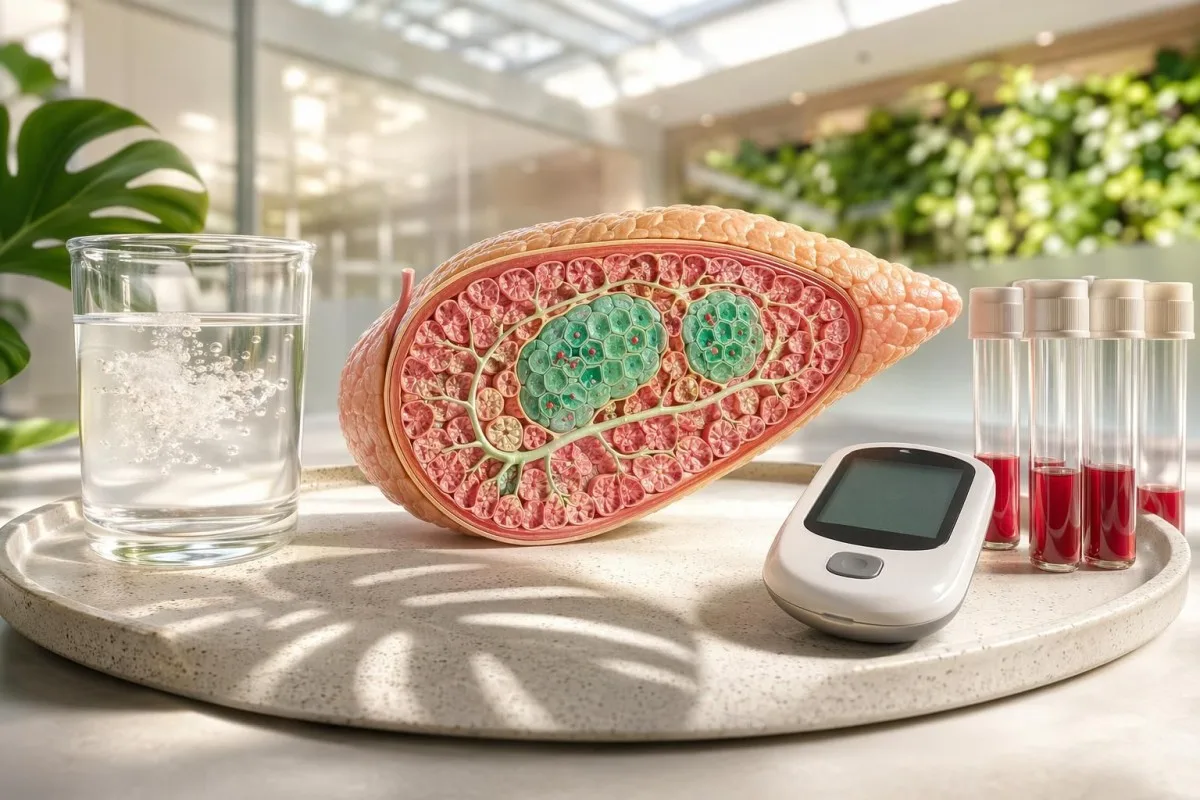
Una guia pràctica de cribratge postpart per a qualsevol persona a qui li han dit que els sucres de l’embaràs ja eren normals, però que encara vol saber què ve després.


- 75 g OGTT entre 4 i 12 setmanes postpart és la prova preferida després de la diabetis gestacional perquè detecta problemes de glucosa a les 2 hores que la glucosa en dejú pot passar per alt.
- Criteris de tall per a la diabetis són glucosa plasmàtica en dejú ≥126 mg/dL, glucosa de l’OGTT de 2 hores ≥200 mg/dL, HbA1c ≥6.5%, o glucosa aleatòria ≥200 mg/dL amb símptomes.
- Límits de prediabetis són glucosa en dejú 100-125 mg/dL, glucosa de l’OGTT de 2 hores 140-199 mg/dL, o HbA1c 5.7-6.4%.
- HbA1c aviat postpart pot ser falsament baixa després de la pèrdua de sang durant el part o d’una alta renovació dels glòbuls vermells, de manera que no hauria de substituir l’OGTT a les 4-12 setmanes.
- Glucosa normal de l’embaràs després del part no esborra el risc futur; la diabetis gestacional sovint és una prova d’estrès de les cèl·lules beta que revela vulnerabilitat anys abans de la diabetis tipus 2.
- Interval de reavaluació és cada 1-3 anys de per vida si el cribratge postpart és normal, i normalment cada any si algun resultat està en el rang de prediabetis.
- Abans d’un altre embaràs demaneu proves de glucosa abans de la concepció o al començament del primer trimestre, especialment si abans la GDM va requerir insulina o medicació.
- Marcadors de risc com la insulina en dejú, els triglicèrids, HDL, ALT i la relació albúmina-creatinina a l’orina no diagnostiquen diabetis, però ajuden a estimar el risc cardiometabòlic.
Les anàlisis de sang que diagnostiquen la diabetis després de la diabetis gestacional
Les anàlisis de sang que detecten la diabetis després de la diabetis gestacional són les prova de tolerància oral a la glucosa de 75 g durant 2 hores, glucosa plasmàtica en dejú, HbA1c, i glucosa plasmàtica aleatòria quan hi ha símptomes clàssics. L’OGTT és habitualment la millor prova de cribratge de diabetis postpart a les 4-12 setmanes perquè detecta el maneig alterat de la glucosa de 2 hores abans que la glucosa en dejú o l’HbA1c esdevinguin anormals.
Com Thomas Klein, MD, dic als pacients que la qüestió no és només si el nombre és alt avui; és si el pàncrees encara té prou reserva després de l’embaràs. Una glucosa en dejú de 94 mg/dL pot semblar tranquil·litzadora, mentre que un valor d’OGTT de 2 hores de 168 mg/dL diu silenciosament que la resposta d’insulina de la primera fase va endarrerida.
Un diagnòstic de diabetis fora de l’embaràs es fa amb la glucosa plasmàtica en dejú ≥126 mg/dL, glucosa de l’OGTT de 2 hores ≥200 mg/dL, HbA1c ≥6.5%, o la glucosa plasmàtica aleatòria ≥200 mg/dL amb símptomes com set, micció freqüent o pèrdua de pes inexplicada. Per a una comparació en llenguatge planer de les proves diagnòstiques i de seguiment, les nostres valors de tall de la prova de diabetis guia és un bon complement.
Kantesti és un analitzador de proves de sang amb IA que llegeix la glucosa postpart, l’HbA1c, els lípids i els marcadors renals en el mateix context clínic, en lloc de com a senyals aïllats. En la nostra anàlisi de 2M+ informes de laboratori carregats, apareix un patró constant: la gent recorda el diagnòstic de l’embaràs, però sovint el resultat de l’OGTT de 4-12 setmanes no arriba mai al registre de salut a llarg termini.
Per què la glucosa normal de l’embaràs no reinicia el risc futur
La glucosa normal després del part no reinicia el risc futur de diabetis perquè la diabetis gestacional sovint reflecteix una reserva limitada de cèl·lules beta sota l’estrès de l’embaràs. El part elimina les hormones placentàries, però no necessàriament repara la resistència a la insulina, el risc genètic, la tendència a tenir fetge gras o la vulnerabilitat de les cèl·lules beta pancreàtiques.
La placenta produeix hormones que fan augmentar la resistència a la insulina, sovint de manera més notable després de les 24-28 setmanes. Quan la glucosa es normalitza després del naixement, això vol dir que l’agent estressant ha desaparegut; no prova que les cèl·lules productores d’insulina tinguin una reserva il·limitada.
Bellamy et al. van informar a The Lancet que les dones amb diabetis gestacional prèvia tenien aproximadament una probabilitat 7 vegades més alta de diabetis tipus 2 posterior en comparació amb les que no havien tingut GDM (Bellamy et al., 2009). En la pràctica dia a dia, veig el grup de risc amb l’augment del perímetre abdominal, triglicèrids per sobre de 150 mg/dL, HDL baix, antecedents familiars, PCOS i alteració del son durant les primeres dues dècades postpart.
Un HbA1c normal de 5.3% sis mesos després del part encara pot coexistir amb una resistència a la insulina primerenca. Si vols una visió metabòlica més profunda, la nostra guia per a test de resistència a la insulina explica per què la insulina en dejú i la glucosa poden anar variant abans que l’A1C creui el llindar de prediabetis.
Quan s’ha de fer el cribratge de diabetis postpart
El cribratge de la diabetis postpart s’ha de fer entre 4 i 12 setmanes després del part, preferiblement amb una OGTT de 75 g durant 2 hores. Si es va perdre aquesta finestra, el millor moment per fer la prova és ara; no esperaria al següent control anual si l’embaràs va ser fa 6 mesos o fa 6 anys.
L’American Diabetes Association recomana una OGTT de 75 g a les 4-12 setmanes postpart i un cribratge de per vida cada 1-3 anys després de la diabetis gestacional (American Diabetes Association Professional Practice Committee, 2024). L’ACOG també dona suport al cribratge postpart en aquesta finestra inicial, i molts centres obstètrics ara intenten demanar-la abans de la visita de les 6 setmanes perquè no s’oblidi (ACOG, 2018).
La lactància, la fragmentació del son i els canvis de pes postpart poden modificar la glucosa dia a dia, però no són motius per saltar-se la prova. La majoria de pacients poden fer l’OGTT mentre alleten; el problema pràctic sovint és la cura dels infants durant l’espera de 2 hores al laboratori, no pas la biologia.
Si també necessites controls d’anèmia, funció tiroïdal, enzims hepàtics o marcadors renals després del part, el nostre llistat de control de laboratori postpart detalla quines proves s’acostumen a combinar amb el cribratge de glucosa. Una sola cita sovint pot cobrir més d’un problema postpart.
Com s’interpreta la prova d’hiper tolerància oral a la glucosa de 75 g
El prova d’ tolerància oral a la glucosa després de l’embaràs mesura la glucosa en dejú i la glucosa als 2 hores després d’una beguda de glucosa de 75 g. Un valor de ≥200 mg/dL 2 hores diagnostica la diabetis, mentre que 140-199 mg/dL diagnostica la tolerància alterada a la glucosa, fins i tot quan la glucosa en dejú és normal.
La prova funciona perquè posa a prova el sistema de la insulina en lloc d’observar-lo en repòs. En la meva experiència, les persones amb GDM prèvia sovint superen la part en dejú però fallen la part de 2 hores; aquest patró apunta a una secreció d’insulina retardada després dels àpats.
Prepara’t amb l’alimentació habitual durant almenys 3 dies, idealment incloent almenys 150 g de carbohidrats al dia tret que el teu clínic t’hagi indicat el contrari. Fer una dieta molt baixa en carbohidrats abans d’una OGTT pot exagerar l’augment de la glucosa i fer la interpretació difícil; la nostra les normes de dejuni guia inclou detalls sobre aigua, cafè i el moment.
No facis exercici intens durant l’espera de 2 hores, i informa el laboratori si vomites o no pots acabar la beguda. Un resultat s’ha de repetir o substituir per una altra prova diagnòstica si el procediment no s’ha completat correctament.
Què pot i què no pot detectar la glucosa en dejú
La glucosa plasmàtica en dejú detecta la diabetis quan el valor en dejú és ≥126 mg/dL, però pot passar per alt una intolerància a la glucosa aïllada després dels àpats en el context de la diabetis gestacional. És útil, barata i repetible; simplement és massa contundent per substituir l’OGTT postpart.
Una glucosa en dejú de 100-125 mg/dL és prediabetis segons els criteris de l’ADA, mentre que <100 mg/dL generalment es considera normal als Estats Units. Alguns sistemes internacionals fan servir 110 mg/dL com a llindar inferior d’alteració de la glucosa en dejú, i aquesta és una de les raons per les quals els pacients s’embullen en passar d’un país a un altre.
El parany clínic és una glucosa en dejú de 88-96 mg/dL amb una OGTT de 2 hores de 155-185 mg/dL. A aquesta persona se li pot dir que tot està bé si només s’ha demanat la glucosa en dejú, però la seva biologia de la glucosa en el moment dels àpats ja és anormal.
La glucosa del matí es veu afectada pel dèficit de son, el fet de menjar a altes hores de la nit, els corticosteroides, la infecció i el fenomen de l’alba. El nostre guia de glucosa en dejú explica per què s’ha d’interpretar un sol resultat del matí tenint en compte el que va passar la tarda anterior i la qualitat del son.
Per què l’HbA1c és convenient però imperfecta després del part
HbA1c detecta la diabetis a ≥6.5%, però és menys fiable durant les primeres 4-12 setmanes postpart, perquè la pèrdua de sang durant el part i la renovació dels glòbuls vermells poden distorsionar el resultat. HbA1c és útil més endavant, especialment per al seguiment a llarg termini, però no s’hauria de substituir la primera OGTT postpart.
HbA1c estima la glucosa mitjana al llarg de aproximadament 8-12 setmanes, ponderat cap al mes més recent. Després del part, l’anèmia, la transfusió, la deficiència de ferro o la reposició ràpida de glòbuls vermells poden allunyar el valor de la veritable història de la glucosa.
La deficiència de ferro pot augmentar falsament l’HbA1c en alguns pacients, mentre que una pèrdua de sang recent pot disminuir-la falsament. És una d’aquelles àrees on el context importa més que el nombre; un HbA1c postpart de 5.6% pot no ser tan tranquil·litzador si la ferritina és 8 ng/mL i no s’ha fet mai l’OGTT.
Si el teu A1c no coincideix amb les lectures de la punció digital o els símptomes, llegeix la nostra guia sobre precisió de l’A1c abans d’acceptar el valor tal com és. Normalment combino HbA1c amb la glucosa en dejú, la CBC i la ferritina quan la història postpart sembla inconsistent.
Quan la glucosa aleatòria o els símptomes requereixen una acció ràpida
La glucosa plasmàtica aleatòria detecta la diabetis quan és ≥200 mg/dL i hi ha símptomes. Després de la diabetis gestacional, cal una revisió urgent si hi ha glucosa alta amb vòmits, deshidratació, pèrdua de pes ràpida, cetones, visió borrosa o esgotament inusual.
La majoria de la diabetis després de la DGM és de tipus 2, però ocasionalment pot aparèixer diabetis autoimmune postpart, especialment si la pèrdua de pes és ràpida i hi ha cetones. He vist pacients que es descartaven com a simplement pares nous cansats quan la seva glucosa era 280 mg/dL i ja estaven amb cetosi.
Una glucosa aleatòria de 140-199 mg/dL no és diagnòstica per si sola, però hauria de portar a una glucosa en dejú, HbA1c o OGTT segons el moment i els símptomes. Un valor aleatori per sobre de 300 mg/dL, especialment si hi ha dolor abdominal o respiració dificultosa, s’ha de tractar com a atenció mèdica el mateix dia.
Un sol valor alt pot passar després d’una malaltia, esteroides o un àpat molt alt en carbohidrats, però el patró importa. La nostra guia sobre glucosa alta inesperada explica com els clínics separen la hiperglucèmia per estrès de la diabetis inicial.
Marcadors sanguinis que indiquen risc abans que aparegui la diabetis
La insulina en dejú, el pèptid C, els triglicèrids, HDL, ALT i la ràtio albúmina-creatinina d’orina no diagnostiquen diabetis, però ajuden a mostrar el risc metabòlic després de la diabetis gestacional. Aquests marcadors poden revelar resistència a la insulina, tendència a fetge gras o estrès renal precoç mentre la glucosa encara és tècnicament normal.
Una insulina en dejú per sobre d’aproximadament 15-20 µIU/mL pot suggerir resistència a la insulina, tot i que els mètodes de laboratori difereixen i no hi ha un llindar diagnòstic universal. El HOMA-IR utilitza insulina en dejú i glucosa en dejú; els valors per sobre de 2.0-2.5 sovint aixequen sospita en adults, però l’ètnia, el BMI i l’elecció de l’assaig canvien la interpretació.
Triglicèrids per sobre de 150 mg/dL i HDL per sota de 50 mg/dL en dones sovint van de la mà amb resistència a la insulina. ALT per sobre d’uns 25-30 IU/L en una dona amb GDM prèvia pot ser una pista precoç de fetge gras fins i tot quan l’avís del laboratori encara diu normal.
Kantesti és una plataforma d’interpretació de biomarcadors d’IA que tracta un A1C normal després de la diabetis gestacional com una pregunta de marcador de risc, no com un “verd” per sempre. Si vols calcular la resistència a la insulina a partir de les teves dades, la calculadora HOMA-IR guia mostra la fórmula i les seves limitacions.
Amb quina freqüència s’ha de repetir la prova si el cribratge postpart és normal
Si el cribratge postpart és normal després de la diabetis gestacional, torna a fer la prova cada 1-3 anys per a tota la vida. Repetir abans, sovint cada any, si augmenta el pes, apareix prediabetis, es planifica un altre embaràs, o medicaments com esteroides o antipsicòtics augmenten el risc de glucosa.
La recomanació de l’ADA de fer cribratge de per vida cada 1-3 anys existeix perquè el risc de diabetis augmenta amb el temps, no només durant el primer any postpart. Al meu consultori, normalment trio el 1-any d’interval per a qualsevol persona amb prediabetis, GDM tractada amb insulina, BMI per sobre de 30, forta història familiar o PCOS.
Una prova normal el 2026 encara és útil perquè es converteix en la teva línia de base. Una glucosa en dejú que es desplaça de 82 a 96 mg/dL al llarg de 3 anys pot ser més significativa que un resultat marcat, sobretot si els triglicèrids i el perímetre de cintura pugen al mateix temps.
Kantesti L’IA pot traçar la glucosa, HbA1c, els triglicèrids i l’ALT al llarg del temps perquè els petits canvis siguin visibles abans que es tornin dramàtics. El nostre anàlisi de tendències article explica per què sovint l’“slope” i el agrupament importen més que una sola bandera de laboratori.
Què demanar al teu clínic que prescrigui
Demana una OGTT de 75 g i 2 hores a les 4-12 setmanes postpart, o bé glucosa plasmàtica en dejú més HbA1c si no és factible una OGTT. Per al risc a llarg termini, pregunta si s’hauria de comprovar el perfil lipídic, l’ALT, la creatinina, l’eGFR i la relació albúmina-creatinina d’orina amb els teus marcadors de glucosa.
Una primera comanda postpart raonable sovint diu: glucosa en dejú, glucosa de 75 g i 2 hores, HbA1c, CBC si hi va haver una pèrdua important de sang durant el part, ferritina si es sospita anèmia, panell lipídic i CMP si el risc cardiometabòlic és alt. No totes les pacients necessiten totes les proves, però la comanda hauria d’encaixar amb la història de l’embaràs.
Si durant l’embaràs tenies hiperglucèmia en dejú o necessitaves insulina, jo seria més agressiu amb el seguiment precoç. Si la teva GDM va ser lleu i controlada amb dieta, l’OGTT encara importa, però el ritme a llarg termini pot estar més a prop de cada 2-3 anys quan tots els resultats són normals.
Per a lectors que volen entendre què mesura realment cada marcador, el nostre guia de biomarcadors cobreix milers de marcadors de laboratori i diferències habituals d’unitats. Això és especialment útil quan un laboratori informa la glucosa en mg/dL i un altre la informa en mmol/L.
Què fan els metges amb resultats limítrofs o contradictoris
Els resultats de diabetis limítrofs o contradictoris habitualment s’han de repetir o confirmar amb una prova diagnòstica diferent. Una glucosa en dejú de 124 mg/dL, HbA1c de 6.4%, o una OGTT de 2 hores de 198 mg/dL no és per fer una ganyota; és un resultat gairebé al llindar que mereix un pla.
Sense símptomes clàssics, la majoria de clínics confirmen la diabetis amb un resultat anormal repetit. Si dues proves diferents no coincideixen, la prova per sobre del llindar diagnòstic normalment es repeteix, i el context de la pacient decideix com de ràpid passa això.
Thomas Klein, MD, regla pràctica: no deixis que la paraula “limítrof” faci que el resultat sembli inofensiu. Una OGTT de 2 hores de 196 mg/dL després d’una GDM prèvia sovint comporta més risc futur que una glucosa en dejú de 101 mg/dL, tot i que ambdues poden quedar registrades com a prediabetis.
La nostra guia per llindars de prediabetis explica com la glucosa en dejú, l’A1c i l’OGTT defineixen diferents problemes biològics. Sovint em refereixo a la prediabetis després de la GDM com una finestra de tractament més que no pas una sala d’espera.
Situacions especials: lactància, anèmia, SOP i medicaments
La lactància, l’anèmia, la PCOS, els medicaments GLP-1, els esteroides i la malaltia tiroïdal poden canviar com s’han d’interpretar les analítiques de diabetis postpart. Els punts de tall de la glucosa es mantenen iguals, però la confiança que diposites en l’HbA1c, la glucosa en dejú o els nivells d’insulina pot canviar substancialment.
La lactància materna sovint millora el metabolisme de la glucosa i pot reduir el risc futur de diabetis tipus 2, però no elimina la necessitat de fer cribratge. Si estàs prenent insulina o sulfonilurees postpart, demana al teu clínic el risc d’hipoglucèmia durant preses més llargues o àpats perduts.
El SOP afegeix una via separada de resistència a la insulina, i el fet d’haver tingut GDM prèvia més SOP és una de les combinacions que tracto amb especial cura. El nostre Patrons d’analítica del SOP explica per què la insulina en dejú, els lípids i els andrògens poden importar fins i tot quan la glucosa encara no és diagnòstica.
Les injeccions d’esteroides, la prednisona a dosis altes, alguns antipsicòtics i la privació severa de son poden augmentar la glucosa temporalment. L’evidència sobre els llindars exactes de son postpart és, sincerament, contradictòria, però veig valors de dejú pitjors quan el son es fragmenta per sota de 5-6 hores durant setmanes.
Com Kantesti llegeix de manera segura les analítiques de diabetis postpart
Kantesti llegeix les analítiques de diabetis postpart combinant llindars de glucosa amb el moment, l’historial de l’embaràs, pistes d’anèmia, patrons lipídics i marcadors renals. L’objectiu no és substituir el teu clínic; és fer més clar el patró de risc abans de la teva cita.
Kantesti és una eina d’anàlisi d’analítica de sang impulsada per IA utilitzada per 2M+ persones a 127 països, amb interpretació de PDF o foto de l’analítica de sang en aproximadament 60 segons. Per al cribratge de la diabetis postpart, la nostra xarxa neuronal separa els criteris diagnòstics de glucosa dels marcadors de context de risc com els triglicèrids, HDL, ALT i l’ACR d’orina.
Una pujada típica podria mostrar HbA1c 5.5%, glucosa en dejú 92 mg/dL, ferritina 10 ng/mL i no OGTT. La IA de Kantesti no diagnosticaria diabetis a partir d’aquests valors, però hauria de marcar que l’A1c postpart inicial pot ser poc fiable i que falta l’OGTT recomanada.
Els nostres mètodes s’alineen amb estàndards clínics publicats i amb revisió interna de metges; els lectors poden veure el nostre estàndards de validació clínica i la Benchmark d’IA. Si estàs pujant un escaneig en lloc d’escriure valors, el flux de càrrega de PDF explica com es llegeixen i es comproven els informes.
Un pla pràctic de repetició de proves per al 2026 i més enllà
A partir del 26 de maig de 2026, el pla més segur després de la diabetis gestacional és OGTT entre 4 i 12 setmanes, repetir el cribratge cada 1-3 anys i fer proves abans d’un altre embaràs. Si algun resultat està en el rang de prediabetis, tracta’l com una finestra activa de prevenció, no com una curiositat lleu de laboratori.
El meu guió habitual és simple: fer el primer OGTT postpart, desar el resultat i, després, posar la següent comprovació de glucosa al calendari abans que la vida s’emboliqui. Si el teu OGTT de 2 hores és 140-199 mg/dL, demana un interval de seguiment clar, un pla de nutrició i un objectiu d’exercici en lloc d’un recordatori vague de tenir cura.
Si el teu cribratge de diabetis és normal, igualment explica a cada futur clínic que vas tenir GDM. Aquesta sola línia canvia com llegeixo una glucosa en dejú de 103 mg/dL, un nivell de triglicèrids de 180 mg/dL, o un HbA1c que s’enfila des de 5,2% a 5,6% al llarg de diversos anys.
Kantesti Ltd és una empresa de tecnologia sanitària del Regne Unit, i els nostres metges revisen el contingut mèdic mitjançant el nostre consell assessor mèdic i el procés de governança clínica descrit a Sobre nosaltres. En resum: les proves adequades no són complicades, però el moment i la interpretació importen més del que la majoria de persones se’ls diu.
Publicacions de recerca relacionades de Kantesti
El cribratge de la diabetis postpart sovint s’inclou dins d’una revisió més àmplia de laboratori que inclou CBC, l’estat del ferro i marcadors renals. Les publicacions de Kantesti amb DOI que es mostren a continuació donen suport a mètodes d’interpretació de proves de sang adjacents, incloent índexs de cèl·lules vermelles i ràtios de funció renal que poden afectar la confiança en l’HbA1c o l’avaluació del risc metabòlic a llarg termini.
Preguntes freqüents
Quines anàlisis de sang detecten la diabetis després de la diabetis gestacional?
Les anàlisis de sang que detecten la diabetis després de la diabetis gestacional són la prova de tolerància oral a la glucosa de 75 g durant 2 hores, la glucosa plasmàtica en dejú, HbA1c i la glucosa plasmàtica aleatòria quan hi ha símptomes. La diabetis es diagnostica amb una glucosa en dejú ≥126 mg/dL, una glucosa de l’OGTT de 2 hores ≥200 mg/dL, HbA1c ≥6.5%, o una glucosa aleatòria ≥200 mg/dL amb símptomes clàssics. Es prefereix l’OGTT entre 4 i 12 setmanes postpart perquè pot detectar una alteració del maneig de la glucosa de 2 hores fins i tot quan la glucosa en dejú és normal.
La prova de tolerància oral a la glucosa després de l’embaràs és millor que l’HbA1c?
Sí, la prova de tolerància oral a la glucosa després del part sol ser millor que l’HbA1c per a la primera detecció postpart a les 4-12 setmanes. L’HbA1c pot quedar distorsionada per la pèrdua de sang durant el part, l’anèmia, la transfusió o la rotació ràpida dels eritròcits, mentre que l’OGTT mesura directament el maneig de la glucosa després d’una prova de càrrega de 75 g de glucosa. L’HbA1c esdevé més útil més endavant per a la detecció a llarg termini i el seguiment de tendències.
Quan s’ha de fer el cribratge de la diabetis postpart després de la DG?
S’ha de fer el cribratge de la diabetis postpart després de la diabetis gestacional entre 4 i 12 setmanes després del part, idealment amb una OGTT de 75 g durant 2 hores. Si es va perdre aquest període, s’ha de fer la prova tan aviat com sigui pràctic en lloc d’esperar l’aparició de símptomes. Si el resultat postpart és normal, cal repetir el cribratge de la diabetis cada 1-3 anys durant tota la vida.
Pot l’HbA1c ser normal però l’OGTT ser anormal després de la diabetis gestacional?
Sí, l’HbA1c pot ser normal mentre que l’OGTT és anormal després de la diabetis gestacional. Una persona pot tenir una HbA1c de 5,3% i una glucosa en dejú de 92 mg/dL, però un valor d’OGTT de 2 hores de 160 mg/dL, que és una tolerància alterada a la glucosa. Això passa perquè l’HbA1c reflecteix la glucosa mitjana, mentre que l’OGTT posa a prova la resposta de la insulina després d’una càrrega de glucosa.
Què signifiquen els resultats de la prediabetis després de la diabetis gestacional?
La prediabetis després de la diabetis gestacional es defineix per una glucosa plasmàtica en dejú de 100-125 mg/dL, una glucosa de l’OGTT de 2 hores de 140-199 mg/dL, o HbA1c 5.7-6.4%. Una anomalia en l’OGTT de 2 hores és especialment freqüent després de la DG i pot passar desapercebuda si només s’ordena la glucosa en dejú. La prediabetis generalment hauria de desencadenar un seguiment anual i un pla de prevenció estructurat.
Amb quina freqüència he de tornar a fer proves si el meu cribratge postpart és normal?
Si la teva prova de diabetis postpart és normal després de la diabetis gestacional, torna a fer-la cada 1-3 anys durant tota la vida. Molts clínics opten per fer proves anuals si has tingut GDM tractada amb insulina, prediabetis, SOP, BMI superior a 30, antecedents familiars forts o triglicèrids en augment. Les proves també s’han de repetir abans d’un altre embaràs o a principis del primer trimestre.
La lactància materna canvia els resultats de les anàlisis de sang de la diabetis?
La lactància materna pot millorar el metabolisme de la glucosa i pot reduir el risc futur de diabetis tipus 2, però no elimina la necessitat de fer el cribratge de la diabetis postpart. Els punts de tall diagnòstics per a la glucosa en dejú, l’OGTT i l’HbA1c no canvien perquè algú estigui lactant. Si s’utilitzen medicaments per a la diabetis durant el postpart, els clínics poden ajustar el moment o la dosi per reduir el risc d’hipoglucèmia durant preses llargues o àpats perduts.
El meu nadó necessita proves de diabetis perquè jo vaig tenir diabetis gestacional?
La glucosa del nounat es pot comprovar a l’hospital, especialment si has utilitzat insulina o medicació durant l’embaràs, però la majoria dels infants no necessiten proves de sang de diabetis en curs només perquè la mare hagi tingut diabetis gestacional. Mantén les visites pediàtriques habituals i dóna suport als hàbits familiars relacionats amb àpats equilibrats, activitat i son.
Què passa si no puc tolerar la beguda de glucosa per a l’OGTT postpart?
Abans de la prova, explica-ho al teu professional sanitari. Pot reprogramar-la amb estratègies contra les nàusees, comprovar la glucosa en dejú i l’HbA1c, o utilitzar dades temporals de glucosa a casa o de monitoratge continu, però aquestes alternatives potser no substitueixen completament l’OGTT diagnòstic.
Obteniu avui una anàlisi de sang amb IA
Uneix-te a més de 2 milions d’usuaris a tot el món que confien en Kantesti per a una anàlisi instantània i precisa de proves de laboratori. Pengeu els vostres resultats d’anàlisi de sang i rebeu una interpretació completa de biomarcadors 15,000+ en segons.
📚 Publicacions de recerca citades
Klein, T., Mitchell, S., & Weber, H. (2026). Anàlisi de sang de RDW: guia completa de RDW-CV, MCV i MCHC. Kantesti Recerca mèdica amb IA.
Klein, T., Mitchell, S., & Weber, H. (2026). Explicació de la relació BUN/Creatinina: Guia de proves de funció renal. Kantesti Recerca mèdica amb IA.
📖 Referències mèdiques externes
American Diabetes Association Professional Practice Committee (2024). 2. Diagnòstic i classificació de la diabetis: estàndards d’atenció a la diabetis—2024. Diabetes Care.
⚕️ Avís mèdic
Aquest article és només per a finalitats educatives i no constitueix assessorament mèdic. Consulteu sempre un professional sanitari qualificat per a decisions de diagnòstic i tractament.
Senyals de confiança E-E-A-T
Experiència
Revisió clínica liderada per metges dels fluxos de treball d’interpretació de laboratori.
Experiència
Enfocament en medicina de laboratori sobre com es comporten els biomarcadors en context clínic.
Autoritat
Escrit pel Dr. Thomas Klein amb revisió de la Dra. Sarah Mitchell i el Prof. Dr. Hans Weber.
Fiabilitat
Interpretació basada en l’evidència amb vies de seguiment clares per reduir l’alarma.