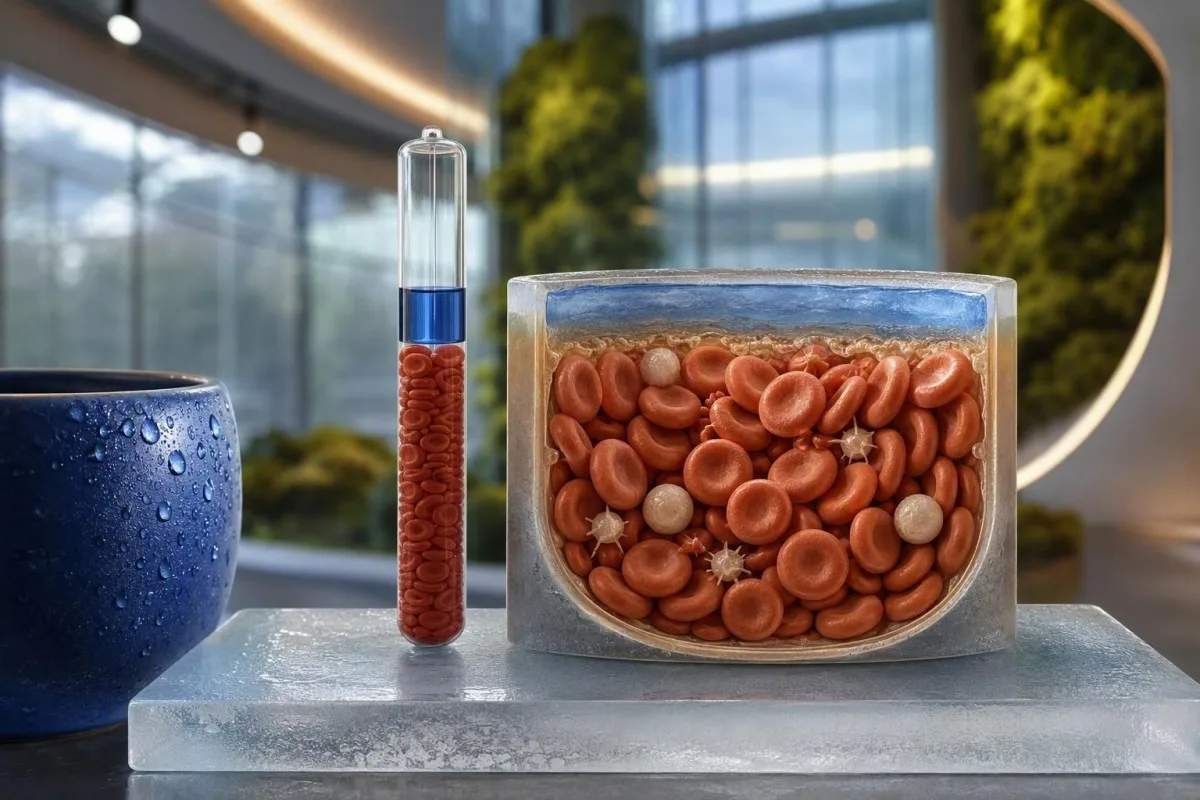
Een hoog RBC-getal kan wijzen op geconcentreerd bloed in plaats van extra rode bloedcellen. De eerste taak is het onderscheiden van tijdelijk vochtverlies van een aanhoudende verhoging die een goed onderzoek behoeft.


- Relatieve erytrocytose betekent dat het plasmavolume is gedaald, waardoor het RBC-getal, hemoglobine en hematocriet hoog lijken zonder dat er nieuwe cellen zijn aangemaakt.
- WHO-drempel waarden die wijzen op mogelijke polycythaemia vera zijn hemoglobine boven 16,5 g/dL bij mannen of 16,0 g/dL bij vrouwen, of een hematocriet boven 49% en 48%, respectievelijk.
- Hertest na hydratatie is meestal redelijk bij een milde, geïsoleerde verhoging na braken, diarree, blootstelling aan hitte, vasten of zware inspanning—als u zich verder goed voelt.
- Diuretica kan de hematocriet verhogen door vochtverlies; stop niet met voorgeschreven medicatie zonder overleg met de clinicus die het heeft voorgeschreven.
- Het patroon is belangrijk: een hoog albumine, totaal eiwit, natrium, BUN/creatinine-ratio en soortelijk gewicht van de urine wijzen meer op uitdroging dan op een werkelijke overproductie van rode bloedcellen.
- Herhaalinterval is meestal 1–2 weken na herstel, normale vochtinname en 24–48 uur zonder ongewoon zware inspanning, tenzij er dringende symptomen zijn.
- Aanhoudende verhoging na een goede hydratatie rechtvaardigt onderzoek naar blootstelling aan roken, slaapgerelateerde ademhalingsstoornissen, hoogte, testosteron, long- of nierziekten, erytropoëtine en vaak JAK2-testen.
- Spoedsymptomen waaronder pijn op de borst, nieuwe kortademigheid, eenzijdige zwakte, gezichtsverlies, verwardheid of een pijnlijk gezwollen been; deze vereisen onmiddellijke zorg, geen hertest thuis.
Wat een hoog RBC-resultaat meestal betekent
Een hoog RBC-getal kan een foutief hoge waarde zijn door uitdroging wanneer vochtverlies het cellulaire deel van het bloed concentreert; dit betekent niet automatisch dat uw beenmerg te veel rode bloedcellen aanmaakt. De aanwijzing is of hemoglobine en hematocriet normaliseren na herstel en normaal drinken, in plaats van verhoogd te blijven bij een goed voorbereide herhaalde CBC.
Het RBC-getal rapporteert het aantal rode bloedcellen per liter, terwijl hematocriet de fractie van het volbloed rapporteert die door deze cellen wordt ingenomen. Referentiewaarden voor volwassenen variëren per laboratorium, maar velen hanteren ongeveer 4,5–5,9 × 10¹²/L voor mannen en 4,1–5,1 × 10¹²/L voor vrouwen. Een waarde die net boven het bereik ligt, is vaak minder informatief dan de hemoglobine- en hematocrietwaarden ernaast; onze gids voor wat een CBC omvat legt uit waarom.
Uitdroging verlaagt het vloeibare bestanddeel van het bloed binnen enkele uren, waardoor dezelfde massa aan rode bloedcellen een kleiner gemeten volume inneemt. In de kliniek zie ik dit vaak na een buikgriep: RBC 5,8 × 10¹²/L, hemoglobine 17,1 g/dL, hematocriet 51%, en daarna normale waarden na herstel. Dit is relatieve erytrocytose, geen laboratoriumfout en niet noodzakelijkerwijs een ziekte.
Kantesti is een AI-bloedtestanalysator die RBC, hemoglobine, hematocriet, rode-bloedcelindices, niermerkers en eerdere resultaten in samenhang leest. Per 5 september 2026 behandelt onze klinische beoordelingsworkflow een enkele grenswaarde bij een CBC als een aanleiding om de voorbereiding en de trend te controleren—niet als een diagnose.
RBC-getal is niet hetzelfde als de totale massa aan rode bloedcellen
Een CBC kan de totale massa aan rode bloedcellen niet direct meten. Het meet de concentratie, die stijgt wanneer het plasmavolume afneemt; gespecialiseerde isotoopstudies naar de massa aan rode bloedcellen zijn tegenwoordig zelden nodig, maar ze illustreren waarom een geconcentreerde CBC alarmerend kan lijken zonder een daadwerkelijke toename van het aantal cellen.
Relatieve erytrocytose versus een werkelijk overschot aan rode bloedcellen
Relatieve erytrocytose is een hoog RBC-getal, hemoglobine of hematocriet veroorzaakt door een verminderd plasmavolume, terwijl absolute erytrocytose een werkelijk toegenomen massa aan rode bloedcellen weerspiegelt. Hydratatie kan het eerste patroon corrigeren, maar zal het tweede niet corrigeren.
Echte erytrocytose kan primair zijn, zoals bij polycythaemia vera, of secundair aan verhoogd erytropoëtine door een zuurstoftekort, medicijnen of zelden een nierproces. De WHO-criteria van 2016 hanteren hemoglobine boven 16,5 g/dL bij mannen of 16,0 g/dL bij vrouwen als drempelwaarden die de vraag naar polycythaemia vera moeten oproepen, met name wanneer dit aanhoudend is (Arber et al., 2016). Een enkele waarde is niet voldoende om dit te diagnosticeren.
Het praktische onderscheid is de rest van het panel. Uitdroging hoog RBC-getal patronen omvatten vaak een hoog albumine, totaal eiwit, ureum/BUN, natrium en geconcentreerde urine; absolute erytrocytose laat deze markers mogelijk onveranderd. Bekijk ons gerichte artikel over licht verhoogd hemoglobine als hemoglobine, in plaats van alleen het RBC-getal, het gemarkeerde resultaat is.
Een normaal RBC-getal sluit erytrocytose niet uit als het hemoglobine of hematocriet hoog is, en een verhoogd RBC-getal alleen kan voorkomen bij kleine rode bloedcellen door ijzergebrek of thalassemie-dragerschap. Daarom zijn MCV en ferritine van belang; een hoog RBC-getal met een MCV onder 80 fL is een ander klinisch gesprek.
Hoe uitdroging de CBC en nierwaarden beïnvloedt
Uitdroging verhoogt gewoonlijk het RBC-getal, hemoglobine en hematocriet samen, en het verhoogt vaak albumine, totaal eiwit, ureum/BUN, creatinine en urineconcentratie. Een tegenstrijdig resultaat—bijvoorbeeld een hoog RBC-getal met een laag hemoglobine—past niet goed bij eenvoudige hemoconcentratie.
Een BUN/creatinine-ratio van meer dan ongeveer 20:1 in Amerikaanse eenheden kan wijzen op een verminderde nierdoorbloeding door vochtverlies, hoewel gastro-intestinale bloedingen, eiwitinname, corticosteroïden en een lage spiermassa de ratio kunnen beïnvloeden. Creatinine kan licht stijgen na blootstelling aan hitte of een lange hardloopsessie omdat zowel de filtratie als het spierstofwisselingsproces veranderen. Onze gids voor uitdroging en eGFR behandelt wanneer een lage eGFR herhaald moet worden.
Een urine-soortelijk gewicht van 1,025 of hoger is verenigbaar met geconcentreerde urine, maar het is geen directe graadmeter voor hydratatie. Glucose, eiwitten en bepaalde contrastmiddelen voor beeldvorming kunnen het ook verhogen, dus een clinicus moet dit interpreteren in samenhang met symptomen en elektrolyten. Een referentiewaarde voor het soortelijk gewicht van urine is nuttig wanneer de CBC en urineanalyse op dezelfde dag zijn afgenomen.
Ik raad het af om te proberen een test kunstmatig te normaliseren door direct voor de afname enkele liters te drinken. Snel overmatig drinken kan het natriumgehalte verlagen en creëert opnieuw een niet-representatief monster; normale maaltijden en reguliere hydratatie op basis van dorst gedurende 24–48 uur zijn over het algemeen veiliger voor mensen zonder vochtbeperking.
Braken, diarree, hitte, vasten en diuretica
Braken, diarree, hevig zweten, langdurig vasten en diuretica kunnen allemaal een tijdelijke hoge RBC-concentratie veroorzaken door vermindering van het plasmavolume. De mate van verhoging hangt meer af van vochtverlies en -aanvulling dan van hoe ziek iemand zich voelt.
Acuut braken leidt vaak tot een laag chloridegehalte en soms een hoog bicarbonaatgehalte omdat maagzuur en vocht verloren gaan. Lisdiuretica zoals furosemide en thiaziden kunnen een vergelijkbaar volume-gecontracteerd profiel veroorzaken, vooral bij ouderen. Een laag chlorideresultaat past in hetzelfde klinische kader; zie aanwijzingen bij braken en diuretica wat betreft chloride patroon.
Stop niet met een voorgeschreven diureticum om een CBC te verbeteren zonder medisch advies. Mensen die deze medicijnen gebruiken voor hartfalen, cirrose, resistente hypertensie of nieraandoeningen hebben mogelijk een aangepast vochtplan nodig, omdat willekeurig drinken oedeem of kortademigheid kan verergeren. De juiste vraag is of de dosis, symptomen, het gewicht, de bloeddruk en de nierresultaten bij elkaar passen.
Dorst is nuttig, maar niet perfect bij volwassenen ouder dan 65 jaar en bij mensen met diabetes, nieraandoeningen of bepaalde neurologische aandoeningen. Donkergele urine, een droge mond, licht in het hoofd bij opstaan, verminderde urineproductie en een gewichtsverlies van 1 kg over 24 uur kunnen wijzen op vochtverlies, maar ernstige symptomen verdienen een beoordeling in plaats van zelfbehandeling.
Inspanning kan je bloed tijdelijk concentreren
Zware duurtraining kan de hematocriet- en hemoglobineconcentratie gedurende enkele uren verhogen door zweetverlies en verschuivingen in het plasmavolume, ook al kan herhaalde training de basis-hematocriet verlagen door een toename van het plasmavolume. De timing is daarom ongewoon belangrijk voor atleten.
Een loop van 90 minuten bij warm weer kan 1–3 liter vocht doen verdwijnen, afhankelijk van lichaamsomvang, klimaat en zweetproductie. Bloedafname direct na een wedstrijd kan ook hogere waarden laten zien voor creatinine, CK, albumine en totaal eiwit; die cluster is nuttiger dan alleen een RBC-uitslag. Onze gids voor het tijdstip van bloedtesten bij marathons bespreekt de herstelmarkers die gewoonlijk veranderen.
Voor routinecontrole adviseer ik meestal om ongebruikelijk zware inspanning te vermijden 24–48 uur vóór de bloedafname, uitgerust te komen en de dag ervoor normaal te drinken. Dit is geen universele laboratoriumregel, en bij het monitoren van topsporters kan er bewust onder belasting worden getest—maar consistentie is belangrijker dan perfectie. Dr. Thomas Klein heeft veel onnodige doorverwijzingen zien verdwijnen zodra een atleet opnieuw werd getest na een normale herstelweek.
Kantesti’s BUN- en creatinine-onderzoeksrichtlijn is bijzonder nuttig wanneer een duursporter zowel een hoog hematocriet als een grenswaarde voor de nieren heeft. Een dalend gewicht, een hoog soortelijk gewicht van de urine en een kort herstelinterval maken hemoconcentratie aannemelijk; spierpijn, colakleurige urine of een zeer hoog CK vereisen een ander niveau van voorzichtigheid.
Een veilig plan voor het herhalen van een licht verhoogde CBC
Een licht verhoogd RBC-getal kan meestal na 1–2 weken herstel, normale hydratatie en stabiel medicatiegebruik worden herhaald als er geen alarmsymptomen zijn. Herhaal dit alleen eerder als uw arts daarom vraagt of als de initiële uitslag aanzienlijk verhoogd was.
Noteer vóór de herhaling of u in de voorgaande 72 uur last heeft gehad van diarree, braken, koorts, alcoholgebruik, een saunabezoek, lange reizen, blootstelling aan hoogte, vasten of intensieve inspanning. Houd uw gebruikelijke dieet en medicatieschema aan, tenzij uw arts anders voorschrijft. Deze voorbereidingsgids voor bloedonderzoek (baseline) bevat een praktische checklist om toevallige variaties te voorkomen.
Gebruik indien mogelijk hetzelfde laboratorium, omdat analysemethoden en referentiewaarden verschillen. Vraag om een CBC met hemoglobine, hematocriet, MCV, RDW, witte bloedcellen en bloedplaatjes; aanhoudende verhoging vergezeld van hoge bloedplaatjes of witte bloedcellen is zorgwekkender voor een beenmergproces dan een geïsoleerde erytrocytose. Een recente ziekte kan deze waarden in tegengestelde richtingen beïnvloeden, dus het volledige panel telt.
Kantesti is een AI lab test interpretatieservice dat een nieuwe CBC vergelijkt met eerdere waarden en veranderingen markeert die de gewone variatie overschrijden. Onze trendmatige aanpak vervangt geen arts, maar kan de cruciale context behouden—inspanning, ziekte, medicatie en eerdere hematocrietwaarden—die vaak verloren gaat wanneer een enkele uitslag op zichzelf wordt bekeken.
Wanneer een herhaald hoog resultaat testen op erytrocytose vereist
Een aanhoudend hoog hemoglobinegehalte van meer dan 16,5 g/dL bij mannen of 16,0 g/dL bij vrouwen, of een hematocrietwaarde boven 49% of 48%, moet een arts ertoe aanzetten om erytrocytose te evalueren nadat uitdroging is uitgesloten. De gebruikelijke eerste tests zijn een herhaalde CBC, erytropoëtinegehalte, zuurstofbeoordeling en, indien van toepassing, JAK2-mutatietesten.
Polycythemia vera is een myeloproliferatieve neoplasma waarbij JAK2-mutaties bij ongeveer 1% van de getroffen patiënten worden gevonden. Een laag serum-erytropoëtine ondersteunt de diagnose van primaire overproductie in het beenmerg, maar geen enkele bloedtest mag op zichzelf worden geïnterpreteerd. De richtlijn van de British Society for Haematology adviseert een gestructureerde aanpak die primaire van secundaire erytrocytose onderscheidt (McMullin et al., 2019).
Symptomen kunnen subtiel zijn: hoofdpijn, wazig zien, jeuk na een warme douche, ongebruikelijke roodheid in het gezicht, vermoeidheid of een eerder stolsel kunnen belangrijker zijn dan de exacte RBC-waarde. Lees voor een volledige uitleg over hematocriet, erytropoëtine en JAK2 onze polycytemie-symptoomgids. Veel mensen met een lichte verhoging in het laboratorium hebben geen van deze kenmerken.
Ik ben voorzichtig om niet te suggereren dat elke aanhoudend hoge waarde kanker is. Blootstelling aan koolmonoxide door roken, onbehandelde slaapapneu, longziekten, testosteron, grote hoogte en sommige nieraandoeningen zijn in veel praktijken vaker voorkomende verklaringen. Toch is die persistentie precies de reden waarom een herhaalde CBC geen eindeloze cyclus van toevallige hertesten mag worden.
Laag zuurstofgehalte, roken en slaapapneu als oorzaken van een hoog RBC
Chronisch laag zuurstofgehalte kan erytropoëtine stimuleren en een werkelijk verhoogd aantal rode bloedcellen veroorzaken; slaapapneu, blootstelling aan koolmonoxide door roken en longziekten zijn veelvoorkomende oorzaken. Een normale zuurstofverzadiging overdag sluit zuurstofdalingen 's nachts niet volledig uit.
Obstructieve slaapapneu kan matige erytrocytose veroorzaken, vooral wanneer er aanzienlijke zuurstofdesaturaties tijdens de nacht optreden. Luid snurken, geobserveerde ademstops, ochtendhoofdpijn, resistente hypertensie en slaperigheid overdag zouden aanleiding moeten geven tot een slaapgerichte anamnese in plaats van de aanname dat uitdroging alles verklaart. Een gids voor bloedonderzoek bij kortademigheid schetst de bredere cardiopulmonale context.
Sigaretten roken verhoogt het carboxyhemoglobine, waardoor de zuurstoftoevoer afneemt, ondanks een mogelijk geruststellende waarde op de pulsoximeter. Vapen veroorzaakt niet dezelfde blootstelling aan koolmonoxide als brandbare tabak, maar brengt andere gezondheidsrisico’s met zich mee en moet nog steeds eerlijk worden besproken. Koolmonoxidemeting of co-oximetrie is soms nuttiger dan een routinematige zuurstofsaturatiemeting.
Kantesti AI interpreteert een hoge RBC-uitslag samen met hemoglobine, hematocriet, niermarkers en gemelde slaap- of rookfactoren, in plaats van een algemene lijst met mogelijke oorzaken te presenteren. Deze contextuele interpretatie is vooral waardevol wanneer het hematocriet na hydratatie 50% bedraagt en de patiënt meldt niet uitgerust wakker te worden.
Hoogte, testosteron en medicijnen die het RBC verhogen
Wonen of trainen op hoogte en het gebruik van testosteron kunnen de aanmaak van rode bloedcellen verhogen, waardoor de verhoging reëel kan zijn en niet door uitdroging wordt veroorzaakt. Het tijdstip van de blootstelling geeft vaak meer informatie dan het eerste getal.
Op hoogte stimuleert de lagere zuurstofdruk erytropoëtine en verhoogt deze het hemoglobine gedurende dagen tot weken; het verwachte bereik hangt af van de hoogte, de duur, de afkomst en de referentiegegevens van het laboratorium. Een CBC die tijdens of kort na een verblijf in de bergen is afgenomen, moet worden geïnterpreteerd in het licht van die blootstelling. Onze handleiding voor het opnieuw testen van hemoglobine op hoogte legt uit waarom het tijdstip van terugkeer naar zeeniveau van belang is.
Testosteroninjecties, gels, pellets en sommige anabole middelen kunnen erytrocytose veroorzaken. Veel voorschrijfprotocollen verminderen of onderbreken de behandeling wanneer het hematocriet 54%, bereikt, hoewel individuele risicobeslissingen verschillen, vooral bij mensen met hart- en vaatziekten of slaapapneu. Doneer nooit bloed en pas nooit een voorgeschreven dosis aan als alternatief voor het bespreken van de uitslag met de voorschrijver.
Minder vaak kunnen SGLT2-diabetesmedicijnen een kleine stijging van het hematocriet veroorzaken, deels door effecten op het plasmavolume en mogelijk door signalering van erytropoëtine. Een medicatielijst moet vrij verkrijgbare androgene producten, injecteerbare behandelingen en recente wijzigingen bevatten — niet alleen medicijnen die in het elektronisch dossier staan.
CBC-aanwijzingen die de mate van bezorgdheid veranderen
Een hoge RBC is zorgwekkender wanneer hemoglobine en hematocriet eveneens verhoogd zijn, vooral bij verhoogde bloedplaatjes, witte bloedcellen, laag erytropoëtine of afwijkende cellen in een bloeduitstrijkje. Een hoge RBC met een lage MCV wijst vaak eerder op aandoeningen met kleine rode bloedcellen.
Een MCV lager dan 80 fL met een relatief hoog aantal rode bloedcellen kan voorkomen bij thalassemietrait, waarbij de cellen klein maar talrijk zijn. IJzertekort kan de MCV eveneens verlagen, hoewel het hemoglobine na verloop van tijd vaker daalt; ferritine en transferrinesaturatie maken het onderscheid duidelijk. Onze MCV- en MCH-vergelijking legt uit waarom alleen het RBC-getal misleidend kan zijn.
Hoge aantallen witte bloedcellen of bloedplaatjes naast een hoog hematocriet stellen geen polycythaemia vera vast, maar verlagen wel de drempel voor beoordeling door een hematoloog. Een perifeer bloeduitstrijkje, ferritine, erytropoëtine, JAK2-onderzoek en soms beenmergbeoordeling kunnen volgen. Onze bloedkankertestroute laat zien waarom deze onderzoeken stapsgewijs worden uitgevoerd in plaats van zonder onderscheid te worden aangevraagd.
De praktische regel van dr. Thomas Klein is eenvoudig: zoek naar overeenstemming tussen onafhankelijke signalen. Een hematocriet van 52%, bloedplaatjes van 520 × 10⁹/L en een laag erytropoëtine vormen een fundamenteel ander patroon dan een hematocriet van 50% na een hittegolf, met albumine van 5,3 g/dL en geconcentreerde urine.
Symptomen en stollingsrisico: wanneer een hoog RBC urgent is
Zoek met spoed medische hulp bij een hoge RBC-uitslag in combinatie met pijn op de borst, plotselinge kortademigheid, bloed ophoesten, flauwvallen, nieuwe zwakte, spraakproblemen, verlies van gezichtsvermogen of een pijnlijke gezwollen been. Deze symptomen kunnen wijzen op een stolsel of een andere acute aandoening en mogen nooit wachten op een herhaalde CBC.
Een hoger hematocriet kan de bloedviscositeit verhogen, maar de symptomen en het algehele vasculaire risico bepalen de urgentie betrouwbaarder dan een matige, geïsoleerde verhoging. Polycythaemia vera brengt een erkend tromboserisico met zich mee, vooral bij hogere leeftijd, een eerdere trombose, cardiovasculaire risicofactoren en ongecontroleerde waarden. De review van Tefferi en Barbui uit 2021 beschrijft een aan het risico aangepaste behandeling, in plaats van elke verhoogde waarde op dezelfde manier te behandelen.
Hoofdpijn op zichzelf komt vaak voor en is aspecifiek; hoofdpijn met nieuwe visuele symptomen, zwakte of verwardheid is dat niet. Ook jeuk na een warme douche kan voorkomen bij polycythaemia vera, maar eveneens bij een droge huid en allergie, en is dus een aanwijzing, geen bewijs. Bespreek waarschuwingssignalen op bloedonderzoek bij pijn op de borst als de symptomen een van de redenen waren waarom de test is aangevraagd.
Neem geen aspirine uitsluitend omdat het RBC-aantal hoog is, tenzij uw arts dit adviseert. Aspirine brengt bloedingsrisico’s met zich mee en kan ongeschikt zijn bij maagzweren, antistollingsmiddelen, een laag aantal bloedplaatjes of bepaalde medische voorgeschiedenissen. Spoedhulp inschakelen is de veiligere keuze wanneer focale neurologische of cardiopulmonale symptomen optreden.
Waarom uw eerdere CBC's de vraag kunnen beantwoorden
Een stabiel licht verhoogd RBC-aantal gedurende meerdere jaren heeft een andere betekenis dan een snelle stijging in enkele weken, en trends kunnen onderscheid maken tussen uw persoonlijke uitgangswaarde en een nieuwe aandoening. Vergelijk de resultaten met behulp van hemoglobine, hematocriet, MCV en zo mogelijk hetzelfde laboratorium.
Biologische variatie en variatie tussen analysers betekenen dat een kleine verandering niet altijd een echte fysiologische verandering is. Een verschil van 0,3 g/dL in hemoglobine tussen twee bloedafnames kan het gevolg zijn van hydratatie, houding, timing of normale variatie; een aanhoudende stijging van 15,2 naar 17,3 g/dL verdient meer aandacht. Ons artikel over betekenisvolle laboratoriumveranderingen legt het concept van de referentiewaardeverandering uit.
Houd bij elke bloedafname eenvoudig bij wat de hoogte, rookstatus, testosterondosis, ziekte, zware inspanning, menstruatiebloeding en het vochtverlies waren. Die registratie is klinisch nuttiger dan het najagen van één exact “ideaal” RBC-aantal. Naar mijn ervaring is het ontbreken van deze context de reden waarom patiënten tijdens verschillende afspraken tegenstrijdige verklaringen krijgen.
Kantesti, een AI-biomarkerinterpretatieplatform, kan seriële CBC-waarden naast nier- en eiwitmarkers weergeven om concentratiepatronen te herkennen. We moedigen gebruikers aan trendanalyse te zien als voorbereiding op een gesprek met een arts, niet als vervanging van lichamelijk onderzoek of gerichte tests.
Overwegingen bij zwangerschap, hogere leeftijd en chronische ziekten
Tijdens de zwangerschap dalen hemoglobine en hematocriet meestal door toename van het plasmavolume, dus een hoge waarde tijdens de zwangerschap verdient beoordeling door een arts en mag niet zomaar aan uitdroging worden toegeschreven. Bij oudere volwassenen en mensen met hart- of nierziekte moet vochtadvies worden geïndividualiseerd.
Tijdens de zwangerschap neemt het plasmavolume met ongeveer 40–50% toe, waardoor fysiologische verdunning ontstaat; veel verloskundige diensten onderzoeken hemoglobinewaarden boven 16,0 g/dL, omdat dit kan wijzen op onvoldoende plasmatoename of andere problemen. Ernstig braken in het begin van de zwangerschap kan de CBC nog steeds concentreren, maar een aanhoudende verhoging moet met het verloskundig team worden besproken. Zie zwangerschap-bloedtest alarmsignalen voor situaties waarin beoordeling op dezelfde dag nodig is.
Oudere volwassenen geven dorst mogelijk niet betrouwbaar aan, terwijl hartfalen en gevorderde nierziekte een teveel aan vocht gevaarlijk kunnen maken. Een snelle verandering in enkelzwelling, gewicht, kortademigheid of urineproductie is belangrijker dan proberen een algemene waterdoelstelling te halen. Aanpassingen van diuretica horen te worden gemaakt door de arts die de onderliggende aandoening behandelt.
Kinderen hebben leeftijdsspecifieke hemoglobinewaarden, en een waarde die op een portaal voor volwassenen hoog lijkt, kan op een bepaalde leeftijd of hoogte normaal zijn. Een kinderarts moet een aanhoudende verhoging beoordelen, vooral bij cyanose, aangeboren hartafwijkingen of onvoldoende groei.
Vragen voor uw clinicus na een hoog RBC-getal
Vraag of uw uitslag wijst op hemoconcentratie, of hemoglobine en hematocriet ook hoog zijn en onder welke omstandigheden een herhaling passend is gezien uw medische voorgeschiedenis. Goede vragen voorkomen zowel voortijdige ongerustheid als het missen van aanhoudende erytrocytose.
Neem het volledige rapport mee, niet alleen de gemarkeerde RBC-waarde, evenals eerdere CBC-uitslagen en een actuele medicatielijst. Vraag: “Waren albumine, totaal eiwit, natrium, creatinine, BUN/ureum en urineconcentratie consistent met vochtverlies?” Dit gids voor serum-eiwitten kan u helpen begrijpen waarom albumine bij die bespreking hoort.
Als de verhoging aanhoudt, vraag dan of zuurstofbeoordeling, slaaponderzoek, erytropoëtine, ferritine, JAK2-onderzoek of verwijzing naar een hematoloog past bij uw patroon. Het antwoord verschilt voor een 28-jarige duursporter met een hematocriet van 50% en een 67-jarige roker met een hematocriet van 55% en een eerdere trombose. De specifieke voorgeschiedenis verandert de diagnostische aanpak.
De klinische methodologie van Kantesti staat onder toezicht met gepubliceerde kwaliteitsnormen en inbreng van artsen; lezers kunnen onze medische validatie-aanpak raadplegen voordat zij een geautomatiseerde interpretatie gebruiken. De kernboodschap van dr. Thomas Klein is dat hydratatie een redelijke eerste controle is bij een licht geïsoleerd afwijkende uitslag, maar dat aanhoudend hoge waarden een echte verklaring verdienen.
De praktische kern over uitdroging en een hoog RBC
Uitdroging kan een schijnbaar hoge RBC-uitslag veroorzaken doordat het bloed wordt geconcentreerd, maar dit mag alleen als werkhypothese worden beschouwd wanneer de klinische context en aanvullende laboratoriummarkers hiermee overeenkomen. Een normale herhaling na herstel is geruststellend; een aanhoudende verhoging moet worden onderzocht.
Bij een geïsoleerde, lichte verhoging na hitte, een maag-darmziekte, vasten of zware inspanning dient u normaal te herstellen en het CBC onder consistente omstandigheden na ongeveer 1–2 weken te herhalen. Vermijd het overmatig drinken van water en wijzig diuretica, testosteron of andere voorgeschreven medicatie niet zonder advies. Als u niet zeker weet of uw resultaat slechts marginaal verhoogd is, onze buiten-bereik uitslag legt laboratoriumwaarschuwingen uit.
Vraag bij een herhaald hematocriet boven 49% bij mannen of 48% bij vrouwen, of een hemoglobine boven 16,5 g/dl of 16,0 g/dl, om gerichte beoordeling in plaats van eindeloos herhalen. Blootstelling aan roken, slaapapneu, verblijf op hoogte, medicatie-effecten, erytropoëtine en de JAK2-status worden in de volgende fase vaak beoordeeld. Symptomen die wijzen op stolselvorming of een beroerte vereisen spoedeisende zorg.
Kantesti is een AI-aangedreven tool voor analyse van bloedtesten ontworpen om deze resultaten en hun trends te ordenen voor een geïnformeerd medisch gesprek. Onze arts-beoordelaars en Medische Adviesraad benadrukken hetzelfde principe: eerst de context, herhaalonderzoek wanneer dit veilig is en snelle klinische beoordeling wanneer het patroon aanhoudt.
Veelgestelde vragen
Kan uitdroging een hoog RBC-gehalte veroorzaken?
Ja. Uitdroging kan leiden tot een hoog RBC-aantal omdat het verlies van plasmawater de rode bloedcellen concentreert in een kleiner bloedvolume; dit patroon wordt relatieve erytrocytose genoemd. Hemoglobine en hematocriet stijgen gewoonlijk mee met het RBC-aantal, en albumine, totaal eiwit, BUN/ureum of het soortelijk gewicht van de urine kunnen ook verhoogd zijn. Een milde, geïsoleerde verhoging normaliseert vaak na herstel en normale hydratatie, maar een aanhoudend hematocriet van boven de 49% bij mannen of 48% bij vrouwen vereist klinische evaluatie.
Hoeveel water moet ik drinken voordat ik een RBC-test herhaal?
De meeste volwassenen moeten gedurende 24–48 uur vóór een herhaalde CBC hun gebruikelijke hoeveelheid drinken op basis van dorst, in plaats van bewust overmatige hoeveelheden te drinken. Een praktisch streefdoel is lichtgele urine en een normale mictie, niet volledig heldere urine of geforceerde vochtinname. Mensen met hartfalen, gevorderde nierziekte, cirrose of een voorgeschreven vochtbeperking moeten hun clinicus om een individueel plan vragen. Het snel drinken van meerdere liters kan het natriumgehalte verlagen en een niet-representatief resultaat opleveren.
Hoe lang na uitdroging moet ik een CBC herhalen?
Een herhaald CBC wordt gewoonlijk 1–2 weken nadat braken, diarree, koorts, blootstelling aan hitte of zware inspanning zijn verdwenen, uitgevoerd. Vermijd voor inspanningsgerelateerde veranderingen ongebruikelijk zware training gedurende 24–48 uur vóór de monsterafname en handhaaf een normale vochtinname. De timing kan korter zijn wanneer de hematocrietwaarde aanzienlijk hoog is, er symptomen aanwezig zijn of nierwaarden abnormaal zijn. Gebruik waar mogelijk hetzelfde laboratorium zodat referentiewaarden en analysemethoden vergelijkbaar zijn.
Welk RBC-getal wordt als gevaarlijk hoog beschouwd?
Er is geen enkel RBC-getal dat gevaar definieert, omdat het risico meer afhangt van hematocriet, hemoglobine, symptomen, oorzaak en de voorgeschiedenis van stolling. Een hematocrietwaarde van ongeveer 60% of hoger vereist over het algemeen een snelle klinische beoordeling op dezelfde dag, terwijl aanhoudende waarden boven 49% bij mannen of 48% bij vrouwen een onderzoek naar erytrocytose rechtvaardigen. Pijn op de borst, plotselinge kortademigheid, gezichtsverlies, zwakte, spraakmoeilijkheden of een pijnlijk gezwollen been zijn urgent, ongeacht het exacte getal. Deze symptomen vereisen een spoedeisende beoordeling in plaats van afwachten om te hydrateren of opnieuw te testen.
Kunnen diuretica leiden tot verhoogde rode bloedcellen?
Diuretica kunnen een verhoogde concentratie rode bloedcellen veroorzaken door het plasmavolume te verlagen, vooral na dosisverhogingen, bij warm weer, onvoldoende inname, braken of diarree. Ze zorgen er meestal niet voor dat het beenmerg extra rode bloedcellen aanmaakt, dus het effect kan verdwijnen wanneer de vochtbalans is hersteld. Stop niet uit eigen beweging met furosemide, hydrochloorthiazide of een ander voorgeschreven diureticum, omdat deze medicijnen hartfalen, bloeddruk of oedeem kunnen onder controle houden. Bespreek de CBC samen met het gewicht, de bloeddruk, creatinine, natrium, kalium en symptomen.
Betekent een hoog RBC-aantal altijd polycythaemia vera?
Nee. De meeste hoge RBC-waarden betekenen niet automatisch polycythaemia vera; uitdroging, koolmonoxide door roken, slaapapneu, hoogte, longziekten en testosteron zijn veelvoorkomende alternatieven. Polycythaemia vera wordt waarschijnlijker wanneer het hemoglobinegehalte boven de 16,5 g/dL bij mannen of 16,0 g/dL bij vrouwen blijft, de hematocrietwaarde boven de 49% of 48% blijft, erytropoëtine laag is en de JAK2-test positief is. Polycythaemia vera heeft in ongeveer 97% van de gevallen een JAK2-mutatie. Een clinicus moet deze tests als een patroon interpreteren en niet diagnosticeren op basis van één CBC-vlag.
Ontvang vandaag nog AI-aangedreven bloedtestanalyse
Sluit je aan bij meer dan 2 miljoen gebruikers wereldwijd die Kantesti vertrouwen voor directe, nauwkeurige analyse van labtests. Upload je bloedwaarden resultaten en ontvang binnen enkele seconden een uitgebreide interpretatie van 15,000+-biomarkers.
📚 Geraadpleegde wetenschappelijke publicaties
Klein, T., Mitchell, S., & Weber, H. (2026). De BUN/creatinine-ratio uitgelegd: handleiding voor nierfunctietesten. Kantesti AI medisch onderzoek.
Klein, T., Mitchell, S., & Weber, H. (2026). Urobilinogeen in urinetest: Complete gids 2026 voor urinalyse. Kantesti AI medisch onderzoek.
📖 Externe medische referenties
⚕️ Medische disclaimer
Dit artikel is uitsluitend bedoeld voor educatieve doeleinden en vormt geen medisch advies. Raadpleeg altijd een gekwalificeerde zorgverlener voor beslissingen over diagnose en behandeling.
E-E-A-T Vertrouwenssignalen
Ervaring
Klinische beoordeling door artsen van lab-interpretatieworkflows.
Expertise
Laboratoriumgeneeskunde met focus op hoe biomarkers zich gedragen in een klinische context.
Gezag
Geschreven door Dr. Thomas Klein, met review door Dr. Sarah Mitchell en Prof. Dr. Hans Weber.
Betrouwbaarheid
Evidence-based interpretatie met duidelijke vervolgstappen om onrust te verminderen.