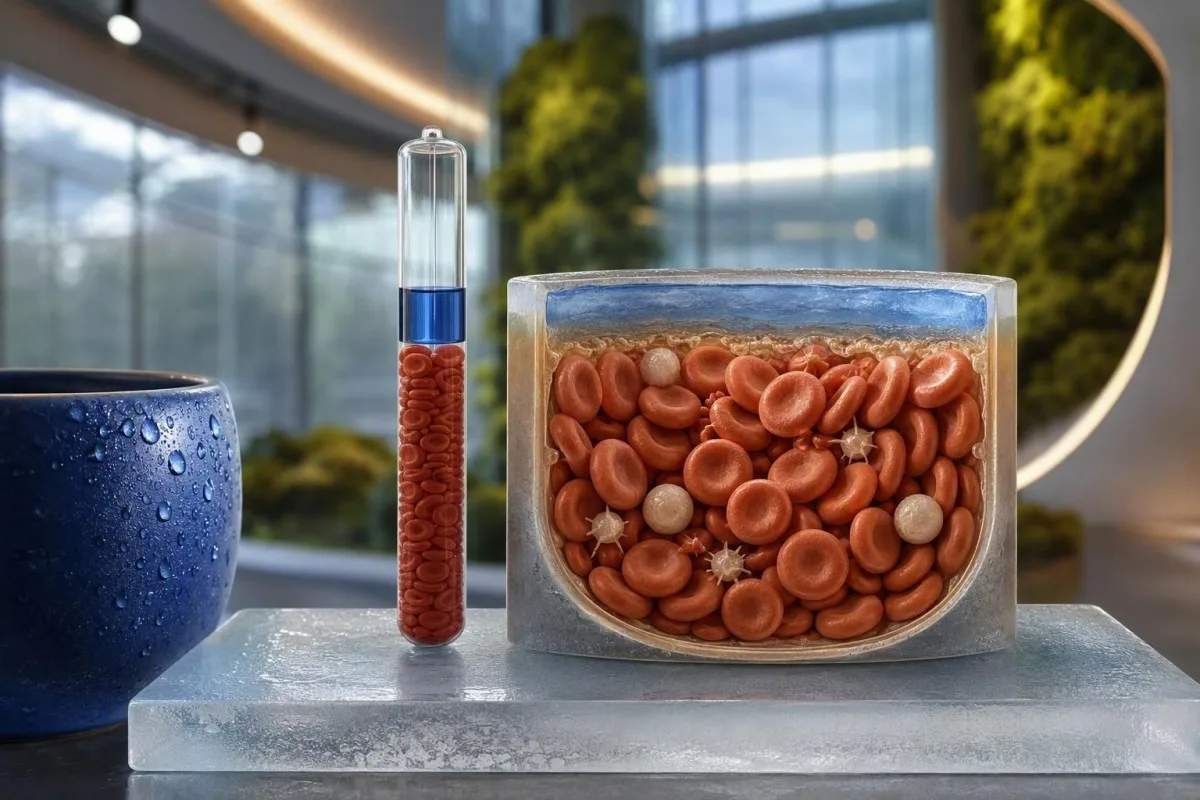
Ang mataas na RBC count ay maaaring magpahiwatig ng puro o concentrated na dugo sa halip na sobrang dami ng red cells. Ang unang hakbang ay ang paghihiwalay ng pansamantalang pagkawala ng likido sa katawan mula sa patuloy na pagtaas nito na nangangailangan ng tamang pagsusuri.


- Relatibong erythrocytosis ay nangangahulugan na nabawasan ang tubig sa plasma, na nagpapataas sa RBC count, hemoglobin, at hematocrit nang hindi gumagawa ng mga bagong cell.
- WHO threshold ang mga value na sumusuporta sa posibleng polycythemia vera ay hemoglobin na higit sa 16.5 g/dL sa mga lalaki o 16.0 g/dL sa mga babae, o hematocrit na higit sa 49% at 48%, ayon sa pagkakabanggit.
- Retest sa hydration ay karaniwang makatuwiran para sa bahagya at isolated na pagtaas pagkatapos ng pagsusuka, pagtatae, pagkakalantad sa init, pag-aayuno, o mabigat na ehersisyo—kung ikaw ay maayos naman ang pakiramdam.
- Mga diuretics ay maaaring magpataas ng hematocrit dahil sa pagkawala ng likido; huwag itigil ang iniresetang gamot nang walang pahintulot mula sa doktor na nagreseta nito.
- Mahalaga ang pattern: ang mataas na albumin, total protein, sodium, BUN/creatinine ratio, at urine specific gravity ay mas sumusuporta sa dehydration kaysa sa totoong overproduction ng red-cell.
- Paulit-ulit na oras ay karaniwang 1–2 linggo pagkatapos ng paggaling, normal na pag-inom ng tubig, at 24–48 oras na walang matinding ehersisyo, maliban kung may mga agarang sintomas.
- Patuloy na pagtaas pagkatapos ng sapat na hydration ay nangangailangan ng pagsusuri para sa pagkakalantad sa usok ng sigarilyo, sleep-disordered breathing, altitude, testosterone, sakit sa baga o bato, erythropoietin, at madalas ay JAK2 testing.
- Mga sintomas na nangangailangan ng agarang atensyon kabilang ang pananakit ng dibdib, bagong hirap sa paghinga, panghihina ng isang bahagi ng katawan, pagkawala ng paningin, pagkalito, o masakit at namamang binti; ang mga ito ay nangangailangan ng agarang pangangalagang medikal, hindi ng home retest.
Ano ang karaniwang ibig sabihin ng mataas na resulta ng RBC
Ang mataas na RBC count ay maaaring maging maling mataas dahil sa dehydration kapag ang pagkawala ng likido ay nagdudulot ng konsentrasyon sa cellular part ng dugo; hindi ito awtomatikong nangangahulugan na ang iyong marrow ay gumagawa ng masyadong maraming red cell. Ang palatandaan ay kung ang hemoglobin at hematocrit ay nag-normalize pagkatapos ng paggaling at pag-inom ng sapat na tubig, sa halip na manatiling mataas sa isang maayos na ginawang paulit-ulit na CBC.
Ang RBC count ay nag-uulat ng bilang ng mga red cell bawat litro, habang ang hematocrit ay nag-uulat ng bahagi ng buong dugo na inookupa ng mga cell na iyon. Ang mga adult reference interval ay nag-iiba-iba ayon sa laboratoryo, ngunit marami ang gumagamit ng humigit-kumulang 4.5–5.9 × 10¹²/L para sa mga lalaki at 4.1–5.1 × 10¹²/L para sa mga babae. Ang value na bahagyang lampas sa range ay madalas na hindi gaanong impormatibo kaysa sa hemoglobin at hematocrit sa tabi nito; ang aming gabay sa kung ano ang kasama sa CBC ay nagpapaliwanag kung bakit.
Ang dehydration ay nagpapababa ng likidong bahagi ng dugo sa loob ng ilang oras, kaya ang parehong red-cell mass ay sumasakop sa mas maliit na sukat na volume. Sa klinika, madalas ko itong nakikita pagkatapos ng sakit sa tiyan: RBC 5.8 × 10¹²/L, hemoglobin 17.1 g/dL, hematocrit 51%, pagkatapos ay normal na mga value pagkatapos ng paggaling. Ito ay relative erythrocytosis, hindi pagkakamali ng laboratoryo at hindi kinakailangang isang sakit.
Si Kantesti ay isang AI blood test analyzer na nagbabasa ng RBC, hemoglobin, hematocrit, red-cell indices, kidney markers, at mga nakaraang resulta nang magkakasama. Simula noong Setyembre 5, 2026, ang aming clinical review workflow ay itinuturing ang isang solong borderline na CBC flag bilang paalala na suriin ang paghahanda at trend—hindi bilang diagnosis.
Ang RBC count ay hindi kapareho ng red-cell mass
Ang isang CBC ay hindi direktang makakapagsukat ng kabuuang red-cell mass. Sinusukat nito ang konsentrasyon, na tumataas kapag lumiit ang plasma volume; ang mga espesyalisadong isotope red-cell-mass study ay bihira na ngayong kailangan, ngunit ipinapakita nito kung bakit ang isang concentrated na CBC ay maaaring magmukhang nakakabahala kahit walang aktwal na pagtaas sa mga cell.
Relative erythrocytosis laban sa totoong pagdami ng red-cell
Ang relative erythrocytosis ay isang mataas na RBC, hemoglobin, o hematocrit na sanhi ng nabawasang plasma volume, samantalang ang absolute erythrocytosis ay sumasalamin sa tunay na pagtaas ng red-cell mass. Ang hydration ay kayang itama ang unang pattern ngunit hindi nito maitatama ang pangalawa.
Ang tunay na erythrocytosis ay maaaring primary, gaya ng sa polycythemia vera, o secondary sa tumaas na erythropoietin mula sa mababang oxygen, mga gamot, o bihira ay isang proseso sa bato. Ang 2016 WHO criteria ay gumagamit ng hemoglobin na higit sa 16.5 g/dL sa mga lalaki o 16.0 g/dL sa mga babae bilang mga threshold na dapat magtaas ng tanong tungkol sa polycythemia vera, lalo na kapag ito ay paulit-ulit (Arber et al., 2016). Ang isang solong value ay hindi sapat upang ma-diagnose ito.
Ang praktikal na pagkakaiba ay ang natitirang bahagi ng panel. Dehydration na mataas ang RBC count ang mga pattern ay madalas na may kasamang mataas na albumin, total protein, urea/BUN, sodium, at concentrated na ihi; ang absolute erythrocytosis ay maaaring mag-iwan sa mga marker na ito na normal. Suriin ang aming nakatuong artikulo sa bahagyang mataas na hemoglobin kung ang hemoglobin, sa halip na RBC lamang, ang naka-flag na resulta.
Ang isang normal na RBC count ay hindi nag-aalis ng posibilidad ng erythrocytosis kung mataas ang hemoglobin o hematocrit, at ang isang mataas na RBC count lamang ay maaaring mangyari sa maliliit na red cell mula sa iron deficiency o thalassemia trait. Ito ang dahilan kung bakit mahalaga ang MCV at ferritin; ang mataas na RBC na may MCV na mas mababa sa 80 fL ay ibang usaping klinikal.
Paano binabago ng dehydration ang CBC at mga marker sa bato
Ang dehydration ay karaniwang nagpapataas ng RBC count, hemoglobin, at hematocrit nang magkakasama, at madalas nitong itinataas ang albumin, total protein, urea/BUN, creatinine, at konsentrasyon ng ihi. Ang isang hindi tugmang resulta—halimbawa, mataas na RBC na may mababang hemoglobin—ay hindi angkop sa simpleng hemoconcentration.
Ang ratio ng BUN/creatinine na higit sa humigit-kumulang 20:1 sa mga yunit na ginagamit sa US ay maaaring sumuporta sa nabawasang perfusion ng bato dahil sa pagkawala ng likido, bagama’t maaaring maapektuhan ang ratio ng pagdurugo sa gastrointestinal tract, pag-inom ng protina, corticosteroids, at mababang muscle mass. Maaaring bahagyang tumaas ang creatinine pagkatapos malantad sa init o makatakbo nang matagal dahil nagbabago ang filtration at muscle metabolism. Ang aming gabay sa dehydration at eGFR ay sumasaklaw sa kung kailan dapat ulitin ang mababang eGFR.
Ang urine specific gravity na 1.025 o mas mataas ay tugma sa concentrated na ihi, ngunit hindi ito direktang panukat ng hydration. Maaari rin itong tumaas dahil sa glucose, protina, at ilang contrast agent na ginagamit sa imaging, kaya dapat itong bigyang-kahulugan ng clinician kasama ng mga sintomas at electrolytes. Ang isang sanggunian para sa urine specific gravity ay kapaki-pakinabang kapag isinagawa sa parehong araw ang CBC at urinalysis.
Hindi ko ipinapayo ang pagtatangkang gawing normal ang isang pagsusuri sa pamamagitan ng pag-inom agad ng ilang litro bago kumuha ng sample. Maaaring magpababa ng sodium ang mabilis na labis na pag-inom, at lumilikha ito ng isa pang sample na hindi kumakatawan sa karaniwang kalagayan; sa pangkalahatan, mas ligtas para sa mga taong walang fluid restriction ang normal na pagkain at pag-inom ayon sa karaniwang uhaw sa loob ng 24–48 oras.
Pagsusuka, pagtatae, init, pag-aayuno, at mga diuretic
Ang pagsusuka, pagtatae, matinding pagpapawis, matagal na pag-aayuno, at mga diuretic na gamot ay maaaring magdulot ng pansamantalang mataas na konsentrasyon ng RBC sa pamamagitan ng pagbawas ng tubig sa plasma. Ang antas ng pagtaas ay higit na nakadepende sa pagkawala at pagpapalit ng likido kaysa sa tindi ng nararamdamang karamdaman ng isang tao.
Ang matinding pagsusuka ay kadalasang nagdudulot ng mababang chloride at kung minsan ay mataas na bicarbonate dahil nawawala ang gastric acid at likido. Ang mga loop diuretic gaya ng furosemide at thiazide ay maaaring magdulot ng katulad na profile ng pagliit ng dami ng likido, lalo na sa mga nakatatanda. Dapat isaalang-alang ang mababang chloride sa kaparehong klinikal na konteksto; tingnan ang mga palatandaan sa chloride na nauugnay sa pagsusuka at diuretic para sa pattern.
Huwag itigil ang iniresetang diuretic upang mapabuti ang CBC nang walang payong medikal. Ang mga umiinom ng mga gamot na ito para sa heart failure, cirrhosis, resistant hypertension, o sakit sa bato ay maaaring mangailangan ng planong likido na iniangkop sa kanilang kalagayan, dahil maaaring lumala ang pamamaga o paghingal dahil sa basta-bastang pag-inom. Ang tamang tanong ay kung magkakatugma ang dosis, mga sintomas, timbang, presyon ng dugo, at mga resulta sa bato.
Nakatutulong ang uhaw ngunit hindi ito ganap na maaasahan sa mga nasa edad na higit 65 at sa mga taong may diabetes, sakit sa bato, o ilang kondisyong neurological. Maaaring magpahiwatig ng pagkawala ng likido ang matingkad na dilaw na ihi, tuyong bibig, pagkahilo kapag tumatayo, pagbawas ng pag-ihi, at pagbaba ng timbang ng 1 kg sa loob ng 24 na oras, ngunit ang malulubhang sintomas ay nangangailangan ng pagsusuri sa halip na sariling paggamot.
Ang ehersisyo ay maaaring pansamantalang magpalamot (concentrate) sa iyong dugo
Maaaring magpataas ng hematocrit at hemoglobin nang ilang oras ang matinding endurance exercise dahil sa pagkawala ng pawis at pagbabago sa dami ng plasma, kahit na maaaring magpababa ng baseline hematocrit ang paulit-ulit na pagsasanay dahil sa paglawak ng dami ng plasma. Dahil dito, lubhang mahalaga ang timing para sa mga atleta.
Ang 90-minutong pagtakbo sa mainit na panahon ay maaaring magpabawas ng 1–3 litro ng likido, depende sa laki ng katawan, klima, at bilis ng pagpapawis. Ang pagkuha ng sample kaagad pagkatapos ng karera ay maaari ring magpakita ng mas mataas na creatinine, CK, albumin, at kabuuang protina; mas kapaki-pakinabang ang magkakasamang resultang iyon kaysa sa resulta ng RBC lamang. Ang aming gabay sa tamang oras ng pagsusuri ng dugo para sa marathon ay tumatalakay sa mga marker ng paggaling na karaniwang nagbabago.
Para sa regular na pagsubaybay, karaniwan kong iminumungkahing iwasan ang hindi pangkaraniwang matinding ehersisyo sa loob ng 24–48 oras bago kunan ng dugo, magpunta nang nakapagpahinga, at uminom nang normal isang araw bago nito. Hindi ito pangkalahatang tuntunin ng laboratoryo, at maaaring sadyang magsagawa ng pagsusuri sa ilalim ng pisikal na karga para sa pagsubaybay sa mga elite na atleta—ngunit mas mahalaga ang pagiging pare-pareho kaysa sa pagiging perpekto. Marami nang hindi kinakailangang referral ang nakita ni Dr. Thomas Klein na nawala matapos muling masuri ang atleta pagkatapos ng isang linggong normal na paggaling.
Kantesti’s Gabay sa pananaliksik sa BUN at creatinine ay partikular na kapaki-pakinabang kapag ang isang endurance athlete ay may parehong mataas na hematocrit at borderline na palatandaan ng problema sa bato. Ang pagbaba ng timbang, mataas na specific gravity ng ihi, at maikling pagitan ng paggaling ay nagpapahiwatig na maaaring hemoconcentration ang sanhi; ang pananakit ng kalamnan, ihing kulay cola, o napakataas na CK ay nangangailangan ng ibang antas ng pag-iingat.
Isang ligtas na plano para sa pag-uulit ng bahagyang mataas na CBC
Karaniwang maaaring ulitin ang pagsusuri kapag bahagyang mataas ang bilang ng RBC pagkatapos ng 1–2 linggong paggaling, sapat na pag-inom ng likido, at matatag na paggamit ng mga gamot kung wala kang mga sintomas na dapat ikabahala. Ulitin ito nang mas maaga kung hihilingin ng iyong clinician o kung lubhang mataas ang unang resulta.
Bago ang muling pagsusuri, itala kung nagkaroon ka ng diarrhea, pagsusuka, lagnat, pag-inom ng alak, pagpunta sa sauna, mahabang paglalakbay, pagkalantad sa mataas na lugar, pag-aayuno, o matinding ehersisyo sa loob ng nakaraang 72 oras. Panatilihin ang karaniwan mong diyeta at iskedyul ng pag-inom ng gamot maliban kung iba ang sabihin ng iyong clinician. Ang gabay sa paghahanda para sa baseline na pagsusuri ng dugo ay may praktikal na checklist upang maiwasan ang hindi sinasadyang pagkakaiba-iba.
Kung maaari, gamitin ang parehong laboratoryo dahil magkakaiba ang mga pamamaraan ng analyzer at mga reference interval. Humiling ng CBC na may hemoglobin, hematocrit, MCV, RDW, bilang ng white cell, at mga platelet; ang patuloy na pagtaas na may kasamang mataas na bilang ng platelet o white cell ay higit na nakababahala para sa proseso sa bone marrow kaysa sa nakahiwalay na erythrocytosis. Maaaring makaapekto ang kamakailang karamdaman sa mga bilang na ito sa magkakasalungat na direksiyon, kaya mahalaga ang buong panel.
Si Kantesti ay isang serbisyo ng AI lab test interpretation na naghahambing ng bagong CBC sa mga naunang halaga at tumutukoy sa mga pagbabagong lumalampas sa karaniwang pagkakaiba-iba. Hindi pinapalitan ng aming pamamaraan ng pagsubaybay sa trend ang clinician, ngunit maaari nitong mapanatili ang mahalagang konteksto—ehersisyo, karamdaman, mga gamot, at naunang hematocrit—na kadalasang nawawala kapag hiwalay na tinitingnan ang isang resulta.
Kailan nangangailangan ng pagsusuri para sa erythrocytosis ang paulit-ulit na mataas na resulta
Ang patuloy na mataas na hemoglobin na lampas 16.5 g/dL sa mga lalaki o 16.0 g/dL sa mga babae, o hematocrit na lampas 49% o 48%, ay dapat mag-udyok sa clinician na suriin ang erythrocytosis matapos maalis ang dehydration bilang sanhi. Ang karaniwang mga unang pagsusuri ay paulit-ulit na CBC, antas ng erythropoietin, pagsusuri ng oxygen, at pagsusuri para sa JAK2 mutation kung naaangkop.
Ang polycythemia vera ay isang myeloproliferative neoplasm kung saan nakikita ang JAK2 mutations sa humigit-kumulang 98% ng mga apektadong pasyente. Sinusuportahan ng mababang serum erythropoietin ang pangunahing labis na produksiyon ng bone marrow, ngunit walang iisang pagsusuri ng dugo ang dapat bigyang-kahulugan nang hiwalay. Inirerekomenda ng guideline ng British Society for Haematology ang isang sistematikong pamamaraan na naghihiwalay sa primary at secondary erythrocytosis (McMullin et al., 2019).
Maaaring banayad ang mga sintomas: maaaring mas mahalaga kaysa sa eksaktong halaga ng RBC ang pananakit ng ulo, malabong paningin, pangangati pagkatapos ng mainit na paligo, hindi pangkaraniwang pamumula ng mukha, pagkapagod, o dating pagkakaroon ng blood clot. Para sa mas buong paliwanag tungkol sa hematocrit, erythropoietin, at JAK2, basahin ang aming gabay sa mga sintomas ng polycythemia. Maraming taong may bahagyang mataas na resulta sa laboratoryo ang walang alinman sa mga katangiang ito.
Maingat ako upang hindi ipahiwatig na ang bawat patuloy na mataas na bilang ay kanser. Ang pagkalantad sa carbon monoxide dahil sa paninigarilyo, hindi nagagamot na sleep apnea, sakit sa baga, testosterone, mataas na lugar, at ilang kondisyon sa bato ay mas karaniwang mga paliwanag sa maraming klinika. Gayunman, tiyak na dahilan ang pagpapatuloy nito kung bakit hindi dapat mauwi sa walang katapusang basta-bastang muling pagsusuri ang paulit-ulit na CBC.
Mababang oxygen, paninigarilyo, at sleep apnea bilang mga sanhi ng mataas na RBC
Maaaring pasiglahin ng matagal na mababang oxygen ang erythropoietin at magdulot ng tunay na pagtaas ng bilang ng red blood cell; madalas na sanhi ang sleep apnea, pagkalantad sa carbon monoxide dahil sa paninigarilyo, at sakit sa baga. Hindi lubusang naaalis ng normal na oxygen saturation sa araw ang posibilidad ng pagbaba ng oxygen sa gabi.
Maaaring magdulot ng katamtamang erythrocytosis ang obstructive sleep apnea, lalo na kapag malaki ang pagbaba ng oxygen sa gabi. Ang malakas na paghilik, mga nasasaksihang paghinto ng paghinga, pananakit ng ulo sa umaga, altapresyon na mahirap kontrolin, at pagkaantok sa araw ay dapat mag-udyok ng history na nakatuon sa pagtulog sa halip na ipalagay na dehydration ang nagpapaliwanag sa lahat. Ang gabay sa blood-test para sa hirap sa paghinga inilalarawan ang mas malawak na konteksto ng puso at baga.
Ang paninigarilyo ng sigarilyo ay nagpapataas ng carboxyhemoglobin, na nagpapababa sa paghahatid ng oxygen kahit mukhang maaasahan ang resulta ng pulse oximeter. Ang vaping ay hindi nagdudulot ng kaparehong pagkakalantad sa carbon monoxide gaya ng nasusunog na tabako, ngunit mayroon itong iba pang panganib sa kalusugan at dapat pa ring talakayin nang tapat. Kung minsan, mas kapaki-pakinabang ang pagsusuri para sa carbon monoxide o co-oximetry kaysa sa karaniwang pagsukat ng oxygen saturation.
Binibigyang-kahulugan ng Kantesti AI ang mataas na resulta ng RBC kasama ng hemoglobin, hematocrit, mga marker ng bato, at iniulat na mga salik tungkol sa pagtulog o paninigarilyo sa halip na maglahad ng pangkalahatang listahan ng mga sanhi. Lalong mahalaga ang ganitong pagbasa ayon sa konteksto kapag ang hematocrit ay 50% pagkatapos ng hydration at iniuulat ng pasyente na hindi nakapagpapahinga ang tulog.
Altitude, testosterone, at mga gamot na nagpapataas ng RBC
Ang paninirahan o pagsasanay sa mataas na lugar at paggamit ng testosterone ay maaaring magpataas ng produksyon ng mga pulang selula ng dugo, kaya maaaring tunay ang pagtaas at hindi lamang dulot ng dehydration. Madalas, mas maraming sinasagot ang oras ng pagkakalantad kaysa sa unang numero.
Sa mataas na lugar, ang mas mababang presyon ng oxygen ay nagpapasigla sa erythropoietin at nagpapataas ng hemoglobin sa loob ng ilang araw hanggang linggo; nakadepende ang inaasahang saklaw sa taas ng lugar, tagal ng pananatili, pinagmulan ng lahi, at datos ng sangguniang laboratoryo. Ang CBC na kinuha habang nasa bundok o ilang sandali pagkatapos nito ay dapat bigyang-kahulugan ayon sa pagkakalantad na iyon. Ang aming gabay sa muling pagsusuri ng hemoglobin sa altitude ay nagpapaliwanag kung bakit mahalaga ang oras ng pagbabalik sa lebel ng dagat.
Ang mga iniksyon, gel, at pellet ng testosterone, pati na ang ilang anabolic agent, ay maaaring magdulot ng erythrocytosis. Maraming protocol sa pagrereseta ang nagbabawas o pansamantalang humihinto ng paggamot kapag umabot ang hematocrit sa 54%, bagama’t magkakaiba ang mga indibidwal na pagpapasya sa panganib, lalo na sa mga taong may sakit sa puso o sleep apnea. Huwag kailanman magbigay ng dugo o baguhin ang iniresetang dosis bilang kapalit ng pagtalakay sa resulta sa nagreseta nito.
Mas bihira, ang mga gamot para sa diabetes na SGLT2 ay maaaring magdulot ng bahagyang pagtaas ng hematocrit, na bahagyang dahil sa mga epekto sa dami ng plasma at posibleng pagsenyas ng erythropoietin. Dapat kasama sa listahan ng mga gamot ang mga androgen product na nabibili nang walang reseta, mga iniiniksyong paggamot, at mga kamakailang pagbabago—hindi lamang ang mga gamot na nakalista sa elektronikong rekord.
Mga pahiwatig sa CBC na nagbabago sa antas ng pag-aalala
Mas nakababahala ang mataas na RBC kapag mataas din ang hemoglobin at hematocrit, lalo na kung mataas ang mga platelet, mga white cell, mababa ang erythropoietin, o may abnormal na mga selula sa smear. Ang mataas na RBC na may mababang MCV ay madalas na tumutukoy sa mga karamdaman ng maliliit na selula.
Ang MCV na mas mababa sa 80 fL na may bahagyang mataas na bilang ng RBC ay maaaring mangyari sa thalassemia trait, kung saan maliliit ngunit marami ang mga selula. Maaari ring magpababa ng MCV ang kakulangan sa iron, bagama’t mas madalas nitong ibinababa ang hemoglobin sa paglipas ng panahon; nililinaw ng ferritin at transferrin saturation ang pagkakaiba. Ang aming Paghahambing ng MCV at MCH ay nagpapaliwanag kung bakit maaaring makapanlinlang ang bilang ng RBC lamang.
Ang mataas na white cell o platelet kasabay ng mataas na hematocrit ay hindi nagtatatag ng diagnosis ng polycythemia vera, ngunit ibinababa nito ang hangganan para sa konsultasyon sa hematology. Maaaring isagawa ang peripheral smear, ferritin, erythropoietin, pagsusuri sa JAK2, at kung minsan ay pagsusuri ng bone marrow. Ipinakikita ng aming pathway para sa pagsusuri ng blood cancer kung bakit isinasaayos ang pagkakasunod-sunod ng mga pagsusuring ito sa halip na ipagawa nang walang pamantayan.
Simple ang praktikal na tuntunin ni Dr. Thomas Klein: hanapin ang pagkakatugma ng magkakahiwalay na palatandaan. Ang hematocrit na 52%, platelet na 520 × 10⁹/L, at mababang erythropoietin ay ganap na naiibang pattern kumpara sa hematocrit na 50% pagkatapos ng heatwave, na may albumin na 5.3 g/dL at puro ang ihi.
Mga sintomas at panganib ng pamumuo ng dugo: kailan nagiging apurahan ang mataas na RBC
Humingi agad ng pangangalagang medikal para sa mataas na resulta ng RBC na may kasamang pananakit ng dibdib, biglaang paghinga nang may hirap, pag-ubo ng dugo, pagkahimatay, bagong panghihina, hirap sa pagsasalita, pagkawala ng paningin, o masakit at namamagang binti. Maaaring nagpapahiwatig ang mga sintomas na ito ng namuong dugo o iba pang malubhang kondisyon, at hindi dapat maghintay para sa panibagong CBC.
Maaaring magpataas ng lagkit ng dugo ang mas mataas na hematocrit, ngunit mas maaasahang batayan ng pagiging apurado ang mga sintomas at pangkalahatang panganib sa mga daluyan ng dugo kaysa sa katamtamang pagtaas lamang. May kinikilalang panganib ng pamumuo ng dugo ang polycythemia vera, lalo na sa mas matandang edad, dating pamumuo ng dugo, mga salik ng panganib sa sakit sa puso, at hindi nakokontrol na mga bilang. Inilalarawan ng pagsusuri nina Tefferi at Barbui noong 2021 ang paggamot na iniangkop sa panganib sa halip na gamutin ang bawat mataas na bilang sa parehong paraan.
Karaniwan at hindi tiyak na sintomas ang sakit ng ulo lamang; iba naman ang sakit ng ulo na may bagong sintomas sa paningin, panghihina, o pagkalito. Gayundin, maaaring mangyari ang pangangati pagkatapos ng mainit na paligo sa polycythemia vera, ngunit maaari rin itong dulot ng tuyong balat at allergy, kaya palatandaan lamang ito at hindi patunay. Suriin ang . mga babalang senyales sa pagsusuri ng dugo para sa pananakit ng dibdib kung bahagi ng dahilan ng pagpapagawa ng pagsusuri ang mga sintomas.
Huwag uminom ng aspirin dahil lamang mataas ang bilang ng RBC maliban kung inirerekomenda ito ng iyong clinician. May mga panganib sa pagdurugo ang aspirin at maaaring hindi ito angkop kung may mga ulcer, umiinom ng mga anticoagulant, mababa ang bilang ng platelet, o may ilang partikular na kasaysayang medikal. Mas ligtas na tumawag sa mga serbisyong pang-emergency kapag nagkaroon ng mga lokal na sintomas sa neurological o cardiopulmonary.
Bakit maaaring sagutin ng iyong mga naunang CBC ang tanong
Iba ang kahulugan ng bahagyang mataas ngunit matatag na bilang ng RBC sa loob ng maraming taon kumpara sa mabilis na pagtaas sa loob ng ilang linggo, at makatutulong ang mga trend upang matukoy kung personal na baseline ito o bagong sakit. Ihambing ang mga resulta gamit ang hemoglobin, hematocrit, MCV, at hangga’t maaari ay mula sa iisang laboratoryo.
Nangangahulugan ang baryasyong biyolohikal at baryasyon ng analyzer na ang maliit na pagbabago ay hindi palaging tunay na pagbabagong pisyolohikal. Ang pagkakaibang 0.3 g/dL sa hemoglobin sa pagitan ng dalawang pagkuha ng dugo ay maaaring dulot ng hydration, posisyon ng katawan, oras ng pagsusuri, o karaniwang baryasyon; ang patuloy na pagtaas mula 15.2 tungong 17.3 g/dL ay nararapat bigyang-pansin. Ang aming artikulo tungkol sa makabuluhang pagbabago sa laboratoryo ay nagpapaliwanag sa konsepto ng reference-change value.
Magtago ng simpleng talaan ng altitude, katayuan sa paninigarilyo, dosis ng testosterone, karamdaman, matinding ehersisyo, pagdurugo dahil sa regla, at pagkawala ng likido sa bawat pagkuha ng dugo. Mas kapaki-pakinabang sa klinika ang talaang iyon kaysa sa paghahabol sa iisang eksaktong “ideal” na bilang ng RBC. Sa aking karanasan, ang kawalan ng kontekstong ito ang dahilan kung bakit nakatatanggap ang mga pasyente ng magkakasalungat na paliwanag sa magkakaibang appointment.
Kantesti, isang platform ng interpretasyon ng biomarker ng AI, ay maaaring magpakita ng magkakasunod na halaga ng CBC kasama ng mga marker ng bato at protina upang matukoy ang mga pattern ng konsentrasyon. Hinihikayat namin ang mga gumagamit na ituring ang pagsusuri ng trend bilang paghahanda para sa pakikipag-usap sa clinician, hindi kapalit ng pagsusuri o partikular na mga test.
Mga konsiderasyon para sa pagbubuntis, katandaan, at malalang sakit (chronic disease)
Karaniwang nagpapababa ang pagbubuntis ng hemoglobin at hematocrit dahil sa paglawak ng dami ng plasma, kaya ang mataas na halaga habang buntis ay dapat ipasuri sa clinician sa halip na basta ipalagay na dulot ito ng dehydration. Sa mga nakatatanda at mga taong may sakit sa puso o bato, kailangang iangkop sa bawat indibidwal ang payo tungkol sa likido.
Sa panahon ng pagbubuntis, lumalawak ang dami ng plasma nang humigit-kumulang 40–50%, na nagdudulot ng pisyolohikal na dilution; maraming serbisyo para sa maternity ang nagsusuri kapag higit sa 16.0 g/dL ang hemoglobin dahil maaaring senyales ito ng hindi sapat na paglawak ng plasma o iba pang alalahanin. Maaari pa ring magpataas ng konsentrasyon ng CBC ang matinding pagsusuka sa unang bahagi ng pagbubuntis, ngunit dapat talakayin sa pangkat ng maternity ang patuloy na pagtaas. Tingnan ang mga pregnancy blood-test na red flags para sa mga sitwasyong nangangailangan ng pagsusuri sa parehong araw.
Maaaring hindi mapagkakatiwalaang makaramdam ng uhaw ang mga nakatatanda, samantalang maaaring maging mapanganib ang sobrang likido sa may heart failure at malubhang sakit sa bato. Mas mahalaga ang mabilis na pagbabago sa pamamaga ng bukung-bukong, timbang, paghinga, o dami ng ihi kaysa sa pagsisikap na maabot ang pangkalahatang target sa pag-inom ng tubig. Ang mga pagbabago sa dosis ng diuretic ay dapat gawin kasama ng clinician na namamahala sa pinagbabatayang kondisyon.
May mga saklaw ng hemoglobin na partikular sa edad ng mga bata, at ang halagang mukhang mataas sa portal para sa mga nasa hustong gulang ay maaaring angkop sa isang partikular na edad o altitude. Dapat ipasuri ng pediatric clinician ang patuloy na pagtaas, lalo na kung may cyanosis, congenital heart disease, o mahinang paglaki.
Mga tanong na dadalhin sa iyong doktor pagkatapos ng mataas na RBC count
Itanong kung ang iyong resulta ay kumakatawan sa hemoconcentration, kung mataas din ang hemoglobin at hematocrit, at kung anong mga kondisyon ang angkop para sa muling pagsusuri batay sa iyong kasaysayang pangkalusugan. Nakaiiwas ang mabubuting tanong sa parehong hindi napapanahong pag-aalala at hindi pagkakatukoy sa patuloy na erythrocytosis.
Dalhin ang kumpletong ulat, hindi lamang ang na-flag na halaga ng RBC, pati ang mga naunang CBC at kasalukuyang talaan ng mga gamot. Itanong: “Ang albumin, total protein, sodium, creatinine, BUN/urea, at konsentrasyon ng ihi ba ay naaayon sa pagkawala ng likido?” Ito gabay sa mga serum protein ay makatutulong sa iyong maunawaan kung bakit kabilang ang albumin sa talakayang iyon.
Kung magpapatuloy ang pagtaas, itanong kung ang pagsusuri ng oxygen, sleep testing, erythropoietin, ferritin, pagsusuri para sa JAK2, o referral sa hematology ay angkop sa iyong pattern. Magkakaiba ang sagot para sa isang 28 taong gulang na endurance athlete na may hematocrit na 50% at isang 67 taong gulang na naninigarilyo na may hematocrit na 55% at dating namuong dugo. Binabago ng partikular na kasaysayan ang work-up.
Ang klinikal na metodolohiya ng Kantesti ay pinangangasiwaan alinsunod sa mga inilathalang pamantayan sa kalidad at input ng mga physician; maaaring suriin ng mga mambabasa ang aming pamamaraan ng pagpapatunay ng medikal bago gumamit ng anumang awtomatikong interpretasyon. Ang buod ni Dr. Thomas Klein ay ang hydration ay makatuwirang unang hakbang para sa bahagyang nakahiwalay na resulta, ngunit ang patuloy na mataas na mga halaga ay nangangailangan ng tunay na paliwanag.
Ang praktikal na konklusyon tungkol sa dehydration at mataas na RBC
Ang dehydration ay maaaring magdulot ng mukhang maling mataas na resulta ng RBC dahil pinupupok nito ang dugo, ngunit dapat lamang itong ituring na pansamantalang paliwanag kapag nagtutugma ang klinikal na konteksto at mga kaugnay na laboratory marker. Nakapagpapalubag-loob ang normal na muling pagsusuri matapos gumaling; ang patuloy na pagtaas ay dapat siyasatin.
Para sa hiwalay at bahagyang pagtaas pagkatapos ng init, sakit sa gastrointestinal tract, pag-aayuno, o matinding ehersisyo, magpagaling nang normal at ulitin ang CBC sa pare-parehong mga kondisyon makalipas ang humigit-kumulang 1–2 linggo. Iwasan ang labis na pag-inom ng tubig, at huwag baguhin ang mga diuretic, testosterone, o iba pang iniresetang gamot nang walang payo. Kung hindi ka sigurado kung bahagya lamang ang iyong resulta, ang aming out-of-range na gabay ay nagpapaliwanag ng mga flag sa laboratoryo.
Kung paulit-ulit na higit sa 49% ang hematocrit sa mga lalaki o 48% sa mga babae, o higit sa 16.5 g/dL o 16.0 g/dL ang hemoglobin, humingi ng nakatuong pagsusuri sa halip na paulit-ulit na magpasuri nang walang katapusan. Karaniwang isinasaalang-alang sa susunod na yugto ang pagkakalantad sa paninigarilyo, sleep apnea, altitud, mga epekto ng gamot, erythropoietin, at status ng JAK2. Ang mga sintomas na nagpapahiwatig ng pamumuo ng dugo o stroke ay nangangailangan ng agarang pangangalaga.
Si Kantesti ay isang AI-powered tool para sa pagsusuri ng dugo na ginawa upang ayusin ang mga resultang ito at ang mga trend ng mga ito para sa isang may-kaalamang talakayang medikal. Binibigyang-diin ng aming mga physician reviewer at Medical Advisory Board ang parehong prinsipyo: unahin ang konteksto, ulitin ang pagsusuri kapag ligtas, at agad na magpatingin kapag nagpapatuloy ang pattern.
Mga Madalas Itanong
Maaari bang magdulot ng mataas na bilang ng RBC ang dehydration?
Oo. Maaaring magdulot ang dehydration ng mataas na bilang ng RBC dahil ang pagkawala ng tubig sa plasma ay nagkukonsentra sa mga pulang selula sa mas maliit na dami ng dugo, isang pattern na tinatawag na relative erythrocytosis. Karaniwang tumataas kasabay ng bilang ng RBC ang hemoglobin at hematocrit, at maaari ring mataas ang albumin, total protein, BUN/urea, o urine specific gravity. Ang bahagyang pagtaas na walang kasamang ibang abnormalidad ay kadalasang bumabalik sa normal pagkatapos ng paggaling at sapat na pag-inom ng tubig, ngunit ang patuloy na hematocrit na higit sa 49% sa mga lalaki o 48% sa mga babae ay nangangailangan ng klinikal na pagsusuri.
Gaano karaming tubig ang dapat kong inumin bago ulitin ang high RBC test?
Ang karamihan sa mga nasa hustong gulang ay dapat uminom ng kanilang karaniwang dami ng tubig ayon sa antas ng kanilang pagkauhaw sa loob ng 24–48 oras bago ang ulit na CBC, sa halip na sadyang uminom ng labis na dami. Ang isang praktikal na target ay ang maputlang dilaw na ihi at normal na pag-ihi, hindi ang ganap na malinaw na ihi o sapilitang pag-inom ng tubig. Ang mga taong may heart failure, advanced kidney disease, cirrhosis, o may itinakdang limitasyon sa pag-inom ng likido ay dapat humingi ng indibidwal na plano sa kanilang clinician. Ang mabilis na pag-inom ng ilang litro ay maaaring magpababa ng sodium at magbunga ng resulta na hindi kumakatawan sa tunay na kalagayan.
Gaano katagal pagkatapos ng dehydration dapat ulitin ang CBC?
Ang paulit-ulit na CBC ay karaniwang ginagawa 1–2 linggo matapos humupa ang pagsusuka, pagtatae, lagnat, pagkakalantad sa init, o matinding ehersisyo. Para sa mga pagbabagong may kaugnayan sa ehersisyo, iwasan ang hindi karaniwang mabigat na pagsasanay sa loob ng 24–48 oras bago ang pagkuha ng sample at panatilihin ang normal na pag-inom ng likido. Maaaring mas maaga ang takdang panahon kung ang hematocrit ay masyadong mataas, may mga nararamdamang sintomas, o abnormal ang mga marker ng bato. Hangga't maaari, gamitin ang parehong laboratoryo upang maging comparable ang mga reference range at paraan ng pagsusuri (analyser methods).
Anong RBC count ang itinuturing na delikadong mataas?
Walang iisang bilang ng RBC na nagtatakda ng panganib dahil ang panganib ay higit na nakadepende sa hematocrit, hemoglobin, mga sintomas, sanhi, at kasaysayan ng pamumuo ng dugo. Ang hematocrit na nasa 60% o mas mataas ay karaniwang nangangailangan ng agarang klinikal na pagsusuri sa parehong araw, habang ang patuloy na mga halaga na higit sa 49% sa mga lalaki o 48% sa mga babae ay nagbibigay-katwiran sa isang work-up para sa erythrocytosis. Ang pananakit ng dibdib, biglaang pagkapos ng hininga, pagkawala ng paningin, panghihina, kahirapan sa pagsasalita, o masakit na pamamanas ng binti ay mga kagyat na sitwasyon anuman ang eksaktong bilang. Ang mga sintomas na ito ay nangangailangan ng emergency assessment sa halip na maghintay na uminom ng tubig o magpa-test muli.
Ang mga diuretic ba ay maaaring maging sanhi ng pagtaas ng red blood cells?
Ang mga diuretic ay maaaring magdulot ng mataas na konsentrasyon ng red blood cell sa pamamagitan ng pagbabawas ng volume ng plasma, lalo na pagkatapos ng pagtaas ng dosis, mainit na panahon, kakulangan sa pag-inom ng tubig, pagsusuka, o pagtatae. Karaniwan ay hindi nito pinapagawa ang bone marrow ng karagdagang red blood cells, kaya maaaring bumalik sa dati ang epekto kapag naayos na ang balanse ng fluid. Huwag itigil ang furosemide, hydrochlorothiazide, o iba pang iniresetang diuretic nang mag-isa dahil maaaring kontrolado ng mga gamot na ito ang heart failure, presyon ng dugo, o pamamaga. Talakayin ang CBC kasama ang timbang, presyon ng dugo, creatinine, sodium, potassium, at mga sintomas.
Ang mataas ba na RBC count ay nangangahulugan ba palagi ng polycythemia vera?
Hindi. Karamihan sa matataas na resulta ng RBC ay hindi awtomatikong nangangahulugan ng polycythemia vera; ang dehydration, carbon monoxide na may kaugnayan sa paninigarilyo, sleep apnea, altitude, sakit sa baga, at testosterone ay mga karaniwang alternatibong dahilan. Nagiging mas malamang ang polycythemia vera kapag ang hemoglobin ay nananatiling mataas sa 16.5 g/dL sa mga lalaki o 16.0 g/dL sa mga babae, ang hematocrit ay nananatiling mataas sa 49% o 48%, mababa ang erythropoietin, at positibo ang JAK2 testing. Ang polycythemia vera ay may JAK2 mutation sa humigit-kumulang 1% ng mga kaso. Ang isang clinician ay dapat mag-interpret ng mga test na ito bilang isang pattern, at hindi mag-diagnose base lamang sa isang flag ng CBC.
Kumuha ng AI-Powered Blood Test Analysis Ngayon
Sumali sa mahigit 2 milyong user sa buong mundo na nagtitiwala sa Kantesti para sa agarang at tumpak na pagsusuri ng lab test. I-upload ang iyong resulta ng blood test at makakuha ng komprehensibong interpretasyon ng mga biomarker ng 15,000+ sa loob ng ilang segundo.
📚 Mga Sanggunian na Publikasyon sa Pananaliksik
Klein, T., Mitchell, S., & Weber, H. (2026). Paliwanag sa Ratio ng BUN/Creatinine: Gabay sa Pagsusuri sa Tungkulin ng Bato. Kantesti AI Medical Research.
Klein, T., Mitchell, S., & Weber, H. (2026). Pagsusuri ng Urobilinogen sa Ihi: Kumpletong Gabay sa Urinalysis 2026. Kantesti AI Medical Research.
📖 Mga Panlabas na Sanggunian sa Medikal
⚕️ Pagtatanggi sa Medikal
Ang artikulong ito ay para sa mga layuning pang-edukasyon lamang at hindi ito bumubuo ng medikal na payo. Palaging kumonsulta sa isang kwalipikadong tagapagbigay ng pangangalagang pangkalusugan para sa mga desisyon sa diagnosis at paggamot.
Mga Signal ng Tiwala ng E-E-A-T
Karanasan
Pinamumunuan ng manggagamot na klinikal na pagsusuri ng mga daloy ng interpretasyon ng mga pagsusuri sa laboratoryo.
Kadalubhasaan
Pokus sa laboratoryong medisina kung paano kumikilos ang mga biomarker sa kontekstong klinikal.
Pagka-awtoridad
Isinulat ni Dr. Thomas Klein na may pagsusuri ni Dr. Sarah Mitchell at Prof. Dr. Hans Weber.
Pagiging Mapagkakatiwalaan
Interpretasyong nakabatay sa ebidensya na may malinaw na mga susunod na hakbang upang mabawasan ang pag-aalarma.