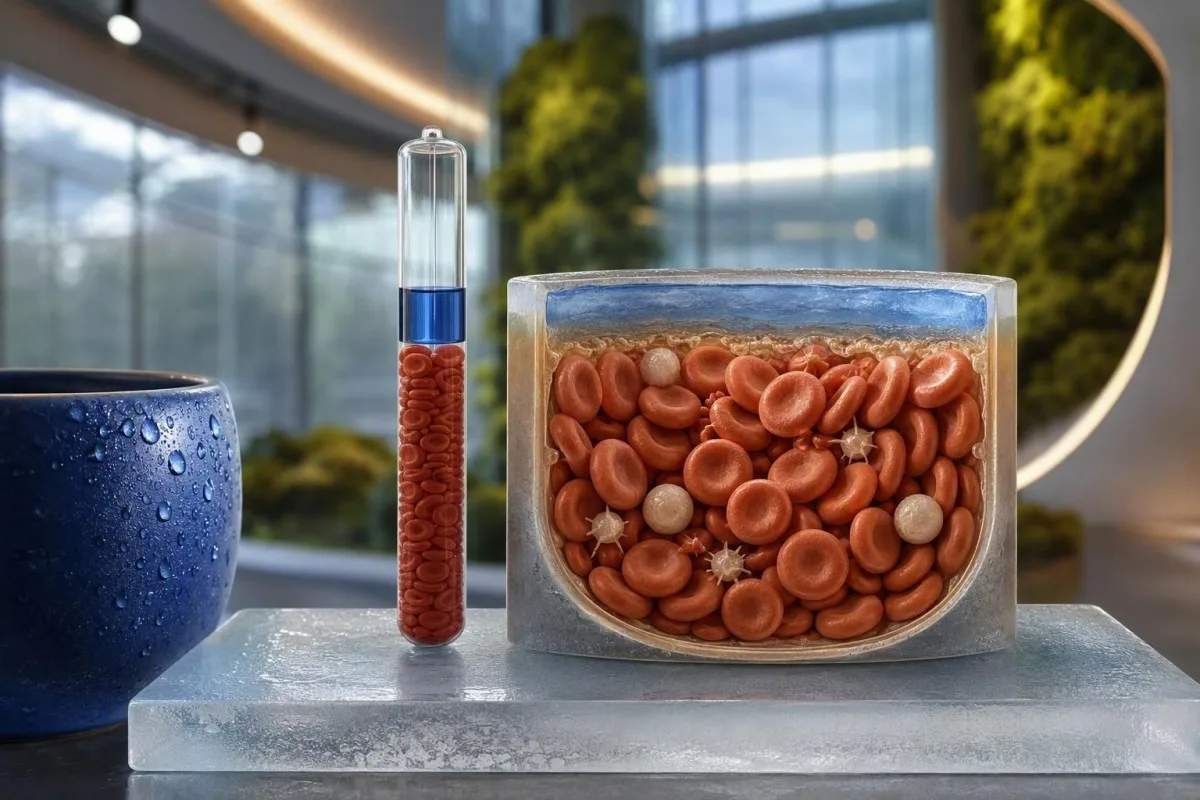
赤血球数が高い場合、赤血球が増えたのではなく、血液が濃縮されていることを反映している可能性があります。まず、一時的な体液喪失なのか、適切な精査が必要な持続的上昇なのかを区別します。.


- 相対的赤血球増加症 血漿中の水分が減少し、新たな赤血球が作られていないにもかかわらず、RBC数、ヘモグロビン、ヘマトクリットが高く見えることを意味します。.
- WHOの基準値 真性多血症の可能性を支持する値は、男性でヘモグロビン16.5 g/dL超、女性で16.0 g/dL超、またはヘマトクリットがそれぞれ49%および48%を超える場合です。.
- 水分補給後の再検査 それ以外は健康であれば、嘔吐、下痢、暑熱への曝露、絶食、または激しい運動の後に軽度かつ単独で高値を示した場合、通常は妥当です。.
- 利尿薬 体液喪失によってヘマトクリットを上昇させる可能性があります。処方した医療者に相談せず、処方薬の服用を中止しないでください。.
- パターンが重要:アルブミン高値、総タンパク高値、ナトリウム高値、BUN/クレアチニン比の上昇、尿比重高値は、真の赤血球過剰産生よりも脱水を支持します。.
- 繰り返しのタイミング 緊急症状がない限り、十分に回復し、通常どおり水分を摂取し、通常以上に激しい運動を24~48時間控えた後、通常1~2週間後に行います。.
- 持続的な上昇 十分な水分補給後も高値が続く場合は、喫煙曝露、睡眠呼吸障害、高地、テストステロン、肺疾患または腎疾患、エリスロポエチンを評価し、しばしばJAK2検査も行う必要があります。.
- 緊急性のある症状 胸痛、新たな息切れ、片側の脱力、視力喪失、混乱、または痛みを伴う脚の腫れが含まれます。これらは自宅で再検査するのではなく、直ちに医療機関を受診する必要があります。.
RBC高値が通常意味すること
RBC高値は、体液喪失によって血液の細胞成分が濃縮される脱水により、見かけ上高くなることがあります。これは、骨髄が赤血球を過剰に産生していることを自動的に意味するものではありません。. 手がかりとなるのは、回復して通常どおり水分を摂取した後に、ヘモグロビンとヘマトクリットが正常化するか、それとも十分な準備をして再検したCBCでも高値のままかどうかです。.
RBC数は1リットル当たりの赤血球数を示す一方、 ヘマトクリット は全血のうち赤血球が占める割合を示します。成人の基準範囲は検査室によって異なりますが、多くの施設では男性でおよそ4.5~5.9 × 10¹²/L、女性で4.1~5.1 × 10¹²/Lを用いています。基準範囲をわずかに上回る値は、その隣に示されるヘモグロビンやヘマトクリットほど有用な情報ではないことが多く、当院の CBCに含まれるもの が、その理由を説明しています。.
脱水では数時間以内に血液の液体成分が減少するため、同じ赤血球量でも測定される体積が小さくなります。診療では、胃腸炎の後にこの状態をよく見かけます。RBC 5.8 × 10¹²/L、ヘモグロビン17.1 g/dL、ヘマトクリット51%となり、その後、回復すると正常値に戻ります。これは 相対的赤血球増加症, であり、検査上の誤りでも、必ずしも病気でもありません。.
カンテスティは AI血液検査分析装置 これはRBC、ヘモグロビン、ヘマトクリット、赤血球指数、腎機能マーカー、過去の結果を総合的に評価します。2026年9月5日時点で、当院の臨床レビュー手順では、CBCの境界域の異常フラグが1回出ただけの場合、診断とみなすのではなく、検査前の準備と推移を確認するきっかけとしています。.
RBC数は赤血球量と同じではありません
CBCでは、赤血球の総量を直接測定することはできません。測定するのは濃度であり、血漿量が減少すると上昇します。特殊な同位体を用いた赤血球量検査が必要となることは現在ではほとんどありませんが、濃縮されたCBCが、実際には細胞数が増えていないにもかかわらず、なぜ危険なほど高く見えることがあるのかを示しています。.
相対的赤血球増加症と真の赤血球過剰
相対的赤血球増加症は、血漿量の減少によってRBC、ヘモグロビン、またはヘマトクリットが高くなる状態です。一方、絶対的赤血球増加症は、実際に赤血球量が増加している状態を指します。. 脱水は前者を改善できますが、後者を改善することはありません。.
真の赤血球増加症は、真性多血症のように原発性の場合もあれば、低酸素、薬剤、またはまれに腎臓の病態によるエリスロポエチン増加を原因とする続発性の場合もあります。2016年のWHO基準では、男性で16.5 g/dL超、女性で16.0 g/dL超のヘモグロビン値は、特に持続している場合、真性多血症を疑うきっかけとなる閾値とされています(Arber et al., 2016)。1回の測定値だけで診断することはできません。.
実際の鑑別では、検査パネルの他の項目が重要です。. 脱水によるRBC高値 では、アルブミン、総蛋白、尿素/BUN、ナトリウム、尿濃縮の上昇を伴うことが多く、絶対的赤血球増加症ではこれらのマーカーに目立った異常がみられないことがあります。当院の ヘモグロビンがわずかに高い場合 の詳しい記事をご覧ください。RBC単独ではなく、ヘモグロビンが異常値として示されている場合に役立ちます。.
RBC数が正常でも、ヘモグロビンまたはヘマトクリットが高ければ赤血球増加症を否定できません。また、RBC数だけが高い場合は、鉄欠乏やサラセミア形質による小赤血球でも起こり得ます。だからこそMCVとフェリチンが重要です。MCVが80 fL未満でRBCが高い場合は、別の臨床的な検討が必要になります。.
脱水がCBCおよび腎機能マーカーに及ぼす変化
脱水では通常、RBC数、ヘモグロビン、ヘマトクリットが一緒に上昇し、アルブミン、総蛋白、尿素/BUN、クレアチニン、尿濃度も上昇することが多くあります。. 例えばRBCが高いのにヘモグロビンが低いといった不一致の結果は、単純な血液濃縮では十分に説明できません。.
米国単位でBUN/クレアチニン比が約20:1を超えると、体液喪失による腎灌流低下を裏づけることができますが、消化管出血、たんぱく摂取、コルチコステロイド、筋肉量の低下によって比は変わり得ます。クレアチニンは、熱曝露や長距離走の後に、ろ過と筋代謝の両方が変化するため、わずかに上昇することがあります。私たちの 脱水と eGFR に関するガイド は、低eGFRをいつ再検すべきかを示します。.
尿比重が1.025以上は濃縮尿と整合しますが、直接の水分補給メーターではありません。グルコース、たんぱく質、ならびに一部の画像造影剤もこれを上昇させ得るため、臨床医は症状と電解質とともに解釈すべきです。A 尿比重の参照 は、CBCと尿検査が同日に採取された場合に有用です。.
採血の直前に数リットル飲んで検査値を無理に正常化しようとすることは勧めません。急速な過剰飲水はナトリウムを低下させ得て、さらに別の代表性のない検体を作ってしまいます。通常の食事と、24〜48時間は喉の渇きに基づく通常の水分摂取は、体液制限がない人では一般により安全です。.
嘔吐、下痢、暑熱、絶食、利尿薬
嘔吐、下痢、強い発汗、長時間の絶食、利尿薬の服用はいずれも、血漿水分が減ることで一時的にRBC濃度を高くすることができます。. 上昇の程度は、本人がどれほど具合が悪いかよりも、体液喪失と補充の程度により左右されます。.
急性の嘔吐では、胃酸と体液が失われるため、クロールが低くなり、時に重炭酸塩が高くなることがあります。フロセミドなどのループ利尿薬やチアジド系利尿薬は、特に高齢者では、同様の循環血液量低下(volume-contracted)プロファイルを生じ得ます。クロール低値は同じ臨床的枠組みに入ります;次を参照 嘔吐および利尿薬のクロールに関する手がかり を参照してください。.
医師の助言なしに、CBCを改善する目的で処方された利尿薬を中止しないでください。これらの薬を心不全、肝硬変、難治性高血圧、または腎疾患のために服用している人では、個別化した体液計画が必要になる場合があります。無差別な飲水は、むくみや息切れを悪化させ得るためです。正しい問いは、用量、症状、体重、血圧、そして腎臓の結果が互いに整合しているかどうかです。.
喉の渇きは有用ですが、65歳超の成人や、糖尿病、腎疾患、ある種の神経学的疾患のある人では不完全です。濃い黄色の尿、口の渇き、起立時のふらつき、尿量低下、24時間で1kgの体重減少は体液喪失を支持し得ますが、重い症状は自己治療ではなく評価を受けるべきです。.
運動によって一時的に血液が濃縮されることがある
強い持久系の運動は、発汗による体液喪失と血漿量のシフトによって、数時間にわたりヘマトクリットとヘモグロビンを上昇させ得ます。反復トレーニングは、血漿量の拡大により基礎ヘマトクリットを下げる可能性があるとしてもです。. したがって、タイミングは競技者にとって特に重要です。.
暖かい天候での90分間のランニングは、体格、気候、発汗量によって1〜3リットルの体液を除去し得ます。レース直後に採血すると、クレアチニン、CK、アルブミン、総タンパクが高値に見えることもあります。そのまとまりは、RBC結果単独よりも有用です。私たちの マラソンの採血タイミングガイド は、よく変化する回復マーカーについて説明しています。.
定期的なモニタリングでは、採血前に異常に強い運動を避け、休息をとって来院し、前日は通常どおり飲食することを私は勧めています。これは普遍的な検査室のルールではなく、トップアスリートのモニタリングでは意図的に負荷下で検査することもありますが、完璧さよりも一貫性が重要です。トーマス・クライン医師は、通常の回復週の後に再検すると不要な紹介が多く消えるのを見てきました。 24〜48時間 検査前の安静、十分な休息、前日の通常の水分摂取。これは一般的な検査室の規則ではなく、エリートアスリートのモニタリングでは意図的に負荷をかけた状態での検査を行うこともありますが、完璧さよりも一貫性が重要です。トーマス・クライン博士は、アスリートが通常の回復週の後に再検査を受けると、不必要な紹介が数多くなくなるのを見てきました。.
Kantestiの BUNとクレアチニンの研究ガイド 特に、耐久系アスリートでヘマトクリットが高く、腎臓の所見が境界域の場合に役立ちます。体重が減っていること、高い尿比重、回復までの間隔が短いことから、血液濃縮(ヘモコンセントレーション)が起こっている可能性があります。筋肉痛、コーラ色の尿、あるいは非常に高いCKがある場合は、別のレベルの注意が必要です。.
軽度のCBC高値を再検査する安全な計画
軽度にRBC数が高い場合は、赤旗となる症状がないなら、1〜2週間の回復、通常の水分摂取、安定した服薬のもとで再検することで、通常は繰り返し可能です。. それより早く再検するのは、主治医が求める場合、または最初の結果が実質的に高値だった場合に限ってください。.
再検の前に、過去72時間に下痢、嘔吐、発熱、飲酒、サウナ、長距離移動、高地曝露、絶食、または激しい運動があったかを記録してください。主治医から別の指示がない限り、いつもの食事と服薬スケジュールを維持してください。これは ベースラインの採血準備ガイド には、偶発的なばらつきを避けるための実用的なチェックリストがあります。.
可能なら同じ検査機関を使ってください。分析法と基準範囲は異なるためです。ヘモグロビン、ヘマトクリット、MCV、RDW、白血球数、血小板を含むCBCを依頼してください。高血小板または高白血球を伴う持続的な高値は、単独の赤血球増多症よりも骨髄のプロセスを疑う点でより懸念されます。最近の感染症はこれらの項目に逆方向の影響を与え得るため、全項目のパネル数を確認してください。.
カンテスティは AIラボ検査解釈サービス 新しいCBCを以前の値と比較し、通常のばらつきを超える変化をフラグします。私たちのトレンド(経時的推移)アプローチは主治医に代わるものではありませんが、単一の結果だけを見たときに失われがちな重要な文脈――運動、感染症、服薬、そしてしばしば見落とされる既往のヘマトクリット――を保つことができます。.
再検査でも高値の場合に赤血球増加症の検査が必要となる時
男性で16.5 g/dLを超えるヘモグロビンの持続的な高値、または女性で16.0 g/dLを超えるヘモグロビンの持続的な高値、あるいはヘマトクリットが49%または48%を超える場合は、脱水が除外された後に赤血球増多症を評価するよう主治医に促すべきです。. 通常最初に行う検査は、再度のCBC、エリスロポエチン(EPO)値、酸素評価、そして適切な場合のJAK2変異検査です。.
真性多血症(Polycythemia vera)は骨髄増殖性腫瘍であり、罹患者の約98%でJAK2変異が見つかります。低い血清エリスロポエチンは一次性の骨髄過剰産生を支持しますが、単一の血液検査を単独で解釈すべきではありません。英国血液学会のガイドラインでは、一次性と二次性の赤血球増多症を分ける、構造化されたアプローチが推奨されています(McMullin et al., 2019)。.
症状は見逃しやすいことがあります。頭痛、かすみ目、温かいシャワーの後のかゆみ、いつもと違う顔のほてり、倦怠感、または過去の血栓の既往は、RBCの正確な値よりも重要になることがあります。ヘマトクリット、エリスロポエチン、JAK2のより詳しい説明は、私たちの 多血症の症状ガイドに記載されたパターンと重なります。. を読んでください。軽度の検査値上昇がある多くの人には、これらの特徴はありません。.
私は、すべての持続的な高値ががんだと示唆しないよう注意しています。喫煙に関連する一酸化炭素曝露、未治療の睡眠時無呼吸、肺疾患、テストステロン、高地、そして一部の腎臓の状態は、多くの診療現場でより一般的な説明です。それでも、持続していることこそが、再度CBCを無限に気軽に繰り返すべきでない理由なのです。.
低酸素、喫煙、睡眠時無呼吸によるRBC高値
慢性的な低酸素はエリスロポエチンを刺激し、真に高い赤血球数を引き起こし得ます。睡眠時無呼吸、喫煙に関連する一酸化炭素曝露、肺疾患は頻繁な原因です。. 日中の酸素飽和度が正常であることは、夜間の酸素低下を完全には除外できません。.
閉塞性睡眠時無呼吸は、特に夜間の酸素飽和度低下がかなり大きい場合に、軽度の赤血球増多症を引き起こし得ます。大きないびき、目撃された呼吸停止、朝の頭痛、抵抗性高血圧、日中の眠気は、「脱水がすべてを説明する」という前提ではなく、睡眠に焦点を当てた問診を促すべきです。A 息切れの血液検査ガイド より広範な心肺機能の文脈を概説しています。.
たばこ喫煙はカルボキシヘモグロビンを増加させ、パルスオキシメーターの結果が良好に見えても酸素供給を低下させます。電子タバコは、燃焼性タバコと同じ一酸化炭素暴露を引き起こしませんが、他の健康リスクがあり、依然として率直に話し合うべきです。一酸化炭素検査またはCOオキシメトリーは、通常の酸素飽和度よりも有用な場合があります。.
Kantesti AIは、一般的な原因リストを提示するのではなく、ヘモグロビン、ヘマトクリット、腎臓マーカー、および報告された睡眠または喫煙要因に加えて、高いRBCの結果を解釈します。この文脈的な読み取りは、水分補給後のヘマトクリットが50%であり、患者がすっきりしない睡眠を報告した場合に特に価値があります。.
RBCを増加させる標高、テストステロン、薬剤
高地での生活またはトレーニング、およびテストステロンの使用は赤血球産生を増加させる可能性があります。そのため、上昇は脱水に関連するものではなく、実際のものである可能性があります。. 暴露のタイミングは、初期の数値よりも多くのことを明らかにすることがよくあります。.
高地では、低い酸素圧がエリスロポエチンを刺激し、数日から数週間かけてヘモグロビンを増加させます。予想される範囲は、標高、期間、祖先、および検査室の参照データによって異なります。山の滞在中またはその直後に採取されたCBCは、その暴露に対して解釈されるべきです。私たちの 高地ヘモグロビン再検査ガイド は、海抜への戻りのタイミングがなぜ重要なのかを説明しています。.
テストステロン注射、ジェル、ペレット、および一部のアナボリック剤は、多血症を引き起こす可能性があります。多くの処方プロトコルでは、ヘマトクリットが 54%, に達した場合、治療を減らすか一時停止しますが、個々のリスク判断は異なり、特に心血管疾患や睡眠時無呼吸のある人では注意が必要です。結果について処方医に相談する代わりに、決して献血したり、処方された用量を変更したりしないでください。.
よりまれに、SGLT2糖尿病薬は、主に血漿量効果およびおそらくエリスロポエチンシグナル伝達を通じて、ヘマトクリットのわずかな上昇を引き起こす可能性があります。薬物リストには、市販のアンドロゲン製品、注射療法、および電子記録に印刷されている薬だけでなく、最近の変更も含まれるべきです。.
注意度を変えるCBCの手がかり
ヘモグロビンとヘマトクリットも高い場合、特に血小板、白血球の増加、エリスロポエチンの低下、または塗抹標本上の異常な細胞がある場合、高いRBCはより懸念されます。. 低いMCVを伴う高いRBCは、代わりに小細胞疾患の兆候である可能性があります。.
80 fL未満のMCVと比較的高いRBC数では、サラセミア形質で見られることがあり、その場合、細胞は小さいですが多数です。鉄欠乏もMCVを低下させる可能性がありますが、時間の経過とともにヘモグロビンを低下させることが多いため、フェリチンとトランスフェリン飽和度がその区別を明確にします。私たちの MCVとMCHの比較 は、RBCの数だけでは誤解を招く理由を説明しています。.
高いヘマトクリットと並んで高い白血球または血小板は真性多血症を診断しませんが、血液内科のレビューの敷居を下げます。末梢血塗抹標本、フェリチン、エリスロポエチン、JAK2検査、および場合によっては骨髄評価が続くことがあります。私たちの 血液がん検査のための経路 は、これらの検査が任意に注文されるのではなく、どのように順番に実行されるかを説明しています。.
トーマス・クライン博士の実践的なルールは単純です。独立したシグナルの全体的な一致を探します。ヘマトクリット52%、血小板520 × 10⁹/L、および低いエリスロポエチンは、熱波後のヘマトクリット50%、アルブミン5.3 g/dL、および濃縮された尿とは根本的に異なるパターンです。.
症状と血栓リスク:RBC高値が緊急となる時
胸痛、突然の息切れ、血の咳、失神、新たな脱力感、話しにくさ、視力喪失、または痛みを伴う脚の腫れを伴う高いRBCの結果の場合は、緊急のケアを求めてください。. これらの症状は血栓またはその他の急性状態を反映している可能性があり、CBCの再検査を待つべきではありません。.
ヘマトクリットの上昇は血液の粘稠度を増加させる可能性がありますが、症状と全体的な血管リスクは、わずかな孤立した上昇よりも緊急性をより確実に決定します。真性多血症は、特に高齢、過去の血栓症、心血管リスク因子、および制御されていない数値では、認識されている血栓リスクを伴います。テフェリとバルブイによる2021年のレビューは、すべての増加した数値に同じように対処するのではなく、リスク適応治療を説明しています。.
頭痛のみは一般的で非特異的ですが、新しい視覚症状、脱力感、または錯乱を伴う頭痛はそうではありません。同様に、多血症で温かいシャワーを浴びた際のかゆみが発生することがありますが、乾燥肌やアレルギーでも発生するため、これは証拠ではなく手がかりにすぎません。 胸痛の原因となった血液検査の危険信号 症状が検査が依頼された理由の一部である場合。.
臨床医が推奨しない限り、RBC数が高いという理由だけでアスピリンを服用しないでください。アスピリンには出血リスクがあり、潰瘍、抗凝固薬、血小板減少症、または特定の病歴がある場合は不適切である可能性があります。限局性の神経学的または心肺症状が現れた場合は、救急サービスがより安全な選択肢です。.
過去のCBCが疑問に答えてくれる理由
長年にわたる安定したわずかに高いRBC数は、数週間での急速な上昇とは異なる意味を持ち、傾向は個人のベースラインと新しい疾患を区別できます。. 可能であれば、ヘモグロビン、ヘマトクリット、MCV、および同じ検査室を使用して結果を比較してください。.
生物学的変動とアナライザーの変動は、小さな変化が必ずしも実際の生理学的変化ではないことを意味します。2回の採血で0.3 g/dLのヘモグロビン差は、水分補給、姿勢、タイミング、または通常の変動を反映している可能性があります。15.2から17.3 g/dLへの持続的な上昇は、より注意が必要です。当社の記事では 意味のある検査室の変化 参照変更値の概念を説明しています。.
各採血時に、標高、喫煙状況、テストステロン投与量、病気、激しい運動、月経出血、および体液損失の簡単な記録を保持してください。その記録は、1つの正確な「理想的な」RBC数を追いかけるよりも臨床的に有用です。私の経験では、この文脈の欠如が、患者が異なる予約から矛盾した説明を受ける理由です。.
Kantestiは、医師の監督のもとで開発されており、当社の医師とアドバイザーが、リスクに関する表現が患者に対してどのように組み立てられるかをレビューします。この取り組みの背後にいる臨床医については、当社の AIバイオマーカー解釈プラットフォーム, 、血中濃度パターンを特定するために、腎臓およびタンパク質マーカーの隣に連続したCBC値を表示できます。傾向分析を、診察や標的検査の代替ではなく、臨床医との会話の準備として扱うことをお勧めします。.
妊娠、高齢、慢性疾患に関する考慮事項
妊娠は通常、血漿量の拡大によりヘモグロビンとヘマトクリットを低下させるため、妊娠中の高い値は、カジュアルな脱水症の仮定ではなく、臨床医のレビューに値します。. 高齢者および心臓または腎臓病のある人では、体液に関するアドバイスは個別化する必要があります。.
妊娠中、血漿量は約40〜50%増加し、生理学的な希釈が生じます。多くの産科サービスでは、ヘモグロビンが16.0 g/dLを超える場合に、血漿拡張が不十分であるか、その他の懸念がある可能性があるため、調査します。妊娠初期の重度の嘔吐は依然としてCBCを濃縮する可能性がありますが、持続的な上昇は産科チームと話し合う必要があります。同日のシナリオについては、 妊娠中の血液検査のレッドフラグ を参照してください。.
高齢者は信頼できるほど喉の渇きを訴えない場合がありますが、心不全および進行した腎臓病は過剰な体液を危険にする可能性があります。足首の腫れ、体重、息切れ、または尿量の急激な変化は、一般的な水分目標を達成しようとするよりも重要です。利尿薬の調整は、根本的な状態を管理する臨床医に任されます。.
子供には年齢特異的なヘモグロビン範囲があり、成人ポータルで高く見える値は、特定の年齢または標高で適切である可能性があります。持続的な上昇、特にチアノーゼ、先天性心疾患、または成長不良を伴う場合は、小児科医が解釈する必要があります。.
RBC高値の後に担当医へ確認する質問
結果が赤血球濃縮を反映しているかどうか、ヘモグロビンとヘマトクリットも高いかどうか、そしてあなたの病歴に適した再検査条件は何かを尋ねてください。. 適切な質問は、早期の警戒と持続性赤血球増加症の見落としの両方を防ぎます。.
フラグが付けられたRBC値だけでなく、完全なレポート、以前のCBC、および現在の投薬リストを持参してください。質問してください。「アルブミン、総タンパク質、ナトリウム、クレアチニン、BUN/尿素、および尿濃度は体液喪失と一致しましたか?」この eGFRの記事 は、アルブミンがその議論に含まれる理由を理解するのに役立ちます。.
上昇が持続する場合は、酸素評価、睡眠検査、エリスロポエチン、フェリチン、JAK2検査、または血液内科紹介があなたのパターンに適合するかどうかを尋ねてください。28歳の持久力アスリートでヘマトクリット50%、または55%のヘマトクリットと以前の血栓症の既往歴のある67歳の喫煙者では、答えは異なります。特定の病歴はワークアップを変更します。.
Kantestiの臨床方法論は、公開された品質基準と医師の意見によって監督されています。読者は当社の 医学的なバリデーションのアプローチ 自動解釈を使用する前に。トーマス・クライン医師の要点は、軽度の孤立した結果の最初のチェックとして水分補給は合理的であるということですが、持続的な高い値は真の説明に値します。.
脱水とRBC高値に関する実際の要点
脱水は、血液を濃縮することによって、誤った高いRBC結果を引き起こす可能性がありますが、臨床的文脈と併記される検査マーカーが一致する場合にのみ、作業仮説として考慮されるべきです。. 回復後の正常な再検査は安心材料となります。持続的な上昇は調査されるべきです。.
熱、胃腸疾患、絶食、または激しい運動後の孤立した軽度の上昇については、通常通り回復し、約1〜2週間後に一貫した条件下でCBCを再検査してください。過度の水分摂取を避け、アドバイスなしで利尿薬、テストステロン、またはその他の処方薬を変更しないでください。結果がわずかなものかどうかわからない場合は、当社の 範囲外結果ガイド は検査室のフラグを説明します。.
男性で49%以上、または女性で48%以上のヘマトクリット、または16.5 g/dLまたは16.0 g/dL以上のヘモグロビンについては、無期限に再検査するのではなく、指示された評価を求めてください。喫煙曝露、睡眠時無呼吸、高度、薬物の影響、エリスロポエチン、JAK2の状態が、次の段階で一般的に考慮されます。凝固または脳卒中を示唆する症状は、緊急のケアを必要とします。.
カンテスティは AI搭載の血液検査解析ツール これらの結果とその傾向を整理し、情報に基づいた医学的議論を行うために構築されています。当社の医師レビュアーおよび 医療諮問委員会 は同じ原則を強調しています。まず状況を把握し、安全な場合は再検査を行い、パターンが持続する場合は迅速な臨床レビューを行います。.
よくある質問
脱水はRBC(赤血球)数の増加の原因になりますか?
はい。脱水により血漿中の水分が失われ、より少ない血液量に赤血球が濃縮されるため、RBC数が高くなることがあります。この状態は相対的赤血球増加症と呼ばれます。通常、RBC数の増加に伴ってヘモグロビンとヘマトクリットも上昇し、アルブミン、総蛋白、BUN/尿素、または尿比重も高くなることがあります。軽度の単独上昇であれば、回復して通常どおり水分を摂取すると正常化することが多いですが、男性でヘマトクリットが49%を超える状態、または女性で48%を超える状態が持続する場合は、臨床的な評価が必要です。.
RBC値が高かった検査を再検査する前に、どのくらい水を飲むべきですか?
ほとんどの成人は、再検査のCBCを受ける24~48時間前には、意図的に大量の水分を摂取するのではなく、喉の渇きに応じて普段どおりの量を飲むべきです。実際的な目安は、尿が淡い黄色で、排尿が正常であることです。尿が完全に透明になるまで、または無理に水分を摂取する必要はありません。心不全、進行した腎疾患、肝硬変がある方、または水分摂取量を制限されている方は、個別の計画について担当医に相談してください。短時間に数リットルの水分を飲むと、ナトリウム値が低下し、実態を反映しない結果になる可能性があります。.
脱水後、どのくらい経ってからCBCを再検査すべきですか?
嘔吐、下痢、発熱、暑熱曝露、または激しい運動が治まった後、通常1~2週間で再度CBCを行います。運動に関連する変化の場合は、採血前24~48時間は普段より極端に激しいトレーニングを避け、通常どおり水分を摂取してください。ヘマトクリットが著しく高い場合、症状がある場合、または腎機能マーカーに異常がある場合は、より早期に検査することがあります。可能な限り同じ検査室を利用し、基準範囲や分析装置の測定方法を比較可能にしてください。.
どの程度のRBC数が危険なほど高いとみなされますか?
危険性を定義する単一のRBC数値はありません。リスクは、ヘマトクリット、ヘモグロビン、症状、原因、血栓の既往歴により大きく左右されるためです。ヘマトクリットが約60%以上の場合は、一般的に当日中の速やかな臨床評価が必要です。また、男性で49%超、女性で48%超の値が持続する場合は、赤血球増加症の精査が適応となります。胸痛、突然の息切れ、視力低下、脱力、言語障害、または痛みを伴う腫れた脚がある場合は、正確な数値にかかわらず緊急性があります。これらの症状がある場合は、水分補給や再検査を待つのではなく、救急評価を受けてください。.
利尿薬によって赤血球数が増加することはありますか?
利尿薬は、特に増量後、暑い天候、摂取不足、嘔吐、または下痢がある場合、血漿量を減少させることによって赤血球濃度を上昇させることがあります。通常、骨髄に余分な赤血球を産生させるわけではないため、体液バランスが是正されるとこの影響は元に戻ることがあります。フロセミド、ヒドロクロロチアジド、またはその他の処方された利尿薬を自己判断で中止しないでください。これらの薬は、心不全、血圧上昇、またはむくみをコントロールしている可能性があります。体重、血圧、クレアチニン、ナトリウム、カリウム、症状と併せてCBCについて相談してください。.
RBC数が高いからといって、必ずしも真性多血症を意味するわけではありません。
いいえ。RBCの高値の多くは、必ずしも真性多血症を意味するわけではありません。脱水、喫煙に関連する一酸化炭素、睡眠時無呼吸、高地、肺疾患、テストステロンなどが一般的な代替原因です。ヘモグロビン値が男性で16.5 g/dL超、女性で16.0 g/dL超の状態が続き、ヘマトクリット値が49%または48%を超え、エリスロポエチンが低値で、JAK2検査が陽性の場合、真性多血症の可能性が高くなります。真性多血症では、約98%の症例にJAK2変異が認められます。医療従事者は、単一のCBCフラグだけで診断するのではなく、これらの検査結果を全体的なパターンとして解釈すべきです。.
今日、AIによる血液検査分析を
いますぐ利用しませんか。即時で正確な検査分析を提供するKantestiを信頼する、世界中の200万人以上のユーザーに参加してください。血液検査結果をアップロードすると、15,000+のバイオマーカーについて数秒で包括的な解釈が得られます。.
📚 参考文献
Klein, T., Mitchell, S., & Weber, H. (2026). BUN/クレアチニン比の説明:腎機能検査ガイド.。 Kantesti AI Medical Research.
Klein, T., Mitchell, S., & Weber, H. (2026). 尿中ウロビリノーゲン検査:尿検査完全ガイド 2026.。 Kantesti AI Medical Research.
📖 外部の医学的参考文献
⚕️ 医療免責事項
この記事は教育目的のみを対象としており、医療助言を構成するものではありません。診断や治療の判断を行う際は、必ず有資格の医療提供者にご相談ください。.
E-E-A-T 信頼性シグナル
経験
医師主導による、検査結果解釈ワークフローの臨床レビュー。.
専門知識
臨床的な文脈においてバイオマーカーがどのように振る舞うかに焦点を当てた検査医学。.
権威
トーマス・クライン博士が執筆し、サラ・ミッチェル博士およびハンス・ヴェーバー教授によるレビュー。.
信頼性
アラームを減らすための明確なフォローアップ経路を備えた、エビデンスに基づく解釈。.