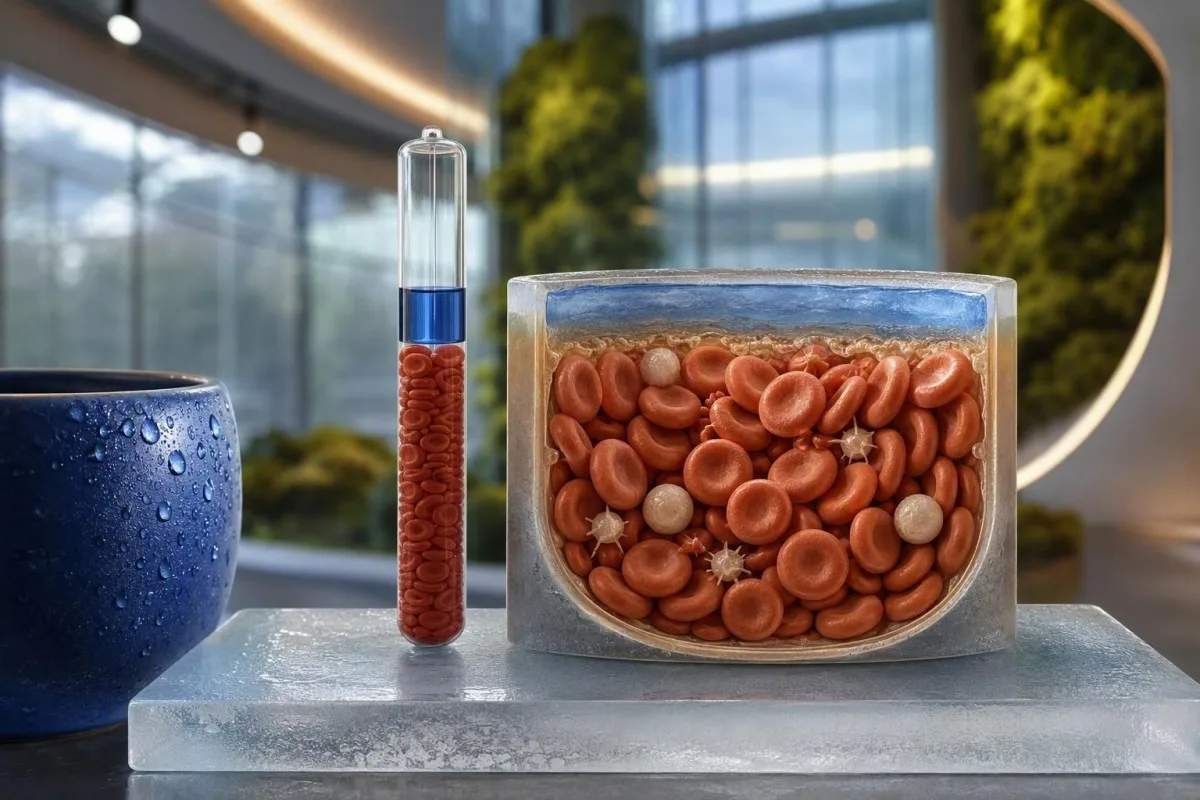
Visok broj RBC može ukazivati na koncentrovanu krv, a ne na povećan broj crvenih krvnih zrnaca. Prvi zadatak je razlikovanje privremenog gubitka tečnosti od perzistentnog povišenja koje zahteva odgovarajuću dijagnostiku.


- Relativna eritrocitoza znači da je količina plazme opala, čineći da broj RBC, hemoglobin i hematokrit izgledaju povišeno bez stvaranja novih ćelija.
- WHO праг vrednosti koje podržavaju moguću policitemiju veru su hemoglobin iznad 16,5 g/dL kod muškaraca ili 16,0 g/dL kod žena, odnosno hematokrit iznad 49% i 48%.
- Ponovno testiranje nakon hidratacije je obično razumno kod blagog, izolovanog povišenja nakon povraćanja, dijareje, izlaganja vrućini, posta ili napornog vežbanja — ukoliko se inače osećate dobro.
- Диуретици može povećati hematokrit usled gubitka tečnosti; ne prekidajte uzimanje propisanih lekova bez konsultacije sa lekarom koji ih je prepisao.
- образац је важан: visok albumin, ukupni proteini, natrijum, odnos BUN/kreatinin i specifična težina urina više podržavaju dehidrataciju nego pravu prekomernu proizvodnju crvenih krvnih zrnaca.
- Понављање у одређеним интервалима je obično 1–2 nedelje nakon oporavka, normalnog unosa tečnosti i 24–48 sati bez neuobičajeno napornog vežbanja, osim ako nisu prisutni hitni simptomi.
- упорно повишен nakon dobre hidratacije zahteva procenu izloženosti pušenju, poremećaja disanja u snu, nadmorske visine, testosterona, bolesti pluća ili bubrega, eritropoetina i često JAK2 testiranje.
- Хитни симптоми uključuju bol u grudima, novonastali nedostatak vazduha, slabost jedne strane tela, gubitak vida, konfuziju ili bolnu otečenu nogu; ovo zahteva hitnu negu, a ne ponovno testiranje kod kuće.
Šta obično znači visok rezultat RBC
Visok RBC broj može biti lažno visok usled dehidratacije kada gubitak tečnosti koncentriše ćelijski deo krvi; to ne znači automatski da vaša koštana srž proizvodi previše crvenih krvnih zrnaca. Trag je u tome da li se hemoglobin i hematokrit normalizuju nakon oporavka i uobičajenog unosa tečnosti, umesto da ostanu povišeni na pravilno pripremljenom ponovljenom CBC.
RBC broj izveštava o broju crvenih krvnih zrnaca po litru, dok хематокрит izveštava o udelu pune krvi koji zauzimaju te ćelije. Referentni intervali za odrasle se razlikuju u zavisnosti od laboratorije, ali mnogi koriste približno 4,5–5,9 × 10¹²/L za muškarce i 4,1–5,1 × 10¹²/L za žene. Vrednost neznatno iznad opsega često je manje informativna od hemoglobina i hematokrita pored nje; naš vodič za šta obuhvata CBC објашњава зашто.
Dehidratacija smanjuje tečnu komponentu krvi u roku od nekoliko sati, pa ista masa crvenih krvnih zrnaca zauzima manju izmerenu zapreminu. U klinici to često viđam nakon stomačnog virusa: RBC 5,8 × 10¹²/L, hemoglobin 17,1 g/dL, hematokrit 51%, zatim normalne vrednosti nakon oporavka. Ovo je relativna eritrocitoza, a ne laboratorijska greška i nije nužno bolest.
Кантести је АИ анализатор крви koji zajedno tumači RBC, hemoglobin, hematokrit, indekse crvenih krvnih zrnaca, bubrežne markere i prethodne rezultate. Od 5. septembra 2026. godine, naš radni proces kliničkog pregleda tretira jedno granično upozorenje CBC kao poziv da se proveri priprema i trend—a ne kao dijagnozu.
RBC broj nije isto što i masa crvenih krvnih zrnaca
CBC ne može direktno da izmeri ukupnu masu crvenih krvnih zrnaca. On meri koncentraciju, koja raste kada se smanji zapremina plazme; specijalizovane studije izotopa za merenje mase crvenih krvnih zrnaca su danas retko potrebne, ali one ilustruju zašto koncentrisan CBC može izgledati alarmantno bez stvarnog povećanja broja ćelija.
Relativna eritrocitoza naspram pravog viška crvenih krvnih zrnaca
Relativna eritrocitoza je visok RBC, hemoglobin ili hematokrit uzrokovan smanjenom zapreminom plazme, dok apsolutna eritrocitoza odražava stvarno povećanu masu crvenih krvnih zrnaca. Hidratacija može ispraviti prvi obrazac, ali neće ispraviti drugi.
Prava eritrocitoza može biti primarna, kao kod policitemije vere, ili sekundarna usled povećanog eritropoetina zbog niskog nivoa kiseonika, lekova ili, retko, procesa u bubrezima. Kriterijumi SZO iz 2016. koriste hemoglobin iznad 16,5 g/dL kod muškaraca ili 16,0 g/dL kod žena kao pragove koji bi trebalo da otvore pitanje policitemije vere, posebno kada je stanje perzistentno (Arber i dr., 2016). Jedna vrednost nije dovoljna za dijagnozu.
Praktična razlika se ogleda u ostatku panela. Dehidratacija visok RBC broj obrasci često uključuju visok albumin, ukupne proteine, ureu/BUN, natrijum i koncentrovanu mokraću; apsolutna eritrocitoza može ostaviti ove markere nepromenjenim. Pregledajte naš fokusirani članak o blago povišenom hemoglobinu ako je hemoglobin, a ne samo RBC, rezultat koji je označen.
Normalan RBC broj ne isključuje eritrocitozu ako su hemoglobin ili hematokrit visoki, a povišen RBC broj sam po sebi može se javiti uz sitna crvena krvna zrnca usled nedostatka gvožđa ili talasemije minor. Zbog toga su MCV i feritin važni; visok RBC uz MCV ispod 80 fL je drugačija klinička priča.
Kako dehidratacija menja CBC i bubrežne markere
Dehidratacija obično podiže RBC broj, hemoglobin i hematokrit istovremeno, a često podiže i albumin, ukupne proteine, ureu/BUN, kreatinin i koncentraciju mokraće. Neslaganje rezultata—na primer, visok RBC uz nizak hemoglobin—ne odgovara dobro jednostavnoj hemokoncentraciji.
Odnos BUN/creatinina iznad približno 20:1 u američkim jedinicama može ukazivati na smanjenu perfuziju bubrega usled gubitka tečnosti, mada gastrointestinalno krvarenje, unos proteina, kortikosteroidi i mala mišićna masa mogu promeniti taj odnos. Kreatinin može blago porasti nakon izlaganja toploti ili dugog trčanja jer se menjaju i filtracija i metabolizam mišića. Naš vodič za dehidrataciju i eGFR tekst obuhvata situacije u kojima treba ponoviti nisku vrednost eGFR.
Specifična težina urina od 1.025 ili viša odgovara koncentrisanom urinu, ali nije direktno merilo hidratacije. Glukoza, proteini i neka kontrastna sredstva za snimanje takođe mogu povećati ovu vrednost, pa lekar treba da je tumači zajedno sa simptomima i elektrolitima. A referentna vrednost specifične težine urina korisna je kada su CBC i analiza urina urađeni istog dana.
Ne savetujem pokušaj veštačkog normalizovanja rezultata tako što ćete neposredno pre vađenja krvi popiti nekoliko litara tečnosti. Prekomerno brzo unošenje tečnosti može sniziti natrijum i dovesti do još jednog nereprezentativnog uzorka; uobičajeni obroci i unos tečnosti prema normalnom osećaju žeđi tokom 24–48 sati generalno su bezbedniji za osobe koje nemaju ograničenje unosa tečnosti.
Povraćanje, dijareja, vrućina, post i diuretici
Povraćanje, dijareja, obilno znojenje, produženo gladovanje i diuretici mogu izazvati privremeno povećanu koncentraciju RBC smanjenjem količine vode u plazmi. Stepen povišenja više zavisi od gubitka i nadoknade tečnosti nego od toga koliko se osoba oseća loše.
Akutno povraćanje često dovodi do snižene koncentracije hlorida, a ponekad i do povišene koncentracije bikarbonata, jer se gube želudačna kiselina i tečnost. Diuretici Henleove petlje, kao što je furosemid, i tiazidi mogu izazvati sličan profil smanjenog volumena, naročito kod starijih osoba. Nizak rezultat hlorida treba posmatrati u istom kliničkom kontekstu; videti pokazatelje povezane sa hloridima kod povraćanja i primene diuretika obrazac.
Nemojte prekidati propisanu terapiju diuretikom da biste poboljšali CBC bez saveta lekara. Osobama koje ove lekove uzimaju zbog srčane insuficijencije, ciroze, rezistentne hipertenzije ili bolesti bubrega može biti potreban individualno prilagođen plan unosa tečnosti, jer nekontrolisano unošenje tečnosti može pogoršati otoke ili otežano disanje. Pravo pitanje je da li se doza, simptomi, telesna masa, krvni pritisak i bubrežni rezultati međusobno uklapaju.
Žeđ je koristan, ali nesavršen pokazatelj kod odraslih starijih od 65 godina i kod osoba sa dijabetesom, bolešću bubrega ili određenim neurološkim stanjima. Tamnožut urin, suva usta, omaglica pri ustajanju, smanjeno mokrenje i gubitak 1 kg telesne mase tokom 24 sata mogu ukazivati na gubitak tečnosti, ali teški simptomi zahtevaju procenu, a ne samostalno lečenje.
Vežbanje može privremeno da koncentriše vašu krv
Intenzivna vežba izdržljivosti može povećati hematokrit i hemoglobin tokom nekoliko sati zbog gubitka tečnosti znojenjem i promena volumena plazme, iako ponavljani treninzi mogu sniziti bazalni hematokrit usled povećanja volumena plazme. Zbog toga je vreme uzorkovanja posebno važno za sportiste.
Trčanje u trajanju od 90 minuta po toplom vremenu može dovesti do gubitka 1–3 litra tečnosti, u zavisnosti od telesne veličine, klime i brzine znojenja. Uzorkovanje neposredno nakon trke takođe može pokazati više vrednosti kreatinina, CK, albumina i ukupnih proteina; ta kombinacija je korisnija od samog rezultata RBC. Naš vodič za vreme uzimanja krvnih testova kod maratonaca razmatra pokazatelje oporavka koji se često menjaju.
Za rutinsko praćenje obično savetujem izbegavanje neuobičajeno intenzivnog vežbanja tokom 24–48 сати pre vađenja krvi, dolazak odmoran i uobičajeno uzimanje tečnosti dan ranije. Ovo nije univerzalno laboratorijsko pravilo, a praćenje vrhunskih sportista može namerno da se obavlja pod opterećenjem — ali doslednost je važnija od savršenstva. Dr Tomas Klajn je video kako su mnogi nepotrebni upućivanja nestali nakon što je sportista ponovo testiran posle uobičajene nedelje oporavka.
Kantesti’s Istraživački vodič za BUN i kreatinin je naročito korisno kada sportista izdržljivosti ima i visok hematokrit i granični pokazatelj funkcije bubrega. Gubitak telesne mase, visoka specifična težina urina i kratak interval oporavka ukazuju na moguću hemokoncentraciju; bol u mišićima, urin boje kole ili veoma visoka vrednost CK zahtevaju drugačiji nivo opreza.
Bezbedan plan za ponavljanje blago povišenog CBC
Blago povišen broj RBC obično se može ponoviti nakon 1–2 nedelje oporavka, uobičajene hidracije i stabilne primene lekova, ako nemate simptome upozorenja. Ponovite ranije samo ako to zatraži lekar ili ako je početni rezultat bio značajno povišen.
Pre ponovljenog testa zabeležite da li ste u prethodna 72 sata imali proliv, povraćanje, povišenu temperaturu, konzumirali alkohol, koristili saunu, dugo putovali, boravili na velikoj nadmorskoj visini, postili ili intenzivno vežbali. Nastavite sa uobičajenom ishranom i rasporedom uzimanja lekova, osim ako vam lekar ne savetuje drugačije. Ovaj vodič za pripremu za osnovne krvne testove sadrži praktičnu kontrolnu listu za izbegavanje slučajnih odstupanja.
Ako je moguće, koristite istu laboratoriju, jer se metode analizatora i referentni intervali razlikuju. Zatražite CBC sa hemoglobinom, hematokritom, MCV, RDW, brojem belih krvnih zrnaca i trombocitima; trajno povišenje praćeno visokim brojem trombocita ili belih krvnih zrnaca više zabrinjava zbog procesa u koštanoj srži nego izolovana eritrocitoza. Skorašnja bolest može uticati na ove parametre u suprotnim smerovima, zato je važan ceo panel.
Кантести је услузи за тумачење лабораторијских тестова заснованој на AI-у koji upoređuje novi CBC sa ranijim vrednostima i označava promene koje prelaze uobičajena odstupanja. Naš pristup praćenju trenda ne zamenjuje lekara, ali može sačuvati ključni kontekst — vežbanje, bolest, lekove i prethodni hematokrit — koji se često izgubi kada se pojedinačni rezultat posmatra izdvojeno.
Kada ponovljen visok rezultat zahteva testiranje na eritrocitozu
Trajno povišen hemoglobin iznad 16.5 g/dL kod muškaraca ili 16.0 g/dL kod žena, odnosno hematokrit iznad 49% ili 48%, trebalo bi da podstakne lekara da proceni eritrocitozu nakon isključivanja dehidracije. Uobičajeni početni testovi su ponovljeni CBC, nivo eritropoetina, procena oksigenacije i testiranje na mutaciju JAK2 kada je to odgovarajuće.
Policitemija vera je mijeloproliferativna neoplazma kod koje se mutacije JAK2 nalaze kod oko 98% obolelih. Nizak nivo eritropoetina u serumu podržava primarnu prekomernu proizvodnju u koštanoj srži, ali nijedan krvni test ne bi trebalo tumačiti izolovano. Smernice Britanskog društva za hematologiju preporučuju strukturisan pristup kojim se primarna eritrocitoza razlikuje od sekundarne (McMullin i sar., 2019).
Simptomi mogu biti suptilni: glavobolje, zamagljen vid, svrab nakon toplog tuširanja, neuobičajeno crvenilo lica, umor ili raniji krvni ugrušak mogu biti važniji od tačne vrednosti RBC. Za potpunije objašnjenje hematokrita, eritropoetina i JAK2 pročitajte naš vodiču za simptome poliglobulije. Mnogi ljudi sa blagim laboratorijskim povišenjem nemaju nijednu od ovih karakteristika.
Vodim računa da ne ostavim utisak da je svako trajno povišenje broja ćelija karcinom. Izloženost ugljen-monoksidu povezana sa pušenjem, nelečena apneja u snu, plućne bolesti, testosteron, velika nadmorska visina i neka oboljenja bubrega češća su objašnjenja u mnogim ordinacijama. Ipak, upravo zato što povišenje traje, ponavljanje CBC ne bi smelo da se pretvori u beskonačan ciklus neobaveznog testiranja.
Nizak nivo kiseonika, pušenje i apneja u snu kao uzroci visokog RBC
Hronično snižen nivo kiseonika može stimulisati eritropoetin i izazvati stvarno povišen broj crvenih krvnih zrnaca; apneja u snu, izloženost ugljen-monoksidu povezana sa pušenjem i plućne bolesti česti su uzroci. Normalna dnevna saturacija kiseonikom ne isključuje u potpunosti noćne padove nivoa kiseonika.
Opstruktivna apneja u snu može izazvati umerenu eritrocitozu, naročito kada postoje značajne noćne desaturacije kiseonika. Glasno hrkanje, uočene pauze u disanju, jutarnje glavobolje, rezistentna hipertenzija i dnevna pospanost trebalo bi da podstaknu ciljanu anamnezu o spavanju, umesto pretpostavke da dehidracija objašnjava sve. A vodič za analizu krvi kod kratkog daha daje širi kardiopulmonalni kontekst.
Pušenje cigareta povećava karboksihemoglobin, što smanjuje dopremanje kiseonika uprkos tome što pulsni oksimetar može pokazivati ohrabrujući rezultat. E-cigarete ne stvaraju isto izlaganje ugljen-monoksidu kao sagorevajući duvan, ali nose druge zdravstvene rizike i o njima ipak treba otvoreno razgovarati. Testiranje na ugljen-monoksid ili ko-oksimetrija ponekad su korisniji od rutinskog merenja zasićenosti kiseonikom.
Kantesti AI tumači visok RBC zajedno sa hemoglobinom, hematokritom, bubrežnim parametrima i navodima o snu ili pušenju, umesto da prikazuje generički spisak uzroka. Takvo tumačenje u kontekstu naročito je korisno kada je hematokrit 50% nakon hidratacije, a pacijent navodi da se budi neispavan.
Nadmorska visina, testosteron i lekovi koji povećavaju RBC
Život ili treniranje na velikoj nadmorskoj visini i upotreba testosterona mogu povećati stvaranje eritrocita, pa povišenje može biti stvarno, a ne povezano sa dehidracijom. Vreme izlaganja često daje više odgovora nego početna vrednost.
Na velikoj nadmorskoj visini niži pritisak kiseonika podstiče eritropoetin i povećava hemoglobin tokom nekoliko dana do nekoliko nedelja; očekivani raspon zavisi od nadmorske visine, trajanja boravka, porekla i referentnih podataka laboratorije. CBC uzet tokom ili neposredno nakon boravka u planinama treba tumačiti u odnosu na to izlaganje. Naš vodič za ponovno testiranje hemoglobina nakon boravka na velikoj nadmorskoj visini objašnjava zašto je važno kada se nakon povratka meri stanje na nivou mora.
Injekcije testosterona, gelovi, implantati i neki anabolički agensi mogu izazvati eritrocitozu. Mnogi protokoli propisivanja smanjuju ili privremeno obustavljaju terapiju kada hematokrit dostigne 54%, iako se pojedinačne procene rizika razlikuju, naročito kod osoba sa kardiovaskularnim bolestima ili apnejom u snu. Nikada nemojte davati krv niti menjati propisanu dozu kao zamenu za razgovor sa lekarom koji je propisao terapiju.
Ređe, lekovi iz grupe SGLT2 za lečenje dijabetesa mogu izazvati blago povećanje hematokrita, delimično zbog uticaja na volumen plazme, a moguće i putem signalizacije eritropoetina. Spisak lekova treba da obuhvati androgenе koji se izdaju bez recepta, injekcione terapije i nedavne promene — a ne samo lekove navedene u elektronskom zdravstvenom kartonu.
Indikatori u CBC koji menjaju nivo zabrinutosti
Visok RBC je zabrinjavajući kada su povišeni i hemoglobin i hematokrit, naročito uz povećan broj trombocita, leukocita, snižen eritropoetin ili abnormalne ćelije u razmazu. Visok RBC uz nizak MCV češće ukazuje na poremećaje sa sitnim eritrocitima.
MCV ispod 80 fL uz relativno visok broj eritrocita može se javiti kod nosilaštva talasemije, kada su ćelije male, ali brojne. Nedostatak gvožđa takođe može sniziti MCV, iako vremenom češće snižava hemoglobin; feritin i saturacija transferina razjašnjavaju razliku. Naš Poređenje MCV i MCH objašnjava zašto sam broj RBC može da zavara.
Povišen broj leukocita ili trombocita uz visok hematokrit ne potvrđuje policitemiju veru, ali snižava prag za hematološku procenu. Mogu uslediti pregled perifernog razmaza, određivanje feritina i eritropoetina, testiranje na JAK2 i ponekad procena koštane srži. Naš put za testiranje na karcinome krvi prikazuje zašto se ovi testovi rade određenim redosledom, umesto da se naručuju bez kriterijuma.
Praktično pravilo dr Tomasa Klajna jednostavno je: tražite podudarnost između nezavisnih pokazatelja. Hematokrit od 52%, trombociti 520 × 10⁹/L i nizak eritropoetin predstavljaju suštinski drugačiji obrazac od hematokrita 50% nakon toplotnog talasa, uz albumin 5,3 g/dL i koncentrisan urin.
Simptomi i rizik od ugrušaka: kada je visok RBC hitan slučaj
Hitno potražite pomoć ako je visok rezultat RBC praćen bolom u grudima, iznenadnim nedostatkom vazduha, iskašljavanjem krvi, gubitkom svesti, novonastalom slabošću, teškoćama u govoru, gubitkom vida ili bolnom otečenom nogom. Ovi simptomi mogu ukazivati na ugrušak ili drugo akutno stanje i nikada ne treba čekati ponavljanje CBC.
Viši hematokrit može povećati viskoznost krvi, ali simptomi i ukupni vaskularni rizik pouzdanije određuju hitnost nego umereno izolovano povišenje. Policitemija vera nosi prepoznat rizik od tromboze, naročito kod starije životne dobi, prethodne tromboze, kardiovaskularnih faktora rizika i nekontrolisanih vrednosti krvne slike. Pregled Teferija i Barbui iz 2021. godine opisuje lečenje prilagođeno riziku, umesto da se svaka povišena vrednost tretira na isti način.
Sama glavobolja je česta i nespecifična; glavobolja sa novim smetnjama vida, slabošću ili konfuzijom nije. Slično tome, svrab nakon toplog tuširanja može se javiti kod policitemije vere, ali i kod suve kože i alergije, pa predstavlja znak za razmatranje, a ne dokaz. Pregled upozoravajući znaci u analizi krvi kod bola u grudima ako su simptomi deo razloga zbog kojeg je analiza zatražena.
Ne uzimajte aspirin samo zato što je broj RBC povišen, osim ako vam to preporuči lekar. Aspirin nosi rizik od krvarenja i može biti neodgovarajući u slučaju čira, terapije antikoagulansima, niskog broja trombocita ili određenih zdravstvenih stanja. Kada se pojave fokalni neurološki ili kardiopulmonalni simptomi, pozivanje hitne pomoći je bezbedniji izbor.
Zašto vaši prethodni CBC rezultati mogu odgovoriti na pitanje
Stabilno blago povišen broj RBC tokom više godina ima drugačije značenje od naglog porasta tokom nekoliko nedelja, a praćenje trendova može razlikovati ličnu početnu vrednost od novonastale bolesti. Kad god je moguće, upoređujte rezultate koristeći hemoglobin, hematokrit, MCV i istu laboratoriju.
Biološka i analitička varijabilnost znače da mala promena nije uvek stvarna fiziološka promena. Razlika u hemoglobinu od 0,3 g/dL između dva uzorkovanja može biti posledica hidratacije, položaja tela, vremena uzorkovanja ili uobičajene varijacije; trajni porast sa 15,2 na 17,3 g/dL zaslužuje veću pažnju. Naš članak o značajnim laboratorijskim promenama objašnjava koncept referentne vrednosti promene.
Vodite jednostavnu evidenciju o nadmorskoj visini, pušačkom statusu, dozi testosterona, bolesti, intenzivnom vežbanju, menstrualnom krvarenju i gubitku tečnosti pri svakom uzorkovanju. Ta evidencija je klinički korisnija od pokušaja da se odredi jedna tačna “idealna” vrednost RBC. Prema mom iskustvu, upravo nedostatak ovih informacija dovodi do toga da pacijenti dobijaju oprečna objašnjenja na različitim pregledima.
Kantesti, a платформа за тумачење биомаркера помоћу AI, može prikazati serijske vrednosti CBC uporedo sa bubrežnim i proteinskim markerima radi utvrđivanja obrazaca koncentracije. Podstičemo korisnike da analizu trendova koriste kao pripremu za razgovor sa lekarom, a ne kao zamenu za pregled ili ciljano testiranje.
Razmatranja o trudnoći, starijem životnom dobu i hroničnim bolestima
Trudnoća obično snižava hemoglobin i hematokrit usled povećanja zapremine plazme, pa povišena vrednost u trudnoći zahteva procenu lekara, a ne olako pripisivanje dehidrataciji. Kod starijih osoba i ljudi sa srčanim ili bubrežnim oboljenjem, savet o unosu tečnosti mora biti individualizovan.
Tokom trudnoće zapremina plazme se povećava za približno 40–50%, stvarajući fiziološku hemodiluciju; mnoge akušerske službe ispituju hemoglobin iznad 16,0 g/dL jer može ukazivati na nedovoljno povećanje zapremine plazme ili druge probleme. Izraženo povraćanje u ranoj trudnoći i dalje može dovesti do hemokoncentracije CBC, ali o trajnom povišenju treba razgovarati sa akušerskim timom. Pogledajte laboratorijske crvene zastavice u trudnoći za situacije koje zahtevaju procenu istog dana.
Starije osobe možda ne osećaju žeđ pouzdano, dok srčana insuficijencija i uznapredovala bubrežna bolest mogu učiniti višak tečnosti opasnim. Nagla promena otoka članaka, telesne mase, otežanog disanja ili količine urina važnija je od pokušaja da se dostigne opšti cilj unosa vode. Promene doze diuretika treba da sprovodi lekar koji leči osnovno oboljenje.
Deca imaju uzrasno specifične referentne opsege hemoglobina, pa vrednost koja na portalu za odrasle izgleda visoko može biti odgovarajuća za određeni uzrast ili nadmorsku visinu. Pedijatar treba da proceni trajno povišenje, naročito uz cijanozu, urođenu srčanu manu ili slabiji rast.
Pitanja za vašeg lekara nakon visokog broja RBC
Pitajte da li vaš rezultat ukazuje na hemokoncentraciju, da li su hemoglobin i hematokrit takođe povišeni i u kakvim uslovima treba ponoviti analizu imajući u vidu vašu zdravstvenu istoriju. Dobra pitanja sprečavaju i preranu uzbunu i previđanje trajne eritrocitoze.
Ponesite kompletan izveštaj, a ne samo označenu vrednost RBC, kao i prethodne CBC nalaze i aktuelni spisak lekova. Pitajte: “Da li su albumin, ukupni proteini, natrijum, kreatinin, BUN/urea i koncentracija urina bili u skladu sa gubitkom tečnosti?” Ovo водичу за серумске протеине može pomoći da razumete zašto albumin spada u tu procenu.
Ako povišenje potraje, pitajte da li se, u skladu sa vašim obrascem nalaza, preporučuju procena oksigenacije, testiranje na poremećaje disanja tokom spavanja, eritropoetin, feritin, testiranje na JAK2 ili upućivanje hematologu. Odgovor će biti drugačiji za 28-godišnjeg izdržljivog sportistu sa hematokritom od 50% i 67-godišnjeg pušača sa hematokritom od 55% i prethodnom trombozom. Konkretna anamneza menja dijagnostičku obradu.
Klinička metodologija Kantesti nadgleda se uz objavljene standarde kvaliteta i doprinos lekara; čitaoci mogu pregledati naš приступ медицинској валидацији pre nego što upotrebe bilo kakvo automatizovano tumačenje. Zaključak dr Tomasa Klajna jeste da je hidratacija razuman prvi korak kod blagog izolovanog rezultata, ali trajno povišene vrednosti zahtevaju stvarno objašnjenje.
Praktičan zaključak o dehidrataciji i visokom RBC
Dehidracija može izazvati lažno povišen rezultat RBC tako što koncentriše krv, ali je treba smatrati samo radnim objašnjenjem kada se klinički kontekst i prateći laboratorijski pokazatelji podudaraju. Normalan ponovljeni nalaz nakon oporavka je ohrabrujući; trajno povišenje treba ispitati.
Kod izolovanog, blagog povišenja nakon izlaganja toploti, gastrointestinalne bolesti, gladovanja ili napornog vežbanja, normalno se oporavite i ponovite CBC pod ujednačenim uslovima za otprilike 1–2 nedelje. Izbegavajte prekomeran unos vode i ne menjajte diuretike, testosteron ili druge propisane lekove bez saveta. Ako niste sigurni da li je vaš rezultat samo granično povišen, naš резултат ван опсега водич objašnjava laboratorijske oznake.
Kod ponovljenog hematokrita iznad 49% kod muškaraca ili 48% kod žena, ili hemoglobina iznad 16,5 g/dL odnosno 16,0 g/dL, zatražite ciljanu procenu umesto da nalaz ponavljate unedogled. Izloženost pušenju, apneja u snu, nadmorska visina, dejstvo lekova, eritropoetin i status JAK2 obično se razmatraju u sledećoj fazi. Simptomi koji ukazuju na stvaranje ugrušaka ili moždani udar zahtevaju hitnu pomoć.
Кантести је Алат за анализу крвних тестова уз помоћ AI napravljen da organizuje ove rezultate i njihove trendove radi informisanog razgovora sa lekarom. Naši lekari koji vrše stručnu reviziju i Медицински саветодавни одбор naglašavaju isti princip: najpre sagledati kontekst, ponoviti testiranje kada je bezbedno i blagovremeno obaviti kliničku procenu kada obrazac potraje.
Често постављана питања
Да ли дехидратација може да доведе до високог броја RBC?
Da. Dehidracija može izazvati povišen broj RBC jer gubitak vode iz plazme koncentriše crvena krvna zrnca u manjoj zapremini krvi, što se naziva relativna eritrocitoza. Hemoglobin i hematokrit obično rastu zajedno sa brojem RBC, a albumin, ukupni proteini, BUN/urea ili specifična težina urina takođe mogu biti povišeni. Blago izolovano povišenje često se normalizuje nakon oporavka i uobičajene hidratacije, ali trajni hematokrit iznad 49% kod muškaraca ili 48% kod žena zahteva kliničku procenu.
Koliko vode treba da popijem pre ponovnog testiranja visokog RBC?
Većina odraslih treba da pije uobičajenu količinu tečnosti prema žeđi 24–48 sati pre ponovljenog CBC, umesto da namerno pije prekomerne količine. Praktičan cilj je bledožuta mokraća i normalno mokrenje, a ne potpuno bistra mokraća ili forsirani unos vode. Osobe sa srčanom insuficijencijom, uznapredovalom bolešću bubrega, cirozom ili propisanim ograničenjem unosa tečnosti treba da zatraže individualni plan od svog kliničara. Brzo ispijanje nekoliko litara tečnosti može sniziti nivo natrijuma i dati nereprezentativan rezultat.
Koliko dugo nakon dehidracije treba da ponovim CBC?
Ponovljeni CBC se obično radi 1–2 nedelje nakon povlačenja povraćanja, dijareje, groznice, izloženosti toploti ili intenzivne fizičke aktivnosti. Kada je reč o promenama povezanim sa vežbanjem, izbegavajte neuobičajeno naporne treninge 24–48 sati pre uzimanja uzorka i održavajte normalan unos tečnosti. Vreme može biti i kraće ukoliko je hematokrit izrazito visok, ukoliko postoje simptomi ili ako su bubrežni parametri abnormalni. Gde je moguće, koristite istu laboratoriju kako bi referentne vrednosti i metode analizatora bile uporedive.
Koji se broj RBC smatra opasno visokim?
Ne postoji jedinstven broj RBC koji definiše opasnost jer rizik više zavisi od hematokrita, hemoglobina, simptoma, uzroka i istorije nastanka tromba. Hematokrit od oko 54% ili viši generalno zahteva hitnu kliničku procenu istog dana, dok uporne vrednosti iznad 49% kod muškaraca ili 48% kod žena opravdavaju ispitivanje eritrocitoze. Bol u grudima, iznenadni nedostatak daha, gubitak vida, slabost, poteškoće u govoru ili bolna otečena noga su hitna stanja bez obzira na tačan broj. Ovi simptomi zahtevaju hitnu procenu umesto čekanja na hidrataciju ili ponovno testiranje.
Mogu li diuretici da uzrokuju povišen broj crvenih krvnih zrnaca?
Diuretici mogu uzrokovati povišenu koncentraciju crvenih krvnih zrnaca smanjenjem volumena plazme, naročito nakon povećanja doze, po toplom vremenu, usled nedovoljnog unosa tečnosti, povraćanja ili dijareje. Oni obično ne podstiču koštanu srž da proizvodi dodatna crvena krvna zrnca, tako da se ovaj efekat može povući kada se balans tečnosti uspostavi. Nemojte samoinicijativno prestajati sa uzimanjem furosemida, hidrohlortiazida ili drugog propisanog diuretika jer ovi lekovi mogu kontrolisati srčanu insuficijenciju, krvni pritisak ili otoke. Razmotrite CBC zajedno sa telesnom težinom, krvnim pritiskom, kreatininom, natrijumom, kalijumom i simptomima.
Da li visok RBC uvek znači policitemiju veru?
Ne. Većina visokih rezultata RBC automatski ne znači policitemiju veru; dehidracija, ugljen-monoksid povezan sa pušenjem, apneja u snu, nadmorska visina, bolesti pluća i testosteron su česti alternativni uzroci. Policitemija vera postaje verovatnija kada hemoglobin ostaje iznad 16,5 g/dL kod muškaraca ili 16,0 g/dL kod žena, hematokrit ostaje iznad 49% ili 48%, eritropoetin je nizak, a JAK2 test je pozitivan. Policitemija vera ima JAK2 mutaciju u oko 97% slučajeva. Kliničar treba da tumači ove testove kao obrazac, a ne da postavlja dijagnozu na osnovu jednog CBC upozorenja.
Укључите AI анализу крвне слике данас
Придружите се више од 2 милиона корисника широм света који верују Kantesti-у за тренутну и прецизну анализу лабораторијских тестова. Отпремите своје резултате крвне слике и добијте свеобухватно тумачење 15,000+ биомаркера за неколико секунди.
📚 Референциране научне публикације
Klajn, T., Mičel, S., i Veber, H. (2026). Објашњење односа BUN/креатинина: Водич за тестирање функције бубрега. Kantesti AI Medical Research.
Klajn, T., Mičel, S., i Veber, H. (2026). Тест уробилиногена у урину: Водич за комплетну анализу урина 2026. Kantesti AI Medical Research.
📖 Спољне медицинске референце
Ревизија из 2016. године класификације мијелоидних неоплазми и акутне леукемије Светске здравствене организације. Тестови функције бубрега — тумачење лабораторијских резултата 2026. ажурирање Пацијенту прилагођен креатинински eGFR је користан, али може бити погрешан на предвидив начин.... Крв.
⚕️ Медицинска одрицање одговорности
Овај чланак је само у образовне сврхе и не представља медицински савет. За одлуке о дијагнози и лечењу увек се консултујте са квалификованим здравственим радником.
Е-Е-А-Т сигнали поверења
Искуство
Клиничка ревизија процеса тумачења лабораторијских налаза коју води лекар.
Експертиза
Фокус на лабораторијску медицину: како се биомаркери понашају у клиничком контексту.
Ауторитативност
Написао др Томас Клајн, уз рецензију др Саре Мичел и проф. др Ханса Вебера.
Поузданост
Тумачење засновано на доказима, са јасним путевима праћења како би се смањила узнемиреност.