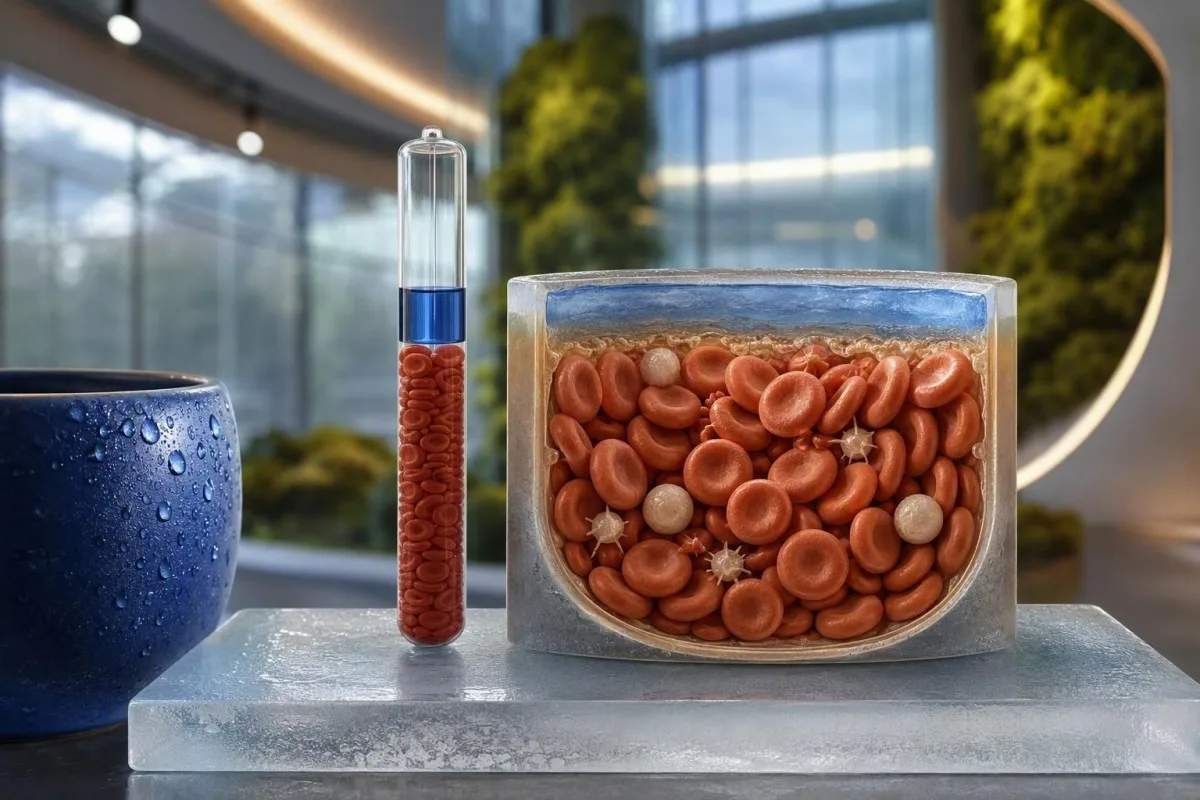
Cacah sel getih abang sing dhuwur bisa nuduhaké getih sing luwih pekat, dudu tambahé sel getih abang. Tugas kapisan yaiku mbedakaké kekurangan cairan sementara saka peningkatan sing menetap lan mbutuhaké pemeriksaan luwih lanjut.


- Eritrositosis relatif tegesé banyu plasma wis mudhun, saéngga cacah RBC, hemoglobin, lan hematokrit katon dhuwur tanpa mbentuk sel anyar.
- Ambang WHO nilai sing ndhukung kemungkinan polycythemia vera yaiku hemoglobin luwih saka 16.5 g/dL ing wong lanang utawa 16.0 g/dL ing wong wadon, utawa hematokrit luwih saka 49% lan 48%, kanthi urutan kasebut.
- Pemeriksaan ulang sawisé hidrasi biasané cukup ditindakake kanggo peningkatan entheng sing terisolasi sawisé muntah, diare, kena hawa panas, pasa, utawa olahraga abot—yen kahanan umum panjenengan apik.
- Diuretik bisa ningkataké hematokrit amarga kekurangan cairan; aja mandheg ngonsumsi obat resep tanpa konsultasi karo klinisi sing menehi resep.
- pola iku wigati: albumin sing dhuwur, protein total, natrium, rasio BUN/kreatinin, lan bobot jinis urin ndhukung dehidrasi luwih tinimbang produksi sel getih abang sing berlebihan.
- Wektu mbaleni biasané ditindakake 1–2 minggu sawisé pulih, ngonsumsi cairan kanthi normal, lan 24–48 jam tanpa olahraga sing banget abot, kajaba ana gejala darurat.
- kenaikan sing terus-terusan sawisé hidrasi sing cukup mbutuhaké evaluasi marang paparan asap rokok, gangguan napas nalika turu, panggonan kanthi elevasi dhuwur, testosteron, penyakit paru utawa ginjel, eritropoietin, lan asring uga pemeriksaan JAK2.
- gejala sing darurat kalebu nyeri dada, sesek ambegan anyar, kelemahan salah siji sisih awak, kelangan penglihatan, bingung, utawa sikil sing nyeri lan abuh; kahanan iki mbutuhake perawatan cepet, dudu tes ulang ing omah.
Makna sing biasané saka asil RBC sing dhuwur
Jumlah RBC sing dhuwur bisa dadi kenaikan palsu amarga dehidrasi nalika kelangan cairan ndadekake bagean seluler getih luwih pekat; iki ora otomatis ateges sumsum balung sampeyan ngasilake kakehan sel getih abang. Petunjuke yaiku apa hemoglobin lan hematokrit bali normal sawise pulih lan ngombe kanthi cukup kaya biasane, dudu tetep dhuwur nalika CBC diulang kanthi persiapan sing becik.
Jumlah RBC nuduhake cacahing sel getih abang saben liter, dene hematokrit nuduhake fraksi sakabehe getih sing diisi déning sel-sel kasebut. Rentang rujukan wong diwasa beda-beda miturut laboratorium, nanging akèh laboratorium nggunakake kira-kira 4,5–5,9 × 10¹²/L kanggo lanang lan 4,1–5,1 × 10¹²/L kanggo wadon. Nilai sing mung sethithik ngluwihi rentang asring kurang informatif tinimbang hemoglobin lan hematokrit ing jejere; pandhuan kita babagan apa sing kalebu ing CBC nerangaké sebabe.
Dehidrasi nyuda komponen cair getih sajrone sawetara jam, mula massa sel getih abang sing padha ngisi volume sing diukur luwih cilik. Ing klinik, aku kerep ndeleng iki sawisé gangguan lambung: RBC 5,8 × 10¹²/L, hemoglobin 17,1 g/dL, hematokrit 51%, banjur bali normal sawisé pulih. Iki minangka eritrositosis relatif, dudu kesalahan laboratorium lan ora mesthi minangka penyakit.
Kantesti iku sawijining Analisa tes getih AI sing maca RBC, hemoglobin, hematokrit, indeks sel getih abang, panandha ginjel, lan asil sadurungé kanthi bebarengan. Miturut kahanan nganti 5 September 2026, alur kerja tinjauan klinis kita nganggep siji tandha CBC sing rada wates minangka alasan kanggo mriksa persiapan lan tren—dudu minangka diagnosis.
Jumlah RBC ora padha karo massa sel getih abang
CBC ora bisa ngukur langsung total massa sel getih abang. CBC ngukur konsentrasi, sing mundhak nalika volume plasma nyusut; pemeriksaan khusus massa sel getih abang nganggo isotop saiki arang dibutuhake, nanging iki nerangake kenapa CBC sing pekat bisa katon nguwatirake tanpa ana paningkatan sel sing nyata.
Erythrositosis relatif dibandhingaké karo keluwihan sel getih abang sing nyata
Eritrositosis relatif yaiku RBC, hemoglobin, utawa hematokrit sing dhuwur amarga volume plasma suda, dene eritrositosis absolut nuduhake massa sel getih abang sing pancen tambah. Hidrasi bisa mbenerake pola sing kapisan, nanging ora bakal mbenerake pola sing kapindho.
Eritrositosis sejati bisa dadi primer, kaya ing polycythemia vera, utawa sekunder amarga paningkatan eritropoietin saka kurang oksigen, obat-obatan, utawa arang banget amarga proses ing ginjel. Kriteria WHO taun 2016 nggunakake hemoglobin luwih saka 16,5 g/dL ing lanang utawa 16,0 g/dL ing wadon minangka ambang sing kudu nuwuhake pitakon babagan polycythemia vera, utamane yen terus-terusan (Arber et al., 2016). Siji nilai wae ora cukup kanggo ndhiagnosis kahanan kasebut.
Bedane sing praktis bisa dideleng saka asil panel liyane. Jumlah RBC dhuwur amarga dehidrasi pola iki asring kalebu albumin, protein total, urea/BUN, natrium, lan urin sing luwih pekat; eritrositosis absolut bisa uga ora mengaruhi panandha-panandha kasebut. Wacanen artikel fokus kita babagan hemoglobin sing rada munggah yen asil sing ditandhani yaiku hemoglobin, dudu RBC wae.
Jumlah RBC sing normal ora nyingkirake eritrositosis yen hemoglobin utawa hematokrit dhuwur, lan jumlah RBC sing munggah wae bisa kedadeyan amarga sel getih abang cilik saka kekurangan wesi utawa trait talasemia. Mula MCV lan feritin penting; RBC sing dhuwur kanthi MCV ing ngisor 80 fL minangka perkara klinis sing beda.
Kepiyé dehidrasi ngowahi CBC lan penanda ginjel
Dehidrasi biasane ningkatake RBC, hemoglobin, lan hematokrit bebarengan, lan uga asring ningkatake albumin, protein total, urea/BUN, kreatinin, lan konsentrasi urin. Asil sing ora cocog—umpamane RBC dhuwur nanging hemoglobin kurang—ora cocog karo hemokonsentrasi sederhana.
Rasio BUN/creatinine ing ndhuwur kira-kira 20:1 ing unit AS bisa ndhukung anané perfusi ginjel sing mudhun amarga kelangan cairan, sanajan perdarahan saluran cerna, asupan protein, kortikosteroid, lan massa otot sing sithik bisa ngowahi rasio kasebut. Creatinine bisa mundhak kanthi moderat sawisé kena panas utawa mlayu adoh amarga filtrasi lan metabolisme otot padha ngalami owah-owahan. Our pandhuan dehidrasi lan eGFR nyakup kapan eGFR sing kurang kudu dipriksa ulang.
Specific gravity urin 1.025 utawa luwih dhuwur cocog karo urin sing pekat, nanging iki dudu alat ukur hidrasi langsung. Glukosa, protein, lan sawetara bahan kontras pencitraan uga bisa nambah nilai kasebut, mula klinisi kudu napsiraké bebarengan karo gejala lan elektrolit. A panduan referensi gravitasi spesifik urin migunani nalika CBC lan urinalisis diklumpukake ing dina sing padha.
Aku ora nyaranake nyoba nggawe asil tes dadi normal kanthi ngombé pirang-pirang liter sakdurungé njupuk sampel. Ngombé kakehan kanthi cepet bisa nyuda natrium lan ngasilaké sampel liya sing ora nggambarake kahanan nyata; mangan kanthi normal lan ngombé cairan miturut rasa ngelak sajrone 24–48 jam umume luwih aman kanggo wong sing ora diwatesi cairané.
Muntah, diare, hawa panas, pasa, lan obat diuretik
Muntah, diare, kringet sing akèh, pasa suwé, lan obat diuretik kabeh bisa nyebabake konsentrasi RBC mundhak sauntara amarga banyu plasma mudhun. Tingkat mundhake luwih gumantung marang jumlah cairan sing ilang lan sing diganti tinimbang marang sepira abote rasa ora sehat sing dirasakake wong kasebut.
Muntah akut kerep nyebabake klorida mudhun lan kadhang bikarbonat mundhak amarga asam lambung lan cairan ilang. Diuretik loop kayata furosemide lan tiazid bisa nyebabake pola kontraksi volume sing padha, utamané ing wong tuwa. Asil klorida sing kurang kudu dideleng ing kerangka klinis sing padha; delengen muntah lan klorida diuretik ngandhani kanggo polane.
Aja mandheg ngonsumsi diuretik sing diresepake kanggo nambah asil CBC tanpa naséhat medis. Wong sing ngonsumsi obat kasebut kanggo gagal jantung, sirosis, hipertensi resisten, utawa penyakit ginjel bisa mbutuhake rencana cairan sing disesuaikan, amarga ngombé tanpa aturan bisa nambah bengkak utawa sesek ambegan. Pitakonan sing bener yaiku apa dosis, gejala, bobot awak, tekanan getih, lan asil ginjel padha selaras.
Rasa ngelak migunani nanging ora sampurna ing wong diwasa sing umuré luwih saka 65 taun lan ing wong sing diabetes, penyakit ginjel, utawa kondisi neurologis tartamtu. Urin kuning peteng, tutuk garing, rasa entheng ing sirah nalika ngadeg, frekuensi nguyuh sing mudhun, lan bobot awak mudhun 1 kg sajrone 24 jam bisa ndhukung anané kelangan cairan, nanging gejala abot mbutuhake evaluasi tinimbang ngobati dhewe.
Olahraga bisa sauntara ndadèkaké getih luwih pekat
Olahraga ketahanan sing abot bisa nambah hematokrit lan hemoglobin nganti sawetara jam amarga kelangan kringet lan owah-owahan volume plasma, sanajan latihan bola-bali bisa nyuda hematokrit dhasar amarga volume plasma saya amba. Mula, wektu pemeriksaan penting banget kanggo atlet.
Lari suwéné 90 menit ing cuaca anget bisa ngurangi cairan 1–3 liter, gumantung ukuran awak, iklim, lan tingkat kringet. Pengambilan sampel langsung sawisé lomba uga bisa nuduhaké kreatinin, CK, albumin, lan protein total sing luwih dhuwur; klompok asil kasebut luwih migunani tinimbang asil RBC waé. Pandhuan kita pandhuan wektu tes getih kanggo maraton mbahas tandha-tandha pemulihan sing umumé owah.
Kanggo pemantauan rutin, aku biasané nyaranaké supaya ora olahraga kanthi intensitas sing ora lumrah 24–48 jam sadurungé pengambilan sampel, teka ing laboratorium kanthi kondisi wis ngaso, lan ngombé kaya biasané sedina sadurungé. Iki dudu aturan laboratorium sing universal, lan pemantauan atlet elit bisa waé kanthi sengaja nguji nalika awak lagi ngalami beban—nanging konsistensi luwih penting tinimbang kasampurnan. Dr. Thomas Klein wis ndeleng akèh rujukan sing ora perlu ilang sawisé atlet dites ulang sawise seminggu pemulihan normal.
Kantesti’s pandhuan riset BUN lan kreatinin iki utamané migunani nalika atlet ketahanan nduwèni hematokrit dhuwur lan pratandha masalah ginjel sing samar. Bobot awak sing mudhun, bobot jenis urin sing dhuwur, lan interval pemulihan sing cendhak ndadèkaké hemokonsentrasi bisa uga dadi sebab; nyeri otot, urin warna kaya cola, utawa CK sing dhuwur banget mbutuhaké tingkat kawigatèné sing béda.
Rencana sing aman kanggo mbalèni pemeriksaan CBC sing rada dhuwur
Cacah RBC sing rada dhuwur biasané bisa dites ulang sawisé 1–2 minggu pemulihan, hidrasi biasa, lan panggunaan obat sing stabil yen ora ana gejala tandha bahaya. Baleni luwih cepet mung yen dijaluk déning klinisi utawa asil awalé mundhak kanthi signifikan.
Sadurungé tes ulang, cathet apa kowé ngalami diare, muntah, mriyang, ngombé alkohol, sauna, lelungan dawa, paparan ing dataran dhuwur, pasa, utawa olahraga intensif sajroné 72 jam sadurungé. Tetepna pola mangan lan jadwal obat sing biyasa kajaba klinisi mènèhi arahan liya. Iki pandhuan persiapan tes getih dhasar nduwèni daftar priksa praktis kanggo nyegah variasi sing ora disengaja.
Yen bisa, gunakna laboratorium sing padha, amarga cara analisis lan interval rujukan bisa béda. Nyuwuna CBC kanthi hemoglobin, hematokrit, MCV, RDW, cacah sel getih putih, lan trombosit; kenaikan sing tetep lan diiringi trombosit utawa sel getih putih sing dhuwur luwih kuwatiraké tumrap proses ing sumsum balung tinimbang eritrositosis sing terisolasi. Penyakit sing anyar dialami bisa mengaruhi garis-garis sel iki kanthi arah sing kosok balèn, mula panel lengkap tetep penting.
Kantesti iku sawijining layanan interpretasi tes lab AI sing mbandhingaké CBC anyar karo asil sadurungé lan menehi tandha marang owah-owahan sing ngluwihi variasi lumrah. Pendekatan tren kita ora nggantèkaké klinisi, nanging bisa njaga konteks penting—olahraga, penyakit, obat-obatan, lan hematokrit sadurungé—sing kerep ilang nalika siji asil dideleng kanthi kapisah.
Nalika asil dhuwur sing bola-bali mbutuhaké pemeriksaan erythrocytosis
Hemoglobin sing terus-terusan dhuwur, yaiku luwih saka 16.5 g/dL ing priya utawa 16.0 g/dL ing wanita, utawa hematokrit luwih saka 49% utawa 48%, kudu ndadèkaké klinisi mriksa eritrositosis sawisé dehidrasi disingkiraké. Tes wiwitan sing biyasa ditindakake yaiku CBC ulang, kadar eritropoietin, penilaian oksigen, lan tes mutasi JAK2 yen cocog.
Policitemia vera iku neoplasma mieloproliferatif, ing ngendi mutasi JAK2 ditemokaké ing kira-kira 98% pasien sing kena. Eritropoietin serum sing kurang ndhukung produksi berlebihan saka sumsum balung minangka panyebab primer, nanging ora ana siji tes getih waé sing kena ditafsiraké kanthi kapisah. Pedoman British Society for Haematology nyaranaké pendekatan terstruktur sing misahaké eritrositosis primer lan sekunder (McMullin et al., 2019).
Gejalane bisa samar: sirah mumet utawa nyeri, pandelengan kabur, gatel sawisé adus anget, rai katon abang ora lumrah, kesel, utawa riwayat bekuan getih bisa luwih penting tinimbang nilai RBC sing persis. Kanggo panjelasan sing luwih jangkep babagan hematokrit, eritropoietin, lan JAK2, wacanen pandhuan gejala polycythemia. Akèh wong sing ngalami kenaikan asil laboratorium sing entheng ora nduwèni ciri-ciri kasebut.
Aku ngati-ati supaya ora menehi kesan yèn saben cacah sing terus-terusan dhuwur iku kanker. Paparan karbon monoksida amarga ngrokok, apnea turu sing ora diobati, penyakit paru-paru, testosteron, dataran dhuwur, lan sawetara kondisi ginjel luwih kerep dadi panjelasan ing akèh praktik klinis. Nanging, ketetapan kenaikan kasebut dadi sebab utama kenapa CBC ulang ora kena dadi siklus tes ulang sembrana tanpa pungkasan.
Kadar oksigen sing kurang, ngrokok, lan sleep apnea minangka panyebab RBC dhuwur
Kurangé oksigen kronis bisa ngrangsang eritropoietin lan nyebabaké cacah sel getih abang sing pancèn mundhak; apnea turu, paparan karbon monoksida amarga ngrokok, lan penyakit paru-paru minangka panyebab sing kerep ditemokaké. Saturasi oksigen awan sing normal ora sacara lengkap nyingkiraké kemungkinan mudhune oksigen ing wayah wengi.
Apnea turu obstruktif bisa nyebabaké eritrositosis sing moderat, utamané nalika ana desaturasi oksigen wengi sing signifikan. Ngorok banter, jeda ambegan sing katon déning wong liya, sirah nyeri nalika ésuk, hipertensi sing angel dikontrol, lan ngantuk ing wayah awan kudu ndadèkaké anamnesis sing fokus marang turu, dudu nganggep yèn dehidrasi nerangaké kabèh. A panduan tes getih sesak ambegan njlèntrèhaké konteks kardiopulmoner sing luwih amba.
Ngrokok ngasilake karboksihemoglobin, sing nyuda pangiriman oksigen sanajan oksimeter denyut nadi katon nentremake. Ngrokok nggunakake rokok elektronik ora ngasilake paparan karbon monoksida sing padha karo tembako sing gampang kobong, nanging duwe risiko kesehatan liyane lan kudu dibahas kanthi jujur. Tes karbon monoksida utawa ko-oksometri kadang-kadang luwih migunani tinimbang saturasi oksigen rutin.
AI ngetrapake asil RBC sing dhuwur bebarengan karo hemoglobin, hematocrit, penanda ginjel, lan faktor turu utawa ngrokok sing dilaporake tinimbang menehi dhaptar panyebab umum. Interpretasi kontekstual kasebut utamané berharga nalika hematocrit 50% sawise hidrasi lan pasien nglaporake turu sing ora nyenengake.
Dhuwuré panggonan, testosteron, lan obat-obatan sing ningkataké RBC
Urip utawa latihan ing papan sing dhuwur lan nggunakake testosteron bisa nambah produksi sel abang, mula kenaikan kasebut nyata tinimbang ana hubungane karo dehidrasi. Wektu paparan asring mangsuli luwih saka nomer awal.
Ing papan sing dhuwur, tekanan oksigen sing luwih murah nyimpen erythropoietin lan ngasilake hemoglobin sajrone pirang-pirang dina nganti pirang-pirang minggu; kisaran sing diarepake gumantung saka elevasi, durasi, leluhur, lan data referensi laboratorium. CBC sing diklumpukake nalika utawa sakcepete sawise nginep ing gunung kudu diinterpretasikake marang paparan kasebut. Kita pandhuan tes ulang hemoglobin ketinggian njlèntrèhaké kenapa wektu bali menyang permukaan laut penting.
Suntikan testosteron, gel, pelet, lan sawetara agen anabolik bisa nyebabake erythrocytosis. Akeh protokol resep nyuda utawa ngaso terapi nalika hematocrit tekan 54%, sanajan keputusan risiko individu beda-beda, utamane ing wong sing duwe penyakit kardiovaskular utawa sleep apnea. Aja nyumbang getih utawa ngowahi dosis sing diresepake minangka pengganti kanggo ngrembug asil karo dokter.
Sanajan arang, obat diabetes SGLT2 bisa nyebabake kenaikan hematocrit cilik, sebagian amarga efek volume plasma lan bisa uga sinyal erythropoietin. Dhaptar obat kudu kalebu produk androgen over-the-counter, perawatan suntik, lan owah-owahan anyar—ora mung obat sing dicithak ing cathetan elektronik.
Petunjuk saka CBC sing ngowahi tingkat keprihatinan
RBC sing dhuwur luwih prihatin nalika hemoglobin lan hematocrit uga dhuwur, utamane kanthi platelet sing dhuwur, sel putih, erythropoietin sing kurang, utawa sel sing ora normal ing apus. RBC sing dhuwur kanthi MCV sing kurang malah nunjukake kelainan sel cilik.
MCV ing ngisor 80 fL kanthi jumlah RBC sing relatif dhuwur bisa kedadeyan ing sifat thalassemia, ing ngendi sel cilik nanging akeh. Kekurangan zat besi uga bisa nyuda MCV, sanajan luwih kerep nyuda hemoglobin saka wektu; ferritin lan saturasi transferrin ngklarifikasi bedane. Kita Perbandingan MCV lan MCH njlèntrèhaké kenapa nomer RBC dheweke ngapusi.
Sel putih utawa platelet sing dhuwur bebarengan karo hematocrit sing dhuwur ora diagnosa polycythemia vera, nanging nyuda ambang kanggo review hematologi. Apus perifer, ferritin, erythropoietin, tes JAK2, lan kadang-kadang penilaian sumsum balung bisa uga ditindakake. Kita jalur pemeriksaan kanker getih nuduhake kenapa tes kasebut diurutake tinimbang dipesan kanthi ora sopan.
Aturan praktis Dr. Thomas Klein prasaja: goleki persetujuan ing sinyal independen. Hematocrit 52%, platelet 520 × 10⁹/L, lan erythropoietin sing kurang minangka pola sing beda banget saka hematocrit 50% sawise gelombang panas kanthi albumin 5,3 g/dL lan urin sing pekat.
Gejala lan risiko bekuan getih: nalika RBC dhuwur dadi darurat
Golek perawatan darurat kanggo asil RBC sing dhuwur kanthi nyeri dada, sesak ambegan dumadakan, watuk getih, pingsan, kelemahan anyar, kesulitan ngomong, mundhut penglihatan, utawa sikil bengkak sing nyeri. Gejala kasebut bisa nggambarake gumpalan utawa kondisi akut liyane lan ora kudu ngenteni CBC ulang.
Hematocrit sing luwih dhuwur bisa nambah kekeruhan getih, nanging gejala lan risiko vaskular sakabehe luwih akurat nemtokake urgensi tinimbang mung munggah sithik. Polycythemia vera nduweni risiko trombosis sing diakoni, utamane kanthi umur tuwa, trombosis sadurunge, faktor risiko kardiovaskular, lan jumlah sing ora dikontrol. Tinjauan Tefferi lan Barbui taun 2021 njlèntrèhaké perawatan sing disesuaikan karo risiko tinimbang ngobati saben jumlah sing munggah kanthi cara sing padha.
Sirah mung umum lan ora spesifik; sirah kanthi gejala visual anyar, kelemahan, utawa bingung ora. Kajaba iku, gatal nalika adus banyu anget bisa kedadeyan ing polycythemia vera nanging uga ing kulit garing lan alergi, mula iki minangka tandha, dudu bukti. Tinjauan pratandha bebaya tes getih kanggo nyeri dada yen gejala minangka bagian saka alesan kenapa tes kasebut diprentahake.
Aja njupuk aspirin mung amarga jumlah RBC dhuwur kajaba dhokter sampeyan nyaranake. Aspirin duwe risiko pendarahan lan bisa uga ora cocog karo tukak, antikoagulan, platelet sing sithik, utawa riwayat medis tartamtu. Layanan darurat minangka pilihan sing luwih aman nalika gejala neurologis utawa kardiopulmoner fokal berkembang.
Napa asil CBC sadurungé bisa njawab pitakon iki
Jumlah RBC sing stabil lan sithik luwih dhuwur sajrone pirang-pirang taun duwe makna sing beda saka munggah cepet sajrone pirang-pirang minggu, lan tren bisa mbedakake garis dasar pribadi saka penyakit anyar. Bandhingake asil nggunakake hemoglobin, hematocrit, MCV, lan laboratorium sing padha kapan wae bisa.
Variasi biologis lan variasi penganalisis tegese owah-owahan cilik ora mesthi owah-owahan fisiologis sing nyata. Bedane hemoglobin 0,3 g/dL antarane rong gambar bisa nggambarake hidrasi, postur, wektu, utawa variasi biasa; pendakian sing terus-terusan saka 15,2 nganti 17,3 g/dL kudu luwih digatekake. Artikel kita ing owah-owahan lab sing bermakna nerangake konsep nilai-owah-owahan-referensi.
Simpen cathetan prasaja babagan dhuwur, status udud, dosis testosteron, penyakit, olahraga abot, pendarahan menstruasi, lan ilang cairan ing saben gambar. Cathetan kasebut luwih migunani kanthi klinis tinimbang ngoyak siji jumlah RBC “ideal” sing tepat. Sajrone pengalaman, ora ana konteks iki sing nyebabake pasien nampa panjelasan sing kontradiktif saka janji temu sing beda.
Kantesti, sawijining platform interpretasi biomarker AI, bisa nampilake nilai CBC serial ing jejere tandha ginjel lan protein kanggo ngenali pola konsentrasi. Kita nyengkuyung pangguna kanggo nindakake analisis tren minangka persiapan kanggo obrolan dokter, dudu pengganti pemeriksaan utawa pengujian sing ditargetake.
Pertimbangan nalika meteng, umur tuwa, lan penyakit kronis
Kandhutan biasane nyuda hemoglobin lan hematocrit liwat ekspansi volume plasma, mula jumlah sing dhuwur nalika meteng mbutuhake review dokter tinimbang mung asumsi dehidrasi biasa. Ing wong tuwa lan wong sing duwe penyakit jantung utawa ginjel, saran cairan kudu diindividualisasi.
Sajrone meteng, volume plasma mundhak kira-kira 40-50%, nyebabake dilusi fisiologis; akeh layanan kebidanan nyelidiki hemoglobin luwih saka 16,0 g/dL amarga bisa menehi tandha ekspansi plasma sing ora cekap utawa masalah liyane. Muntah parah ing awal meteng isih bisa nggawe konsentrasi CBC, nanging elevasi sing terus-terusan kudu dibahas karo tim kebidanan. Delengen pemeriksaan darah saat kehamilan kanggo skenario dina sing padha.
Wong tuwa bisa uga ora bisa nglapurake rasa ngelak kanthi andal, nalika gagal jantung lan penyakit ginjel sing maju bisa nggawe cairan sing berlebihan mbebayani. Owah-owahan cepet ing pembengkakan tungkak, bobot, sesak ambegan, utawa output urin luwih penting tinimbang nyoba nyukupi target banyu generik. Penyesuaian diuretik kalebu karo dhokter sing ngatur kondisi sing ndasari.
Bocah-bocah duwe kisaran hemoglobin khusus umur, lan nilai sing katon dhuwur ing portal wong diwasa bisa uga cocog ing umur utawa dhuwur tartamtu. Dhokter anak kudu napsirake elevasi sing terus-terusan, utamane kanthi sianosis, penyakit jantung bawaan, utawa pertumbuhan sing ora apik.
Pitakon sing kudu digawa marang klinisi sawisé cacah RBC dhuwur
Takon manawa asil sampeyan nuduhake hemokonsentrasi, apa hemoglobin lan hematocrit uga dhuwur, lan kondisi ulangan apa sing cocog kanggo riwayat kesehatan sampeyan. Pitakonan sing apik nyegah weker awal lan erythrocytosis sing terus-terusan.
Nggawa laporan lengkap, ora mung nilai RBC sing ditandhani, plus CBC sadurunge lan dhaptar obat saiki. Takon: “Apa albumin, protein total, natrium, kreatinin, BUN/urea, lan konsentrasi urin konsisten karo ilang cairan?” Iki nuntun bisa mbantu sampeyan ngerti kenapa albumin kalebu ing diskusi kasebut.
Yen elevasi kasebut terus, takon manawa penilaian oksigen, tes turu, erythropoietin, ferritin, tes JAK2, utawa rujukan hematologi cocog karo pola sampeyan. Wangsulane bakal beda kanggo atlet daya tahan umur 28 taun kanthi hematocrit 50% lan perokok umur 67 taun kanthi hematocrit 55% lan bekuan sadurunge. Sejarah tartamtu ngganti luwih jero.
metodologi klinis Kantesti diawasi kanthi standar kualitas sing diterbitake lan input dhokter; pamaca bisa mriksa pendekatan validasi medis kita sadurunge nggunakake interpretasi otomatis. Pendapat Dr. Thomas Klein yaiku hidrasi minangka cek pisanan sing logis kanggo asil sing kapencil lan entheng, nanging nilai dhuwur sing terus-terusan mbutuhake penjelasan nyata.
Inti praktis babagan dehidrasi lan RBC dhuwur
Dehidrasi bisa nyebabake asil RBC dhuwur sing katon palsu kanthi ngonsentrasi getih, nanging kudu dianggep minangka panjelasan kerja mung nalika konteks klinis lan penanda laboratorium pendamping setuju. Repeat normal sawise pulih iku njamin; elevasi sing terus-terusan kudu diselidiki.
Kanggo elevasi sing kapencil, entheng sawise panas, penyakit gastrointestinal, puasa, utawa olahraga sing abot, pulih normal lan baleni CBC ing kahanan sing konsisten kira-kira 1-2 minggu. Aja ngombe banyu sing ekstrem, lan aja ngowahi diuretik, testosteron, utawa obat resep liyane tanpa saran. Yen sampeyan ora yakin manawa asil sampeyan mung marginal, asil sing ngluwihi wates nerangake tandha laboratorium.
Kanggo hematokrit bola-bali luwih saka 49% ing pria utawa 48% ing wanita, utawa hemoglobin luwih saka 16.5 g/dL utawa 16.0 g/dL, njaluk penilaian sing diarani tinimbang mbaleni tanpa wates. Paparan ngrokok, apnea nalika turu, dhuwur, efek obat, eritropoietin, lan status JAK2 biasane dipertimbangake ing fase sabanjure. Gejala sing nuduhake pembekuan utawa stroke mbutuhake perawatan darurat.
Kantesti iku sawijining Piranti analisis tes getih berbasis AI dibangun kanggo ngatur asil kasebut lan tren kasebut kanggo diskusi medis sing diinformasikake. Peninjau dhokter lan Dewan Penasehat Medis nandheske prinsip sing padha: konteks dhisik, tes mbaleni nalika aman, lan tinjauan klinis cepet nalika pola kasebut terus.
Pitakonan sing Sering Ditakoni
Apa dehidrasi bisa nyebabake jumlah RBC sing dhuwur?
Inggih. Dehidrasi bisa nyebabake jumlah RBC dhuwur amarga kelangan banyu plasma ndadèkaké sel getih abang luwih pekat ing volume getih sing luwih cilik, sawijining pola sing diarani eritrositosis relatif. Hemoglobin lan hematokrit biasané mundhak bebarengan karo jumlah RBC, lan albumin, protein total, BUN/urea, utawa gravitasi spesifik urin uga bisa dhuwur. Peningkatan entheng sing terisolasi asring normal manèh sawisé pulih lan cukup hidrasi kaya biasané, nanging hematokrit sing tetep ing ndhuwur 49% ing wong lanang utawa 48% ing wong wadon mbutuhake evaluasi klinis.
Pinten banyu ingkang kedah kula unjuk sadèrèngipun mbaleni tes RBC ingkang asilingipun inggil?
Umume wong diwasa kudu ngombe kaya biasane miturut rasa ngelak sajrone 24–48 jam sadurunge CBC diulang, tinimbang sengaja ngombe kanthi jumlah sing kakehan. Target praktis yaiku urin warna kuning pucet lan kerep urinasi kanthi normal, dudu urin sing bening banget utawa meksa ngombe banyu. Wong sing ngalami gagal jantung, penyakit ginjel tahap lanjut, sirosis, utawa diwatesi asupan cairan miturut resep kudu takon marang klinisi kanggo rencana individual. Ngombe pirang-pirang liter kanthi cepet bisa nyuda kadar natrium lan nyebabake asil sing ora nggambarake kahanan sing sakbenere.
Pira suwene sawisé dehidrasi aku kudu mbalèni CBC?
CBC ulang biasane ditindakake 1–2 minggu sawisé muntah, diare, mriyang, paparan panas, utawa olahraga abot wis mari. Kanggo owah-owahan sing ana gandheng cenenge karo olahraga, aja nindakake latihan sing luwih abot tinimbang biasane sajrone 24–48 jam sadurunge njupuk sampel lan tetep ngonsumsi cairan kanthi jumlah normal. Wektune bisa luwih cepet menawa hematokrit mundhak banget, ana gejala, utawa penanda ginjel ora normal. Yen bisa, gunakna laboratorium sing padha supaya rentang referensi lan cara analisisé bisa dibandhingaké.
Pira jumlah RBC sing dianggep dhuwur banget lan mbebayani?
Ora ana siji angka cacah RBC sing bisa nemtokake bebaya, amarga risiko luwih gumantung marang hematokrit, hemoglobin, gejala, panyebab, lan riwayat pembekuan getih. Hematokrit watara 60% utawa luwih umume mbutuhake penilaian klinis ing dina sing padha kanthi cepet, dene nilai sing tetep luwih saka 49% ing pria utawa 48% ing wanita mbutuhake pemeriksaan kanggo eritrositosis. Nyeri dada, sesak napas dadakan, penglihatan ilang, kelemahan, kesulitan wicara, utawa sikil sing nyeri lan bengkak kudu ditangani kanthi darurat tanpa preduli saka angka sing pas. Gejala kasebut mbutuhake penilaian darurat, dudu ngenteni nganti awak cukup cairan utawa nindakake tes maneh.
Apa diuretik bisa nyebabake jumlah sel getih abang mundhak?
Diuretik bisa nyebabaké konsentrasi sel getih abang mundhak amarga nyuda volume plasma, utamané sawisé dosis ditambah, cuaca panas, kurang asupan, muntah, utawa diare. Biasané obat-obatan iki ora ndadèkaké sumsum balung gawé sel getih abang luwih akèh, mula efeké bisa mbalikke sawisé keseimbangan cairan dibeneraké. Aja mandheg ngonsumsi furosemide, hydrochlorothiazide, utawa diuretik resep liyané kanthi karep dhéwé amarga obat-obatan iki bisa uga lagi ngontrol gagal jantung, tekanan getih, utawa pembengkakan. Rembugaké asil CBC bebarengan karo bobot badan, tekanan getih, kreatinin, natrium, kalium, lan gejala.
Apa cacah RBC sing dhuwur tansah ateges polycythemia vera?
Ora. Umume asil RBC sing dhuwur ora langsung ateges polycythemia vera; dehidrasi, karbon monoksida sing ana gandhengane karo ngrokok, sleep apnea, panggonan ing dhuwur, penyakit paru-paru, lan testosteron minangka panyebab alternatif sing umum. Polycythemia vera dadi luwih mungkin yen hemoglobin tetep luwih saka 16.5 g/dL ing wong lanang utawa 16.0 g/dL ing wong wadon, hematokrit tetep luwih saka 49% utawa 48%, eritropoietin kurang, lan tes JAK2 positif. Polycythemia vera nduwèni mutasi JAK2 ing kira-kira 98% kasus. Klinisi kudu napsirake tes-tes iki minangka sawijining pola, dudu nemtokake diagnosis mung saka siji tandha ing CBC.
Entuk Analisis Tes Getih Berbasis AI Dina Iki
Gabung karo luwih saka 2 yuta pangguna ing saindenging jagad sing percaya Kantesti kanggo analisis tes lab sing instan lan akurat. Unggah asil tes getihmu lan tampa interpretasi lengkap saka 15,000+ biomarker sajrone sawetara detik.
📚 Publikasi Riset sing Dirujuk
Klein, T., Mitchell, S., & Weber, H. (2026). Penjelasan Rasio BUN/Kreatinin: Pandhuan Tes Fungsi Ginjel. Riset Medis AI Kantesti.
Klein, T., Mitchell, S., & Weber, H. (2026). Urobilinogen ing Tes Urine: Pandhuan Urinalisis Lengkap 2026. Riset Medis AI Kantesti.
📖 Referensi Medis Eksternal
⚕️ Penafian Medis
Artikel iki mung kanggo tujuan edukasi lan ora dadi saran medis. Tansah konsultasi karo panyedhiya layanan kesehatan sing mumpuni kanggo keputusan diagnosis lan perawatan.
Sinyal Kepercayaan E-E-A-T
Pengalaman
Tinjauan klinis sing dipimpin dokter babagan alur kerja interpretasi lab.
Keahlian
Fokus kedokteran laboratorium babagan carane biomarker tumindak ing konteks klinis.
Kewibawaan
Ditulis dening Dr. Thomas Klein kanthi ditinjau dening Dr. Sarah Mitchell lan Prof. Dr. Hans Weber.
Kapercayan
Interpretasi adhedhasar bukti kanthi tindak lanjut sing cetha kanggo nyuda rasa kaget.