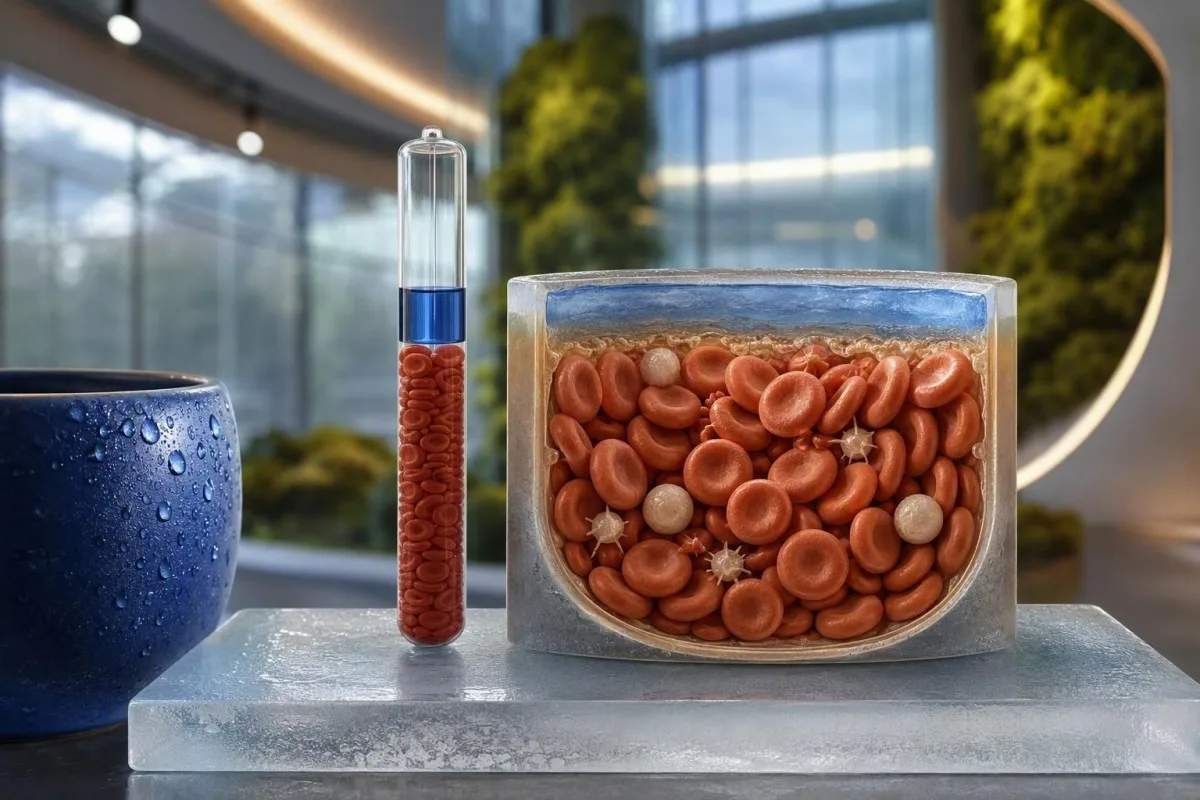
Цусны улаан эсийн тоо өндөр байх нь улаан эс нэмэгдсэнээс бус, цус өтгөрснийг илэрхийлж болно. Эхний зорилго нь түр зуурын шингэний алдагдлыг зохих шинжилгээ шаарддаг тогтвортой өсөлтөөс ялгах явдал юм.


- Харьцангуй эритроцитоз гэдэг нь сийвэнгийн ус багассанаар шинэ эс үүсээгүй ч RBC-ийн тоо, гемоглобин болон гематокрит өндөр мэт харагдахыг хэлнэ.
- ДЭМБ-ын босго полицитеми вера байж болзошгүйг дэмжих үзүүлэлтүүд нь эрэгтэйд гемоглобин 16.5 g/dL-ээс, эмэгтэйд 16.0 g/dL-ээс өндөр байх, эсвэл гематокрит тус тус 49% болон 48%-ээс өндөр байх явдал юм.
- Шингэн нөхсөний дараах давтан шинжилгээ бөөлжих, суулгах, халуунд өртөх, мацаг барих эсвэл хүнд дасгал хийсний дараах бага зэрэг, дангаар илэрсэн өсөлтийн үед—хэрэв биеийн байдал ерөнхийдөө сайн бол—ихэвчлэн зохистой арга юм.
- Шээс хөөх эмүүд : шингэн алдалтын улмаас гематокритыг нэмэгдүүлж болно; эмийг бичиж өгсөн эмчтэй зөвлөлдөхгүйгээр жороор олгосон эмийг бүү зогсоо.
- Дүр зураг чухал: альбумин, нийт уураг, натри, BUN/креатинины харьцаа болон шээсний хувийн жин өндөр байх нь улаан эсийн жинхэнэ хэт үйлдвэрлэлээс илүүтэй шингэн алдалтыг дэмжинэ.
- Давтамжийг давтах хугацаа яаралтай шинж тэмдэг илрээгүй бол бие сэргэж, шингэнийг хэвийн хэмжээгээр ууж, ердийнхөөс хэт хүнд дасгал хийгээгүй 24–48 цагийн дараа, ихэвчлэн 1–2 долоо хоногийн дараа хийгддэг.
- 6 сараас дээш үргэлжилсэн өсөлт хангалттай шингэн нөхсөний дараа мөн өндөр хэвээр байвал тамхины утаанд өртөлт, нойрны амьсгалын эмгэг, өндөрлөг газар, тестостерон, уушги эсвэл бөөрний өвчин, эритропоэтин болон ихэвчлэн JAK2-ийн шинжилгээг үнэлэх шаардлагатай.
- 2 дахин цээжний өвдөлт, шинээр үүссэн амьсгал давчдах, биеийн нэг талын сулрал, хараа алдагдах, будилах, эсвэл өвдөж хавдсан хөл багтана; эдгээр нь гэртээ дахин шинжилгээ хийх бус, яаралтай тусламж авах шаардлагатай.
RBC-ийн өндөр үзүүлэлт ихэвчлэн юуг илэрхийлдэг вэ
RBC-ийн өндөр тоо нь шингэн алдалтын улмаас цусны эсийн хэсэг өтгөрснөөс үүссэн хуурамч өндөр үзүүлэлт байж болно; энэ нь ясны чөмөг хэт олон улаан эс үүсгэж байна гэсэн үг биш. Гол шинж нь гемоглобин болон гематокрит бие сэргэж, ердийн хэмжээгээр шингэн уусны дараа хэвийн болох эсэх, эсвэл зохих бэлтгэлтэйгээр давтан хийсэн CBC-д өндөр хэвээр байх эсэх юм.
RBC-ийн тоо нь нэг литрт ногдох улаан эсийн тоог мэдээлдэг бол гематокрит нь бүхэл цусны ямар хувийг эдгээр эс эзэлж байгааг мэдээлдэг. Насанд хүрэгчдийн лавлах хязгаар лаборатори бүрд ялгаатай боловч олон лаборатори эрэгтэйд ойролцоогоор 4.5–5.9 × 10¹²/л, эмэгтэйд 4.1–5.1 × 10¹²/л-ийг хэрэглэдэг. Лавлах хязгаараас ялимгүй давсан үзүүлэлт нь түүнтэй хамт гарсан гемоглобин, гематокритоос бага мэдээлэлтэй байх нь элбэг; бидний CBC-д юу ордог тухай гарын авлага яагаад гэдгийг тайлбарладаг.
Шингэн алдалт хэдхэн цагийн дотор цусны шингэн бүрэлдэхүүнийг багасгадаг тул улаан эсийн ижил масс хэмжигдсэн бага эзлэхүүнийг эзэлнэ. Эмнэлэгт би үүнийг ходоод гэдэсний халдварын дараа түгээмэл хардаг: RBC 5.8 × 10¹²/л, гемоглобин 17.1 г/дл, гематокрит 51%, дараа нь бие сэргэсний дараа үзүүлэлтүүд хэвийн болдог. Энэ нь харьцангуй эритроцитоз, бөгөөд лабораторийн алдаа ч биш, заавал өвчин гэсэн үг ч биш.
Кантести бол AI цусны шинжилгээний анализатор RBC, гемоглобин, гематокрит, улаан эсийн индексүүд, бөөрний үзүүлэлтүүд болон өмнөх шинжилгээний үр дүнг хамтад нь үнэлдэг. 2026 оны 9 дүгээр сарын 5-ны байдлаар манай эмнэлзүйн хяналтын үйл явц нь CBC-ийн нэг удаагийн хязгаарын утгын дохиог онош гэж үзэх бус, шинжилгээний бэлтгэл болон өөрчлөлтийн явцыг шалгах шалтгаан гэж үздэг.
RBC-ийн тоо нь улаан эсийн масстай адил биш
CBC нь нийт улаан эсийн массыг шууд хэмжиж чаддаггүй. Энэ нь концентрацийг хэмждэг бөгөөд плазмын эзлэхүүн агших үед концентраци нэмэгддэг; тусгай изотопын улаан эсийн массын шинжилгээ одоо ховор шаардлагатай болсон ч өтгөрсөн CBC бодит эсийн өсөлтгүй байхад яагаад түгшүүртэй харагддагийг харуулдаг.
Харьцангуй эритроцитоз ба улаан эсийн жинхэнэ илүүдэл
Харьцангуй эритроцитоз гэдэг нь плазмын эзлэхүүн багассанаас RBC, гемоглобин эсвэл гематокрит өндөр болохыг хэлдэг бол үнэмлэхүй эритроцитоз нь улаан эсийн масс үнэхээр нэмэгдсэнийг илэрхийлнэ. Шингэн нөхөх нь эхний хэлбэрийг засаж болох боловч хоёр дахь хэлбэрийг засахгүй.
Жинхэнэ эритроцитоз нь полицитеми верагийн адил анхдагч, эсвэл хүчилтөрөгчийн дутагдал, эм бэлдмэл, ховор тохиолдолд бөөрний эмгэгийн улмаас эритропоэтин нэмэгдсэнтэй холбоотой хоёрдогч байж болно. 2016 оны ДЭМБ-ын шалгуурт эрэгтэйд 16.5 г/дл-ээс, эмэгтэйд 16.0 г/дл-ээс дээш гемоглобиныг полицитеми верагийн талаар авч үзэх ёстой босго үзүүлэлт гэж заасан бөгөөд ялангуяа энэ нь тогтвортой өндөр байх үед хамаарна (Arber et al., 2016). Нэг удаагийн үзүүлэлтээр онош тавихад хангалтгүй.
Практик ялгааг шинжилгээний багцын бусад үзүүлэлтүүд өгнө. Шингэн алдалтын үеийн өндөр RBC-ийн тоо бүхий хэв шинжид альбумин, нийт уураг, мочевин/BUN, натри болон өтгөрсөн шээс ихэвчлэн нэмэгддэг; үнэмлэхүй эритроцитозын үед эдгээр үзүүлэлт хэвийн байж болно. Манай гемоглобин бага зэрэг өндөр гэсэн төвлөрсөн нийтлэлийг гемоглобин, зөвхөн RBC биш, өөрчлөгдсөн үзүүлэлт бол уншина уу.
RBC-ийн хэвийн тоо нь гемоглобин эсвэл гематокрит өндөр байгаа тохиолдолд эритроцитозыг үгүйсгэхгүй; мөн RBC-ийн дан ганц өндөр үзүүлэлт нь төмрийн дутагдал эсвэл талассемийн тээгч байдлын үед жижиг улаан эстэй холбоотой байж болно. Иймээс MCV болон ферритин чухал; MCV 80 fL-ээс бага үед өндөр RBC нь эмнэлзүйн хувьд өөр асуудлыг илэрхийлнэ.
Шингэн алдалт CBC болон бөөрний маркеруудыг хэрхэн өөрчилдөг вэ
Шингэн алдалтын үед RBC-ийн тоо, гемоглобин, гематокрит ихэвчлэн хамтдаа нэмэгддэг бөгөөд альбумин, нийт уураг, мочевин/BUN, креатинин болон шээсний концентраци мөн ихсэх нь элбэг. Зөрүүтэй үр дүн—жишээлбэл, RBC өндөр боловч гемоглобин бага байх—нь энгийн гемоконцентрацитай сайн тохирохгүй.
АНУ-ын нэгжээр BUN/креатинины харьцаа ойролцоогоор 20:1-ээс их байх нь шингэний алдагдлаас үүдэлтэй бөөрний перфузи буурсныг дэмжиж болох боловч ходоод гэдэсний цус алдалт, уургийн хэрэглээ, кортикостероид, булчингийн масс бага байх зэрэг нь уг харьцааг өөрчилж болно. Дулаанд өртсөний дараа эсвэл удаан гүйсний дараа шүүлт болон булчингийн метаболизм хоёул өөрчлөгддөг тул креатинин бага зэрэг нэмэгдэж болно. Манай шингэн алдалт ба eGFR гарын авлага нь eGFR бага гарсан үед хэзээ давтан шинжилгээ хийхийг хамардаг.
Шээсний хувийн жин 1.025 буюу түүнээс дээш байх нь шээс өтгөрснийг илтгэж болох боловч энэ нь шингэний дутагдлыг шууд хэмжих үзүүлэлт биш. Глюкоз, уураг болон зарим дүрс оношилгооны тодосгогч бодис шээсний хувийн жинг мөн нэмэгдүүлж болох тул эмч үүнийг шинж тэмдэг болон электролитийн үзүүлэлттэй уялдуулан тайлбарлах ёстой. A шээсний хувийн жингийн лавлах утга нь CBC болон шээсний шинжилгээг нэг өдөр авсан үед тустай.
Шинжилгээ өгөхийн өмнө хэдэн литр ус шууд ууж, үзүүлэлтийг хэвийн болгохыг оролдохыг зөвлөдөггүй. Богино хугацаанд хэт их ус уух нь натрийн түвшинг бууруулж, мөн төлөөлөх чадваргүй өөр нэг сорьц үүсгэнэ; шингэний хэрэглээнд хязгаарлалтгүй хүмүүст 24–48 цагийн турш ердийн хооллож, цангаагаа даган хэвийн хэмжээгээр шингэн уух нь ерөнхийдөө илүү аюулгүй.
Бөөлжих, суулгах, халуунд байх, мацаг барих болон шээс хөөх эм
Бөөлжих, суулгах, ихээр хөлрөх, удаан хугацаагаар өлөн байх болон шээс хөөх эмүүд нь бүгд сийвэнгийн усны хэмжээг бууруулж, RBC-ийн концентрацийг түр хугацаанд ихэсгэж болно. Ихсэлтийн зэрэг нь тухайн хүн хэр хүнд өвдөж байгаагаас илүүтэй шингэний алдагдал болон нөхөн дүүргэлтээс хамаардаг.
Цочмог бөөлжих үед ходоодны хүчил болон шингэн алдагдсанаас хлорид буурч, заримдаа бикарбонат ихэсдэг. Фуросемид зэрэг гогцооны шээс хөөх эмүүд болон тиазидууд нь ялангуяа ахмад настанд эзлэхүүн агшсан үүнтэй төстэй дүр зураг үүсгэж болно. Хлоридын бага үзүүлэлтийг мөн адил эмнэлзүйн хүрээнд авч үзэх хэрэгтэй; бөөлжих болон шээс хөөх эмтэй холбоотой хлоридын шинж тэмдгүүдийг үзнэ үү хэв маягийн талаар.
Эмчийн зөвлөгөөгүйгээр CBC-ийг сайжруулахын тулд эмчийн заасан шээс хөөх эмийг зогсоож болохгүй. Зүрхний дутагдал, элэгний хатуурал, эмэнд тэсвэртэй гипертензи эсвэл бөөрний өвчний улмаас эдгээр эмийг хэрэглэдэг хүмүүст шингэний хэрэглээний тусгай төлөвлөгөө шаардлагатай байж болно. Учир нь ялгаваргүйгээр их ус уух нь хаван болон амьсгаадалтыг дордуулж болзошгүй. Тун, шинж тэмдэг, жин, цусны даралт болон бөөрний үзүүлэлтүүд хоорондоо нийцэж байгаа эсэхийг тодруулах нь зөв асуулт юм.
Цангах мэдрэмж нь 65-аас дээш насны насанд хүрэгчид болон чихрийн шижин, бөөрний өвчин эсвэл зарим мэдрэлийн эмгэгтэй хүмүүст тустай боловч төгс найдвартай биш. Хар шар шээс, ам хатах, босоход толгой эргэх, шээсний хэмжээ багасах болон 24 цагийн дотор жин 1 кг-аар буурах нь шингэн алдалтыг дэмжиж болох боловч хүнд шинж тэмдэг илэрвэл өөрөө эмчлэхээс илүүтэй эмнэлгийн үнэлгээ хийлгэх шаардлагатай.
Дасгал хөдөлгөөн цусыг түр хугацаанд өтгөрүүлж болно
Хүнд ачааллын тэсвэрийн дасгал хийхэд хөлс алдах болон сийвэнгийн эзлэхүүний шилжилтийн улмаас гематокрит, гемоглобин хэдэн цагийн турш нэмэгдэж болно. Гэвч давтан бэлтгэл хийх нь сийвэнгийн эзлэхүүнийг нэмэгдүүлснээр суурь гематокритийг бууруулж болно. Иймээс тамирчдын хувьд шинжилгээ авах хугацаа онцгой чухал.
Дулаан цаг агаарт 90 минут гүйхэд биеийн хэмжээ, уур амьсгал, хөлрөлтийн хэмжээнээс хамааран 1–3 литр шингэн алдаж болно. Тэмцээний дараахан авсан шинжилгээнд креатинин, CK, альбумин, нийт уураг мөн өндөр гарч болох бөгөөд эдгээр үзүүлэлтүүдийн нийлбэр нь зөвхөн RBC-ийн үр дүнгээс илүү ач холбогдолтой. Манай марафоны үеийн цусны шинжилгээ өгөх хугацааны заавар нь ихэвчлэн өөрчлөгддөг сэргэлтийн үзүүлэлтүүдийн талаар тайлбарладаг.
Тогтмол хяналтын зорилгоор шинжилгээ өгөхөөс 24–48 цагийн дотор өмнө ер бусын эрчимтэй дасгал хийхээс зайлсхийж, амарч ирэн, өмнөх өдөр нь хэвийн хэмжээгээр шингэн уухыг ихэвчлэн зөвлөдөг. Энэ нь лабораторийн бүх нийтээр мөрдөх дүрэм биш бөгөөд элит тамирчдын хяналтын үед ачаалалтай нөхцөлд зориудаар шинжилгээ авч болно—гэхдээ төгс байхаас илүү тогтвортой байдал чухал. Доктор Томас Клайн тамирчныг хэвийн сэргэлтийн долоо хоногийн дараа дахин шинжлэхэд шаардлагагүй олон илгээмж хэрэггүй болсныг ажигласан.
Kantesti-ийн BUN ба креатинины судалгааны удирдамж нь тэсвэрийн тамирчинд гематокрит өндөр, бөөрний үзүүлэлт хил залгаа өөрчлөгдсөн үед онцгой ач холбогдолтой. Жин буурах, шээсний хувийн жин өндөр байх, сэргэлтийн хугацаа богино байх нь цус өтгөрөлт байж болзошгүйг示нэ; булчин өвдөх, кола-гийн өнгөтэй шээс гарах, эсвэл CK маш өндөр байх нь илүү болгоомжтой хандах шаардлагатай өөр нөхцөлийг илтгэнэ.
Бага зэрэг өндөр CBC-ийг дахин шинжлэх аюулгүй төлөвлөгөө
Улаан эсийн RBC-ийн тоо бага зэрэг өндөр гарсан боловч аюулын дохио болох шинж тэмдэггүй бол 1–2 долоо хоногийн сэргэлт, хэвийн шингэний хэрэглээ, эмийн тогтвортой хэрэглээний дараа ихэвчлэн дахин шинжилж болно. Эхний үр дүн мэдэгдэхүйц өндөр байсан эсвэл эмч тань хүссэн тохиолдолд л эрт давтан шинжилгээ өгнө.
Давтан шинжилгээний өмнө өмнөх 72 цагт суулгалт, бөөлжих, халуурах, архи хэрэглэх, саунд суух, удаан хугацаагаар аялах, өндөрлөг газарт байх, мацаг барих эсвэл эрчимтэй дасгал хийсэн эсэхээ тэмдэглэ. Эмч тань өөрөөр зөвлөөгүй бол ердийн хооллолт болон эмийн хуваариа хэвээр хадгал. Энэхүү суурь цусны шинжилгээнд бэлтгэх заавар нь санамсаргүй хэлбэлзлээс зайлсхийх практик шалгах жагсаалттай.
Боломжтой бол нэг лабораторийг тогтмол ашигла, учир нь анализаторын арга болон лавлах интервалууд ялгаатай байдаг. Гемоглобин, гематокрит, MCV, RDW, цагаан эсийн тоо, ялтас бүхий CBC шинжилгээ хийлгэхийг хүс; өндөр ялтас эсвэл цагаан эс дагалдсан тогтвортой өсөлт нь дан ганц эритроцитозоос илүү ясны чөмөгний эмгэгийг сэжиглүүлнэ. Саяхан өвдсөн өвчин эдгээр эсийн үзүүлэлтүүдэд эсрэг чиглэлтэй өөрчлөлт үүсгэж болох тул бүрэн багц шинжилгээ чухал.
Кантести бол AI лабораторийн шинжилгээний тайлбар үйлчилгээ нь шинэ CBC-ийг өмнөх үзүүлэлтүүдтэй харьцуулж, ердийн хэлбэлзлээс давсан өөрчлөлтийг тэмдэглэдэг. Манай хандлага эмчийн үнэлгээг орлохгүй боловч дасгал хөдөлгөөн, өвчин эмгэг, эм хэрэглээ, өмнөх гематокрит зэрэг нэг үр дүнг дангаар нь харахад ихэвчлэн алдагддаг чухал нөхцөл байдлыг хадгалж чадна.
Давтан өндөр гарсан үзүүлэлтэд эритроцитозын шинжилгээ хэзээ шаардлагатай вэ
Эрэгтэйд 16.5 г/дЛ-ээс, эмэгтэйд 16.0 г/дЛ-ээс дээш гемоглобин, эсвэл 49% болон 48%-ээс дээш гематокрит илэрвэл шингэн алдалтыг үгүйсгэсний дараа эмч эритроцитозыг үнэлэх хэрэгтэй. Ихэвчлэн эхний хийх шинжилгээнд давтан CBC, эритропоэтины түвшин, хүчилтөрөгчийн үнэлгээ, шаардлагатай тохиолдолд JAK2 мутацийн шинжилгээ орно.
Полицитеми вера нь миелопролифератив хавдар бөгөөд өвчтөнүүдийн ойролцоогоор 98%-д JAK2 мутаци илэрдэг. Ийлдэсний эритропоэтин бага байх нь ясны чөмөгний анхдагч хэт үйлдвэрлэлийг дэмжих боловч нэг ч цусны шинжилгээг дангаар нь тайлбарлаж болохгүй. Британийн Гематологийн нийгэмлэгийн удирдамж нь анхдагч ба хоёрдогч эритроцитозыг ялгасан бүтэцтэй аргачлалыг зөвлөдөг (McMullin et al., 2019).
Шинж тэмдэг бүдэг байж болно: толгой өвдөх, хараа бүрэлзэх, халуун шүршүүрийн дараа загатнах, нүүр ер бусын улайх, ядрах эсвэл өмнө нь цусны бүлэн үүсэж байсан түүх нь RBC-ийн яг утгаас илүү чухал байж болно. Гематокрит, эритропоэтин болон JAK2-ийн талаар дэлгэрэнгүй тайлбарыг манай полицитеми (polycythemia) шинж тэмдгийн гарын авлагад хамрагдсан хэв маягуудтай давхцдаг.. -аас уншина уу. Хөнгөн зэргийн лабораторийн өсөлттэй олон хүнд эдгээр шинжийн аль нь ч байдаггүй.
Тогтвортой өндөр үзүүлэлт бүр хавдар гэсэн ойлголт төрүүлэхээс би болгоомжилдог. Тамхинаас үүдэлтэй нүүрстөрөгчийн дутуу ислийн өртөлт, эмчлэгдээгүй нойрны апноэ, уушгины өвчин, тестостерон, өндөрлөг газар болон бөөрний зарим эмгэг нь олон эмнэлгийн практикт илүү түгээмэл тайлбар болдог. Гэсэн ч үзүүлэлт тогтвортой өндөр байгаа нь давтан CBC-г санамсаргүйгээр эцэс төгсгөлгүй хийлгэх мөчлөг болгох ёсгүй шалтгаан юм.
Хүчилтөрөгчийн дутагдал, тамхидалт болон нойрны апноэ нь RBC өндөр байх шалтгаан болох нь
Архаг хүчилтөрөгчийн дутагдал нь эритропоэтиныг өдөөж, улаан эсийн тоог үнэхээр нэмэгдүүлж болно; нойрны апноэ, тамхинаас үүдэлтэй нүүрстөрөгчийн дутуу ислийн өртөлт, уушгины өвчин нь түгээмэл шалтгаан юм. Өдрийн цагаар хүчилтөрөгчийн ханалт хэвийн байх нь шөнийн хүчилтөрөгчийн бууралтыг бүрэн үгүйсгэхгүй.
Бөглөрөлтөт нойрны апноэ нь эритроцитозын хөнгөн хэлбэрийг үүсгэж болно, ялангуяа шөнийн цагаар хүчилтөрөгчийн ханалт мэдэгдэхүйц буурдаг бол. Чанга хурхирах, унтаж байхдаа амьсгал тасалдахыг бусад хүн анзаарах, өглөө толгой өвдөх, эмэнд тэсвэртэй даралт ихсэх, өдрийн цагаар нойрмоглох зэрэг нь бүх зүйлийг шингэн алдалтаар тайлбарлахын оронд нойрны талаарх нарийвчилсан асуумж авах шаардлагатайг илтгэнэ. A амьсгал давхцах цусны шинжилгээний гарын авлага зүрх-уушгины өргөн хүрээний нөхцөл байдлыг тоймлон харуулна.
Тамхи татах нь карбоксигемоглобины түвшинг нэмэгдүүлдэг бөгөөд энэ нь пульсоксиметрийн үзүүлэлт хэвийн мэт харагдаж байсан ч хүчилтөрөгчийн хүргэлтийг бууруулна. Вэйп хэрэглэх нь шатдаг тамхитай адил нүүрстөрөгчийн дутуу ислийн өртөлт үүсгэдэггүй боловч эрүүл мэндийн өөр эрсдэлтэй тул энэ талаар мөн шударгаар ярилцах хэрэгтэй. Нүүрстөрөгчийн дутуу ислийн шинжилгээ эсвэл ко-оксиметри нь ердийн хүчилтөрөгчийн ханалтыг хэмжихээс заримдаа илүү ач холбогдолтой байдаг.
Kantesti AI нь RBC-ийн өндөр үзүүлэлтийг ерөнхий шалтгаануудын жагсаалт хэлбэрээр танилцуулахын оронд гемоглобин, гематокрит, бөөрний үзүүлэлтүүд болон мэдээлсэн нойр, тамхидалтын хүчин зүйлстэй хамтатган тайлбарладаг. Гематокрит нь шингэн нөхсөний дараа 50% болсон бөгөөд өвчтөн сэргээж амраадаггүй нойрны талаар мэдээлж байгаа үед ийм нөхцөлт тайлбар онцгой ач холбогдолтой.
Өндөрлөг газар, тестостерон болон RBC-ийг нэмэгдүүлдэг эмүүд
Өндөрлөг газар амьдрах буюу бэлтгэл хийх, мөн тестостерон хэрэглэх нь улаан эсийн үүсэлтийг нэмэгдүүлж болох тул энэ өсөлт нь шингэн дутагдлаас бус, бодит өөрчлөлт байж болно. Өртөлтийн хугацаа нь эхний тоон үзүүлэлтээс илүү олон асуултын хариуг өгдөг.
Өндөрлөг газарт хүчилтөрөгчийн даралт багассанаар эритропоэтин идэвхжиж, хэдэн өдөрөөс хэдэн долоо хоногийн дотор гемоглобины түвшин нэмэгддэг; хүлээгдэж буй хэмжээ нь өндөрлөгийн түвшин, хугацаа, угсаа гарал болон лабораторийн лавлах мэдээллээс хамаарна. Ууланд байх хугацаанд эсвэл буцаж ирснээс хойш удалгүй авсан CBC-ийн хариуг тухайн өртөлтийг харгалзан тайлбарлах ёстой. Манай өндөрлөг газрын гемоглобиныг дахин шинжлэх заавар далайн түвшинд буцаж ирсний дараах хугацаа яагаад чухал болохыг тайлбарладаг.
Тестостероны тарилга, гель, үрэл болон зарим анаболик эмүүд эритроцитоз үүсгэж болно. Олон эмчилгээний протоколд гематокрит 54%, хүрэх үед эмчилгээг бууруулах буюу түр зогсоохыг зөвлөдөг боловч, ялангуяа зүрх судасны өвчин эсвэл нойрны апноэтой хүмүүст эрсдэлийн талаарх хувь хүний шийдвэр өөр байж болно. Шинжилгээний хариуг эмчлэгч эмчтэй ярилцахын оронд хэзээ ч цус бүү өг, жороор бичсэн тунг бүү өөрчил.
Ховор тохиолдолд чихрийн шижингийн SGLT2 бүлгийн эмүүд гематокрит бага зэрэг нэмэгдэхэд хүргэж болох бөгөөд энэ нь хэсэгчлэн сийвэнгийн эзлэхүүний өөрчлөлт, мөн эритропоэтины дохиололтой холбоотой байж болно. Эмийн жагсаалтад зөвхөн цахим бүртгэлд хэвлэгдсэн эмүүд бус, жоргүй олгодог андрогенийн бүтээгдэхүүн, тарилгын эмчилгээ болон саяхны өөрчлөлтүүдийг мөн оруулах ёстой.
Анхаарал хандуулах түвшнийг өөрчилдөг CBC-ийн шинжүүд
Гемоглобин болон гематокрит мөн өндөр, ялангуяа ялтас, цагаан эсийн тоо нэмэгдсэн, эритропоэтин бага, эсвэл түрхэц дээр хэвийн бус эсүүд илэрсэн үед өндөр RBC илүү ихээхэн анхаарал татна. MCV бага, харин RBC өндөр байх нь ихэвчлэн жижиг эсийн эмгэгийг илтгэнэ.
MCV 80 fL-ээс бага, RBC-ийн тоо харьцангуй өндөр байх нь эсүүд жижиг боловч олон байдаг талассемийн тээгчийн байдалд тохиолдож болно. Төмрийн дутагдал мөн MCV-ийг бууруулж болох боловч хугацааны явцад гемоглобиныг бууруулах нь илүү түгээмэл; ферритин болон трансферриний ханалт нь ялгааг тодруулахад тусална. Манай MCV ба MCH-ийн харьцуулалт RBC-ийн тоог дангаар нь авч үзэх нь яагаад төөрөгдүүлдэгийг тайлбарладаг.
Гематокрит өндөртэй зэрэгцэн цагаан эс эсвэл ялтас өндөр байх нь полицитеми вераг оношлохгүй боловч гематологийн үзлэгт илгээх босгыг бууруулна. Захын цусны түрхэц, ферритин, эритропоэтин, JAK2-ийн шинжилгээ, заримдаа ясны чөмөгний үнэлгээг дараагийн шатанд хийж болно. Манай цусны хавдрын шинжилгээний замнал эдгээр шинжилгээг ялгалгүйгээр бүгдийг захиалах бус, яагаад дараалалтай хийдгийг харуулдаг.
Доктор Томас Клейний практик дүрэм энгийн: хоорондоо хамааралгүй бие даасан үзүүлэлтүүдийн нийцлийг хай. Гематокрит 52%, ялтас 520 × 10⁹/L, эритропоэтин бага байгаа нь халуун давалгааны дараах гематокрит 50%, альбумин 5.3 g/dL, өтгөрсөн шээстэй байхаас үндсээрээ өөр хэв шинж юм.
Шинж тэмдэг ба бүлэн үүсэх эрсдэл: RBC өндөр байх нь хэзээ яаралтай тусламж шаарддаг вэ
Цээжээр өвдөх, гэнэт амьсгал давчдах, цустай ханиах, ухаан алдах, шинээр сулрах, ярихад хүндрэлтэй болох, хараа муудах, эсвэл хөл өвдөж хавдах зэрэг шинж тэмдэг өндөр RBC-ийн үзүүлэлттэй хавсарвал яаралтай тусламж авна уу. Эдгээр шинж тэмдэг нь бүлэн эсвэл өөр хурц эмгэгийг илтгэж болох тул CBC-г давтан хийлгэхийг хэзээ ч хүлээж болохгүй.
Гематокрит өндөр байх нь цусны зуурамтгай чанарыг нэмэгдүүлж болох боловч яаралтай тусламж шаардлагатай эсэхийг дангаар нь бага зэрэг нэмэгдсэн үзүүлэлтээс илүүтэй шинж тэмдэг болон судасны ерөнхий эрсдэл найдвартай тодорхойлно. Полицитеми вера нь ялангуяа ахимаг нас, өмнө нь бүлэнтөлж байсан түүх, зүрх судасны эрсдэлийн хүчин зүйлс болон хяналтгүй өндөр үзүүлэлттэй үед бүлэн үүсэх эрсдэл дагуулна. Tefferi болон Barbui нарын 2021 оны тоймд бүх өндөр үзүүлэлтийг ижил аргаар эмчлэх бус, эрсдэлд тохируулсан эмчилгээг тайлбарласан байдаг.
Толгой өвдөх нь дангаараа түгээмэл бөгөөд өвөрмөц бус шинж; харин шинээр илэрсэн харааны өөрчлөлт, сулрал эсвэл будилалттай хавсарсан толгой өвдөлт бол өөр. Үүнтэй адил халуун шүршүүрийн дараах загатнаа нь полицитеми верагийн үед илэрч болох ч арьс хуурайших болон харшлын үед ч тохиолддог тул сэжүүр болохоос баталгаа биш. Хянаж үзнэ үү. Цээжний өвдөлтийн үед цусны шинжилгээнд анхаарах аюулын шинжүүд шинж тэмдэг нь шинжилгээ захиалах болсон шалтгааны нэг хэсэг байсан бол.
RBC-ийн тоо өндөр гарсан гээд эмч, эмнэлгийн мэргэжилтэн зөвлөөгүй бол зөвхөн үүнд үндэслэн аспирин бүү хэрэглэ. Аспирин нь цус алдах эрсдэлтэй бөгөөд шархлаа, цусны бүлэгнэлтийн эсрэг эмийн хэрэглээ, ялтас багассан байдал эсвэл зарим өвчний түүхтэй үед тохиромжгүй байж болно. Мэдрэлийн голомтот шинж тэмдэг эсвэл зүрх, уушгины шинж тэмдэг илэрвэл яаралтай тусламж дуудах нь илүү аюулгүй сонголт юм.
Өмнөх CBC-үүд энэ асуултад хариулж болох шалтгаан
Олон жилийн турш тогтвортой бага зэрэг өндөр RBC-ийн тоо нь хэдхэн долоо хоногийн дотор огцом нэмэгдсэн үзүүлэлтээс өөр утгатай бөгөөд өөрчлөлтийн чиг хандлага нь тухайн хүний хэвийн суурь үзүүлэлт үү, эсвэл шинээр үүссэн өвчин үү гэдгийг ялгахад тусална. Боломжтой бол үр дүнг гемоглобин, гематокрит, MCV болон нэг лабораторийн ижил аргачлалаар харьцуул.
Биологийн хэлбэлзэл болон анализаторын хэлбэлзлээс шалтгаалан бага хэмжээний өөрчлөлт нь физиологийн бодит өөрчлөлт байдаггүй. Хоёр удаагийн шинжилгээний гемоглобины 0.3 g/dL-ийн зөрүү нь шингэний байдал, биеийн байрлал, шинжилгээ өгсөн цаг эсвэл ердийн хэлбэлзлийг илэрхийлж болно; харин 15.2-оос 17.3 g/dL хүртэл тогтвортой өсөх нь илүү анхаарал шаардна. Манай нийтлэл ач холбогдолтой лабораторийн өөрчлөлтүүд лавлагааны өөрчлөлтийн утгын үзэл баримтлалыг тайлбарладаг.
Шинжилгээ бүрийн үед өндөрлөг газрын түвшин, тамхидалтын байдал, тестостероны тун, өвчлөл, хүнд дасгал хөдөлгөөн, сарын тэмдгийн цус алдалт болон шингэний алдагдлын талаар энгийн тэмдэглэл хөтөл. Энэ нь нэг “хамгийн тохиромжтой” RBC-ийн тоог хөөцөлдөхөөс эмнэлзүйн хувьд илүү ач холбогдолтой. Миний туршлагаар ийм нөхцөл байдлын мэдээлэл байхгүйгээс өвчтөнүүд өөр өөр үзлэгийн үеэр зөрүүтэй тайлбар сонсдог.
Kantesti нь AI биомаркер тайлбарлах платформ, нь дараалсан CBC-ийн үзүүлэлтүүдийг бөөрний болон уургийн маркеруудын хажууд харуулж, өтгөрөлтийн хэв шинжийг илрүүлэх боломжтой. Бид хэрэглэгчдэд өөрчлөлтийн чиг хандлагын шинжилгээг эмчтэй ярилцахад бэлтгэх хэрэгсэл гэж үзэхийг зөвлөж байна; энэ нь үзлэг эсвэл зорилтот шинжилгээг орлохгүй.
Жирэмслэлт, өндөр нас болон архаг өвчний талаар анхаарах зүйлс
Жирэмсэн үед цусны сийвэнгийн эзлэхүүн нэмэгдсэнээр гемоглобин болон гематокрит ихэвчлэн буурдаг. Тиймээс жирэмсэн үеийн өндөр үзүүлэлтийг зүгээр л шингэн алдалт гэж үзэхийн оронд эмчээр хянуулах шаардлагатай. Ахмад настнууд болон зүрх, бөөрний өвчтэй хүмүүст шингэний хэрэглээний зөвлөгөөг хувь хүнд тохируулан өгнө.
Жирэмсэн үед цусны сийвэнгийн эзлэхүүн ойролцоогоор 40–50%-ээр нэмэгдэж, физиологийн шингэрэл үүсдэг. Тиймээс олон жирэмсний тусламж үйлчилгээний байгууллага гемоглобин 16.0 g/dL-ээс дээш гарахад шинжилдэг бөгөөд энэ нь сийвэнгийн эзлэхүүн хангалттай нэмэгдээгүй эсвэл бусад асуудал байгааг илтгэж болно. Жирэмсний эхэн үед хүчтэй бөөлжих нь CBC-ийг мөн өтгөрүүлж болох боловч өндөр үзүүлэлт удаан үргэлжилбэл жирэмсний тусламж үйлчилгээний багтай ярилцах хэрэгтэй. Нэг өдрийн дотор арга хэмжээ авах шаардлагатай нөхцөлүүдийг цусны шинжилгээний анхааруулах дохиоллууд хэсгээс үзнэ үү.
Ахмад настнууд цангаж байгаагаа найдвартай мэдрэхгүй байж болохын зэрэгцээ зүрхний дутагдал болон бөөрний хүнд хэлбэрийн өвчинтэй хүмүүст илүүдэл шингэн аюултай байж болно. Шагайн хаван, жин, амьсгаадах байдал эсвэл шээсний гарцын огцом өөрчлөлт нь нийтлэг усны зорилтот хэмжээнд хүрэхийг оролдохоос илүү чухал. Шээс хөөх эмийн тунг суурь өвчнийг эмчилж буй эмчтэй зөвлөлдөн өөрчилнө.
Хүүхдийн гемоглобины хэвийн хэмжээ наснаас хамаардаг бөгөөд насанд хүрэгчдийн портал дээр өндөр мэт харагдах үзүүлэлт нь тухайн нас, өндөрлөг газрын түвшинд хэвийн байж болно. Ялангуяа хөхрөлт, төрөлхийн зүрхний өвчин эсвэл өсөлт муу байгаа тохиолдолд тогтвортой өндөр үзүүлэлтийг хүүхдийн эмч тайлбарлах ёстой.
RBC өндөр гарсны дараа эмчээсээ асуух асуултууд
Таны үр дүн цус өтгөрснийг илэрхийлж байгаа эсэх, гемоглобин болон гематокрит мөн өндөр байгаа эсэх, мөн таны өвчний түүхэнд тохирох нөхцөлөөр давтан шинжилгээ өгөх шаардлагатай эсэхийг асуу. Зорилтот асуултууд нь эрт сандрах болон үргэлжилсэн эритроцитозыг анзааралгүй өнгөрөөхөөс сэргийлнэ.
Зөвхөн анхааруулгатай RBC-ийн утгыг биш, бүрэн тайланг авч оч. Мөн өмнөх CBC-ийн хариунууд болон одоо хэрэглэж буй эмийн жагсаалтыг авчир. “Альбумин, нийт уураг, натри, креатинин, BUN/мочевин болон шээсний концентраци нь шингэний алдагдалтай нийцэж байсан уу?” гэж асуу. Энэ нь ийлдэсний уургийн гарын авлага альбумин яагаад энэ хэлэлцүүлэгт багтдагийг ойлгоход тусална.
Хэрэв өндөр үзүүлэлт үргэлжилбэл хүчилтөрөгчийн үнэлгээ, нойрны шинжилгээ, эритропоэтин, ферритин, JAK2-ийн шинжилгээ эсвэл гематологийн эмчид илгээх нь таны хэв шинжид тохирох эсэхийг асуу. Гематокрит 50% бүхий 28 настай тэсвэрийн тамирчин болон гематокрит 55%, өмнө нь бүлэн үүсэж байсан 67 настай тамхичинд хариу өөр байна. Тодорхой өвчний түүх нь цаашдын шинжилгээний төлөвлөгөөг өөрчилнө.
Kantesti-ийн эмнэлзүйн аргачлалыг нийтлэгдсэн чанарын стандарт болон эмчийн оролцоотойгоор хянадаг; автомат тайлбарыг ашиглахаас өмнө уншигчид манай эмнэлзүйн баталгаажуулалтын арга хэсгийг үзэж болно. Доктор Томас Клейний дүгнэлтээр бага зэрэг өндөр, тусгаарлагдсан үзүүлэлтийн үед шингэний байдлыг шалгах нь зөв эхний алхам боловч тогтвортой өндөр утгад бодитой тайлбар шаардлагатай.
Шингэн алдалт ба RBC өндөр байх талаархи практик дүгнэлт
Шүүрэл нь цусны RBC-ийн үр дүнг нэмэгдүүлж, хуурамч өндөр харагдуулж болно, гэхдээ энэ нь зөвхөн эмнэлзүйн нөхцөл байдал болон хамт байгаа лабораторийн маркерүүд тохирсон тохиолдолд л ажиллах тайлбар гэж үзэх ёстой. Нөхөн сэргэсний дараах хэвийн давталт нь тайван байлгадаг; байнга нэмэгдэх нь шалгах шаардлагатай.
Халуун, ходоод гэдэсний өвчин, өлсөх, эрчимтэй дасгал хийсний дараа ганц, бага зэрэг нэмэгдсэн тохиолдолд, хэвийн байдалдаа эргэн ороод, ойролцоогоор 1-2 долоо хоногийн дараа тогтвортой нөхцөлд CBC-ийг давтан хийлгээрэй. Хэт их ус уухаас зайлсхийж, зөвлөлгөөгүйгээр шээс хөөх эм, тестостерон эсвэл бусад заасан эмийг өөрчлөхгүй байх хэрэгтэй. Хэрэв таны үр дүн зөвхөн хязгаарлагдмал эсэх талаар эргэлзэж байвал манай хязгаараас хэтэрсэн үр дүнгийн заавар нь лабораторийн тэмдэглэгээг тайлбарладаг.
Эрэгтэйчүүдэд 49% эсвэл эмэгтэйчүүдэд 48%-аас дээш гематокрит, эсвэл 16.5 г/дл эсвэл 16.0 г/дл-аас дээш гемоглобин давтагдсан тохиолдолд, удаа дараа давтан хийлгэхийн оронд чиглэсэн үнэлгээ хийлгэхийг хүс. Тамхи татах, нойрны хэрцгийрэл, өндөрлөг, эмийн нөлөө, эритропоэтин, JAK2 байдал нь дараагийн шатанд ихэвчлэн авч үздэг. Хүндрэл эсвэл цус харвалттай холбоотой шинж тэмдгүүд нь яаралтай тусламж шаарддаг.
Кантести бол AI-аар ажилладаг цусны шинжилгээний үр дүнгийн шинжилгээний хэрэгсэл нь мэдээлэлтэй эмнэлгийн хэлэлцүүлэг хийх зорилгоор эдгээр үр дүн болон тэдгээрийн хандлагыг зохион байгуулахад зориулагдсан. Манай эмч судлаачид болон Эмнэлгийн зөвлөх зөвлөл нь ижил зарчмыг онцолдог: эхлээд нөхцөл байдал, аюулгүй үед давтан шинжилгээ хийх, хэв маяг хэвээр байвал яаралтай эмнэлгийн хяналт шалгалт хийх.
Байнга асуудаг асуултууд
Шингэн дутагдал нь RBC-ийн тоо өндөр гарахад нөлөөлж болох уу?
Тийм ээ. Шингэний дутагдал нь RBC-ийн тоог ихэсгэж болно, учир нь плазмын ус алдагдах нь улаан эсийн эзлэхүүнийг багасгаж, концентрацийг нь нэмэгдүүлдэг бөгөөд үүнийг харьцангуй эритроцитоз гэж нэрлэдэг. Гемоглобин болон гематокрит нь ихэвчлэн RBC-ийн тоотой хамт өсдөг бөгөөд альбумин, нийт уураг, BUN/шээг эсвэл шээсний хувийн жин мөн өндөр байж болно. Бага зэргийн тусгаарлагдсан өсөлт нь ихэвчлэн эдгэрэлт болон энгийн шингэн нөхөлтийн дараа хэвийн болдог боловч эрэгтэйчүүдэд 49%, эмэгтэйчүүдэд 48%-иас дээш тогтвортой гематокрит байвал эмнэлзүйн үзлэг шаардлагатай.
RBC-ийн шинжилгээг дахин өгөхөөс өмнө би хэр их ус уух ёстой вэ?
Насанд хүрэгчдийн ихэнх нь CBC шинжилгээг давтан хийлгэхээс өмнөх 24–48 цагийн туршид санаатайгаар их хэмжээний шингэн уухын оронд цангасныхаа хэрээр хэвийн хэмжээгээр уух хэрэгтэй. Шингэний хэмжээг тохируулах практик зорилт бол шээс нь цайвар шар өнгөтэй, шээх үйл ажиллагаа хэвийн байх бөгөөд бүрэн тунгалаг шээх эсвэл албадан ус уух шаардлагагүй юм. Зүрхний дутагдал, бөөрний дэвшилтэт өвчин, элэгний хатууралтай эсвэл эмчийн заавраар шингэний хэмжээг хязгаарласан хүмүүс өөрт тохирсон төлөвлөгөөг эмчээсээ асуух хэрэгтэй. Богино хугацаанд хэдэн литр ус уух нь натрийн хэмжээг бууруулж, бодит бус үр дүнд хүргэж болзошгүй.
Шингэн дутагдсаны дараа хэр удаан хугацааны дараа CBC шинжилгээг дахин хийлгэх шаардлагатай вэ?
Бөөлжилт, суулгалт, халууралт, халууны цохилт эсвэл их хэмжээний биеийн тамирын дасгал хийсний дараа 1–2 долоо хоногийн дараа CBC-г давтан хийлгэх нь түгээмэл байдаг. Дасгал хөдөлгөөнөөс үүдэлтэй өөрчлөлтүүдийн хувьд дээж авахын өмнөх 24–48 цагийн турш хэт ачаалалтай бэлтгэл хийхээс зайлсхийж, шингэний хэвийн хэрэээг хадгалах хэрэгтэй. Гематокрит мэдэгдэхүйц өндөр, шинж тэмдэг илэрсэн эсвэл бөөрний үзүүлэлтүүд хэвийн бус байвал шинжилгээг эрт хийлгэж болно. Лавлагаа хэмжээ болон анализын аргуудыг харьцуулах боломжтой байлгахын тулд боломжтой бол ижил лабораторийг ашиглах хэрэгтэй.
RBC-ийн тоо хэд байвал аюултай өндөр гэж үзэх вэ?
RBC-ийн тоог аюултай гэж тодорхойлох нэгдмэл үзүүлэлт байхгүй, учир нь эрсдэл нь гематокрит, гемоглобин, шинж тэмдэг, шалтгаан болон цусны бүлэгнэлтийн түүхээс илүүтэй хамаардаг. Гематокрит 60% буюу түүнээс дээш байх нь ерөнхийдөө тухайн өдөртөө яаралтай эмнэлзүйн үзлэг хийхийг шаарддаг бол эрэгтэйчүүдэд 49%, эмэгтэйчүүдэд 48%-иас дээш тогтмол илэрч буй үзүүлэлт нь эритроцитозын шинжилгээ хийх үндэслэл болдог. Цээжээр өвдөх, гэнэт амьсгаадах, хараа муудах, сулрах, ярихад хүндрэлтэй болох эсвэл хөл өвдөж хавдах зэрэг нь RBC-ийн тооноос үл хамааран яаралтай тусламж шаардлагатай шинж тэмдгүүд юм. Эдгээр шинж тэмдэг илэрсэн тохиолдолд шингэн сэлбэх эсвэл дахин шинжилгээ өгөх хүртэл хүлээлгүйгээр яаралтай эмнэлгийн үзлэгт хамрагдах шаардлагатай.
Шээс хөөх эм нь улаан эсийн тоог ихэсгэхэд хүргэж болох уу?
Шээс хөөх эм нь ялангуяа тунг нэмэгдүүлсний дараа, халуун цаг агаар, шингэний дутагдал, бөөлжих эсвэл суулгах үед плазмын эзэлхүүнийг бууруулснаар улаан эсийн концентрацийг ихэсгэж болно. Эдгээр эм нь ихэвчлэн ясны чөмгийг илүү улаан эс үйлдвэрлэхэд хүргэдэггүй тул шингэний тэнцвэрийг зассаны дараа уг нөлөө арилж болзошгүй. Фуросемид, гидрохлоротиазид эсвэл эмчийн заасан бусад шээс хөөх эмүүдийг өөрийн дураар зогсоож болохгүй, учир нь эдгээр эмүүд нь зүрхний дутагдал, цусны даралт эсвэл хавангийн хяналтад нөлөөлдөг. CBC-ийн шинжилгээний хариуг жин, цусны даралт, креатинин, натри, кали болон бусад шинж тэмдгүүдтэй хамт авч хэлэлцэнэ үү.
RBC-ийн өндөр тоо нь үргэлж полицитеми вера гэсэн үг үү?
Үгүй. RBC-ийн ихэнх өндөр үзүүлэлт нь автоматаар полицитеми вера гэсэн үг биш; шингэн алдалт, тамхитай холбоотой нүүрстөрөгчийн дутуу исэл, нойрны апноэ, өндөрлөг газар, уушгины өвчин болон тестостерон зэрэг нь түгээмэл өөр шалтгаан болдог. Эрэгтэйд гемоглобины түвшин 16.5 г/дЛ-ээс, эмэгтэйд 16.0 г/дЛ-ээс дээш хэвээр байх, гематокрит 49% эсвэл 48%-ээс дээш тогтвортой байх, эритропоэтины түвшин бага байх, мөн JAK2-ийн шинжилгээ эерэг гарах үед полицитеми вера байх магадлал нэмэгддэг. Полицитеми верагийн тохиолдлын ойролцоогоор 98%-д JAK2 мутаци илэрдэг. Эмч эдгээр шинжилгээний үр дүнг нэг CBC-ийн анхааруулгад үндэслэн оношлох бус, харин нийтлэг хэв шинжийн хүрээнд тайлбарлах ёстой.
Өнөөдөр AI-аар дэмжигдсэн цусны шинжилгээний тайлал аваарай
Лабораторийн шинжилгээний агшин зуур, үнэн зөв тайлалд итгэдэг дэлхийн 2 сая гаруй хэрэглэгчтэй нэгдээрэй. Цусны шинжилгээний хариугаа байршуулж, 15,000+ биомаркеруудын цогц тайллыг хэдхэн секундын дотор аваарай.
📚 Иш татсан судалгааны нийтлэлүүд
Клейн, Т., Митчелл, С., ба Вебер, Х. (2026). BUN/Креатинины харьцааны тайлбар: Бөөрний үйл ажиллагааны шинжилгээний гарын авлага. Kantesti AI Медикл Рисерч.
Клейн, Т., Митчелл, С., ба Вебер, Х. (2026). Шээсэнд уробилиноген илрүүлэх шинжилгээ: 2026 оны бүрэн шээсний шинжилгээний гарын авлага. Kantesti AI Медикл Рисерч.
📖 Гадаад эмнэлгийн лавлагаа
⚕️ Эмнэлгийн мэдэгдэл
Энэ нийтлэл зөвхөн боловсролын зорилготой бөгөөд эмнэлгийн зөвлөгөө биш болно. Оношилгоо, эмчилгээний шийдвэр гаргахдаа мэргэшсэн эрүүл мэндийн үйлчилгээ үзүүлэгчтэй заавал зөвлөлдөнө.
E-E-A-T итгэлийн дохио
Туршлага
Эмчийн удирдлагатай лабораторийн тайлалын ажлын урсгалын клиник хяналт.
Мэргэшсэн байдал
Биомаркерууд клиникийн нөхцөлд хэрхэн ажиллаж/өөрчлөгдөж байгаад чиглэсэн лабораторийн анагаах ухаан.
Эрх мэдэл
Доктор Томас Клейн бичсэн, Доктор Сара Митчелл, Проф. Доктор Ханс Вебер нар хянан тохиолдуулсан.
Найдвартай байдал
Сэрэмжлүүлгийг бууруулахын тулд тодорхой дараагийн алхамтай, нотолгоонд суурилсан тайлал.