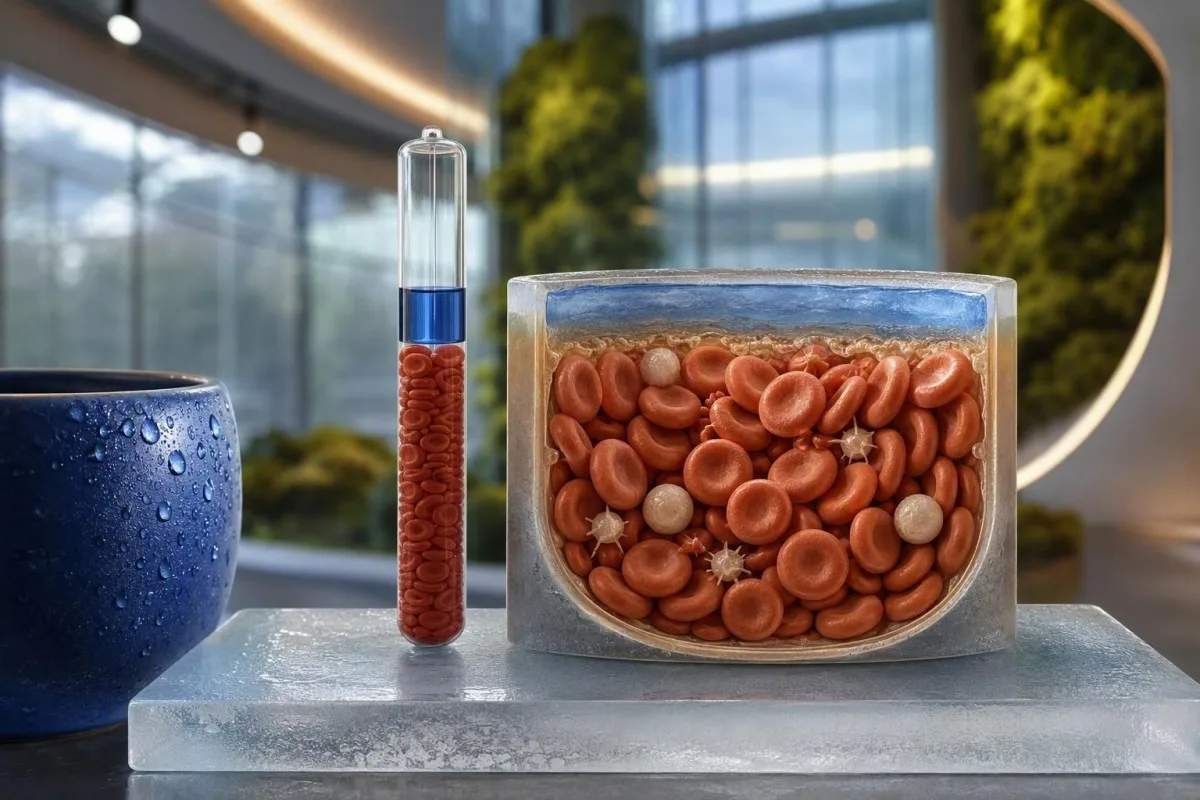
Et høyt antall røde blodceller kan reflektere konsentrert blod heller enn et overskudd av røde blodceller. Den første oppgaven er å skille midlertidig væsketap fra en vedvarende forhøyelse som krever en grundig utredning.


- Relativ erytrocytose betyr at plasmavæsken har sunket, noe som gjør at RBC-antall, hemoglobin og hematokrit ser høye ut uten at det har blitt dannet nye celler.
- WHO threshold verdier som støtter mulig polycythemia vera er hemoglobin over 16,5 g/dL hos menn eller 16,0 g/dL hos kvinner, eller hematokrit over henholdsvis 49 % og 48 %.
- Ny test etter hydrering er vanligvis fornuftig ved en mild, isolert forhøyelse etter oppkast, diaré, varmeeksponering, faste eller anstrengende trening – hvis du ellers er frisk.
- Diuretics kan øke hematokrit gjennom væsketap; ikke avbryt foreskrevet medisinering uten å snakke med legen som foreskrev den.
- Pattern matters: høy albumin, totalprotein, natrium, BUN/kreatinin-ratio og urinens egenvekt støtter dehydrering mer enn ekte overproduksjon av røde blodceller.
- Repeat timing er vanligvis 1–2 uker etter restitusjon, normalt væskeinntak og 24–48 timer uten uvanlig hard trening, med mindre akutte symptomer er til stede.
- Persistent elevation etter god hydrering berettiger vurdering av røykeeksponering, søvnrelaterte pusteforstyrrelser, høyde, testosteron, lunge- eller nyresykdom, erytropoietin og ofte JAK2-testing.
- Akutte symptomer inkluderer brystsmerter, ny tung pust, ensidig svakhet, synstap, forvirring eller et smertefullt, hovent bein; dette krever umiddelbar oppfølging, ikke en ny hjemmetest.
Hva et høyt RBC-resultat vanligvis betyr
Et høyt RBC-tall kan være falskt forhøyet grunnet dehydrering når væsketap konsentrerer den cellulære delen av blodet; det betyr ikke automatisk at benmargen din produserer for mange røde blodceller. Nøkkelen er om hemoglobin og hematokrit normaliserer seg etter restitusjon og vanlig inntak av væske, fremfor å forbli forhøyet på en korrekt utført oppfølgende CBC.
RBC-tallet angir antall røde blodceller per liter, mens hematokrit angir brøkdelen av helblod som består av disse cellene. Referanseområder for voksne varierer fra laboratorium til laboratorium, men mange bruker omtrent 4,5–5,9 × 10¹²/L for menn og 4,1–5,1 × 10¹²/L for kvinner. En verdi rett over referanseområdet er ofte mindre informativ enn hemoglobin- og hematokritverdiene ved siden av; vår guide til hva en CBC inneholder explains why.
Dehydrering senker den flytende komponenten i blodet i løpet av timer, slik at den samme massen av røde blodceller opptar et mindre målt volum. På klinikken ser jeg ofte dette etter omgangssyke: RBC 5,8 × 10¹²/L, hemoglobin 17,1 g/dL, hematokrit 51 %, og deretter normale verdier etter restitusjon. Dette er relativ erytrocytose, ikke en laboratoriefeil og ikke nødvendigvis en sykdom.
Kantesti er en AI-blodprøveanalysator som leser RBC, hemoglobin, hematokrit, røde blodcelleindekser, nyremarkører og tidligere resultater under ett. Fra og med 5. september 2026 behandler vår kliniske vurderingsrutine et enkelt grenseverdi-flagg på en CBC som en oppfordring til å sjekke prøveforberedelse og trender – ikke som en diagnose.
RBC-tall er ikke det samme som total masse av røde blodceller
En CBC kan ikke måle den totale massen av røde blodceller direkte. Den måler konsentrasjon, som stiger når plasmavolumet trekker seg sammen; spesialiserte isotopundersøkelser av rødcellemasse er i dag sjelden nødvendig, men de illustrerer hvorfor en konsentrert CBC kan se alarmerende ut uten at det foreligger en faktisk økning i antall celler.
Relativ erytrocytose kontra ekte overskudd av røde blodceller
Relativ erytrocytose er et høyt RBC-, hemoglobin- eller hematokritnivå forårsaket av redusert plasmavolum, mens absolutt erytrocytose reflekterer en genuint økt masse av røde blodceller. Hydrering kan korrigere det første mønsteret, men vil ikke korrigere det andre.
Ekte erytrocytose kan være primær, som ved polycythemia vera, eller sekundær til økt erytropoietin grunnet lavt oksygennivå, medisiner eller i sjeldne tilfeller en nyreprosess. WHOs kriterier fra 2016 bruker hemoglobin over 16,5 g/dL for menn eller 16,0 g/dL for kvinner som grenseverdier som bør reise mistanke om polycythemia vera, særlig når det er vedvarende (Arber et al., 2016). En enkeltverdi er ikke tilstrekkelig for å stille diagnosen.
Det praktiske skillet ligger i resten av panelet. Høy RBC ved dehydrering mønstre inkluderer ofte høy albumin, totalprotein, urea/BUN, natrium og konsentrert urin; absolutt erytrocytose kan etterlate disse markørene uendret. Se vår fokuserte artikkel om lett forhøyet hemoglobin hvis det er hemoglobin, fremfor kun RBC, som er resultatet med flagg.
Et normalt RBC-tall utelukker ikke erytrocytose hvis hemoglobin eller hematokrit er høy, og et forhøyet RBC-tall alene kan forekomme med små røde blodceller ved jernmangel eller thalassemi-anlegg. Dette er grunnen til at MCV og ferritin betyr noe; et høyt RBC-tall med MCV under 80 fL er en annen klinisk samtale.
Hvordan dehydrering endrer CBC og nyremarkører
Dehydrering øker vanligvis RBC-tall, hemoglobin og hematokrit samtidig, og det øker ofte albumin, totalprotein, urea/BUN, kreatinin og urinkonsentrasjon. Et uoverensstemmende resultat – for eksempel høyt RBC-tall med lav hemoglobin – passer ikke godt med enkel hemokonsentrasjon.
Et BUN/creatinin-forhold på over cirka 20:1 i amerikanske enheter kan støtte redusert nyreperfusjon på grunn av væsketap, selv om gastrointestinal blødning, proteininntak, kortikosteroider og lav muskelmasse kan påvirke forholdet. Kreatinin kan stige moderat etter varmeeksponering eller en lang løpetur fordi både filtrasjonen og muskelmetabolismen endres. Vår guide for dehydrering og eGFR dekker når en lav eGFR bør gjentas.
En urins egenvekt på 1,025 eller høyere er forenlig med konsentrert urin, men er ikke et direkte mål på hydrering. Glukose, protein og enkelte kontrastmidler ved bildediagnostikk kan også øke den, så en kliniker bør tolke den sammen med symptomer og elektrolytter. En referanse for urinens egenvekt er nyttig når CBC og urinanalyse ble tatt samme dag.
Jeg fraråder å forsøke å normalisere en test ved å drikke flere liter rett før prøvetaking. For raskt og stort væskeinntak kan senke natriumet og gi en ny, lite representativ prøve; normale måltider og vanlig, tørstestyrt væskeinntak i 24–48 timer er generelt tryggere for personer uten væskerestriksjon.
Oppkast, diaré, varme, faste og vanndrivende medisiner
Oppkast, diaré, kraftig svetting, langvarig faste og vanndrivende legemidler kan alle forårsake en midlertidig høy RBC-konsentrasjon ved å redusere plasmavannet. Graden av forhøyelsen avhenger mer av væsketap og væskeerstatning enn av hvor dårlig en person føler seg.
Akutt oppkast gir ofte lavt klorid og noen ganger høyt bikarbonat fordi magesyre og væske går tapt. Slyngediuretika som furosemid og tiazider kan gi en lignende profil med redusert plasmavolum, særlig hos eldre. Et lavt kloridresultat bør vurderes i samme kliniske sammenheng; se kloridindikatorer ved oppkast og bruk av vanndrivende for mønsteret.
Ikke slutt med et forskrevet vanndrivende legemiddel for å forbedre en CBC uten medisinsk råd. Personer som tar slike legemidler mot hjertesvikt, cirrhose, behandlingsresistent hypertensjon eller nyresykdom, kan trenge en individuelt tilpasset væskeplan, fordi ukritisk væskeinntak kan forverre hevelse eller tungpustethet. Det riktige spørsmålet er om dose, symptomer, vekt, blodtrykk og nyreverdier passer sammen.
Tørste er nyttig, men upålitelig hos voksne over 65 år og hos personer med diabetes, nyresykdom eller visse nevrologiske tilstander. Mørkegul urin, tørr munn, svimmelhet når man reiser seg, redusert vannlating og et vekttap på 1 kg over 24 timer kan støtte mistanke om væsketap, men alvorlige symptomer bør vurderes av helsepersonell fremfor egenbehandling.
Trening kan midlertidig konsentrere blodet ditt
Hard utholdenhetstrening kan øke hematokrit og hemoglobin i flere timer på grunn av væsketap gjennom svette og forskyvninger i plasmavolumet, selv om gjentatt trening kan senke hematokritens utgangsnivå gjennom økt plasmavolum. Tidspunktet er derfor uvanlig viktig for idrettsutøvere.
En løpetur på 90 minutter i varmt vær kan føre til et væsketap på 1–3 liter, avhengig av kroppsstørrelse, klima og svettehastighet. Prøvetaking umiddelbart etter et løp kan også vise høyere kreatinin, CK, albumin og totalprotein; denne kombinasjonen er mer nyttig enn et RBC-resultat alene. Vår veiledning om tidspunkt for blodprøver etter maraton omtaler restitusjonsmarkørene som vanligvis endrer seg.
Ved rutinemessig oppfølging anbefaler jeg vanligvis å unngå uvanlig intens trening 24–48 timer før prøvetakingen, møte uthvilt og drikke normalt dagen før. Dette er ikke en universell laboratorieregel, og oppfølging av toppidrettsutøvere kan med hensikt innebære testing under belastning – men konsekvens er viktigere enn perfeksjon. Dr. Thomas Klein har sett mange unødvendige henvisninger forsvinne når en utøver testes på nytt etter en normal restitusjonsuke.
Kantesti’s BUN- og kreatininforskningsveiledning er særlig nyttig når en utholdenhetsutøver både har høy hematokrit og et grensetilfelle på en nyremarkør. Fallende kroppsvekt, høy urintetthet og kort restitusjonsintervall gjør hemokonsentrasjon sannsynlig; muskelsmerter, colafarget urin eller svært høy CK krever en annen grad av forsiktighet.
En trygg plan for å gjenta en mildt forhøyet CBC
Et lett forhøyet RBC-tall kan vanligvis kontrolleres på nytt etter 1–2 ukers restitusjon, normalt væskeinntak og stabil medisinbruk dersom du ikke har alarmsymptomer. Ta prøven på nytt tidligere bare hvis legen ber deg om det, eller hvis det første resultatet var betydelig forhøyet.
Før den nye prøven bør du notere om du hadde diaré, oppkast, feber, alkoholinntak, badstue, langvarig reise, opphold i høyden, faste eller intens trening i løpet av de foregående 72 timene. Fortsett med vanlig kosthold og vanlig medisinplan med mindre legen ber deg gjøre noe annet. Denne veiledningen om forberedelse til blodprøver ved utgangsnivå inneholder en praktisk sjekkliste for å unngå utilsiktede variasjoner.
Bruk samme laboratorium når det er mulig, fordi analysemetoder og referanseintervaller varierer. Be om en CBC med hemoglobin, hematokrit, MCV, RDW, antall hvite blodceller og blodplater; vedvarende forhøyelse ledsaget av høyt antall blodplater eller hvite blodceller gir større mistanke om en benmargstilstand enn isolert erytrocytose. En nylig gjennomgått sykdom kan påvirke disse cellelinjene i motsatt retning, så hele panelet er viktig.
Kantesti er en Tjeneste for tolkning av laboratorieprøver med AI som sammenligner en ny CBC med tidligere verdier og markerer endringer som overstiger normal variasjon. Vår trendtilnærming erstatter ikke en lege, men kan bevare den avgjørende konteksten – trening, sykdom, medisiner og tidligere hematokrit – som ofte går tapt når ett enkelt resultat vurderes alene.
Når et gjentatt høyt resultat krever utredning for erytrocytose
Vedvarende høyt hemoglobin over 16.5 g/dL hos menn eller 16.0 g/dL hos kvinner, eller hematokrit over 49% eller 48%, bør føre til at en lege utreder erytrocytose etter at dehydrering er utelukket. De vanligste første undersøkelsene er ny CBC, erytropoietinnivå, vurdering av oksygenmetning og testing for JAK2-mutasjon når det er aktuelt.
Polycythaemia vera er en myeloproliferativ neoplasi der JAK2-mutasjoner finnes hos omtrent 98% av de berørte pasientene. Lavt serum-erytropoietin støtter primær overproduksjon i benmargen, men ingen enkeltstående blodprøve bør tolkes isolert. Retningslinjen fra British Society for Haematology anbefaler en strukturert tilnærming som skiller primær fra sekundær erytrocytose (McMullin et al., 2019).
Symptomene kan være vage: hodepine, tåkesyn, kløe etter en varm dusj, uvanlig ansiktsrødme, tretthet eller en tidligere blodpropp kan være viktigere enn den nøyaktige RBC-verdien. For en mer utførlig forklaring av hematokrit, erytropoietin og JAK2 kan du lese vår polycytemi symptomveiledning. Mange med lett laboratorieforhøyelse har ingen av disse trekkene.
Jeg er nøye med å ikke antyde at alle vedvarende høye verdier skyldes kreft. Røykerelatert eksponering for karbonmonoksid, ubehandlet søvnapné, lungesykdom, testosteron, høyde over havet og enkelte nyresykdommer er vanligere forklaringer i mange klinikker. Likevel er det nettopp vedvarende forhøyelse som gjør at en ny CBC ikke bør bli en endeløs syklus med tilfeldig testing.
Lavt oksygennivå, røyking og søvnapné som årsaker til høy RBC
Kronisk lavt oksygennivå kan stimulere erytropoietin og føre til et reelt forhøyet antall røde blodceller; søvnapné, røykerelatert eksponering for karbonmonoksid og lungesykdom er hyppige årsaker. En normal oksygenmetning på dagtid utelukker ikke fullstendig fall i oksygennivået om natten.
Obstruktiv søvnapné kan føre til moderat erytrocytose, særlig når det forekommer betydelige oksygenfall om natten. Høylytt snorking, observerte pustepauser, morgenhodepine, behandlingsresistent hypertensjon og søvnighet på dagtid bør føre til en søvnrettet sykehistorie, snarere enn en antakelse om at dehydrering forklarer alt. En pustebesværs blodprøveguide skisserer den bredere kardiopulmonale konteksten.
Sigarettrøyking øker karboksyhemoglobinnivået, noe som reduserer oksygentilførselen selv om pulsoksymeteret kan se betryggende ut. Vaping gir ikke den samme eksponeringen for karbonmonoksid som forbrenningstobakk, men innebærer andre helserisikoer og bør likevel omtales ærlig. Testing for karbonmonoksid eller ko-oksimetri kan noen ganger være mer nyttig enn en rutinemessig oksygenmetning.
Kantesti AI tolker et høyt RBC-resultat sammen med hemoglobin, hematokrit, nyremarkører og oppgitte opplysninger om søvn eller røyking, i stedet for å presentere en generell liste over årsaker. Denne kontekstuelle vurderingen er spesielt verdifull når hematokriten er 50% etter hydrering og pasienten oppgir at søvnen ikke føles forfriskende.
Høyde, testosteron og medisiner som øker RBC
Å bo eller trene i høyden og bruke testosteron kan øke produksjonen av røde blodceller, slik at forhøyelsen kan være reell og ikke skyldes dehydrering. Tidspunktet for eksponeringen gir ofte mer informasjon enn det opprinnelige tallet.
I høyden stimulerer lavere oksygentrykk erytropoietin og øker hemoglobinet over dager til uker; forventet område avhenger av høyde over havet, varighet, etnisk bakgrunn og laboratoriets referansedata. En CBC som tas under eller kort tid etter et fjellopphold, bør tolkes i lys av denne eksponeringen. Vår veiledning om ny måling av hemoglobin i høyden forklarer hvorfor tidspunktet for retur til havnivå er viktig.
Testosteroninjeksjoner, -geler og -pellets samt enkelte anabole midler kan forårsake erytrocytose. Mange behandlingsprotokoller reduserer eller pauser behandlingen når hematokriten når 54%, selv om individuelle risikovurderinger varierer, særlig hos personer med hjerte- og karsykdom eller søvnapné. Doner aldri blod eller endre en foreskrevet dose som erstatning for å diskutere resultatet med legen som har forskrevet behandlingen.
Sjeldnere kan SGLT2-legemidler mot diabetes føre til en liten økning i hematokrit, delvis gjennom effekter på plasmavolumet og muligens gjennom erytropoietinsignalering. En legemiddelliste bør omfatte reseptfrie androgenprodukter, injeksjonsbehandlinger og nylige endringer – ikke bare legemidler som er registrert i den elektroniske journalen.
CBC-indikasjoner som endrer bekymringsnivået
Høy RBC er mer bekymringsfullt når hemoglobin og hematokrit også er høye, særlig sammen med forhøyede blodplater, hvite blodceller, lavt erytropoietin eller unormale celler i et blodutstryk. Høy RBC med lav MCV peker ofte heller mot tilstander med små blodceller.
En MCV under 80 fL med et relativt høyt antall RBC kan forekomme ved talassemitrekk, der cellene er små, men tallrike. Jernmangel kan også senke MCV, selv om den oftere senker hemoglobin over tid; ferritin og transferrinmetning tydeliggjør forskjellen. Vår MCV og MCH-sammenligning forklarer hvorfor RBC-tallet alene kan være misvisende.
Høye nivåer av hvite blodceller eller blodplater sammen med høy hematokrit stiller ikke diagnosen polycytemia vera, men senker terskelen for en hematologisk vurdering. Blodutstryk fra perifert blod, ferritin, erytropoietin, JAK2-testing og noen ganger undersøkelse av benmargen kan bli aktuelt. Vår blodkreft-testvei viser hvorfor disse testene utføres trinnvis i stedet for å bestilles ukritisk.
Dr. Thomas Kleins praktiske regel er enkel: Se etter samsvar mellom uavhengige signaler. En hematokrit på 52%, blodplater på 520 × 10⁹/L og lavt erytropoietin er et grunnleggende annerledes mønster enn hematokrit på 50% etter en hetebølge, med albumin på 5,3 g/dL og konsentrert urin.
Symptomer og risiko for blodpropp: når høy RBC er akutt
Oppsøk øyeblikkelig hjelp ved et høyt RBC-resultat sammen med brystsmerter, plutselig tungpustethet, blodig hoste, besvimelse, nyoppstått svakhet, talevansker, synstap eller et smertefullt og hovent ben. Disse symptomene kan skyldes en blodpropp eller en annen akutt tilstand og bør aldri vente til en ny CBC er tatt.
Høyere hematokrit kan øke blodets viskositet, men symptomer og samlet vaskulær risiko avgjør hvor raskt det haster, mer pålitelig enn en moderat, isolert forhøyelse. Polycytemia vera medfører en kjent tromboserisiko, særlig ved høyere alder, tidligere trombose, kardiovaskulære risikofaktorer og ukontrollerte blodverdier. Oversikten til Tefferi og Barbui fra 2021 beskriver risikotilpasset behandling i stedet for å behandle alle forhøyede verdier likt.
Hodepine alene er vanlig og uspesifikk; hodepine med nye synsforstyrrelser, svakhet eller forvirring er det ikke. På samme måte kan kløe etter en varm dusj forekomme ved polycytemia vera, men også ved tørr hud og allergi, så det er et tegn, ikke et bevis. Se gjennom advarselstegn i blodprøver ved brystsmerter hvis symptomene er en del av grunnen til at prøven ble bestilt.
Ikke ta aspirin utelukkende fordi RBC-tallet er høyt, med mindre legen anbefaler det. Aspirin medfører blødningsrisiko og kan være uegnet ved magesår, antikoagulasjonsbehandling, lave blodplater eller visse medisinske sykdommer. Akuttmedisinske tjenester er det tryggeste valget når fokale nevrologiske eller kardiopulmonale symptomer oppstår.
Hvorfor dine tidligere CBC-er kan svare på spørsmålet
Et stabilt, lett forhøyet RBC-tall over flere år har en annen betydning enn en rask økning over noen uker, og utviklingen over tid kan skille personlig utgangsnivå fra ny sykdom. Sammenlign resultatene ved hjelp av hemoglobin, hematokrit, MCV og helst det samme laboratoriet.
Biologisk variasjon og variasjon mellom analysatorer betyr at en liten endring ikke alltid er en reell fysiologisk endring. En forskjell på 0,3 g/dL i hemoglobin mellom to prøvetakinger kan skyldes væskebalanse, kroppsstilling, tidspunkt eller normal variasjon; en vedvarende økning fra 15,2 til 17,3 g/dL fortjener mer oppmerksomhet. Artikkelen vår om meningsfulle laboratorieendringer forklarer konseptet referanseendringsverdi.
Før en enkel oversikt over høyde over havet, røykestatus, testosterondose, sykdom, hard trening, menstruasjonsblødning og væsketap ved hver prøvetaking. Denne oversikten er mer klinisk nyttig enn å jakte på ett nøyaktig “ideelt” RBC-tall. Etter min erfaring er mangelen på denne konteksten grunnen til at pasienter får motstridende forklaringer ved ulike konsultasjoner.
Kantesti, en AI-plattform for tolkning av biomarkører, kan vise serielle CBC-verdier sammen med nyre- og proteinmarkører for å identifisere konsentrasjonsmønstre. Vi oppfordrer brukerne til å se på trendanalyse som forberedelse til en samtale med legen, ikke som en erstatning for undersøkelse eller målrettede tester.
Vurderinger ved graviditet, høy alder og kronisk sykdom
Graviditet senker vanligvis hemoglobin og hematokrit gjennom økt plasmavolum, så en høy verdi under graviditet bør vurderes av lege i stedet for å avfeies som vanlig dehydrering. Hos eldre voksne og personer med hjerte- eller nyresykdom må råd om væskeinntak individualiseres.
Under graviditet øker plasmavolumet med omtrent 40–50%, noe som gir fysiologisk fortynning; mange fødeavdelinger utreder hemoglobin over 16,0 g/dL fordi det kan tyde på utilstrekkelig plasmaekspansjon eller andre forhold. Kraftig oppkast tidlig i graviditeten kan fortsatt konsentrere CBC, men en vedvarende forhøyelse bør diskuteres med fødselsteamet. Se svangerskap blodprøve røde flagg for situasjoner som krever vurdering samme dag.
Eldre voksne oppfatter kanskje ikke tørste pålitelig, mens hjertesvikt og langtkommen nyresykdom kan gjøre for mye væske farlig. En rask endring i hevelse i anklene, vekt, tungpust eller urinmengde er viktigere enn å forsøke å nå et generelt vannmål. Justeringer av diuretika bør gjøres sammen med legen som behandler den underliggende tilstanden.
Barn har aldersspesifikke hemoglobinområder, og en verdi som ser høy ut i en voksenportal, kan være normal ved en bestemt alder eller høyde over havet. En barnelege bør vurdere vedvarende forhøyelse, særlig ved cyanose, medfødt hjertesykdom eller dårlig vekst.
Spørsmål du kan stille legen din etter et høyt RBC-antall
Spør om resultatet ditt representerer hemokonsentrasjon, om hemoglobin og hematokrit også er høye, og hvilke betingelser som er riktige for en ny prøve ut fra sykehistorien din. Gode spørsmål forebygger både unødig bekymring og at vedvarende erytrocytose overses.
Ta med hele rapporten, ikke bare den markerte RBC-verdien, samt tidligere CBC-prøver og en oppdatert legemiddelliste. Spør: “Var albumin, totalprotein, natrium, kreatinin, BUN/urea og urinkonsentrasjon forenlige med væsketap?” Dette veiledning for serumproteiner kan hjelpe deg med å forstå hvorfor albumin hører hjemme i denne vurderingen.
Hvis forhøyelsen vedvarer, spør om vurdering av oksygenmetning, søvnundersøkelse, erytropoietin, ferritin, JAK2-testing eller henvisning til hematolog passer med mønsteret ditt. Svaret vil være forskjellig for en 28 år gammel utholdenhetsutøver med hematokrit 50% og en 67 år gammel røyker med hematokrit 55% og tidligere blodpropp. Den konkrete sykehistorien endrer utredningen.
Kantesti sin kliniske metode er underlagt publiserte kvalitetsstandarder og innspill fra leger; leserne kan gjennomgå vår medisinske valideringsmetode før de bruker en automatisert tolkning. Dr. Thomas Kleins hovedpoeng er at væsketilførsel er en rimelig første kontroll ved et lett, isolert avvik, men vedvarende høye verdier fortjener en reell forklaring.
Den praktiske konklusjonen om dehydrering og høy RBC
Dehydrering kan gi et tilsynelatende høyt RBC-resultat ved å konsentrere blodet, men dette bør bare regnes som en foreløpig forklaring når den kliniske konteksten og tilhørende laboratoriemarkører stemmer overens. En normal ny prøve etter bedring er betryggende; en vedvarende forhøyelse bør utredes.
Ved en isolert, mild forhøyelse etter varme, mage-tarmsykdom, faste eller anstrengende trening bør du komme deg som normalt og ta en ny CBC under ensartede forhold etter omtrent 1–2 uker. Unngå å drikke ekstreme mengder vann, og ikke endre vanndrivende legemidler, testosteron eller andre foreskrevne legemidler uten råd. Hvis du er usikker på om resultatet ditt bare er marginalt, forklarer vår utenfor-området-resultatguide laboratorievarsler.
Ved gjentatt hematokrit over 49% hos menn eller 48% hos kvinner, eller hemoglobin over 16,5 g/dL eller 16,0 g/dL, bør du be om en målrettet vurdering i stedet for å gjenta prøvene i det uendelige. Eksponering for røyking, søvnapné, høyde over havet, legemiddeleffekter, erytropoietin og JAK2-status vurderes ofte i neste fase. Symptomer som tyder på blodpropp eller hjerneslag krever akutt behandling.
Kantesti er en Analyseverktøy for blodprøver drevet av KI utviklet for å organisere disse resultatene og utviklingen over tid med tanke på en informert medisinsk samtale. Våre leger som gjennomgår innholdet, og Medisinsk rådgivende styre understreker det samme prinsippet: kontekst først, gjentatt testing når det er trygt, og rask klinisk vurdering når mønsteret vedvarer.
Ofte stilte spørsmål
Kan dehydrering føre til et høyt RBC-tall?
Ja. Dehydrering kan føre til et høyt RBC-tall fordi tap av plas vann konsentrerer de røde blodcellene i et mindre blodvolum, et mønster som kalles relativ erytrocytose. Hemoglobin og hematokrit stiger vanligvis sammen med RBC-tallet, og albumin, totalprotein, BUN/urea eller urinens spesifikke vekt kan også være forhøyet. En lett isolert forhøyelse normaliseres ofte etter tilfriskning og normalt væskeinntak, men ved vedvarende hematokrit over 49% hos menn eller 48% hos kvinner er klinisk vurdering nødvendig.
Hvor mye vann bør jeg drikke før jeg gjentar en RBC-test?
De fleste voksne bør drikke sin vanlige mengde basert på tørst i 24–48 timer før en ny CBC, fremfor å bevisst drikke unormalt store mengder. Et praktisk mål er lysegul urin og normal vannlatning, ikke helt klar urin eller tvunget væskeinntak. Personer med hjertesvikt, langtkommen nyresykdom, skrumplever eller en foreskrevet væskebegrensning bør be legen sin om en individuell plan. Å drikke flere liter raskt kan senke natriumnivået og gi et ikke-representativt resultat.
Hvor lenge etter dehydrering bør jeg gjenta en CBC?
En gjentatt CBC utføres vanligvis 1–2 uker etter at oppkast, diaré, feber, heteslag eller betydelig fysisk anstrengelse har gitt seg. Ved treningsrelaterte endringer bør man unngå uvanlig hard trening i 24–48 timer før prøvetaking og opprettholde normalt væskeinntak. Tidspunktet kan være tidligere dersom hematokrittverdien er markant høy, symptomer er til stede eller nyremarkører er unormale. Bruk samme laboratorium så langt det er mulig, slik at referanseområder og analysemetoder er sammenlignbare.
Hvilket RBC-antall anses som farlig høyt?
Det finnes ikke ett enkelt RBC-antall som definerer fare, ettersom risikoen avhenger mer av hematokrit, hemoglobin, symptomer, årsak og sykehistorikk med blodpropp. En hematokrit på rundt 60 % eller høyere krever vanligvis rask klinisk vurdering samme dag, mens vedvarende verdier over 49 % hos menn eller 48 % hos kvinner begrunner en utredning for erytrocytose. Brystsmerter, plutselig åndenød, synstap, svakhet, talevansker eller et smertefullt, hovent ben er hastetilfeller uavhengig av det nøyaktige tallet. Disse symptomene krever akutt vurdering fremfor å vente med hydrering eller ny prøvetaking.
Kan vanndrivende midler føre til forhøyede røde blodceller?
Diuretika kan føre til forhøyet konsentrasjon av røde blodceller ved å redusere plasmavolumet, spesielt etter doseøkning, i varmt vær, ved lavt væskeinntak, oppkast eller diaré. De får vanligvis ikke benmargen til å produsere ekstra røde blodceller, så effekten kan reverseres når væskebalansen er korrigert. Ikke avbryt behandlingen med furosemid, hydroklortiazid eller et annet foreskrevet diuretikum på egen hånd, ettersom disse medisinene kan være nødvendige for å kontrollere hjertesvikt, blodtrykk eller ødem. Diskuter CBC sammen med vekt, blodtrykk, kreatinin, natrium, kalium og symptomer.
Betyr et høyt RBC-antall alltid polycythaemia vera?
Nei. De fleste høye RBC-resultater betyr ikke automatisk polycythemia vera; dehydrering, karbonmonoksid knyttet til røyking, søvnapné, høyde, lungesykdom og testosteron er vanlige alternativer. Polycythemia vera blir mer sannsynlig når hemoglobin forblir over 16,5 g/dL hos menn eller 16,0 g/dL hos kvinner, hematokritt forblir over 49 %, erytropoietin er lavt, og JAK2-testing er positiv. Polycythemia vera har en JAK2-mutasjon i omtrent 97 % av tilfellene. En kliniker bør tolke disse testene som et mønster, ikke stille en diagnose ut fra ett enkelt CBC-flagg.
Få AI-drevet analyse av blodprøver i dag
Bli med over 2 millioner brukere over hele verden som stoler på Kantesti for øyeblikkelig, nøyaktig analyse av laboratorietester. Last opp blodprøveresultatene dine og få omfattende tolkning av 15,000+-biomarkører på sekunder.
📚 Refererte forskningspublikasjoner
Klein, T., Mitchell, S., & Weber, H. (2026). Forklaring av BUN/kreatinin-forhold: Veiledning for nyrefunksjonstester. Kantesti KI medisinsk forskning.
Klein, T., Mitchell, S., & Weber, H. (2026). Urobilinogen i urintest: Fullstendig veiledning for urinalyse 2026. Kantesti KI medisinsk forskning.
📖 Eksterne medisinske referanser
⚕️ Medisinsk ansvarsfraskrivelse
Denne artikkelen er kun for informasjonsformål og utgjør ikke medisinsk rådgivning. Rådfør deg alltid med en kvalifisert helsepersonell for beslutninger om diagnose og behandling.
E-E-A-T tillitssignaler
Experience
Klinisk gjennomgang ledet av lege av arbeidsflyter for laboratorietolkning.
Expertise
Fagområde laboratoriemedisin med fokus på hvordan biomarkører oppfører seg i klinisk kontekst.
Authoritativeness
Skrevet av Dr. Thomas Klein med gjennomgang av Dr. Sarah Mitchell og Prof. Dr. Hans Weber.
Trustworthiness
Evidensbasert tolkning med tydelige oppfølgingsveier for å redusere uro.