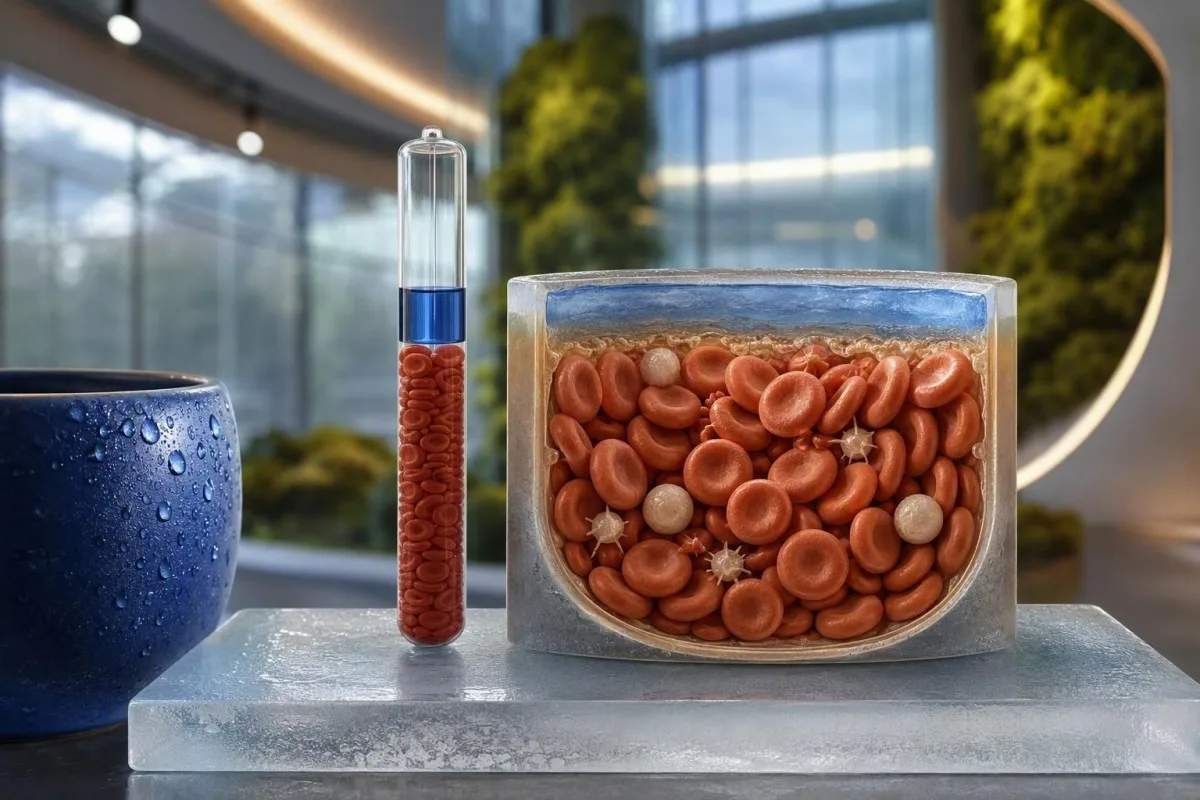
Високият брой RBC може да отразява концентрирана кръв, а не излишък от червени кръвни клетки. Първата задача е да се разграничи временната загуба на течности от трайно повишение, което изисква подходящо изследване.


- Относителна еритроцитоза означава, че плазмената вода е намаляла, което прави броя на RBC, хемоглобина и хематокрита да изглеждат високи, без да са създадени нови клетки.
- Праг на СЗО стойности, които подкрепят възможна полицитемия вера, са хемоглобин над 16.5 g/dL при мъжете или 16.0 g/dL при жените, или хематокрит съответно над 49% и 48%.
- Повторно изследване при хидратация обикновено е разумно при леко, изолирано повишение след повръщане, диария, излагане на жега, гладуване или интензивни упражнения – ако в останалото сте здрави.
- Диуретици могат да повишат хематокрита чрез загуба на течности; не спирайте предписаното лекарство без консултация с клинициста, който го е предписал.
- Важен е моделът: високи стойности на албумин, общ белтък, натрий, съотношение BUN/креатинин и относително тегло на урината подкрепят дехидратацията повече, отколкото истинското свръхпроизводство на червени кръвни клетки.
- Повторение според времето обикновено се прави 1–2 седмици след възстановяване, нормален прием на течности и 24–48 часа без необичайно тежки упражнения, освен ако не са налице спешни симптоми.
- Продължително повишение след добра хидратация изисква оценка за излагане на тютюнопушене, дихателни нарушения по време на сън, надморска височина, тестостерон, белодробно или бъбречно заболяване, еритропоетин и често JAK2 изследване.
- Спешни симптоми включват болка в гърдите, задух, едностранна слабост, загуба на зрение, объркване или болезнен оток на крака; те изискват незабавна медицинска помощ, а не повторен домашен тест.
Какво обикновено означава висок резултат на RBC
Високият брой RBC може да бъде фалшиво висок поради дехидратация, когато загубата на течности концентрира клетъчните елементи на кръвта; това не означава автоматично, че костният мозък произвежда твърде много червени кръвни клетки. Ключът е дали хемоглобинът и хематокритът се нормализират след възстановяване и нормален прием на течности, вместо да остават повишени при правилно подготвен повторен CBC.
Броят на RBC отчита броя на червените кръвни клетки на литър, докато хематокрит отчита дела на цялата кръв, зает от тези клетки. Референтните интервали за възрастни варират според лабораторията, но много от тях използват приблизително 4,5–5,9 × 10¹²/L за мъже и 4,1–5,1 × 10¹²/L за жени. Стойност малко над нормата често е по-малко информативна от придружаващите я стойности на хемоглобина и хематокрита; нашето ръководство за какво включва CBC обяснява защо.
Дехидратацията намалява течния компонент на кръвта в рамките на часове, така че същата маса червени кръвни клетки заема по-малък измерен обем. В клиничната практика често виждам това след стомашно-чревна инфекция: RBC 5,8 × 10¹²/L, хемоглобин 17,1 g/dL, хематокрит 51%, последвано от нормални стойности след възстановяване. Това е относителна еритроцитоза, а не лабораторна грешка и не непременно заболяване.
Кантести е един AI кръвен анализатор което разглежда RBC, хемоглобина, хематокрита, еритроцитните индекси, бъбречните маркери и предходните резултати заедно. Към 5 септември 2026 г. нашият работен процес за клиничен преглед третира единичен граничен показател в CBC като подкана за проверка на подготовката и тенденцията, а не като диагноза.
Броят на RBC не е същото като общата маса на червените кръвни клетки.
CBC не може директно да измери общата маса на червените кръвни клетки. Той измерва концентрацията, която се повишава при намален плазмен обем; специализирани изследвания на масата на червените кръвни клетки с изотопи днес са рядко необходими, но те илюстрират защо концентрираният CBC може да изглежда тревожен без реално увеличение на клетките.
Относителна еритроцитоза срещу истински излишък на червени кръвни клетки
Относителната еритроцитоза е висок брой RBC, хемоглобин или хематокрит, причинени от намален плазмен обем, докато абсолютната еритроцитоза отразява реално увеличена маса на червените кръвни клетки. Хидратацията може да коригира първия модел, но няма да коригира втория.
Истинската еритроцитоза може да бъде първична, както при полицитемия вера, или вторична поради повишен еритропоетин вследствие на ниско ниво на кислород, прием на лекарства или, рядко, бъбречен процес. Критериите на СЗО от 2016 г. използват хемоглобин над 16,5 g/dL при мъже или 16,0 g/dL при жени като прагове, които трябва да повдигнат въпроса за полицитемия вера, особено когато са постоянни (Arber et al., 2016). Единична стойност не е достатъчна за поставяне на диагноза.
Практическото разграничение се крие в останалата част от изследването. Висок брой RBC при дехидратация моделите често включват висок албумин, общ протеин, урея/BUN, натрий и концентрирана урина; абсолютната еритроцитоза може да остави тези маркери непроменени. Прегледайте нашата специализирана статия за леко повишен хемоглобин ако хемоглобинът, а не само RBC, е резултатът с отбелязано отклонение.
Нормалният брой RBC не изключва еритроцитоза, ако хемоглобинът или хематокритът са високи, а повишеният брой RBC сам по себе си може да се появи при малки червени кръвни клетки поради железен дефицит или таласемична черта. Ето защо MCV и феритинът са от значение; висок брой RBC при MCV под 80 fL е обект на различен клиничен разговор.
Как дехидратацията променя CBC и показателите за бъбречна функция
Дехидратацията обикновено повишава едновременно броя на RBC, хемоглобина и хематокрита, и често повишава албумина, общия протеин, уреята/BUN, креатинина и концентрацията на урината. Несъответстващ резултат – например висок брой RBC при нисък хемоглобин – не съответства добре на обикновена хемоконцентрация.
Съотношение BUN/креатинин над около 20:1 в американски единици може да подкрепя намалена бъбречна перфузия вследствие на загуба на течности, въпреки че стомашно-чревно кървене, приемът на белтъчини, кортикостероидите и ниската мускулна маса могат да променят съотношението. Креатининът може умерено да се повиши след излагане на топлина или продължително бягане, тъй като се променят както филтрацията, така и мускулният метаболизъм. Нашият ръководство за дехидратация и eGFR обхваща кога ниският eGFR трябва да се изследва повторно.
Относително тегло на урината 1.025 или по-високо е съвместимо с концентрирана урина, но не е пряк показател за хидратацията. Глюкозата, белтъкът и някои контрастни вещества за образна диагностика също могат да го повишат, затова клиницистът трябва да го интерпретира с оглед на симптомите и електролитите. Един референтен диапазон за относителното тегло на урината е полезен, когато CBC и анализът на урината са взети в един и същи ден.
Не препоръчвам да се опитвате да нормализирате резултат насила, като изпиете няколко литра непосредствено преди вземането на пробата. Бързото прекомерно приемане на течности може да понижи натрия и да създаде друга непредставителна проба; нормалното хранене и обичайният прием на течности според жаждата в продължение на 24–48 часа обикновено са по-безопасни за хора без ограничение на течностите.
Повръщане, диария, жега, гладуване и диуретици
Повръщането, диарията, обилното изпотяване, продължителното гладуване и диуретичните лекарства могат да причинят временно повишена концентрация на RBC, като намалят количеството вода в плазмата. Степента на повишението зависи повече от загубата и възстановяването на течности, отколкото от това колко зле се чувства човекът.
Острото повръщане често води до нисък хлорид и понякога до висок бикарбонат, тъй като се губят стомашна киселина и течности. Бримковите диуретици като фуроземид и тиазидите могат да предизвикат сходен профил на свиване на обема, особено при по-възрастни хора. Ниският резултат за хлорид трябва да се разглежда в същата клинична рамка; вижте насоките за хлорид при повръщане и прием на диуретици за модела.
Не спирайте предписан диуретик с цел подобряване на CBC без медицински съвет. Хората, които приемат тези лекарства поради сърдечна недостатъчност, цироза, резистентна хипертония или бъбречно заболяване, може да се нуждаят от индивидуално съобразен план за прием на течности, тъй като безразборното пиене може да влоши отоците или задуха. Правилният въпрос е дали дозата, симптомите, теглото, кръвното налягане и бъбречните показатели са взаимно съвместими.
Жаждата е полезен, но несъвършен ориентир при възрастни над 65 години и при хора с диабет, бъбречно заболяване или определени неврологични състояния. Тъмножълтата урина, сухотата в устата, замайването при изправяне, намаленото уриниране и спадът на теглото с 1 kg за 24 часа могат да подкрепят наличието на загуба на течности, но тежките симптоми налагат оценка, а не самолечение.
Упражненията могат временно да концентрират кръвта ви
Интензивните упражнения за издръжливост могат да повишат хематокрита и хемоглобина за няколко часа вследствие на загуба на пот и промени в плазмения обем, въпреки че повтарящите се тренировки могат да понижат базовия хематокрит чрез разширяване на плазмения обем. Затова времето на изследването е необичайно важно за спортистите.
90-минутно бягане в топло време може да доведе до загуба на 1–3 литра течности в зависимост от телесния размер, климата и степента на изпотяване. Изследването непосредствено след състезание може също да покаже по-високи стойности на креатинина, CK, албумина и общия белтък; тази съвкупност е по-информативна от самостоятелния резултат за RBC. Нашето ръководство за времето на кръвните изследвания при маратон разглежда маркерите за възстановяване, които обичайно се променят.
За рутинно проследяване обикновено препоръчвам да се избягват необичайно интензивни физически натоварвания 24–48 часа преди вземането на кръв, да пристигнете отпочинали и да приемате обичайното количество течности през предходния ден. Това не е универсално лабораторно правило, а проследяването при елитни спортисти може целенасочено да се извършва при натоварване — но постоянството е по-важно от съвършенството. Д-р Томас Клайн е виждал как много ненужни направления отпадат, след като спортистът бъде изследван повторно след нормална седмица за възстановяване.
Kantesti’s Ръководство за изследвания на BUN и креатинин е особено полезно, когато спортист, занимаващ се с издръжливост, има едновременно висок хематокрит и граничен показател за бъбречната функция. Намаляване на теглото, висока относителна плътност на урината и кратък интервал за възстановяване правят хемоконцентрацията вероятна; мускулна болка, урина с цвят на кола или много висока CK изискват по-висока степен на предпазливост.
Безопасен план за повторно изследване при леко повишен CBC
Леко повишеният брой на RBC обикновено може да се провери повторно след 1–2 седмици възстановяване, нормален прием на течности и стабилен прием на лекарствата, ако нямате симптоми, които изискват спешно внимание. Направете повторно изследване по-рано само ако Вашият лекар го препоръча или ако първоначалният резултат е бил значително повишен.
Преди повторното изследване запишете дали през предходните 72 часа сте имали диария, повръщане, температура, приемали сте алкохол, посещавали сте сауна, пътували сте дълго, били сте на голяма надморска височина, гладували сте или сте извършвали интензивна физическа активност. Спазвайте обичайния си хранителен режим и график за прием на лекарства, освен ако Вашият лекар не Ви инструктира друго. Това ръководство за подготовка за изходно кръвно изследване съдържа практичен списък за избягване на случайни вариации.
По възможност използвайте същата лаборатория, тъй като методите на анализаторите и референтните интервали се различават. Поискайте CBC с хемоглобин, хематокрит, MCV, RDW, брой на белите кръвни клетки и тромбоцити; персистиращо повишение, придружено от висок брой тромбоцити или бели кръвни клетки, е по-тревожно за процес в костния мозък, отколкото изолирана еритроцитоза. Скорошно заболяване може да повлияе тези клетъчни линии в противоположни посоки, затова е важен целият панел.
Кантести е един услугата за интерпретация на AI лабораторни тестове което сравнява новия CBC с по-ранни стойности и сигнализира за промени, надхвърлящи обичайната вариабилност. Нашият подход, основан на проследяване на тенденциите, не замества лекарската оценка, но може да съхрани важния контекст — физическа активност, заболяване, лекарства и предишен хематокрит — който често се губи, когато единичният резултат се разглежда самостоятелно.
Кога повторен висок резултат изисква изследване за еритроцитоза
Трайно повишен хемоглобин над 16.5 g/dL при мъжете или 16.0 g/dL при жените, или хематокрит над 49% или 48%, трябва да подтикне лекаря да изследва еритроцитозата, след като се изключи дехидратация. Обичайните първоначални изследвания са повторен CBC, ниво на еритропоетина, оценка на оксигенацията и изследване за мутация JAK2, когато е уместно.
Истинската полицитемия е миелопролиферативна неоплазма, при която мутации в JAK2 се откриват при около 98% от засегнатите пациенти. Ниското серумно ниво на еритропоетина подкрепя първичната свръхпродукция от костния мозък, но нито едно кръвно изследване не трябва да се интерпретира изолирано. Ръководството на Британското дружество по хематология препоръчва структуриран подход, който разграничава първичната от вторичната еритроцитоза (McMullin et al., 2019).
Симптомите могат да бъдат дискретни: главоболие, замъглено зрение, сърбеж след топъл душ, необичайно зачервяване на лицето, умора или прекаран в миналото тромб могат да имат по-голямо значение от точната стойност на RBC. За по-пълно обяснение на хематокрита, еритропоетина и JAK2 прочетете нашето симптомен водич за полицитемия. Много хора с леко повишени лабораторни показатели нямат нито една от тези особености.
Внимавам да не внушавам, че всяко персистиращо повишение на броя на клетките означава рак. Излагането на въглероден оксид, свързано с тютюнопушене, нелекуваната сънна апнея, белодробните заболявания, тестостеронът, голямата надморска височина и някои бъбречни заболявания са по-чести обяснения в много практики. Въпреки това именно персистирането е причината повторният CBC да не се превръща в безкраен цикъл от несистематични повторни изследвания.
Ниско ниво на кислород, тютюнопушене и сънна апнея като причини за висок RBC
Хронично ниското ниво на кислород може да стимулира еритропоетина и да причини действително повишен брой на червените кръвни клетки; сънната апнея, свързаното с тютюнопушенето излагане на въглероден оксид и белодробните заболявания са чести причини. Нормалната дневна сатурация на кислород не изключва напълно нощните спадове на кислорода.
Обструктивната сънна апнея може да причини умерена еритроцитоза, особено когато има значителни нощни спадове на сатурацията. Силното хъркане, наблюдаваните паузи в дишането, сутрешното главоболие, резистентната хипертония и дневната сънливост трябва да насочат към анамнеза, фокусирана върху съня, вместо към предположението, че дехидратацията обяснява всичко. Е n наръчник за кръвни изследвания при задух очертава по-широкия кардиопулмонален контекст.
Пушенето на цигари повишава карбоксихемоглобина, което намалява доставката на кислород, въпреки че пулсоксиметърът може да показва успокоителни стойности. Вейпингът не води до същото излагане на въглероден оксид като горимия тютюн, но крие други рискове за здравето и все пак трябва да бъде обсъждан открито. Изследването за въглероден оксид или кооксиметрията понякога са по-полезни от рутинното измерване на сатурацията с кислород.
Kantesti AI интерпретира високия резултат за RBC заедно с хемоглобина, хематокрита, бъбречните показатели и съобщените фактори, свързани със съня или тютюнопушенето, вместо да представя общ списък с причини. Този контекстуален прочит е особено ценен, когато хематокритът е 50% след хидратация, а пациентът съобщава за невъзстановяващ сън.
Надморска височина, тестостерон и лекарства, които повишават RBC
Животът или тренировките на голяма надморска височина и употребата на тестостерон могат да увеличат производството на червени кръвни клетки, така че повишението може да е реално, а не свързано с дехидратация. Времето на излагане често дава повече отговори от първоначалната стойност.
На голяма надморска височина по-ниското кислородно налягане стимулира еритропоетина и повишава хемоглобина за период от дни до седмици; очакваният диапазон зависи от надморската височина, продължителността, етническия произход и референтните лабораторни данни. CBC, взета по време на или малко след престой в планината, трябва да се интерпретира с оглед на това излагане. Нашето ръководство за повторно изследване на хемоглобина след престой на голяма надморска височина обяснява защо времето от завръщането до морското равнище има значение.
Инжекциите, геловете и пелетите с тестостерон, както и някои анаболни средства, могат да причинят еритроцитоза. Много протоколи за предписване препоръчват намаляване или временно преустановяване на терапията, когато хематокритът достигне 54%, въпреки че индивидуалните решения относно риска се различават, особено при хора със сърдечносъдово заболяване или сънна апнея. Никога не дарявайте кръв и не променяйте предписаната доза като заместител на обсъждането на резултата с предписалия лекар.
По-рядко лекарствата за диабет от групата на SGLT2 могат да причинят леко повишение на хематокрита, отчасти чрез въздействие върху плазмения обем и вероятно чрез сигнализирането на еритропоетина. Списъкът с лекарства трябва да включва андрогенни продукти без рецепта, инжекционни лечения и скорошни промени, а не само лекарствата, отпечатани в електронното медицинско досие.
Указания в CBC, които променят нивото на загриженост
Високият RBC е по-притеснителен, когато хемоглобинът и хематокритът също са повишени, особено при увеличени тромбоцити, левкоцити, нисък еритропоетин или атипични клетки в натривка. Висок RBC с нисък MCV по-често насочва към нарушения с микроцитоза.
MCV под 80 fL при относително висок брой еритроцити може да се наблюдава при носителство на таласемия, при което клетките са малки, но многобройни. Железният дефицит също може да понижи MCV, макар че с течение на времето по-често понижава хемоглобина; феритинът и сатурацията на трансферина изясняват разликата. Нашето Сравнение MCV и MCH обяснява защо броят на RBC сам по себе си може да заблуди.
Повишените левкоцити или тромбоцити наред с високия хематокрит не поставят диагноза полицитемия вера, но понижават прага за консултация с хематолог. Може да последват периферна натривка, изследване на феритин, еритропоетин, изследване за JAK2 и понякога оценка на костния мозък. Нашето пътечка за изследване на кръвни ракови заболявания показва защо тези изследвания се назначават поетапно, а не безразборно.
Практическото правило на д-р Томас Клайн е просто: търсете съответствие между независими показатели. Хематокрит от 52%, тромбоцити 520 × 10⁹/L и нисък еритропоетин представляват коренно различен модел от хематокрит 50% след гореща вълна, албумин 5,3 g/dL и концентрирана урина.
Симптоми и риск от съсиреци: кога високият RBC е спешен случай
Потърсете спешна медицинска помощ при висок резултат за RBC, придружен от болка в гърдите, внезапен задух, кашлица с кръв, припадък, новопоявила се слабост, затруднен говор, загуба на зрение или болезнен подут крак. Тези симптоми могат да са признак на тромб или друго остро състояние и никога не трябва да се изчаква повторна CBC.
По-високият хематокрит може да увеличи вискозитета на кръвта, но симптомите и общият съдов риск определят спешността по-надеждно от умерено изолирано повишение. Полицитемия вера носи признат риск от тромбоза, особено при по-напреднала възраст, предходна тромбоза, сърдечносъдови рискови фактори и неконтролирани стойности. Прегледът на Tefferi и Barbui от 2021 г. описва лечение, съобразено с риска, вместо еднакъв подход към всяка повишена стойност.
Самото главоболие е често срещано и неспецифично; главоболие с новопоявили се зрителни симптоми, слабост или обърканост не е. По същия начин сърбежът след топъл душ може да се появи при полицитемия вера, но и при суха кожа и алергия, затова е ориентир, а не доказателство. Прегледайте предупредителни признаци при изследване на кръвта при болка в гърдите ако симптомите са част от причината, поради която е назначено изследването.
Не приемайте аспирин само защото броят на RBC е висок, освен ако Вашият лекар не Ви го препоръча. Аспиринът крие риск от кървене и може да е неподходящ при язви, прием на антикоагуланти, нисък брой тромбоцити или определени заболявания в анамнезата. При поява на огнищни неврологични или кардиопулмонални симптоми по-безопасният избор е да потърсите спешна медицинска помощ.
Защо предишните ви CBC могат да отговорят на въпроса
Стабилно леко повишеният брой на RBC в продължение на години има различно значение от бързото му покачване за няколко седмици, а проследяването на тенденциите може да разграничи индивидуалната изходна стойност от ново заболяване. Сравнявайте резултатите, като използвате хемоглобина, хематокрита, MCV и, когато е възможно, една и съща лаборатория.
Биологичните вариации и вариациите в анализатора означават, че малката промяна невинаги е реална физиологична промяна. Разлика от 0,3 g/dL в хемоглобина между две изследвания може да се дължи на хидратацията, позата, часа на изследването или обичайни вариации; устойчивото покачване от 15,2 до 17,3 g/dL заслужава повече внимание. Нашата статия за съществени лабораторни промени обяснява концепцията за референтната стойност на промяната.
Водете кратък запис на надморската височина, тютюнопушенето, дозата тестостерон, заболяването, интензивните физически упражнения, менструалното кървене и загубата на течности при всяко изследване. Този запис е по-полезен от клинична гледна точка, отколкото да се търси една точно определена “идеална” стойност на RBC. По моя опит липсата на този контекст е причината пациентите да получават противоречиви обяснения при различни прегледи.
Kantesti, едно Платформа за интерпретация на биомаркери с AI, може да показва последователни стойности на CBC наред с бъбречни и белтъчни маркери, за да идентифицира модели на хемоконцентрация. Насърчаваме потребителите да приемат анализа на тенденциите като подготовка за разговор с лекар, а не като заместител на преглед или целенасочени изследвания.
Съображения относно бременност, напреднала възраст и хронични заболявания
Бременността обикновено понижава хемоглобина и хематокрита поради увеличаването на плазмения обем, затова високата стойност по време на бременност трябва да бъде прегледана от лекар, а не небрежно да се приема за резултат от дехидратация. При по-възрастни хора и хора със сърдечно или бъбречно заболяване препоръките за прием на течности трябва да бъдат индивидуализирани.
По време на бременност плазменият обем се увеличава приблизително с 40–50%, което води до физиологично разреждане; много акушерски звена изследват хемоглобин над 16,0 g/dL, тъй като това може да е признак за недостатъчно разширяване на плазмения обем или за други проблеми. Силното повръщане в началото на бременността също може да концентрира показателите на CBC, но трайното повишение трябва да се обсъди с акушерския екип. Вижте алармени признаци при кръвни изследвания по време на бременност за ситуации, изискващи оценка в същия ден.
По-възрастните хора може да не усещат надеждно жажда, докато сърдечната недостатъчност и напредналото бъбречно заболяване могат да направят излишния прием на течности опасен. Бързата промяна в отока на глезените, теглото, задуха или количеството на урината е по-важна от опитите да се достигне обща цел за прием на вода. Промените в дозата на диуретиците трябва да се извършват съвместно с лекаря, който лекува основното заболяване.
Децата имат специфични за възрастта референтни диапазони за хемоглобина, а стойност, която изглежда висока в портал за възрастни, може да е нормална за определена възраст или надморска височина. Педиатър трябва да тълкува трайното повишение, особено при цианоза, вродено сърдечно заболяване или изоставане в растежа.
Въпроси, които да зададете на вашия клиницист след установяване на висок брой RBC
Попитайте дали резултатът Ви отразява хемоконцентрация, дали хемоглобинът и хематокритът също са повишени и при какви условия е подходящо повторното изследване с оглед на Вашата здравна история. Добре подготвените въпроси предотвратяват както преждевременната тревога, така и пропускането на персистираща еритроцитоза.
Носете пълния резултат, а не само маркираната стойност на RBC, както и предишните резултати от CBC и актуален списък на лекарствата. Попитайте: “Съответстваха ли албуминът, общият белтък, натрият, креатининът, BUN/уреята и концентрацията на урината на загуба на течности?” Това водещо ръководство за серумни белтъци може да Ви помогне да разберете защо албуминът е част от това обсъждане.
Ако повишението продължава, попитайте дали оценка на кислородната сатурация, изследване на съня, еритропоетин, феритин, изследване за JAK2 или консултация с хематолог са подходящи за Вашия случай. Отговорът ще е различен при 28-годишен атлет по издръжливост с хематокрит 50% и при 67-годишен пушач с хематокрит 55% и предишен тромб. Конкретната анамнеза променя диагностичния подход.
Клиничната методология на Kantesti се контролира чрез публикувани стандарти за качество и участие на лекари; читателите могат да прегледат нашия подход за медицинска валидация преди да използват каквото и да е автоматизирано тълкуване. Основният извод на д-р Томас Клайн е, че хидратацията е разумна първа проверка при леко изолирано отклонение, но трайно високите стойности заслужават реално обяснение.
Практическото заключение относно дехидратацията и високия RBC
Дехидратацията може да причини привидно висок резултат за RBC поради концентриране на кръвта, но това трябва да се разглежда само като работно обяснение, когато клиничният контекст и съпътстващите лабораторни показатели го потвърждават. Нормален повторен резултат след възстановяване е успокояващ; персистиращото повишение трябва да бъде изследвано.
При изолирано, леко повишение след излагане на топлина, стомашно-чревно заболяване, гладуване или интензивно физическо натоварване се възстановете нормално и повторете CBC при постоянни условия след приблизително 1–2 седмици. Избягвайте прекомерния прием на вода и не променяйте диуретиците, тестостерона или други предписани лекарства без медицински съвет. Ако не сте сигурни дали резултатът ви е само гранично повишен, нашето извънреферентен резултат обяснява лабораторните флагове.
При многократно установен хематокрит над 49% при мъжете или 48% при жените, или хемоглобин над 16,5 g/dL или 16,0 g/dL, поискайте целенасочена оценка, вместо да повтаряте изследването безкрайно. Излагането на тютюнопушене, сънната апнея, надморската височина, лекарствените ефекти, еритропоетинът и статусът на JAK2 обичайно се разглеждат на следващия етап. Симптомите, предполагащи тромбоза или инсулт, изискват спешна медицинска помощ.
Кантести е един Инструмент за анализ на кръвни изследвания с AI създадено, за да организира тези резултати и тенденциите им за информирана медицинска дискусия. Нашите лекари-рецензенти и Медицински консултативен съвет подчертават същия принцип: първо контекстът, повторно изследване, когато е безопасно, и своевременен клиничен преглед, когато моделът се запазва.
Често задавани въпроси
Може ли дехидратацията да причини високо ниво на RBC?
Да. Дехидратацията може да причини висок брой RBC, тъй като загубата на плазмена вода концентрира червените кръвни клетки в по-малък кръвен обем — модел, наречен относителна еритроцитоза. Хемоглобинът и хематокритът обикновено се повишават заедно с броя на RBC, а албуминът, общият белтък, BUN/уреята или относителната плътност на урината също може да са повишени. Лекото изолирано повишение често се нормализира след възстановяване и обичайна хидратация, но персистиращ хематокрит над 49% при мъжете или 48% при жените изисква клинична оценка.
Колко вода трябва да пия преди повторното изследване на RBC?
Повечето възрастни трябва да пият обичайното си количество течности според жаждата в продължение на 24–48 часа преди повторен CBC, вместо умишлено да приемат прекомерни обеми. Практическа цел е бледожълта урина и нормално уриниране, а не напълно бистра урина или принудителен прием на вода. Хората със сърдечна недостатъчност, напреднало бъбречно заболяване, цироза или предписан ограничителен режим на прием на течности трябва да се консултират с лекуващия си лекар за индивидуален план. Бързият прием на няколко литра течности може да понижи нивата на натрий и да доведе до непредставителен резултат.
Колко време след дехидратация трябва да повторя CBC?
Повторен CBC обикновено се прави 1–2 седмици след отзвучаване на повръщане, диария, температура, излагане на горещина или интензивно физическо натоварване. При промени, свързани с физически упражнения, избягвайте необичайно тежки тренировки в продължение на 24–48 часа преди вземането на пробата и поддържайте нормален прием на течности. Времевият интервал може да бъде по-кратък, ако хематокритът е значително повишен, при наличие на симптоми или ако показателите за бъбречна функция са извън нормата. По възможност използвайте същата лаборатория, за да бъдат референтните стойности и методите на анализатора съпоставими.
Какъв брой RBC се счита за опасно висок?
Няма единен брой RBC, който да определя опасност, тъй като рискът зависи повече от хематокрита, хемоглобина, симптомите, причината и анамнезата за съсиреци. Хематокрит около 60% или по-висок обикновено изисква незабавна клинична оценка в същия ден, докато постоянни стойности над 49% при мъжете или 48% при жените оправдават изследване за еритроцитоза. Болката в гърдите, внезапният задух, загубата на зрение, слабостта, затрудненият говор или болезненият оточен крак са спешни състояния, независимо от точната цифра. Тези симптоми изискват спешна оценка, вместо изчакване за хидратация или повторно тестване.
Могат ли диуретиците да причинят повишен брой червени кръвни клетки?
Диуретиците могат да причинят повишена концентрация на червени кръвни клетки чрез намаляване на обема на плазмата, особено след увеличаване на дозата, горещо време, недостатъчен прием на течности, повръщане или диария. Обикновено те не карат костния мозък да произвежда повече червени кръвни клетки, така че ефектът може да се обърне при коригиране на водно-електролитния баланс. Не спирайте фуроземид, хидрохлоротиазид или друг предписан диуретик по собствено усмотрение, тъй като тези лекарства могат да контролират сърдечна недостатъчност, кръвно налягане или отоци. Обсъдете CBC заедно с теглото, кръвното налягане, креатинина, натрия, калия и симптомите.
Означава ли винаги високият брой RBC полицитемия вера?
Не. Повечето високи резултати на RBC не означават автоматично полицитемия вера; дехидратация, въглероден оксид вследствие на тютюнопушене, сънна апнея, надморска височина, белодробно заболяване и тестостерон са често срещани алтернативни причини. Полицитемия вера става по-вероятна, когато хемоглобинът остава над 16,5 g/dL при мъжете или 16,0 g/dL при жените, хематокритът остава над 49% или 48%, еритропоетинът е нисък, а JAK2 изследването е положително. Полицитемия вера има JAK2 мутация в около 95% от случаите. Клиницистът трябва да интерпретира тези изследвания като съвкупност от показатели, а не да поставя диагноза въз основа на един сигнал от CBC.
Вземете анализ на кръвен тест с ИИ още днес
Присъединете се към над 2M+ потребители по целия свят, които се доверяват на Kantesti за моментален и точен анализ на лабораторни тестове. Качете резултатите от вашия кръвен тест и получете цялостно тълкуване на биомаркерите 15,000+ за секунди.
📚 Публикации от изследвания с препратки
Klein, T., Mitchell, S., & Weber, H. (2026). Обяснение на съотношението BUN/креатинин: Ръководство за изследване на бъбречната функция. Kantesti AI Medical Research.
Klein, T., Mitchell, S., & Weber, H. (2026). Уробилиноген в изследване на урина: Ръководство за пълна уринна проба 2026. Kantesti AI Medical Research.
📖 Външни медицински източници
⚕️ Медицинска декларация
Тази статия е само с образователна цел и не представлява медицински съвет. Винаги се консултирайте с квалифициран медицински специалист за решения относно диагностика и лечение.
Сигнали за доверие E-E-A-T
Опит
Медицински преглед, воден от лекар, на работните процеси за интерпретация на лабораторни резултати.
Експертиза
Фокус в лабораторната медицина върху това как се държат биомаркерите в клиничен контекст.
Авторитетност
Написано от д-р Томас Клайн, с преглед от д-р Сара Мичъл и проф. д-р Ханс Вебер.
Надеждност
Интерпретация, основана на доказателства, с ясни последващи стъпки за намаляване на тревогата.