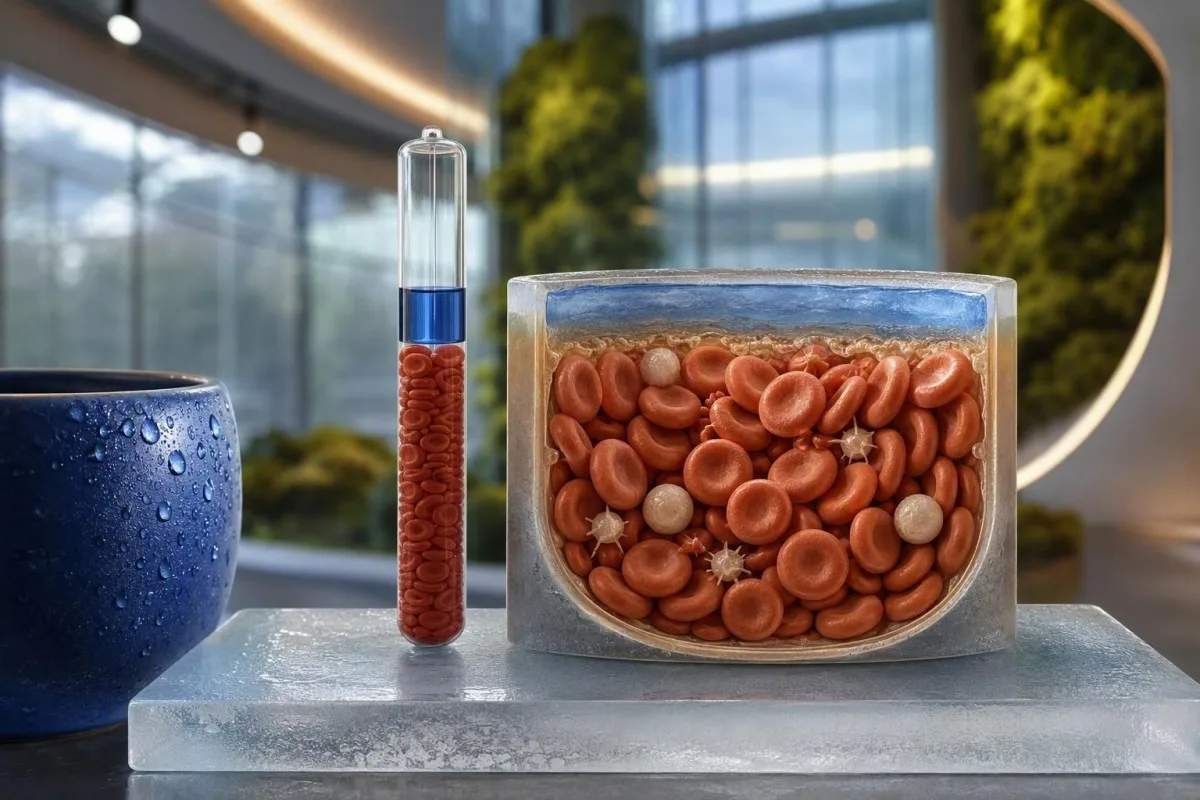
In heech oantal reade bloedsellen kin wize op konsintrearre bloed ynstee fan ekstra reade sellen. De earste taak is it skieden fan tydlik floeistofferlies fan in oanhâldende ferheging dy't in goede ûndersyksmetoade nedich is.


- Relative erythrocytose betsjut dat plasmaswiet ôfnommen is, wêrtroch't de RBC-telling, hemoglobine en hematokrit heech lykje sûnder dat der nije sellen oanmakke binne.
- WHO-grins wearden dy't mooglike polycythemia vera stypje binne hemoglobine boppe 16.5 g/dL by manlju of 16.0 g/dL by froulju, of hematokrit boppe 49% en 48%, respektivelik.
- Hydrataasje-werhellingstest is meastal ridlik foar in lichte, isolearre ferheging nei braken, diarree, waarmte-eksposysje, fêstjen of swiere ynspanning—as jo fierders sûn binne.
- Diuretika kin de hematokrit ferheegje troch floeistofferlies; stopje net mei foarskreaune medisinen sûnder oerlis mei de klinikus dy't it foarskreaun hat.
- patroan is wichtich: hege albumine, totaal proteïne, natrium, BUN/kreatinine-ratio en urine-soarchlikheid stypje útdrûging mear as wiere oerproduksje fan reade sellen.
- Werhelje timing is ornaris 1–2 wiken nei herstel, normale floeistofyntak en 24–48 oeren sûnder ûngewoan swiere ynspanning, útsein as der driuwende symptomen binne.
- oanhâldende ferheging nei goede hydrataasje rjochtfeardiget beoardieling foar bleatstelling oan smoken, sliepproblemen, hichte, testosteron, long- of niersykte, erythropoëtine en faak JAK2-testen.
- Dringende symptomen omfetsje boarstpine, nije koartswittichheid, iensidige swakte, fisueel ferlies, betizing, of in pynlike swolle skonk; dizze hawwe direkte soarch nedich, net in thús-wer-test.
Wat in hege RBC-wearde meastal betsjut
In hege RBC-telling kin in falske hege wearde wêze troch útdrûging as floeistofferlies it sellulêre diel fan it bloed konsintrearret; it betsjut net automatysk dat jo bienmurch tefolle reade bloedsellen oanmakket. De oanwizing is oft hemoglobine en hematokrit normalisearje nei herstel en gewoan drinken, ynstee fan ferhege te bliuwen op in goed taret werhelle CBC.
De RBC-telling rapportearret it oantal reade bloedsellen per liter, wylst hematokrit de fraksje fan folbloed rapportearret dy't troch dy sellen beset wurdt. Referinsje-ynterfallen foar folwoeksenen ferskille per laboratoarium, mar in protte brûke rûchwei 4,5–5,9 × 10¹²/L foar manlju en 4,1–5,1 × 10¹²/L foar froulju. In wearde krekt boppe it berik is faak minder ynformatyf as de hemoglobine en hematokrit dêrnjonken; ús gids foar wat in CBC omfettet ferklearret wêrom.
Útdrûging ferleget de floeibere komponint fan bloed binnen oeren, sadat deselde reade-selmassa in lytser mjitten folume beslacht. Yn de klinyk sjoch ik dit faak nei in búkgriep: RBC 5,8 × 10¹²/L, hemoglobine 17,1 g/dL, hematokrit 51%, dan normale wearden nei herstel. Dit is relative erythrocytosis, gjin laboratoariumflater en net needsaaklik in sykte.
Kantesti is in AI bloedtestanalysator dat RBC, hemoglobine, hematokrit, reade-sel-yndeksen, niermarkers en eardere resultaten tegearre lêst. Sûnt 5 septimber 2026 behannelet ús klinyske beoardielingsworkflow in inkelde grinsgrins CBC-flagge as in prompt om tarieding en trend te kontrolearjen—net as in diagnoaze.
RBC-telling is net itselde as reade-selmassa
In CBC kin de totale reade-selmassa net direkt mjitte. It mjit konsintraasje, dy't stiigt as plasmavolume krimpt; spesjalisearre isotope reade-selmassa-ûndersiken binne no selden nedich, mar se yllustrearje wêrom't in konsintrearre CBC alarmearjend lykje kin sûnder in feitelijke taname fan sellen.
Relative erythrocytosis tsjin wiere oerskot oan reade sellen
Relative erythrocytosis is in hege RBC, hemoglobine, of hematokrit feroarsake troch fermindere plasmavolume, wylst absolute erythrocytosis in echt ferhege reade-selmassa wjerspegelt. Hydratisaasje kin it earste patroan korrigearje, mar sil it twadde net korrigearje.
Echte erythrocytosis kin primêr wêze, lykas by polycythemia vera, of sekundêr oan ferhege erythropoietine troch leech soerstof, medisinen, of selden in nierproses. De 2016 WHO-kritearia brûke hemoglobine boppe 16,5 g/dL by manlju of 16,0 g/dL by froulju as drompels dy't de fraach nei polycythemia vera ophelje moatte, benammen as it oanhâldend is (Arber et al., 2016). Ien inkelde wearde is net genôch om it te diagnostisearjen.
It praktyske ûnderskied is de rest fan it paniel. Útdrûging hege RBC-telling patroanen omfetsje faak heech albumine, totaal proteïne, ureum/BUN, natrium en konsintrearre urine; absolute erythrocytosis kin dizze markers net opfallend litte. Besjoch ús fokusartikel oer in bytsje ferhege hemoglobine as hemoglobine, ynstee fan allinich RBC, it markearre resultaat is.
In normale RBC-telling slút erythrocytosis net út as hemoglobine of hematokrit heech is, en in ferhege RBC-telling allinich kin foarkomme mei lytse reade bloedsellen troch izertekoart of thalassemy-trait. Dêrom binne MCV en ferritine fan belang; in hege RBC mei MCV ûnder 80 fL is in oar klinysk petear.
Hoe útdrûging de CBC en niermarkers feroaret
Útdrûging ferheget meastal RBC-telling, hemoglobine en hematokrit tegearre, en it ferheget faak albumine, totaal proteïne, ureum/BUN, kreatinine en urinekonsintraasje. In net oerienkomend resultaat—bygelyks hege RBC mei lege hemoglobine—past net goed by ienfâldige hemokonsintraasje.
In BUN/creatinine-ferhâlding boppe likernôch 20:1 yn Amerikaanske ienheden kin in fermindere nierperfúzje troch floeistofferlies stypje, hoewol't gastro-intestinale bloedingen, proteïne-yntak, kortikosteroïden en lege spiermassa de ferhâlding feroarje kinne. Creatinine kin nei bleatstelling oan waarmte of in lange rintocht beskieden tanimme, om't sawol de filtraasje as it spiermetabolisme feroarje. Us útdroeging en eGFR gids behannelet wannear't in lege eGFR werhelle wurde moat.
In urine-soartlik gewicht fan 1.025 of heger past by konsintrearre urine, mar it is gjin direkte mjitte fan hydrataasje. Glukoaze, proteïne en guon kontrastmiddels foar byldfoarming kinne it ek ferheegje, dus in klinikus moat it ynterpretearje yn kombinaasje mei symptomen en elektrolyten. In referinsje foar it urine-soartlik gewicht is nuttich as de CBC en urinalyse op deselde dei ôfnommen binne.
Ik ried ôf om te besykjen in test keunstmjittich normaal te meitsjen troch fuort foar it bloedprikken ferskate liters te drinken. Te fluch tefolle drinke kin it natriumgehalte ferleegje en soarget foar noch in net-represintatyf stekproef; normale mielen en gewoane, troch toarst begeliede floeistofyntak yn 'e 24–48 oeren dêrfoar binne oer it algemien feiliger foar minsken sûnder floeistofbeheining.
Braken, diarree, waarmte, fêstjen en diuretika
Braken, diarree, swier transpirearjen, lang fêstjen en diuretyske medisinen kinne allegear tydlik in hege RBC-konsintraasje feroarsaakje trochdat de hoemannichte wetter yn it plasma ôfnimt. De mjitte fan de ferheging hinget mear ôf fan it floeistofferliezen en it oanfoljen dêrfan as fan hoe siik immen him of har fielt.
Akút braken feroarsaket faak in leech chloridegehalte en soms in heech bikarbonaatgehalte, om't magesoer en floeistof ferlern geane. Loopdiuretyka lykas furosemide en thiaziden kinne in ferlykber profyl mei fermindere floeistofvolumint feroarsaakje, benammen by âldere folwoeksenen. In leech chloride-resultaat moat yn itselde klinyske ramt besjoen wurde; sjoch oanwizingen foar chloride by braken en diuretyka patroan.
Stopje net mei in foarskreaun diuretykum om in CBC te ferbetterjen sûnder medysk advys. Minsken dy't dizze medisinen nimme foar hertfalen, cirrose, dreech te behanneljen hypertensie of niersykte kinne in op maat makke floeistofplan nedich hawwe, om't ûnbeheind drinken swelling of benaudens slimmer meitsje kin. De juste fraach is oft de dosis, symptomen, it gewicht, de bloeddruk en de nierresultaten mei-inoar klopje.
Toarst is nuttich, mar net folslein betrouber by folwoeksenen boppe de 65 jier en by minsken mei diabetes, niersykte of bepaalde neurologyske oandwaningen. Donkergiele urine, in droege mûle, ljochtholligens by oerein kommen, minder urinearjen en in gewichtsôfname fan 1 kg yn 24 oeren kinne floeistofferliezen stypje, mar swiere symptomen fertsjinje beoardieling yn stee fan selsbehanneling.
Beweging kin jo bloed tydlik konsintrearje
Swiere duorsport kin it hematokryt en hemoglobine ferskate oeren ferheegje troch ferlies fan swit en ferskowingen yn it plasmavolume, ek al kin regelmjittige training it basale hematokryt ferleegje troch útwreiding fan it plasmavolume. De timing is dêrom ûngewoan wichtich foar sporters.
In run fan 90 minuten by waarm waar kinne 1–3 liter floeistof ferlern gean, ôfhinklik fan lichemsgrutte, klimaat en sweatrate. Bloedôfname fuort nei in wedstriid kin ek hegere wearden fan kreatinine, CK, albumine en totaalproteïne sjen litte; dy kombinaasje is nuttiger as allinnich in RBC-resultaat. Us gids foar de timing fan bloedûndersyk by maratonrinners besprekt de herstelmarkers dy’t faak feroarje.
Foar routinekontrôle advisearje ik ornaris om ûngewoan yntinsive ynspanning te mijen 24–48 oeren foar de bloedôfname, rêstich oan te kommen en de dei derfoar normaal te drinken. Dit is gjin universele laboratoariumregel, en by monitoaring fan topsporters kin der bewust ûnder belêsting test wurde—konsekwinsje is lykwols wichtiger as folsleinens. Dr. Thomas Klein hat sjoen dat in protte ûnnedige trochferwizingen ferdwine as in sporter nei in normale herstelwike opnij test wurdt.
Kantesti’s BUN- en kreatinine-ûndersyksrjochtline is benammen nuttich as in duorsporter sawol in hege hematokryt as in grinswearde foar in nierôfwiking hat. Gewichtsverlies, in hege spesifike urinegewicht en in koart herstelynterval meitsje hemokonsintraasje oannimlik; spierpine, kolakleurige urine of in tige hege CK fereaskje in oare mjitte fan foarsichtigens.
In feilich plan foar it werheljen fan in licht hege CBC
In licht ferhege RBC-tal kin ornaris nei 1–2 wiken herstel, normale hydrataasje en stabyl medisyngebrûk werhelle wurde as jo gjin alarmsymptomen hawwe. Lit it earder werhelje allinnich as jo dokter dat freget of as it earste resultaat flink ferhege wie.
Noteer foar de werhelling oft jo yn de foargeande 72 oeren diarree, braken, koarts, alkoholgebrûk, in saunabesyk, in lange reis, bleatstelling oan hege hichte, fêstjen of yntinsive ynspanning hân hawwe. Hâld jo gewoane dieet en medisynskema oan, útsein as jo dokter oars seit. Dizze gids foar tarieding op in nulmjitting fan bloedûndersyk befettet in praktyske checklist om tafallige fariaasje foar te kommen.
Brûk as it kin itselde laboratoarium, om’t analyzermetoaden en referinsje-yntervallen ferskille. Freegje om in CBC mei hemoglobine, hematokryt, MCV, RDW, witebloedsellen en bloedplaatjes; oanhâldende ferheging mei hege bloedplaatjes of witebloedsellen is mear soarchlik foar in bienmurchproses as isolearre erythrocytose. In resinte sykte kin dizze sellynen yn tsjinoerstelde rjochtingen beynfloedzje, dus it folsleine paniel is fan belang.
Kantesti is in AI lab test-ynterpretaasjetsjinst dy’t in nije CBC fergeliket mei eardere wearden en feroaringen markearret dy’t de gewoane fariaasje oerskriuwe. Us trendbenadering ferfangt gjin dokter, mar kin de krúsjale kontekst—ynspanning, sykte, medisinen en eardere hematokryt—behâlde dy’t faak ferlern giet as ien inkeld resultaat op himsels besjoen wurdt.
Wannear't in werhelle hege wearde erythrocytosis-testen nedich is
Oanhâldend hege hemoglobine boppe 16.5 g/dL by manlju of 16.0 g/dL by froulju, of hematokryt boppe 49% of 48%, moat in dokter oanlieding jaan om erythrocytose te ûndersykjen neidat útdroeging útsletten is. De gebrûklike earste ûndersiken binne in werhelle CBC, in erythropoëtinenivo, in soerstofbeoardieling en, as passend, JAK2-mutaasjetesten.
Polycythemia vera is in myeloproliferative neoplasma wêrby’t JAK2-mutaasjes fûn wurde by sawat 98% fan de troffen pasjinten. In leech serum-erythropoëtine stipet primêre oermjittige produksje troch de bienmurch, mar gjin inkelde bloedtest moat isolearre ynterpretearre wurde. De rjochtline fan de British Society for Haematology advisearret in strukturearre oanpak dy’t primêre fan sekundêre erythrocytose skiedt (McMullin et al., 2019).
Symptomen kinne subtyl wêze: hoofdpine, wazich sjen, jeuk nei in waarme dûs, ûngewoane gesichtsreadens, wurgens of in eardere bloedklonter kinne wichtiger wêze as de krekte RBC-wearde. Lês ús foar in follediger útlis fan hematokryt, erythropoëtine en JAK2 polycythemia-symptoomhantlieding. In protte minsken mei in lichte laboratoariumferheging hawwe gjin fan dizze skaaimerken.
Ik pas derfoar op om net de yndruk te wekken dat elke oanhâldend hege wearde kanker is. Bleatstelling oan koalmonokside troch smoken, net behannele sliepapneu, longsykte, testosteron, ferbliuw op hege hichte en guon niersykten binne yn in protte praktiken faker foarkommende ferklearrings. Dochs is oanhâldendheid krekt de reden wêrom’t in werhelle CBC gjin einleaze syklus fan samar opnij testen wurde moat.
Leech soerstofgehalte, smoken en sliepapneu as oarsaken fan hege RBC
Kronysk leech soerstof kin erythropoëtine stimulearje en in wier ferhege tal reade bloedsellen feroarsaakje; sliepapneu, koalmonoksideblootstelling troch smoken en longsykte binne faak foarkommende oarsaken. In normale soerstofsaturaasje oerdeis slút nachtlike dalingen fan it soerstofnivo net folslein út.
Obstruktive sliepapneu kin beskieden erythrocytose feroarsaakje, benammen as der oansjenlike nachtlike soerstofdesaturaasjes binne. Lûd snoarkjen, waarnommen sykhelpauzes, moarnshoofdpine, dreech te behanneljen hypertensie en slaperigens oerdeis moatte oanlieding jaan ta in op sliep rjochte anamnese, ynstee fan oan te nimmen dat útdroeging alles ferklearret. In koartheid-fan- sykheljen bloed-test gids jout de bredere kardiopulmonêre kontekst oan.
Sigarettenroken ferheget carboxyhemoglobine, wat de soerstoflevering ferminderet, ek al kin in pulsoximeter gerêststellend lykje. Vapen feroarsaket net deselde bleatstelling oan koalmonokside as ferbaarne tabak, mar hat oare sûnensrisiko’s en moat noch altyd earlik besprutsen wurde. In koalmonoksidetest of ko-oksimetry is soms nuttiger as in routine mjitting fan de soerstofsaturaasje.
Kantesti AI ynterpretearret in hege RBC-útslach yn kombinaasje mei hemoglobine, hematokryt, niermarkers en rapporteare sliep- of rookfaktoaren, ynstee fan in algemiene list mei mooglike oarsaken te jaan. Dy kontekstuele ynterpretaasje is benammen weardefol as it hematokryt 50% is nei rehydrataasje en de pasjint meldt dat de sliep net ferfrissend is.
Hichte, testosteron en medisinen dy't RBC ferheegje
Wenjen of trainen op hichte en it brûken fan testosteron kinne de produksje fan reade bloedsellen ferheegje, sadat de ferheging echt wêze kin en net troch útdroeging komt. It momint fan bleatstelling jout faak mear antwurd as it earste getal.
Op hichte stimulearret de legere soerstofdruk erytropoëtine en ferheget dy it hemoglobine oer dagen oant wiken; it ferwachte berik hinget ôf fan de hichte, de doer, de etnyske eftergrûn en de referinsjegegevens fan it laboratoarium. In CBC dy’t tidens of koart nei in ferbliuw yn de bergen ôfnommen is, moat yn it ljocht fan dy bleatstelling ynterpretearre wurde. Us hantlieding foar in nije hemoglobinemjitting nei in ferbliuw op hichte leit út wêrom’t de timing fan de weromkomst nei seenivo fan belang is.
Testosteronynjeksjes, -gels, -pellets en guon anabole middels kinne erytrocytose feroarsaakje. In protte foarskriuwprotokollen ferminderje of ûnderbrekke de behanneling as it hematokryt 54%, berikt, hoewol’t yndividuele risikoôfwagingen ferskille, benammen by minsken mei kardiovaskulêre sykte of sliepapneu. Jou nea bloed of feroarje in foarskreaune dosis as ferfanging foar it besprekken fan de útslach mei de foarskriuwer.
Minder faak kinne SGLT2-diabetesmedisinen in lytse ferheging fan it hematokryt feroarsaakje, foar in part troch effekten op it plasmavolume en mooglik troch sinjalearring fan erytropoëtine. In medisynlist moat ek frij ferkeapbere androgenprodukten, ynjeksjebehannelingen en resinte feroaringen befetsje — net allinnich medisinen dy’t yn it elektroanyske dossier steane.
CBC-oanwizings dy't it nivo fan soarch feroarje
In hege RBC is mear soarchlik as it hemoglobine en hematokryt ek heech binne, benammen mei ferhege bloedplaatjes, wite bloedsellen, leech erytropoëtine of abnormale sellen yn in bloedútstryk. In hege RBC mei in lege MCV wiist faak earder op steurnissen mei lytse reade bloedsellen.
In MCV ûnder 80 fL mei in relatyf heech oantal RBC’s kin foarkomme by thalassemie-trait, wêrby’t de sellen lyts mar talryk binne. Izertekoart kin de MCV ek ferleegje, hoewol’t it hemoglobine yn de rin fan de tiid faker ferleget; ferritine en transferrinesaturaasje meitsje it ûnderskied dúdliker. Us MCV en MCH fergeliking leit út wêrom’t it RBC-tal allinnich misliedend is.
In heech oantal wite bloedsellen of bloedplaatjes njonken in heech hematokryt stelt gjin polycythemia vera fêst, mar ferleget de drompel foar in beoardieling troch in hematolooch. In perifeare bloedútstryk, ferritine, erytropoëtine, JAK2-testen en soms in ûndersyk fan it bienmurch kinne folgje. Us bloedkanker-testpaad lit sjen wêrom’t dizze testen efterinoar útfierd wurde ynstee fan sûnder ûnderskied oanfrege te wurden.
De praktyske regel fan dr. Thomas Klein is ienfâldich: sykje nei oerienkomst tusken ûnôfhinklike sinjalen. In hematokryt fan 52%, bloedplaatjes fan 520 × 10⁹/L en leech erytropoëtine foarmje in folslein oar patroan as in hematokryt fan 50% nei in hjitteweach, mei albumine fan 5,3 g/dL en konsintrearre urine.
Symptomen en risiko op bloedklûten: wannear't in hege RBC driuwend is
Sykje driuwende medyske help by in hege RBC-útslach mei boarstpine, hommelse koartazemigens, bloed ophoastjen, flaufallen, nije swakte, problemen mei praten, ferlies fan it sicht of in pynlik swollen skonk. Dizze symptomen kinne wize op in bloedklont of in oare akute tastân en meie nea wachtsje op in werhelle CBC.
In heger hematokryt kin de bloedviskositeit ferheegje, mar symptomen en it algemiene vaskulêre risiko bepale de urginsje betrouberder as in matige, isolearre ferheging. Polycythemia vera hat in erkend risiko op trombose, benammen by hegere leeftyd, eardere trombose, kardiovaskulêre risikofaktoaren en net-kontroleare bloedwearden. De oersjochstúdzje fan Tefferi en Barbui út 2021 beskriuwt op it risiko ôfstimde behanneling, ynstee fan elke ferhege bloedwearde op deselde wize te behanneljen.
Allinnich hoofdpine is gewoan en net-spesifyk; hoofdpine mei nije fisuele symptomen, swakte of betizing is dat net. Ek jeuk nei in waarme dûs kin foarkomme by polycythemia vera, mar ek by droege hûd en allergie, dus it is in oanwizing en gjin bewiis. Besjoch warskôgingsbuorden yn bloedûndersyk by boarstpine as symptomen ien fan de redenen binne wêrom’t it ûndersyk oanfrege is.
Nim gjin aspirine allinnich om’t it RBC-tal heech is, útsein as jo behanneljend arts dat oanret. Aspirine bringt in bloedingsrisiko mei en kin net geskikt wêze by zweren, antikoagulantia, lege bloedplaatjes of bepaalde medyske foarskiednis. Spoedhelp is de feiliger kar as der fokale neurologyske of kardiopulmonêre symptomen ûntsteane.
Wêrom jo eardere CBC's de fraach beäntwurdzje kinne
In stabyl licht ferhege RBC-tal oer jierren hat in oare betsjutting as in snelle stiging oer wiken, en trends kinne in persoanlike basiswearde ûnderskiede fan in nije sykte. Ferlykje resultaten mei gebrûk fan hemoglobine, hematokryt, MCV en, as it kin, itselde laboratoarium.
Biologyske fariaasje en fariaasje fan de analysator betsjutte dat in lytse feroaring net altyd in echte fysiologyske feroaring is. In ferskil fan 0,3 g/dL yn hemoglobine tusken twa bloedôfnames kin komme troch hydrataasje, hâlding, it tiidstip of gewoane fariaasje; in oanhâldende stiging fan 15,2 nei 17,3 g/dL fertsjinnet mear omtinken. Us artikel oer betsjuttingsfolle labferoarings leit it konsept fan de referinsjeferoaringswearde út.
Hâld by elke bloedôfname in ienfâldich oersjoch by fan hichte boppe seenivo, smookstatus, testosterondosis, sykte, swiere ynspanning, menstruaasjebloeding en floeistofferlies. Dat oersjoch is klinysk nuttiger as it neisitten fan ien krekte “ideale” RBC-wearde. Yn myn ûnderfining is it ûntbrekken fan dizze kontekst de reden wêrom’t pasjinten by ferskillende ôfspraken tsjinstridige útlis krije.
Kantesti, in AI-biomarker-ynterpretaasjeplatfoarm, kin seriale CBC-wearden njonken nier- en proteïnemarkers werjaan om konsintraasjepatroanen te identifisearjen. Wy riede brûkers oan om trendanalyse te sjen as tarieding op in petear mei in arts, net as ferfanging fan in ûndersyk of rjochte testen.
Oerwegingen oer swierwêzen, âldere leeftyd en chronike sykten
Swangerskip ferleget ornaris hemoglobine en hematokryt troch útwreiding fan it plasmavolume, dus in hege wearde yn de swangerskip moat troch in arts beoardiele wurde yn stee fan samar oan útdroeging taskreaun te wurden. By âldere folwoeksenen en minsken mei hert- of niersykte moat advys oer floeistof yndividualisearre wurde.
Yn de swangerskip wreidet it plasmavolume him mei rûchwei 40–50% út, wat fysiologyske ferdunning feroarsaket; in protte kreamôfdielingen ûndersykje hemoglobine boppe 16,0 g/dL, om’t dat wize kin op ûnfoldwaande plasma-útwreiding of oare soargen. Swier braken yn it begjin fan de swangerskip kin de CBC noch altyd konsintrearje, mar in oanhâldende ferheging moat mei it kreamteam besprutsen wurde. Sjoch swangerskip-bloedtest reade flaggen foar situaasjes dy’t deselde dei beoardiele wurde moatte.
Aldere folwoeksenen jouwe toarst miskien net betrouber oan, wylst hertfalen en avansearre niersykte oerstallige floeistof gefaarlik meitsje kinne. In rappe feroaring yn swelling fan de ankels, gewicht, koartazemigens of urineproduksje is wichtiger as besykje in algemien wetterdoel te heljen. Oanpassingen fan diuretyka hearre by de arts dy’t de ûnderlizzende tastân behannelet.
Bern hawwe leeftydsôfhinklike hemoglobinebereiken, en in wearde dy’t op in folwoeksenenportaal heech liket, kin op in bepaalde leeftyd of hichte boppe seenivo passend wêze. In bernedokter moat in oanhâldende ferheging beoardielje, benammen by cyanose, oanberne hertsykte of minne groei.
Fragen om mei te nimmen nei jo klinikus nei in hege RBC-wearde
Freegje oft jo útslach hemokonsintraasje fertsjintwurdiget, oft hemoglobine en hematokryt ek heech binne, en hokker omstannichheden foar in werhelling passend binne sjoen jo medyske skiednis. Goede fragen foarkomme sawol te betide panyk as it missen fan oanhâldende erytrocytose.
Nim it folsleine rapport mei, net allinnich de markearre RBC-wearde, plus eardere CBC’s en in aktuele list fan medisinen. Freegje: “Wiene albumine, totaalproteïne, natrium, kreatinine, BUN/ureum en de urinekonsintraasje yn oerienstimming mei floeistofferlies?” Dit gids foar serum-aaiwiten kin jo helpe te begripen wêrom’t albumine by dy besprekking heart.
As de ferheging oanhâldt, freegje dan oft soerstofbeoardieling, sliepûndersyk, erytropoëtine, ferritine, JAK2-testen of in ferwizing nei in hematolooch by jo patroan past. It antwurd sil oars wêze foar in 28-jierrige duursporter mei in hematokryt fan 50% en in 67-jierrige smoker mei in hematokryt fan 55% en in earder bloedklots. Spesifike ynformaasje oer de skiednis feroaret de fierdere diagnostyk.
De klinyske metodyk fan Kantesti wurdt tafersjochte mei publisearre kwaliteitsnoarmen en ynbring fan dokters; lêzers kinne ús medyske validaasje-oanpak besjen foardat se in automatyske ynterpretaasje brûke. De konklúzje fan Dr. Thomas Klein is dat hydrataasje in ridlike earste kontrôle is by in licht isolearre resultaat, mar dat oanhâldend hege wearden in echte ferklearring fertsjinje.
De praktyske konklúzje oer útdrûging en in hege RBC
Dehydraasje kin in falsk lykjend hege RBC-útslach feroarsaakje trochdat it bloed konsintrearre wurdt, mar dit moat allinnich as wurkferklearring beskôge wurde as de klinyske kontekst en byhearrende laboratoariummarkers dêrmei oerienkomme. In normale werhelling nei herstel is gerêststellend; in oanhâldende ferheging moat ûndersocht wurde.
By in isolearre, lichte ferheging nei waarmte, in gastro-intestinale sykte, fêstjen of swiere ynspanning: herstel normaal en lit de CBC oer likernôch 1–2 wiken ûnder konsekwinte omstannichheden werhelje. Drink net oerdreaun folle wetter en feroarje diuretika, testosteron of oare foarskreaune medisinen net sûnder advys. As jo net wis binne oft jo útslach mar krekt boppe de grins leit, ús bûten-berik resultaatgids leit laboratoariumflags út.
By in werhelle hematokryt boppe 49% by manlju of 48% by froulju, of hemoglobine boppe 16.5 g/dL of 16.0 g/dL, freegje dan om rjochte beoardieling yn stee fan einleas werheljen. Bleatstelling oan smoken, sliepapneu, hichte, effekten fan medisinen, erythropoëtine en de JAK2-status wurde yn de folgjende faze faak beoardiele. Symptomen dy't wize op in bloedklonter of beroerte fereaskje driuwende soarch.
Kantesti is in AI-oandreaune ark foar analyse fan bloedtests ûntworpen om dizze resultaten en harren trends te organisearjen foar in goed ynformearre medysk petear. Us medyske beoardielers en Medyske Advysried beklamje itselde prinsipe: earst de kontekst, werhelling fan testen as dat feilich is, en in rappe klinyske beoardieling as it patroan oanhâldt.
Faak stelde fragen
Kin útdroeging in hege RBC-telling feroarsaakje?
Ja. Utjtroeging kin soargje foar in hege RBC-telling om't it ferliezen fan plasmawetter de reade bloedsellen konsintrearret yn in lytser bloedfolume, in patroan dat relative erytrocytose neamd wurdt. Hemoglobine en hematokrit stiigje meastal mei de RBC-telling, en albumine, totaal proteïne, BUN/urea, of it spesifike gewicht fan de urine kinne ek heech wêze. In mylde isolearre ferheging normalisearret faak nei herstel en gewoane hydrataasje, mar oanhâldende hematokrit boppe 49% by manlju of 48% by froulju freget om klinyske evaluaasje.
Hoefolle wetter moat ik drinke foardat ik in hege RBC-test werhelje?
De measte folwoeksenen moatte yn de 24–48 oeren foar in werhelle CBC de gewoane hoemannichte drinke op basis fan toarst, ynstee fan opsetsin tefolle te drinken. In praktysk doel is ljochtgiele urine en normale urinearring, net folslein heldere urine of twongen wetteryntak. Minsken mei hertfalen, avansearre niersykte, sirrose, of in foarskreaune flüssigenslimyt moatte harren dokter freegje om in yndividueel plan. It fluch drinken fan ferskate liters kin it natrium ferleegje en in net-represintatyf resultaat jaan.
Hoe lang nei útdrûging moat ik in CBC werhelje?
In werhelle CBC wurdt ornaris 1–2 wiken nei't spuien, diarree, koarts, waarmte- bleatstelling of yntinsive fysike ynspanning oer binne, dien. Foar feroarings dy't te krijen hawwe mei fysike ynspanning, moatte jo 24–48 oeren foar de bloedôfname swiere training mije en in normale floeistofyntak oanhâlde. De timing kin earder wêze as de hematokrit-wearde opfallend heech is, der symptomen binne, of nierwearden ôfwikend binne. Brûk, as dat mooglik is, itselde laboratoarium sadat referinsjewearden en analysemetoaden fergelykber binne.
Hokker RBC-telling wurdt as gefaarlik heech beskôge?
Der is gjin inkel RBC-tal dat gefaar definiearret, om't it risiko mear ôfhinget fan hematokrit, hemoglobine, symptomen, oarsaak en de skiednis fan bloedklonters. In hematokrit fan sawat 60% of heger fereasket oer it algemien in driuwende klinyske beoardieling op deselde dei, wylst oanhâldende wearden boppe 49% by manlju of 48% by froulju in ûndersyk nei erytrosytoze rjochtfeardigje. Pyn op it boarst, hommelse koartheid fan sykheljen, gesichtsferlies, swakte, spraakproblemen of in pineftige swolling fan it skonk binne driuwend, nettsjinsteande it krekte getal. Dizze symptomen fereaskje in needbeoardieling ynstee fan te wachtsjen op hydrataasje of werhelle testen.
Kin diuretika in ferheging fan reade bloedsellen feroarsaakje?
Diuretika kinne soargje foar in ferhege konsintraasje fan reade bloedsellen troch it ferminderjen fan it plasmavolume, benammen nei dosisferhegingen, waarm waar, minne yntak, braken, of diarree. Se soargje der meastal net foar dat it bienmurch ekstra reade bloedsellen oanmakke, dus it effekt kin weromdraaie as de floeistofbalâns korrizjearre is. Stopje net op eigen inisjatyf mei furosemide, hydrochloorthiazide of in oar foarskreaun diuretikum, om't dizze medisinen hertfalen, bloeddruk of swelling ûnder kontrôle hâlde kinne. Besprek de CBC tegearre mei gewicht, bloeddruk, kreatinine, natrium, kalium en symptomen.
Betsjut in hege RBC-telling altyd polycythemia vera?
Nee. De measte hege RBC-resultaten betsjutte net automatysk polycythemia vera; útdrûging, koalmonokside troch smoken, sliepapneu, hichte, longsykte en testosteron binne mienskiplike alternativen. Polycythemia vera wurdt wierskynliker as hemoglobine boppe de 16,5 g/dL bliuwt by manlju of 16,0 g/dL by froulju, hematokrit boppe de 49% of 48% bliuwt, erythropoëtine leech is, en JAK2-testen posityf binne. Polycythemia vera hat yn likernôch 1% fan de gefallen in JAK2-mutaasje. In klinikus moat dizze tests as in patroan ynterpretearje, net diagnostisearje op basis fan ien CBC-markearring.
Krij hjoed noch AI-oandreaune bloedtest-analyse
Doch mei oan mear as 2 miljoen brûkers wrâldwiid dy’t Kantesti fertrouwe foar direkte, krekte analyse fan laboratoariumtests. Upload jo bloedtest resultaten en ûntfange wiidweidige ynterpretaasje fan 15,000+-biomarkers yn sekonden.
📚 Ferwiisde ûndersykspublikaasjes
Klein, T., Mitchell, S., & Weber, H. (2026). BUN/Kreatinine-ferhâlding útlein: hantlieding foar nierfunksjetests. Kantesti AI Medysk Undersyk.
Klein, T., Mitchell, S., & Weber, H. (2026). Urobilinogen yn urine test: folsleine hantlieding foar urinalysis 2026. Kantesti AI Medysk Undersyk.
📖 Eksterne medyske referinsjes
⚕️ Medyske disclaimer
Dit artikel is allinnich foar ûnderwiisdoelen en foarmet gjin medysk advys. Rieplachtsje altyd in kwalifisearre soarchferliener foar besluten oer diagnoaze en behanneling.
E-E-A-T fertrouwensignalen
Ûnderfining
Dokter-oandreaune klinyske resinsje fan lab-ynterpretaasje-wurkprosessen.
Ekspertize
Fokus fan laboratoariummedisyne op hoe’t biomarkers har gedrage yn in klinyske kontekst.
Autoriteit
Skreaun troch dr. Thomas Klein mei resinsje troch dr. Sarah Mitchell en prof. dr. Hans Weber.
Betrouberens
Bewiis-basearre ynterpretaasje mei dúdlike ferfolchpaadkes om alarm te ferminderjen.