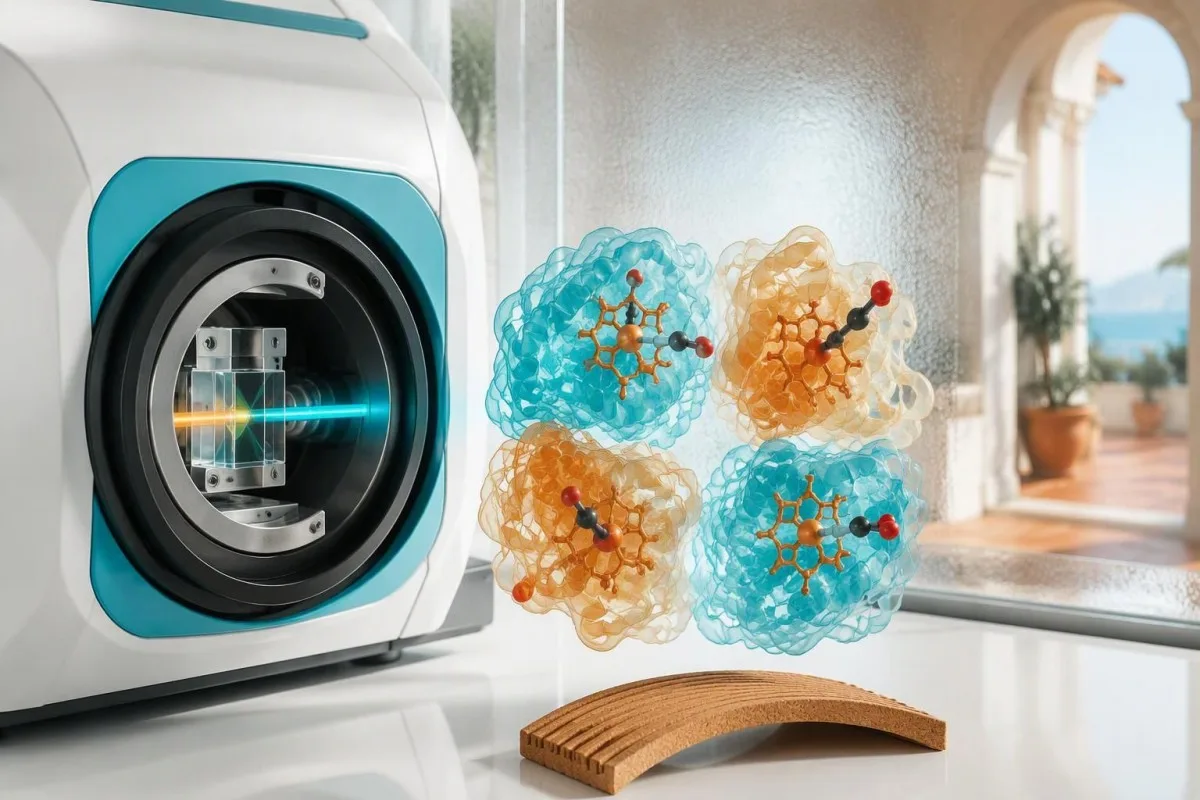
In carboxyhemoglobinetest mjit koalmonokside dy’t oan hemoglobine bûn is. Smoken kin de útslach ferheegje, wylst fertrage ôfname of soerstof de útslach ferleegje kin; in normale mjitting of in normale pulsoximeter kin fergiftiging net útslute.


- Needbeoardieling giet foar it persintaazje: by fertochte bleatstelling mei pineholle, duizeligheid, braken, betizing, boarstpine of ynstoarten is driuwende medyske help nedich.
- Carboxyhemoglobinetest útslaggen jouwe it persintaazje hemoglobine oan dat koalmonokside draacht; de test mjit harsens- of hertskea net streekrjocht.
- Utslaggen by net-smokers binne faak leger as 2%; de CDC beskôget in útslach fan 2% of heger as stypjend foar bleatstelling by in net-smoker as de skiednis dêrby past.
- Ferhegingen troch smoken lizze faak om de 3–8% hinne, hoewol’t wearden ferskille; boppe 9% by in smoker is der sterke reden foar ekstra soarch oer koalmonoksidebleatstelling.
- Fertrage ôfname kin de eardere pyk misse, om’t carboxyhemoglobine typysk ôfnimt mei in heale libbenstiid fan likernôch 4–6 oeren yn keamerlucht nei’t de bleatstelling ophâldt.
- Soerstofbehanneling ferkoartet de healtiid oant likernôch 60–90 minuten by soerstof mei in hege konsintraasje, sadat in lege útslach yn it sikehûs folgje kin op in flinke bleatstelling.
- Polsoksimetry kin 98–100% oanjaan by koalmonoksidefergiftiging, omdat standertapparaten mei 2 golflingten carboxyhemoglobine net betrouber ûnderskiede kinne fan oxyhemoglobine.
- Hyperbare konsultaasje kin passend wêze by wearden boppe likernôch 25–30%, mar neurologyske befiningen, hertskea, bewusteleazens en swangerskip kinne wichtiger wêze as it getal.
Wat mjit in carboxyhemoglobinetest eins?
A carboxyhemoglobinetest mjit it persintaazje hemoglobine dat bûn is oan koalmonokside, meastal mei laboratoarium-co-oksimetry. Hege útslaggen stypje bleatstelling, mar smoken ferheget de basiswearde en soerstof of in fertrage ôfname ferleget de mjitting; by fertochte fergiftiging is in driuwende beoardieling op basis fan symptomen nedich, sels by in útslach ûnder 2% of in normale polsoksimeter.
Carboxyhemoglobine, ôfkoarte as COHb, is net deselde mjitting as de hemoglobinekonsintraasje op in folsleine bloedtelling: in útslach fan 12% betsjut dat likernôch 12% fan it mjitten hemoglobine oanwêzich is as COHb, net dat de hemoglobinekonsintraasje mei 12% sakke is. Us ferliking fan hemoglobine en hematokryt leit dat ûnderskied út.
Koalmonokside bindet him likernôch 200–250 kear sterker oan hemoglobine as soerstof en makket it ek dreger foar it oerbleaune soerstof om oan weefsels ôfjûn te wurden. Rose et al. beskriuwe fierdere effekten op de mitochondriale funksje en inflammatoire paden, dy't helpe te ferklearjen wêrom't in ôfnimmend persintaazje net needsaaklik betsjut dat de harsens en it hert wer hersteld binne (Rose et al., 2017).
Kantesti is in AI bloedtestanalysator dat helpe kin om in opjûn COHb-persintaazje neist it referinsje-ynterfal fan it laboratoarium te ferklearjen; ús biomarkermer terminologygids jout in bredere kontekst. Ik bin Thomas Klein, MD, Chief Medical Officer fan Kantesti, en myn oanpak begjint mei 3 fragen: wêr't de bleatstelling plakfûn, hokker symptomen ûntstiene en wannear't de soerstof begon—net oft it rapport in warskôging oanjout.
Hokker symptomen freegje om needsoarch foardat der in útslach is?
Mooglike bleatstelling oan koalmonokside mei symptomen fereasket in driuwende beoardieling, ûnôfhinklik fan de COHb-útslach. Hoofdpine, duizeligheid, mislikens, braken, ûngewoane swakte, betizing, sykheljen, boarstpine of flaufallen binne soarchlik; sels in mjitting fan 99% op in polsoksimeter kin dy kombinaasje net feilich meitsje.
Gean fuort út de fertochte omjouwing en belje de helptsjinsten yn de frisse lucht—999 of 112 yn it Feriene Keninkryk, 911 yn de FS, of it pleatslike nûmer earne oars. Gean net wer nei binnen om it apparaat te ynspektearjen, in alaarm stil te setten of besittings op te heljen, en ryd net sels as jo duizelig of yn de war binne; helpferlieners kinne it gebou beoardielje sûnder in nij slachtoffer te meitsjen.
As 2 minsken yn deselde keamer hoofdpine of mislikens krije, is in mienskiplike miljeu-oarsaak folle wierskynliker as twa net-relatearre migraineoanfallen. Symptomen dy't bûten ôfnimme en binnen weromkomme, binne in oare oanwizing, mar ferbettering is gjin test om thús fêst te stellen dat it feilich is: bleatstelling oan koalmonokside kin trochgean wylst de persoan him tydlik better fielt.
Boarstpine nei bleatstelling fereasket in hertbeoardieling, net gewoan noch in COHb-mjitting; ús gids foar driuwende ûndersiken by boarstpine leit út wêrom't in ECG en troponine ferskillende fragen beäntwurdzje. Tink oan in hypotetyske persoan fan 52 jier mei druk op it boarst nei it brûken fan in generator: in COHb-wearde fan 4% nei soerstof annulearret de needsaak om myokardskea te ûndersykjen net.
Hokker carboxyhemoglobinenivo’s jouwe oanlieding om oan CO-bleatstelling te tinken?
Carboxyhemoglobine leit by net-smokers faak ûnder 2%, wylst smoken hegere basiswearden feroarsaakje kin. De CDC stelt dat 2% by in net-smoker of mear as 9% by in smoker sterk op koalmonoksidefergiftiging wiist as de bleatstellingshistoarje dêrby past; dit binne diagnostyske oanwizingen, gjin mjitten fan de earnst (CDC, 2024).
A laboratory reference interval and an emergency decision threshold serve different purposes: some laboratories list a nonsmoker upper limit near 1.5%, while others allow approximately 2–3%. A printed normal flag therefore cannot substitute for the clinical history; our out-of-range results explanation describes why reference intervals are not universal safety boundaries.
High carboxyhemoglobin levels establish that more hemoglobin is carrying carbon monoxide, but a result of 18% does not predict a particular symptom set or guarantee a better outcome than 28%. Exposure duration, age, anemia, underlying cardiac disease, and oxygen given before sampling all weaken a simple percentage-to-severity relationship.
The approximately 25–30% range is commonly used as one reason to discuss hyperbaric treatment, not as a line below which emergency care is unnecessary. A symptomatic nonsmoker at 6% may need substantial investigation, whereas an otherwise stable smoker at 6% needs careful source and timing assessment rather than an automatic poisoning label.
Hoe moatte carboxyhemoglobinenivo’s by smokers ynterpretearre wurde?
Carboxyhemoglobin levels in smokers are often around 3–8%, but smoking intensity, inhalation depth, and time since the last cigarette create substantial variation. Values approaching or exceeding 10% can occur with smoking, yet a symptomatic smoker must still be assessed for an additional environmental exposure.
Combustion produces carbon monoxide; nicotine itself is not the cause of an elevated COHb percentage. Cigarettes, cigars, combustible cannabis, and charcoal-heated waterpipes can contribute, whereas nicotine replacement without combustion does not create the same exposure mechanism—so asking only whether someone uses nicotine can misclassify a result of 7%.
A single cigarette count cannot reliably predict COHb because 10 cigarettes smoked across a day are not equivalent to intensive smoking immediately before collection. This is a timing problem, similar in principle—but not in detection window—to our PEth sampling and exposure guide; COHb usually changes over hours, not weeks.
Persistent smoking-related carbon monoxide exposure can also contribute to a higher hemoglobin concentration over time, but that CBC finding does not quantify today's COHb; see our mildly elevated hemoglobin discussion. If a smoker has a COHb result of 8% and their nonsmoking partner has 5% with similar headaches, the household pattern should outweigh the temptation to blame tobacco alone.
Wêrom kin fertrage ôfname de bleatstelling ûnderskatte?
Carboxyhemoglobin falls after exposure stops, so a sample collected several hours later can underestimate the earlier level. Its room-air elimination half-life is commonly about 4–6 hours, although ventilation, continued exposure, and individual physiology alter that estimate (Rose et al., 2017).
A half-life means that the excess burden falls by roughly half over that interval under the assumed conditions; it is not the time required for complete clearance. In a simplified example starting at 20%, a 5-hour half-life would leave about 10% after 5 hours and 5% after 10 hours, ignoring baseline production and any new exposure.
The useful timestamp is when the person actually left the exposure, not just when they arrived at hospital: a 3-hour journey, an ambulance wait, and time receiving oxygen can all shift the reading. Our bloedtest-timinggids explains why chronology can carry more information than the difference between two flagged values.
Back-calculating a precise peak from one late sample is usually unreliable because the earlier concentration, oxygen delivery, breathing pattern, and ongoing source are unknown. A result of 1.8% measured the following morning cannot prove that exposure was trivial the previous evening, and it should never overrule a convincing history of collapse or confusion.
Hoe feroaret soerstofbehanneling de testútslach?
High-concentration oxygen accelerates carbon monoxide elimination, often shortening the COHb half-life to approximately 60–90 minutes. Oxygen should not be delayed to obtain an untreated sample; clinicians document treatment timing and interpret the later percentage in that context.
An ambulance sample and a hospital sample taken 90 minutes apart may differ sharply even if both laboratories are accurate. Using a deliberately simplified 90-minute half-life, 20% would become approximately 10% after 90 minutes and 5% after 3 hours of effective high-concentration oxygen; that illustration is not a method for reconstructing an individual patient's peak.
The CDC recommends 100% oxygen until symptoms resolve, commonly for about 4–5 hours, with repeated neurological assessment rather than a percentage-only stopping rule (CDC, 2024). Oxygen delivery must be supervised because a prescribed concentration, mask fit, reservoir inflation, and the patient's ventilation are not interchangeable; an ordinary low-flow nasal cannula does not reproduce every high-concentration treatment assumption.
Kantesti is in AI bloedtest-útslachplatfoarm that can help explain why a post-treatment value differs from an earlier report, but our approximately 60-second interpretation is not emergency assessment. Our post-hospital result changes guide also separates biochemical improvement from clinical recovery—a distinction that matters when headache improves but memory or balance remains abnormal.
Wêrom kin pulsoximetry normaal wêze by CO-fergiftiging?
Normal pulse oximetry cannot exclude carbon monoxide poisoning because standard 2-wavelength pulse oximeters cannot reliably separate carboxyhemoglobin from oxyhemoglobin. A display of 98–100% can therefore look reassuring while oxygen delivery to tissues is impaired.
Arterial oxygen pressure, or PaO2, may also remain normal because it measures dissolved oxygen rather than the proportion of hemoglobin blocked by carbon monoxide. A hypothetical PaO2 of 95 mmHg does not show that hemoglobin is carrying and releasing oxygen normally; our arterial blood gas interpretation guide explains the separate measurements.
A blood gas report may show an oxygen saturation calculated from PaO2 rather than one directly measured by co-oximetry, and the calculated number can miss abnormal hemoglobin species. Some analyzers also report functional saturation separately from fractional oxyhemoglobin, so a number near 99% must be read with the measurement method—not merely the label 'saturation.'
Specialized pulse CO-oximeters use additional wavelengths, but their readings are not reliable enough to rule out poisoning when symptoms and exposure suggest it. Another hemoglobin disorder produces a different pulse-oximetry pattern, described in our methemoglobin testing explanation; neither disorder should be diagnosed or dismissed from 1 fingertip reading.
Is in veneus stekproef genôch, en is fêstjen nedich?
Venous blood is usually suitable for measuring carboxyhemoglobin by co-oximetry, and fasting is not required. An arterial sample may still be needed to answer other respiratory or acid–base questions, but a 12-hour fast or an arterial puncture is not a prerequisite for exposure testing.
The request must specifically include COHb or co-oximetry: a complete blood count, routine chemistry panel, or ordinary blood gas without that capability does not automatically test for carbon monoxide. A report with 20 routine markers can therefore contain no useful exposure measurement, even when hemoglobin, glucose, and electrolytes are all normal.
Collection containers and handling requirements depend on the laboratory's validated analyzer, commonly using heparinized whole blood kept sealed and processed promptly. Our sample quality and hemolysis guide explains why a specimen warning requires laboratory input; clinicians should not invent a numerical correction for a COHb result of 6% from a compromised sample.
The request should carry 4 pieces of context: exposure-stop time, collection time, oxygen-start time, and recent combustible smoking history. If a report merely says 'COHb 3.2%' without those details, the percentage can be analytically correct while its clinical meaning remains uncertain—especially after pre-hospital treatment.
Wat heart der fierder by de diagnoaze fan koalmonoksidefergiftiging?
Carbon monoxide poisoning diagnosis combines exposure history, symptoms, examination, and COHb, rather than relying on one result. ECG, troponin, blood gas measurements, glucose, and lactate may identify complications or alternative explanations; their selection depends on the presentation, not a fixed 1-size-fits-all panel.
An elevated lactate can reflect impaired oxygen use, seizures, shock, or other illness, so a lactate of 5 mmol/L does not prove carbon monoxide exposure. Our lactate timing and handling guide explains an additional problem: specimen delays can distort a marker that clinicians are already interpreting in a complex emergency.
Troponin measures myocardial injury, not carbon monoxide binding, and a normal initial value does not settle every chest-pain evaluation. Our troponin interpretation and limits guide discusses that distinction; when COHb has fallen from 24% to 4%, an abnormal ECG or rising troponin still deserves attention rather than being dismissed as yesterday's exposure.
Fire exposure can involve several hazards at once, including airway injury and cyanide, while severe anemia or low glucose may worsen symptoms without producing high COHb. Carbon monoxide is odorless and colorless, so identifying 1 competing explanation—such as a viral illness—does not rule out a faulty heater when several occupants become unwell together.
Wêrom feroarje swierwêzen, bernetiid en hertsykte de urginsje?
Pregnancy, childhood, anemia, and underlying cardiac disease can increase concern at a given COHb percentage. A maternal result of 5% after oxygen cannot establish fetal safety, and a child or adult with limited oxygen-delivery reserve may need urgent assessment despite a comparatively modest measured elevation.
Fetal hemoglobin binds carbon monoxide avidly, and fetal clearance can lag behind maternal clearance, so maternal improvement and a lower maternal COHb do not guarantee recovery in both patients. The CDC strongly favors hyperbaric oxygen during pregnancy, including less severe poisoning, although the treating team must obtain specialist advice rather than apply a universal 10% maternal cutoff (CDC, 2024).
Children may present with nonspecific vomiting, sleepiness, irritability, or poor feeding rather than describing a headache; 2 affected siblings should prompt a shared-exposure assessment. Our children's result interpretation limits explain why an adult reference interval and a reassuring automated comment are not substitutes for pediatric assessment.
Anemia reduces total oxygen-carrying capacity before any carbon monoxide is added, while coronary disease limits the heart's ability to compensate for reduced delivery. For example, COHb of 8% in someone with hemoglobin of 8 g/dL is not physiologically equivalent to 8% in someone with hemoglobin of 15 g/dL; the percentage alone hides that difference.
Wannear wurdt hyperbare soerstof beskôge, en hoe wis is it foardiel?
Hyperbaric oxygen is considered for selected serious carbon monoxide exposures, including neurological impairment, loss of consciousness, cardiac involvement, severe acidosis, pregnancy, or COHb above approximately 25–30%. No single threshold decides treatment, and evidence about preventing delayed neurological problems remains mixed.
Hyperbaric oxygen can shorten COHb elimination to roughly 20–30 minutes under treatment conditions, but faster clearance is not automatically proof of better long-term outcomes. Clinicians must consider safe transfer, chamber availability, potential pressure-related complications, and whether another urgent problem requires treatment where the patient already is.
Weaver et al.'s randomized trial enrolled 152 patients and reported cognitive sequelae at 6 weeks in 25.0% of the hyperbaric group versus 46.1% of the comparison group (Weaver et al., 2002). That approximately 21-percentage-point difference came from a specific treatment protocol and study population; it should not be presented as a guaranteed benefit for every mild exposure.
Different trials and treatment protocols have produced inconsistent findings, as discussed by Rose et al. (2017), which is why honest counseling includes uncertainty rather than promising that a chamber prevents all later problems. Our medyske advysried provides information about clinical oversight, but an urgent toxicology or hyperbaric consultation—not a website review—must guide an individual patient with 1 episode of collapse or persistent confusion.
Wat moat der barre nei’t symptomen en COHb ferbettere binne?
Follow-up is needed because delayed neurological symptoms can appear after apparent recovery, even when COHb has returned to baseline. The CDC recommends warning discharged patients about these problems and repeating medical and neurological assessment at approximately 2 weeks; new confusion, weakness, seizures, or chest pain needs earlier urgent care.
Delayed problems may include memory difficulty, reduced attention, personality change, altered walking, or new problems managing ordinary tasks, emerging over days to weeks. A COHb of 1% during that later period does not exclude an exposure-related complication because the test measures current carbon monoxide binding, not persistent injury from an earlier event.
Persistent breathlessness also needs reassessment rather than being assumed to be anxiety; our sykheljen testen gids describes why cardiac, pulmonary, and hematologic causes require different investigations. A practical discharge record should preserve at least 3 details: the earliest COHb, treatment received, and the planned follow-up date.
The source must be made safe before anyone returns: do not run a generator indoors, in a garage, or near openings, even with doors open. CDC prevention advice places portable generators at least 20 feet—about 6 metres—from doors, windows, and vents; working carbon monoxide alarms add protection but cannot replace appliance servicing or professional building clearance.
Hoe kin AI helpe by it ynterpretearjen fan in COHb-rapport nei needsoarch?
AI can help explain a documented COHb result after emergency assessment, but it cannot establish that a home is safe, examine neurological function, or rule out poisoning. A report showing 1.5% after 3 hours of oxygen needs a different explanation from the same percentage collected before treatment.
Kantesti is in AI-oandreaune ark foar analyse fan bloedtests that accepts laboratory PDFs or photos and helps explain reported values alongside their reference intervals. Before sharing a document, check identifiers and permissions using our result upload privacy checklist; for this test, supplying 4 timing and exposure details is more useful than uploading only a cropped percentage.
Kantesti's role is education and follow-up support, not a carbon monoxide emergency service; our company and clinical mission describes the organization behind that work. If symptoms remain after a result falls from 16% to 2%, the useful next step is clinician reassessment—not repeated uploads until an interpretation sounds reassuring.
For readers checking how interpretation works, our AI-útlis-technologygids explains the broader approach without making a COHb-specific emergency validation claim. My editorial rule as Thomas Klein, MD, is simple: 1 laboratory percentage should never overrule a convincing exposure history, ongoing symptoms, or a clinician's concern about brain or heart injury.
Hokker ûndersyk stipet dit advys, en wat behannelje de keppele gidsen?
The carbon monoxide advice here is supported by CDC clinical guidance, Rose et al.'s 2017 review, and Weaver et al.'s 2002 trial, listed separately below. As of October 20, 2026, the 2 additional Zenodo guides listed here are related educational publications—not carbon monoxide studies or evidence validating emergency AI triage.
Clinical guidance, randomized trials, reviews, and educational repositories answer different questions; a DOI identifies a publication but does not itself establish peer review or clinical effectiveness. Our technical and clinical validation overview should be read within its stated scope, and neither of the 2 Zenodo publications below establishes sensitivity for excluding carbon monoxide poisoning.
Kantesti. (n.d.). C3 C4 Komplement Bloedtest & ANA Titergids. Zenodo. This publication concerns complement and autoimmune testing, not COHb; ResearchGate titel sykjen en Academia.edu titelsykje are discovery links, not claims of verified repository copies, and the DOI is supplied in the publication list below.
Kantesti. (n.d.). Nipah-firusbloedtest: hantlieding foar iere deteksje en diagnoaze 2026. Zenodo. This publication concerns viral testing rather than carbon monoxide; Undersykspublikaasje-sykjen en Academia.edu publikaasjesykje provide title-based discovery, while its DOI appears below and should not be interpreted as evidence for COHb treatment thresholds.
Faak stelde fragen
Wat is in normale carboxyhemoglobinespiegel?
Carboxyhemoglobine leit by net-smokers ornaris ûnder 2%, hoewol't referinsje-yntervallen fan laboratoarium ta laboratoarium ferskille. Smokers hawwe faak wearden fan sa'n 3–8%, mei fariaasje ôfhinklik fan resint gebrûk fan brânbere tabak. De CDC beskôget 2% by in net-smoker of mear as 9% by in smoker as sterke stipe foar bleatstelling as de skiednis dêrmei oerienkomt. In normale útslach nei in fertrage monstername of soerstof slút in eardere wichtige bleatstelling net út.
Kin smoken hege karboksyhemoglobinenivo's feroarsaakje?
It smoken fan brânbere tabak kin it carboxyhemoglobine ferheegje, faak oant likernôch 3–8% en soms heger. Sigaretten, sigaren, brânbere cannabis en mei houtskoal ferwaarme wetterpypen kinne allegear koalmonokside bydrage. Nikotineferfanging sûnder ferbaarning feroarsaket net itselde meganisme. In smoker mei symptomen en in útslach fan 8% moat noch altyd beoardiele wurde op in ekstra boarne, benammen as oare minsken yn itselde gebou har ek net goed fiele.
Kin in normale mjitting mei in pulsoximeter koalmonoksidefergiftiging útslute?
In normale lêzing fan in pulsoximeter kin koalmonoksidefergiftiging net útslute. Standertapparaten mei 2 golflingten kinne karboksyhemoglobine net betrouber ûnderskiede fan oxyhemoglobine, sadat se 98–100% oanjaan kinne nettsjinsteande beheinde soerstoffoarsjenning. In normale arteriële soerstofdruk slút fergiftiging ek net út, om't dy oploste soerstof mjit ynstee fan hemoglobine dat oan koalmonokside bûn is. By fertochte bleatstelling mei symptomen is driuwende beoardieling en passende laboratoariumko-oksimetry nedich.
Hoe fluch ferleget soerstof it koalmonoksyhemoglobine?
0 Hege konsintraasje soerstof ferkoartet de heale libbenstiid fan karboksyhemoglobine ornaris ta likernôch 60–90 minuten, yn ferliking mei rûchwei 4–6 oeren by it ynademen fan keamerloft nei't de bleatstelling opholden is. Dit binne skatte wearden, gjin persoanlike rekkenmasine foar ôfname. In stekproef dy't nei ferskate oeren soerstof sammele is, kin folle leger wêze as de eardere pyk. Soerstof mei net útsteld wurde om in ûnbehannele testresultaat te behâlden.
Hokker nivo fan karboksyhemoglobine fereasket hyperbare soerstof?
In carboxyhemoglobinenivo boppe likernôch 25–30% is in gewoane reden foar oerlis oer hyperbare soerstof, mar it is net it ienige kritearium. Bewusteleasheid, neurologyske beheining, hertskea, slimme acidose of swierwêzen kinne beskôging troch in spesjalist by legere nivo's rjochtfeardigje. It bewiis foar behanneling is net unanym, en besluten binne ek ôfhinklik fan it tiidstip, de feiligens fan it ferfier en de beskikberens fan in keamer. In wearde ûnder 25% makket in bleatstelling mei symptomen net feilich.
Kin koalmonoksidefergiftiging mist wurde troch in bloedtest dy't letter dien wurdt?
0 In fertrage carboxyhemoglobinetest kin de eardere pyk misse, om't it nivo sakket nei't de bleatstelling ophâldt. De heale libbenstiid yn keamerlucht is ornaris sa'n 4–6 oeren, en soerstof mei hege konsintraasje ferleget it nivo flugger. In útslach fan 1–2% de oare moarns kin substansjele bleatstelling de foargeande jûn net útslute. Dêrom basearje kliïnten har op 'e bleatstellingsskiednis, symptomen, tiidline fan 'e behanneling en it ûndersyk, ynstee fan op ien lette útslach te fertrouwen.
Krij hjoed noch AI-oandreaune bloedtest-analyse
Doch mei oan mear as 2 miljoen brûkers wrâldwiid dy’t Kantesti fertrouwe foar direkte, krekte analyse fan laboratoariumtests. Upload jo bloedtest resultaten en ûntfange wiidweidige ynterpretaasje fan 15,000+-biomarkers yn sekonden.
📚 Ferwiisde ûndersykspublikaasjes
Klein, T., Mitchell, S., & Weber, H. (2026). Gids foar C3- en C4-komplementbloedtest & ANA-titer. Kantesti AI Medysk Undersyk.
Klein, T., Mitchell, S., & Weber, H. (2026). Nipah-firusbloedtest: hantlieding foar iere deteksje en diagnoaze 2026. Kantesti AI Medysk Undersyk.
📖 Eksterne medyske referinsjes
Centers for Disease Control and Prevention (2024). Clinical Guidance for Carbon Monoxide Poisoning Following Disasters and Severe Weather. CDC Carbon Monoxide Poisoning Clinical Guidance.
⚕️ Medyske disclaimer
Dit artikel is allinnich foar ûnderwiisdoelen en foarmet gjin medysk advys. Rieplachtsje altyd in kwalifisearre soarchferliener foar besluten oer diagnoaze en behanneling.
E-E-A-T fertrouwensignalen
Ûnderfining
Dokter-oandreaune klinyske resinsje fan lab-ynterpretaasje-wurkprosessen.
Ekspertize
Fokus fan laboratoariummedisyne op hoe’t biomarkers har gedrage yn in klinyske kontekst.
Autoriteit
Skreaun troch dr. Thomas Klein mei resinsje troch dr. Sarah Mitchell en prof. dr. Hans Weber.
Betrouberens
Bewiis-basearre ynterpretaasje mei dúdlike ferfolchpaadkes om alarm te ferminderjen.