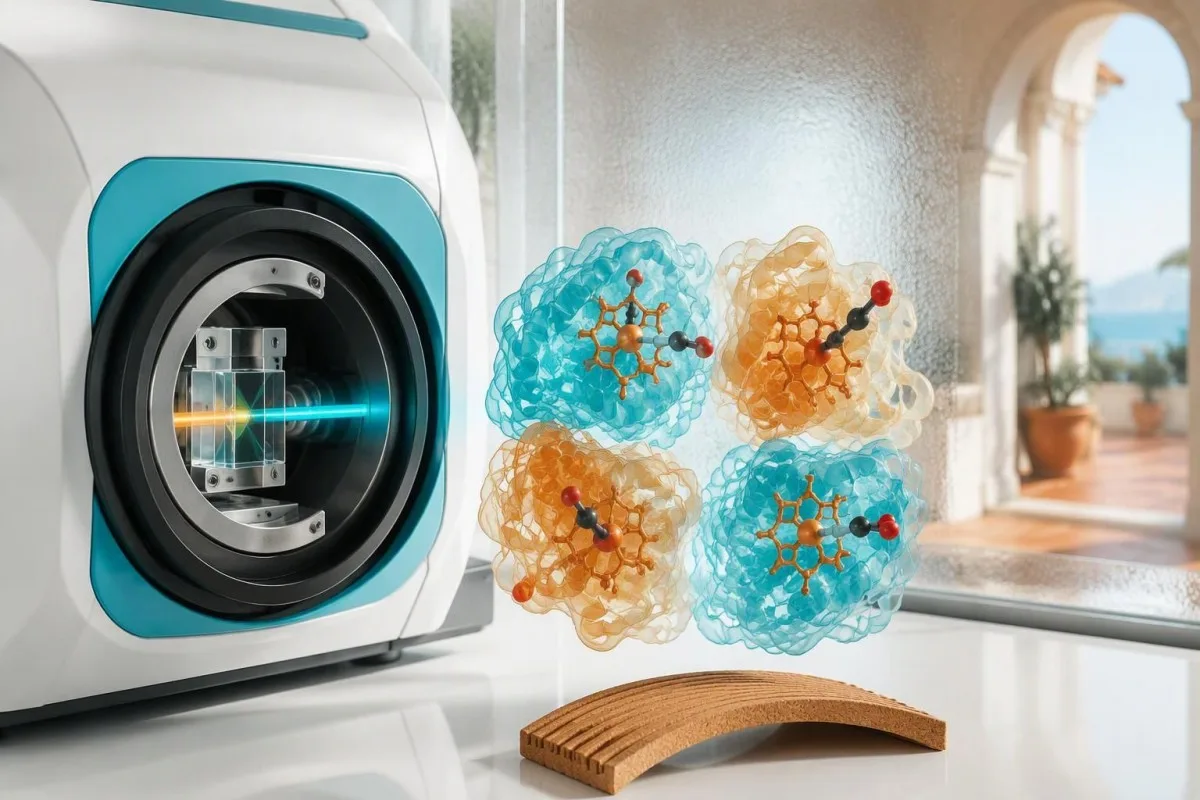
Un tèst de carboxiemoglobina mesura lo monoxida de carbòni ligat a l’emoglobina. Lo tabaquisme pòt far montar lo resultat, mentre qu’un prélèvement tardiu o l’oxigèn lo pòt far baissar; una lectura normala o un oxigèn de pols normal pòdon pas exclure una intoxicacion.


- Avaluacion d’emergéncia passa abans lo percentatge: una exposicion sospècha amb mal de cap, vertigis, vomiments, confusion, dolor toracica o pèrdia de consciéncia necessita una ajuda medicala urgenta.
- Tèst de carboxiemoglobina los resultats indican lo percentatge d’emoglobina que transporta de monoxida de carbòni; lo tèst mesura pas dirèctament las lesions del cervèl o del còr.
- Resultats en çò dels nonfumaires son generalament inferiors a 2%; lo CDC considera qu’un resultat de 2% o mai es compatible amb una exposicion en çò d’un nonfumador quand l’istòria correspond.
- Augmentacions ligadas al tabaquisme son sovent d’environ 3–8%, encara que las valors varian; per dessús de 9% en çò d’un fumaire, aquò sosten fortament una preocupacion suplementària per una exposicion al monoxida de carbòni.
- Prélèvement tardiu pòt mancar lo pic anterior, perque la carboxiemoglobina baissa abitualament amb una mièja vida d’aperaquí 4–6 oras a l’aire ambiant aprèp l’arrèst de l’exposicion.
- Tractament per l’oxigèn abreugís la miègavida a aperaquí 60–90 minutas amb oxigèn de concentracion nauta, doncas un resultat hospitalièr bas pòt seguir una exposicion importanta.
- Oximetria de poncha pòt afichar 98–100% pendent una intoxicacion al monoxid de carbòni, perque los aparelhs estandards de 2 longors d’onda pòdon pas destriar de faiçon fisabla la carboxiemoglobina de l’oxiemoglobina.
- Consulta en medecina iperbara pòt èsser indicada per dessús d’aperaquí 25–30%, mas las constatacions neurologicas, una lesion cardiaca, una pèrda de consciéncia e la grossessa pòdon comptar mai que lo nombre.
Que mesura vertadièrament un tèst de carboxiemoglobina?
A test de carboxiemoglobina mesura lo percentatge d’hemoglobina ligada al monoxid de carbòni, generalament amb la co-oximetria de laboratòri. De resultats elevats confirman l’exposicion, mas lo tabac aumenta lo taus de basa e l’oxigèn o un prélèvement tardiu fan baissar la valor; una intoxicacion sospiechada exigís una evaluacion urgenta basada suls simptòmas, quitament amb un resultat inferior a 2% o un oximètre de poncha normal.
Carboxihemoglobina, abreujat COHb, es pas la meteissa mesura que la concentracion d’hemoglobina dins una numeracion formula sanguina: un resultat de 12% significa qu’aperaquí 12% de l’hemoglobina mesurada es de COHb, e non pas que la concentracion d’hemoglobina a demesit de 12%. Nòstre comparason de l’hemoglobina e de l’ematocrít explica aquela distincion.
Lo monoxid de carbòni se liga a l’hemoglobina amb una afinitat aperaquí 200–250 còps superiora a aquela de l’oxigèn e fa tanben que l’oxigèn restant es mai dificil de liberar als teissuts. Rose et al. descrivon d’efièches suplementaris sus la foncion mitocondriala e las vias inflamatòrias, çò que permet de comprene perqué una baissa del percentatge significa pas necessàriament que lo cervèl e lo còr s’es recuperat (Rose et al., 2017).
Kantesti es un Analizador de tèst de sang d'IA que pòt ajudar a explicar un percentatge de COHb comunicat al costat de l’interval de referéncia del laboratòri; nòstre guida terminologica sui biomarcadors dona un contèxte mai larg. Soi Thomas Klein, MD, mètge cap de Kantesti, e mon apròchi comença per 3 questions: ont s’es producha l’exposicion, quins simptòmas son apareguts e quand l’oxigèn a començat—e non pas se lo rapòrt pòrta un senhal d’alarma.
Quins simptòmas necessitan de suènhs d’urgéncia abans d’aver un resultat?
Una possibla exposicion al monoxid de carbòni amb de simptòmas exigís una evaluacion urgenta, quin que siá lo resultat de COHb. Cefalèa, vertige, nausèa, vomiment, flaquesa inabituala, confusion, alenada corta, dolor toracic o esvaniment son de signes preocupants; quitament una lectura de 99% a l’oximètre de poncha pòt pas far que aquela combinason siá segura.
Quitatz l’environament sospiechat e sonatz los servicis d’urgéncia dempuèi un endrech ont l’aire es fresc—999 o 112 al Reialme Unit, 911 als EUA, o lo numèro local endacòm mai. Tornetz pas dintrar per inspeccionar l’aparelh, arrestar una alarma o recuperar d’afars, e condusezis pas vosautres meteisses se sètz pres de vertige o confuses; los secors pòdon avaliar l’immòble sens provocar una autra victima.
Quand 2 personas presentan una cefalèa o de nausèas dins la meteissa pèça, una causa ambientala comuna ven plan mai probabla que doas migrènas sens ligam. De simptòmas que s’amelioran a l’exterior e tòrnan dins lo bastiment son un autre indici, mas aquela melhora es pas un test de seguretat a l’ostal: l’exposicion al monoxid de carbòni pòt contunhar mentre que la persona se sent melhor de biais temporari.
Una dolor toracica aprèp una exposicion exigís una evaluacion cardiaca, pas simplament una autra mesura de COHb; nòstre guida dels tèsts urgents per la dolor toracica explica perqué l’ECG e la troponina respondon a de questions diferentas. Consideratz lo cas ipotetic d’una persona de 52 ans amb una pression dins lo pièch aprèp aver utilizat un generador: una COHb de 4% mesurada aprèp l’oxigèn anulariá pas la necessitat de cercar una lesion miocardica.
Quins nivèls de carboxiemoglobina confirman una exposicion al CO?
La carboxiemoglobina es comunament inferiora a 2% en çò dels nonfumaires, mentre que lo tabac pòt produire de valors de basa mai nautas. Lo CDC indica qu’una valor de 2% en çò d’un nonfumador o superiora a 9% en çò d’un fumador sosten fòrtament lo diagnostic d’intoxicacion al monoxid de carbòni quand l’istoric d’exposicion es compatible; son d’indicis diagnostics, pas d’escales de gravetat (CDC, 2024).
A laboratory reference interval and an emergency decision threshold serve different purposes: some laboratories list a nonsmoker upper limit near 1.5%, while others allow approximately 2–3%. A printed normal flag therefore cannot substitute for the clinical history; our out-of-range results explanation describes why reference intervals are not universal safety boundaries.
High carboxyhemoglobin levels establish that more hemoglobin is carrying carbon monoxide, but a result of 18% does not predict a particular symptom set or guarantee a better outcome than 28%. Exposure duration, age, anemia, underlying cardiac disease, and oxygen given before sampling all weaken a simple percentage-to-severity relationship.
The approximately 25–30% range is commonly used as one reason to discuss hyperbaric treatment, not as a line below which emergency care is unnecessary. A symptomatic nonsmoker at 6% may need substantial investigation, whereas an otherwise stable smoker at 6% needs careful source and timing assessment rather than an automatic poisoning label.
Cossí cal interpretar los nivèls de carboxiemoglobina en çò dels fumaires?
Carboxyhemoglobin levels in smokers are often around 3–8%, but smoking intensity, inhalation depth, and time since the last cigarette create substantial variation. Values approaching or exceeding 10% can occur with smoking, yet a symptomatic smoker must still be assessed for an additional environmental exposure.
Combustion produces carbon monoxide; nicotine itself is not the cause of an elevated COHb percentage. Cigarettes, cigars, combustible cannabis, and charcoal-heated waterpipes can contribute, whereas nicotine replacement without combustion does not create the same exposure mechanism—so asking only whether someone uses nicotine can misclassify a result of 7%.
A single cigarette count cannot reliably predict COHb because 10 cigarettes smoked across a day are not equivalent to intensive smoking immediately before collection. This is a timing problem, similar in principle—but not in detection window—to our PEth sampling and exposure guide; COHb usually changes over hours, not weeks.
Persistent smoking-related carbon monoxide exposure can also contribute to a higher hemoglobin concentration over time, but that CBC finding does not quantify today's COHb; see our mildly elevated hemoglobin discussion. If a smoker has a COHb result of 8% and their nonsmoking partner has 5% with similar headaches, the household pattern should outweigh the temptation to blame tobacco alone.
Perqué un prélèvement tardiu pòt sosestimar l’exposicion?
Carboxyhemoglobin falls after exposure stops, so a sample collected several hours later can underestimate the earlier level. Its room-air elimination half-life is commonly about 4–6 hours, although ventilation, continued exposure, and individual physiology alter that estimate (Rose et al., 2017).
A half-life means that the excess burden falls by roughly half over that interval under the assumed conditions; it is not the time required for complete clearance. In a simplified example starting at 20%, a 5-hour half-life would leave about 10% after 5 hours and 5% after 10 hours, ignoring baseline production and any new exposure.
The useful timestamp is when the person actually left the exposure, not just when they arrived at hospital: a 3-hour journey, an ambulance wait, and time receiving oxygen can all shift the reading. Our guia de temporizacion de las analisis de sang explains why chronology can carry more information than the difference between two flagged values.
Back-calculating a precise peak from one late sample is usually unreliable because the earlier concentration, oxygen delivery, breathing pattern, and ongoing source are unknown. A result of 1.8% measured the following morning cannot prove that exposure was trivial the previous evening, and it should never overrule a convincing history of collapse or confusion.
Cossí lo tractament per l’oxigèn modifica lo resultat del tèst?
High-concentration oxygen accelerates carbon monoxide elimination, often shortening the COHb half-life to approximately 60–90 minutes. Oxygen should not be delayed to obtain an untreated sample; clinicians document treatment timing and interpret the later percentage in that context.
An ambulance sample and a hospital sample taken 90 minutes apart may differ sharply even if both laboratories are accurate. Using a deliberately simplified 90-minute half-life, 20% would become approximately 10% after 90 minutes and 5% after 3 hours of effective high-concentration oxygen; that illustration is not a method for reconstructing an individual patient's peak.
The CDC recommends 100% oxygen until symptoms resolve, commonly for about 4–5 hours, with repeated neurological assessment rather than a percentage-only stopping rule (CDC, 2024). Oxygen delivery must be supervised because a prescribed concentration, mask fit, reservoir inflation, and the patient's ventilation are not interchangeable; an ordinary low-flow nasal cannula does not reproduce every high-concentration treatment assumption.
Kantesti es un plataforma d’interpretacion d’analisi de sang d’AI that can help explain why a post-treatment value differs from an earlier report, but our approximately 60-second interpretation is not emergency assessment. Our post-hospital result changes guide also separates biochemical improvement from clinical recovery—a distinction that matters when headache improves but memory or balance remains abnormal.
Perqué l’oximetria de pols pòt èsser normala pendent una intoxicacion al CO?
Normal pulse oximetry cannot exclude carbon monoxide poisoning because standard 2-wavelength pulse oximeters cannot reliably separate carboxyhemoglobin from oxyhemoglobin. A display of 98–100% can therefore look reassuring while oxygen delivery to tissues is impaired.
Arterial oxygen pressure, or PaO2, may also remain normal because it measures dissolved oxygen rather than the proportion of hemoglobin blocked by carbon monoxide. A hypothetical PaO2 of 95 mmHg does not show that hemoglobin is carrying and releasing oxygen normally; our arterial blood gas interpretation guide explains the separate measurements.
A blood gas report may show an oxygen saturation calculated from PaO2 rather than one directly measured by co-oximetry, and the calculated number can miss abnormal hemoglobin species. Some analyzers also report functional saturation separately from fractional oxyhemoglobin, so a number near 99% must be read with the measurement method—not merely the label 'saturation.'
Specialized pulse CO-oximeters use additional wavelengths, but their readings are not reliable enough to rule out poisoning when symptoms and exposure suggest it. Another hemoglobin disorder produces a different pulse-oximetry pattern, described in our methemoglobin testing explanation; neither disorder should be diagnosed or dismissed from 1 fingertip reading.
Un prélèvement venós sufís, e cal èsser a dejun?
Venous blood is usually suitable for measuring carboxyhemoglobin by co-oximetry, and fasting is not required. An arterial sample may still be needed to answer other respiratory or acid–base questions, but a 12-hour fast or an arterial puncture is not a prerequisite for exposure testing.
The request must specifically include COHb or co-oximetry: a complete blood count, routine chemistry panel, or ordinary blood gas without that capability does not automatically test for carbon monoxide. A report with 20 routine markers can therefore contain no useful exposure measurement, even when hemoglobin, glucose, and electrolytes are all normal.
Collection containers and handling requirements depend on the laboratory's validated analyzer, commonly using heparinized whole blood kept sealed and processed promptly. Our sample quality and hemolysis guide explains why a specimen warning requires laboratory input; clinicians should not invent a numerical correction for a COHb result of 6% from a compromised sample.
The request should carry 4 pieces of context: exposure-stop time, collection time, oxygen-start time, and recent combustible smoking history. If a report merely says 'COHb 3.2%' without those details, the percentage can be analytically correct while its clinical meaning remains uncertain—especially after pre-hospital treatment.
Que cal mai per establir lo diagnostic d’intoxicacion al monoxida de carbòni?
Carbon monoxide poisoning diagnosis combines exposure history, symptoms, examination, and COHb, rather than relying on one result. ECG, troponin, blood gas measurements, glucose, and lactate may identify complications or alternative explanations; their selection depends on the presentation, not a fixed 1-size-fits-all panel.
An elevated lactate can reflect impaired oxygen use, seizures, shock, or other illness, so a lactate of 5 mmol/L does not prove carbon monoxide exposure. Our lactate timing and handling guide explains an additional problem: specimen delays can distort a marker that clinicians are already interpreting in a complex emergency.
Troponin measures myocardial injury, not carbon monoxide binding, and a normal initial value does not settle every chest-pain evaluation. Our troponin interpretation and limits guide discusses that distinction; when COHb has fallen from 24% to 4%, an abnormal ECG or rising troponin still deserves attention rather than being dismissed as yesterday's exposure.
Fire exposure can involve several hazards at once, including airway injury and cyanide, while severe anemia or low glucose may worsen symptoms without producing high COHb. Carbon monoxide is odorless and colorless, so identifying 1 competing explanation—such as a viral illness—does not rule out a faulty heater when several occupants become unwell together.
Perqué la graviditat, l’enfança e las malautiás cardiacas càmbian l’urgéncia?
Pregnancy, childhood, anemia, and underlying cardiac disease can increase concern at a given COHb percentage. A maternal result of 5% after oxygen cannot establish fetal safety, and a child or adult with limited oxygen-delivery reserve may need urgent assessment despite a comparatively modest measured elevation.
Fetal hemoglobin binds carbon monoxide avidly, and fetal clearance can lag behind maternal clearance, so maternal improvement and a lower maternal COHb do not guarantee recovery in both patients. The CDC strongly favors hyperbaric oxygen during pregnancy, including less severe poisoning, although the treating team must obtain specialist advice rather than apply a universal 10% maternal cutoff (CDC, 2024).
Children may present with nonspecific vomiting, sleepiness, irritability, or poor feeding rather than describing a headache; 2 affected siblings should prompt a shared-exposure assessment. Our children's result interpretation limits explain why an adult reference interval and a reassuring automated comment are not substitutes for pediatric assessment.
Anemia reduces total oxygen-carrying capacity before any carbon monoxide is added, while coronary disease limits the heart's ability to compensate for reduced delivery. For example, COHb of 8% in someone with hemoglobin of 8 g/dL is not physiologically equivalent to 8% in someone with hemoglobin of 15 g/dL; the percentage alone hides that difference.
Quand se considera l’oxigènoterapia iperbara, e quant es segur son benefici?
Hyperbaric oxygen is considered for selected serious carbon monoxide exposures, including neurological impairment, loss of consciousness, cardiac involvement, severe acidosis, pregnancy, or COHb above approximately 25–30%. No single threshold decides treatment, and evidence about preventing delayed neurological problems remains mixed.
Hyperbaric oxygen can shorten COHb elimination to roughly 20–30 minutes under treatment conditions, but faster clearance is not automatically proof of better long-term outcomes. Clinicians must consider safe transfer, chamber availability, potential pressure-related complications, and whether another urgent problem requires treatment where the patient already is.
Weaver et al.'s randomized trial enrolled 152 patients and reported cognitive sequelae at 6 weeks in 25.0% of the hyperbaric group versus 46.1% of the comparison group (Weaver et al., 2002). That approximately 21-percentage-point difference came from a specific treatment protocol and study population; it should not be presented as a guaranteed benefit for every mild exposure.
Different trials and treatment protocols have produced inconsistent findings, as discussed by Rose et al. (2017), which is why honest counseling includes uncertainty rather than promising that a chamber prevents all later problems. Our conselh medical provides information about clinical oversight, but an urgent toxicology or hyperbaric consultation—not a website review—must guide an individual patient with 1 episode of collapse or persistent confusion.
Que cal far aprèp la melhora dels simptòmas e del COHb?
Follow-up is needed because delayed neurological symptoms can appear after apparent recovery, even when COHb has returned to baseline. The CDC recommends warning discharged patients about these problems and repeating medical and neurological assessment at approximately 2 weeks; new confusion, weakness, seizures, or chest pain needs earlier urgent care.
Delayed problems may include memory difficulty, reduced attention, personality change, altered walking, or new problems managing ordinary tasks, emerging over days to weeks. A COHb of 1% during that later period does not exclude an exposure-related complication because the test measures current carbon monoxide binding, not persistent injury from an earlier event.
Persistent breathlessness also needs reassessment rather than being assumed to be anxiety; our guida de test de dificultat respiratòria describes why cardiac, pulmonary, and hematologic causes require different investigations. A practical discharge record should preserve at least 3 details: the earliest COHb, treatment received, and the planned follow-up date.
The source must be made safe before anyone returns: do not run a generator indoors, in a garage, or near openings, even with doors open. CDC prevention advice places portable generators at least 20 feet—about 6 metres—from doors, windows, and vents; working carbon monoxide alarms add protection but cannot replace appliance servicing or professional building clearance.
Cossí l’IA pòt ajudar a interpretar un compte rendut de COHb aprèp una presa en carga d’urgéncia?
AI can help explain a documented COHb result after emergency assessment, but it cannot establish that a home is safe, examine neurological function, or rule out poisoning. A report showing 1.5% after 3 hours of oxygen needs a different explanation from the same percentage collected before treatment.
Kantesti es un Outil d’analisi de sang amb IA that accepts laboratory PDFs or photos and helps explain reported values alongside their reference intervals. Before sharing a document, check identifiers and permissions using our result upload privacy checklist; for this test, supplying 4 timing and exposure details is more useful than uploading only a cropped percentage.
Kantesti's role is education and follow-up support, not a carbon monoxide emergency service; our company and clinical mission describes the organization behind that work. If symptoms remain after a result falls from 16% to 2%, the useful next step is clinician reassessment—not repeated uploads until an interpretation sounds reassuring.
For readers checking how interpretation works, our guia de tecnologia d’interpretacion amb IA explains the broader approach without making a COHb-specific emergency validation claim. My editorial rule as Thomas Klein, MD, is simple: 1 laboratory percentage should never overrule a convincing exposure history, ongoing symptoms, or a clinician's concern about brain or heart injury.
Quinas recèrcas sostenon aquestes conselhs, e de qué tractan los guidas en ligam?
The carbon monoxide advice here is supported by CDC clinical guidance, Rose et al.'s 2017 review, and Weaver et al.'s 2002 trial, listed separately below. As of October 20, 2026, the 2 additional Zenodo guides listed here are related educational publications—not carbon monoxide studies or evidence validating emergency AI triage.
Clinical guidance, randomized trials, reviews, and educational repositories answer different questions; a DOI identifies a publication but does not itself establish peer review or clinical effectiveness. Our technical and clinical validation overview should be read within its stated scope, and neither of the 2 Zenodo publications below establishes sensitivity for excluding carbon monoxide poisoning.
Kantesti. (n.d.). Pròva de sang de complement C3 C4 e guida de títol ANA. Zenodo. This publication concerns complement and autoimmune testing, not COHb; Recèrca de títol sus ResearchGate e Recèrca de títol Academia.edu are discovery links, not claims of verified repository copies, and the DOI is supplied in the publication list below.
Kantesti. (n.d.). Pròva de sang del virus Nipah: Guida de deteccion precoça e de diagnostic 2026. Zenodo. This publication concerns viral testing rather than carbon monoxide; Recèrca de publicacions sus ResearchGate e Recèrca de publicacion sus Academia.edu provide title-based discovery, while its DOI appears below and should not be interpreted as evidence for COHb treatment thresholds.
Questions frequentas
Quin es un nivèl normal de carboxiemoglobina ?
0. La carboxihemoglobina es generalament inferiora a 2% chez los non-fumaires, encara que los intervals de referéncia del laboratòri varian. Los fumaires an sovent de valors d’environ 3–8%, amb de variacions segon l’us recent de tabac combustible. Los CDC considèran que 2% chez un non-fumair o mai de 9% chez un fumair son d’elements que sostenon fòrtament una exposicion quand l’istòria es compatibla. Un resultat normal après un prélèvement tardiu o l’administracion d’oxigèn exclutz pas una exposicion significativa anteriora.
Lo fach pòt causar de taus elevats de carboxiemoglobina ?
0] Lo fumatge de tabac combustible pòt aumentar la carboxihemoglobina, sovent fins a aperaquí 3–8 % e de còps mai. Las cigaretas, los cigars, lo cannabis comburent e las pipas d’aiga escaufadas amb de carbon de lenha pòdon totes contribuir al monoxid de carbòni. La substitucion de la nicotina sens combustion produch pas lo meteis mecanisme. Un fumador simptomatic amb un resultat de 8 % deu totjorn èsser avalorat per cercar una font suplementària, sustot quand d’autras personas del meteis bastiment son malautas.
0 Una lectura normal d’un oxímetre de pols pòt descartar una intoxicacion al monoxid de carbòni ?
Una lectura normala d’un oxímetre de pols pòt pas exclure una intoxicacion al monoxid de carbòni. Los aparelhs estandards de 2 longors d’onda pòdon pas distinguir de manièra fisabla la carboxiemoglobina de l’oxiemoglobina, e pòdon doncas afichar 98–100% malgrat una distribucion d’oxigèn compromesa. Una pression arteriala normala d’oxigèn exclutz pas tanpauc l’intoxicacion, perque mesura l’oxigèn dissolgut puslèu que l’hemoglobina ligada al monoxid de carbòni. Una exposicion sospiecha amb de simptòmas requerís una evaluacion d’urgéncia e una co-oximetria de laboratòri apropriada.
Amb quina rapiditat l’oxigèn fa baixar la carboxihemoglobina?
L’oxigèn a nauta concentracion acorsa abitualament la mièja-vida de la carboxiemoglobina fins a aperaquí 60–90 minutas, en comparason amb aperaquí 4–6 oras de respiracion d’aire ambient aprèp la fin de l’exposicion. Son de valors aproximatius, pas un calculator personal de depuracion. Un escandalh pres aprèp qualques oras d’oxigèn pòt èsser plan mai bas que lo pic anterior. Cal pas retardar l’oxigèn per preservar un resultat de tèst sens tractament.
Quin nivèl de carboxiemoglobina necessita d’oxigèn iperbaric ?
0 Un nivèl de carboxiemoglobina superior a aproximativament 25–30 % es una rason correnta de consultar un especialista en oxigenoterapia iperbarica, mas es pas lo sol critèri. Una pèrda de consciéncia, una alteracion neurologica, una lesion cardiaca, una acidosi grèva o una grossesse pòdon justificar de considerar l’avís d’un especialista per de nivèls mai basses. Las donadas sus l’eficacitat del tractament son mitigadas, e las decisions dependon tanben del moment, de la seguretat del transferiment e de l’accès a una cauna iperbarica. Una valor inferiora a 25 % rend pas segura una exposicion simptomatica.
Una intoxicacion al monoxid de carbòni pòt passar desapercebuda amb una analisi de sang retardada?
0 Una mesura retardada de la carboxihemoglobina pòt mancar lo pic anterior, perque lo nivèl baissa un còp acabada l'exposicion. La miègvida a l'aire ambiant es generalament d'aperaquí 4–6 oras, e l'oxigèn a nauta concentracion la fa baissar mai rapidament. Un resultat de 1–2% lo matin seguent pòt pas exclure una exposicion importanta lo ser precedent. Los clinicians s'apuèjan doncas sus l'istoric de l'exposicion, los simptòmas, la cronologia del tractament e l'examen, puslèu que de se fisar a un sol resultat tardiu.
Obtén uèi una analisi de sang amb IA
Joinhètz mai de 2 milions d’utilizaires al mond que confian en Kantesti per una analisi instantanèa e precisa dels analisis de laboratòri. Mandatz vòstres resultats analisi de sang e recebetz una interpretacion complèta de 15,000+ biomarcadors en segondas.
📚 Publicacions de recerca citadas
Klein, T., Mitchell, S., & Weber, H. (2026). Guia de l’analisi de sang del complement C3 C4 e del títol ANA. Kantesti IA Recèrca Medicala.
Klein, T., Mitchell, S., & Weber, H. (2026). Pròva de sang del virus Nipah: Guida de deteccion precoça e de diagnostic 2026. Kantesti IA Recèrca Medicala.
📖 Referéncias mèdicas externes
Centers for Disease Control and Prevention (2024). Clinical Guidance for Carbon Monoxide Poisoning Following Disasters and Severe Weather. CDC Carbon Monoxide Poisoning Clinical Guidance.
⚕️ Avertiment medical
Aqueste article es solament per tòcas educatius e constituís pas de conselh medical. Consultatz totjorn un professional de la sant qualificat per las decisions de diagnostica e de tractament.
Senhals de confiança E-E-A-T
Experiéncia
Revisión clinica menada pel metge de las practicas d’interpretacion de las analisis.
Expertisa
Fòcus sus la medicina de laboratòri sus cossí los biomarcadors se comportan dins un contèxte clinic.
Autoritat
Escrich pel Dr. Thomas Klein amb revisión pel Dr. Sarah Mitchell e Prof. Dr. Hans Weber.
Fisança
Interpretacion basada sus d’evidéncias amb de camins de seguiment clars per reduzir l’alarmisme.