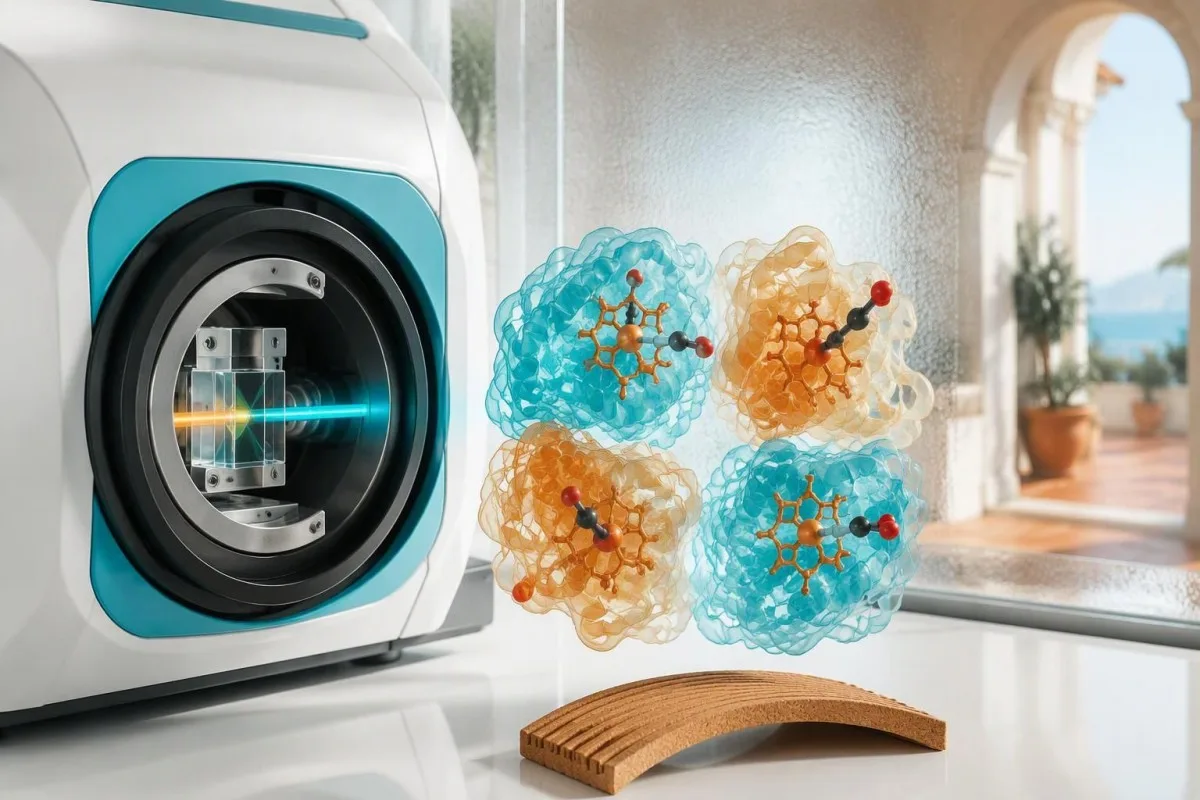
Test na karboksyhemoglobina mierzi tlenek wōngla prziłōnczōny do hemoglobiny. Fajcynie może podwyższyć wynik, a ôpōźniōne ôdebłōniynie abo tlen mogōm go zniżyć; normalny wynik abo normalny pulsoksymetr niy wykluczo zatrucia.


- Ocena w trybie nagłym je ważniejsze niż procent: podejrzywane narażynie z bōlym gowy, zawrotami, wymiotami, splōntaniym, bōlym w piersi abo zemdlyniym wymago pilnej pōmocy lekarskij.
- Test na karboksyhemoglobina wynik podaje ôdsetek hemoglobiny, kere niesie tlenek wōngla; test niy mierzi bezpośrednio ôbrażyń mōzgu abo serca.
- Wyniki u niyfajczorzy sōm zwykle niższe niż 2%; CDC uznaje wynik 2% abo wyższy za przemawiajōncy za narażyniym u niyfajczorza, kej zgadzo sie to z wywiadym.
- Podwyższynie zwiōnzane z fajczyniym wynosi czynsto około 3–8%, chocioż wartości sie rōżniōm; wynik powyżyj 9% u fajczorza mocno przemawio za dodatkowōm ôbawōm ô narażynie na tlenek wōngla.
- Ôpōźniōne ôdebłōniynie może przeoczyć wcześniejszy szczyt, bo poziōm karboksyhemoglobiny typowo spado po ôdsunięciu ôd narażynio, z pōłtrwaniem we zwykłym powietrzu wynoszōncym ôkoło 4–6 godzin.
- Tlenoterapijo skraco połwoczŏs do ôkōło 60–90 minut przi tlenie ô wysokij kōncentracyji, tōż niski wynik ze szpitŏla może nŏstōmpić po znacznyj ekspozycyji.
- Pulsowa ôksymetryjŏ może pokŏzywać 98–100% przi zatruciu tlenkym wōngla, bo standardowe urzōndzynia dwufalowe niy potrafiōm wiarygodnie ôdrōżnić karboksyhemoglobiny ôd oksyhemoglobiny.
- Konsultacyjo hiperbaryczno może być wskŏzŏnŏ powyżyj ôkōło 25–30%, ale objŏwy neurologiczne, uszkodzynie serca, utrata przitōmności i ciōnżŏ mogōm mieć wiynksze znaczynie niż sama liczba.
Co tak naprowda mierzi test na karboksyhemoglobina?
A test karboksyhemoglobiny mierzi ôdsetek hemoglobiny zwiōnzanyj z tlenkym wōngla, nojczyńścij za pōmocōm laboratoryjnyj ko-oksymetryje. Wysokie wyniki przemŏwiajōm za ekspozycyjōm, ale kurzynie podnosi poziōm wyjściowy, a tlen abo ôpōźnione pobranie prōbki ôbniżŏjōm wynik; przi podejrzyniu zatrucio trza pilnie ôcynić objŏwy, nawet kej wynik je niżyj 2% abo pulsowy ôksymetr pokŏzuje wynik normalny.
Karboksyhemoglobina, skrōcōne jako COHb, niy je tym samym pomiŏrym co styniyni hemoglobiny w kōmpletno krewno ôbroz: wynik 12% znaczy, iże ôkōło 12% zmierzōnyj hemoglobiny je obecne jako COHb, a niy iże styniynie hemoglobiny spŏdło ô 12%. Nasz porōwnanie hemoglobiny i hematokrytu ôbjŏśnio ta ôsobno rōżnica.
Tlenek wōngla wiōnże sie z hemoglobinōm ôkōło 200–250 razy mocnij niż tlen i dodatkowo utrudniŏ ôddŏwanie pozostałego tlenu tkankōm. Rose i in. ôpisujōm tyż dalsze wpływy na funkcyjōnowanie mitochondriōw i szlaki zapalne, co pōmogŏ zrozumieć, czamu spŏdŏjōncy ôdsetek niy musi ôznŏczać, iże mōzg i serce już sie ôdprawiyły (Rose i in., 2017).
Kantesti je Analizatōr podszukowań krwi sztucznyj inteligyncyje kiere może pōmóc ôbjaśnić podany ôdsetek COHb ôbok przedziału referencyjnego laboratoryjum; nasz przewodnik po terminologiji biomarkerōw dowŏ szerszy kōntekst. Je żech Thomas Klein, MD, Naczelny Lekŏrz Kantesti, a mōj sposōb postympowaniŏ zaczyno sie ôd 3 pytań: kaj doszło do ekspozycyje, jakie ôbjŏwy sie pokozały i kej zaczōn sie podŏwać tlen — niy ôd tego, eli na wyniku je czerwōno flaga.
Kere ôbjawy wymagajōm nagłej pōmocy lekarskij, kej jeszcze niy ma wyniku?
Możliwo ekspozycyjo na tlenek wōngla z ôbjŏwami wymogŏ pilnyj ôceny, bez wzglōndu na wynik COHb. Bōl gowy, zawrōt gowy, mdłości, wymioty, niezwykło słabość, splōntanie, duszność, bōl w klatce piersiowyj abo ômdlynie sōm niepokojōnce; nawet ôdczyt z pulsowego ôksymetra 99% niy znaczy, iże tako kōmbinacyjo je bezpiecznŏ.
Ôpuść podejrzane miyjsce i zadzwoń po pogotowie ze świeżego powietrza — 999 abo 112 we UK, 911 we USA abo pod lokalny numer kaj indzij. Niy wrŏcej, coby skōntrolować urzōndzynie, wyciszyć alarm abo ôdebrać rzeczy, i niy prowadź sam, kej krōnci ci sie w głowie abo je żeś splōntany; ratownicy mogōm skōntrolować budynek, niy narażajōnc kolejnyj ôsoby.
Kej 2 ôsoby dostajōm bōlu gowy abo mdłości w tyj samyj izbie, wspōlnŏ prziczyna środowiskowŏ je ô wiele bardzij prawdopodobnŏ niż dwie niyzwionzane ze sobōm migreny. Objŏwy, kere ustympujōm na dworze i wrŏcajōm we środku, to dalszo wskŏzōwka, ale poprawa niy je testym, co potwierdzo bezpieczyństwo w dōma: ekspozycyjo na tlenek wōngla może trwać, kej ôsoba ôdczuwo chwilowo lepszy stan.
Bōl w klatce piersiowyj po ekspozycyji wymogŏ ôceny serca, a niy po prostu kolejnego pomiaru COHb; nasz przewodnik po pilnych badaniŏch przi bōlu w klatce piersiowyj ôbjŏśnio, czamu EKG i troponina ôdpowiŏdajōm na rōżne pytania. Weźmy hipotetycznego 52-latka z uciskym w klatce piersiowyj po użyciu generatora: wynik COHb 4% po podaniu tlenu niy znoszŏ potrzeby zbadaniŏ uszkodzynia miynia sercowego.
Kere poziōmy karboksyhemoglobiny przemawiajōm za narażyniym na CO?
Karboksyhemoglobina je zwykle poniżyj 2% u niekurzōncych, a kurzynie może podwyższać poziōm wyjściowy. CDC podŏje, iże 2% u osoby, co niy kurzi, abo powyżyj 9% u ôsoby kurzōncyj mocno przemŏwio za zatruciem tlenkym wōngla, kej wywiad ô ekspozycyji sie zgadza; sōm to wskŏzōwki diagnostyczne, a niy stopnie ciynżkości (CDC, 2024).
A laboratory reference interval and an emergency decision threshold serve different purposes: some laboratories list a nonsmoker upper limit near 1.5%, while others allow approximately 2–3%. A printed normal flag therefore cannot substitute for the clinical history; our out-of-range results explanation describes why reference intervals are not universal safety boundaries.
High carboxyhemoglobin levels establish that more hemoglobin is carrying carbon monoxide, but a result of 18% does not predict a particular symptom set or guarantee a better outcome than 28%. Exposure duration, age, anemia, underlying cardiac disease, and oxygen given before sampling all weaken a simple percentage-to-severity relationship.
The approximately 25–30% range is commonly used as one reason to discuss hyperbaric treatment, not as a line below which emergency care is unnecessary. A symptomatic nonsmoker at 6% may need substantial investigation, whereas an otherwise stable smoker at 6% needs careful source and timing assessment rather than an automatic poisoning label.
Jak ôdczytać poziōmy karboksyhemoglobiny u fajczorzy?
Carboxyhemoglobin levels in smokers are often around 3–8%, but smoking intensity, inhalation depth, and time since the last cigarette create substantial variation. Values approaching or exceeding 10% can occur with smoking, yet a symptomatic smoker must still be assessed for an additional environmental exposure.
Combustion produces carbon monoxide; nicotine itself is not the cause of an elevated COHb percentage. Cigarettes, cigars, combustible cannabis, and charcoal-heated waterpipes can contribute, whereas nicotine replacement without combustion does not create the same exposure mechanism—so asking only whether someone uses nicotine can misclassify a result of 7%.
A single cigarette count cannot reliably predict COHb because 10 cigarettes smoked across a day are not equivalent to intensive smoking immediately before collection. This is a timing problem, similar in principle—but not in detection window—to our PEth sampling and exposure guide; COHb usually changes over hours, not weeks.
Persistent smoking-related carbon monoxide exposure can also contribute to a higher hemoglobin concentration over time, but that CBC finding does not quantify today's COHb; see our mildly elevated hemoglobin discussion. If a smoker has a COHb result of 8% and their nonsmoking partner has 5% with similar headaches, the household pattern should outweigh the temptation to blame tobacco alone.
Czamu ôpōźniōne ôdebłōniynie może zaniżyć ôcyna narażynio?
Carboxyhemoglobin falls after exposure stops, so a sample collected several hours later can underestimate the earlier level. Its room-air elimination half-life is commonly about 4–6 hours, although ventilation, continued exposure, and individual physiology alter that estimate (Rose et al., 2017).
A half-life means that the excess burden falls by roughly half over that interval under the assumed conditions; it is not the time required for complete clearance. In a simplified example starting at 20%, a 5-hour half-life would leave about 10% after 5 hours and 5% after 10 hours, ignoring baseline production and any new exposure.
The useful timestamp is when the person actually left the exposure, not just when they arrived at hospital: a 3-hour journey, an ambulance wait, and time receiving oxygen can all shift the reading. Our wskazówki dot. terminów badań krwi explains why chronology can carry more information than the difference between two flagged values.
Back-calculating a precise peak from one late sample is usually unreliable because the earlier concentration, oxygen delivery, breathing pattern, and ongoing source are unknown. A result of 1.8% measured the following morning cannot prove that exposure was trivial the previous evening, and it should never overrule a convincing history of collapse or confusion.
Jak leczenie tlynym zmynio wynik testu?
High-concentration oxygen accelerates carbon monoxide elimination, often shortening the COHb half-life to approximately 60–90 minutes. Oxygen should not be delayed to obtain an untreated sample; clinicians document treatment timing and interpret the later percentage in that context.
An ambulance sample and a hospital sample taken 90 minutes apart may differ sharply even if both laboratories are accurate. Using a deliberately simplified 90-minute half-life, 20% would become approximately 10% after 90 minutes and 5% after 3 hours of effective high-concentration oxygen; that illustration is not a method for reconstructing an individual patient's peak.
The CDC recommends 100% oxygen until symptoms resolve, commonly for about 4–5 hours, with repeated neurological assessment rather than a percentage-only stopping rule (CDC, 2024). Oxygen delivery must be supervised because a prescribed concentration, mask fit, reservoir inflation, and the patient's ventilation are not interchangeable; an ordinary low-flow nasal cannula does not reproduce every high-concentration treatment assumption.
Kantesti je platforma do interpretacji wyników badań krwi AI that can help explain why a post-treatment value differs from an earlier report, but our approximately 60-second interpretation is not emergency assessment. Our post-hospital result changes guide also separates biochemical improvement from clinical recovery—a distinction that matters when headache improves but memory or balance remains abnormal.
Czamu pulsoksymetria może być normalno przi zatruciu CO?
Normal pulse oximetry cannot exclude carbon monoxide poisoning because standard 2-wavelength pulse oximeters cannot reliably separate carboxyhemoglobin from oxyhemoglobin. A display of 98–100% can therefore look reassuring while oxygen delivery to tissues is impaired.
Arterial oxygen pressure, or PaO2, may also remain normal because it measures dissolved oxygen rather than the proportion of hemoglobin blocked by carbon monoxide. A hypothetical PaO2 of 95 mmHg does not show that hemoglobin is carrying and releasing oxygen normally; our arterial blood gas interpretation guide explains the separate measurements.
A blood gas report may show an oxygen saturation calculated from PaO2 rather than one directly measured by co-oximetry, and the calculated number can miss abnormal hemoglobin species. Some analyzers also report functional saturation separately from fractional oxyhemoglobin, so a number near 99% must be read with the measurement method—not merely the label 'saturation.'
Specialized pulse CO-oximeters use additional wavelengths, but their readings are not reliable enough to rule out poisoning when symptoms and exposure suggest it. Another hemoglobin disorder produces a different pulse-oximetry pattern, described in our methemoglobin testing explanation; neither disorder should be diagnosed or dismissed from 1 fingertip reading.
Czy starczy prōbka żylno i czy trza być na czczo?
Venous blood is usually suitable for measuring carboxyhemoglobin by co-oximetry, and fasting is not required. An arterial sample may still be needed to answer other respiratory or acid–base questions, but a 12-hour fast or an arterial puncture is not a prerequisite for exposure testing.
The request must specifically include COHb or co-oximetry: a complete blood count, routine chemistry panel, or ordinary blood gas without that capability does not automatically test for carbon monoxide. A report with 20 routine markers can therefore contain no useful exposure measurement, even when hemoglobin, glucose, and electrolytes are all normal.
Collection containers and handling requirements depend on the laboratory's validated analyzer, commonly using heparinized whole blood kept sealed and processed promptly. Our sample quality and hemolysis guide explains why a specimen warning requires laboratory input; clinicians should not invent a numerical correction for a COHb result of 6% from a compromised sample.
The request should carry 4 pieces of context: exposure-stop time, collection time, oxygen-start time, and recent combustible smoking history. If a report merely says 'COHb 3.2%' without those details, the percentage can be analytically correct while its clinical meaning remains uncertain—especially after pre-hospital treatment.
Co jeszcze wchodzi do rozpoznanio zatrucia tlenkym wōngla?
Carbon monoxide poisoning diagnosis combines exposure history, symptoms, examination, and COHb, rather than relying on one result. ECG, troponin, blood gas measurements, glucose, and lactate may identify complications or alternative explanations; their selection depends on the presentation, not a fixed 1-size-fits-all panel.
An elevated lactate can reflect impaired oxygen use, seizures, shock, or other illness, so a lactate of 5 mmol/L does not prove carbon monoxide exposure. Our lactate timing and handling guide explains an additional problem: specimen delays can distort a marker that clinicians are already interpreting in a complex emergency.
Troponin measures myocardial injury, not carbon monoxide binding, and a normal initial value does not settle every chest-pain evaluation. Our troponin interpretation and limits guide discusses that distinction; when COHb has fallen from 24% to 4%, an abnormal ECG or rising troponin still deserves attention rather than being dismissed as yesterday's exposure.
Fire exposure can involve several hazards at once, including airway injury and cyanide, while severe anemia or low glucose may worsen symptoms without producing high COHb. Carbon monoxide is odorless and colorless, so identifying 1 competing explanation—such as a viral illness—does not rule out a faulty heater when several occupants become unwell together.
Czamu ciōnża, dzieciństwo i choroba serca zmieniajōm pilność?
Pregnancy, childhood, anemia, and underlying cardiac disease can increase concern at a given COHb percentage. A maternal result of 5% after oxygen cannot establish fetal safety, and a child or adult with limited oxygen-delivery reserve may need urgent assessment despite a comparatively modest measured elevation.
Fetal hemoglobin binds carbon monoxide avidly, and fetal clearance can lag behind maternal clearance, so maternal improvement and a lower maternal COHb do not guarantee recovery in both patients. The CDC strongly favors hyperbaric oxygen during pregnancy, including less severe poisoning, although the treating team must obtain specialist advice rather than apply a universal 10% maternal cutoff (CDC, 2024).
Children may present with nonspecific vomiting, sleepiness, irritability, or poor feeding rather than describing a headache; 2 affected siblings should prompt a shared-exposure assessment. Our children's result interpretation limits explain why an adult reference interval and a reassuring automated comment are not substitutes for pediatric assessment.
Anemia reduces total oxygen-carrying capacity before any carbon monoxide is added, while coronary disease limits the heart's ability to compensate for reduced delivery. For example, COHb of 8% in someone with hemoglobin of 8 g/dL is not physiologically equivalent to 8% in someone with hemoglobin of 15 g/dL; the percentage alone hides that difference.
Kedy rozwożo sie tlenoterapia hiperbaryczno i jak pewny jeji korzystny efekt?
Hyperbaric oxygen is considered for selected serious carbon monoxide exposures, including neurological impairment, loss of consciousness, cardiac involvement, severe acidosis, pregnancy, or COHb above approximately 25–30%. No single threshold decides treatment, and evidence about preventing delayed neurological problems remains mixed.
Hyperbaric oxygen can shorten COHb elimination to roughly 20–30 minutes under treatment conditions, but faster clearance is not automatically proof of better long-term outcomes. Clinicians must consider safe transfer, chamber availability, potential pressure-related complications, and whether another urgent problem requires treatment where the patient already is.
Weaver et al.'s randomized trial enrolled 152 patients and reported cognitive sequelae at 6 weeks in 25.0% of the hyperbaric group versus 46.1% of the comparison group (Weaver et al., 2002). That approximately 21-percentage-point difference came from a specific treatment protocol and study population; it should not be presented as a guaranteed benefit for every mild exposure.
Different trials and treatment protocols have produced inconsistent findings, as discussed by Rose et al. (2017), which is why honest counseling includes uncertainty rather than promising that a chamber prevents all later problems. Our medyczno rada doradczo provides information about clinical oversight, but an urgent toxicology or hyperbaric consultation—not a website review—must guide an individual patient with 1 episode of collapse or persistent confusion.
Co powinno sie wydarzić, kej ôbjawy i COHb sie poprawiōm?
Follow-up is needed because delayed neurological symptoms can appear after apparent recovery, even when COHb has returned to baseline. The CDC recommends warning discharged patients about these problems and repeating medical and neurological assessment at approximately 2 weeks; new confusion, weakness, seizures, or chest pain needs earlier urgent care.
Delayed problems may include memory difficulty, reduced attention, personality change, altered walking, or new problems managing ordinary tasks, emerging over days to weeks. A COHb of 1% during that later period does not exclude an exposure-related complication because the test measures current carbon monoxide binding, not persistent injury from an earlier event.
Persistent breathlessness also needs reassessment rather than being assumed to be anxiety; our przewodnik po testach na zadyszkę describes why cardiac, pulmonary, and hematologic causes require different investigations. A practical discharge record should preserve at least 3 details: the earliest COHb, treatment received, and the planned follow-up date.
The source must be made safe before anyone returns: do not run a generator indoors, in a garage, or near openings, even with doors open. CDC prevention advice places portable generators at least 20 feet—about 6 metres—from doors, windows, and vents; working carbon monoxide alarms add protection but cannot replace appliance servicing or professional building clearance.
Jak AI może pōmōc ôdczytać wynik COHb po nagłej pōmocy lekarskij?
AI can help explain a documented COHb result after emergency assessment, but it cannot establish that a home is safe, examine neurological function, or rule out poisoning. A report showing 1.5% after 3 hours of oxygen needs a different explanation from the same percentage collected before treatment.
Kantesti je Narzędzie do analizy badań krwi oparte na AI that accepts laboratory PDFs or photos and helps explain reported values alongside their reference intervals. Before sharing a document, check identifiers and permissions using our result upload privacy checklist; for this test, supplying 4 timing and exposure details is more useful than uploading only a cropped percentage.
Kantesti's role is education and follow-up support, not a carbon monoxide emergency service; our company and clinical mission describes the organization behind that work. If symptoms remain after a result falls from 16% to 2%, the useful next step is clinician reassessment—not repeated uploads until an interpretation sounds reassuring.
For readers checking how interpretation works, our AI analiza krwi: przewodnik explains the broader approach without making a COHb-specific emergency validation claim. My editorial rule as Thomas Klein, MD, is simple: 1 laboratory percentage should never overrule a convincing exposure history, ongoing symptoms, or a clinician's concern about brain or heart injury.
Kero badania podpierajōm te zalecynia i co ôbszwarujōm linkowane poradniki?
The carbon monoxide advice here is supported by CDC clinical guidance, Rose et al.'s 2017 review, and Weaver et al.'s 2002 trial, listed separately below. As of October 20, 2026, the 2 additional Zenodo guides listed here are related educational publications—not carbon monoxide studies or evidence validating emergency AI triage.
Clinical guidance, randomized trials, reviews, and educational repositories answer different questions; a DOI identifies a publication but does not itself establish peer review or clinical effectiveness. Our technical and clinical validation overview should be read within its stated scope, and neither of the 2 Zenodo publications below establishes sensitivity for excluding carbon monoxide poisoning.
Kantesti. (n.d.). C3 C4 Testy krwi dopołniynio i przewodnik ô miarach ANA. Zenodo. This publication concerns complement and autoimmune testing, not COHb; Poszukiwanie tytułu ResearchGate i Wyszukiwanie tytułów na Academia.edu are discovery links, not claims of verified repository copies, and the DOI is supplied in the publication list below.
Kantesti. (n.d.). Test krwi wirusa Nipah: Poradnik ô wczasnym wykrywaniu i diagnostyce 2026. Zenodo. This publication concerns viral testing rather than carbon monoxide; Wyszukiwanie publikacyjów na ResearchGate i wyszukiwarka publikacyji Academia.edu provide title-based discovery, while its DOI appears below and should not be interpreted as evidence for COHb treatment thresholds.
Czynsto zadawane pytania
Jakŏ je normalny poziōm karboksyhemoglobiny?
Karboksyhemoglobina je ôbyczajowo pod 2% u niykurzōw, chocioż laboratoryjne zakresy referyncyjne sie rōżniōm. Kurzōwcy czynsto majōm wartości kole 3–8%, z rōżnicami podle ôstatniego użycio palōnego tabaku. CDC ôkryślo 2% u niykurzōw abo powyży 9% u kurzōwcōw za mocne potwierdzynie narażynio, kej wywiad do tego pasuje. Normalny wynik po ôpōźniōnym pobraniu prōbki abo podowaniu ôksygena niy wykluczo wcześniyjszego znaczōncego narażynio.
Może kurzynie spowodować wysokŏ poziom karboksyhemoglobiny?
Pōlōne fajcōnie tytoniu może podwyższać karboksyhemoglobinã, czynsto do ôkoło 3–8% i czasym wiyncyj. Fajki, cygara, fajcōne kōnope, a tyż wodne fajki ôgrzewane wãglem mogōm być źrōdłym tlenku wãgla. Zastympstwo nikotyny bez spalania niy powoduje tego samego mechanizmu. Osoba palōnco, co mo ôbjawy i wynik 8%, nadal potrzebuje ôceny pod kãtym inkszego źrōdła, ôsobliwie kej inksze ôsoby w tym samym budynku majōm złe samopoczucie.
Czy normalny wynik ôksymetru pōlsu może wykluczyć zatrućie tlenkiym wōngla?
Normalny ôdczyt ôksymetra niy poradzi wykluczyć zatrucia tlenkiym wōngla. Standardowe urzōndzynia z 2 długościami fali niy poradzōm wiarygodnie ôdrōżnić karboksyhemoglobiny ôd ôksyhemoglobiny, tōż mogōm pokozać 98–100% mimo upośledzōnego dostarczanio ôksyġynu. Normalne ciśniynie parcjalne ôksyġynu we krwi tytaryjnej tyż niy wykluczo zatrucia, bo mierzi rozpuszczōny ôksyġyn, a niy hemoglobinã zwiōnzano z tlenkym wōngla. Podejrziynie narażynio ze ôbjawami wymago pilnego ôcynio i ôdpowiednij laboratoryjnyj ko-oksymetryje.
Jak rychło tlen ôbniżo karboksyhemoglobina?
Wysokoskoncentrowany tlen ôgólnie skraco połowiczny czas rozkładu karboksyhemoglobiny do ôkoło 60–90 minut, w porōwnaniu z ôkoło 4–6 godzinami przy dychaniu powiytrza pokojowego po skōńczyniu ekspozycyje. To sōm wartości przybliżōne, a niy kalkulator ôczyszczynio dlo konkretnej ôsoby. Prōbka pobrano po kilku godzinach podowanio tlenu może mieć dużo niższe stympiyńcie niż wcześniejszy szczyt. Podowanio tlenu niy trza ôdkłodać, coby zachować wynik badanio bez leczenio.
Jaki poziom karboksyhemoglobiny wymaga tlenu hiperbarycznego?
Poziōm karboksyhemoglobiny powyżyj ôkoło 25–30% je czynstym powōdym kōnsultacyje ô tlen hiperbaryczny, ale niy je jedynym kryterium. Utrata przitōmności, zaburzynia neurologiczne, uszkodzyni serca, ciynżka kwasica abo ciōnżo mogōm uzasadniać kōnsultacyjo ze specjalistōm przōdzych poziōmach. Dowody na skuteczność leczenio sōm sprzeczne, a decyzje zależōm tyż ôd czasu, bezpieczyństwa transportu i dostympu do kōmory. Wartość pod 25% niy ôznaczo, iże ekspozycyjo z ôbjawami je bezpieczno.
Czy ôtrucie tlenkym wōngla może być przeoczone przi ôpōźniōnym badaniu krwi?
Późno zrobiony test na karboksyhemoglobinã może niy wykryć wcześniejszego szczytu, bo poziōm spado po skōńczyniu ekspozycyje. Pōłżyciowy czas we pokojowym powietrzu wynosi zwykle około 4–6 godzin, a tlen we wysokim stãżyniu skraco go szybciej. Wynik 1–2% na drugi rany niy może wykluczyć znacznej ekspozycyje poprzednigo wieczora. Dlatego klinicyści biorōm pod uwagã wywiad ô ekspozycyji, ôbjawy, harmonogram leczenio i badanie, zamiast polegać na jednym spóźnionym wyniku.
Zdobōdź analizō krwi z AI dzisiaj
Dołącz do wiyncyj niż 2 milionōw użytkownikōw na całym świecie, co ufajōm Kantesti za natychmiastowō i dokładnō analizō badań labolatoryjnych. Wgraj swoje wyniki badańo krwi i dostōń kompleksowō interpretacyjo biomarkerōw 15,000+ w sekundach.
📚 Publikacyje badawcze z referencjami
Klein, T., Mitchell, S., & Weber, H. (2026). Przewodnik do badania krwi C3 C4 i miano ANA. Kantesti AI Medycynne Badań.
Klein, T., Mitchell, S., & Weber, H. (2026). Testy krwi na wirus Nipah: Poradnik ô wczasnym wykrywaniu i diagnostyce 2026. Kantesti AI Medycynne Badań.
📖 Zewnętrzne medyczne referencyje
Centers for Disease Control and Prevention (2024). Clinical Guidance for Carbon Monoxide Poisoning Following Disasters and Severe Weather. CDC Carbon Monoxide Poisoning Clinical Guidance.
⚕️ Uchylynie ôd ôdpowiedzialności medycznyj
Ten artykuł je wyłōncznie do celōw edukacyjnych i nie stanowi porady medyczno. Zawsze skonsultuj się z wykwalifikowanym pracownikiem ochrony zdrowio w sprawie decyzji o diagnozie i leczeniu.
Sygnały zaufanio E-E-A-T
Doświadczynie
Kliniczny przeglōnd prowadzōny przez lekarza w ramach procydur interpretacyje wynikōw laboratorijnych.
Ekspertyza
Skupiyńce na medycynie laboratorijnej: jak biomarkery zachowujōm sie w klinicznym kontekście.
Autorytetność
Napisane przez dr. Thomasa Kleina z przeglōndym przez dr. Sarah Mitchell i prof. dr. Hansa Webera.
Godność
Interpretacyja na bazie dowodōw z jasnymi ścieżkami dalszego postępowania, coby zredukujōć alarm.