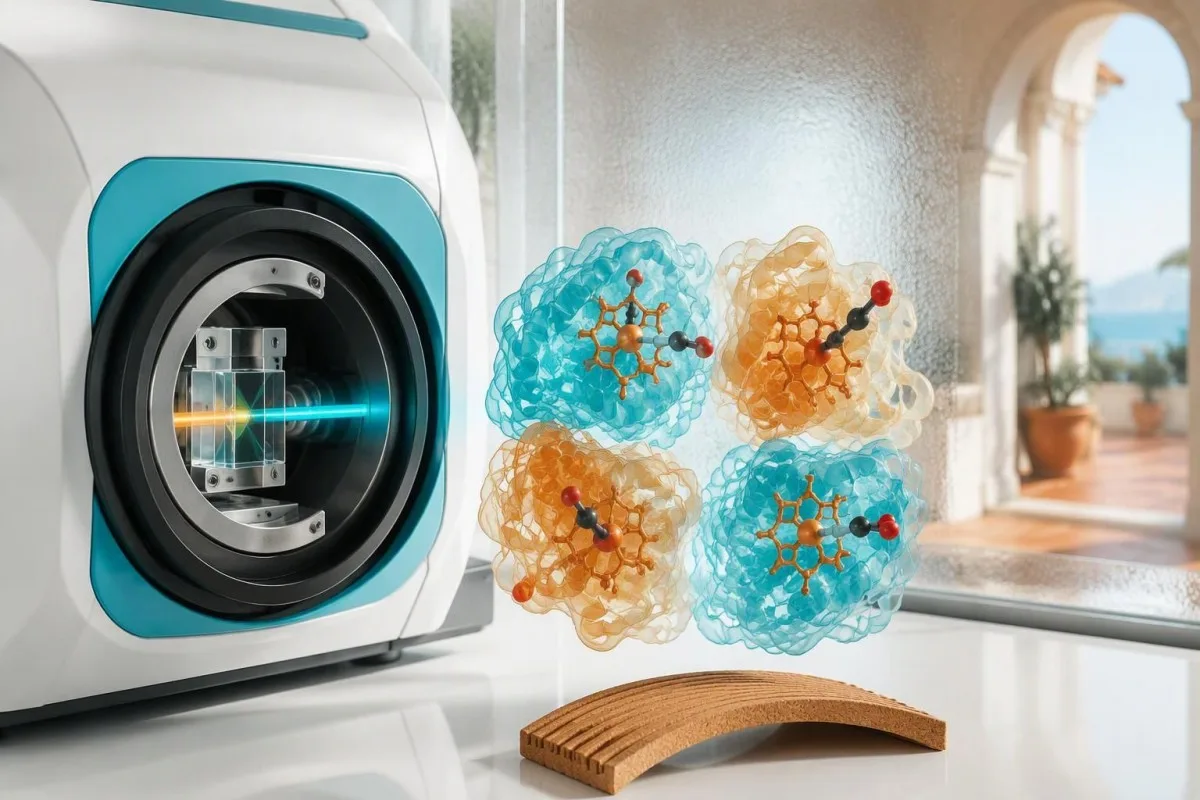
Тестот за карбоксихемоглобин го мери јаглеродниот моноксид врзан за хемоглобинот. Пушењето може да го зголеми резултатот, додека одложеното земање примерок или кислородот може да го намалат; нормален резултат или нормална вредност на пулсниот оксиметар не може да исклучи труење.


- Итна проценка е поважно од процентот: сомнителна изложеност со главоболка, вртоглавица, повраќање, збунетост, болка во градите или колапс бара итна медицинска помош.
- Тест за карбоксихемоглобин резултатите ја прикажуваат процентуалната застапеност на хемоглобинот што пренесува јаглероден моноксид; тестот не го мери директно оштетувањето на мозокот или срцето.
- Резултати кај непушачи најчесто се под 2%; CDC смета дека резултат од 2% или повисок укажува на изложеност кај непушач кога анамнезата е соодветна.
- Зголемувања поврзани со пушењето често се околу 3–8%, иако вредностите варираат; вредност над 9% кај пушач силно укажува на дополнителна причина за загриженост во врска со изложеност на јаглероден моноксид.
- Одложено земање примерок може да го пропушти претходниот врв, бидејќи карбоксихемоглобинот обично се намалува со полуживот од приближно 4–6 часа при дишење на собен воздух откако ќе престане изложеноста.
- Кислородната терапија го скратува полуживотот на приближно 60–90 минути со кислород во висока концентрација, па ниска вредност добиена во болница може да следи по значителна изложеност.
- Пулсната оксиметрија може да прикажува 98–100% при труење со јаглерод моноксид, бидејќи стандардните уреди со 2 бранови должини не можат сигурно да разликуваат карбоксихемоглобин од оксихемоглобин.
- Консултација за хипербарична терапија може да биде соодветна при вредности над приближно 25–30%, но невролошките наоди, срцевата повреда, губењето на свеста и бременоста може да бидат поважни од бројката.
Што всушност мери тестот за карбоксихемоглобин?
A тест за карбоксихемоглобин го мери процентот на хемоглобин врзан за јаглероден моноксид, обично со лабораториска кооксиметрија. Високите резултати ја поткрепуваат изложеноста, но пушењето ја зголемува почетната вредност, а кислородот или одложеното земање примерок го намалуваат резултатот; при сомневање за труење е неопходна итна процена врз основа на симптомите дури и кога резултатот е под 2% или пулсниот оксиметар покажува нормална вредност.
Карбоксихемоглобин, скратено COHb, не е истото мерење како концентрацијата на хемоглобин при комплетна крвна слика: резултат од 12% значи дека приближно 12% од измерениот хемоглобин е присутен како COHb, а не дека концентрацијата на хемоглобин се намалила за 12%. Нашиот споредување на хемоглобинот и хематокритот ја објаснува таа разлика.
Јаглеродниот моноксид се врзува за хемоглобинот со околу 200–250 пати поголем афинитет од кислородот, а исто така го отежнува ослободувањето на преостанатиот кислород во ткивата. Rose et al. опишуваат дополнителни ефекти врз митохондријалната функција и воспалителните патишта, што помага да се објасни зошто намалувањето на процентот не мора да значи дека мозокот и срцето закрепнале (Rose et al., 2017).
Кантести е анализатор на крвна слика со вештачка интелигенција што може да помогне да се објасни пријавениот процент на COHb во однос на референтниот интервал на лабораторијата; нашиот водич за биомаркерска терминологија дава поширок контекст. Јас сум Thomas Klein, MD, главен медицински директор на Kantesti, а мојот пристап започнува со 3 прашања: каде се случила изложеноста, кои симптоми се појавиле и кога започнал кислородниот третман — а не дали извештајот има црвено предупредување.
Кои симптоми бараат итна медицинска помош пред да се добие резултат?
Можното изложување на јаглероден моноксид со симптоми бара итна процена, без оглед на резултатот за COHb. Главоболка, вртоглавица, мачнина, повраќање, невообичаена слабост, збунетост, отежнато дишење, болка во градите или несвестица се загрижувачки; дури ни отчитување од 99% на пулсен оксиметар не значи дека оваа комбинација е безопасна.
Напуштете ја средината во која постои сомневање за изложеност и повикајте итна помош од свеж воздух — 999 или 112 во ОК, 911 во САД или локалниот број на друго место. Не влегувајте повторно за да го проверите уредот, да го исклучите алармот или да ги земете личните работи, и не возете сами ако ви се врти или сте збунети; службите за итни случаи можат да ја проценат зградата без да создадат уште една жртва.
Кога 2 лица ќе добијат главоболка или мачнина во иста просторија, заедничка причина во животната средина станува многу поверојатна од две неповрзани мигрени. Симптомите што се подобруваат надвор, а се враќаат внатре, се уште еден показател, но подобрувањето не е проверка дека домот е безбеден: изложеноста на јаглероден моноксид може да продолжи додека лицето привремено се чувствува подобро.
Болката во градите по изложеност бара процена на срцето, а не само уште едно мерење на COHb; нашиот водич за итно испитување при болка во градите објаснува зошто ЕКГ и тропонинот даваат одговори на различни прашања. Да разгледаме хипотетички случај на 52-годишно лице со притисок во градите по употреба на генератор: COHb од 4% измерен по кислородна терапија не ја исклучува потребата да се испита повреда на миокардот.
Кои нивоа на карбоксихемоглобин укажуваат на изложеност на CO?
Карбоксихемоглобинот кај непушачите најчесто е под 2%, додека пушењето може да доведе до повисоки почетни вредности. CDC наведува дека вредност од 2% кај непушач или над 9% кај пушач силно укажува на труење со јаглероден моноксид кога историјата на изложеноста соодветствува; ова се дијагностички показатели, а не степени на сериозност (CDC, 2024).
A laboratory reference interval and an emergency decision threshold serve different purposes: some laboratories list a nonsmoker upper limit near 1.5%, while others allow approximately 2–3%. A printed normal flag therefore cannot substitute for the clinical history; our out-of-range results explanation describes why reference intervals are not universal safety boundaries.
High carboxyhemoglobin levels establish that more hemoglobin is carrying carbon monoxide, but a result of 18% does not predict a particular symptom set or guarantee a better outcome than 28%. Exposure duration, age, anemia, underlying cardiac disease, and oxygen given before sampling all weaken a simple percentage-to-severity relationship.
The approximately 25–30% range is commonly used as one reason to discuss hyperbaric treatment, not as a line below which emergency care is unnecessary. A symptomatic nonsmoker at 6% may need substantial investigation, whereas an otherwise stable smoker at 6% needs careful source and timing assessment rather than an automatic poisoning label.
Како треба да се толкуваат нивоата на карбоксихемоглобин кај пушачи?
Carboxyhemoglobin levels in smokers are often around 3–8%, but smoking intensity, inhalation depth, and time since the last cigarette create substantial variation. Values approaching or exceeding 10% can occur with smoking, yet a symptomatic smoker must still be assessed for an additional environmental exposure.
Combustion produces carbon monoxide; nicotine itself is not the cause of an elevated COHb percentage. Cigarettes, cigars, combustible cannabis, and charcoal-heated waterpipes can contribute, whereas nicotine replacement without combustion does not create the same exposure mechanism—so asking only whether someone uses nicotine can misclassify a result of 7%.
A single cigarette count cannot reliably predict COHb because 10 cigarettes smoked across a day are not equivalent to intensive smoking immediately before collection. This is a timing problem, similar in principle—but not in detection window—to our PEth sampling and exposure guide; COHb usually changes over hours, not weeks.
Persistent smoking-related carbon monoxide exposure can also contribute to a higher hemoglobin concentration over time, but that CBC finding does not quantify today's COHb; see our mildly elevated hemoglobin discussion. If a smoker has a COHb result of 8% and their nonsmoking partner has 5% with similar headaches, the household pattern should outweigh the temptation to blame tobacco alone.
Зошто одложеното земање примерок може да ја потцени изложеноста?
Carboxyhemoglobin falls after exposure stops, so a sample collected several hours later can underestimate the earlier level. Its room-air elimination half-life is commonly about 4–6 hours, although ventilation, continued exposure, and individual physiology alter that estimate (Rose et al., 2017).
A half-life means that the excess burden falls by roughly half over that interval under the assumed conditions; it is not the time required for complete clearance. In a simplified example starting at 20%, a 5-hour half-life would leave about 10% after 5 hours and 5% after 10 hours, ignoring baseline production and any new exposure.
The useful timestamp is when the person actually left the exposure, not just when they arrived at hospital: a 3-hour journey, an ambulance wait, and time receiving oxygen can all shift the reading. Our водич за темпирање на крвните тестови explains why chronology can carry more information than the difference between two flagged values.
Back-calculating a precise peak from one late sample is usually unreliable because the earlier concentration, oxygen delivery, breathing pattern, and ongoing source are unknown. A result of 1.8% measured the following morning cannot prove that exposure was trivial the previous evening, and it should never overrule a convincing history of collapse or confusion.
Како лекувањето со кислород го менува резултатот од тестот?
High-concentration oxygen accelerates carbon monoxide elimination, often shortening the COHb half-life to approximately 60–90 minutes. Oxygen should not be delayed to obtain an untreated sample; clinicians document treatment timing and interpret the later percentage in that context.
An ambulance sample and a hospital sample taken 90 minutes apart may differ sharply even if both laboratories are accurate. Using a deliberately simplified 90-minute half-life, 20% would become approximately 10% after 90 minutes and 5% after 3 hours of effective high-concentration oxygen; that illustration is not a method for reconstructing an individual patient's peak.
The CDC recommends 100% oxygen until symptoms resolve, commonly for about 4–5 hours, with repeated neurological assessment rather than a percentage-only stopping rule (CDC, 2024). Oxygen delivery must be supervised because a prescribed concentration, mask fit, reservoir inflation, and the patient's ventilation are not interchangeable; an ordinary low-flow nasal cannula does not reproduce every high-concentration treatment assumption.
Кантести е AI платформа за толкување крвна слика that can help explain why a post-treatment value differs from an earlier report, but our approximately 60-second interpretation is not emergency assessment. Our post-hospital result changes guide also separates biochemical improvement from clinical recovery—a distinction that matters when headache improves but memory or balance remains abnormal.
Зошто пулсната оксиметрија може да биде нормална при труење со CO?
Normal pulse oximetry cannot exclude carbon monoxide poisoning because standard 2-wavelength pulse oximeters cannot reliably separate carboxyhemoglobin from oxyhemoglobin. A display of 98–100% can therefore look reassuring while oxygen delivery to tissues is impaired.
Arterial oxygen pressure, or PaO2, may also remain normal because it measures dissolved oxygen rather than the proportion of hemoglobin blocked by carbon monoxide. A hypothetical PaO2 of 95 mmHg does not show that hemoglobin is carrying and releasing oxygen normally; our arterial blood gas interpretation guide explains the separate measurements.
A blood gas report may show an oxygen saturation calculated from PaO2 rather than one directly measured by co-oximetry, and the calculated number can miss abnormal hemoglobin species. Some analyzers also report functional saturation separately from fractional oxyhemoglobin, so a number near 99% must be read with the measurement method—not merely the label 'saturation.'
Specialized pulse CO-oximeters use additional wavelengths, but their readings are not reliable enough to rule out poisoning when symptoms and exposure suggest it. Another hemoglobin disorder produces a different pulse-oximetry pattern, described in our methemoglobin testing explanation; neither disorder should be diagnosed or dismissed from 1 fingertip reading.
Дали е доволен венски примерок и дали е потребно гладување?
Venous blood is usually suitable for measuring carboxyhemoglobin by co-oximetry, and fasting is not required. An arterial sample may still be needed to answer other respiratory or acid–base questions, but a 12-hour fast or an arterial puncture is not a prerequisite for exposure testing.
The request must specifically include COHb or co-oximetry: a complete blood count, routine chemistry panel, or ordinary blood gas without that capability does not automatically test for carbon monoxide. A report with 20 routine markers can therefore contain no useful exposure measurement, even when hemoglobin, glucose, and electrolytes are all normal.
Collection containers and handling requirements depend on the laboratory's validated analyzer, commonly using heparinized whole blood kept sealed and processed promptly. Our sample quality and hemolysis guide explains why a specimen warning requires laboratory input; clinicians should not invent a numerical correction for a COHb result of 6% from a compromised sample.
The request should carry 4 pieces of context: exposure-stop time, collection time, oxygen-start time, and recent combustible smoking history. If a report merely says 'COHb 3.2%' without those details, the percentage can be analytically correct while its clinical meaning remains uncertain—especially after pre-hospital treatment.
Што друго е дел од дијагнозата на труење со јаглерод моноксид?
Carbon monoxide poisoning diagnosis combines exposure history, symptoms, examination, and COHb, rather than relying on one result. ECG, troponin, blood gas measurements, glucose, and lactate may identify complications or alternative explanations; their selection depends on the presentation, not a fixed 1-size-fits-all panel.
An elevated lactate can reflect impaired oxygen use, seizures, shock, or other illness, so a lactate of 5 mmol/L does not prove carbon monoxide exposure. Our lactate timing and handling guide explains an additional problem: specimen delays can distort a marker that clinicians are already interpreting in a complex emergency.
Troponin measures myocardial injury, not carbon monoxide binding, and a normal initial value does not settle every chest-pain evaluation. Our troponin interpretation and limits guide discusses that distinction; when COHb has fallen from 24% to 4%, an abnormal ECG or rising troponin still deserves attention rather than being dismissed as yesterday's exposure.
Fire exposure can involve several hazards at once, including airway injury and cyanide, while severe anemia or low glucose may worsen symptoms without producing high COHb. Carbon monoxide is odorless and colorless, so identifying 1 competing explanation—such as a viral illness—does not rule out a faulty heater when several occupants become unwell together.
Зошто бременоста, детската возраст и срцевите заболувања ја зголемуваат итноста?
Pregnancy, childhood, anemia, and underlying cardiac disease can increase concern at a given COHb percentage. A maternal result of 5% after oxygen cannot establish fetal safety, and a child or adult with limited oxygen-delivery reserve may need urgent assessment despite a comparatively modest measured elevation.
Fetal hemoglobin binds carbon monoxide avidly, and fetal clearance can lag behind maternal clearance, so maternal improvement and a lower maternal COHb do not guarantee recovery in both patients. The CDC strongly favors hyperbaric oxygen during pregnancy, including less severe poisoning, although the treating team must obtain specialist advice rather than apply a universal 10% maternal cutoff (CDC, 2024).
Children may present with nonspecific vomiting, sleepiness, irritability, or poor feeding rather than describing a headache; 2 affected siblings should prompt a shared-exposure assessment. Our children's result interpretation limits explain why an adult reference interval and a reassuring automated comment are not substitutes for pediatric assessment.
Anemia reduces total oxygen-carrying capacity before any carbon monoxide is added, while coronary disease limits the heart's ability to compensate for reduced delivery. For example, COHb of 8% in someone with hemoglobin of 8 g/dL is not physiologically equivalent to 8% in someone with hemoglobin of 15 g/dL; the percentage alone hides that difference.
Кога се разгледува хипербаричен кислород и колку е сигурна неговата корист?
Hyperbaric oxygen is considered for selected serious carbon monoxide exposures, including neurological impairment, loss of consciousness, cardiac involvement, severe acidosis, pregnancy, or COHb above approximately 25–30%. No single threshold decides treatment, and evidence about preventing delayed neurological problems remains mixed.
Hyperbaric oxygen can shorten COHb elimination to roughly 20–30 minutes under treatment conditions, but faster clearance is not automatically proof of better long-term outcomes. Clinicians must consider safe transfer, chamber availability, potential pressure-related complications, and whether another urgent problem requires treatment where the patient already is.
Weaver et al.'s randomized trial enrolled 152 patients and reported cognitive sequelae at 6 weeks in 25.0% of the hyperbaric group versus 46.1% of the comparison group (Weaver et al., 2002). That approximately 21-percentage-point difference came from a specific treatment protocol and study population; it should not be presented as a guaranteed benefit for every mild exposure.
Different trials and treatment protocols have produced inconsistent findings, as discussed by Rose et al. (2017), which is why honest counseling includes uncertainty rather than promising that a chamber prevents all later problems. Our медицински советодавен одбор provides information about clinical oversight, but an urgent toxicology or hyperbaric consultation—not a website review—must guide an individual patient with 1 episode of collapse or persistent confusion.
Што треба да се направи откако симптомите и COHb ќе се подобрат?
Follow-up is needed because delayed neurological symptoms can appear after apparent recovery, even when COHb has returned to baseline. The CDC recommends warning discharged patients about these problems and repeating medical and neurological assessment at approximately 2 weeks; new confusion, weakness, seizures, or chest pain needs earlier urgent care.
Delayed problems may include memory difficulty, reduced attention, personality change, altered walking, or new problems managing ordinary tasks, emerging over days to weeks. A COHb of 1% during that later period does not exclude an exposure-related complication because the test measures current carbon monoxide binding, not persistent injury from an earlier event.
Persistent breathlessness also needs reassessment rather than being assumed to be anxiety; our водич за тестирање на отежнато дишење describes why cardiac, pulmonary, and hematologic causes require different investigations. A practical discharge record should preserve at least 3 details: the earliest COHb, treatment received, and the planned follow-up date.
The source must be made safe before anyone returns: do not run a generator indoors, in a garage, or near openings, even with doors open. CDC prevention advice places portable generators at least 20 feet—about 6 metres—from doors, windows, and vents; working carbon monoxide alarms add protection but cannot replace appliance servicing or professional building clearance.
Како AI може да помогне во толкувањето на извештајот за COHb по итната медицинска помош?
AI can help explain a documented COHb result after emergency assessment, but it cannot establish that a home is safe, examine neurological function, or rule out poisoning. A report showing 1.5% after 3 hours of oxygen needs a different explanation from the same percentage collected before treatment.
Кантести е Алатка за анализа на крвни тестови со вештачка интелигенција (AI) that accepts laboratory PDFs or photos and helps explain reported values alongside their reference intervals. Before sharing a document, check identifiers and permissions using our result upload privacy checklist; for this test, supplying 4 timing and exposure details is more useful than uploading only a cropped percentage.
Kantesti's role is education and follow-up support, not a carbon monoxide emergency service; our company and clinical mission describes the organization behind that work. If symptoms remain after a result falls from 16% to 2%, the useful next step is clinician reassessment—not repeated uploads until an interpretation sounds reassuring.
For readers checking how interpretation works, our водич за технологијата за AI толкување explains the broader approach without making a COHb-specific emergency validation claim. My editorial rule as Thomas Klein, MD, is simple: 1 laboratory percentage should never overrule a convincing exposure history, ongoing symptoms, or a clinician's concern about brain or heart injury.
Кои истражувања ги поткрепуваат овие совети и што опфаќаат поврзаните водичи?
The carbon monoxide advice here is supported by CDC clinical guidance, Rose et al.'s 2017 review, and Weaver et al.'s 2002 trial, listed separately below. As of October 20, 2026, the 2 additional Zenodo guides listed here are related educational publications—not carbon monoxide studies or evidence validating emergency AI triage.
Clinical guidance, randomized trials, reviews, and educational repositories answer different questions; a DOI identifies a publication but does not itself establish peer review or clinical effectiveness. Our technical and clinical validation overview should be read within its stated scope, and neither of the 2 Zenodo publications below establishes sensitivity for excluding carbon monoxide poisoning.
Kantesti. (n.d.). C3 C4 тест на крвта за комплемент и водич за титрација на ANA. Zenodo. This publication concerns complement and autoimmune testing, not COHb; Пребарување на наслов на ResearchGate и Академско пребарување на наслови на .edu are discovery links, not claims of verified repository copies, and the DOI is supplied in the publication list below.
Kantesti. (n.d.). Крвен тест за вирус Нипа: Водич за рано откривање и дијагноза 2026. Zenodo. This publication concerns viral testing rather than carbon monoxide; Пребарување на публикации на ResearchGate и Пребарување публикации на Academia.edu provide title-based discovery, while its DOI appears below and should not be interpreted as evidence for COHb treatment thresholds.
Често поставувани прашања
Кое е нормално ниво на карбоксихемоглобин?
Карбоксихемоглобинот обично е под 2% кај непушачите, иако референтните интервали во лабораториите се разликуваат. Кај пушачите вредностите често се околу 3–8%, со варијации зависно од неодамнешната употреба на запаливи тутунски производи. CDC смета дека вредност од 2% кај непушач или над 9% кај пушач силно укажува на изложеност кога анамнезата соодветствува. Нормален резултат по одложено земање примерок или примена на кислород не исклучува претходна значителна изложеност.
Дали пушењето може да предизвика високи нивоа на карбоксихемоглобин?
Пушењето со согорување може да го зголеми карбоксихемоглобинот, често на приближно 3–8% и понекогаш и повисоко. Цигарите, пурите, канабисот што се пуши, како и водните лулиња загревани со јаглен, можат да придонесат за присуство на јаглерод моноксид. Заменската терапија со никотин без согорување не го предизвикува истиот механизам. Пушач со симптоми и резултат од 8% сепак треба да се процени за дополнителен извор, особено кога и други лица во истата зграда не се чувствуваат добро.
Може ли нормално отчитување на пулсниот оксиметар да исклучи труење со јаглерод моноксид?
Нормално отчитување на пулсниот оксиметар не може да исклучи труење со јаглерод моноксид. Стандардните уреди со 2 бранови должини не можат сигурно да разликуваат карбоксихемоглобин од оксихемоглобин, па затоа може да прикажат 98–100% и покрај нарушената испорака на кислород. Нормален парцијален притисок на кислород во артериската крв исто така не исклучува труење, бидејќи го мери растворениот кислород, а не хемоглобинот врзан за јаглерод моноксид. При сомневање за изложеност со симптоми, потребни се итна проценка и соодветна лабораториска кооксиметрија.
Колку брзо кислородот го намалува карбоксихемоглобинот?
Кислородот со висока концентрација вообичаено го скратува полуживотот на карбоксихемоглобинот на приближно 60–90 минути, во споредба со околу 4–6 часа при дишење на собен воздух откако ќе заврши изложувањето. Ова се приближни вредности, а не калкулатор за утврдување на индивидуалното време потребно за елиминација. Примерок земен по неколку часа терапија со кислород може да покаже многу пониска вредност од претходниот пик. Не треба да се одложува давањето кислород за да се зачува резултатот од тестирање без третман.
Кое ниво на карбоксихемоглобин бара хипербаричен кислород?
Ниво на карбоксихемоглобин над приближно 25–30% е честа причина за консултација за хипербаричен кислород, но не е единствениот критериум. Губење на свеста, невролошко оштетување, срцева повреда, тешка ацидоза или бременост може да оправдаат разгледување од специјалист и при пониски нивоа. Доказите за третманот се мешани, а одлуките зависат и од времето, безбедноста при транспорт и достапноста на комора. Вредност под 25% не значи дека симптоматската изложеност е безбедна.
Може ли труењето со јаглерод моноксид да се пропушти при задоцнето испитување на крвта?
0 Закаснет тест на карбоксихемоглобин може да го пропушти претходниот максимум, бидејќи нивото опаѓа по прекинот на изложеноста. Полуживотот на собен воздух обично е околу 4–6 часа, а кислородот во висока концентрација го намалува побрзо. Резултат од 1–2% следното утро не може да исклучи значителна изложеност претходната вечер. Затоа, лекарите се потпираат на анамнезата за изложеноста, симптомите, временската линија на третманот и прегледот, а не само на еден задоцнет резултат.
Добијте AI анализа на крв со моќ на вештачка интелигенција денес
Придружете се на над 2 милиони корисници ширум светот кои му веруваат на Kantesti за инстантна, точна анализа на лабораториски тестови. Поставете ги вашите резултати од крвна слика и добијте сеопфатно толкување на 15,000+ биомаркери за секунди.
📚 Реферирани научни публикации
Клајн, Т., Мичел, С., и Вебер, Х. (2026). C3 C4 комплементарен тест на крвта и водич за ANA титри. AI Medical Research.
Клајн, Т., Мичел, С., и Вебер, Х. (2026). Крвен тест за вирус Нипа: Водич за рано откривање и дијагноза 2026. AI Medical Research.
📖 Надворешни медицински референци
Центри за контрола и превенција на болести (2024). Clinical Guidance for Carbon Monoxide Poisoning Following Disasters and Severe Weather. CDC Carbon Monoxide Poisoning Clinical Guidance.
⚕️ Медицинско одрекување од одговорност
Овој напис е само за едукативни цели и не претставува медицински совет. Секогаш консултирајте се со квалификуван здравствен работник за одлуки за дијагноза и третман.
Сигнали за доверба E-E-A-T
Искуство
Клиничка ревизија водена од лекар за работните текови на толкување на лабораториски резултати.
Експертиза
Фокус на лабораториска медицина за тоа како биомаркерите се однесуваат во клинички контекст.
Авторитивност
Напишано од д-р Thomas Klein, со ревизија од д-р Sarah Mitchell и проф. д-р Hans Weber.
Доверливост
Толкување засновано на докази со јасни патеки за следење за да се намали алармирањето.