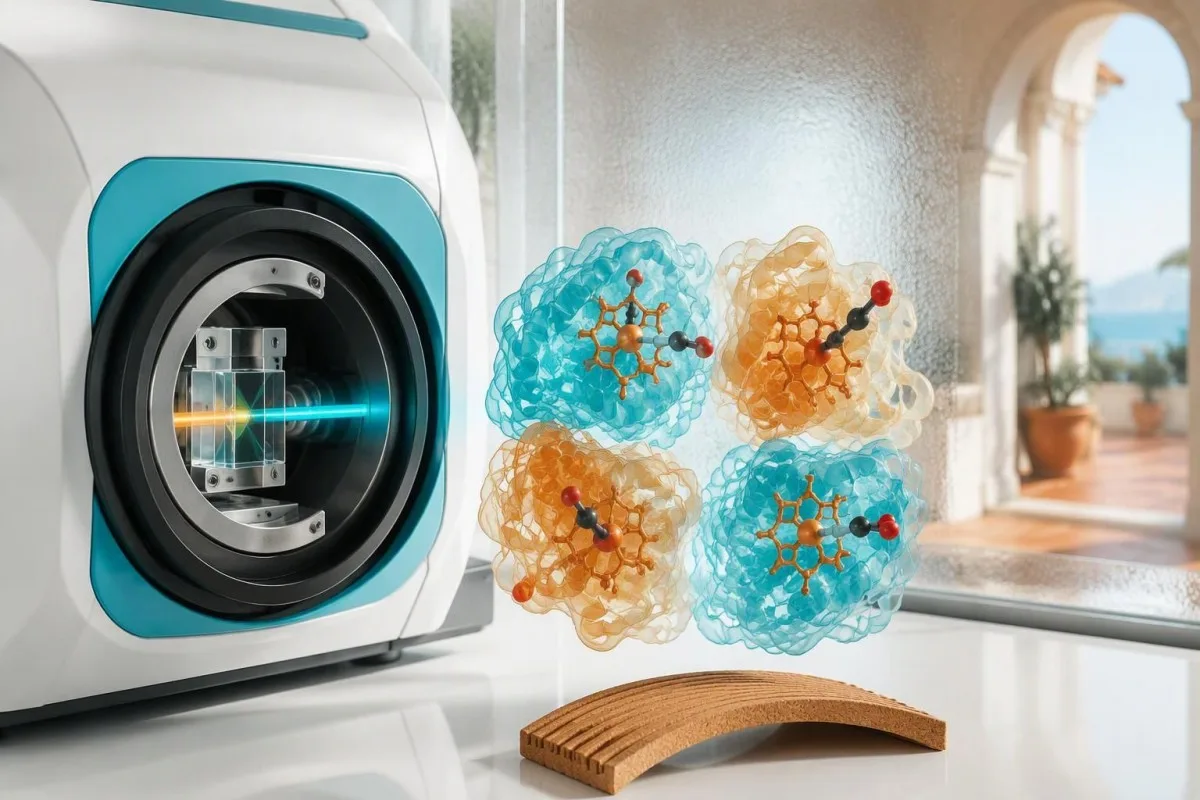
Tha deuchainn carboxyhemoglobin a’ tomhas carbon monogsad a tha ceangailte ri haemoglobin. Faodaidh smocadh an toradh àrdachadh, agus faodaidh samplachadh dàilichte no ocsaidean a lùghdachadh; chan urrainn do leughadh àbhaisteach no do mheatair pulse oximeter àbhaisteach puinnseanachadh a chur às.


- Measadh èiginn thig mus tig an ceudad: ma tha amharas ann gun deach cuideigin a nochdadh ris, agus gu bheil ceann goirt, dizziness, cur a-mach, troimh-chèile, pian sa bhroilleach no tuiteam air, feumar cuideachadh meidigeach èiginneach.
- Deuchainn carboxyhemoglobin tha na toraidhean ag innse dè an ceudad den haemoglobin a tha a’ giùlan carbon monogsad; chan eil an deuchainn a’ tomhas milleadh air an eanchainn no air a’ chridhe gu dìreach.
- Toraidhean ann an daoine nach eil a’ smocadh mar as trice tha iad fo 2%; tha an CDC den bheachd gu bheil toradh de 2% no nas àirde a’ toirt taic do nochdadh ann an neach nach eil a’ smocadh nuair a tha an eachdraidh a rèir sin.
- Àrdachaidhean co-cheangailte ri smocadh tha iad gu tric mu 3–8%, ged a bhios na luachan ag atharrachadh; tha luach os cionn 9% ann an neach-smocaidh a’ toirt taic làidir do bharrachd dragh mu nochdadh do charbon monogsad.
- Samplachadh dàilichte faodaidh e an stùc na bu tràithe a chall, oir mar as trice bidh carboxyhemoglobin a’ tuiteam le leth-bheatha san adhar àbhaisteach de mu 4–6 uairean an dèidh don nochdadh stad.
- Làimhseachadh le ocsaidean giorraichidh e an leth-bheatha gu mu 60–90 mionaid le ocsaidean àrd-dùmhlachd, agus mar sin faodaidh toradh ìosal san ospadal leantainn air nochdadh mòr.
- Ocsimeatraidh cuisle faodaidh e 98–100% a shealltainn rè puinnseanachadh le carbon monoxide oir chan urrainn do dh’innealan àbhaisteach dà-thonn eadar-dhealachadh earbsach a dhèanamh eadar carboxyhemoglobin agus oxyhemoglobin.
- Co-chomhairle mu làimhseachadh ann an seòmar hyperbarach dh’fhaodadh gum biodh e iomchaidh os cionn mu 25–30%, ach faodaidh toraidhean neurolach, dochann cridhe, call mothachaidh agus torrachas a bhith nas cudromaiche na an àireamh.
Dè dìreach a tha deuchainn carboxyhemoglobin a’ tomhas?
A deuchainn carboxyhemoglobin tomhaisidh e an ceudad de haemoglobin a tha ceangailte ri carbon monoxide, mar as trice le co-ocsimeatraidh obair-lann. Tha toraidhean àrda a’ toirt taic do nochdadh, ach bidh smocadh ag àrdachadh na bun-ìre agus bidh ocsaidean no samplachadh dàilichte a’ lùghdachadh na leughaidh; feumar measadh èiginneach stèidhichte air comharraidhean ma tha amharas air puinnseanachadh, fiù ’s ma tha an toradh nas ìsle na 2% no ma tha an ocsimeatair cuisle àbhaisteach.
Carboxyhemoglobin, air a ghiorrachadh mar COHb, chan e an aon tomhas a th’ ann ris a’ cho-chruinneachadh haemoglobin ann an cunntas fala slàn: tha toradh 12% a’ ciallachadh gu bheil mu 12% den haemoglobin a chaidh a thomhas an làthair mar COHb, chan e gun do thuit co-chruinneachadh haemoglobin 12%. Tha ar coimeas eadar haemoglòbin agus hematocrit a’ mìneachadh an eadar-dhealachaidh shònraichte sin.
Bidh carbon monoxide a’ ceangal ri haemoglobin mu 200–250 uair nas làidire na ocsaidean agus cuideachd ga dhèanamh nas duilghe dhan ocsaidean a tha air fhàgail a leigeil ma sgaoil dha na figheagan. Tha Rose et al. a’ toirt cunntas air buaidhean a bharrachd air gnìomhachd nam mitochondria agus slighean sèididh, a tha a’ cuideachadh le mìneachadh carson nach eil ceudad a tha a’ tuiteam a’ ciallachadh gu bheil an eanchainn agus an cridhe air faighinn seachad air (Rose et al., 2017).
Tha Kantesti na Anailisiche deuchainn fala AI a chuidicheas le bhith a’ mìneachadh ceudad COHb a chaidh aithris còmhla ri raon-iomraidh an obair-lann; tha ar stiùireadh air fho-ghnìomhairean a’ toirt co-theacsa nas fharsainge. Is mise Thomas Klein, MD, Prìomh Oifigear Meidigeach Kantesti, agus tha mi a’ tòiseachadh le 3 ceistean: càit an do thachair an nochdadh, dè na comharraidhean a dh’èirich, agus cuin a thòisich ocsaidean—chan ann air a bheil comharra dearg air an aithisg.
Dè na comharraidhean a dh’fheumas cùram èiginneach mus fhaighear toradh?
Feumar measadh èiginneach a dhèanamh ma dh’fhaodadh gun robh nochdadh air carbon monoxide ann agus gu bheil comharraidhean ann, ge bith dè an toradh COHb. Tha ceann goirt, mearachd, nausea, cur a-mach, laigse annasach, troimh-chèile, giorrad analach, pian sa bhroilleach no fannachadh nan adhbhar dragha; chan urrainn fiù ’s leughadh ocsimeatair cuisle de 99% an cothlamadh sin a dhèanamh sàbhailte.
Fàg an t-àite far a bheil amharas air nochdadh agus cuir fios gu na seirbheisean èiginn bhon adhar ùr—999 no 112 san RA, 911 anns na SA, no an àireamh ionadail agad ann an àiteachan eile. Na till a-steach gus an inneal a sgrùdadh, inneal-rabhaidh a chur na thosd no nithean pearsanta fhaighinn, agus na dràibh thu fhèin ma tha thu fo mhiar no troimh-chèile; faodaidh luchd-freagairt measadh a dhèanamh air an togalach gun neach eile a chur ann an cunnart.
Nuair a gheibh 2 neach ceann goirt no nausea san aon rùm, tha adhbhar àrainneachdail co-roinnte fada nas coltaiche na dà cheann ghoirt imrich neo-cheangailte. Tha comharraidhean a thig am feabhas a-muigh agus a thilleas a-staigh nan comharra eile, ach chan eil faighinn nas fheàrr na dheuchainn saoraidh aig an taigh: faodaidh nochdadh air carbon monoxide leantainn fhad ’s a tha an neach a’ faireachdainn nas fheàrr airson ùine.
Feumar measadh cridhe a dhèanamh ma tha pian sa bhroilleach ann às dèidh nochdaidh, chan e dìreach tomhas COHb eile; tha ar stiùireadh mu dheuchainnean èiginneach airson pian sa bhroilleach a’ mìneachadh carson a tha ECG agus troponin a’ freagairt cheistean eadar-dhealaichte. Smaoinich air cùis bharail de neach 52 bliadhna a dh’aois le brùthadh sa bhroilleach an dèidh gineadair a chleachdadh: cha chuireadh COHb iar-ocsaidean de 4% às don fheum sgrùdadh a dhèanamh airson dochann miocaird.
Dè na h-ìrean carboxyhemoglobin a tha a’ toirt taic do nochdadh do CO?
Tha carboxyhemoglobin mar as trice nas ìsle na 2% ann an daoine nach eil a’ smocadh, agus faodaidh smocadh luachan bun-ìre nas àirde adhbharachadh. Tha an CDC ag ràdh gu bheil 2% ann an neach nach eil a’ smocadh no os cionn 9% ann an neach a tha a’ smocadh a’ toirt taic làidir do phuinnseanachadh le carbon monoxide nuair a tha eachdraidh an nochdaidh a’ freagairt; tha iad sin nan comharraidhean breithneachaidh, chan e ìrean cho dona ’s a tha e (CDC, 2024).
A laboratory reference interval and an emergency decision threshold serve different purposes: some laboratories list a nonsmoker upper limit near 1.5%, while others allow approximately 2–3%. A printed normal flag therefore cannot substitute for the clinical history; our out-of-range results explanation describes why reference intervals are not universal safety boundaries.
High carboxyhemoglobin levels establish that more hemoglobin is carrying carbon monoxide, but a result of 18% does not predict a particular symptom set or guarantee a better outcome than 28%. Exposure duration, age, anemia, underlying cardiac disease, and oxygen given before sampling all weaken a simple percentage-to-severity relationship.
The approximately 25–30% range is commonly used as one reason to discuss hyperbaric treatment, not as a line below which emergency care is unnecessary. A symptomatic nonsmoker at 6% may need substantial investigation, whereas an otherwise stable smoker at 6% needs careful source and timing assessment rather than an automatic poisoning label.
Ciamar a bu chòir ìrean carboxyhemoglobin ann an luchd-smocaidh a leughadh?
Carboxyhemoglobin levels in smokers are often around 3–8%, but smoking intensity, inhalation depth, and time since the last cigarette create substantial variation. Values approaching or exceeding 10% can occur with smoking, yet a symptomatic smoker must still be assessed for an additional environmental exposure.
Combustion produces carbon monoxide; nicotine itself is not the cause of an elevated COHb percentage. Cigarettes, cigars, combustible cannabis, and charcoal-heated waterpipes can contribute, whereas nicotine replacement without combustion does not create the same exposure mechanism—so asking only whether someone uses nicotine can misclassify a result of 7%.
A single cigarette count cannot reliably predict COHb because 10 cigarettes smoked across a day are not equivalent to intensive smoking immediately before collection. This is a timing problem, similar in principle—but not in detection window—to our PEth sampling and exposure guide; COHb usually changes over hours, not weeks.
Persistent smoking-related carbon monoxide exposure can also contribute to a higher hemoglobin concentration over time, but that CBC finding does not quantify today's COHb; see our mildly elevated hemoglobin discussion. If a smoker has a COHb result of 8% and their nonsmoking partner has 5% with similar headaches, the household pattern should outweigh the temptation to blame tobacco alone.
Carson as urrainn do shamplachadh dàilichte an ìre nochdaidh a mheas ro ìosal?
Carboxyhemoglobin falls after exposure stops, so a sample collected several hours later can underestimate the earlier level. Its room-air elimination half-life is commonly about 4–6 hours, although ventilation, continued exposure, and individual physiology alter that estimate (Rose et al., 2017).
A half-life means that the excess burden falls by roughly half over that interval under the assumed conditions; it is not the time required for complete clearance. In a simplified example starting at 20%, a 5-hour half-life would leave about 10% after 5 hours and 5% after 10 hours, ignoring baseline production and any new exposure.
The useful timestamp is when the person actually left the exposure, not just when they arrived at hospital: a 3-hour journey, an ambulance wait, and time receiving oxygen can all shift the reading. Our stiùireadh clàr-ama deuchainn fala explains why chronology can carry more information than the difference between two flagged values.
Back-calculating a precise peak from one late sample is usually unreliable because the earlier concentration, oxygen delivery, breathing pattern, and ongoing source are unknown. A result of 1.8% measured the following morning cannot prove that exposure was trivial the previous evening, and it should never overrule a convincing history of collapse or confusion.
Ciamar a dh’atharraicheas làimhseachadh le ocsaidean toradh na deuchainn?
High-concentration oxygen accelerates carbon monoxide elimination, often shortening the COHb half-life to approximately 60–90 minutes. Oxygen should not be delayed to obtain an untreated sample; clinicians document treatment timing and interpret the later percentage in that context.
An ambulance sample and a hospital sample taken 90 minutes apart may differ sharply even if both laboratories are accurate. Using a deliberately simplified 90-minute half-life, 20% would become approximately 10% after 90 minutes and 5% after 3 hours of effective high-concentration oxygen; that illustration is not a method for reconstructing an individual patient's peak.
The CDC recommends 100% oxygen until symptoms resolve, commonly for about 4–5 hours, with repeated neurological assessment rather than a percentage-only stopping rule (CDC, 2024). Oxygen delivery must be supervised because a prescribed concentration, mask fit, reservoir inflation, and the patient's ventilation are not interchangeable; an ordinary low-flow nasal cannula does not reproduce every high-concentration treatment assumption.
Tha Kantesti na àrd-ùrlar mìneachaidh deuchainn fala AI that can help explain why a post-treatment value differs from an earlier report, but our approximately 60-second interpretation is not emergency assessment. Our post-hospital result changes guide also separates biochemical improvement from clinical recovery—a distinction that matters when headache improves but memory or balance remains abnormal.
Carson a dh’fhaodas oximetry pulse a bhith àbhaisteach rè puinnseanachadh CO?
Normal pulse oximetry cannot exclude carbon monoxide poisoning because standard 2-wavelength pulse oximeters cannot reliably separate carboxyhemoglobin from oxyhemoglobin. A display of 98–100% can therefore look reassuring while oxygen delivery to tissues is impaired.
Arterial oxygen pressure, or PaO2, may also remain normal because it measures dissolved oxygen rather than the proportion of hemoglobin blocked by carbon monoxide. A hypothetical PaO2 of 95 mmHg does not show that hemoglobin is carrying and releasing oxygen normally; our arterial blood gas interpretation guide explains the separate measurements.
A blood gas report may show an oxygen saturation calculated from PaO2 rather than one directly measured by co-oximetry, and the calculated number can miss abnormal hemoglobin species. Some analyzers also report functional saturation separately from fractional oxyhemoglobin, so a number near 99% must be read with the measurement method—not merely the label 'saturation.'
Specialized pulse CO-oximeters use additional wavelengths, but their readings are not reliable enough to rule out poisoning when symptoms and exposure suggest it. Another hemoglobin disorder produces a different pulse-oximetry pattern, described in our methemoglobin testing explanation; neither disorder should be diagnosed or dismissed from 1 fingertip reading.
A bheil sampall venous gu leòr, agus a bheil feum air trasgadh?
Venous blood is usually suitable for measuring carboxyhemoglobin by co-oximetry, and fasting is not required. An arterial sample may still be needed to answer other respiratory or acid–base questions, but a 12-hour fast or an arterial puncture is not a prerequisite for exposure testing.
The request must specifically include COHb or co-oximetry: a complete blood count, routine chemistry panel, or ordinary blood gas without that capability does not automatically test for carbon monoxide. A report with 20 routine markers can therefore contain no useful exposure measurement, even when hemoglobin, glucose, and electrolytes are all normal.
Collection containers and handling requirements depend on the laboratory's validated analyzer, commonly using heparinized whole blood kept sealed and processed promptly. Our sample quality and hemolysis guide explains why a specimen warning requires laboratory input; clinicians should not invent a numerical correction for a COHb result of 6% from a compromised sample.
The request should carry 4 pieces of context: exposure-stop time, collection time, oxygen-start time, and recent combustible smoking history. If a report merely says 'COHb 3.2%' without those details, the percentage can be analytically correct while its clinical meaning remains uncertain—especially after pre-hospital treatment.
Dè eile a bhuineas do dhearbhadh puinnseanachadh le carbon monogsad?
Carbon monoxide poisoning diagnosis combines exposure history, symptoms, examination, and COHb, rather than relying on one result. ECG, troponin, blood gas measurements, glucose, and lactate may identify complications or alternative explanations; their selection depends on the presentation, not a fixed 1-size-fits-all panel.
An elevated lactate can reflect impaired oxygen use, seizures, shock, or other illness, so a lactate of 5 mmol/L does not prove carbon monoxide exposure. Our lactate timing and handling guide explains an additional problem: specimen delays can distort a marker that clinicians are already interpreting in a complex emergency.
Troponin measures myocardial injury, not carbon monoxide binding, and a normal initial value does not settle every chest-pain evaluation. Our troponin interpretation and limits guide discusses that distinction; when COHb has fallen from 24% to 4%, an abnormal ECG or rising troponin still deserves attention rather than being dismissed as yesterday's exposure.
Fire exposure can involve several hazards at once, including airway injury and cyanide, while severe anemia or low glucose may worsen symptoms without producing high COHb. Carbon monoxide is odorless and colorless, so identifying 1 competing explanation—such as a viral illness—does not rule out a faulty heater when several occupants become unwell together.
Carson a tha torrachas, leanabachd agus tinneas cridhe ag atharrachadh cho èiginneach ’s a tha cùisean?
Pregnancy, childhood, anemia, and underlying cardiac disease can increase concern at a given COHb percentage. A maternal result of 5% after oxygen cannot establish fetal safety, and a child or adult with limited oxygen-delivery reserve may need urgent assessment despite a comparatively modest measured elevation.
Fetal hemoglobin binds carbon monoxide avidly, and fetal clearance can lag behind maternal clearance, so maternal improvement and a lower maternal COHb do not guarantee recovery in both patients. The CDC strongly favors hyperbaric oxygen during pregnancy, including less severe poisoning, although the treating team must obtain specialist advice rather than apply a universal 10% maternal cutoff (CDC, 2024).
Children may present with nonspecific vomiting, sleepiness, irritability, or poor feeding rather than describing a headache; 2 affected siblings should prompt a shared-exposure assessment. Our children's result interpretation limits explain why an adult reference interval and a reassuring automated comment are not substitutes for pediatric assessment.
Anemia reduces total oxygen-carrying capacity before any carbon monoxide is added, while coronary disease limits the heart's ability to compensate for reduced delivery. For example, COHb of 8% in someone with hemoglobin of 8 g/dL is not physiologically equivalent to 8% in someone with hemoglobin of 15 g/dL; the percentage alone hides that difference.
Cuin a thathar a’ beachdachadh air ocsaidean hyperbarach, agus dè cho cinnteach ’s a tha a’ bhuannachd?
Hyperbaric oxygen is considered for selected serious carbon monoxide exposures, including neurological impairment, loss of consciousness, cardiac involvement, severe acidosis, pregnancy, or COHb above approximately 25–30%. No single threshold decides treatment, and evidence about preventing delayed neurological problems remains mixed.
Hyperbaric oxygen can shorten COHb elimination to roughly 20–30 minutes under treatment conditions, but faster clearance is not automatically proof of better long-term outcomes. Clinicians must consider safe transfer, chamber availability, potential pressure-related complications, and whether another urgent problem requires treatment where the patient already is.
Weaver et al.'s randomized trial enrolled 152 patients and reported cognitive sequelae at 6 weeks in 25.0% of the hyperbaric group versus 46.1% of the comparison group (Weaver et al., 2002). That approximately 21-percentage-point difference came from a specific treatment protocol and study population; it should not be presented as a guaranteed benefit for every mild exposure.
Different trials and treatment protocols have produced inconsistent findings, as discussed by Rose et al. (2017), which is why honest counseling includes uncertainty rather than promising that a chamber prevents all later problems. Our bòrd comhairleachaidh meidigeach provides information about clinical oversight, but an urgent toxicology or hyperbaric consultation—not a website review—must guide an individual patient with 1 episode of collapse or persistent confusion.
Dè bu chòir tachairt às dèidh do na comharraidhean agus COHb fàs nas fheàrr?
Follow-up is needed because delayed neurological symptoms can appear after apparent recovery, even when COHb has returned to baseline. The CDC recommends warning discharged patients about these problems and repeating medical and neurological assessment at approximately 2 weeks; new confusion, weakness, seizures, or chest pain needs earlier urgent care.
Delayed problems may include memory difficulty, reduced attention, personality change, altered walking, or new problems managing ordinary tasks, emerging over days to weeks. A COHb of 1% during that later period does not exclude an exposure-related complication because the test measures current carbon monoxide binding, not persistent injury from an earlier event.
Persistent breathlessness also needs reassessment rather than being assumed to be anxiety; our stiùireadh deuchainn giorrad analach describes why cardiac, pulmonary, and hematologic causes require different investigations. A practical discharge record should preserve at least 3 details: the earliest COHb, treatment received, and the planned follow-up date.
The source must be made safe before anyone returns: do not run a generator indoors, in a garage, or near openings, even with doors open. CDC prevention advice places portable generators at least 20 feet—about 6 metres—from doors, windows, and vents; working carbon monoxide alarms add protection but cannot replace appliance servicing or professional building clearance.
Ciamar as urrainn do AI cuideachadh le mìneachadh aithisg COHb às dèidh cùram èiginneach?
AI can help explain a documented COHb result after emergency assessment, but it cannot establish that a home is safe, examine neurological function, or rule out poisoning. A report showing 1.5% after 3 hours of oxygen needs a different explanation from the same percentage collected before treatment.
Tha Kantesti na Inneal mion-sgrùdaidh deuchainn fala le cumhachd AI that accepts laboratory PDFs or photos and helps explain reported values alongside their reference intervals. Before sharing a document, check identifiers and permissions using our result upload privacy checklist; for this test, supplying 4 timing and exposure details is more useful than uploading only a cropped percentage.
Kantesti's role is education and follow-up support, not a carbon monoxide emergency service; our company and clinical mission describes the organization behind that work. If symptoms remain after a result falls from 16% to 2%, the useful next step is clinician reassessment—not repeated uploads until an interpretation sounds reassuring.
For readers checking how interpretation works, our iùl teicneòlais airson mìneachadh AI explains the broader approach without making a COHb-specific emergency validation claim. My editorial rule as Thomas Klein, MD, is simple: 1 laboratory percentage should never overrule a convincing exposure history, ongoing symptoms, or a clinician's concern about brain or heart injury.
Dè an rannsachadh a tha a’ toirt taic don chomhairle seo, agus dè tha anns na treòraichean ceangailte?
The carbon monoxide advice here is supported by CDC clinical guidance, Rose et al.'s 2017 review, and Weaver et al.'s 2002 trial, listed separately below. As of October 20, 2026, the 2 additional Zenodo guides listed here are related educational publications—not carbon monoxide studies or evidence validating emergency AI triage.
Clinical guidance, randomized trials, reviews, and educational repositories answer different questions; a DOI identifies a publication but does not itself establish peer review or clinical effectiveness. Our technical and clinical validation overview should be read within its stated scope, and neither of the 2 Zenodo publications below establishes sensitivity for excluding carbon monoxide poisoning.
Kantesti. (n.d.). Deuchainn Fuil Co-phàirteach C3 C4 & Stiùireadh Titer ANA. Zenodo. This publication concerns complement and autoimmune testing, not COHb; Rannsachadh ResearchGate agus Rannsachadh tiotal Academia.edu are discovery links, not claims of verified repository copies, and the DOI is supplied in the publication list below.
Kantesti. (n.d.). Deuchainn Fuil Bhìoras Nipah: Stiùireadh airson Lorg is Breithneachadh Tràth 2026. Zenodo. This publication concerns viral testing rather than carbon monoxide; Rannsachadh foillseachaidhean air ResearchGate agus Rannsachadh foillseachaidh Academia.edu provide title-based discovery, while its DOI appears below and should not be interpreted as evidence for COHb treatment thresholds.
Ceistean Bitheanta
Dè an ìre àbhaisteach de charboxyhaemoglobin a th’ ann?
Tha carboxyhaemoglobin gu tric fo 2% ann an daoine nach eil a’ smocadh, ged a tha raointean iomraidh obair-lann ag atharrachadh. Gu tric tha luachan timcheall air 3–8% aig luchd-smocaidh, agus bidh iad ag atharrachadh a rèir cleachdadh tombaca a ghabhas losgadh o chionn ghoirid. Tha an CDC den bheachd gu bheil 2% ann an neach nach eil a’ smocadh, no os cionn 9% ann an neach-smocaidh, a’ toirt taic làidir do dh’eòlas air carbon monoxide nuair a tha an eachdraidh a’ freagairt ris. Chan eil toradh àbhaisteach às dèidh dàil ann an samplachadh no às dèidh ocsaidean a thoirt seachad a’ cur às do dh’eòlas mòr na bu tràithe.
Am faod smocadh ìrean àrda de charboxyhaemoglobin adhbharachadh?
0 Tha smocadh stuthan a loisgeas iad àrdachadh a thoirt air carboxyhaemoglobin, gu tric gu mu 3–8% agus uaireannan nas àirde. Faodaidh toitean, cigars, cainb a thèid a losgadh agus pìoban-uisge air an teasachadh le gual-fiodha uile carbon monoxide a chur ris. Chan eil ath-chur nicotine gun losgadh ag adhbharachadh an aon uidheamachd. Feumar fhathast measadh a dhèanamh air neach-smocaidh le comharraidhean aig a bheil toradh de 8%, airson tùs a bharrachd, gu h-àraidh nuair a tha daoine eile san aon togalach tinn.
An urrainn do leughadh àbhaisteach bho mheatair pulse ocsaidean puinnseanachadh le carbon aon-ogsaid a chur às?
Chan urrainn do leughadh àbhaisteach bho oximeter cuisle puinnseanachadh le carbon monoxide a chur às. Chan urrainn do dh’innealan àbhaisteach dà-thonn eadar-dhealachadh earbsach a dhèanamh eadar carboxyhemoglobin agus oxyhemoglobin, agus mar sin dh’fhaodadh iad 98–100% a shealltainn a dh’aindeoin ’s gu bheil lìbhrigeadh ogsaidean lag. Chan eil cuideam àbhaisteach ogsaidean san artaireachd a’ cur às do phuinnseanachadh nas motha, oir tha e a’ tomhas ogsaidean sgaoilte seach haemoglobin ceangailte ri carbon monoxide. Ma tha amharas ann gun do thachair nochdadh agus gu bheil comharraidhean ann, tha feum air measadh èiginneach agus co-oximeatraidh iomchaidh san obair-lann.
Dè cho luath ’s a lùghdaicheas ogsaidean carboxyhemoglobin?
0] Bidh ocsaidean àrd-dùmhlachd mar as trice a’ giorrachadh leth-bheatha carboxyhaemoglobin gu mu 60–90 mionaid, an coimeas ri mu 4–6 uairean nuair a thathar a’ gabhail anail à èadhar an t-seòmair às dèidh don nochdadh tighinn gu crìch. ’S e luachan tuairmseach a tha seo, chan e inneal-àireimh pearsanta airson ìre glanaidh. Dh’fhaodadh sampall a thèid a chruinneachadh an dèidh grunn uairean a thìde de ocsaidean a bhith fada nas ìsle na an stùc na bu tràithe. Cha bu chòir dàil a chur air ocsaidean gus toradh deuchainn gun làimhseachadh a ghlèidheadh.
Dè an ìre de charboxyhaemoglobin a tha a’ cur feum air ocsaidean fo bhrùthadh?
Tha ìre carboxyhemoglobin os cionn mu 25–30% na adhbhar cumanta airson co-chomhairleachadh mu ocsaidean hipear-bharach, ach chan e seo an aon shlat-tomhais. Dh’fhaodadh call mothachaidh, dìth-obrach eanchainn, dochann cridhe, acidosis mhòr no torrachas beachdachadh le eòlaiche fhìreanachadh aig ìrean nas ìsle. Tha an fhianais a thaobh làimhseachaidh measgaichte, agus tha co-dhùnaidhean an urra cuideachd ris an àm, sàbhailteachd a’ ghluasaid agus cothrom air seòmar hipear-bharach. Chan eil luach fo 25% a’ ciallachadh gu bheil nochdadh samhlachail sàbhailte.
An gabh puinnseanachadh le carbon mon-ogsaid a chall air sgàth ’s gun deach deuchainn fala a dhèanamh fadalach?
0 Tha deuchainn dàil air carboxyhaemoglobin comasach air an ìre as àirde a bu tràithe a chall, oir bidh an ìre a’ tuiteam nuair a sguireas an nochdadh. Mar as trice tha leth-bheatha ann an èadhar an t-seòmair mu 4–6 uairean a thìde, agus bidh ocsaidean aig dùmhlachd àrd ga lùghdachadh nas luaithe. Chan urrainn do thoradh de 1–2% an ath mhadainn nochdadh gun robh nochdadh mòr ann an fheasgar roimhe. Mar sin, bidh luchd-clionaigeach a’ cleachdadh eachdraidh an nochdaidh, nan comharran, loidhne-tìm an làimhseachaidh agus an sgrùdaidh, seach a bhith an urra ri aon toradh fadalach.
Faigh Mion-sgrùdadh Deuchainn Fala le Cumhachd AI an-diugh
Thig còmhla ri còrr is 2 mhillean neach air feadh an t-saoghail a tha a’ earbsa Kantesti airson mion-sgrùdadh sa bhad, ceart air deuchainnean obair-lann. Luchdaich suas na toraidhean deuchainn fala agad agus faigh mìneachadh coileanta air biomarcair 15,000+ ann an diogan.
📚 Foillseachaidhean Rannsachaidh le Iomraidhean
Klein, T., Mitchell, S., & Weber, H. (2026). Stiùireadh Deuchainn Fuil Co-fhreagairt C3 C4 & Tìtear ANA. Rannsachadh Leigheis AI Kantesti.
Klein, T., Mitchell, S., & Weber, H. (2026). Deuchainn Fuil Bhìoras Nipah: Stiùireadh airson Lorg is Breithneachadh Tràth 2026. Rannsachadh Leigheis AI Kantesti.
📖 Iomraidhean Meidigeach Taobh a-muigh
Ionadan airson Smachd Ghalaran is Bacadh (CDC) (2024). Clinical Guidance for Carbon Monoxide Poisoning Following Disasters and Severe Weather. CDC Carbon Monoxide Poisoning Clinical Guidance.
⚕️ Àicheadh Meidigeach
Tha an artaigil seo dìreach airson adhbharan foghlaim agus chan eil e a’ dèanamh comhairle mheidigeach. Cuir fios an-còmhnaidh gu solaraiche cùram slàinte teisteanasach airson co-dhùnaidhean breithneachaidh is leigheis.
Comharran earbsa E-E-A-T
Eòlas
Lèirmheas clionaigeach air a stiùireadh le lighiche air sruthan-obrach mìneachaidh obair-lann.
Eòlas
Fòcas air leigheas obair-lann air mar a bhios bith-chomharraidhean (biomarkers) a’ giùlan ann an co-theacsa clionaigeach.
Ùghdarrasachd
Air a sgrìobhadh le Dr. Thomas Klein le ath-sgrùdadh le Dr. Sarah Mitchell agus Prof. Dr. Hans Weber.
Earbsachd
Mìneachadh stèidhichte air fianais le slighean leanmhainn soilleir gus dragh a lughdachadh.