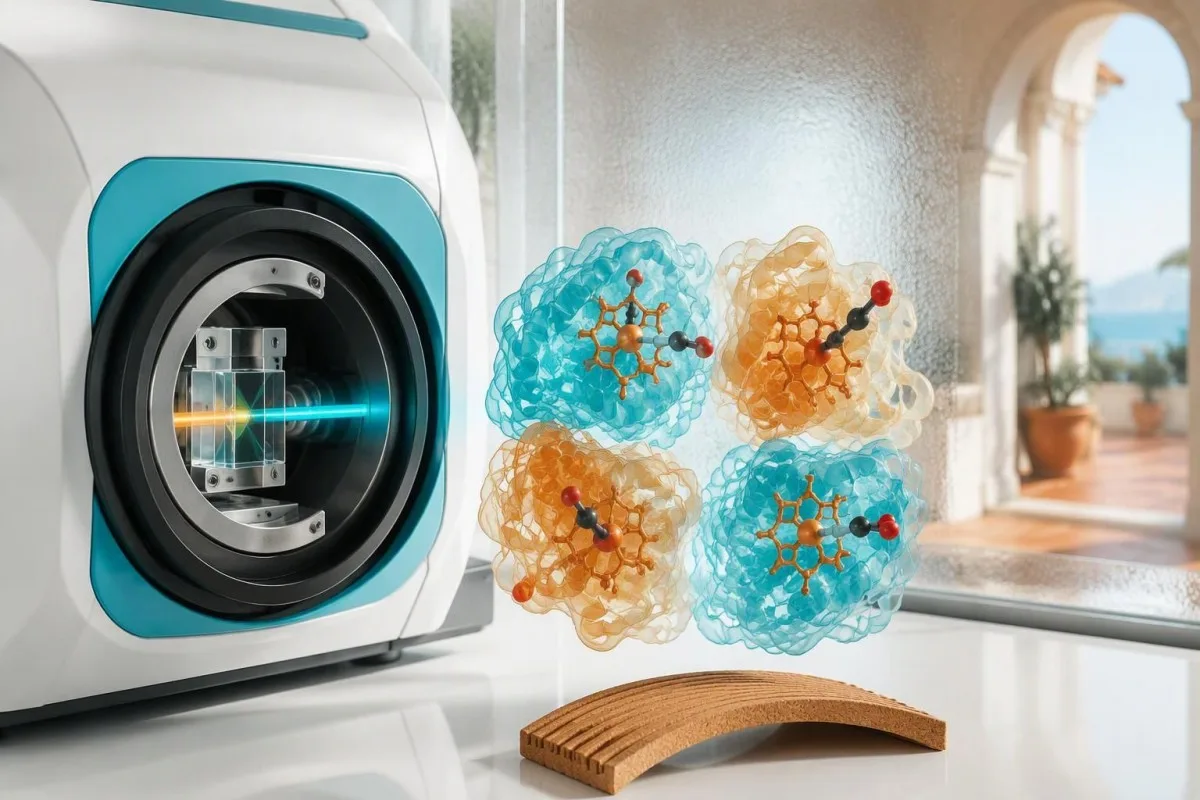
Карбоксигемоглобин анализы гемоглобинга бәйләнгән углерод газын үлчи. Тәмәке тарту нәтиҗәне күтәрергә мөмкин, ә канны соңрак алу яки кислород бирү аны түбәнәйтергә мөмкин; нормаль күрсәткеч яки пульсоксиметрның нормаль нәтиҗәсе агулануны кире какмый.


- Ашыгыч бәяләү проценттан мөһимрәк: баш авыртуы, баш әйләнү, косу, буталу, күкрәк авыртуы яки аңны югалту белән бергә булган шикле тәэсир очрагында кичекмәстән медицина ярдәме кирәк.
- Карбоксигемоглобин анализы нәтиҗәләр гемоглобинның углерод газын йөртүче өлешен процентларда күрсәтә; анализ баш мие яки йөрәк зарарлануын турыдан-туры үлчәми.
- Тәмәке тартмый торган кешеләрдәге нәтиҗәләр гадәттә 2%тан түбән була; анамнез тәэсир белән туры килгәндә, CDC тәмәке тартмый торган кешедә 2% яки аннан югары нәтиҗәне тәэсирне раслый торган билге дип саный.
- Тәмәке тартуга бәйле күтәрелешләр еш кына 3–8% тирәсендә була, әмма күрсәткечләр төрлечә; тәмәке тартучыда 9%тан югары булуы углерод газы тәэсиренә карата өстәмә борчылу өчен көчле нигез бирә.
- Канны соңрак алу баштагы иң югары күрсәткечне күрми калырга мөмкин, чөнки тәэсир туктагач, карбоксигемоглобинның яртылаш кимү вакыты бүлмә һавасында гадәттә 4–6 сәгать тәшкил итә.
- Кислород белән дәвалау югары концентрацияле кислород белән яртылай таркалу вакытын якынча 60–90 минутка кадәр кыскарта, шуңа күрә күпләп тәэсир итүдән соң хастаханәдә алынган түбән күрсәткеч булырга мөмкин.
- Пульсоксиметрия углерод газы белән агуланганда 98–100% күрсәтергә мөмкин, чөнки стандарт 2 дулкын озынлыгында эшләүче җайланмалар карбоксигемоглобинны оксигемоглобиннан ышанычлы аера алмый.
- Гипербарик кислород терапиясе буенча консультация якынча 25–30% тан югары күрсәткечтә урынлы булырга мөмкин, әмма неврологик билгеләр, йөрәк зарарлануы, аңны югалту һәм йөклелек сан күрсәткеченнән мөһимрәк булырга мөмкин.
Карбоксигемоглобин анализы нәрсәне үлчи?
A карбоксигемоглобин анализы гемоглобинның углерод газы белән бәйләнгән өлешен процентларда үлчи; гадәттә моның өчен лаборатория ко-оксиметриясе кулланыла. Югары нәтиҗәләр тәэсиргә дучар булуны раслый, әмма тәмәке тарту башлангыч дәрәҗәне күтәрә, ә кислород бирү яки соңрак үрнәк алу күрсәткечне төшерә; агулануга шик булганда, нәтиҗә 2% тан түбән яки пульсоксиметр күрсәткече нормаль булса да, симптомнарга нигезләнеп кичектергесез бәя бирергә кирәк.
Карбоксигемоглобин, кыскартылып COHb дип атала, тулы кан анализындагы гемоглобин концентрациясе белән бер үк күрсәткеч түгел: 12% нәтиҗәсе үлчәнгән гемоглобинның якынча 12% ы COHb рәвешендә булуын аңлата, гемоглобин концентрациясе 12% ка кимегән дигән сүз түгел. Безнең гемоглобин һәм гематокритны чагыштыру шул аерманы аңлата.
Углерод газы гемоглобин белән кислородка караганда якынча 200–250 тапкыр көчлерәк бәйләнә һәм калган кислородның тукымаларга бүленеп чыгуын да кыенлаштыра. Rose һ.б. митохондрия эшчәнлегенә һәм ялкынсыну юлларына өстәмә тәэсирләрне тасвирлый; бу процентның төшүе баш мие һәм йөрәкнең терелүен һәрвакыт аңлатмавын аңларга ярдәм итә (Rose et al., 2017).
Кантести - ЯИ анализы лабораториянең белешмә аралыгы белән бергә хәбәр ителгән COHb процентын аңларга ярдәм итә ала; безнең биомаркер терминологиясе буенча кулланма киңрәк мәгълүмат бирә. Мин — Thomas Klein, MD, Kantesti компаниясенең баш медицина директоры, һәм минем карашым 3 сораудан башлана: тәэсир кайда булды, нинди симптомнар барлыкка килде һәм кислородны кайчан бирә башладылар — хисапта кызыл билге бармы-юкмы дигәннән түгел.
Нәтиҗәне көткәнче нинди симптомнар ашыгыч медицина ярдәмен таләп итә?
Углерод газы тәэсиренә симптомнар белән шик булганда кичектергесез бәя бирергә кирәк, COHb нәтиҗәсенә карамастан. Баш авырту, баш әйләнү, күңел болгану, косу, гадәттән тыш хәлсезлек, аң буталу, сулыш кысылу, күкрәк авыртуы яки аңны югалту борчу тудыра; хәтта пульсоксиметрның 99% күрсәткече дә бу симптомнар җыелмасын куркынычсыз итми.
Шикле урыннан чыгып, саф һавага килгәч ашыгыч ярдәм хезмәтенә шалтыратыгыз — Бөекбританиядә 999 яки 112, АКШта 911, башка урыннарда җирле номерга. Җиһазны тикшерү, сигнализацияне сүндерү яки әйберләрне алу өчен кире кермәгез; башыгыз әйләнсә яки аң буталса, үзегез машина йөртмәгез. Ярдәм итүчеләр бинада тагын бер кешенең зыян күрүенә юл куймыйча бәя бирә ала.
Бер бүлмәдәге 2 кешенең башы авырта яки күңеле болгана башласа, моның ике бәйләнешсез мигрень түгел, ә уртак тирәлек сәбәбе булуы күпкә ихтималрак. Урамда хәл яхшырып, бина эчендә кабат начараю — тагын бер билге, әмма хәлнең яхшыруы өйдә куркыныч юклыгын расламый: кеше вакытлыча үзен яхшырак хис иткәндә дә углерод газы тәэсире дәвам итәргә мөмкин.
Тәэсирдән соң күкрәк авыртуы булганда, COHb ны кабат үлчәү генә түгел, йөрәкне тикшерү кирәк; безнең күкрәк авыртуын кичектергесез тикшерү буенча кулланма ЭКГ һәм тропонинның ни өчен төрле сорауларга җавап бирүен аңлата. Генератор кулланганнан соң күкрәге кысылган 52 яшьлек кешене күз алдына китерик: кислородтан соң алынган COHb күрсәткече 4% булса да, миокард зарарлануын тикшерү кирәклеген юкка чыгармый.
Карбоксигемоглобинның нинди дәрәҗәләре CO тәэсирен раслый?
Тәмәке тартмаучыларда карбоксигемоглобин гадәттә 2% тан түбән була, ә тәмәке тарту башлангыч күрсәткечне югарырак күтәрергә мөмкин. CDC мәгълүматы буенча, тәмәке тартмаучыда 2% яки тәмәке тартучыда 9% тан югары күрсәткеч, тәэсир тарихы туры килгән очракта, углерод газы белән агулануны көчле раслый; болар — диагноз куюга ярдәм итүче билгеләр, авырлык дәрәҗәләре түгел (CDC, 2024).
A laboratory reference interval and an emergency decision threshold serve different purposes: some laboratories list a nonsmoker upper limit near 1.5%, while others allow approximately 2–3%. A printed normal flag therefore cannot substitute for the clinical history; our out-of-range results explanation describes why reference intervals are not universal safety boundaries.
High carboxyhemoglobin levels establish that more hemoglobin is carrying carbon monoxide, but a result of 18% does not predict a particular symptom set or guarantee a better outcome than 28%. Exposure duration, age, anemia, underlying cardiac disease, and oxygen given before sampling all weaken a simple percentage-to-severity relationship.
The approximately 25–30% range is commonly used as one reason to discuss hyperbaric treatment, not as a line below which emergency care is unnecessary. A symptomatic nonsmoker at 6% may need substantial investigation, whereas an otherwise stable smoker at 6% needs careful source and timing assessment rather than an automatic poisoning label.
Тәмәке тартучыларда карбоксигемоглобин дәрәҗәләрен ничек аңлатырга?
Carboxyhemoglobin levels in smokers are often around 3–8%, but smoking intensity, inhalation depth, and time since the last cigarette create substantial variation. Values approaching or exceeding 10% can occur with smoking, yet a symptomatic smoker must still be assessed for an additional environmental exposure.
Combustion produces carbon monoxide; nicotine itself is not the cause of an elevated COHb percentage. Cigarettes, cigars, combustible cannabis, and charcoal-heated waterpipes can contribute, whereas nicotine replacement without combustion does not create the same exposure mechanism—so asking only whether someone uses nicotine can misclassify a result of 7%.
A single cigarette count cannot reliably predict COHb because 10 cigarettes smoked across a day are not equivalent to intensive smoking immediately before collection. This is a timing problem, similar in principle—but not in detection window—to our PEth sampling and exposure guide; COHb usually changes over hours, not weeks.
Persistent smoking-related carbon monoxide exposure can also contribute to a higher hemoglobin concentration over time, but that CBC finding does not quantify today's COHb; see our mildly elevated hemoglobin discussion. If a smoker has a COHb result of 8% and their nonsmoking partner has 5% with similar headaches, the household pattern should outweigh the temptation to blame tobacco alone.
Ни өчен канны соңрак алу тәэсирне бәяләп бетермәскә мөмкин?
Carboxyhemoglobin falls after exposure stops, so a sample collected several hours later can underestimate the earlier level. Its room-air elimination half-life is commonly about 4–6 hours, although ventilation, continued exposure, and individual physiology alter that estimate (Rose et al., 2017).
A half-life means that the excess burden falls by roughly half over that interval under the assumed conditions; it is not the time required for complete clearance. In a simplified example starting at 20%, a 5-hour half-life would leave about 10% after 5 hours and 5% after 10 hours, ignoring baseline production and any new exposure.
The useful timestamp is when the person actually left the exposure, not just when they arrived at hospital: a 3-hour journey, an ambulance wait, and time receiving oxygen can all shift the reading. Our кан анализы вакытын билгеләү өчен кулланма explains why chronology can carry more information than the difference between two flagged values.
Back-calculating a precise peak from one late sample is usually unreliable because the earlier concentration, oxygen delivery, breathing pattern, and ongoing source are unknown. A result of 1.8% measured the following morning cannot prove that exposure was trivial the previous evening, and it should never overrule a convincing history of collapse or confusion.
Кислород белән дәвалау анализ нәтиҗәсен ничек үзгәртә?
High-concentration oxygen accelerates carbon monoxide elimination, often shortening the COHb half-life to approximately 60–90 minutes. Oxygen should not be delayed to obtain an untreated sample; clinicians document treatment timing and interpret the later percentage in that context.
An ambulance sample and a hospital sample taken 90 minutes apart may differ sharply even if both laboratories are accurate. Using a deliberately simplified 90-minute half-life, 20% would become approximately 10% after 90 minutes and 5% after 3 hours of effective high-concentration oxygen; that illustration is not a method for reconstructing an individual patient's peak.
The CDC recommends 100% oxygen until symptoms resolve, commonly for about 4–5 hours, with repeated neurological assessment rather than a percentage-only stopping rule (CDC, 2024). Oxygen delivery must be supervised because a prescribed concentration, mask fit, reservoir inflation, and the patient's ventilation are not interchangeable; an ordinary low-flow nasal cannula does not reproduce every high-concentration treatment assumption.
Кантести - AI кан анализы нәтиҗәләрен аңлату платформасы that can help explain why a post-treatment value differs from an earlier report, but our approximately 60-second interpretation is not emergency assessment. Our post-hospital result changes guide also separates biochemical improvement from clinical recovery—a distinction that matters when headache improves but memory or balance remains abnormal.
Ни өчен CO белән агуланганда пульсоксиметрия нормаль булырга мөмкин?
Normal pulse oximetry cannot exclude carbon monoxide poisoning because standard 2-wavelength pulse oximeters cannot reliably separate carboxyhemoglobin from oxyhemoglobin. A display of 98–100% can therefore look reassuring while oxygen delivery to tissues is impaired.
Arterial oxygen pressure, or PaO2, may also remain normal because it measures dissolved oxygen rather than the proportion of hemoglobin blocked by carbon monoxide. A hypothetical PaO2 of 95 mmHg does not show that hemoglobin is carrying and releasing oxygen normally; our arterial blood gas interpretation guide explains the separate measurements.
A blood gas report may show an oxygen saturation calculated from PaO2 rather than one directly measured by co-oximetry, and the calculated number can miss abnormal hemoglobin species. Some analyzers also report functional saturation separately from fractional oxyhemoglobin, so a number near 99% must be read with the measurement method—not merely the label 'saturation.'
Specialized pulse CO-oximeters use additional wavelengths, but their readings are not reliable enough to rule out poisoning when symptoms and exposure suggest it. Another hemoglobin disorder produces a different pulse-oximetry pattern, described in our methemoglobin testing explanation; neither disorder should be diagnosed or dismissed from 1 fingertip reading.
Венадан алынган кан үрнәге җитәме, ач тору кирәкме?
Venous blood is usually suitable for measuring carboxyhemoglobin by co-oximetry, and fasting is not required. An arterial sample may still be needed to answer other respiratory or acid–base questions, but a 12-hour fast or an arterial puncture is not a prerequisite for exposure testing.
The request must specifically include COHb or co-oximetry: a complete blood count, routine chemistry panel, or ordinary blood gas without that capability does not automatically test for carbon monoxide. A report with 20 routine markers can therefore contain no useful exposure measurement, even when hemoglobin, glucose, and electrolytes are all normal.
Collection containers and handling requirements depend on the laboratory's validated analyzer, commonly using heparinized whole blood kept sealed and processed promptly. Our sample quality and hemolysis guide explains why a specimen warning requires laboratory input; clinicians should not invent a numerical correction for a COHb result of 6% from a compromised sample.
The request should carry 4 pieces of context: exposure-stop time, collection time, oxygen-start time, and recent combustible smoking history. If a report merely says 'COHb 3.2%' without those details, the percentage can be analytically correct while its clinical meaning remains uncertain—especially after pre-hospital treatment.
Углерод газы белән агулануны диагностикалауга тагын нәрсәләр керә?
Carbon monoxide poisoning diagnosis combines exposure history, symptoms, examination, and COHb, rather than relying on one result. ECG, troponin, blood gas measurements, glucose, and lactate may identify complications or alternative explanations; their selection depends on the presentation, not a fixed 1-size-fits-all panel.
An elevated lactate can reflect impaired oxygen use, seizures, shock, or other illness, so a lactate of 5 mmol/L does not prove carbon monoxide exposure. Our lactate timing and handling guide explains an additional problem: specimen delays can distort a marker that clinicians are already interpreting in a complex emergency.
Troponin measures myocardial injury, not carbon monoxide binding, and a normal initial value does not settle every chest-pain evaluation. Our troponin interpretation and limits guide discusses that distinction; when COHb has fallen from 24% to 4%, an abnormal ECG or rising troponin still deserves attention rather than being dismissed as yesterday's exposure.
Fire exposure can involve several hazards at once, including airway injury and cyanide, while severe anemia or low glucose may worsen symptoms without producing high COHb. Carbon monoxide is odorless and colorless, so identifying 1 competing explanation—such as a viral illness—does not rule out a faulty heater when several occupants become unwell together.
Ни өчен йөклелек, балачак һәм йөрәк авырулары ашыгычлык дәрәҗәсен үзгәртә?
Pregnancy, childhood, anemia, and underlying cardiac disease can increase concern at a given COHb percentage. A maternal result of 5% after oxygen cannot establish fetal safety, and a child or adult with limited oxygen-delivery reserve may need urgent assessment despite a comparatively modest measured elevation.
Fetal hemoglobin binds carbon monoxide avidly, and fetal clearance can lag behind maternal clearance, so maternal improvement and a lower maternal COHb do not guarantee recovery in both patients. The CDC strongly favors hyperbaric oxygen during pregnancy, including less severe poisoning, although the treating team must obtain specialist advice rather than apply a universal 10% maternal cutoff (CDC, 2024).
Children may present with nonspecific vomiting, sleepiness, irritability, or poor feeding rather than describing a headache; 2 affected siblings should prompt a shared-exposure assessment. Our children's result interpretation limits explain why an adult reference interval and a reassuring automated comment are not substitutes for pediatric assessment.
Anemia reduces total oxygen-carrying capacity before any carbon monoxide is added, while coronary disease limits the heart's ability to compensate for reduced delivery. For example, COHb of 8% in someone with hemoglobin of 8 g/dL is not physiologically equivalent to 8% in someone with hemoglobin of 15 g/dL; the percentage alone hides that difference.
Гипербарик кислород кайчан карала һәм аның файдасына ышаныч ни дәрәҗәдә?
Hyperbaric oxygen is considered for selected serious carbon monoxide exposures, including neurological impairment, loss of consciousness, cardiac involvement, severe acidosis, pregnancy, or COHb above approximately 25–30%. No single threshold decides treatment, and evidence about preventing delayed neurological problems remains mixed.
Hyperbaric oxygen can shorten COHb elimination to roughly 20–30 minutes under treatment conditions, but faster clearance is not automatically proof of better long-term outcomes. Clinicians must consider safe transfer, chamber availability, potential pressure-related complications, and whether another urgent problem requires treatment where the patient already is.
Weaver et al.'s randomized trial enrolled 152 patients and reported cognitive sequelae at 6 weeks in 25.0% of the hyperbaric group versus 46.1% of the comparison group (Weaver et al., 2002). That approximately 21-percentage-point difference came from a specific treatment protocol and study population; it should not be presented as a guaranteed benefit for every mild exposure.
Different trials and treatment protocols have produced inconsistent findings, as discussed by Rose et al. (2017), which is why honest counseling includes uncertainty rather than promising that a chamber prevents all later problems. Our медицина консультатив советы provides information about clinical oversight, but an urgent toxicology or hyperbaric consultation—not a website review—must guide an individual patient with 1 episode of collapse or persistent confusion.
Симптомнар басылып, COHb дәрәҗәсе яхшырганнан соң нәрсә эшләргә кирәк?
Follow-up is needed because delayed neurological symptoms can appear after apparent recovery, even when COHb has returned to baseline. The CDC recommends warning discharged patients about these problems and repeating medical and neurological assessment at approximately 2 weeks; new confusion, weakness, seizures, or chest pain needs earlier urgent care.
Delayed problems may include memory difficulty, reduced attention, personality change, altered walking, or new problems managing ordinary tasks, emerging over days to weeks. A COHb of 1% during that later period does not exclude an exposure-related complication because the test measures current carbon monoxide binding, not persistent injury from an earlier event.
Persistent breathlessness also needs reassessment rather than being assumed to be anxiety; our сулыш алу проблемаларын тикшерү кулланмасы describes why cardiac, pulmonary, and hematologic causes require different investigations. A practical discharge record should preserve at least 3 details: the earliest COHb, treatment received, and the planned follow-up date.
The source must be made safe before anyone returns: do not run a generator indoors, in a garage, or near openings, even with doors open. CDC prevention advice places portable generators at least 20 feet—about 6 metres—from doors, windows, and vents; working carbon monoxide alarms add protection but cannot replace appliance servicing or professional building clearance.
Ашыгыч ярдәмнән соң COHb хисабын аңлатуда ЯИ ничек ярдәм итә ала?
AI can help explain a documented COHb result after emergency assessment, but it cannot establish that a home is safe, examine neurological function, or rule out poisoning. A report showing 1.5% after 3 hours of oxygen needs a different explanation from the same percentage collected before treatment.
Кантести - AI нигезендәге кан анализы тикшерү коралы that accepts laboratory PDFs or photos and helps explain reported values alongside their reference intervals. Before sharing a document, check identifiers and permissions using our result upload privacy checklist; for this test, supplying 4 timing and exposure details is more useful than uploading only a cropped percentage.
Kantesti's role is education and follow-up support, not a carbon monoxide emergency service; our company and clinical mission describes the organization behind that work. If symptoms remain after a result falls from 16% to 2%, the useful next step is clinician reassessment—not repeated uploads until an interpretation sounds reassuring.
For readers checking how interpretation works, our AI аңлату технологиясе күрсәтмәсе explains the broader approach without making a COHb-specific emergency validation claim. My editorial rule as Thomas Klein, MD, is simple: 1 laboratory percentage should never overrule a convincing exposure history, ongoing symptoms, or a clinician's concern about brain or heart injury.
Бу киңәшне нинди тикшеренүләр раслый һәм бәйләнгән белешмәлекләрдә нәрсә аңлатыла?
The carbon monoxide advice here is supported by CDC clinical guidance, Rose et al.'s 2017 review, and Weaver et al.'s 2002 trial, listed separately below. As of October 20, 2026, the 2 additional Zenodo guides listed here are related educational publications—not carbon monoxide studies or evidence validating emergency AI triage.
Clinical guidance, randomized trials, reviews, and educational repositories answer different questions; a DOI identifies a publication but does not itself establish peer review or clinical effectiveness. Our technical and clinical validation overview should be read within its stated scope, and neither of the 2 Zenodo publications below establishes sensitivity for excluding carbon monoxide poisoning.
Kantesti. (б. юк.). C3 C4 комплементы кан анализы һәм ANA титрлау кулланмасы. Zenodo. This publication concerns complement and autoimmune testing, not COHb; ResearchGate исемлеген эзләү һәм Academia.edu исемле эзләү are discovery links, not claims of verified repository copies, and the DOI is supplied in the publication list below.
Kantesti. (б. юк.). Нипах вирусын кан анализы: иртә ачыклау һәм диагностикалау буенча кулланма 2026. Zenodo. This publication concerns viral testing rather than carbon monoxide; ResearchGate басма эзләү һәм Academia.edu басмаларны эзләү provide title-based discovery, while its DOI appears below and should not be interpreted as evidence for COHb treatment thresholds.
Еш бирелә торган сораулар
Нормаль карбоксигемоглобин дәрәҗәсе нинди?
Тәмәке тартмаучыларда карбоксигемоглобин гадәттә 2%тан түбән була, әмма лабораторияләрнең белешмә интерваллары аерыла. Тәмәке тартучыларда күрсәткечләр еш кына 3–8% чамасында була һәм күптән түгел яндырылган тәмәке куллануга карап үзгәрә. Анамнез туры килгән очракта, CDC тәмәке тартмаучыларда 2% яки тәмәке тартучыларда 9%тан югары күрсәткечләрне тәэсиргә дучар булуны көчле раслаучы билге дип саный. Соңга калып алынган үрнәк яки кислород бирелгәннән соң алынган нормаль нәтиҗә моңа кадәр булган җитди тәэсирне кире какмый.
Тәмәке тарту карбоксигемоглобинның югары дәрәҗәсенә китерә аламы?
Ягулык яндырылып тартыла торган тәмәке тарту карбоксигемоглобин дәрәҗәсен күтәрергә мөмкин, еш кына якынча 3–8% ка, кайчак аннан да югарырак. Сигаретлар, сигаралар, яндырып тартыла торган каннабис һәм күмер белән җылытылган су тубыклары угар газ барлыкка килүгә сәбәпче була ала. Яндырусыз никотинны алмаштыру шундый ук механизмны китереп чыгармый. Карбоксигемоглобин нәтиҗәсе 8% булган симптомнары сизелгән тәмәке тартучыга өстәмә чыганак булу-булмавын тикшерергә кирәк, бигрәк тә шул ук бинада башка кешеләрнең дә хәле начар булганда.
Пульсоксиметрның нормаль күрсәткече углерод газы белән агулануны кире кага аламы?
Пульс оксиметры күрсәткеченең нормаль булуы угар газы белән агулануны кире какмый. Стандарт 2 дулкын озынлыгында эшләүче җайланмалар карбоксигемоглобинны оксигемоглобиннан ышанычлы рәвештә аера алмый, шуңа күрә кислородның тукымаларга җиткерелүе бозылуга карамастан, 98–100% күрсәтергә мөмкин. Артериаль кислород басымының нормаль булуы да агулануны кире какмый, чөнки ул угар газы белән бәйләнгән гемоглобинны түгел, ә эретелгән кислородны үлчи. Симптомнар белән бергә булган шикле тәэсир ителү очрагы ашыгыч бәяләүне һәм тиешле лаборатор ко-оксиметрияне таләп итә.
Кислород карбоксигемоглобин күләмен никадәр тиз киметә?
0 Югары концентрацияле кислород карбоксигемоглобинның ярым таркалу вакытын, гадәттә, якынча 60–90 минутка кадәр кыскарта; экспозиция тәмамланганнан соң бүлмә һавасын сулап торганда бу вакыт якынча 4–6 сәгать тәшкил итә. Бу — якынча күрсәткечләр, шәхси чистарыну вакытын исәпләү коралы түгел. Берничә сәгать кислород алгач алынган үрнәктә күрсәткеч элекке иң югары дәрәҗәдән шактый түбән булырга мөмкин. Анализ нәтиҗәсен үзгәрешсез саклау өчен кислород бирүне кичектерергә ярамый.
Карбоксигемоглобинның нинди дәрәҗәсендә гипербарик кислород терапиясе кирәк?
Карбоксигемоглобин дәрәҗәсенең якынча 25–30%тан югары булуы гипербарик кислород терапиясе буенча консультациягә еш сәбәп була, әмма бу бердәнбер критерий түгел. Аңны югалту, неврологик бозылу, йөрәк зарарлануы, авыр ацидоз яки йөклелек түбәнрәк дәрәҗәләрдә дә белгечләрнең каравын нигезли ала. Дәвалауның нәтиҗәлелеге турындагы дәлилләр төрле, ә карарлар шулай ук вакытка, күчерү куркынычсызлыгына һәм барокамерага керү мөмкинлегенә бәйле. 25%тан түбән күрсәткеч симптомнар белән барган тәэсирне куркынычсыз итми.
Кан анализын соңга калдырып ясау угар газы белән агулануны ачыкламый калырга мөмкинме?
0 Канга тоташкан гемоглобинга соңрак ясалган тест экспозициядән соң аның дәрәҗәсе төшү сәбәпле, иртәрәк булган иң югары күрсәткечне ачыклый алмаска мөмкин. Бүлмә һавасында ярымтөшү чоры гадәттә якынча 4–6 сәгать тәшкил итә, ә югары концентрацияле кислород аны тизрәк киметә. Икенче көнне иртән алынган 1–2% нәтиҗәсе алдагы кичтә зур күләмдә экспозиция булуын кире кага алмый. Шуңа күрә клиницистлар соң алынган бер нәтиҗәгә генә таянмыйча, экспозиция тарихын, симптомнарны, дәвалау вакытын һәм тикшерү нәтиҗәләрен исәпкә алалар.
Бүген үк AI белән эшләнгән кан анализы тикшерүе
Дөнья буенча 2 миллионнан артык кулланучы кушылыгыз: алар Kantestiны тиз һәм төгәл лаборатория анализы өчен ышана. Кан анализы нәтиҗәләрегезне йөкләгез һәм 15,000+ биомаркерларын секундлар эчендә тулы аңлатма белән алыгыз.
📚 Сылтама бирелгән тикшеренү басмалары
Klein, T., Mitchell, S., & Weber, H. (2026). C3 C4 комплемент кан анализы һәм ANA титры буенча кулланма. Kantesti AI медицина тикшеренүе.
Klein, T., Mitchell, S., & Weber, H. (2026). Нипах вирусын кан анализы: иртә ачыклау һәм диагностикалау буенча кулланма 2026. Kantesti AI медицина тикшеренүе.
📖 Тышкы медицина белешмәләре
Авыруларны контрольдә тоту һәм профилактикалау үзәкләре (CDC) (2024). Clinical Guidance for Carbon Monoxide Poisoning Following Disasters and Severe Weather. CDC Carbon Monoxide Poisoning Clinical Guidance.
⚕️ Медицина кисәтүе
Бу мәкалә бары тик белем бирү максатларында гына һәм медицина киңәше булып тормый. Диагноз һәм дәвалау карарлары өчен һәрвакыт квалификацияле сәламәтлек саклау белгеченә мөрәҗәгать итегез.
E-E-A-T ышаныч сигналлары
Тәҗрибә
Табиб җитәкчелегендә лаборатория нәтиҗәләрен аңлату эш процессларын клиник тикшерү.
Белгечлек
Лаборатория медицинасы: биомаркерларның клиник контекстта үз-үзләрен тотышын аңлау.
Авторититет
Доктор Томас Кляйн тарафыннан язылган, доктор Сара Митчелл һәм профессор доктор Ханс Вебер тарафыннан тикшерелгән.
Ышанычлылык
Ачык күзәтү юллары белән куркуны киметү өчен дәлилләргә нигезләнгән аңлату.